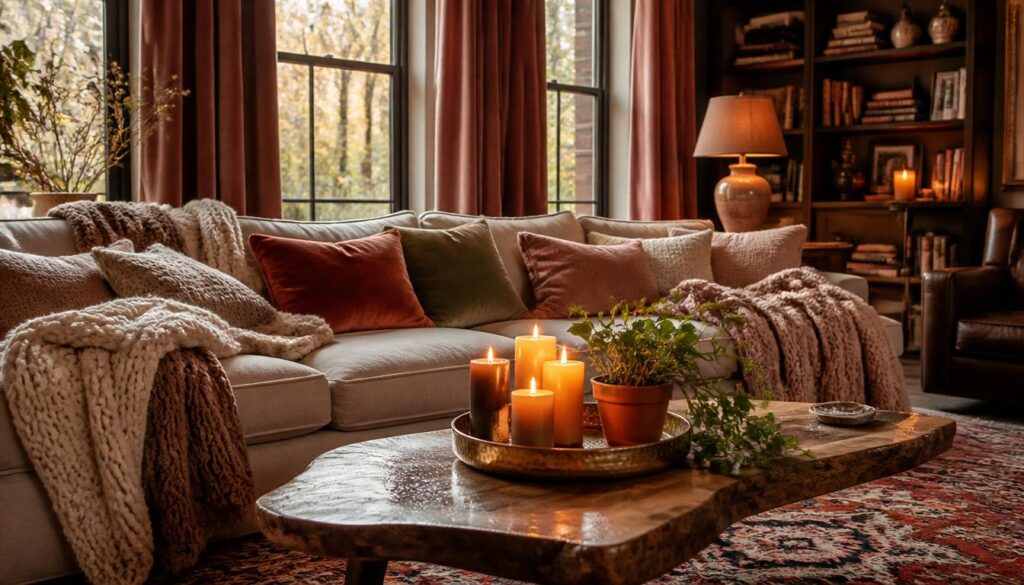
There’s a specific feeling a truly cozy room gives you, the moment you walk in and your shoulders drop, your breath slows, and you just want to stay. That feeling doesn’t happen by accident. It comes from deliberate choices about texture, light, warmth, and the way objects are arranged in a space. Cozy isn’t a style in the way that modern or farmhouse is a style. It’s more of a quality — something you layer into a room over time through honest, thoughtful decisions. And the good news is that you don’t need a big budget or a complete renovation to get there. You need the right ideas and the confidence to act on them.
What separates a genuinely cozy room from one that just looks cozy in photos is how it feels to actually live in it. Real coziness is about sensory experience — the softness underfoot, the warmth of the light, the smell of a candle you actually love, the way a weighted blanket feels when you pull it across your lap. These thirteen ideas are drawn from real experience styling lived in spaces, not just staged ones. Every single idea here is actionable, specific, and designed to give your room that deep, settled comfort that makes home feel like a genuine refuge. Let’s get into it.
1. Layer Your Lighting Instead of Relying on One Overhead Light
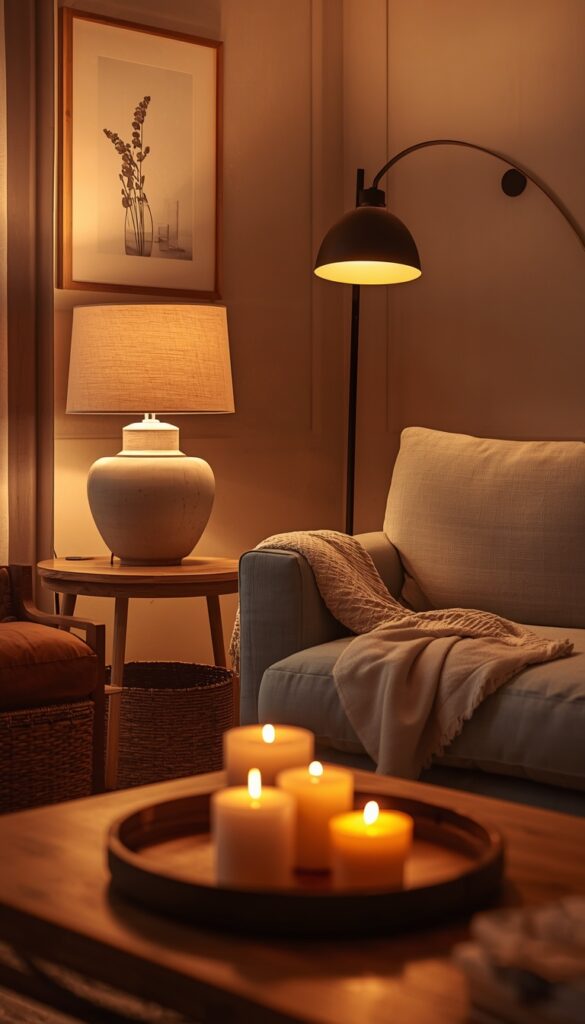
The single biggest mistake people make in living rooms and bedrooms is relying on one central overhead light for everything. Overhead lighting flattens a room. It removes shadow, eliminates depth, and creates a clinical brightness that works against every cozy instinct. Layered lighting — a combination of floor lamps, table lamps, wall sconces, and candles — creates pools of warm light at different heights, and that variation is what makes a room feel dimensional and intimate. Turn off the overhead and switch on three lower positioned light sources, and the transformation is almost immediate. The room feels warmer before you change a single piece of furniture.
Bulb temperature is something most people overlook, and it matters more than the lamp itself. Look for bulbs rated between 2700K and 3000K — that’s the warm amber range that mimics candlelight and late afternoon sun. Anything above 3500K starts reading as cool white, which is great for a home office but actively hostile to coziness. Swap out every bulb in your bedroom or living room for warm tone LEDs and you’ll notice the difference immediately, especially in the evening hours when cooler bulbs make rooms feel almost clinical. This is a ten dollar fix with a genuinely dramatic effect that takes about fifteen minutes to complete.
For placement, think about lighting at three levels: floor level, table height, and slightly above eye level when seated. A chunky ceramic table lamp on a side table beside your sofa creates warm light right at the level you actually see when you’re sitting down. A tall arc floor lamp that curves over a reading chair adds a layer of focused warmth. String lights or a plug in wall sconce adds that final atmospheric glow. None of these need to be expensive to work well. What matters is the warmth of the bulb, the softness of the shade, and the placement at human scale rather than ceiling scale.
2. Add a Large Area Rug to Anchor and Warm the Space
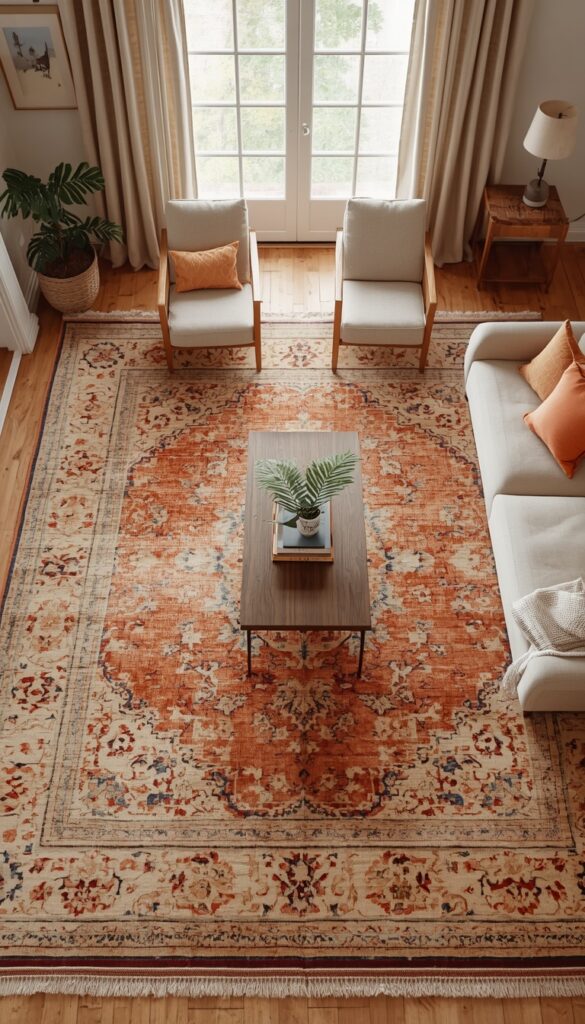
A large area rug might be the single highest impact purchase you can make for a cozy room. It does three things at once: it adds warmth underfoot, it absorbs sound to make the room feel quieter and more enclosed, and it anchors the furniture into one cohesive grouping rather than letting pieces float disconnected across the floor. The size matters enormously here. Most people choose rugs that are too small, which makes furniture look like it’s drifting on an island of pattern. In a living room, your sofa and chairs should either sit fully on the rug or have at least their front legs on it. Go bigger than you think you need.
Material is where the real warmth comes from. Wool rugs are the gold standard for coziness — they’re naturally soft, warm to the touch, insulating, and they only get better with age and use. A flatwoven wool rug like a kilim or dhurrie adds warmth with less pile but incredible pattern personality. High pile shag rugs in natural wool or cotton are deeply tactile and genuinely luxurious underfoot, though they require more maintenance. Jute and sisal rugs bring natural warmth and texture but aren’t particularly soft, so they work best when layered with a smaller, softer rug on top. That rug on rug layering approach, incidentally, is one of the most cozy and collected looking styling tricks you can use.
Color and pattern in a rug set the emotional tone of the entire room. For maximum coziness, lean into warm tones — deep terracotta, dusty rose, warm ochre, faded rust, and soft cream all evoke warmth instinctively. A vintage or vintage style Persian rug brings layered color and an aged quality that new rugs almost never replicate — it looks collected and tells a story. If your room already has a lot of pattern on the walls or furniture, a more neutral, textured rug in a warm tone is the better choice. But don’t be afraid of patterns altogether. A beautiful rug with warmth in its palette is one of the most reliable ways to make a bare, cold room feel instantly inhabited and loved.
3. Build a Reading Nook with a Chair, Lamp, and Personal Touches
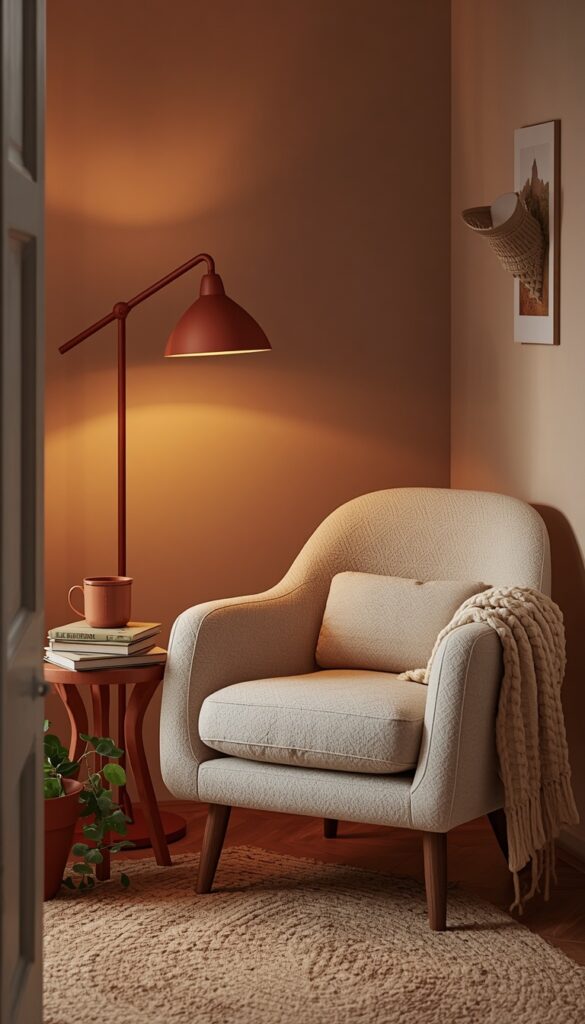
A reading nook doesn’t require a bay window or built in shelving to work. At its most essential, it’s simply a chair you love, a lamp positioned exactly right, and a small table or surface for your drink. That’s it. The magic of a reading nook isn’t in its architecture — it’s in its intention. When you carve out a corner of a room specifically for the purpose of sitting quietly and reading, something shifts in how the whole room feels. It communicates that this space is for human pleasure, not just function. And that intention is one of the core ingredients of genuine coziness.
Chair choice changes everything about how a reading nook feels. A deep, cushioned armchair with wide arms and a high back creates the most enveloping, supported feeling — the kind of chair that holds you rather than just supports you. Linen, velvet, and cotton bouclé are all excellent upholstery choices for a cozy reading chair. Bouclé in particular has a warmth and tactile softness that feels genuinely special. Add a footstool or an upholstered ottoman at the right height and the nook becomes a place you can settle into for hours. A small side table or a C shaped table that slides under the chair keeps your tea or coffee exactly where you need it without requiring you to lean or reach.
The personal touches are what transform a nice chair into a reading nook with real soul. A stack of books you’re actually reading — not just for decoration — on the side table. A small ceramic lamp with a warm toned bulb. A knitted throw draped over the arm. A potted plant in a terracotta pot at floor level nearby. These details communicate lived experience, and that communication is what makes a space feel genuinely cozy to everyone who enters, not just to you. Resist the urge to over style it. A reading nook should look like you just got up from it, not like it was arranged for a photo shoot. That realness is its whole appeal.
4. Use Warm Toned Paint Colors to Transform the Feel of Any Room
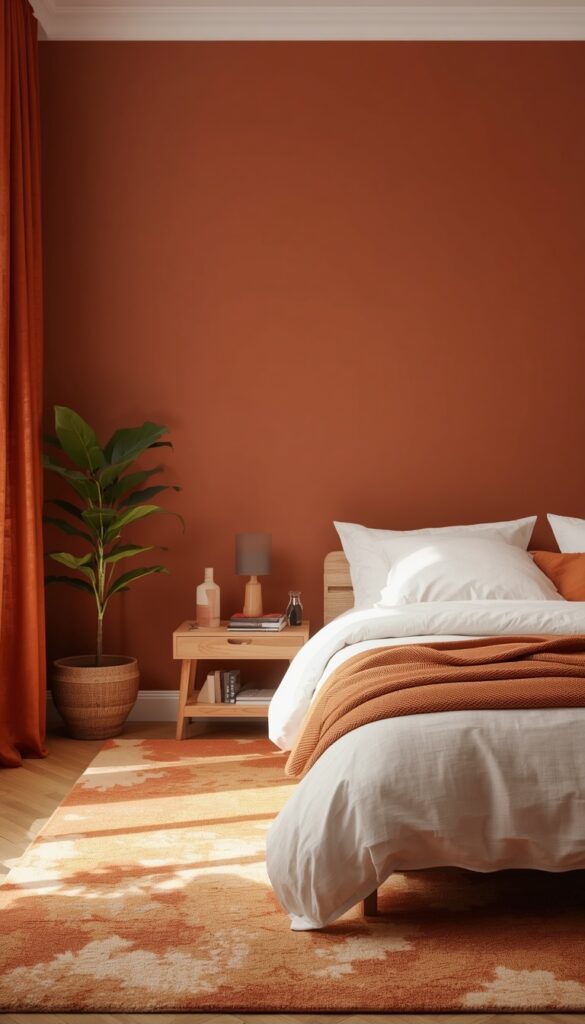
Paint is the most powerful and cost effective tool in a room transformation, and choosing a warm toned color is one of the fastest ways to make a space feel genuinely cozy. Warm whites, soft taupes, earthy terracottas, warm sage greens, and deep, muted ochres all create an atmosphere that cool grays and stark whites simply cannot. The color temperature of your walls affects every other element in the room — how the furniture looks, how the light behaves, how the textiles read. A room painted in warm sand or soft terracotta feels embracing in a way that a cool gray room rarely achieves, no matter how beautiful the furniture is.
Undertones are the thing most people get wrong with warm paint colors. A color can look beautifully warm on a tiny paint chip and turn surprisingly cold or yellow on a full wall because of how it interacts with your room’s specific light source. North facing rooms with cool, indirect light need paints with strong warm undertones — look for paints with yellow, pink, or orange bases rather than green or blue ones. South and west facing rooms have more flexibility. Benjamin Moore’s “Pale Oak,” Farrow & Ball’s “Setting Plaster,” and Sherwin Williams’ “Accessible Beige” are all reliably warm across a range of lighting conditions and are genuinely excellent starting points for a cozy color palette.
The finish you choose affects coziness more than most people realize. Flat and matte finishes absorb light rather than reflecting it, which creates a softer, more velvety wall surface that feels significantly warmer and more intimate than eggshell or satin. Deep, saturated colors like terracotta, rust, or forest green look truly spectacular in a flat or matte finish — they gain an almost fabric like quality that is stunning in evening light. Flat finish does require more careful cleaning, so if you have children or pets, an eggshell might be the practical compromise. But in rooms that don’t get heavy daily abuse, like a bedroom or a formal sitting room, flat finish is absolutely worth considering.
5. Bring in Natural Wood Elements for Warmth and Organic Texture
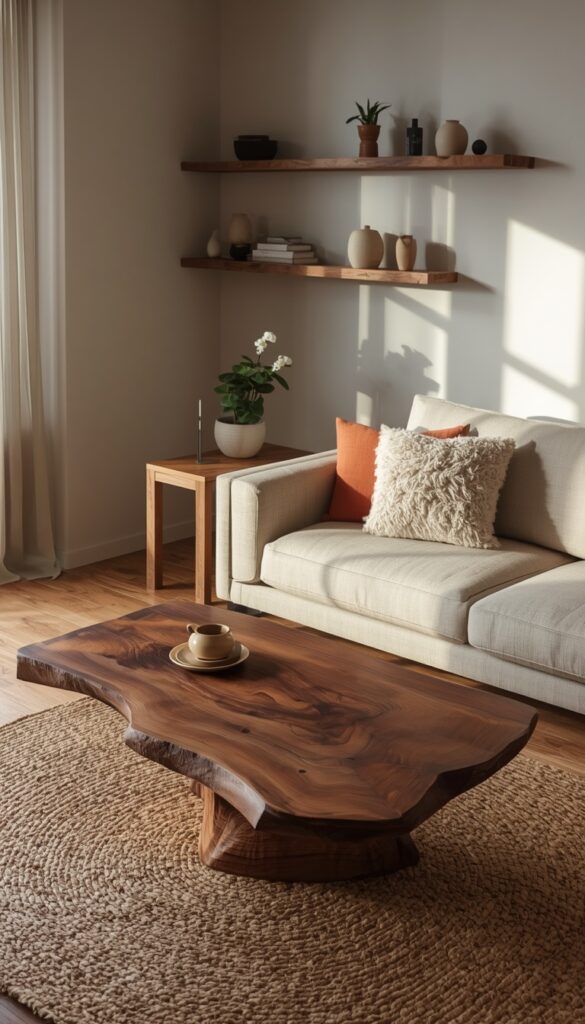
Wood is one of the oldest and most reliable sources of visual and physical warmth in a room. There’s something almost primal about the way natural wood grain makes a space feel inhabited and safe — it connects to something deep in human experience that cool metal and synthetic materials simply don’t reach. Bringing natural wood into a room doesn’t require a renovation or expensive furniture purchases. A wooden side table, a set of shelves, a wooden tray on the coffee table, a cutting board leaned against the kitchen backsplash — these smaller additions collectively create a warmth that transforms the atmosphere of a room without requiring major investment.
The tone of the wood matters as much as its presence. Warm honey toned woods like pine, oak, and ash bring a light, Scandinavian brightness that works beautifully in rooms with white or pale walls. Darker woods like walnut and mahogany add richness and depth that suits rooms with deeper color palettes or more formal furniture. Reclaimed and distressed wood brings a patina and history that new wood genuinely can’t replicate — a weathered oak beam above a fireplace or a salvaged wood coffee table tells a story that adds immense character to a room. When shopping for secondhand or vintage wood furniture, look for solid wood rather than veneer, which chips and peels and loses its warmth over time.
The grain and texture of wood also contribute to coziness in a way that’s worth considering consciously. A smooth, finely sanded oak surface looks beautiful but a piece with visible grain, knots, and natural variation feels more organic and alive. Wire brushed or lightly distressed finishes on wood furniture emphasize the natural texture and feel genuinely warm to the touch. Live edge tables and shelving, where the natural edge of the tree slab is preserved rather than cut straight, bring an unmatched organic quality into a room. You only need one or two pieces with this kind of character for the whole room to feel grounded and connected to something real and natural.
6. Layer Throw Blankets and Pillows for Real Tactile Comfort
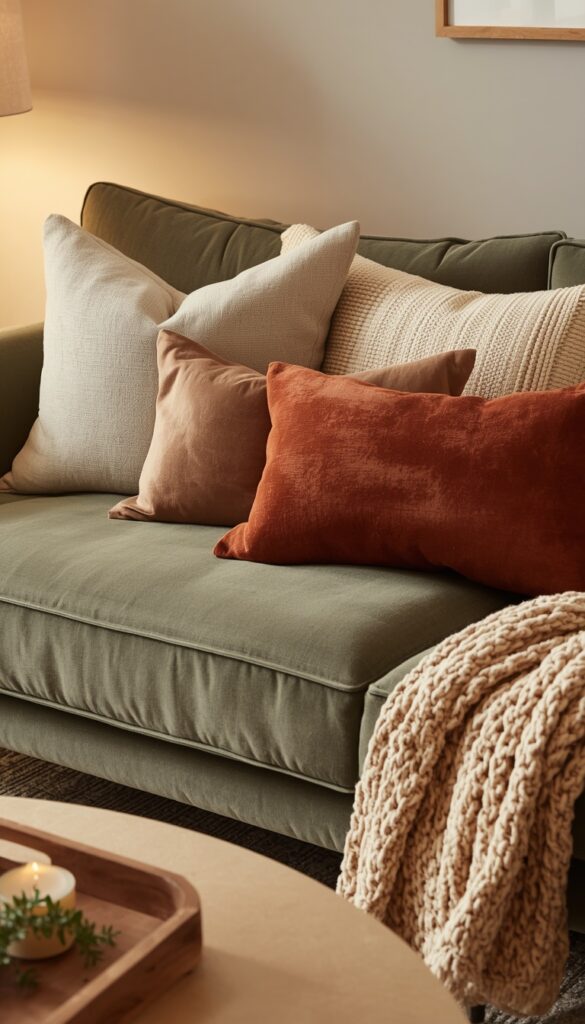
The single most immediate way to make any room feel cozy is to add layers of soft texture through throws and pillows. This isn’t just a styling trick — it’s about creating genuine physical comfort signals that invite you to relax. When you walk into a room and see a chunky knit throw casually draped over the end of a sofa, a pile of pillows in varying sizes at the back, and a velvet cushion propped against the arm, your nervous system reads that scene as safe and restful before your conscious mind processes it. Texture speaks directly to the body. Layers of softness communicate warmth and welcome in the most instinctive way.
Fabric choice makes a real difference in how luxurious the layering feels. Chunky wool or merino knit throws are warm, visually substantial, and deeply tactile — they look as good draped over a chair arm as they feel wrapped around your shoulders on a cold evening. Cashmere blends bring an extraordinary softness that nothing else quite matches, and while they require more care, a single cashmere throw over a sofa elevates the entire room. Linen throws feel lighter and work well in warmer climates or summer rooms — they have a beautiful, lived in quality that gets better with every wash. Avoid microfiber throws, which pill quickly and lose their warmth after a few seasons.
Pillow layering works best with a clear size hierarchy and a cohesive but not identical color palette. Start with large square Euro pillows at the back — these are typically 26 inches and add real height and substance. Layer standard sleeping pillows in front, then add a mix of smaller accent pillows in 18 inch and 12 inch sizes at the front. Mixing one lumbar pillow into the arrangement adds a horizontal element that keeps the grouping from looking too symmetrical and rigid. For fabric, vary the textures deliberately — velvet beside linen beside boucle beside woven cotton. The variation in texture is what creates that rich, layered look that feels genuinely considered rather than assembled from a matching set.
7. Add a Fireplace or Candle Display for Ambient Warmth

Nothing creates coziness the way fire does. The movement, the warmth, the soft crackling sound — a real fireplace is genuinely transformative in any room. But fireplaces aren’t accessible to everyone, and even when you have one, you can’t light it every night year round. That’s where a thoughtfully built candle display becomes one of the most powerful cozy room tools available. A cluster of pillar candles in varying heights on a wide, heat safe tray or plate, placed on a coffee table, mantle, or sideboard, creates genuine ambient warmth and flickering light that no lamp fully replicates. The effect is immediate and completely disproportionate to the effort required.
For candle displays that look intentional rather than thrown together, vary the height and diameter of the pillar candles dramatically. A very tall, narrow pillar beside a wide, short pillar beside a medium pillar of different width creates a natural, organic silhouette. Group them on a wooden slice, a large ceramic plate, a marble slab, or a hammered brass tray — the base matters as much as the candles themselves because it visually unifies the grouping. Unscented or lightly scented pillar candles in cream, ivory, or warm off white are the most versatile choices. Avoid heavily scented candles in living spaces where multiple scents compete — one beautifully scented candle is an experience; three competing ones is a headache.
If you have an unused fireplace opening, filling it deliberately rather than leaving it empty transforms the dead space into a genuine focal point. A cluster of pillar candles of wildly varying heights directly on the fireplace floor creates warmth without heat. You can also fill a fireplace opening with a large bundle of dried pampas grass, a stack of actual birch logs, or a simple log rack with beautiful firewood even if you never intend to burn it. The visual cue of the fireplace as a warm gathering point is powerful even without a flame. Frame it with two floor candleholders on either side and the entire fireplace wall becomes the kind of anchor point every cozy room deserves.
8. Hang Heavy Curtains to Make a Room Feel Enclosed and Warm
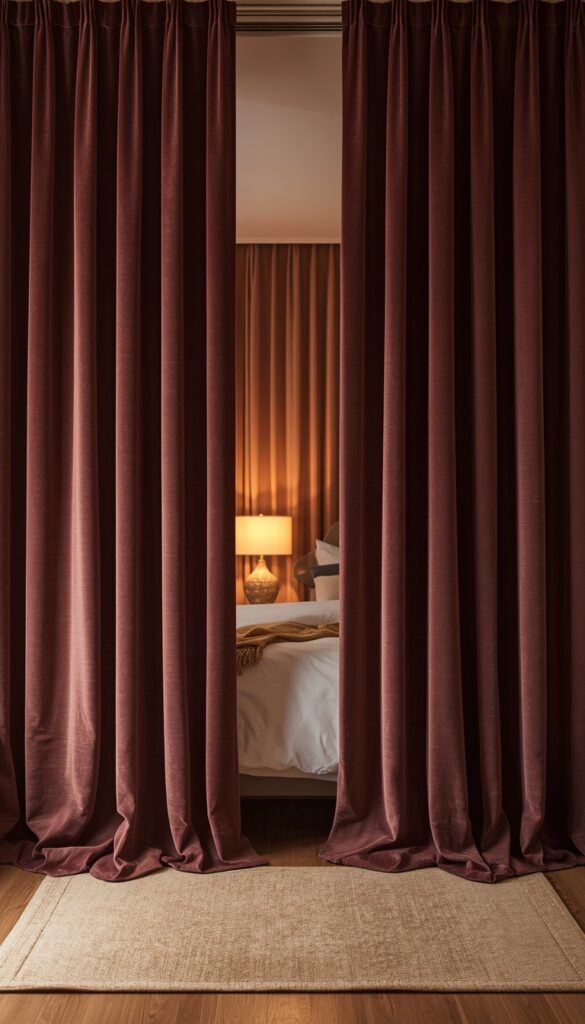
Curtains are chronically underestimated as a cozy room tool. Most people hang whatever came with the rental, or choose something thin and practical, without realizing that fabric at the window is one of the most dramatic ways to change how a room feels. Heavy, floor length curtains do several things simultaneously: they block drafts, absorb sound, reduce the amount of hard surface in the room, and visually lower the ceiling in the best possible way — creating that enclosed, sheltered feeling that genuine coziness depends on. A room with bare windows or thin sheers can be beautifully decorated in every other way and still feel cold and exposed. The right curtains change that completely.
Velvet curtains are the undisputed champions of cozy room design. They’re heavy, they drape beautifully, they absorb light without blocking it entirely, and they add an almost theatrical richness to any space. In deep colors like forest green, dusty mauve, rust, or navy, velvet curtains transform a room into something that feels luxurious and intentionally designed. Linen curtains bring a lighter, more relaxed version of the same warmth — their natural texture adds softness without the formality of velvet. Cotton curtains in a warm, heavier weight work well in bedrooms and more casual spaces. Whatever fabric you choose, hang curtains as high as possible — ideally at ceiling height or just below the crown molding — and let them pool slightly on the floor. That extra length signals luxury and warmth in the most convincing way.
Curtain color should work with your wall color and overall palette rather than contrast sharply with it. A room with warm greige walls and a sage green curtain creates a tonal, layered palette that feels genuinely sophisticated. Curtains in the same general tone as the wall — slightly deeper or slightly lighter — make the room feel taller, softer, and more seamlessly decorated. High contrast curtains — like very dark drapes on very pale walls — can look dramatic and beautiful but require strong commitment to the rest of the room’s design. For most people creating cozy rooms, tonal harmony is the safer and more reliably successful choice. Add blackout lining to any curtain for better sleep and insulation — it’s an easy upgrade that adds real practical warmth.
9. Fill Empty Corners with Plants to Bring Life into the Room
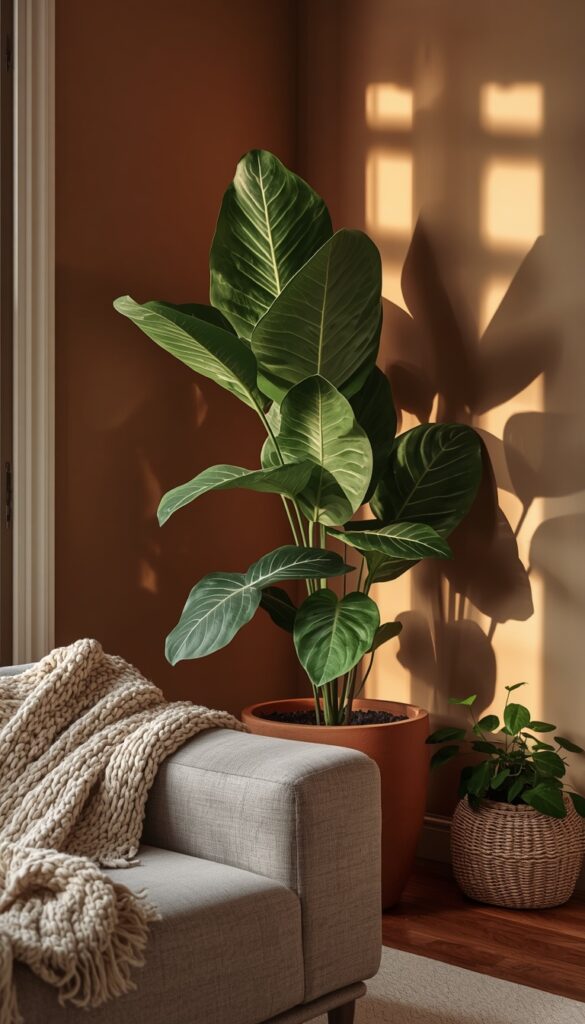
An empty corner is a missed opportunity in any cozy room. It’s a negative space that can feel awkward, cold, or simply unfinished. A large indoor plant fills a corner in a way that nothing else does — it brings height, organic texture, color, and genuine living energy that inanimate objects simply can’t provide. A fiddle leaf fig, a large monstera, a tall olive tree, or a dramatic snake plant placed in a well lit corner transforms that dead space into a genuine design moment. And beyond the aesthetics, the presence of living green things in a room is genuinely good for the spirit in a way that research consistently backs up and personal experience confirms even more strongly.
The container matters as much as the plant itself for achieving a cozy aesthetic. A beautiful terracotta pot, a handmade ceramic planter in a warm cream or earthy tone, a woven seagrass basket, or a wooden planter box all contribute warmth and texture that a plastic nursery pot actively undermines. If you buy a plant in a nursery pot, repot it or at minimum drop the whole thing into a beautiful basket before bringing it into your room. For large floor plants, a generous pot in natural materials — stone, terracotta, woven fiber — adds visual weight that makes the plant look established and intentional. The combination of living plants and beautiful containers is genuinely more than the sum of its parts.
Smaller plants and trailing varieties add coziness in different ways throughout a room. A trailing pothos or string of pearls on a high shelf creates a cascade of green that softens the shelf’s hard edges. A cluster of small succulents or herbs in terracotta pots on a windowsill brings the outside world in and adds warmth to an otherwise cold and reflective window area. Groupings of three or five plants at varying heights on a console table or bookshelf create a small indoor garden that has a genuine atmosphere. Care level matters for long term success — choose plants suited to your actual light conditions and realistic watering habits. A dead plant doesn’t create coziness; a thriving one does.
10. Create a Gallery Wall That Tells a Personal Story
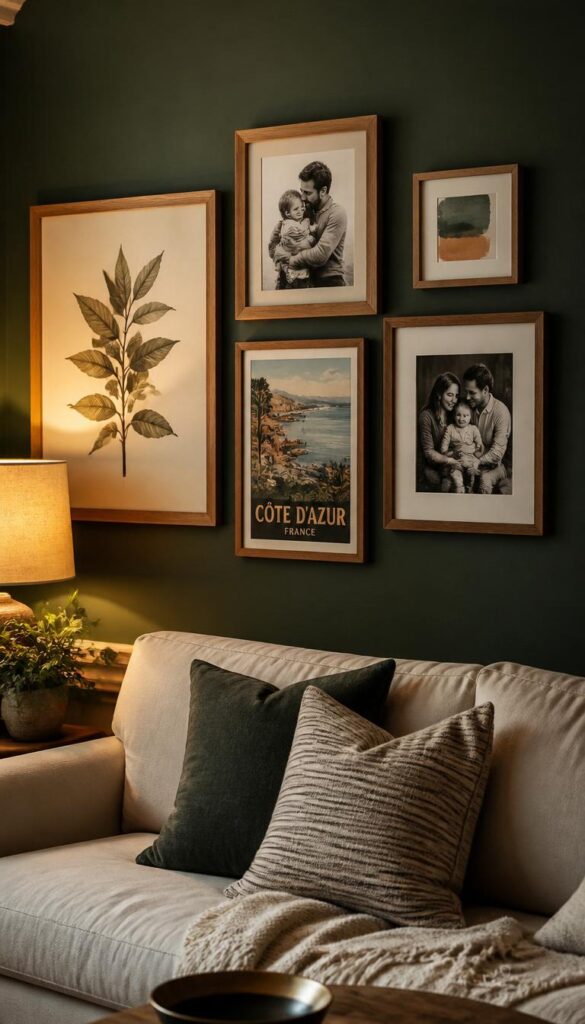
A gallery wall done well is one of the most intimate and cozy elements you can bring into a room, because it turns a blank wall into a record of the things you love. The difference between a gallery wall that feels genuinely personal and one that feels like a themed decoration package is real, and it comes down entirely to whether the pieces have actual meaning. Family photos printed large and framed, original artwork from an artist you love, a pressed botanical you collected, a vintage poster from a place you’ve been, a child’s drawing in a real frame — these things communicate a life lived, and that communication is at the core of what makes spaces feel inhabited and warm.
The arrangement and framing choices affect how the gallery wall reads as a whole. A cohesive frame color — all black, all natural wood, all gold, all white — ties diverse pieces together and prevents the wall from feeling chaotic. Mixed frame finishes can look beautiful but require more intentional curation to prevent visual noise. For layout, print all your images as paper cutouts the same size as your frames and tape them to the wall before hammering a single nail. This simple step, which most people skip, is the difference between a gallery wall that looks planned and one that looks like a collection of afterthoughts. Start with the largest anchor piece in the center or slightly off center, then build outward.
The wall color behind a gallery wall dramatically affects how the art and frames are read. Dark, rich walls — deep terracotta, forest green, warm charcoal — make frames and artwork pop in a gallery-like way that white walls can’t achieve. A gallery wall of black frames and black and white photography on a deep rust or sage green wall is a combination of extraordinary sophistication and warmth. Warm neutral walls in taupe or greige give more flexibility for colorful art. Whatever your wall color, ensure the gallery wall sits at proper eye level — the center of the grouping should be approximately 57 to 60 inches from the floor, which is standard museum hanging height and where the human eye naturally falls in a standing room.
11. Use Bookshelves as a Cozy Styling Opportunity
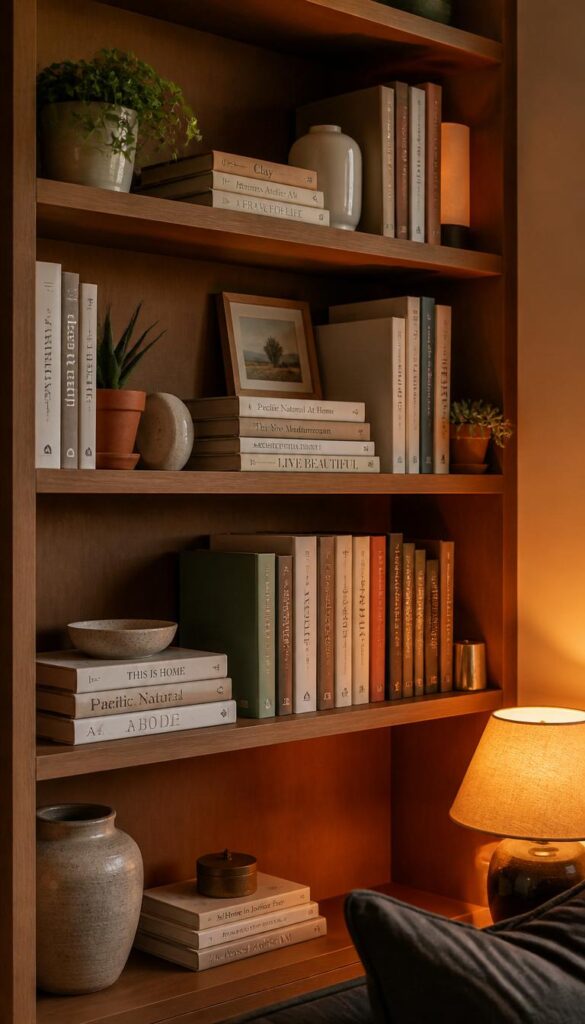
Bookshelves are one of the most underutilized cozy room tools in most homes. People either leave them purely functional — books crammed edge to edge with no breathing room — or they go entirely decorative, removing books in favor of objects, and end up with something that looks styled but cold. The most cozy bookshelves strike a genuine balance: books you’ve actually read alongside objects you genuinely love, with enough variation in height and depth to create visual rhythm. Styling a bookshelf well is genuinely one of the most satisfying design exercises, because the result is a wall of personal history that adds warmth to any room it inhabits.
The most effective cozy bookshelf arrangements mix vertical stacks of books with horizontal stacks. A row of books standing upright beside a stack of three or four books lying flat creates a natural break in the visual rhythm that prevents the shelf from looking rigid. Tuck a small plant, a candle, a ceramic object, or a framed photograph into the gaps between and on top of book stacks. The three dimensional layering — books pushed to the back of the shelf, objects pulled forward — adds depth that flat arrangements lack. Vary the color story of book spines deliberately: clustering books by color creates a curated, intentional look that rewards the eye without requiring you to read by color category permanently.
Books themselves are underrated room warmers. A room filled with books carries an immediate sense of depth, intelligence, and comfort that rooms without books rarely achieve. If your shelves have empty space, this is genuinely the right moment to invest in more books — not just for display, but for reading. Secondhand bookshops are the best source for interest, worn in books with beautiful aged covers and paper that smells like history. The physical presence of many books in a room adds acoustic warmth too — spines absorb sound in the same way soft furnishings do, reducing echo and making the room feel quieter and more intimate. This is a cozy room benefit that rarely gets mentioned but is very real.
12. Add a Scent Layer to Engage All the Senses
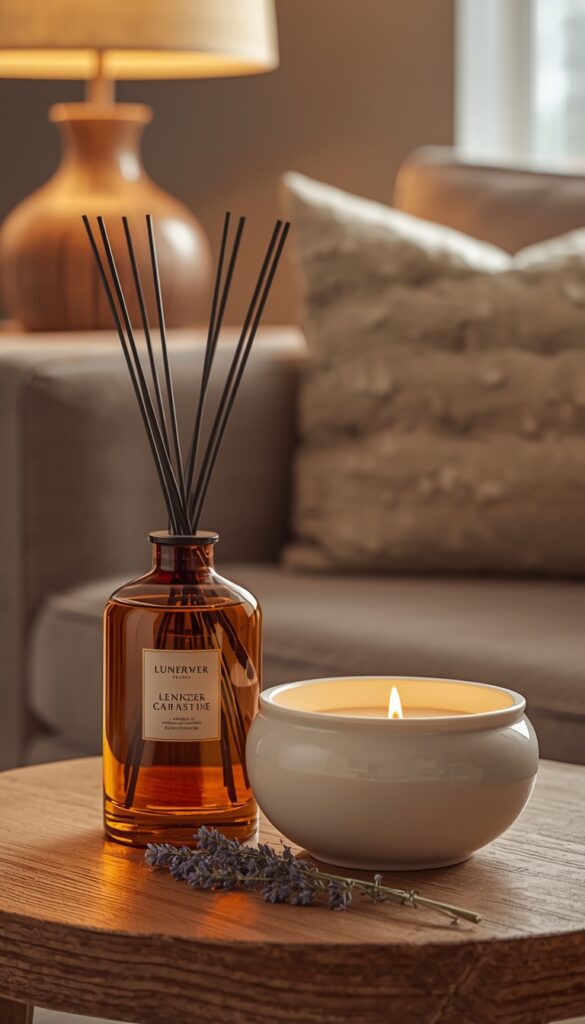
Coziness is a full sensory experience, and scent is the sense most people leave completely unconsidered when decorating. Sight, texture, and warmth get all the attention — and they matter enormously — but scent has a more direct connection to emotion and memory than any other sense. The right fragrance in a room creates a feeling of welcome and warmth that guests notice the moment they walk in, often without being able to identify exactly what’s making the space feel so inviting. Getting the scent layer right in a cozy room is the finishing touch that makes everything else feel more complete and more deeply felt.
Reed diffusers are the most consistent and low maintenance scent delivery method for a cozy room. A quality diffuser in a beautiful glass bottle placed in a corner or on a shelf releases fragrance gradually and evenly without any effort. For cozy room scents, choose warm, grounding notes: sandalwood, vetiver, amber, cedarwood, vanilla, tonka bean, or soft musk. Avoid very sharp or fresh scents like citrus and eucalyptus, which read as energizing rather than relaxing. Dipygus, Boy Smells, and By redo make reed diffusers that are genuinely excellent, but there are many quality options at lower price points the scent profile matters far more than the brand name.
Candles bring a dual benefit to the scent layer — they contribute both fragrance and the warm, flickering light that cozy rooms depend on. For maximum cozy impact, choose a candle with a wide throw — meaning the scent fills the room thoroughly rather than staying close to the flame. Soy and coconut wax candles tend to have a better scent throw than paraffin and burn more cleanly. The timing of when you light a candle matters too. Lighting a scented candle thirty minutes before you settle into a room for the evening lets the fragrance fully develop and fill the space by the time you arrive, creating an atmosphere rather than just a scent. That small habit is the kind of thing that makes home feel genuinely special.
13. Style a Cozy Coffee Table as the Heart of the Seating Area
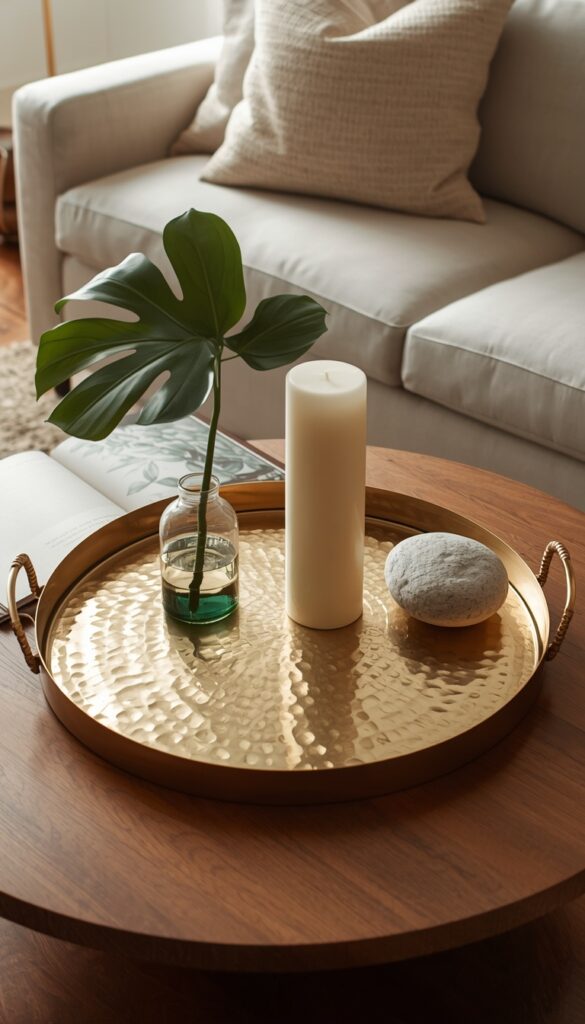
The coffee table is the center of gravity in a living room or sitting area, and styling it thoughtfully turns it from a functional surface into the cozy heart of the whole space. The best styled coffee tables look curated without looking staged — there’s a sense that the objects on them are genuinely used and genuinely loved. A stack of interesting books. A beautiful candle. A small plant in a ceramic pot. A tray that corrals the loose objects into a considered grouping. A natural stone or wooden object with texture. These elements together create a surface that draws the eye, invites touch, and communicates a warmth that empty or purely functional coffee tables never achieve.
The tray is the single most useful coffee table styling tool. It defines a zone on the table, corrals smaller objects into a unified grouping, and immediately makes any collection of items look intentional rather than scattered. A large wooden tray, a hammered brass tray, a lacquered tray in a warm color, or a woven rattan tray all bring texture and warmth to the tabletop while doing the organizational work of containing the arrangement. Within the tray, think about three elements: something tall (a candle or small plant), something flat (a book or a beautiful small journal), and something interesting to touch (a smooth stone, a small ceramic, a wooden object). That three element structure works in almost every combination you can put it to.
Scale matters enormously on a coffee table. Objects that are too small look lost and disconnected on a large table surface. Choose one or two pieces that are genuinely substantial — a large, thick spined book, a wide based candleholder, a broad ceramic bowl — and let them anchor the arrangement before adding smaller elements. A round wooden bowl filled with smooth river stones, a collection of wax tapers in a shallow ceramic dish, or a large art book opened to a beautiful page all provide the visual weight that smaller accent objects can’t supply on their own. Keep some surface clear — visible table surface is as important as what’s on it, because crowding a coffee table removes the sense of ease and breathing room that cozy styling requires.
Conclusion
Cozy rooms don’t happen from a single purchase or one weekend of decorating. They build gradually through intentional, sensory aware choices that prioritize how a space feels to live in over how it looks in a photograph. Every idea in this article serves that goal — from the way layered lighting creates warmth at human scale, to the way a gallery wall tells a story that makes a room feel genuinely inhabited, to the way a single beautiful scent can make a whole space feel like home. The best cozy room is the one that reflects you honestly. Trust your instincts, layer slowly, and don’t aim for perfection. Aim for warmth. Start with one idea today and let the rest follow naturally.
FAQs
Q: How do I make a room feel cozy on a tight budget? A: The most impactful cozy room changes are often the cheapest. Swap out harsh overhead bulbs for warm 2700K LED options, add a few pillar candles grouped on a tray, and layer a textured throw over your sofa. These three changes cost very little but shift the feeling of a room dramatically. Scent, soft light, and texture are the foundation of coziness, not expensive furniture.
Q: What colors make a room feel the most cozy? A: Warm, muted tones work best — think soft terracotta, warm taupe, dusty rose, deep sage green, and earthy ochre. These shades absorb light softly and create an embracing atmosphere. Avoid cool grays and stark whites in rooms where you want coziness, as those tones reflect light in a way that keeps rooms feeling open rather than intimate and sheltered.
Q: What kind of rug is best for a cozy bedroom or living room? A: A wool rug is the best choice for genuine warmth and softness underfoot. Wool is naturally insulating, soft, and durable, and it only improves with age. High pile wool rugs feel especially luxurious in a bedroom. If wool is outside your budget, a high quality cotton rug layered over a natural jute base rug gives a similar cozy layered effect at a lower price point.
Q: How do I make a large room feel cozy without making it look smaller? A: Use your furniture to create defined zones within the large space rather than spreading pieces across the full room. A large area rug that anchors the seating area, a gallery wall that gives one wall visual density, and floor to ceiling curtains that frame windows all add intimacy without sacrificing the room’s actual square footage. Warm paint colors also help an oversized room feel more human in scale.
Q: Can a minimalist room also feel cozy? A: Absolutely — minimalism and coziness are not opposites. The key is choosing warm materials and textures within the minimal palette. Natural wood, linen, warm toned plaster walls, a single large wool rug, and a carefully chosen candle or two create deep coziness without clutter. Minimalist cozy rooms feel calm and intentional rather than sparse, because every piece is chosen with warmth and texture in mind.
Q: What plants are best for making a room feel cozy? A: Large floor plants like fiddle leaf figs, monsteras, and olive trees add the most dramatic warmth to corners and empty spaces. For shelves and side tables, trailing pathos and small succulents in terracotta pots add organic life without requiring much care. The container matters as much as the plant — always choose terracotta, ceramic, or woven baskets over plastic pots for a genuinely warm, cozy look.
Q: How important is scent in a cozy room? A: More important than most people realize. Scent has a direct link to emotion and memory, which means the right fragrance makes a room feel welcoming before a guest even processes the visual details. Warm notes like sandalwood, amber, vanilla, and cedarwood are consistently associated with comfort and relaxation. One quality reed diffuser or a regularly lit candle in a warm scent profile genuinely changes how a room feels to spend time in.
Q: What’s the easiest single change I can make to a room to instantly make it cozier? A: Replace your overhead light source with two or three lower, warmer lamps and switch all bulbs to warm 2700K LEDs. This one change — moving light down from ceiling level to human scale and warming its temperature — transforms a room more immediately and dramatically than almost any other single action. Most people who do this describe the result as an instant and surprising improvement to how the room feels.