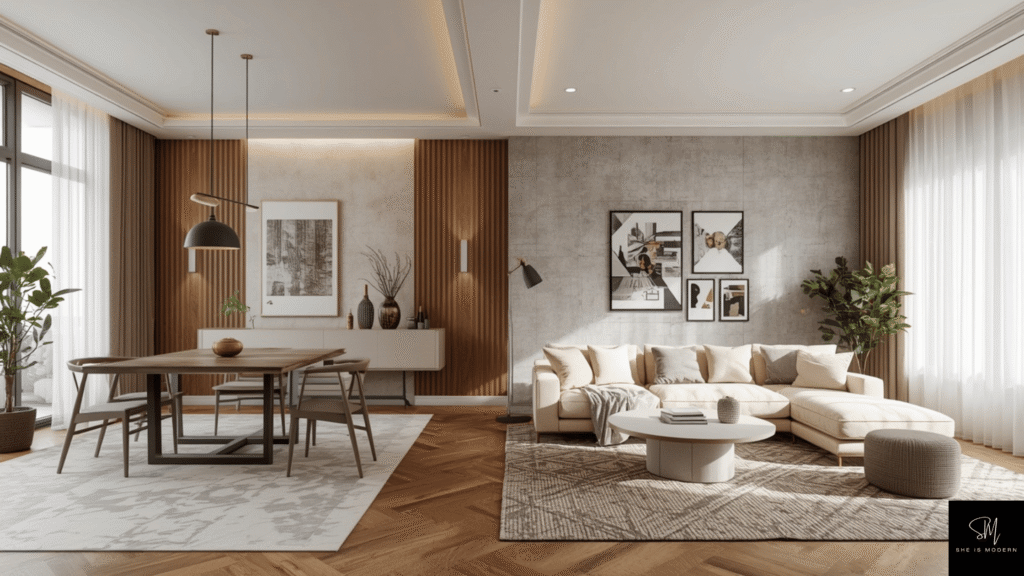
Creating a living and dining room combo can feel challenging, but it’s also a great chance to design a space that looks open, stylish, and easy to use every day. When two areas share one room, the goal is to keep everything balanced without making it feel crowded. With the right layout and simple design choices, you can create a space that feels comfortable for relaxing and perfect for meals.
In this guide, you’ll find living and dining room combo ideas that are practical and modern. These ideas help you define each area clearly while still keeping a smooth flow. Whether your space is small or medium sized, these setups will help you make the most of your layout while keeping your home looking clean, cozy, and well organized.
1. Sofa Divider Layout
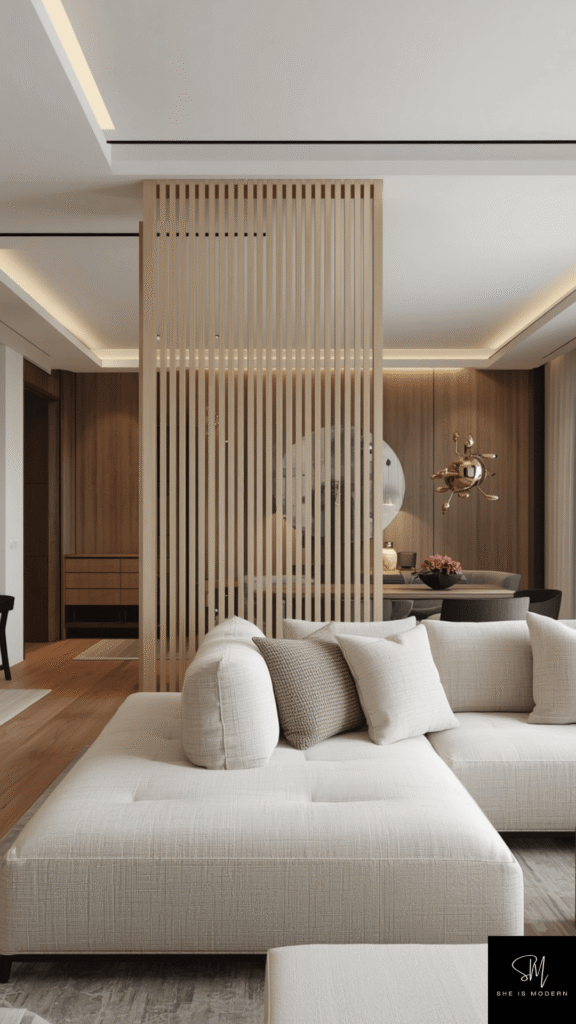
Using a sofa as a divider is one of the easiest ways to separate your living and dining areas. Place the back of the sofa facing the dining table to create a natural boundary. This keeps both spaces connected but clearly defined. It also helps guide movement in the room without adding walls or heavy furniture.
This layout works well in small to medium spaces where you want openness without confusion. The sofa becomes the center of the living zone, while the dining table stays neatly behind it. This arrangement makes the room feel structured and easy to navigate.
Keep the design simple by using a rug under the sofa area to anchor the space. Add soft lighting and minimal decor so the room feels balanced. This idea is perfect for creating a clean and functional combo layout.
2. Dining Behind Living Setup
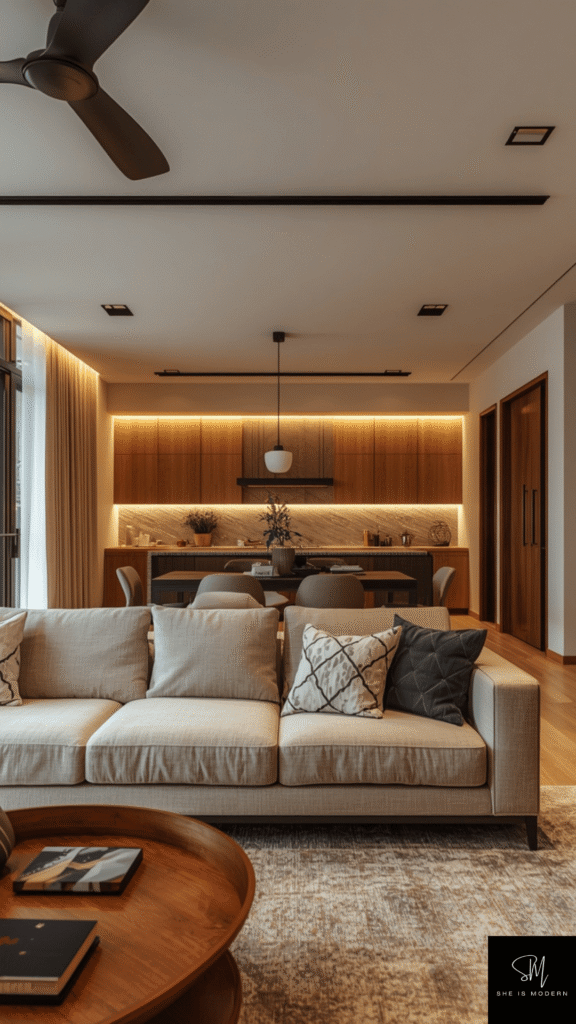
In this layout, the living area comes first when you enter the room, with the dining space placed behind it. This creates a welcoming feel, as guests step into a cozy seating area before reaching the dining table. It works well in open plan homes where flow matters.
The key is to keep both zones visually connected. Use similar colors or materials to tie the spaces together. At the same time, keep enough distance between furniture pieces so the room does not feel tight or crowded.
Add a light fixture above the dining table to define that area clearly. Keep the living zone relaxed with comfortable seating and soft textures. This layout is great for making the room feel natural and easy to use every day.
3. Side by Side Layout
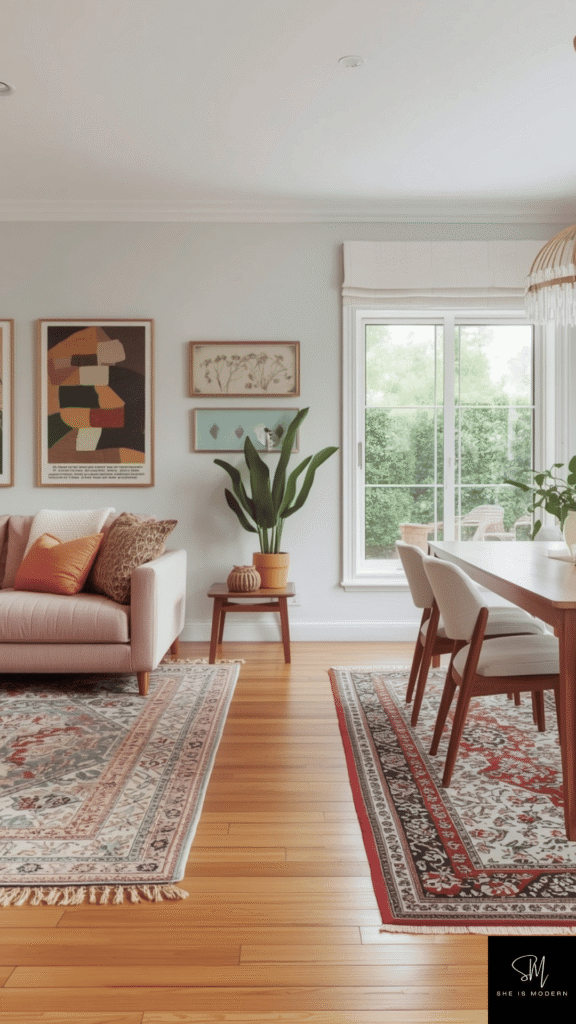
A side by side layout places the living and dining areas next to each other instead of one behind the other. This works well in wider rooms where you have more horizontal space. It creates a balanced look and makes both areas equally important.
You can define each zone using rugs or lighting. For example, place a rug under the sofa and another under the dining table. This helps separate the spaces visually while keeping the room open. It also improves the overall flow of the layout.
Keep furniture sizes proportional so one side does not overpower the other. Use similar tones or styles to keep the design cohesive. This layout is ideal for creating a modern and well balanced combo space.
4. Open Plan with Area Rugs
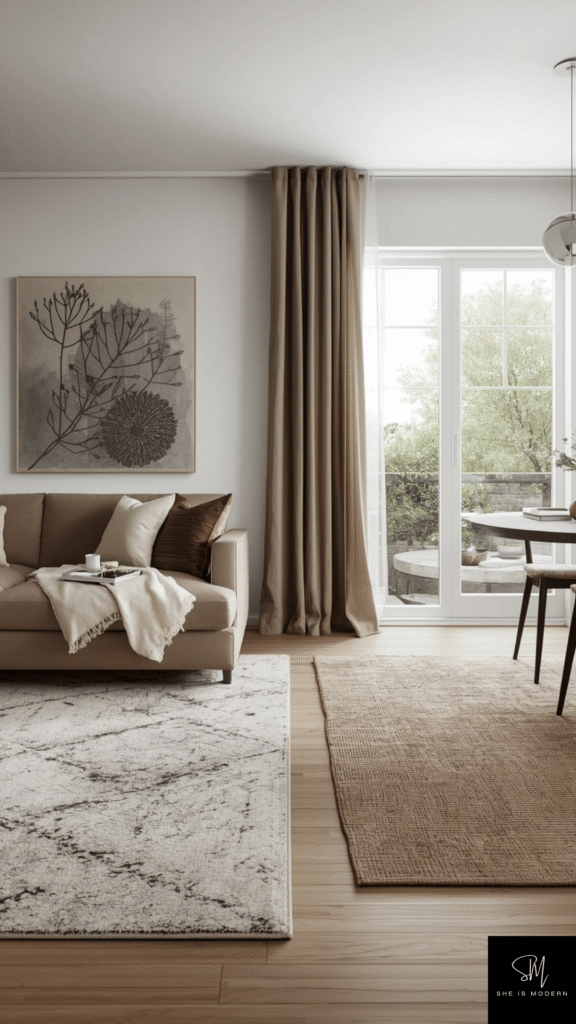
Area rugs are a simple way to divide a living and dining room combo without using physical barriers. Place one rug under the living area and another under the dining table. This creates clear zones while keeping the room open and airy.
This idea works well in both small and large spaces. Rugs add warmth and texture while helping define each section. Choose rugs that complement each other so the room feels connected instead of separated.
Keep furniture aligned with the rugs for a clean look. Avoid placing items outside the rug boundaries as it can make the layout feel messy. This setup is perfect for creating a cozy and organized open plan space.
5. Dining Near Window Layout
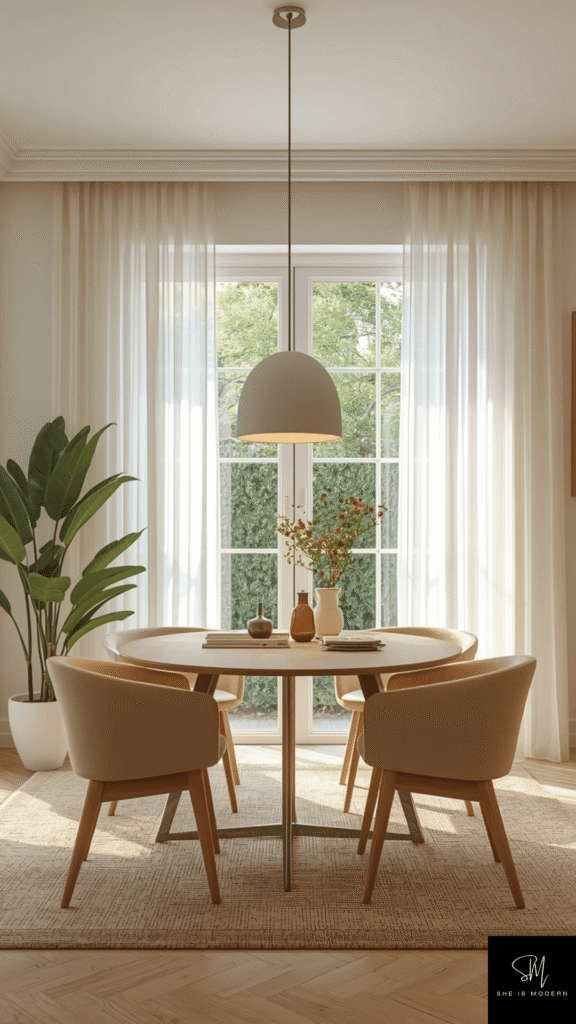
Placing the dining area near a window brings in natural light and creates a fresh, inviting feel. It makes mealtime more enjoyable and keeps the living area slightly more relaxed and private. This layout works especially well in apartments or small homes.
The living area can stay closer to the center or inner part of the room. This creates a soft separation between the two zones without needing extra elements. It also helps balance light across the space.
Use light curtains to keep the area bright and airy. Keep the dining setup simple so the natural light becomes the main feature. This layout is perfect for creating a bright and comfortable living and dining combo.
6. Console Table Divider Layout
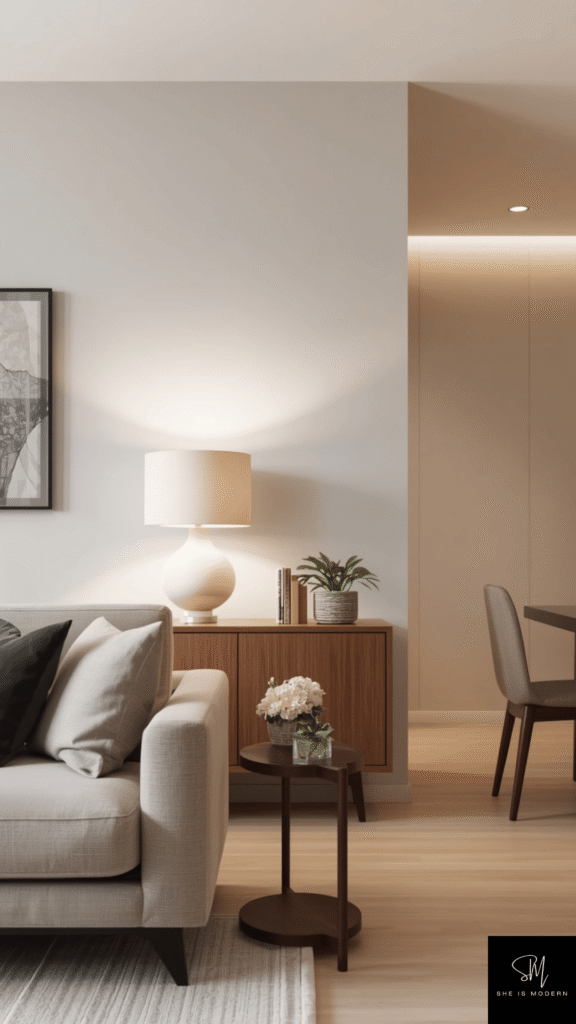
A console table is a smart way to divide your living and dining room combo without blocking light. Place a slim console behind the sofa to create a soft boundary. It separates both areas while keeping the space open and easy to move through. This layout works well in small homes where you want definition without adding bulky furniture.
You can style the console with simple decor like a lamp, books, or a small plant. This adds personality while keeping the design clean. It also gives you extra surface space for storage or display without taking up much room.
Keep the console narrow so it does not crowd the walkway. Match its style with both zones to keep the design cohesive. This layout is perfect for creating a light, modern, and functional divider in your combo space. A well defined space like this often reflects a clear design style — our Interior Design Style Finder helps you identify yours with 8 complete styles, palettes, and room plans inside.
7. Bench Seating Dining Edge
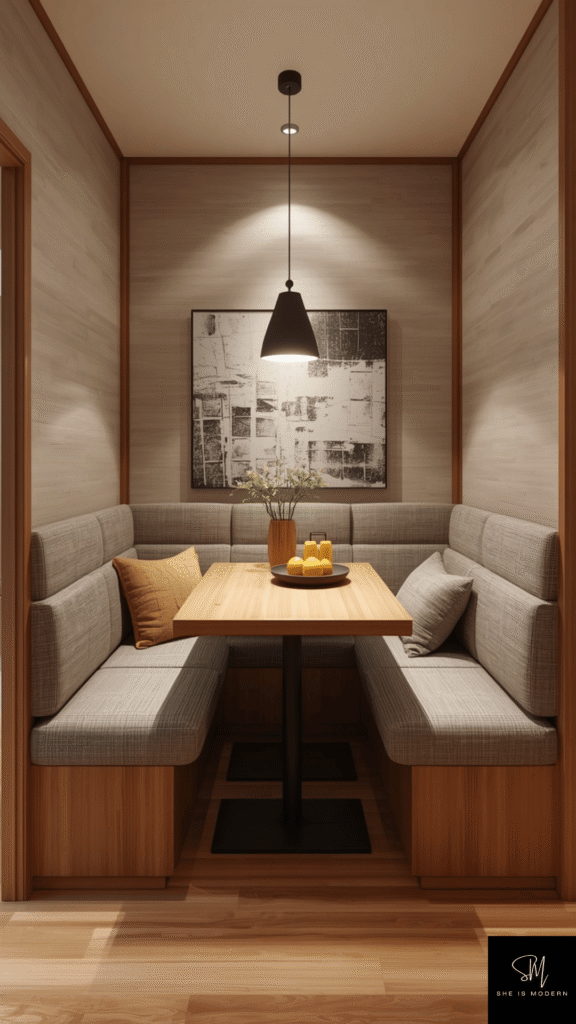
Using a bench along the edge of your dining area helps save space and keeps the layout neat. Place the bench against a wall or along the back of the dining zone to create a clean line. This keeps the dining setup compact and leaves more room for the living area.
This layout works well in smaller rooms where chairs can feel bulky. A bench can slide under the table when not in use, making the space look open and organized. It also adds a cozy and casual feel to the dining area.
Pair the bench with simple chairs on the other side for balance. Add soft cushions to make it more comfortable. This idea is great for creating a practical and space saving dining setup within a combo room.
8. TV Wall Shared Layout
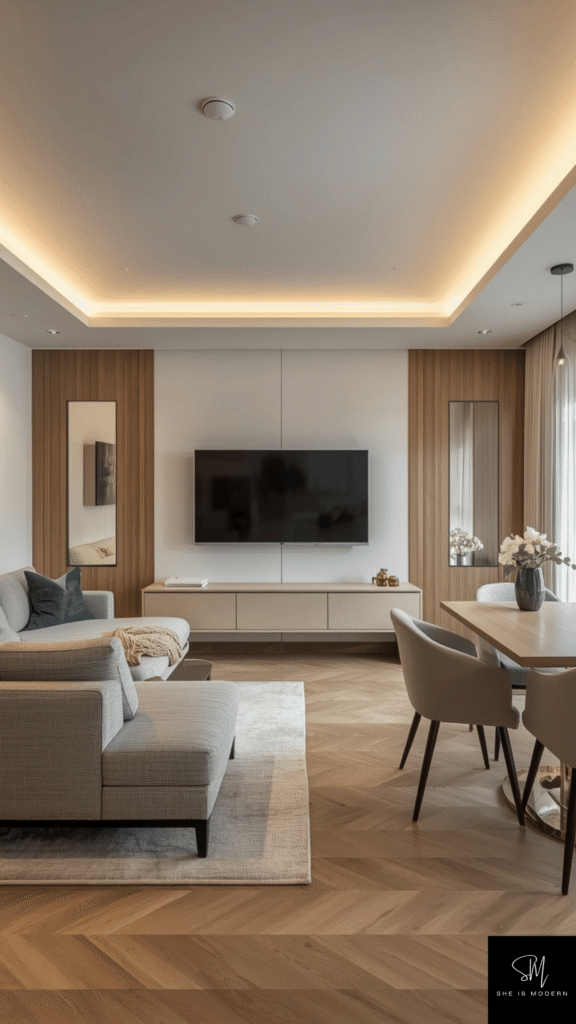
A shared TV wall can connect your living and dining areas in a simple way. Mount the TV on a central wall that is visible from both zones. This creates a common focal point and helps unify the space without needing extra decor.
The living area can face the TV directly, while the dining table sits nearby without blocking the view. This setup keeps everything connected while still allowing each area to function properly. It works well for casual living where both zones are used often.
Keep the wall design simple and clean. Add a sleek unit or floating shelf for storage. Avoid too much clutter so the wall stays visually calm. This layout is perfect for creating a connected and modern combo space.
9. L Shaped Layout
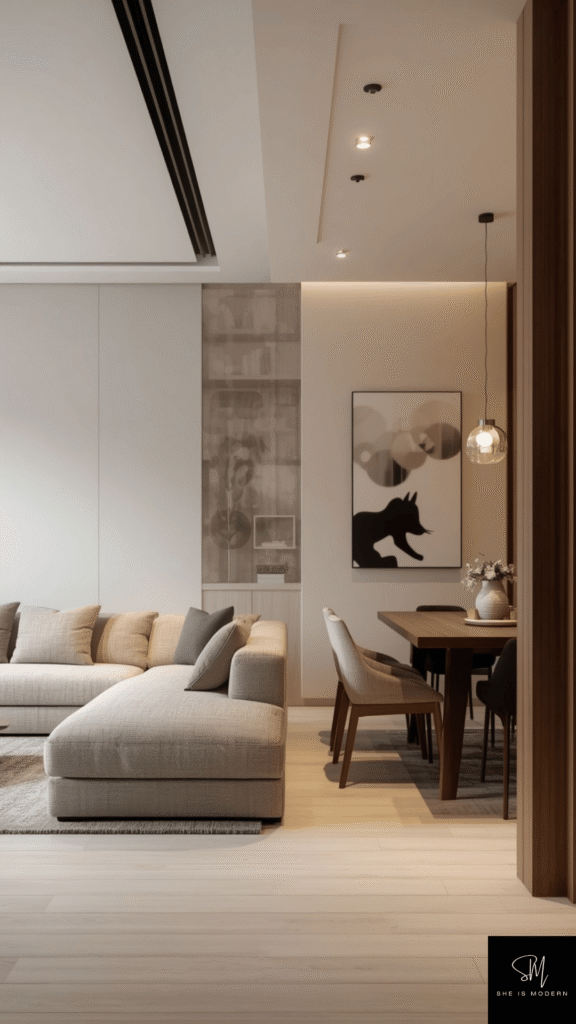
An L shaped layout is great for defining separate zones while keeping the room open. Place the living area in one corner and the dining area in another, forming an L shape. This creates a natural flow and helps each section feel independent without adding walls.
This layout works well in rooms with enough corner space. It allows you to arrange furniture in a way that feels structured and easy to use. Movement between areas feels smooth, and the room does not feel crowded.
Use rugs or lighting to highlight each section. Keep colors consistent so the design stays connected. This idea is perfect for creating a balanced and comfortable living and dining combo with a clear layout.
10. Round Dining Anchor Layout
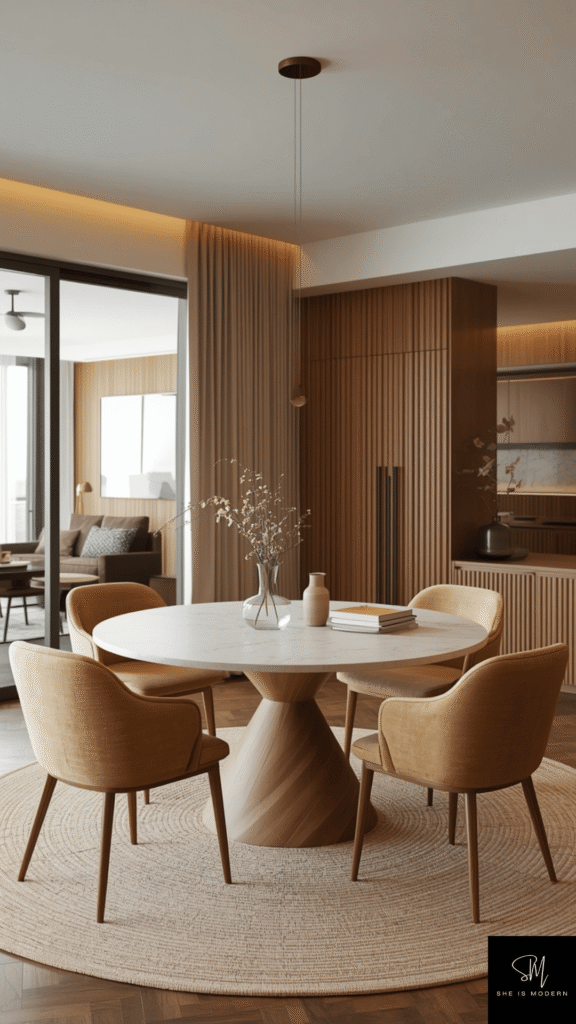
A round dining table can soften the look of a living and dining room combo. It breaks sharp lines and makes movement easier in tight spaces. Place the round table near one side of the room so it feels like a natural gathering spot without blocking pathways. This layout works well when you want a relaxed and inviting dining area.
The living space can stay structured with a sofa and simple seating. The contrast between straight lines and a curved table adds visual balance. It also makes the room feel less rigid and more welcoming for everyday use.
Keep chairs light and easy to move. Add a simple pendant light above the table to define the dining zone. This layout is perfect for creating a soft, friendly flow in your combo space.
11. Narrow Console Dining Layout
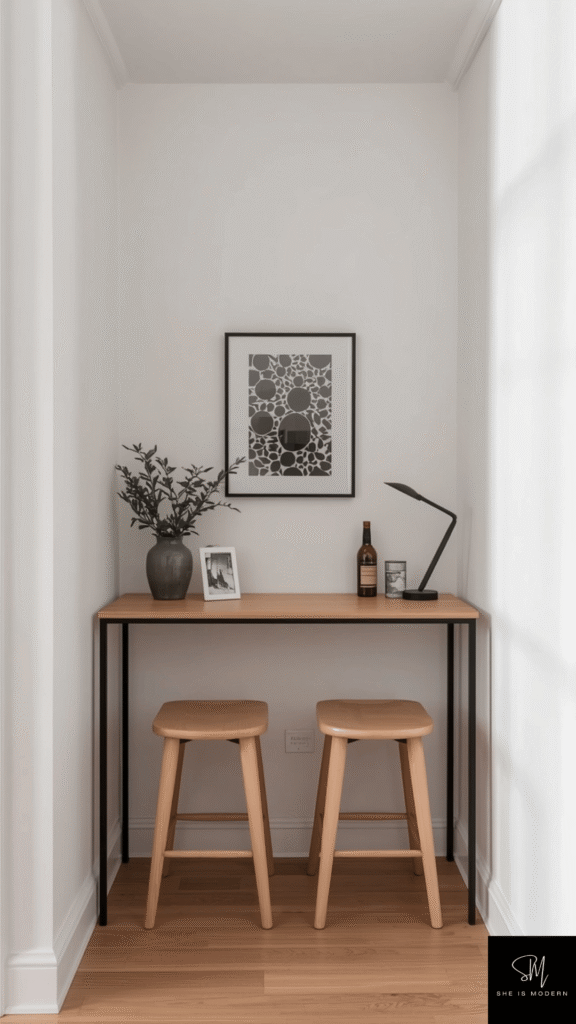
A narrow console table can double as a compact dining space in small rooms. Place it against a wall and use stools or slim chairs that tuck underneath. This setup saves space while still giving you a place to eat or work. It’s ideal for apartments or studio layouts.
The living area can stay open with a small sofa and minimal furniture. This keeps the room from feeling crowded while still being functional. The slim dining setup blends easily into the design without taking attention away from the living space.
Use wall art or a mirror above the console to make the area feel complete. Keep decor simple and light. This layout is perfect for maximizing space while keeping a clean and modern look. Small spaces styled this thoughtfully often have a strong design identity behind them — the Interior Style Exploration Guide breaks down 8 complete styles for anyone who wants to go deeper.
12. Double Lighting Zone Layout
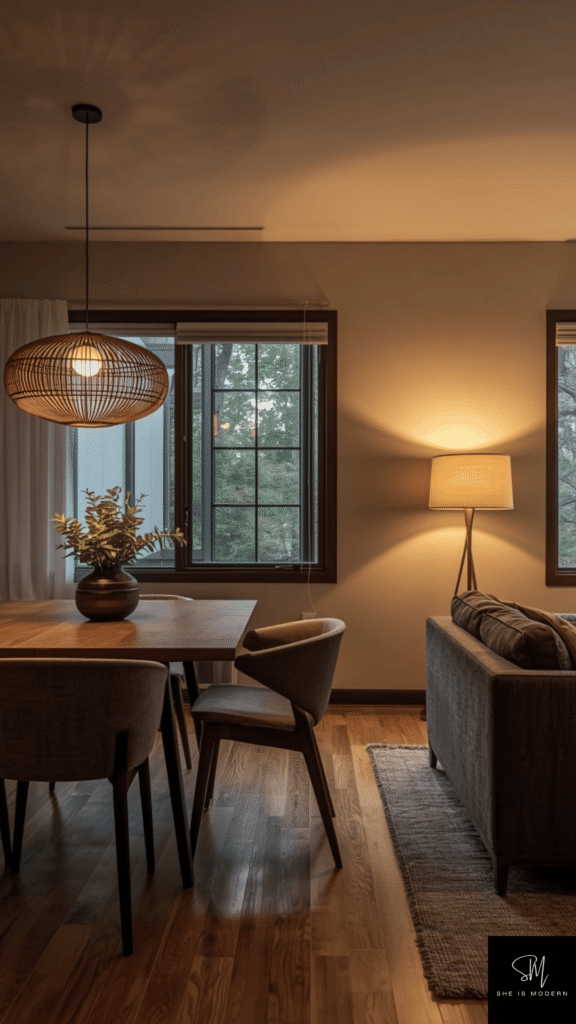
Using separate lighting for each area helps define your living and dining zones clearly. Add a pendant light above the dining table and use floor or table lamps in the living area. This creates two distinct moods in one room without using physical dividers.
This layout works well in open spaces where you want a clear separation. Lighting naturally draws attention and helps each area feel purposeful. It also adds warmth and depth to the overall design.
Choose lighting styles that match in tone but differ in function. Keep brightness balanced so one area does not overpower the other. This idea is perfect for creating a cozy and well defined combo space using simple design elements.
13. Accent Wall Separation Layout
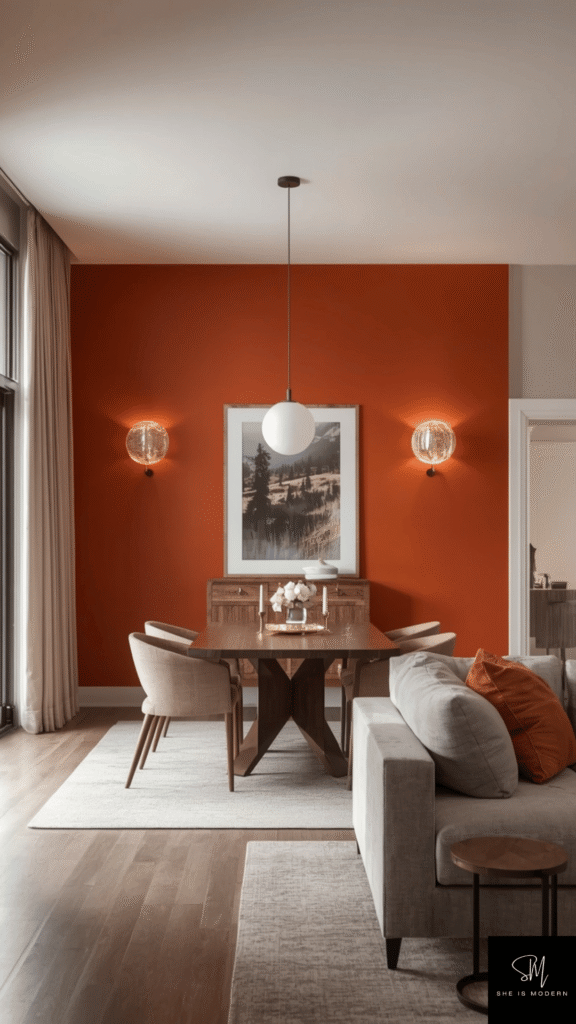
An accent wall can visually separate your living and dining areas without adding furniture. Use paint, wallpaper, or texture on one wall to define either the dining or living zone. This creates a clear boundary while keeping the room open and spacious.
This layout works well when you want a strong visual effect with minimal effort. It adds character and helps guide the eye naturally across the room. You can choose soft tones for a calm look or bold colors for more impact.
Keep the rest of the room neutral to balance the design. Avoid adding too many patterns so the accent wall stands out clearly. This layout is perfect for adding style and structure in a simple way.
14. Compact Corner Dining Layout
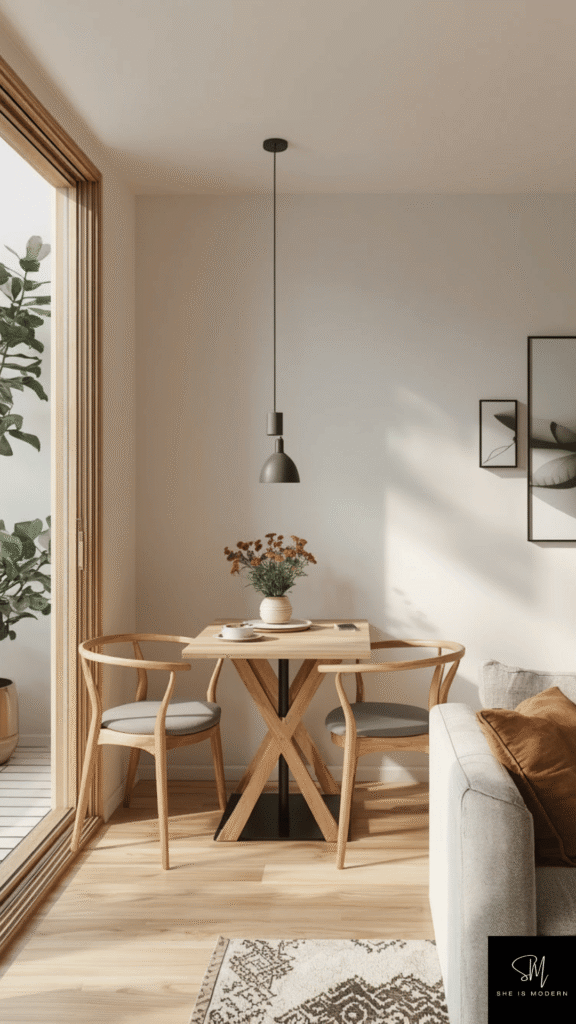
A compact corner dining setup is great for saving space in a combo room. Place a small table and chairs in a corner to create a dedicated dining zone. This keeps the center of the room open for the living area. It’s a smart choice for small homes or apartments.
The living space can then expand freely without feeling restricted. This layout improves movement and keeps everything organized. It also makes the room feel larger by using corners efficiently.
Choose a small table and lightweight chairs to keep the look clean. Add a small wall light or decor piece to define the dining corner. This idea is perfect for creating a practical and space saving combo layout.