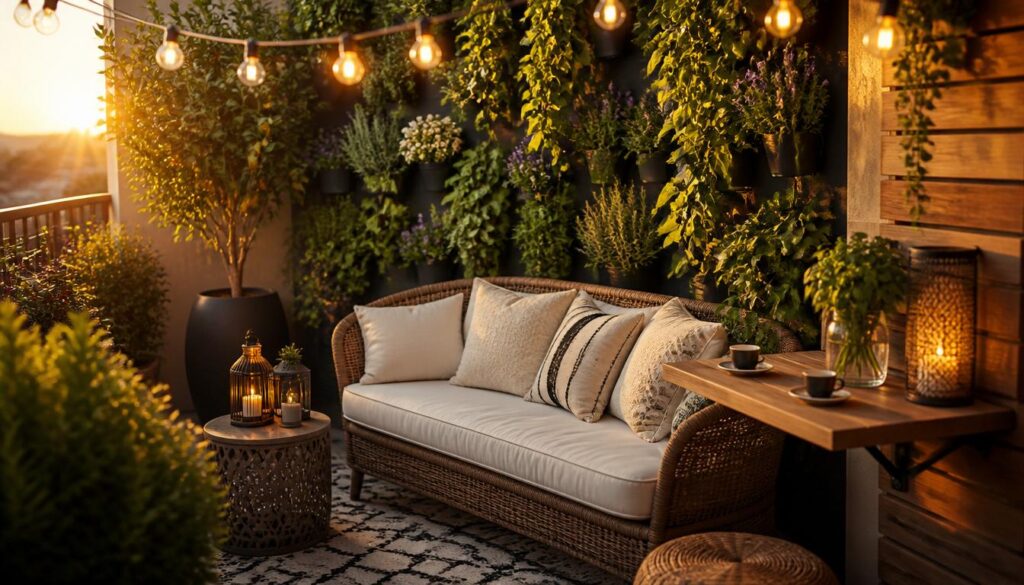
Having a small patio doesn’t mean settling for less. Some of the most stunning outdoor spaces I’ve ever seen were tiny — a narrow balcony turned into a lush retreat, a cramped concrete slab transformed into a cozy dining nook with string lights overhead. The size of your patio has almost nothing to do with how good it can feel. What matters is how you use every inch of it. And trust me, with the right ideas, even the smallest outdoor space can become your favorite spot in the entire home.
The trick is thinking smart — not just decorating, but designing. That means choosing furniture that works harder, plants that pull double duty, and lighting that completely changes the mood after sundown. Whether you’re renting and can’t make permanent changes, or you own your space and want a full transformation, there’s something here for every situation. I’ve tried many of these ideas myself, and I’ll tell you exactly what works and why. Let’s get into it.
1. Fold Down Wall Table — That Frees Up Floor Space
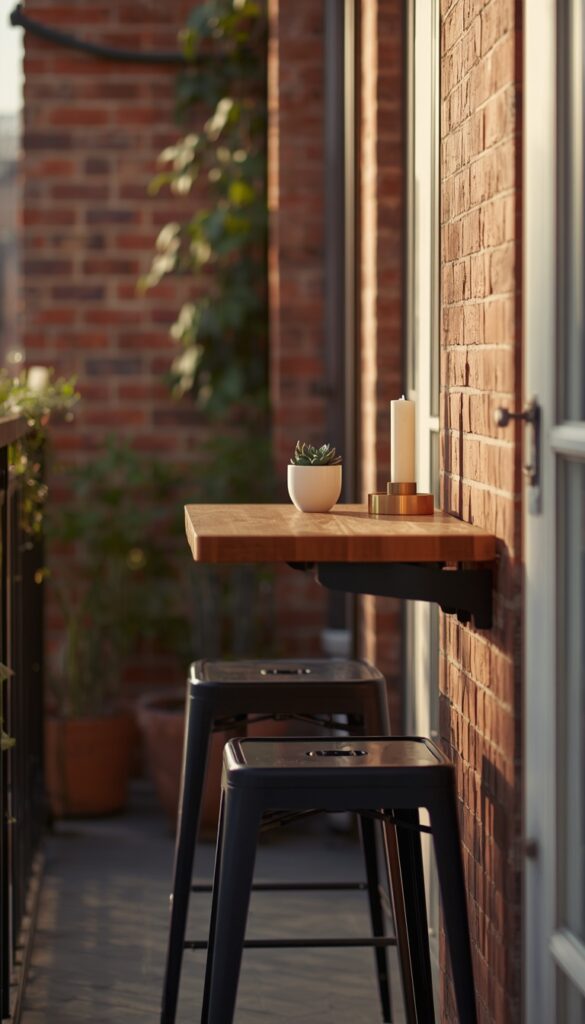
If floor space is your biggest challenge, a fold down wall table is honestly one of the smartest investments you can make for a small patio. Mount it at the right height and it becomes a breakfast spot, a cocktail station, or a place to set your coffee mug in the morning. When you’re done, fold it flat against the wall and suddenly your whole patio breathes again. I’ve seen these work beautifully on balconies as narrow as four feet wide — the difference is immediate and dramatic.
The key is choosing the right material. Teak and powder coated steel both hold up beautifully against weather and humidity. Avoid raw pine or MDF — they warp fast outdoors, even with sealant. Mount yours at counter height (around 36 inches) rather than standard table height if you want the option of bar stools, which take up far less visual space than traditional chairs. It makes the whole area feel more intentional and sleek.
Pair the table with two slim metal stools that tuck completely underneath when not in use. This setup gives you a functional dining or working surface without permanently dedicating floor space to furniture. Add a small potted succulent or a candle lantern on the table surface and it goes from functional to genuinely inviting. You’d be surprised how much living you can do at a fold down table on a tiny patio.
2. Vertical Garden Wall — That Doubles as a Privacy Screen

A vertical garden solves two problems at once — it gives you lush greenery and it creates a natural privacy screen without building a fence or asking your landlord for permission. On small patios, this is huge. You get the feeling of being enclosed in your own green sanctuary without any of the heaviness that a solid wall or tall fence would bring. The plants filter light beautifully, and the whole effect is soft and organic rather than constructed.
The best approach is using a modular pocket system — fabric or felt planters mounted on a wooden or metal frame. Fill the top pockets with trailing plants like string of pearls, pothos, or creeping jenny so they drape downward. Use mid level pockets for herbs like basil, thyme, and mint, which you’ll actually use in cooking. Put structural plants like small ferns or dwarf ornamental grasses in the bottom pockets for stability. This layered approach looks intentional and full, not random.
Maintenance is the honest conversation nobody has. These walls need consistent watering — the top pockets dry out faster than the bottom ones. A simple drip irrigation line running behind the frame solves this entirely and costs under thirty dollars to set up. Once it’s running, the garden practically takes care of itself. Water in the morning so the leaves dry before evening, which prevents mildew. A healthy vertical garden on a small patio will stop people in their tracks — it’s genuinely that impressive.
3. Curved Loveseat — That Softens a Boxy Patio Layout
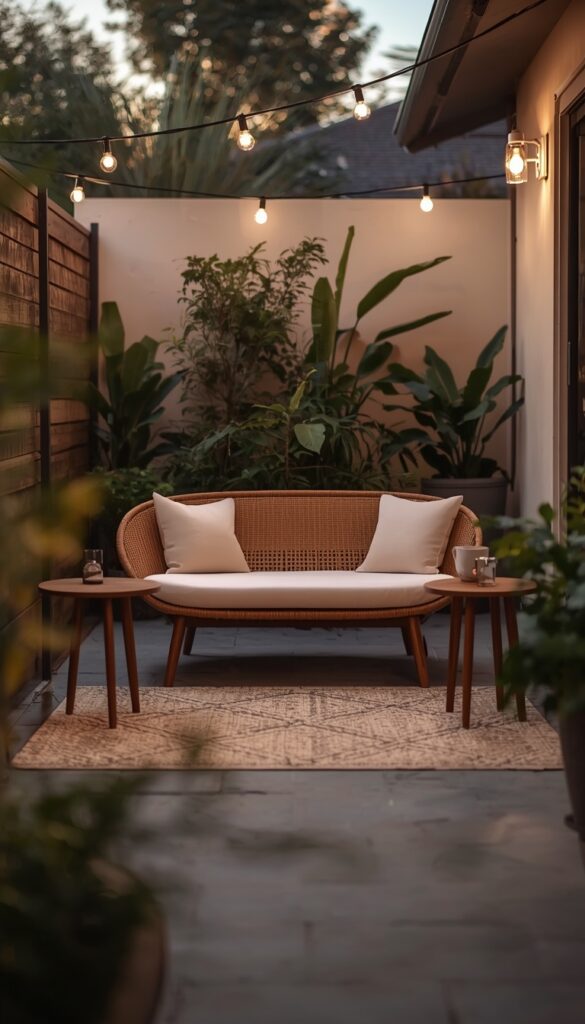
Most small patios are rectangular, and most small patio furniture is also rectangular — so everything ends up feeling like a storage unit rather than a living space. Breaking that rigid geometry with one curved piece changes the entire energy of the space. A curved loveseat or a small semi circular sectional introduces flow, makes movement around the patio feel natural, and creates a conversation friendly layout that rectangular furniture almost never achieves on its own.
Look for a curved loveseat with a low profile — pieces that sit under 30 inches tall keep sightlines open and make the patio feel larger. Wicker with a powder coated aluminum frame is the sweet spot: it looks beautiful, weighs little enough to move around easily, and holds up through seasons of rain and sun without rusting or cracking. Stick to neutral cushion covers in outdoor rated Sunbrella fabric — something in warm linen, cream, or natural beige will work with nearly any surrounding.
Anchor the loveseat with a small round side table on each end rather than one central coffee table. This opens up the walking path in front of the sofa and gives both people their own surface for drinks or books. If space allows, a narrow outdoor rug underneath defines the seating zone and grounds the whole arrangement. That one curved seat creates a destination — somewhere you actually want to sit, stay, and slow down. That’s the goal of any well designed outdoor space, no matter how small.
4. String Light Canopy — That Creates an Outdoor Ceiling
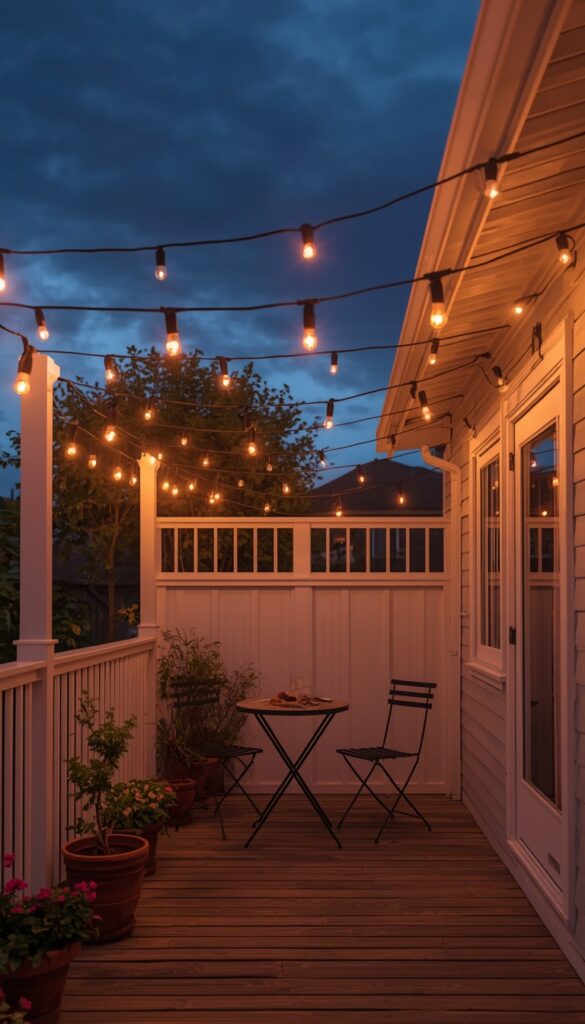
The single fastest way to make a small patio feel designed rather than neglected is overhead string lights. When you look up and see warm glowing bulbs strung above you, the patio suddenly feels intentional — like a space that was planned and loved. The light itself is everything. Soft Edison style bulbs at 2200K color temperature cast a golden warmth that makes people look good, food tastes better, and evenings feel longer. It’s not an exaggeration to say good string lights are transformational.
The installation matters a lot. Don’t just drape them loosely — that looks messy and unprofessional. Instead, anchor screw in cup hooks at the top of your fence posts or wall, then run the lights in parallel lines with about 18 to 24 inches between each strand. Pull them taut enough to stay straight but not so tight they stress the sockets. If your patio has no posts or walls, use two tall shepherd’s hooks planted in corner planters filled with concrete. This creates a freestanding canopy structure that needs no permanent installation.
For small patios, I always recommend warm white bulbs over multicolor — they create a cohesive, sophisticated look rather than something that feels festive but temporary. Go with a waterproof rated strand (IP65 or higher) and a timer plug so they come on automatically at dusk. The combination of the warm light, the gentle glow on surrounding plants, and that sense of being under an outdoor ceiling makes even the most basic patio feel like a restaurant terrace. Guests always comment on it first.
5. Raised Planter Bench — That Serves Two Functions
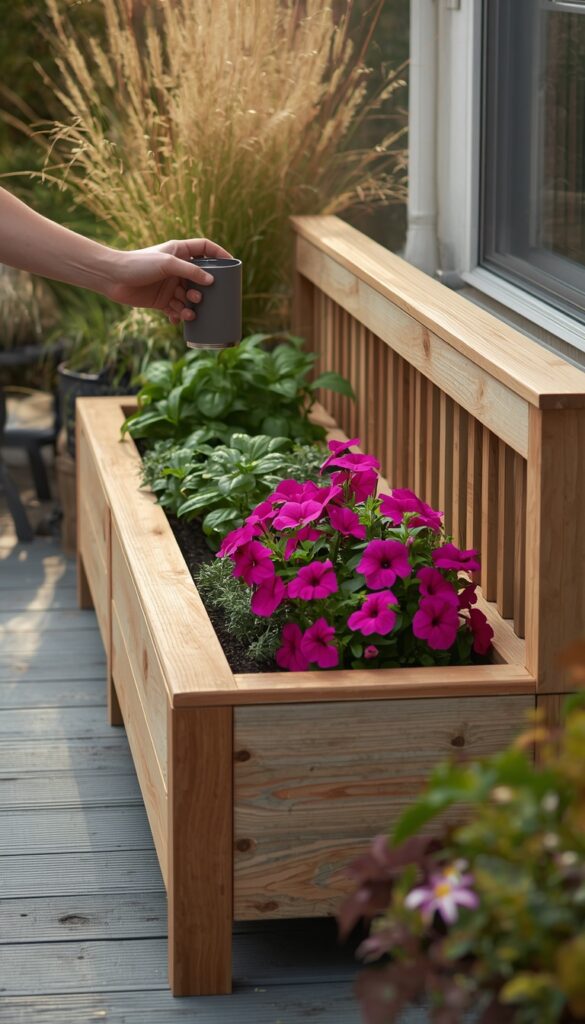
On a small patio, every piece should earn its place by doing more than one job. A raised planter bench — essentially a long planter box with a wide, flat top rail — does exactly that. The planter holds your flowers, herbs, or small shrubs along the perimeter of the patio. The wide top rail becomes seating. You get a garden border and extra seating without using any additional floor space. It’s one of the most efficient design moves you can make outdoors.
Cedar is the ideal material for a DIY version — it’s naturally rot resistant, holds paint and stain beautifully, and stays relatively lightweight. Build the box 18 to 24 inches high (a comfortable seat height) and 14 to 16 inches deep inside to give roots enough room for most herbs and annuals. The top rail should be at least 5 inches wide for comfortable sitting, and smooth sanded on the sitting surface to avoid snags. Seal the interior with a non toxic liner before filling with soil to extend the wood’s life significantly.
For planting, mix structural plants with soft trailing ones for the best visual effect. Ornamental grasses or small boxwood in the back give height and year round interest. Petunias, lobelia, or sweet alyssum in front will spill softly over the edge and add color from spring through fall. In the section closest to your grill or kitchen door, plant herbs — they’ll be close enough to grab while cooking. A planter bench along even one side of a small patio immediately makes the whole space feel more finished and considered.
6. Outdoor Daybed — With a Canopy Frame for Small Patios
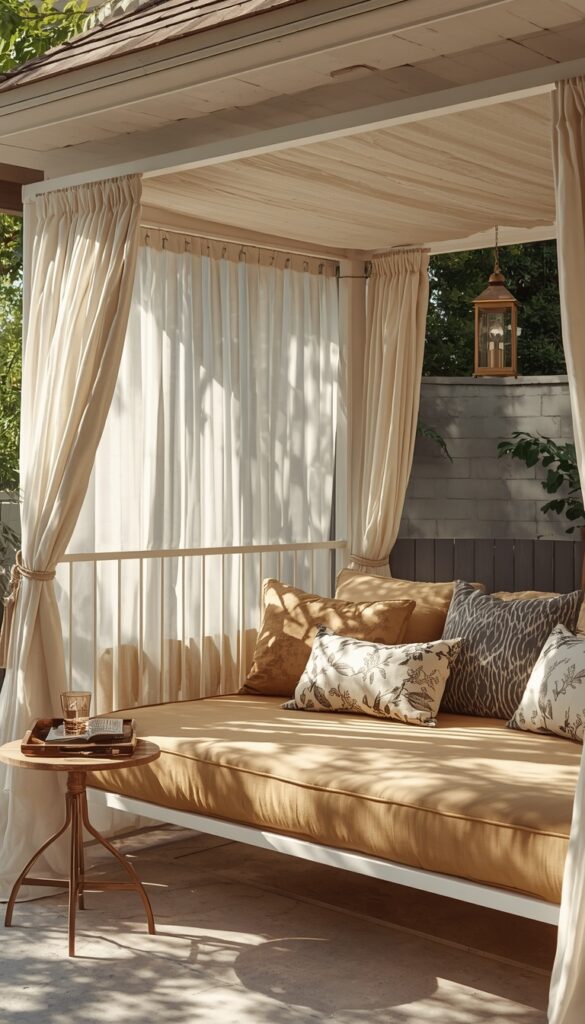
If you’re working with a slightly wider patio — even just eight feet across — an outdoor daybed with a canopy frame turns your outside space into something that feels almost resort-like. It’s an ambitious piece, but it delivers an outsized impact on the feel of the whole area. More than any other piece of furniture, a daybed signals that this space is for genuine relaxation, not just a place to set a few chairs and forget about. It changes how you actually use the space.
Choose a daybed with a simple, open canopy frame — four posts and a top rail, no fabric covering initially. Then hang outdoor curtain panels from the rail using clip rings. White, ivory, or sheer grey panels in outdoor polyester fabric filter harsh afternoon sun, provide privacy, and completely transform the mood. Tie them back during the morning when you want airflow and light, and draw them closed on hot afternoons or evenings when you want that cocooned, private feeling. The flexibility is part of what makes it so satisfying.
Bedding selection is critical outdoors. Use a base cushion rated for outdoor use — look for quick dry foam with a water resistant cover in a tight weave. Layering with indoor style throw pillows in outdoor fabrics (Sunbrella makes beautiful printed options) adds the visual richness of an interior bedroom with the durability needed outside. A small wooden tray table beside the daybed, a hanging lantern on the canopy frame, and you have an outdoor space that’s genuinely worth spending hours in — even on a 10 by 10 patio.
7. Mirrored Fence Panel — That Visually Expands Your Patio
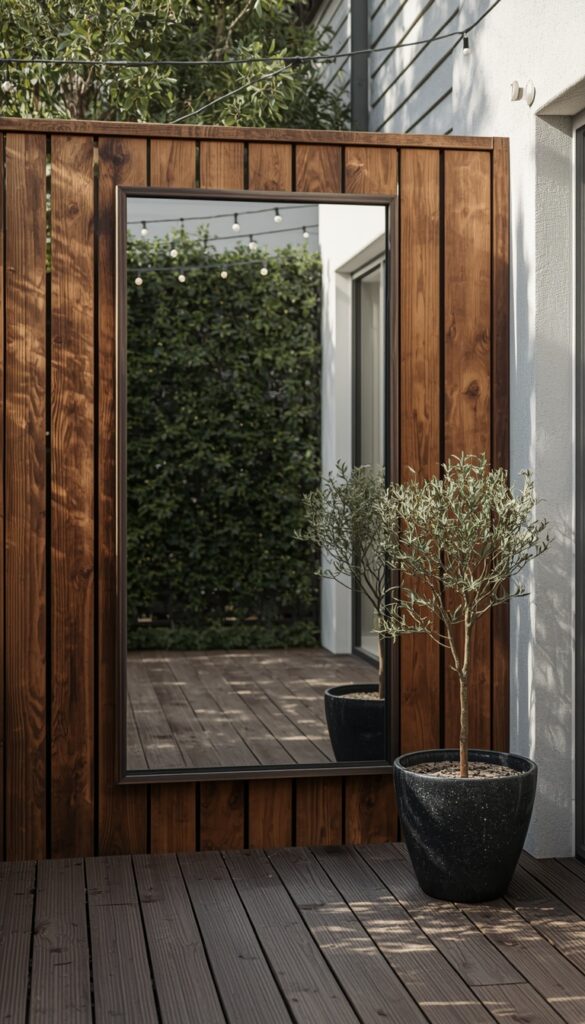
Interior designers use mirrors to make small rooms feel twice the size — and the same principle works beautifully outside. A large mirrored panel or a series of smaller outdoor rated mirrors mounted on a fence or wall bounces light around the patio, reflects the greenery back at you, and creates a genuine sense of depth in a space that might only be a few feet deep. It’s a visual trick that never gets old, and it costs far less than actually expanding your patio.
You need an outdoor specific mirror for this — standard interior mirrors will fog, corrode, and eventually shatter from moisture and temperature changes. Look for acrylic mirror panels or stainless steel backed mirrors rated for outdoor use. Frame them in teak, cedar, or powder coated metal to add visual weight and protect the edges from moisture penetration. A single large panel (think 24×36 inches or bigger) makes more impact than several small ones. Mount it at a slight upward angle, about five degrees — so it reflects sky and plants rather than just the fence opposite.
Position the mirror where it will capture your best view — ideally a planter, a flowering wall, or a garden view beyond the patio. When you sit in your outdoor seating and look at the mirror, you should see something beautiful reflected back. In a small patio with a vertical garden on one wall and a mirror on the opposing wall, the effect is genuinely stunning — the greenery seems to extend infinitely. Add a lantern or string light nearby and the mirror captures the glow at night too. It’s a designer move that works every single time.
8. Compact Bistro Set in a Corner for Al Fresco Dining
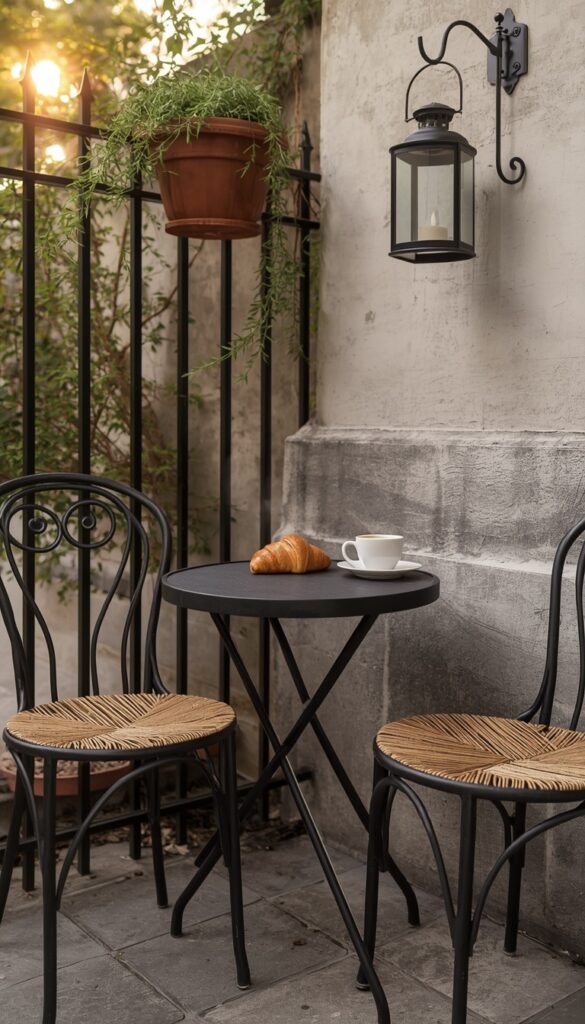
There is something deeply satisfying about a corner bistro setup done right. Two chairs, one small round table, positioned neatly in a corner where two fence panels or walls meet — it’s economical with space, looks intentional and Parisian, and creates a dedicated dining spot without dominating the patio layout. The corner placement is the genius of it. You’re using what is usually wasted, dead space and turning it into the most charming spot on the whole patio.
The table size matters enormously here. Go with a 24 inch round table — anything larger quickly becomes awkward in a corner. Cast iron looks beautiful but it’s very heavy to move when you need to. Instead, look for powder coated steel or aluminum with a mesh top, which allows rain to pass through without pooling and won’t add excessive weight. The chairs should have a slim profile — traditional café chairs with a curved metal back and woven seat are perfect. They’re comfortable enough for a full meal and stack easily when you need the space.
Style the corner with intention. A small wall mounted planter above the table, a candle lantern hanging from a hook on the fence, and a tiny potted topiary on the table surface make the whole setup feel curated. If the corner gets afternoon shade, it becomes your reading corner. If it catches the morning sun, it’s your coffee spot. A bistro corner on a small patio is one of those additions where you immediately wonder why you didn’t do it sooner — it gives the whole outdoor space a sense of purpose and romance that’s hard to achieve any other way.
9. Built In Storage Bench — That Hides Patio Clutter
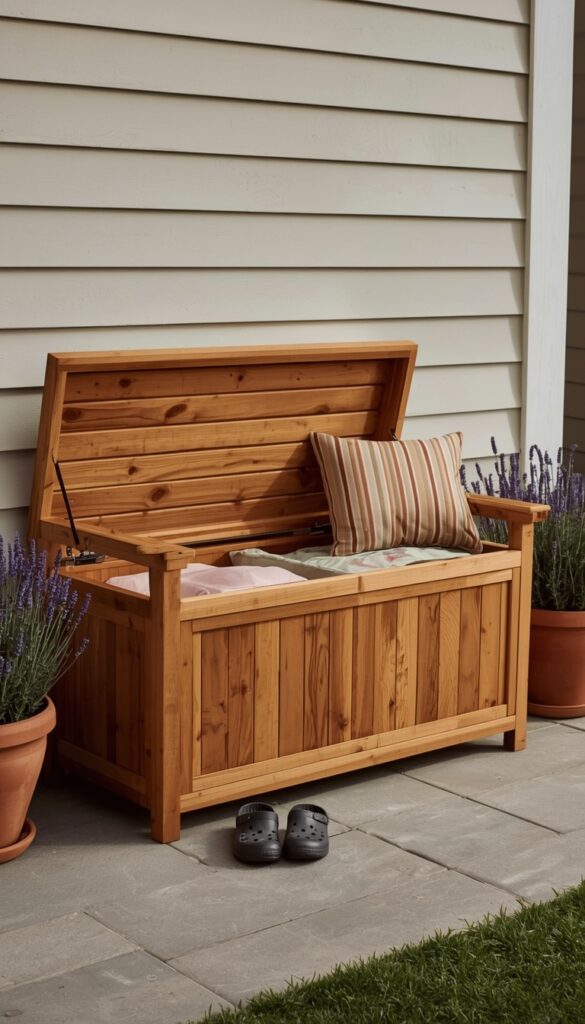
Clutter is the number one enemy of a small patio. Cushions, gardening tools, extra pots, throws, toys, hoses — they all need somewhere to go, and without storage, they end up scattered across the patio making it feel chaotic and cramped. A built in or freestanding storage bench solves this problem completely while also adding seating. The seat lifts to reveal storage inside, keeping everything hidden and the patio visually clean. Its functional design is at its most satisfying.
For a freestanding option, look for a deck box designed as a bench — Keter and Lifetime both make excellent products in the 60 to 100 gallon range that are UV resistant, won’t rust or rot, and come with hinged lids rated to hold seated weight. Cedar storage benches look more refined and can be custom built to fit a specific wall length, which makes them look truly built in. Add a cushion on top and they become an actual comfortable seat, not just a storage box with a place to perch uncomfortably.
The trick with storage benches is using them strategically, not just stuffing everything inside randomly. Use waterproof bags or small bins inside the box to organize categories — one for cushions, one for garden tools, one for candles and lanterns. This way, the bench stays functional rather than becoming another junk drawer. Positioned along the back or side wall of your patio, a storage bench keeps the center floor clear, which makes even the smallest patio feel open, airy, and genuinely lived in rather than overrun with stuff.
10. Hanging Chair — That Replaces a Full Seating Set
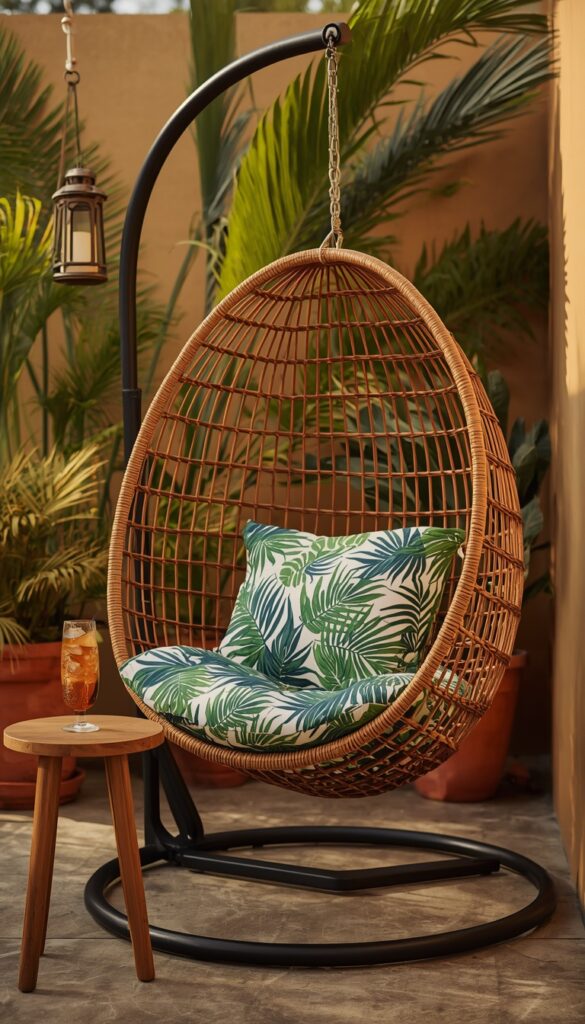
A hanging egg chair or a hammock chair takes up a fraction of the floor space of a sofa or lounge chair, yet it delivers more “wow factor” than almost any other single piece of outdoor furniture. People are drawn to them immediately — there’s something about a suspended seat that feels playful and luxurious at the same time. On a small patio where a full seating group would feel cramped, one well chosen hanging chair does the heavy lifting of the entire seating area with elegance and ease.
Installation is simpler than most people think. A heavy duty ceiling mount or a freestanding hanging chair frame — available for around $80 to $150 — handles the job cleanly. If you have a solid overhead beam, pergola rafter, or concrete ceiling on a covered patio, a threaded eye bolt rated for at least 300 pounds is all you need. For open patios without overhead structure, the freestanding frame is your best option. Wicker egg chairs are the classic choice — they look beautiful, feel enclosed in a cozy way, and are durable with proper weatherproofing spray each season.
Style it with a thick outdoor cushion in a bold print — this is the one place on a small patio where a pattern really works. A side table beside the chair keeps drinks or a book within reach. Hang a small lantern from the same mounting point at a slightly different height for a layered, styled look. A hanging chair makes the act of sitting outside feel like an event rather than an afterthought. On those evenings when you just want to swing gently with a drink in your hand, no other piece of furniture comes close.
11. Potted Citrus Tree — That Adds Structure and Scent
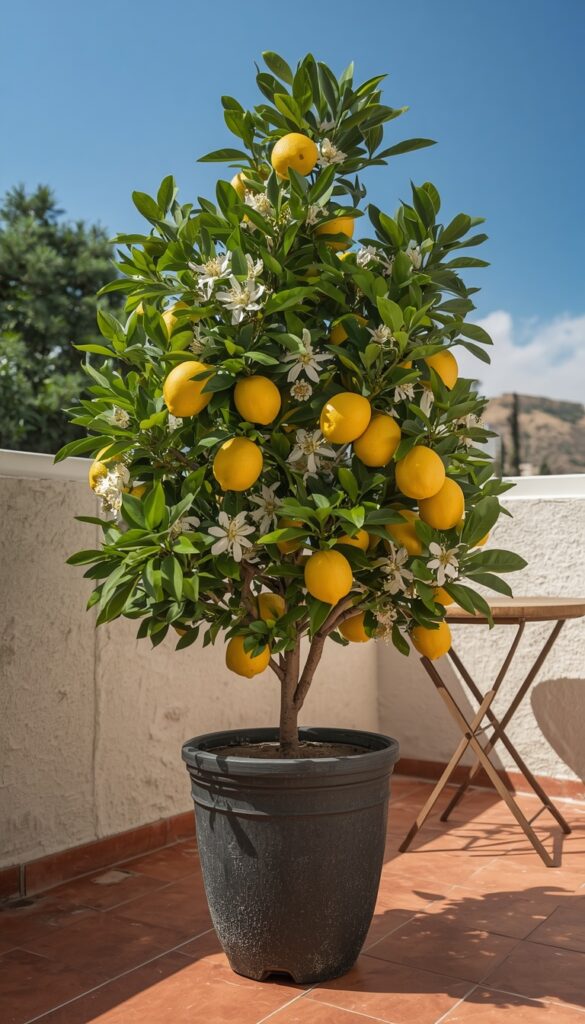
A single potted citrus tree, a dwarf Meyer lemon, lime, or kumquat — does something for a small patio that no other plant quite manages. It provides vertical structure, seasonal fragrance, edible fruit, glossy evergreen foliage, and a sculptural focal point all in one container. Compared to the random collection of small plants that most small patios end up with, one well placed citrus tree in a large pot brings a sense of design coherence and maturity that elevates everything around it.
Container choice is as important as plant choice. Go with a large ceramic or fiberglass pot — at minimum 18 inches wide and 18 inches deep for a dwarf citrus tree. Fiberglass is actually the smarter choice outdoors because it insulates roots better, weighs far less than ceramic, and won’t crack in freeze thaw cycles. Choose a pot in a neutral color — charcoal, ivory, or terracotta — that complements your furniture and doesn’t fight for attention. The tree itself will provide all the visual drama you need.
Citrus trees do need full sun at least six hours daily — so position accordingly. They also need well draining potting mix, not standard garden soil, and regular feeding with a citrus specific fertilizer in spring and summer. The honest reality is that container citrus needs attention. But when a Meyer lemon tree is heavy with yellow fruit on your patio in December, or when the blossoms open in spring and fill the whole outdoor space with that extraordinary sweet fragrance, every bit of the effort feels completely worth it. It’s a living decoration that rewards you in every season.
12. Outdoor Rug — That Zones and Anchors a Small Patio
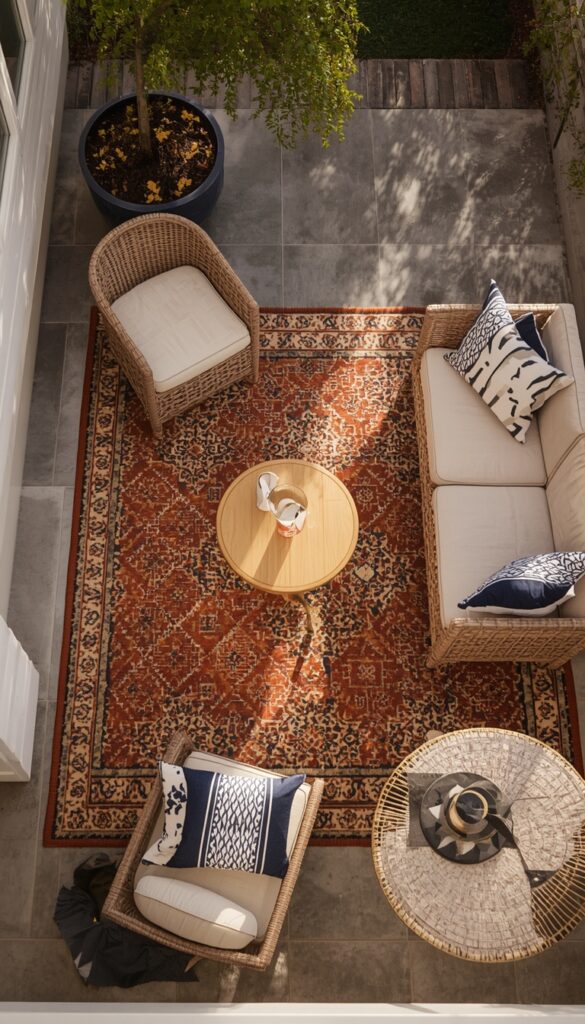
An outdoor rug is one of the lowest cost, highest impact changes you can make to a small patio — and it’s consistently the most underused tool. The right rug defines the living area, softens the hard floor, adds color and pattern, and makes the whole patio feel deliberate and furnished rather than bare and unfinished. It does the same job for an outdoor space that an area rug does for a living room: it says “this is a designed space where someone actually lives.”
The sizing rule is the same outdoors as indoors — go bigger than feels intuitive. On a small patio, the instinct is to buy a 4×6 rug to keep things proportional. But a 6×9 or even an 8×10, depending on your space, will make the patio feel dramatically larger and more cohesive. At minimum, the front legs of all your furniture should sit on the rug. Ideally, all furniture legs are fully on the rug. This creates a unified “room” rather than furniture floating on bare concrete. The visual difference is remarkable.
For material, polypropylene outdoor rugs are the clear practical winner — they’re UV stable, fully waterproof, easy to hose clean, and increasingly available in beautiful patterns. Moroccan tile prints, bold stripes, and geometric patterns all look stunning outside and add personality without requiring much else to change. Avoid natural fiber rugs like jute or sisal outdoors — they mold quickly and deteriorate in one season of rain. A good polypropylene rug in the right size and pattern is honestly one of the best investments you can make in a small patio’s style.
13. Wall Mounted Herb Garden for a Functional Patio Feature
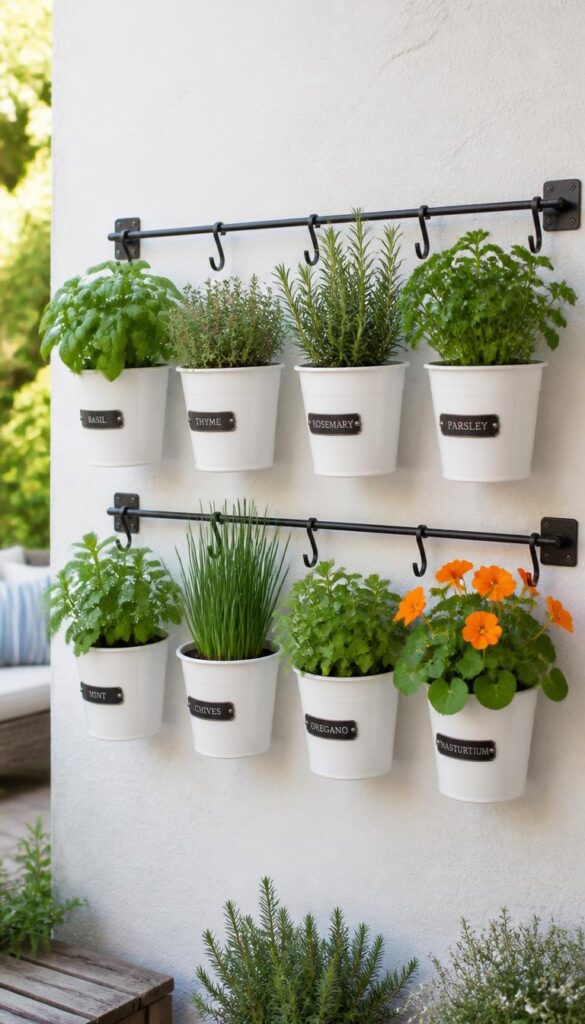
A wall mounted herb garden is the kind of patio feature that people stop and study when they first see it. There’s something about a tidy grid of small pots — each labeled, each thriving, each offering something you can actually cook with — that feels both beautiful and genuinely purposeful. It transforms a plain fence or exterior wall into an intentional, living feature and adds layers of texture, green, and fragrance that flat surfaces simply can’t offer on their own.
The most reliable system is a horizontal rail mounted to the wall with individual pot clips or hooks — the type where each pot clips onto the rail at adjustable spacing. This lets you customize the layout, swap out plants seasonally, and bring individual pots inside during cold snaps without dismantling the whole system. Use matching terracotta or white ceramic pots for a clean, cohesive look. Label each herb with a small chalkboard stake or an embossed metal tag — it adds a polished, editorial quality that makes the whole wall feel designed.
Plant selection should be practical first, beautiful second. Basil, rosemary, thyme, flat leaf parsley, and chives are the core herbs that most home cooks actually use. Add mint in its own dedicated pot — it spreads aggressively in shared soil but is perfectly contained on its own. Nasturtiums or edible violas tucked in at the ends add a pop of color and are genuinely edible as salad garnishes. Water in the morning, trim regularly to encourage bushy growth rather than leggy bolt, and feed monthly with a diluted liquid fertilizer. A thriving herb wall is a living piece of art that also makes you a better cook.
14. Tiered Plant Stand — That Builds Vertical Interest
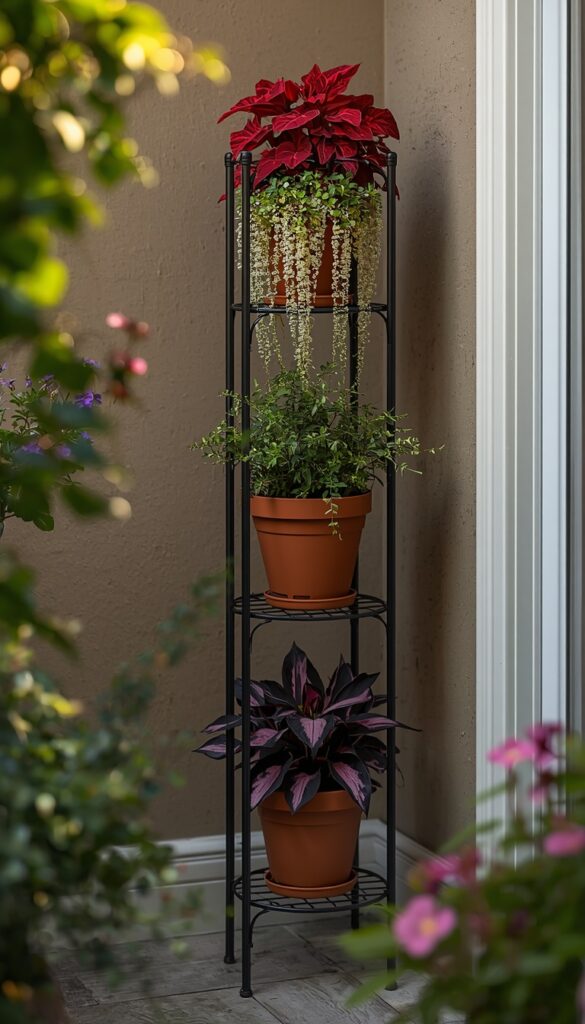
When horizontal floor space is limited, the natural solution is to build upward — and a tiered plant stand does this more elegantly and affordably than almost any other vertical option. A well styled three or four tier stand filled with plants of varying heights, textures, and colors creates a genuine garden feel in a small footprint. Instead of a flat collection of pots spread across the floor, you get a lush, layered plant display that draws the eye upward and makes the patio feel full and green without feeling cluttered.
Material matters for longevity outdoors. Powder coated iron or steel stands hold up beautifully in all weather — just check that every weld point is coated, as raw metal at joints will rust within a season. Bamboo and teak wooden stands look gorgeous but need teak oil or sealant applied annually to stay in good condition. Avoid cheap painted pine stands — the paint bubbles and peels and the wood warps in moisture within one summer. For a permanent outdoor setup, metal is the most reliable and ultimately the most cost effective choice.
For the actual plant styling, think of contrast — pair bold, large leafed plants like caladium or elephant ear with delicate trailing plants like string of pearls or ivy on the lower levels. Add at least one plant with strong color — a bright begonia, a deep purple heuchera, or a vivid coleus — to give the eye a place to land. Odd numbers work better visually than even ones: three, five, or seven pots look more natural than four or six. Water the top tier daily in summer as it dries fastest. A tiered stand in the right corner can completely transform the mood of a small patio in one afternoon.
15. Solar Lantern Cluster — for Warm Ambience Without Wiring
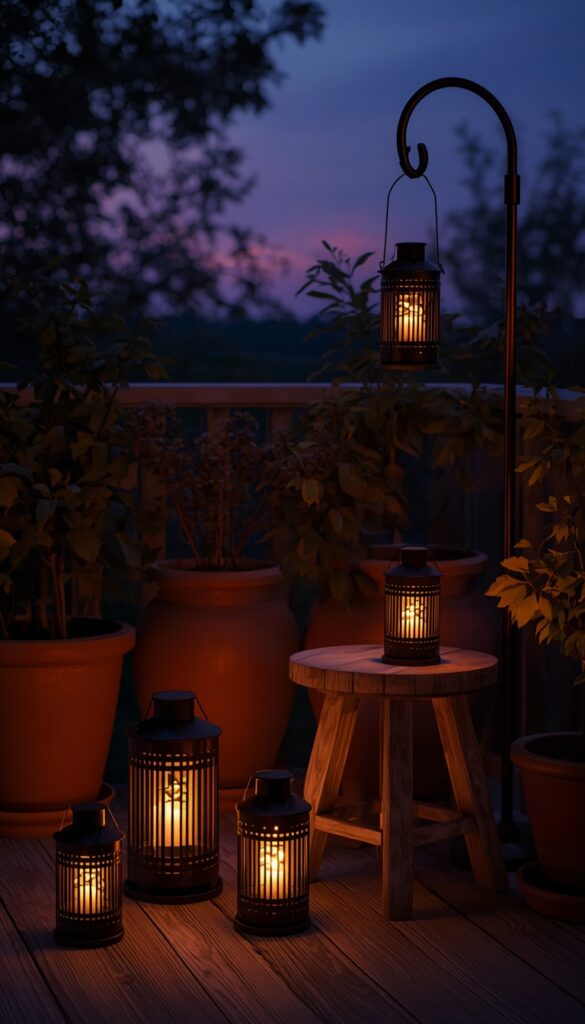
Lighting transforms a small patio more than almost anything else, but running electrical wire outdoors involves permits, costs, and in rental spaces — impossible restrictions. Solar lanterns solve every one of those problems. Modern solar lanterns are genuinely beautiful now — the technology has improved dramatically in recent years — and clustering several together creates a warm, layered ambience that feels intentional and stylish rather than makeshift. No outlets, no wiring, no electrician. Just light, right where you want it.
The key to making solar lanterns look designed rather than accidental is clustering. A single lantern on a table looks like an afterthought. Three or five lanterns grouped together at varying heights — some on the floor, one on a side table, one hung from a hook — create a genuine vignette. Mix lantern shapes within the same material family for the best effect: a tall cylindrical lantern, a traditional square one, and a small round one all in brushed metal or black iron look cohesive and intentional. Avoid mixing metal finishes widely — stick to one metal tone throughout the cluster.
Placement is everything. Put the solar panel side of each lantern where it gets at least six hours of direct sun during the day. Most quality solar lanterns — brands like Maggift, TomCare, or Brightech make consistently good products — run for eight to ten hours on a full charge. Position them where you spend evenings: near the seating area, flanking the dining spot, or lining the path to the back door. Warm white light at 2700K is the most flattering and atmospheric — it makes your patio glow like candlelight long after the sun goes down, which is exactly the magic you want on a warm evening.
Conclusion
Small patios are honestly some of the most rewarding spaces to design because every single decision counts. When you can’t rely on square footage to fill a space, you have to be clever, intentional, and creative — and that process almost always produces something more personal and beautiful than a large patio casually furnished. From the fold down table that gives you back your floor to the solar lantern cluster that transforms your evenings, every idea in this article is built on the same principle: make every inch matter. Pick two or three ideas that speak to your lifestyle and start there. Your ideal small patio is closer than you think, go make it happen.
FAQs
Q: What furniture works best for a very small patio? A: Fold down tables, slim bistro sets, and hanging chairs are your best friends on a tiny patio. They perform their function fully but take up minimal floor space when not in use. Look for pieces that can tuck against walls or stack easily — flexibility is more valuable than style alone when square footage is genuinely limited.
Q: How do I make a small patio feel bigger? A: Use a large outdoor rug to define and ground the space, hang string lights overhead to draw the eye upward, and add a mirrored panel to bounce light and create visual depth. Keeping the center floor area clear of clutter and using furniture with slim profiles also makes a dramatic difference in how open a small patio feels.
Q: What plants are best for a small patio in containers? A: Dwarf citrus trees, herbs, trailing petunias, ornamental grasses, and ferns all thrive in containers and suit small patios beautifully. Choose plants that match your sunlight conditions first — even the most beautiful plant will struggle and look bad in the wrong light. Mix heights and textures for a garden that feels lush rather than sparse.
Q: How do I add privacy to a small patio without building a fence? A: A vertical garden wall is the most beautiful and functional solution — it creates a natural green screen that softens the space while providing real privacy. Tall container plants like bamboo, ornamental grasses, or climbing vines on a trellis also work well. For instant privacy with no maintenance, outdoor curtain panels on tension rods are a surprisingly elegant option.
Q: What is the best outdoor rug size for a small patio? A: Go bigger than feels instinctive. For most small patios, a 6×9 rug creates a far better result than a 4×6, because it grounds all the furniture together into one cohesive zone. The front legs of every furniture piece should sit on the rug at minimum. In polypropylene material, larger rugs are still affordable and will completely change how finished your patio looks.
Q: How do I light a small patio without electrical outlets? A: Solar lanterns clustered at varying heights are the most stylish and practical solution. Modern solar options run eight to ten hours on a full charge and come in genuinely beautiful designs. Battery operated string lights are another excellent option — they look identical to wired versions and are fully weatherproof. Position both types where they receive direct sun during the day for the best performance at night.
Q: Can I create a garden on a small concrete patio? A: Absolutely — and it’s easier than most people expect. Vertical pocket gardens, tiered plant stands, wall mounted herb rails, and large statement container plants like dwarf citrus trees all deliver genuine garden impact without needing any ground soil at all. A combination of a vertical garden wall and a tiered plant stand in one corner can make a concrete patio feel completely surrounded by greenery.
Q: What is the easiest small patio upgrade with the biggest impact? A: String lights, without question. A warm white string light canopy installed overhead transforms the feel of a small patio in one afternoon and costs very little. The second biggest impact for the least effort is an outdoor rug in the right size. Together, these two changes alone make even the most basic patio feel designed, warm, and genuinely worth spending time in.