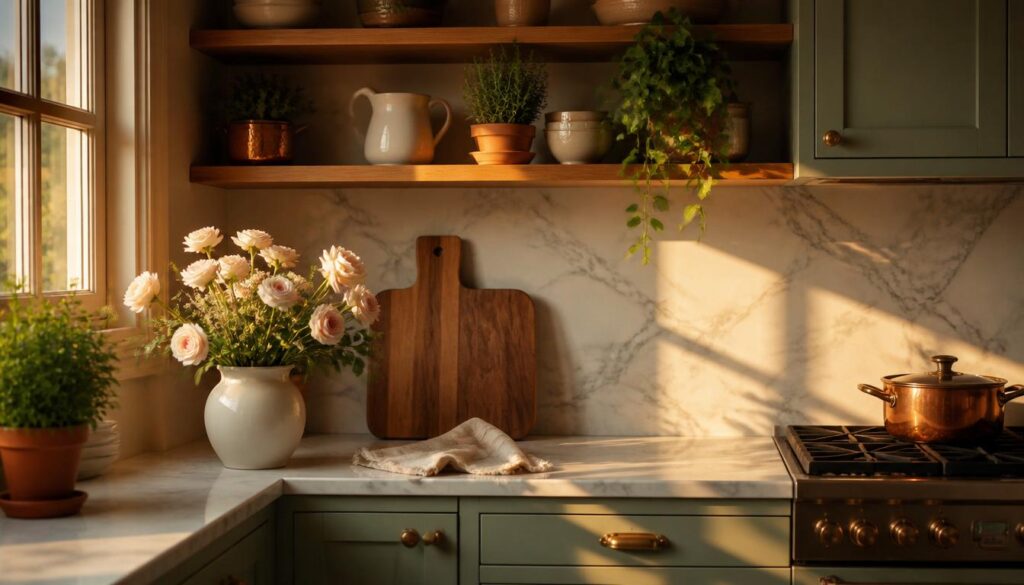
Sage green is having a serious moment in kitchen design and honestly, it deserves every bit of the attention. There’s something almost magical about this color. It’s soft without being timid. It’s earthy without feeling heavy. When you walk into a sage green kitchen, there’s an immediate sense of calm that hits you before you even notice the cabinets. It bridges the gap between modern and traditional effortlessly, which is exactly why so many homeowners are choosing it over the more predictable whites and grays that dominated the last decade. If you’ve been on the fence about committing to color in your kitchen, sage green is the one that will make you wonder why you waited so long.
What makes sage green even more exciting is how well it plays with other elements — warm wood tones, brushed brass hardware, creamy linen, aged terracotta. This isn’t a color that demands you build everything around it. Instead, it quietly ties a whole room together. Whether you’re planning a full renovation or just refreshing a few cabinets, these fourteen ideas will show you exactly how to use sage green in ways that feel intentional, beautiful, and genuinely livable. Every idea here comes from real styling experience and a genuine love of kitchens that feel like home.
1. Sage Green Lower Cabinets with Crisp White Uppers
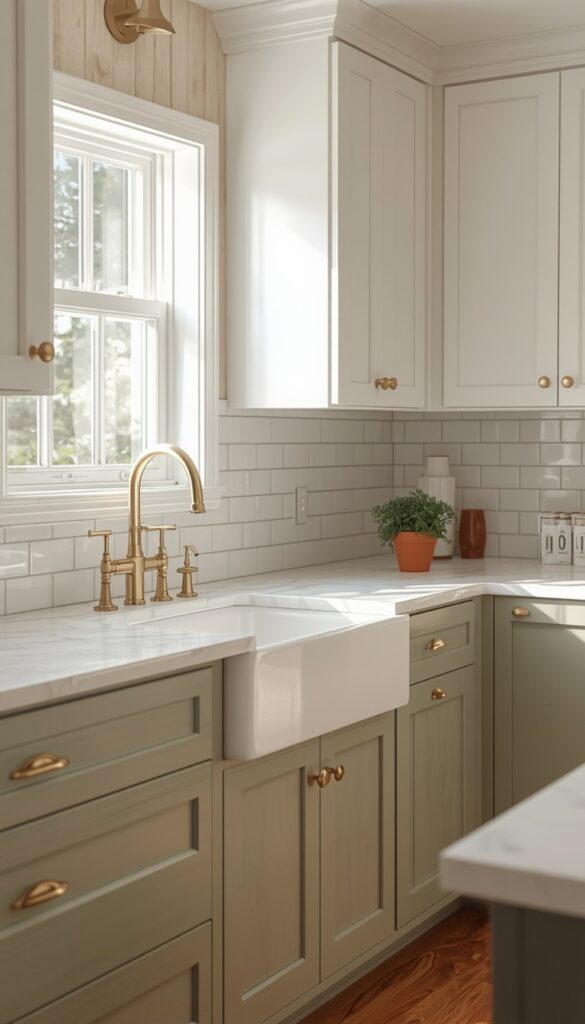
One of the most balanced ways to introduce sage green into your kitchen is by keeping it on the lower cabinets only. This split approach grounds the room with color while keeping the upper half light and airy. The contrast is subtle but incredibly effective — the sage anchors the space visually while the white uppers prevent it from feeling enclosed. It’s the kind of combination that works in both small galley kitchens and large open plan spaces. If you’re nervous about going full color, this is the perfect entry point that still delivers serious design impact.
The key to making this look polished is choosing the right white for the uppers. A warm white or off white works far better than a stark, cool white because sage green carries warm undertones. Brands like Farrow & Ball’s “All White” or Benjamin Moore’s “White Dove” pair beautifully with sage tones without creating a jarring contrast. The warmth keeps everything cohesive. Add in shaker style doors on both upper and lower cabinets, and you’ve got a timeless kitchen that feels curated rather than trendy. It reads as a genuinely thoughtful design.
For hardware, brushed brass or unlacquered brass pulls are the ultimate finishing touch on this combination. They pick up the warm undertones in the sage and tie the upper and lower sections together visually. If brass feels too bold for you, try aged bronze — it has a similar warmth without the shine. Keep your countertop in a warm white marble or butcher block to carry the two tone theme all the way through. Step back and you’ll see a kitchen that feels layered, considered, and completely lived in. It photographs beautifully too, which never hurts.
2. Full Sage Green Cabinetry for a Bold, Unified Look
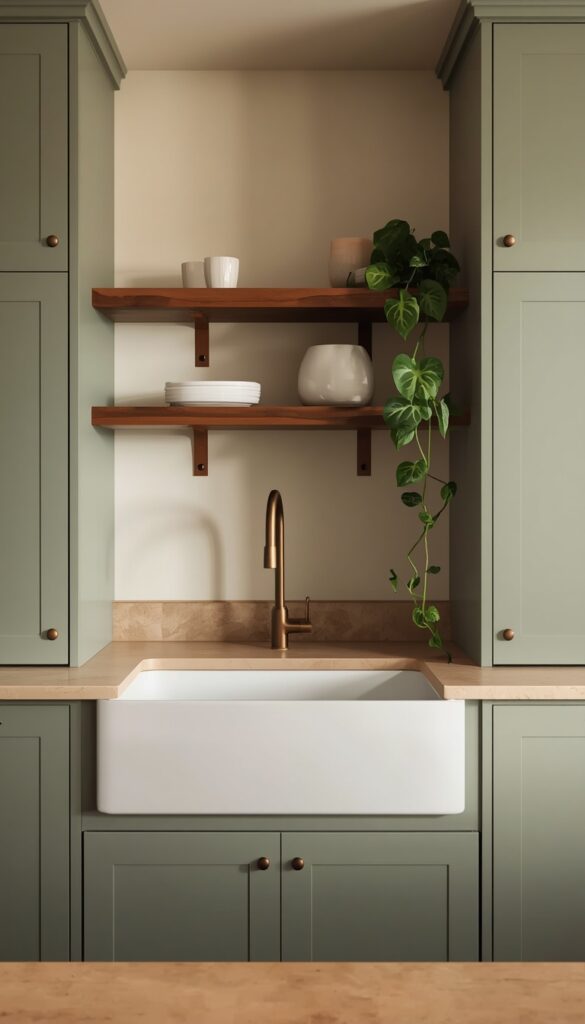
Going all in with sage green on every cabinet takes confidence — and the results absolutely justify it. When you commit to the color fully, the kitchen transforms into something that feels genuinely designed rather than assembled. The room gains a personality that white kitchens simply can’t match. Full sage green cabinetry works especially well in kitchens with good natural light, where the color can shift subtly throughout the day, looking almost silvery in morning light and deeper and richer as the afternoon sun moves through. That kind of life in a color is what makes it so compelling.
The biggest concern people have with full color cabinetry is that it will feel overwhelming or dated quickly. Sage green sidesteps both of those fears. Its gray green balance means it reads as a neutral in most lighting conditions. It doesn’t demand attention the way navy or forest green might. Instead, it creates an atmosphere — quiet, natural, grounded. Pair it with a simple white or light gray wall color and let the cabinetry be the statement. The room will feel cohesive without feeling monotonous. Keep the upper walls light to prevent the space from closing in.
Countertop choice becomes especially important with full sage green cabinetry. Leathered quartzite in a warm beige or a honed Calacatta marble creates the right kind of contrast — luxurious but not cold. Avoid polished black granite, which can feel too stark against sage. A wood open shelf or two breaks up the expanse of painted cabinet fronts and adds that essential organic warmth. Small touches like terracotta pots with fresh herbs or a natural linen runner on the countertop keep the whole room feeling like a real, breathing kitchen rather than a showroom.
3. Sage Green Island as the Kitchen’s Star Piece
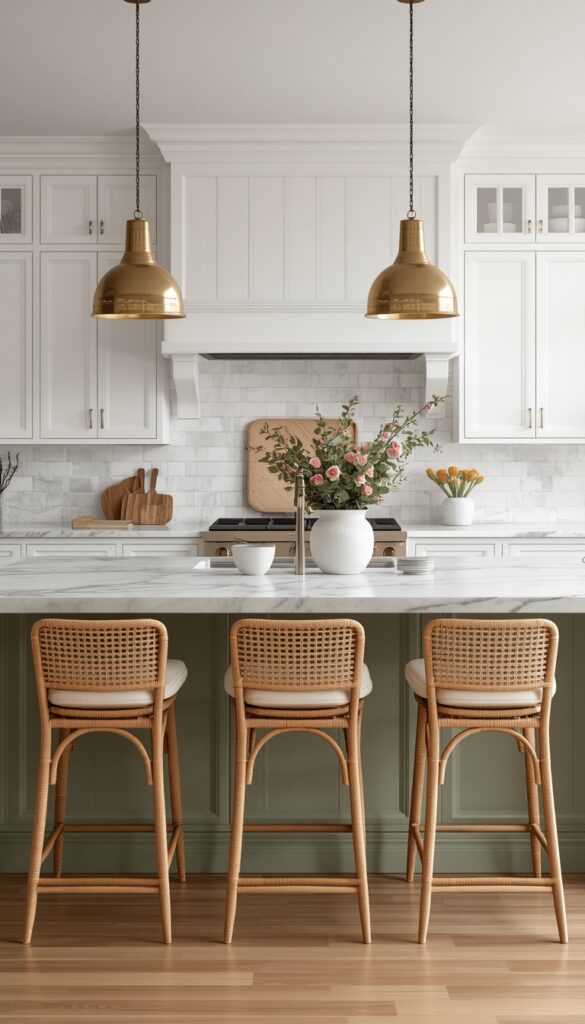
If you love the idea of sage green but aren’t ready to repaint every cabinet, the kitchen island is the smartest place to start. An island in sage green against white or neutral perimeter cabinets creates an immediate focal point that looks completely intentional. It’s the design equivalent of a statement accessory — one bold choice that elevates everything around it. Islands have enough visual real estate to carry a color beautifully, and because they’re freestanding, the color reads as a piece of furniture rather than a wall of color, which feels less permanent and more playful.
The most successful sage green islands pair the color with a contrasting countertop. Thick white marble with bold veining is the classic choice, and for good reason — the drama of the stone against the quietness of the sage is genuinely striking. Butcher block is a warmer alternative that leans into the earthy, natural quality of the color. If you prefer a cleaner, more modern look, a concrete or quartz surface in warm greige works extremely well. Whatever you choose, go for a countertop that has some visual weight — thin or delicate surfaces can look a little underwhelming on a statement island.
Seating around a sage green island is where you can have real fun. Natural rattan counter stools with cushioned seats bring in organic texture that echoes the green’s earthy tone. White painted wood stools keep things clean and contrast nicely. If you want something a bit more unexpected, try saddle style leather stools in camel or cognac — the warm leather against the sage is a combination that feels almost effortlessly chic. Hang a set of statement pendants directly above, ideally in aged brass or hand blown amber glass, and you’ve built a kitchen centerpiece that people will comment on every single time they visit.
4. Sage Green Cabinets with Warm Wood Open Shelving
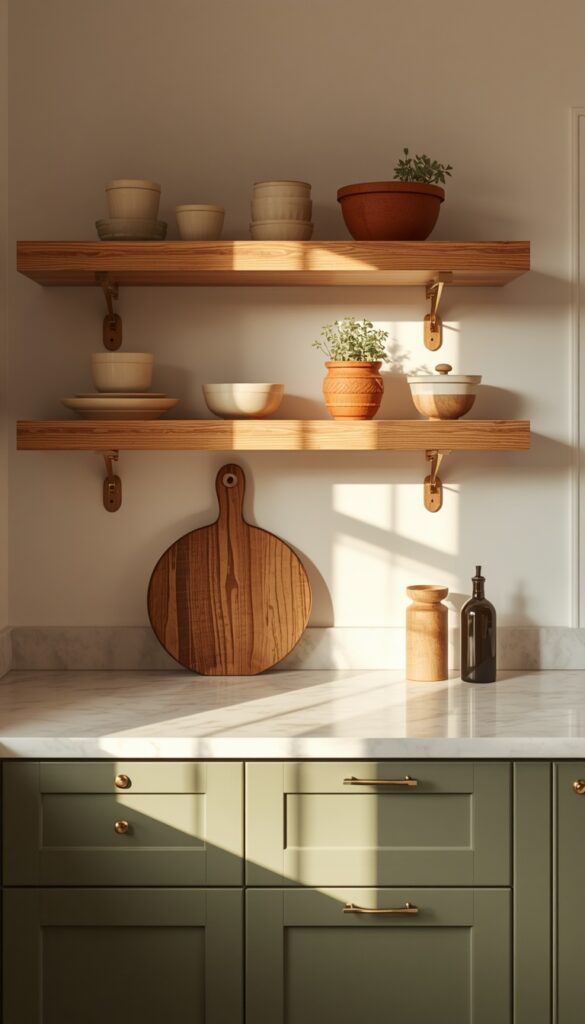
Mixing sage green painted cabinets with open wood shelving is one of the most organic, layered looks you can create in a kitchen. The combination feels collected rather than matched — like a space that was built thoughtfully over time. Open shelving in a warm walnut or white oak above sage lower cabinets creates depth and visual breathing room. It breaks up the painted surfaces beautifully and gives you a chance to style the space with personality. This look lands somewhere between Scandinavian minimalism and warm farmhouse — a combination that has remarkable staying power.
The wood you choose makes a significant difference in the overall mood. Light oak or ash wood keeps the palette feeling fresh and contemporary. Darker walnut adds richness and contrast that can feel more sophisticated and grown up. Reclaimed or live edge wood brings a rustic, one of a kind quality that’s hard to replicate with anything else. Whatever species you pick, make sure the finish complements the undertones in your sage green paint. Warm toned greens pair best with honey colored woods. Cooler, grayer sages sit better alongside lighter, more neutral wood tones. Getting this pairing right makes the whole room feel harmonious.
Styling the open shelves is genuinely half the pleasure of this design. Stack white or cream ceramics for a clean, intentional look. Mix heights — a tall olive oil bottle next to a short stack of handmade bowls creates natural visual rhythm. Add trailing pothos or small herb plants in terracotta pots to bring the sage green color story into the living, organic world of the kitchen. Don’t overcrowd the shelves — breathing room is everything. A shelf that’s seventy percent full looks styled; one that’s completely packed just looks busy. Restraint, in this case, really is a design skill.
5. Sage Green Tile Backsplash with Neutral Cabinets
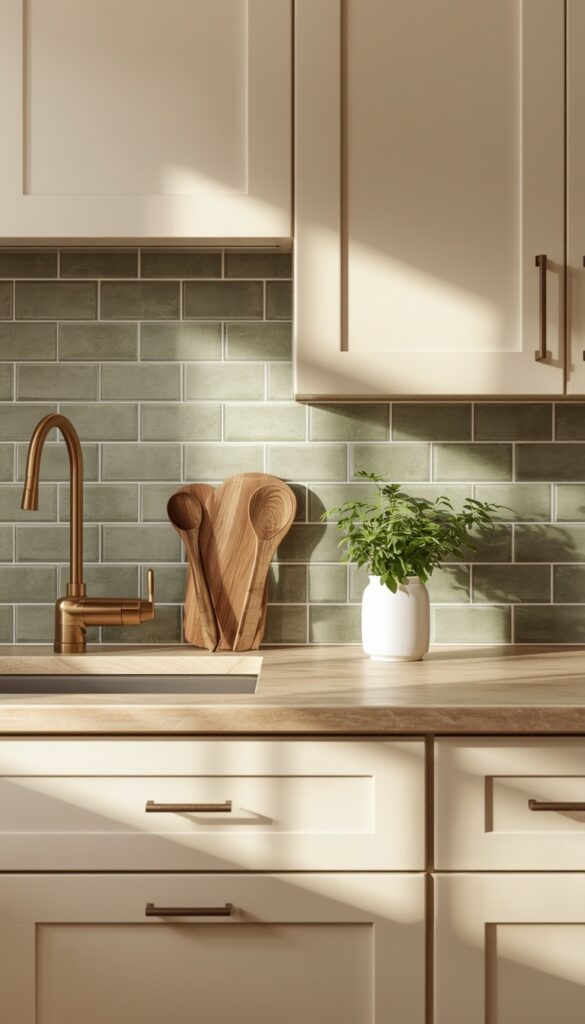
A sage green backsplash is a brilliant way to bring the color into your kitchen without touching a single cabinet. It’s reversible, relatively affordable, and completely transformative. The right tile in a sage or soft moss green adds color, texture, and personality to a kitchen that might otherwise feel plain. Subway tiles in a sage glaze are the most popular choice — they’re classic enough to look timeless but colorful enough to feel fresh. For something more distinctive, try zellige tiles in sage tones, which have that beautiful handmade variation and soft shimmer that catches light in the most flattering way.
The tile format changes the whole feeling of the backsplash. Standard horizontal subway tiles read as traditional and familiar. Stack them vertically and the whole energy shifts — more modern, more architectural. Hex tiles in sage create a geometric, slightly retro vibe that works wonderfully in kitchens with brass fixtures. Large format tiles in a soft sage green feel more contemporary and less fussy. Grout color matters enormously here. A warm white or putty grout keeps things soft and cohesive. Contrasting dark grout with sage tiles can look striking but also shows every smudge and splatter — something to factor in for a working kitchen.
The best neutral cabinet colors to pair with a sage green backsplash are warm whites, soft creams, and light greige tones. Stark white can feel cold against the warmth in sage tile, so nudge toward something with a little yellow or beige in it. If your cabinets are already white and very cool, choose a sage tile that leans slightly warmer to bridge the gap. This is a pairing where the undertones really matter, so grab a tile sample and hold it up against your existing cabinets before you commit. That five minute step can save you a very expensive mistake and a lot of grout cleaning.
6. Sage Green Painted Walls in a White Cabinet Kitchen
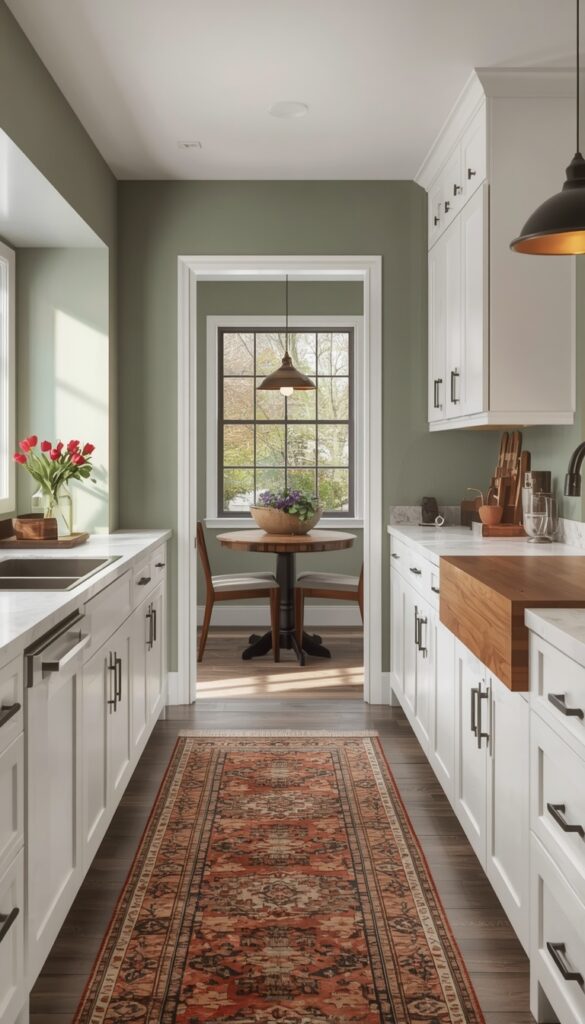
Painting your kitchen walls in sage green rather than the cabinets is a completely different design move — and an underrated one. White cabinets against sage green walls creates an inverted version of the classic combination, and it has a lightness and freshness that feels particularly suited to smaller kitchens or those with less natural light. The walls wrap the room in color while the white cabinets keep the space feeling open. It’s less common than green cabinets, which makes it feel more original. When you get the right sage paint color on the walls, the whole room feels like it’s been dipped in something calm and natural.
Choosing the right sage for walls requires a bit more attention than for cabinets. Wall color covers a much larger surface area, so even subtle undertones become very apparent at scale. Test at least three to four samples on different walls in your kitchen and observe them at different times of day. North facing kitchens with cooler light do better with a warmer sage that has yellow green undertones. South and west facing kitchens can handle cooler, more gray green tones without feeling washed out. Farrow & Ball’s “Mizzle” and Sherwin Williams’ “Privilege Green” are both excellent starting points worth sampling.
White cabinets on sage walls give you tremendous freedom with hardware and accessories because the palette is already doing the heavy lifting. Matte black hardware creates a crisp, modern edge. Brushed brass keeps things warm and classic. Aged nickel reads as quietly sophisticated. For countertops, white quartz or marble feels clean and seamless against the white cabinets. A butcher block section adds warmth without disrupting the palette. Layer in a vintage style rug in rust, terracotta, or mustard and suddenly your kitchen has a story — one that feels layered, personal, and genuinely beautiful rather than catalog perfect.
7. Sage Green Kitchen with Black Hardware and Matte Fixtures
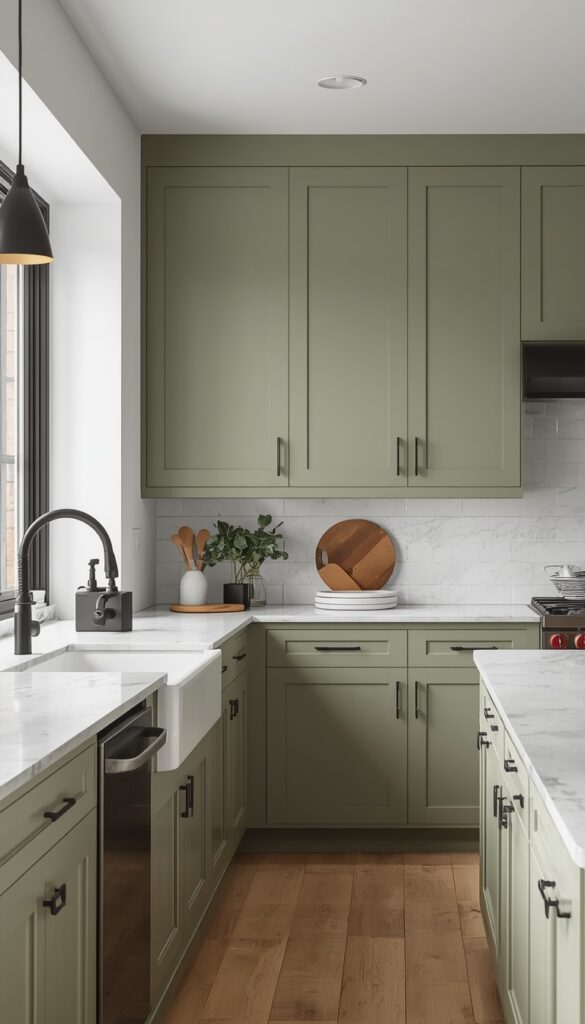
Pairing sage green cabinetry with matte black hardware is one of the most confident design choices you can make in a kitchen. The contrast is sharp and intentional. Black grounds the softness of the sage, giving the room an edge it wouldn’t have with more expected hardware choices like brass or chrome. This combination tends to photograph beautifully too — the deep black pulls against the muted green in a way that reads as sophisticated and purposeful. It works across multiple design styles, from modern farmhouse to clean contemporary, which is part of what makes it such a versatile pairing.
Matte black faucets, cabinet pulls, and light fixtures work together to create a cohesive thread through the kitchen. The key is consistency — mixing matte black with other finishes can dilute the effect. If you go matte black, commit to it across your faucet, cabinet hardware, light fixture bases, and even small details like the window latch or range hood trim. This level of finish coordination is what separates a professionally designed kitchen from one that looks assembled over time. It’s not obsessive — it’s just intentional. And in design, intentionality is what separates beautiful from merely acceptable.
Countertops in this combination need careful thought. White marble or quartz keeps the look clean and lets the black hardware stand out. A warm gray or soft charcoal stone can feel very elegant and adds depth without competing with the sage. Avoid very dark countertops like black granite — the combination of black stone, black hardware, and sage cabinets can start to feel heavy rather than sophisticated. Keep the backsplash simple — white subway tile or a clean, light stone slab lets the cabinet color and hardware do their job. This is a kitchen that rewards restraint in every supporting element.
8. Sage Green Cabinets with Brass Hardware and Marble Countertops
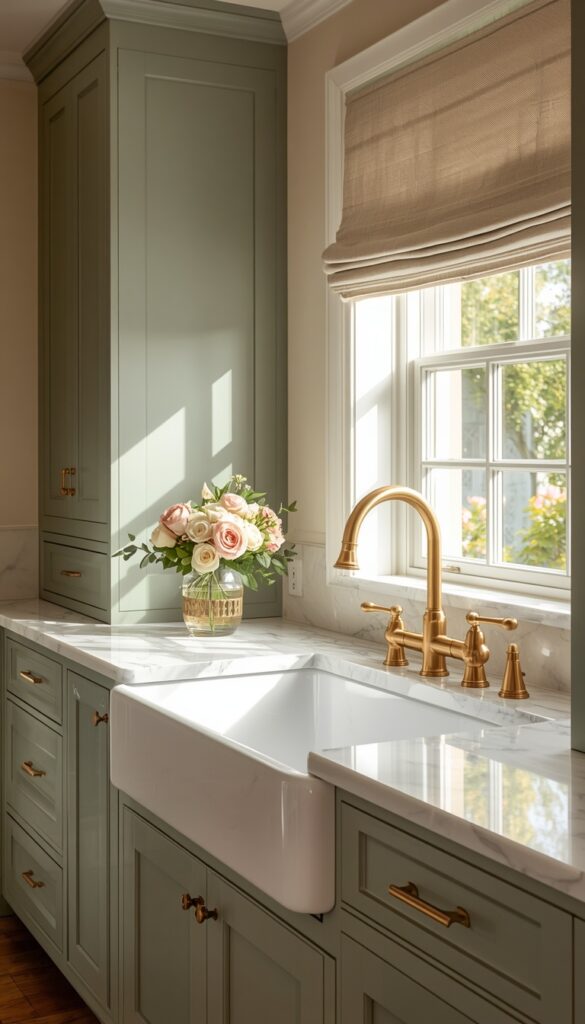
The combination of sage green, brushed brass, and marble is the closest thing to a guaranteed beautiful kitchen that design has to offer. Each element brings out the best in the others. The warm gold of brass hardware picks up the yellow undertones in sage green. The cool veining of marble adds drama without competing for attention. Together, these three elements create a kitchen that feels elevated, timeless, and genuinely luxurious — without requiring a complete renovation budget. This is a combination that interior designers return to again and again because it simply never fails to look incredible.
Brass hardware comes in several finishes that each bring a slightly different energy. Polished brass is the most glamorous and reflective — it makes a definite statement. Brushed or satin brass is quieter and more versatile, working well in both traditional and contemporary kitchens. Unlacquered brass will patina naturally over time, developing a warm, antique quality that many people find even more beautiful than the original finish. For sage green cabinets, brushed brass or unlacquered brass tends to be the most complementary choice because both carry a warmth that matches the green without overwhelming its softness.
Marble countertops in this scheme are best chosen with warm undertones in mind. Calacatta marble, with its creamy background and bold gray or gold veining, is spectacular against sage green cabinets. Statuary marble is slightly cooler but its thick veining adds visual impact that works well. If natural marble is outside the budget, a high quality quartz that mimics marble — particularly one with warm, cream colored background tones — is a completely viable alternative that looks beautiful and offers far better durability. Whatever you choose, leave some counter space uncluttered so the marble surface can be appreciated as part of the design rather than hidden under appliances.
9. Sage Green Shaker Cabinets in a Farmhouse Style Kitchen
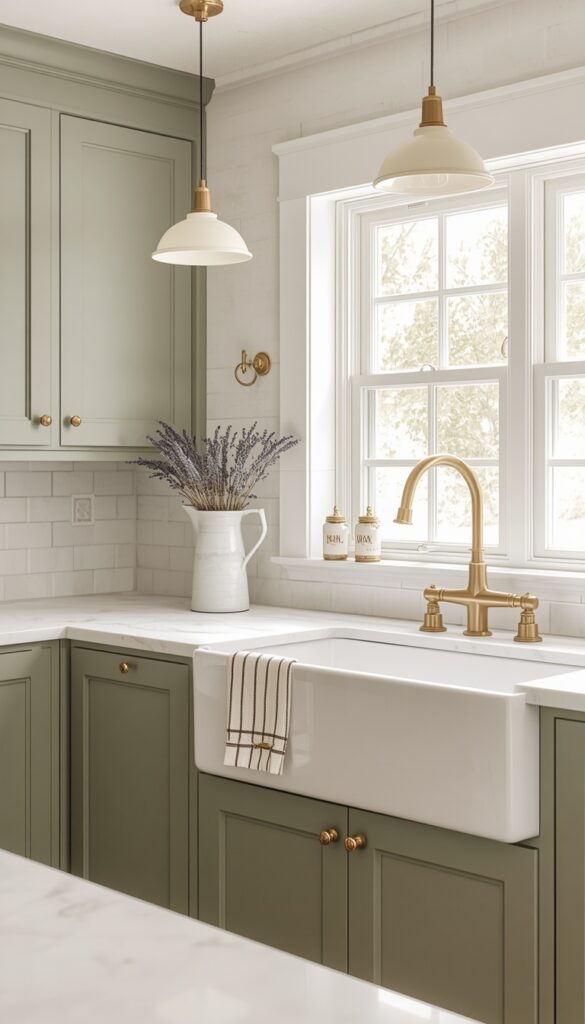
Shaker cabinets were practically invented for sage green. The clean, frame and panel simplicity of the shaker style suits the quiet, unpretentious nature of the color perfectly. Together, they form the backbone of the modern farmhouse kitchen — a look that feels warm, functional, and deeply welcoming. Sage green shakers with a farmhouse sink, open wood shelving, and simple cotton curtains at the window create a kitchen that feels like it has been there for decades, gathering good memories with every meal. This is the kind of kitchen that makes people want to sit down and stay.
The farmhouse kitchen works best when every element has a sense of honest simplicity. Avoid overly ornate cabinet details, elaborate backsplash patterns, or ultra glossy finishes — they work against the relaxed, unpretentious mood. Opt instead for a simple white or light cream subway tile backsplash. Choose a fireclay farmhouse sink in white or a raw, apron front style. Countertops in honed marble, butcher block, or concrete all suit the aesthetic beautifully and add real character. The goal is a kitchen that looks beautiful but also looks like it gets used — where bread gets baked, herbs get snipped fresh, and meals get cooked with genuine enjoyment.
Lighting in a farmhouse sage green kitchen should feel warm and considered. Schoolhouse pendant lights in white enamel with brass or black detailing are the quintessential choice — and they’re a classic for good reason. Edison style bulbs give off a warm, amber glow that flatters sage green in a way that cooler LED daylight bulbs simply don’t. Under cabinet lighting is worth investing in here, as it casts a beautiful warm glow across the countertops in the evening and makes the kitchen feel genuinely cozy. When the sun goes down and those pendants are glowing, a sage green farmhouse kitchen is one of the most beautiful rooms a house can offer.
10. Sage Green Two Tone Kitchen with Warm Greige Walls
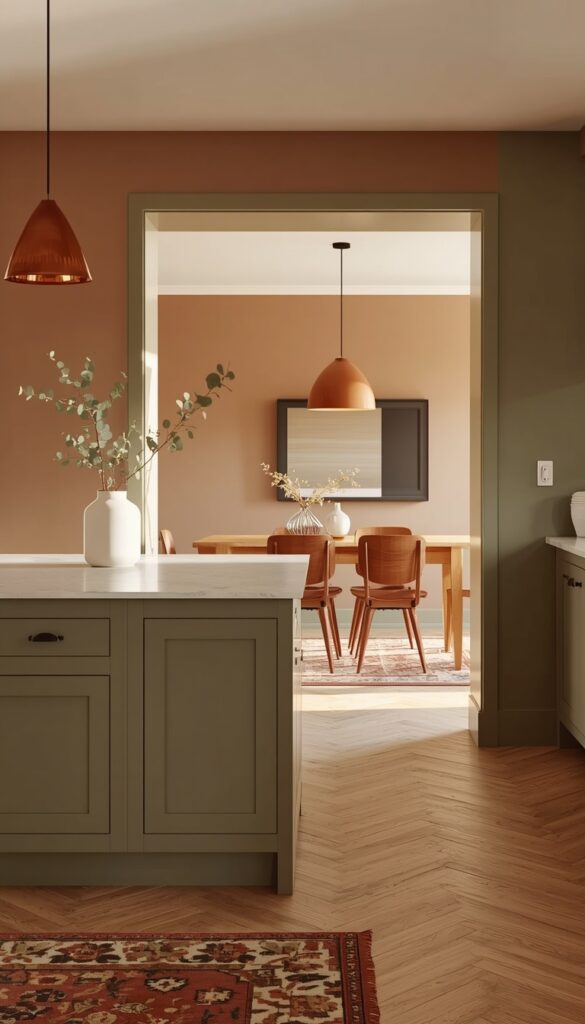
Pairing sage green cabinets with warm greige walls creates one of the most livable, layered kitchen color schemes available. Greige — that perfect blend of gray and beige — shares the warm neutrality of sage without competing with it. The two colors exist in the same tonal neighborhood, creating a room that feels cohesive and calm rather than contrasted. This approach is particularly smart in open plan kitchens where the kitchen bleeds into a dining or living area — the similar warmth of both colors means the transition feels natural and flowing rather than abrupt.
The key to this combination is making sure neither color is exactly the same temperature. If your sage green leans warm with yellow undertones, choose a greige wall color that has slightly more gray in it to prevent the room from feeling too yellow. If your sage green is on the cooler, more gray green side, let the greige wall be warmer with more beige presence. This subtle push and pull between warm and cool keeps the palette dynamic and interesting rather than flat. Paint a large sample of both colors side by side on the actual wall before committing — digital swatches on screens almost never show the real world relationship accurately.
Furniture and textiles in this combination have a wide latitude to roam. Natural linen, raw cotton, and washed canvas all feel at home. Wood tones in honey, amber, or warm brown add essential warmth. A kitchen table in aged oak or pine with mismatched vintage chairs brings a collected, lived in quality that the two tone palette supports beautifully. Layer in a printed cotton rug in warm terracotta, rust, or ochre and suddenly the kitchen feels like a whole room rather than just a functional space. This is the kind of kitchen that makes cooking feel like a pleasure rather than a chore.
11. Sage Green Cabinets with Terracotta Accents
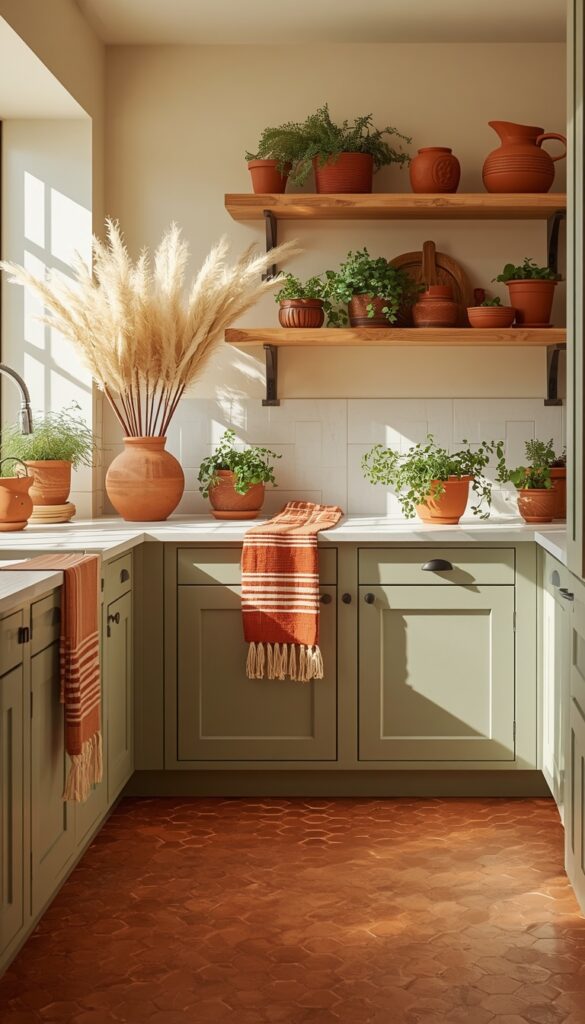
Sage green and terracotta is a color relationship borrowed directly from nature — it’s the combination of moss on clay pots, herbs in terra cotta planters, and Mediterranean hillside villages. In the kitchen, it creates a warmth that feels ancient and instinctively right. Terracotta accents against sage green cabinets bring in a color that is simultaneously earthy and vibrant. It doesn’t compete — it complements. Terracotta pots on the countertop, a hand painted terracotta tile backsplash detail, or even just a set of warm rust colored ceramics on open shelving can establish this color pairing without requiring any structural changes.
For a more committed version of this design, consider terracotta floor tiles in a hexagonal or encaustic pattern beneath sage green lower cabinets. The combination is striking — the warmth of the terracotta floor rises up to meet the calm of the sage cabinets and the effect is genuinely beautiful. Make sure to seal terracotta floor tiles properly in a kitchen environment, as unsealed terracotta is extremely porous and will absorb grease and moisture quickly. A penetrating sealer applied before grouting and then periodically maintained is all it takes to keep terracotta looking beautiful for years without losing its natural matte warmth.
Textiles and accessories pull this color story together in the most accessible, affordable way. A hand woven cotton runner in rust and cream tones, a set of terracotta glazed mugs on a sage green shelf, or a bundle of dried pampas grass in a clay vase on the counter — these small additions speak the same warm language without demanding any renovation budget. Fresh herbs growing in terracotta pots along a windowsill complete the picture perfectly. It’s one of those combinations where nature has already done the color theory work, and all you have to do is bring the right pieces into the same room.
12. Sage Green Kitchen Cabinets in a Small or Galley Kitchen
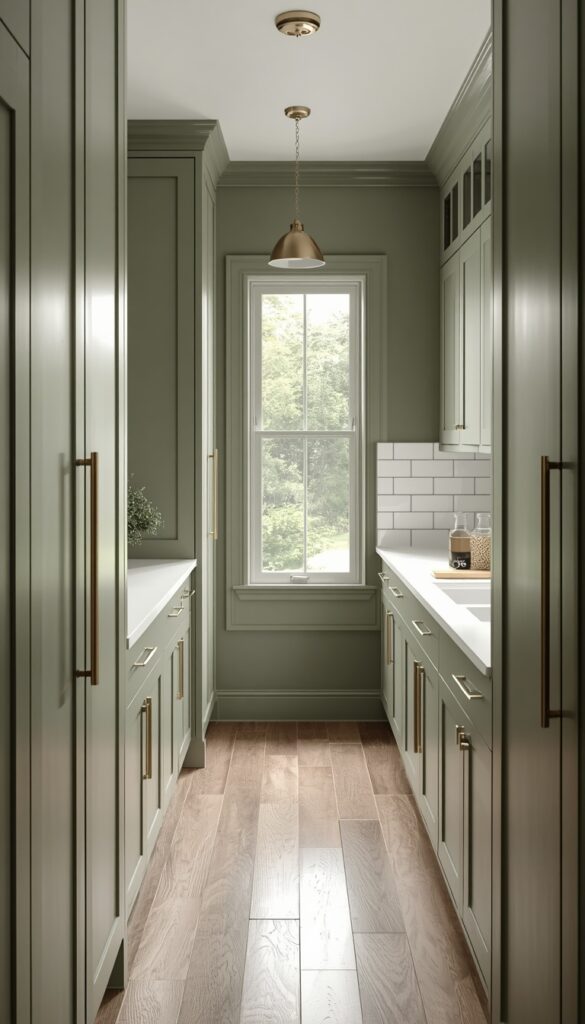
There’s a persistent fear that using color in a small kitchen will make it feel even smaller. With sage green, that fear is mostly unfounded. Because sage reads as a neutral in most lighting conditions — never shouting for attention the way true greens or bold blues might — it creates a sense of depth and dimension without the walls closing in. A galley kitchen painted entirely in sage green, ceiling to toe kick, can actually feel more spacious than the same space in stark white, because the softness of the color removes the harsh contrast that emphasizes boundaries and edges.
The most effective approach in a small or galley kitchen is to use sage green in a single, consistent tone throughout same color on cabinets, same color on the walls if possible. This monochromatic use of color blurs the visual distinction between surfaces, which makes the room feel less chopped up and more expansive. Keep hardware simple and minimal — slim bar pulls rather than chunky knobs, which draw less attention to individual cabinet edges. Use reflective surfaces strategically — a mirrored backsplash tile or glossy white subway tile will bounce light around the room and keep the sage green palette from absorbing too much of it.
Lighting in a small sage green kitchen is everything. Under cabinet strips, a well positioned pendant, and maximized natural light all prevent the sage from darkening a compact space. If natural light is limited, opt for a slightly lighter, more muted sage rather than a deep, saturated green. Keep the countertops light — white or pale stone maintains the brightness that a small kitchen depends on. And resist the urge to fill every inch of counter space with appliances and storage items. A little visible countertop goes a long way toward making a small sage green kitchen feel like a beautifully considered space rather than a tight squeeze.
13. Sage Green Cabinets with Vintage and Antique Kitchen Accents
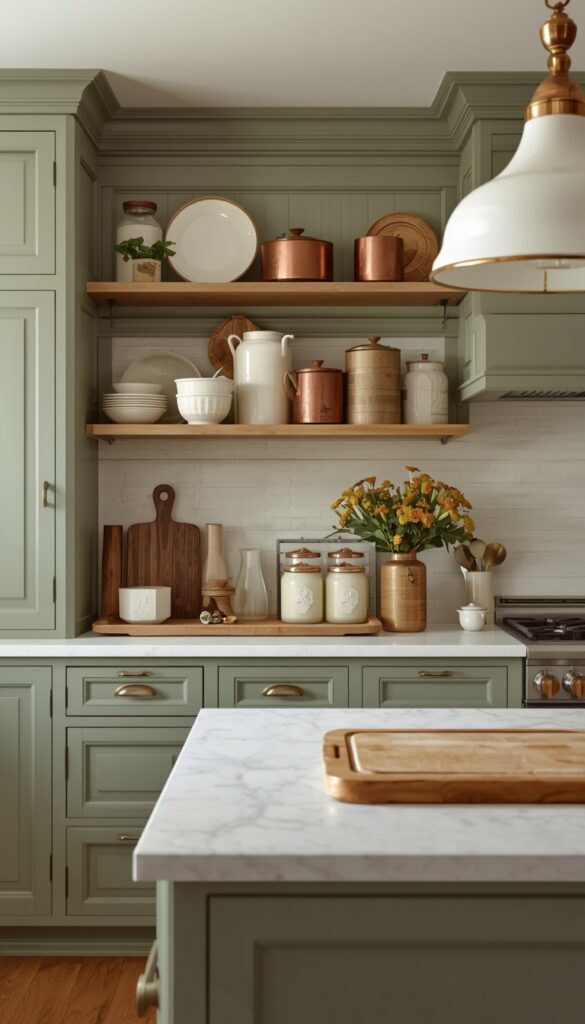
Sage green has a natural affinity for vintage and antique objects that’s genuinely hard to explain rationally. Maybe it’s because the color itself has an aged, almost faded quality that echoes the patina of old things. Whatever the reason, a sage green kitchen filled with vintage finds feels completely right. A collection of vintage ironstone on open shelves, an antique bread box on the counter, old copper pots hung from a ceiling rack, or a set of mismatched vintage canisters — all of these things look better, somehow more themselves, against sage green than they do against any other backdrop.
The most successful vintage accented sage kitchens have a clear sense of curation rather than accumulation. There’s a difference between a thoughtfully collected kitchen and a cluttered one, and that line has everything to do with restraint and spacing. Choose vintage pieces with a consistent color story — aged whites, warm creams, copper, and patinated brass all belong together beautifully in a sage green kitchen. Avoid mixing too many different vintage eras or styles, as the visual noise can overwhelm the quiet sophistication of the sage green. Think of yourself as a museum curator — every piece earns its place for a reason.
Vintage pendant lights above a sage green island or peninsula are one of the most impactful additions you can make. Original mid century schoolhouse globes in milk glass, industrial enamel shades in cream or British racing green, or hand blown amber glass pendants all add character that new fixtures simply cannot manufacture. Check architectural salvage shops, estate sales, and reputable online vintage marketplaces. Have a qualified electrician rewire any vintage fixture before installing it — this is non negotiable for safety. The investment in time and sourcing pays off with a kitchen that feels genuinely unique, like something that happened over time rather than being bought and installed in a single weekend.
14. Sage Green Kitchen with Maximalist Styling and Layered Textures
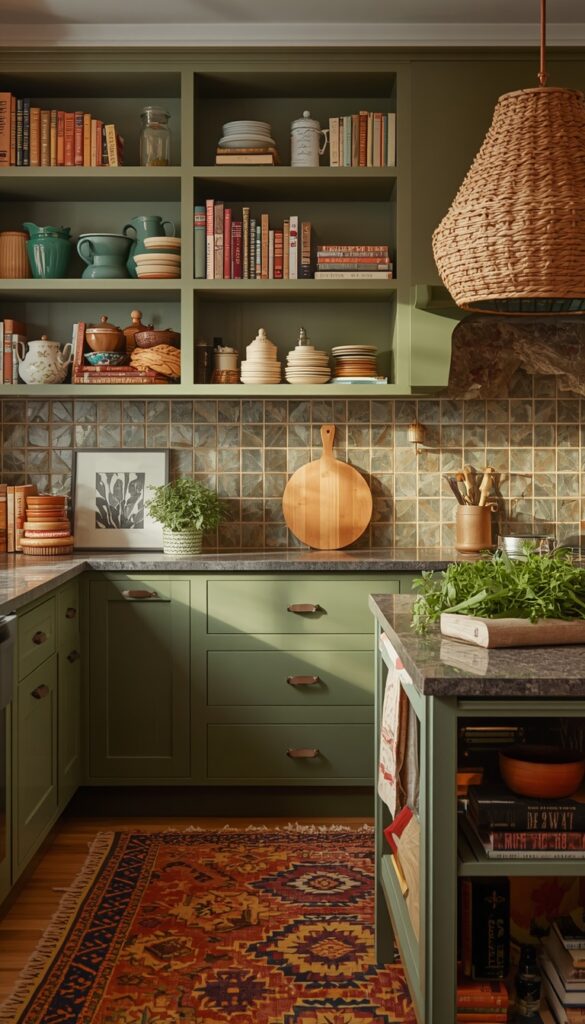
There’s a version of the sage green kitchen that abandons restraint entirely and it is absolutely spectacular. Maximalist styling in a sage green kitchen means layering textures, patterns, colors, and objects with genuine confidence and intention. A zellige tile backsplash with handmade variation, open shelves crowded with beautiful ceramics and cookbooks, a patterned rug underfoot, woven pendant lights, hanging copper pots, botanical prints in mismatched vintage frames — in a sage green kitchen, all of this comes together in a way that feels rich and joyful rather than overwhelming, because the sage itself is such a calming foundation.
The secret to maximalist kitchen styling that works rather than overwhelms is a clear underlying color story. In a sage green maximalist kitchen, that story is the natural world — greens, terracotta, warm browns, creamy whites, faded mustards. Everything chosen should belong to this palette, even if the specific shade differs. A brightly patterned dish towel in green and rust, a set of ceramic bowls in earthy ochre, a sprig of eucalyptus in a vintage bottle — each individual element is different, but they all speak the same warm, organic language. That coherence is what keeps maximalism from tipping into chaos.
Texture is the real engine of maximalist kitchen design. In a sage green space, the variety of textures is what creates the richness: the smoothness of painted cabinet fronts, the rough variation of zellige tiles, the grain of a wood cutting board, the weave of a rattan pendant, the softness of a linen curtain, the cool hardness of marble. Running your eyes and hands around this kitchen should feel like an experience, not just a visual survey. Invest in one truly beautiful textile for the space, whether a vintage kilim rug, a hand embroidered linen runner, or a set of handwoven cotton towels. These are the pieces that make a room feel genuinely loved.
Conclusion
Sage green is one of those rare colors that improves almost every design decision around it. Whether you lean toward the simplicity of sage lower cabinets with white uppers, the bold commitment of full sage cabinetry, or the layered warmth of vintage accents and terracotta pairings, this color rewards every approach you bring to it. What makes these fourteen sage green kitchen ideas genuinely useful is that they cover the full range — from modest single room refresh to full renovation ambition — so there’s a real starting point here for every kind of home and every kind of budget. Pick the idea that speaks to your space, trust the color, and let your kitchen become the room in your house that everyone wants to spend time in.
FAQs
Q: Is sage green a good color for a kitchen? A: Sage green is one of the best colors you can choose for a kitchen. It reads as a warm neutral in most lighting conditions, pairs beautifully with wood, brass, marble, and white, and creates a calm, welcoming atmosphere that suits the way kitchens actually get used. It’s versatile enough for both farmhouse and contemporary styles.
Q: What hardware looks best with sage green kitchen cabinets? A: Brushed brass and unlacquered brass are the most popular choices for sage green cabinets because they pick up the warm undertones in the color beautifully. Matte black hardware creates a sharper, more contemporary look. Aged bronze sits between the two — warm but subtler than brass. Avoid polished chrome, which can feel cold against sage.
Q: Does sage green make a small kitchen look smaller? A: Not at all. Sage green actually tends to make small kitchens feel more spacious than stark white because its softness removes harsh contrast between surfaces. For the best results in a small kitchen, use sage green consistently on both cabinets and walls, keep hardware minimal, and choose light countertops and backsplash tiles to maximize reflected light.
Q: What countertop goes with sage green cabinets? A: Warm white marble or Calacatta quartz is the most popular choice — the creamy tones complement sage beautifully. Butcher block adds warmth and a natural, organic quality that suits sage perfectly. Leathered quartzite in warm beige is an excellent option for a more textured, sophisticated surface. Avoid cold gray or black countertops, which can feel stark against sage.
Q: What paint colors go well with sage green in a kitchen? A: Warm whites, soft creams, and warm greige wall colors work best alongside sage green cabinets. Off whites like Benjamin Moore White Dove or Sherwin Williams Alabaster complement the warm undertones in sage without clashing. Terracotta and warm rust tones work brilliantly as accent colors. Avoid cool gray or bright white, which can make sage green look dull or disconnected.
Q: Is sage green a trend that will go out of style quickly? A: Sage green has real staying power because it functions as a warm neutral rather than a bold statement color. Unlike very saturated or fashion forward colors, sage green belongs to a family of earthy, nature inspired tones that have appeared in interior design across many decades. Rooms designed around sage green tend to feel timeless rather than dated, which makes it a genuinely safe long term investment.
Q: Can I mix sage green with other colors in my kitchen? A: Absolutely, and it takes color pairings particularly well. Sage green works beautifully alongside warm terracotta, deep navy, creamy white, warm wood tones, dusty rose, and warm mustard. The key is keeping the overall palette rooted in the same warm, earthy family. Avoid pairing sage with very cool or neon tones, which fight against its natural warmth and softness.
Q: What style of kitchen suits sage green cabinets best? A: Sage green works across a surprisingly wide range of kitchen styles. It’s a natural fit for farmhouse and cottage kitchens, but it also works beautifully in modern transitional, Scandi influenced, and even maximalist spaces. The style of cabinet door — shaker for traditional, flat panel for contemporary — shifts the mood significantly. Sage green itself is adaptable enough to move comfortably across most design directions.