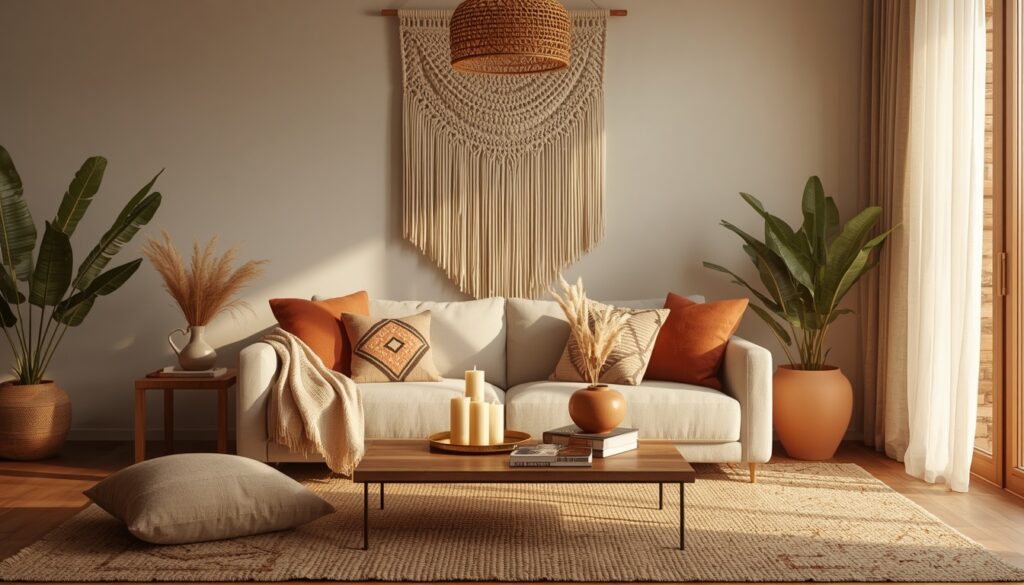
There’s something about bohemian design that feels like a deep exhale. It doesn’t demand perfection. It doesn’t follow rigid rules. It layers textures, mixes cultures, and lets personality breathe through every corner of a room. Modern bohemian design takes that free spirit and refines it — giving you spaces that feel intentional without feeling stiff. If you’ve been scrolling through beautifully curated living rooms wondering how they manage to look effortlessly cool and deeply personal at the same time, this is the article you’ve been looking for.
What makes modern boho so exciting right now is its flexibility. You can work with what you already own, add pieces gradually, and build a space that genuinely reflects who you are. Whether you’re starting from scratch or refreshing a room that’s felt a little flat lately, these thirteen ideas will give you concrete direction. Each one is rooted in real styling experience — the kind of advice that goes beyond “add some throw pillows” and actually helps you create something beautiful.
1. Layer Rugs to Build Depth and Texture on Your Floor
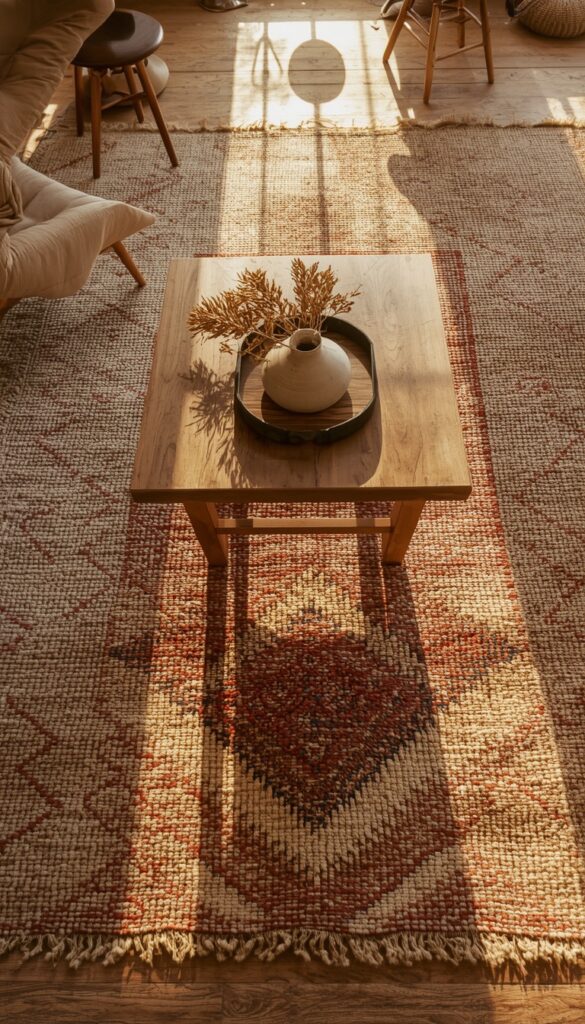
The moment you layer two rugs in a living room, everything changes. A jute or sisal base rug grounds the space with natural texture, while a smaller vintage style kilim or Moroccan rug layered on top adds pattern and warmth. This combination works because both rugs serve different visual roles. The base rug defines the zone; the layered rug adds personality. It’s one of those tricks that looks expensive but actually lets you use smaller, more affordable rugs creatively. Start with a neutral base that’s large enough to anchor your furniture.
Sizing matters more than most people realize when layering rugs. Your base rug should extend at least six inches beyond your sofa on each side. The top rug sits inside that boundary — typically placed under the coffee table and centered in the seating area. A two by three or three by five rug works well as the top layer in most living rooms. Don’t worry about the patterns clashing. In modern bohemian design, patterns are meant to coexist. A geometric kilim over a simple jute weave creates visual interest without chaos.
Color is where you can really make this work for your specific space. If your walls are light and your furniture is neutral, go bold with the layered rug — a rust, indigo, or terracotta print looks stunning. If your room already has a strong color, choose a faded vintage style rug with muted tones for the top layer. The goal is contrast and warmth, not matching. Once you’ve tried rug layering, you’ll wonder why you ever settled for a single flat rug on bare floors.
2. Mix Metals Intentionally for a Curated Boho Look
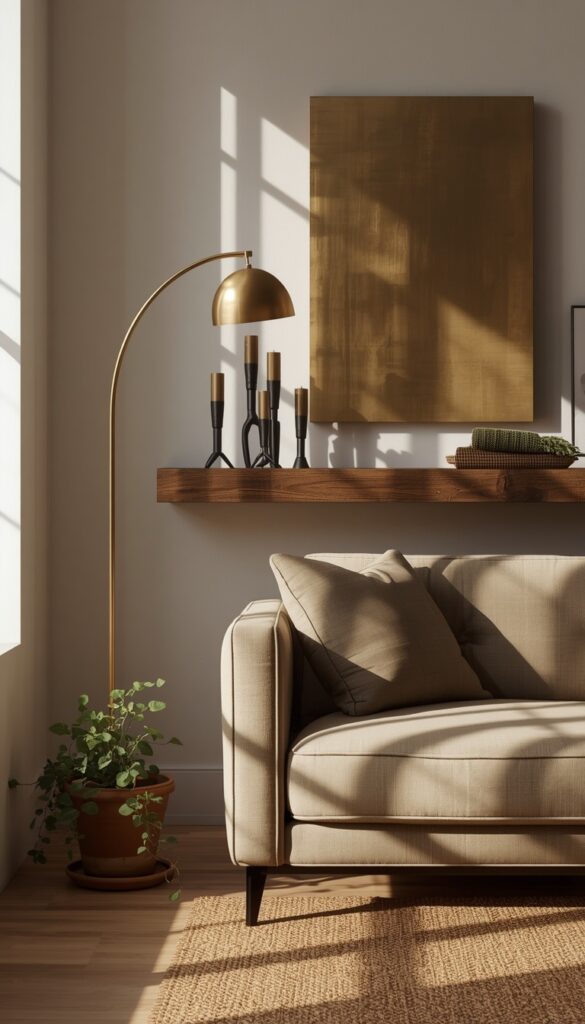
Modern bohemian interiors embrace mixed metals — and they do it on purpose. The key word is intentional. Brass, black iron, copper, and brushed gold can all live together beautifully when you repeat each metal at least twice throughout the room. That repetition is what transforms “mismatched” into “collected.” A brass pendant light paired with brass cabinet pulls, black iron candle holders echoed in a black iron shelf bracket — these moments of repetition make the space feel deliberate rather than accidental.
Brass is the reigning metal of modern boho design right now, and for good reason. It has warmth, it ages beautifully, and it pairs brilliantly with natural materials like rattan, linen, and wood. If you’re building a mixed metal scheme, let brass be your dominant metal — used in lighting fixtures, mirror frames, or drawer hardware. Then bring in a secondary metal as an accent. Black iron works especially well as that second layer because it adds grounding contrast without competing with brass’s warmth.
The rooms that nail mixed metals always have one thing in common — they don’t overthink it. You don’t need a designer formula. Just start with two metals you love and make sure each appears more than once in the room. Then step back and look. If it feels cohesive, you’re done. If it feels busy, remove one element. The beauty of modern bohemian design is that you’re allowed to edit as you go. Living with a space and adjusting it over time is completely part of the process.
3. Use Macramé Wall Hangings as Textural Focal Points
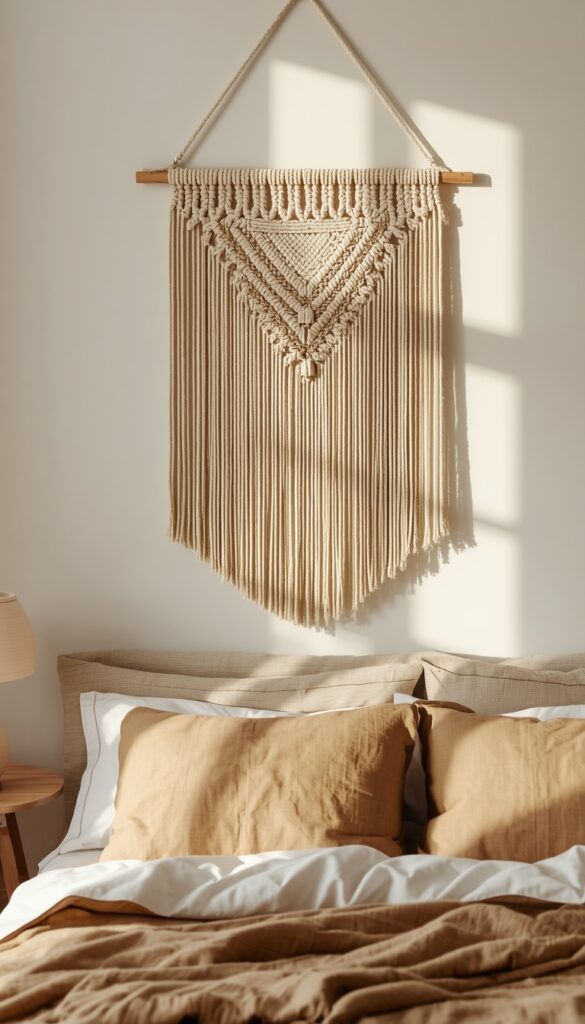
A well chosen macramé piece does something no painting can — it adds dimension. The knotted fibers cast soft shadows on the wall behind them, creating a living texture that shifts subtly as light moves through the room during the day. This is especially powerful in rooms with white or warm white walls where you want depth without color. A large macramé wall hanging above a bed, sofa, or console table instantly becomes the focal point of the room without overwhelming it.
Scale is everything with macramé. A small piece on a large wall looks like an afterthought. For a standard sofa that’s about seventy two inches wide, look for a macramé piece that’s at least thirty six to forty eight inches across. For a queen or king bed, you want something that stretches wide — ideally close to the headboard’s width or slightly narrower. Many independent makers sell large scale pieces through craft marketplaces, and commissioning a custom piece from an artisan gives you exact sizing control plus a truly one of a kind work.
Natural cotton rope in undyed ivory or cream is the classic choice, and it works with almost every color palette. But if you want something a bit more editorial, look for macramé pieces that incorporate earthy tones like warm tan, rust, or sage through dyed fibers or woven yarn elements. Some makers also weave in dried botanicals, wooden beads, or feathers for added texture. Hang your piece with a simple wooden or brass rod for a clean finish. The installation should disappear — the art itself should be all you see.
4. Bring in Rattan and Cane Furniture for Warmth and Lightness
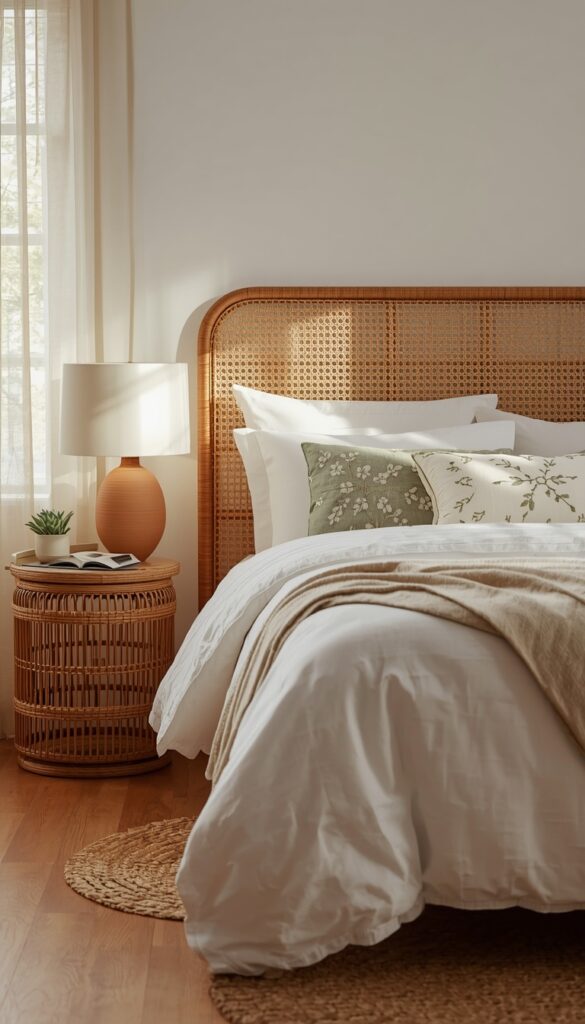
Rattan furniture has had a genuine resurgence, and modern bohemian design is exactly where it belongs. Unlike heavier upholstered pieces, rattan brings a sense of lightness and air to a room. It doesn’t visually crowd a space. A rattan armchair in a corner, a cane front dresser in a bedroom, or a rattan pendant shade in the kitchen — each one introduces natural material in a way that feels relaxed and sophisticated at the same time. The woven texture also catches light beautifully at different times of day.
The distinction between rattan and cane trips people up sometimes. Rattan is the material — a palm species — and cane is woven strips of rattan’s outer skin. Both are used in furniture and decor, often together. A chair might have a rattan frame with cane webbing panels on the back and seat. When you’re shopping, look for solid, well constructed frames. Quality rattan furniture should feel sturdy and tight, with no wobble in the joints. Lower quality pieces tend to loosen over time, especially in humid climates.
Styling rattan is genuinely easy. It plays well with linen cushions, wool throws, and macramé because they share the same handcrafted, natural quality. In a modern bohemian bedroom, a rattan headboard paired with white linen bedding and a few embroidered throw pillows looks relaxed but completely pulled together. In a living room, a rattan coffee tray or a set of nesting side tables adds texture without committing to a large rattan piece. Start small if you’re unsure — even one well placed rattan element reads instantly as boho.
5. Create a Gallery Wall That Tells Your Actual Story
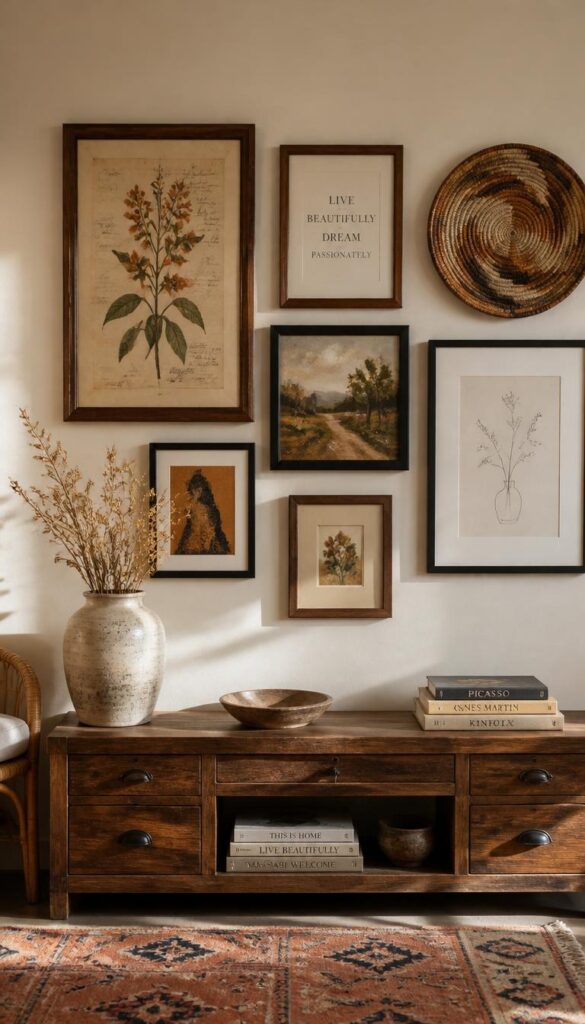
Gallery walls in modern bohemian spaces feel different from the perfectly spaced, uniform grid you see in minimalist interiors. Boho gallery walls mix frame sizes, materials, and mediums — and they include things that actually mean something to the person who lives there. A vintage botanical print alongside a hand lettered quote, a small oil painting next to a woven wall piece, a black and white travel photo near a painted ceramic plate — this is what makes a gallery wall feel curated rather than copied from a catalog.
The secret to a gallery wall that doesn’t look chaotic is starting with a unifying element. That element can be a color — maybe every piece has at least one touch of terracotta or indigo. Or it can be a material — perhaps all the frames are wood tones or all black. Or it can be a mood — every piece has a natural, earthy, or handmade quality. Once you identify your uniform, you have creative freedom to mix everything else. Lay the arrangement on the floor first and photograph it before committing to wall holes.
Spacing and height are the two things that most often go wrong with gallery walls. Keeping the gaps between frames consistent — about two to three inches is a good rule — even if the frames themselves vary wildly in size. And hang the arrangement so its visual center sits at eye level, which is roughly fifty seven to sixty inches from the floor. Don’t start too high, which is the most common mistake. A gallery wall that floats too far up the wall loses its connection to the furniture below and feels disconnected from the rest of the room.
6. Layer Textiles on Your Sofa Like a Styling Professional
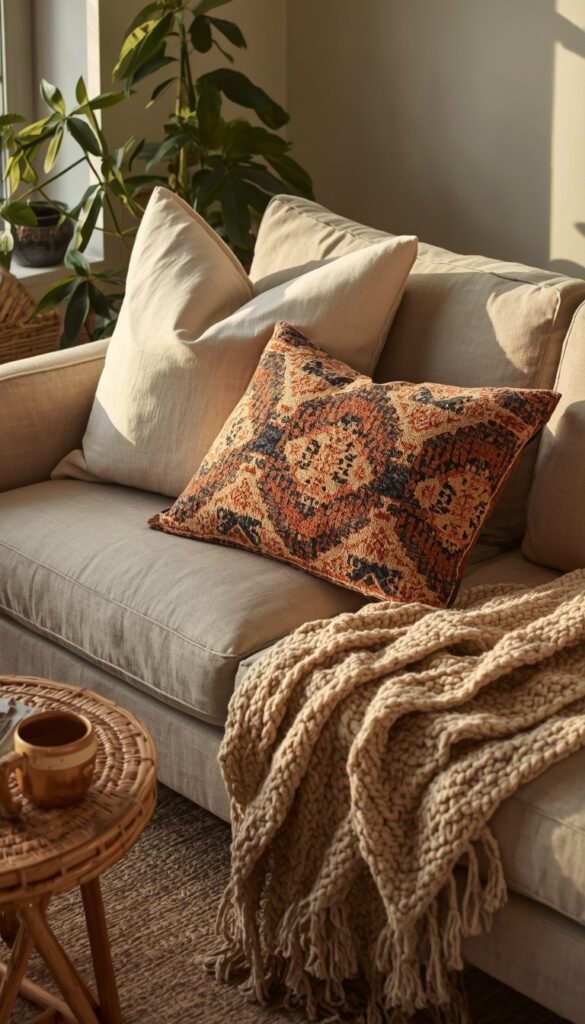
The difference between a flat, boring sofa and one that looks like it belongs in a design magazine comes down almost entirely to textile layering. A modern bohemian sofa typically carries at least three textile types — a solid linen or cotton slipcover or upholstery as the base, one or two patterned throw pillows in different scales, and a textured throw draped casually over one arm or folded at the end cushion. Each layer adds visual richness without requiring expensive furniture. The sofa itself can be completely basic.
Pillow placement matters more than most people think. The goal isn’t symmetry — it’s balance. For a three seater sofa, try two larger pillows (twenty two inches square) at either end in a solid earthy tone, one medium lumbar pillow in a printed fabric in the center, and one smaller textured pillow tucked casually in front of one of the large ones. This asymmetrical arrangement looks effortlessly collected. Mix textures — a chunky knit with a flat woven kilim print and a smooth linen — so each pillow has a different surface quality.
The throw is the finishing touch and the easiest way to change the feel of your sofa seasonally. In cooler months, a chunky wool or sherpa throw in cream or oatmeal adds coziness. In warmer months, a lightweight cotton hammam towel in a simple stripe keeps things relaxed and breathable. Drape it rather than fold it neatly — one corner pulled over the armrest, the rest falling naturally. Modern bohemian style is about the beauty of things that look lived in. Your sofa should invite people to sit down, not tell them to be careful.
7. Incorporate Vintage and Antique Pieces for Genuine Character
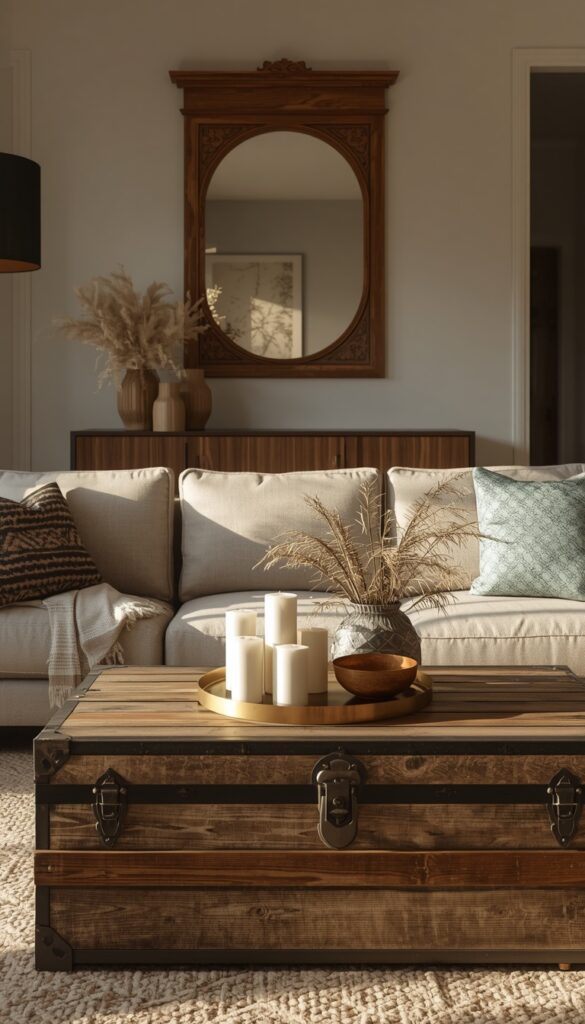
Nothing makes a modern bohemian space feel more authentic than something old. Vintage and antique pieces carry a history that new furniture simply can’t replicate — and in a boho interior, that history is an asset. A weathered wooden trunk used as a coffee table, a brass tray from a market in Marrakech, a hand painted ceramic lamp base found at an estate sale — these pieces become conversation starters and give a room personality that no retail store can sell you in a package.
The challenge most people face with vintage pieces is knowing how to integrate them so the room doesn’t feel like a time capsule. The trick is contrast. Pair your antique or vintage find with something decidedly modern — a clean lined sofa, a contemporary light fixture, simple white walls. The old piece pops when it’s surrounded by something fresh. A nineteenth century carved wooden mirror looks breathtaking above a sleek, modern console table. The juxtaposition is exactly what makes both pieces more interesting than they’d be on their own.
You don’t need to spend a lot of money or have access to fancy antique stores. Thrift stores, estate sales, Facebook Marketplace, and flea markets are genuinely excellent sources for vintage bohemian pieces. Look for objects with handmade quality — things with slight imperfections, tool marks, or patina. Avoid anything that looks mass produced or factory uniform, even if it’s technically old. Train your eye to spot the real handcrafted stuff. It takes a few trips but becomes intuitive quickly, and the thrill of finding a perfect piece for nearly nothing never gets old.
8. Use Earthy, Warm Color Palettes to Anchor the Boho Mood
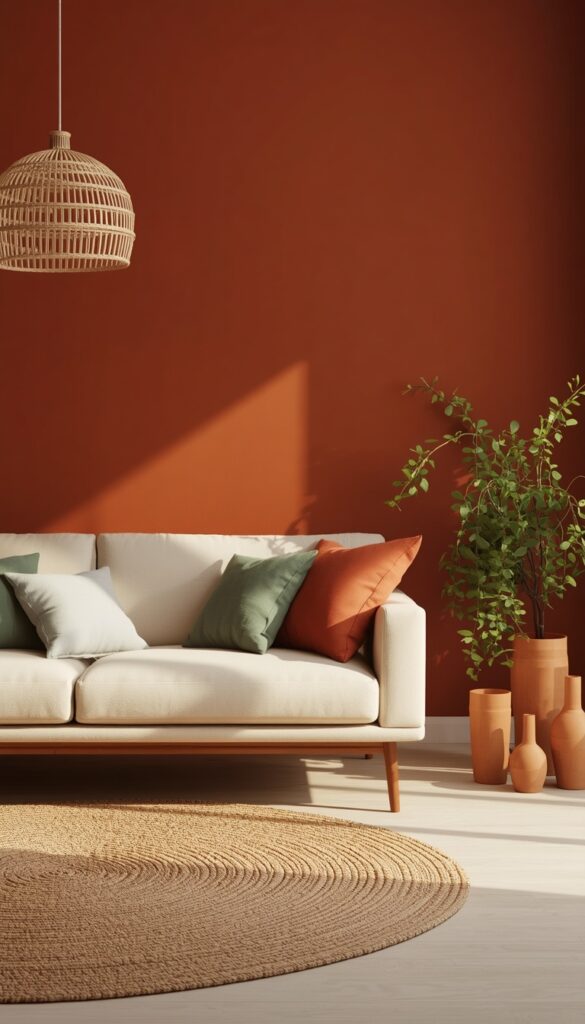
Color is arguably the fastest way to shift a room into modern bohemian territory. The palette that defines this aesthetic pulls from nature — terracotta, warm rust, sand, sage green, warm white, dusty mauve, and deep ochre. These are colors found in adobe walls, desert landscapes, forest floors, and aged ceramics. They feel warm without being aggressive. They layer beautifully together. And they make natural materials like wood, linen, and rattan look even more beautiful by surrounding them in tones that share the same warmth.
Terracotta deserves a special mention because it’s genuinely one of the most versatile colors in the modern bohemian palette. On walls, it creates an enveloping, warm atmosphere that makes a room feel like a retreat. In smaller doses — a terracotta lamp base, a set of terracotta pots, terracotta tiles on a kitchen backsplash — it adds grounding warmth without dominating. Pair it with cream, sage, and warm wood tones for a palette that feels earthy and calming. Add a touch of deep teal or indigo as an accent and the whole palette comes alive with contrast.
If you’re not ready to commit to bold wall color, start with textiles. A terracotta linen throw, rust toned pillow covers, or a warm ochre curtain panel introduces the palette in a way that’s easily changed. From there, build toward paint if you love how it feels in the room. Living with a color in textile form first is genuinely useful — you see how it reacts to your specific light at different times of day before you commit to something more permanent. Most people find the earthy boho palette so comfortable they wonder why they ever lived with cool grays.
9. Hang Curtains High and Wide for a Dramatic, Airy Effect
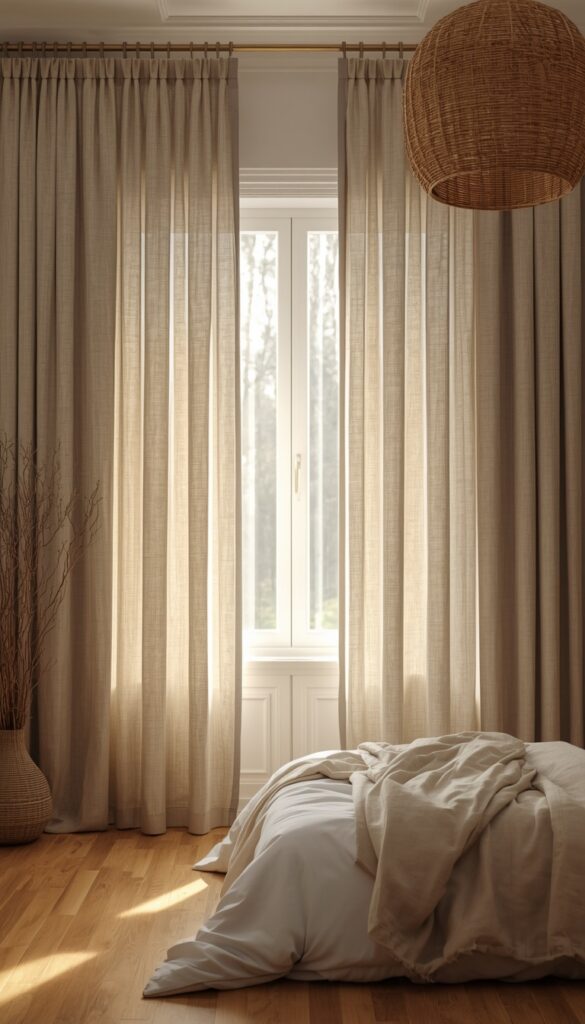
Curtains hung just above the window frame are one of the most common home decor mistakes — and in a bohemian space, getting this right makes an enormous difference. Hang your curtain rod as close to the ceiling as possible, ideally within four to six inches of the ceiling line. Then extend the rod six to twelve inches beyond the window frame on each side. This simple adjustment makes windows look dramatically larger, ceilings feel higher, and the entire room feels more expansive. The curtains become an architectural element, not just window covering.
For modern bohemian interiors, fabric choice is everything. Linen is the gold standard — it has beautiful drapes, filters light softly, and looks more luxurious the more it wrinkles. Avoid anything stiff or synthetic. White, off white, or warm cream linen curtains work in almost every boho room because they let light in while adding softness to the walls. If you want a pattern, mudcloth inspired prints, subtle block prints, or a loose woven texture add boho character without competing with the rest of the room’s layers.
Puddling — where the curtain fabric pools slightly on the floor — is a technique that looks particularly beautiful in bohemian spaces. It adds an intentional, relaxed luxury that feels completely appropriate for the aesthetic. Aim for about one to two inches of fabric touching the floor if you want that soft puddle effect. If you prefer a clean look, hem curtains so they just kiss the floor, with no gap between fabric and floor. Both work. What never works in a boho space is a curtain that stops mid window or hovers awkwardly above the baseboard. Commit to the full length.
10. Style Open Shelving With a Mix of Art, Plants, and Objects
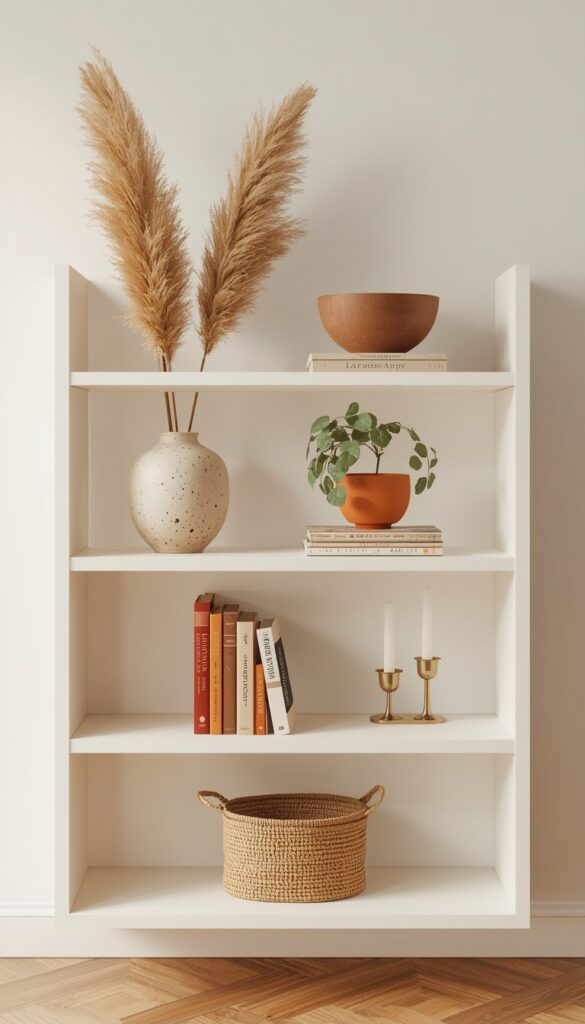
Open shelves in a modern bohemian home are never just storage — they’re gallery space. The key to shelves that look styled rather than cluttered is intentional grouping and breathing room. Every shelf should have negative space — areas where the eye can rest between groupings. A good boho shelf arrangement typically combines three types of elements: something natural (a plant, a crystal, a piece of driftwood), something handmade (a ceramic bowl, a woven basket, a handthrown vase), and something personal (a book, a travel souvenir, a framed photo).
The rule of odd numbers genuinely works on shelves. Group objects in threes or fives rather than twos or fours. Within each grouping, vary the heights — one tall element, one medium, one low. This creates a visual rhythm that feels natural rather than rigid. A tall dried pampas grass stem in a slender vase, a medium ceramic pot, and a small stack of books with an object resting on top is a perfect three part grouping. Repeat the approach across multiple shelves, changing the specific objects while keeping the structure consistent.
Color editing is what separates shelves that look like a shop from shelves that look like a home. Before finalizing your arrangement, step back and look at the overall color picture. If everything is the same tone, add contrast. If everything is competing for attention, remove a few pieces. A cohesive shelf arrangement usually has one or two dominant colors carried through multiple objects, with accents of a third tone. In a boho palette, try warm neutrals as the base with terracotta and green as accent colors. Books with spines facing backward create clean neutral blocks that let other objects shine.
11. Introduce Indoor Plants as Living Sculptural Elements
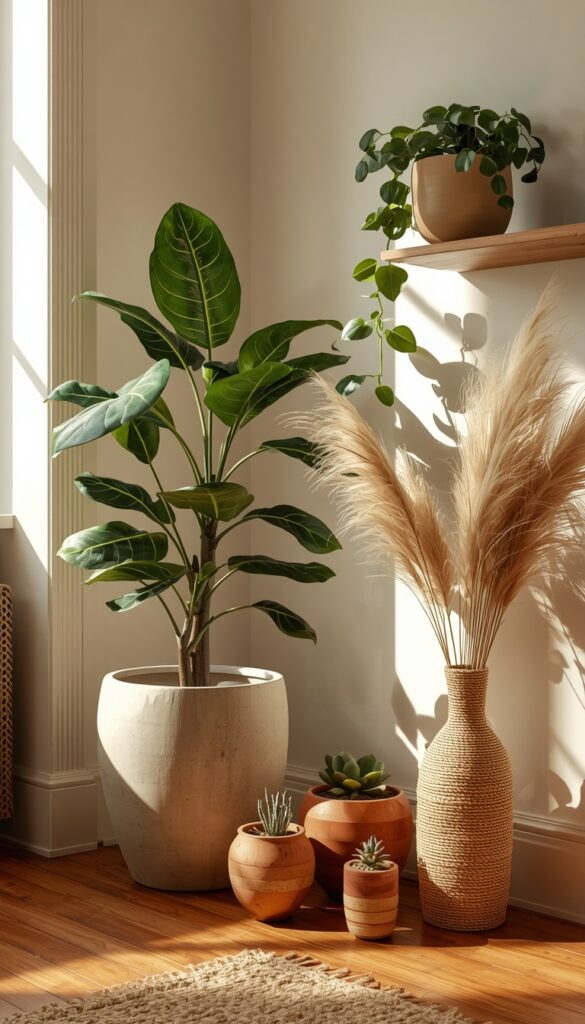
Plants in a modern bohemian space aren’t decoration — they’re structural. The way you position and style them matters just as much as which varieties you choose. A single large plant in a beautiful pot can anchor a corner the same way a floor lamp or armchair does. A trailing pothos or string of pearls cascading from a high shelf adds movement and softness to a room in a way no other design element can replicate. The goal is to treat your plants with the same intentionality you’d bring to any piece of furniture.
Pot selection is where most people underinvest. The plant and the pot are a unit — one without the other feels incomplete. For modern bohemian spaces, hand thrown ceramic pots with subtle imperfections, terracotta pots in various sizes, woven jute pot covers, and matte black or earthy toned planters all work beautifully. Avoid shiny, uniform plastic pots — they undercut the handmade quality that makes bohemian design feel so good. Group pots of different sizes and materials together for a collected look. Three pots of varying heights clustered in a corner reads as an intentional moment, not an afterthought.
For variety in texture and form, consider mixing plant types strategically. A large fiddle leaf fig or olive tree provides height and strong structure. Mid level plants like rubber trees, monstera deliciosa, or snake plants fill in the middle zone. Trailing plants — heartleaf philodendron, string of pearls, or wax plant — spill from shelves or hang from ceiling hooks for movement. Dried botanicals like pampas grass, dried eucalyptus, or seed pod stems add texture and require zero maintenance. Together, these layers create a room that feels genuinely alive.
12. Choose Handmade Ceramics Over Mass Produced Decorative Objects
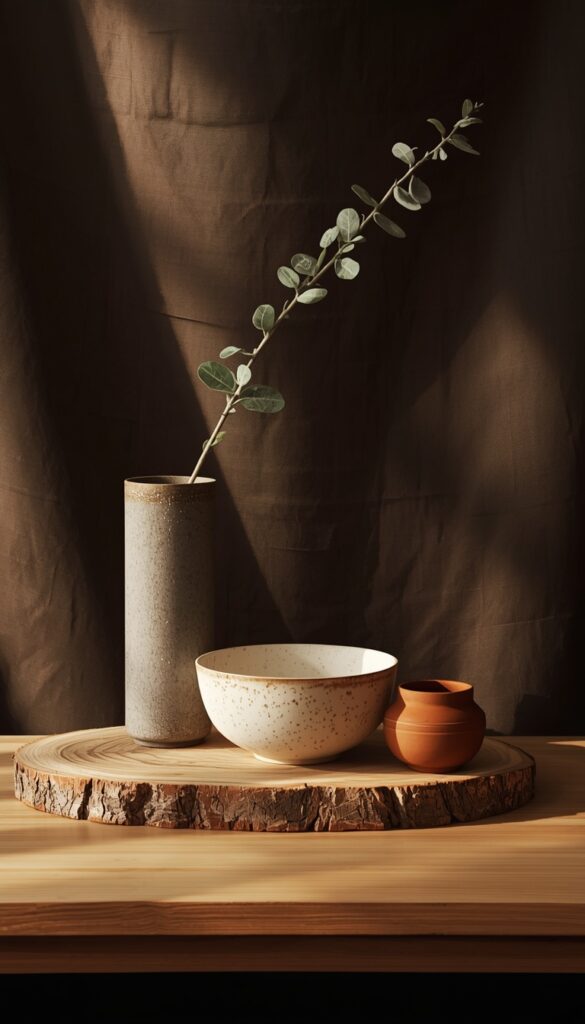
In a modern bohemian interior, the objects you choose to live with say something about you — and handmade ceramics say it beautifully. A handthrown bowl on a coffee table, a set of mismatched ceramic mugs on an open kitchen shelf, a sculptural vase with an irregular rim on a console table — these pieces have a quality of presence that factory made objects simply don’t. The slight variations in glaze, the fingerprint impressions in the clay, the asymmetry of the form — all of it communicates that a real person made this, and that matters in a space designed to feel human.
You don’t need to spend a fortune to build a meaningful collection of handmade ceramics. Craft fairs, local pottery studios, and online marketplaces where independent makers sell directly are all excellent sources. When shopping, look for pieces with matte or satin glazes in earthy tones — warm whites, speckled creams, sage greens, warm browns, and ash grays all sit beautifully in the boho palette. Shiny, uniform glazes in bright colors tend to read as commercial even when they’re handmade. Trust your instincts about what has presence and what doesn’t.
Styling ceramics well comes down to grouping and contrast. A single beautiful ceramic piece can get lost on a crowded shelf, but the same piece given space and positioned against a contrasting background becomes a focal point. Try placing a dark matte ceramic vase against a light wall, or a pale speckled bowl on a dark wood surface. Group ceramics of similar scale together but vary their shapes — a cylindrical vase next to a wide mouthed bowl next to a small pinch pot creates visual rhythm. Rotate pieces seasonally and fill vases with whatever’s beautiful at the moment — dried stems, fresh eucalyptus, or nothing at all.
13. Design a Cozy Reading Nook With Layered Boho Comfort
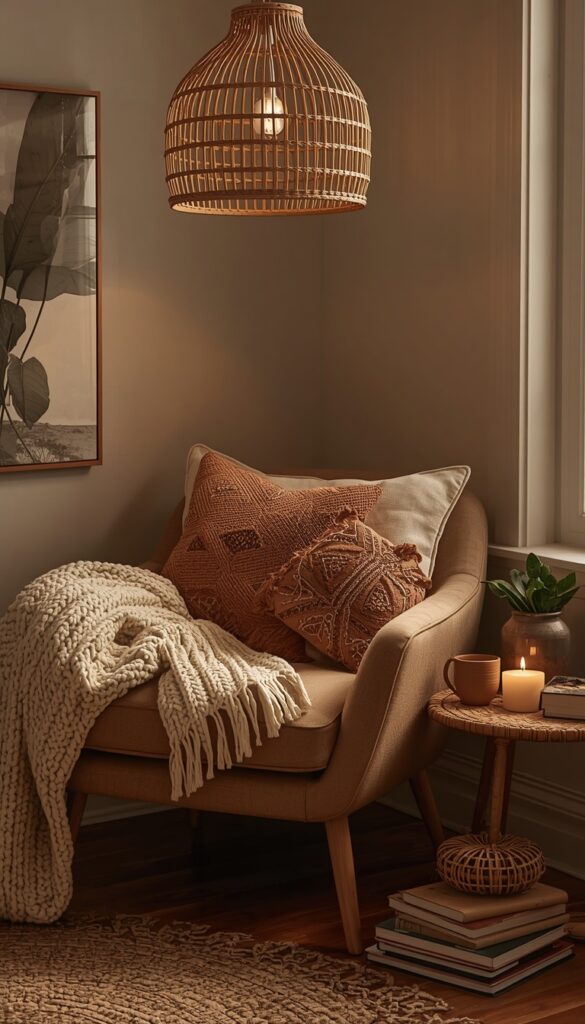
A reading nook is one of the most beloved projects in modern bohemian home design — and it’s genuinely achievable in almost any space. You don’t need a bay window or an alcove. A corner of a bedroom or living room, a window seat, or even a spot beneath a staircase can become a beautifully layered retreat. The essential elements are simple: a comfortable seat or floor cushion, layered textiles, warm lighting, and a small surface for books and a drink. Everything else is personality.
Start with the seating. A large floor cushion or pouf in a kilim or Moroccan fabric works perfectly for a floor level nook. A low profile armchair with generous cushioning is ideal if you prefer elevated seating. Layer a linen or cotton slipcover with throw pillows in mixed textures — a velvet cushion, an embroidered pillow, a simple woven one. Add a chunky throw within easy reaching distance. The lighting should be warm, low, and directional — a swing arm wall sconce, a rattan pendant hung low, or a small table lamp with a warm bulb. Avoid overhead lighting entirely in this zone.
The small details complete a reading nook beautifully. A low wooden crate or rattan basket to hold current books and magazines keeps the area organized without feeling precious. A small tray on a side table for a candle, a small plant, and a coaster makes the space feel attended to. A piece of macramé or a small gallery grouping on the adjacent wall ties the nook visually into the rest of the room’s aesthetic. Once you create a boho reading book and spend an afternoon there, you’ll understand why people list it as one of their favorite home additions. It becomes the spot everyone gravitates toward.
Conclusion
Modern bohemian design is one of the most rewarding aesthetics to live with because it grows with you. It rewards collecting slowly, mixing thoughtfully, and styling with genuine personality rather than following a rigid formula. The thirteen ideas in this article cover everything from how you layer textiles and position plants to choosing handmade objects and creating intentional nooks — all of it working together to build spaces that feel warm, layered, and completely your own. Start with one or two ideas that excite you most, let the space evolve naturally, and trust your instincts. The best bohemian homes are never finished — they’re always becoming. That’s exactly what makes them so beautiful to live in.
FAQs
Q: What is modern bohemian design? A: Modern bohemian design blends free spirited, eclectic styling with a more refined, intentional approach. It layers natural textures, earthy colors, handmade objects, and vintage finds in a way that feels personal and warm — but still curated. Think collected and layered rather than cluttered or chaotic.
Q: What colors work best in a modern bohemian interior? A: Earthy, warm tones define the modern boho palette — terracotta, rust, warm cream, sage green, ochre, and dusty mauve are all strong choices. These nature inspired colors layer beautifully together and make natural materials like wood, rattan, and linen look their absolute best.
Q: How do I make a bohemian space feel modern rather than outdated? A: Balance is everything. Pair vintage or handmade pieces with clean lined modern furniture. Keep walls simple and let your textiles and objects carry the personality. Limit pattern mixing to two or three patterns per room and always leave some breathing room so the space doesn’t feel overloaded.
Q: Can I create a modern bohemian look on a tight budget? A: Absolutely. Thrift stores, estate sales, and craft fairs are genuinely excellent sources for boho style pieces at low prices. Layering affordable textiles, adding plants, and incorporating handmade ceramics from independent makers can completely transform a space without a large investment.
Q: What plants work best in a modern bohemian home? A: Fiddle leaf figs, monstera, rubber trees, and trailing pothos are all beautiful in boho spaces. Dried botanicals like pampas grass and eucalyptus add texture without maintenance. The key is styling plants with intentional pot choices and grouping them at varying heights for a lush, layered effect.
Q: How many patterns can I mix in a modern bohemian room? A: Two to three patterns typically work well together. Vary the scale — one large pattern, one medium, one small — and make sure they share at least one color. Mixing a geometric kilim with a botanical print and a simple stripe works beautifully because each pattern has a different scale and style.
Q: Is modern bohemian design the same as maximalism? A: Not exactly. Maximalism is about abundance and filling space with bold color and pattern. Modern bohemian design values layering and warmth, but it still edits carefully. The result feels full and personal — not sparse — but every piece is there for a reason, not just to fill space.
Q: What’s the easiest way to start decorating in a bohemian style? A: Start with textiles — throw pillows, a woven throw, and a layered rug can instantly shift the mood of any room. Add a plant in a beautiful ceramic pot and bring in one vintage or handmade object. Those three changes alone will give your space a noticeably warmer, more personal feel right away.