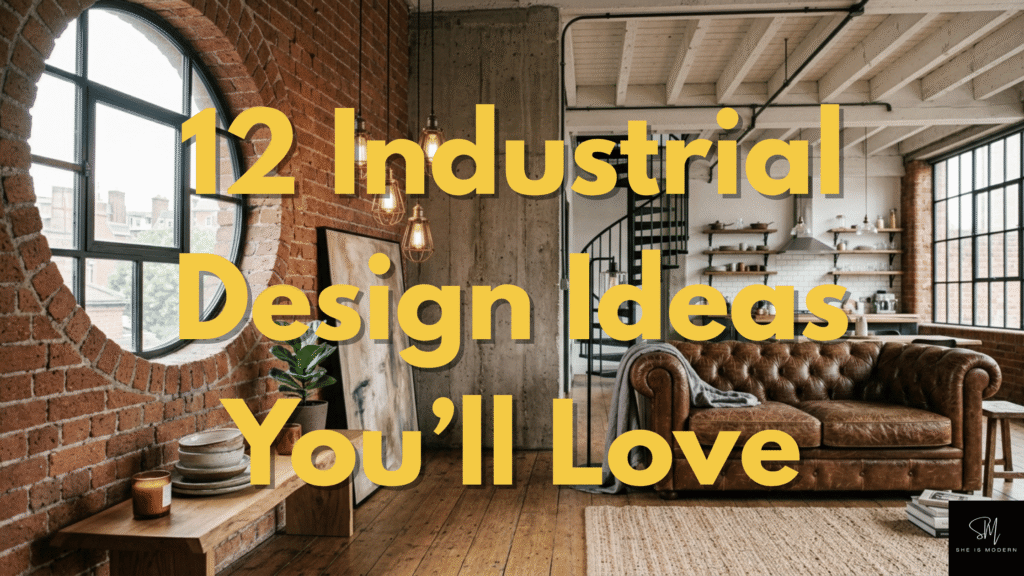
Industrial design is a celebration of raw materials, structural honesty, and functional aesthetics. Originally born from the conversion of old factories into living spaces, this style has evolved into a sophisticated interior design language that balances “hard” elements like steel and concrete with “soft” textures and thoughtful lighting. This guide explores 12 curated ideas to help you master this look, ensuring your space feels both architecturally significant and remarkably comfortable.
To achieve a professional result, focus on the contrast between manufactured and organic materials, along with smart builder grade upgrades that look custom to elevate the overall finish. The following concepts are grounded in proven design principles that prioritize durability and visual impact. Whether you are working with a wide-open loft or a traditional apartment, these industrial elements provide a framework for a space that feels intentional, curated, and timeless.
1. Raw Concrete Statement Walls
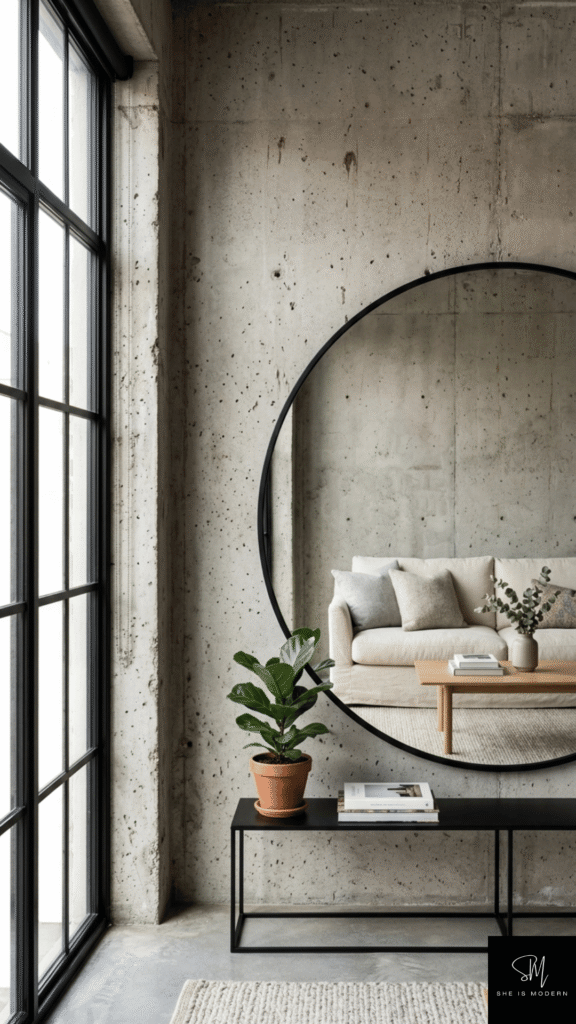
The foundation of authentic industrial design often starts with the raw honesty of concrete. A concrete statement wall provides a neutral yet highly textured backdrop that serves as an anchor for the entire room. Unlike paint, concrete possesses a natural depth with variations in tone and “imperfections” that add character. This architectural element signals a commitment to minimalist, structural beauty, allowing any furniture or artwork placed against it to stand out with sharp definition.
Implementing this look doesn’t always require a structural pour; high quality concrete plasters or micro cement can replicate the cooling gray tones and tactile feel of solid stone. To ensure the space remains inviting, it is essential to balance the hardness of the concrete with organic elements. Pairing a gray concrete wall with warm wood accents, large scale greenery, and soft textiles prevents the room from feeling sterile. This juxtaposition of “cold” stone and “warm” life is the hallmark of professional industrial curation.
2. Exposed Black Steel Beams
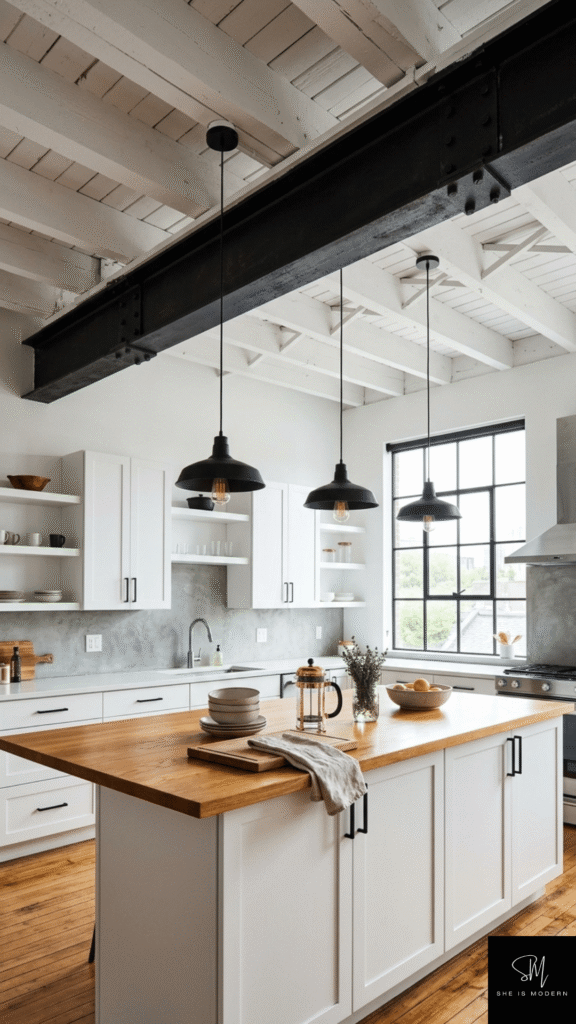
Exposed structural steel is the skeletal essence of industrial architecture. Highlighting beams, particularly when finished in a smooth matte black, creates strong linear perspectives that draw the eye across a space. These black architectural lines define the height of a room and provide a sense of structural security and permanence. In open-plan layouts, a traversing I-beam acts as a visual divider, organizing the space without the need for restrictive walls, maintaining an airy and expansive feel.
For residential spaces where structural steel isn’t present, faux beams finished in matte black provide an identical aesthetic with much easier installation. These elements should be treated as functional art they provide a “weight” to the room that grounds the design. To keep the aesthetic balanced, pair these heavy black lines with bright surfaces and abundant natural light. The goal is to highlight the engineering of the home, making the structural components a primary feature of your interior design.
3. Curated Factory Lighting
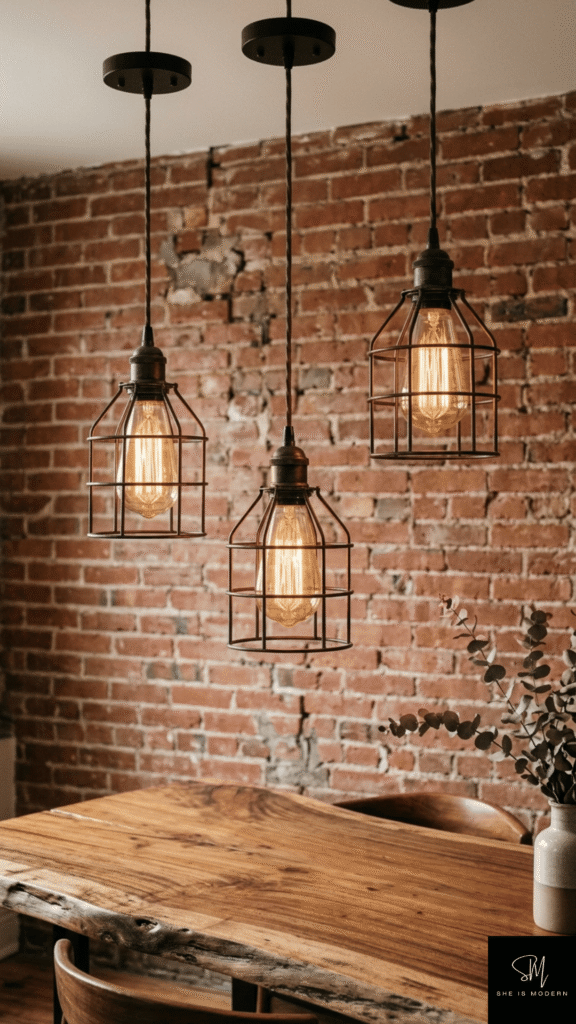
Industrial lighting is defined by its utility and robust construction. Black factory style cage pendants and articulating wall sconces prioritize function, often featuring visible joints, screws, and protective cages. These fixtures add a sculptural, engineered element to a room, acting as focal points that bridge the gap between vintage and modern. By using matte black or aged metal finishes, you create a sharp contrast that emphasizes the mechanical beauty of the light source itself.
The choice of illumination is critical when using industrial fixtures. To avoid a cold environment, always opt for warm toned Edison bulbs with visible filaments. The golden glow of these vintage style bulbs softens the hard metal of the cage or dome, creating an intimate atmosphere. Try grouping pendant lights at different heights or using oversized floor lamps with articulating arms to add a sense of movement and professional layering to your lighting scheme.
4. Visible Brick Accent Walls
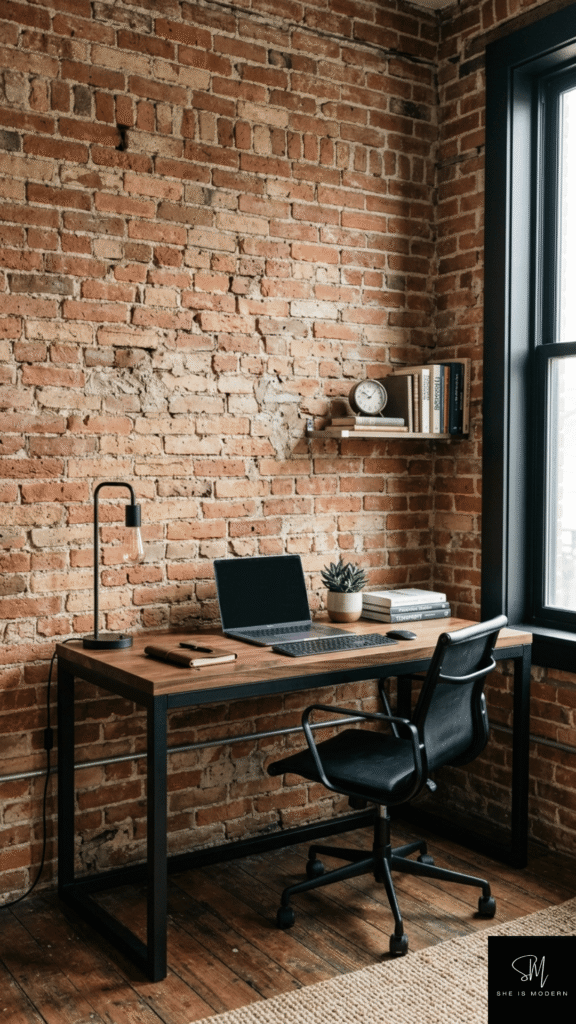
Exposed brick is perhaps the most iconic industrial element, offering a sense of history and warmth that is hard to replicate with modern materials. The natural irregularities in aged brick cracks, varied shades of red, and patches of old mortar provide a rich, tactile surface that breaks up flat walls. Brick introduces an organic, earthy element into the design, serving as a bridge between the industrial “factory” look and a comfortable home environment.
If you don’t have original brick, high quality brick veneers are an excellent way to achieve this look with professional accuracy. For a modern take, consider a “limewash” or a light gray paint over the brick to maintain the texture while unifying the color palette. Balance the busy pattern of the brick with sleek, minimalist furniture and metallic accents. This ensures the room feels edited and purposeful, rather than cluttered or overly rustic.
5. Matte Black Hardware Accents
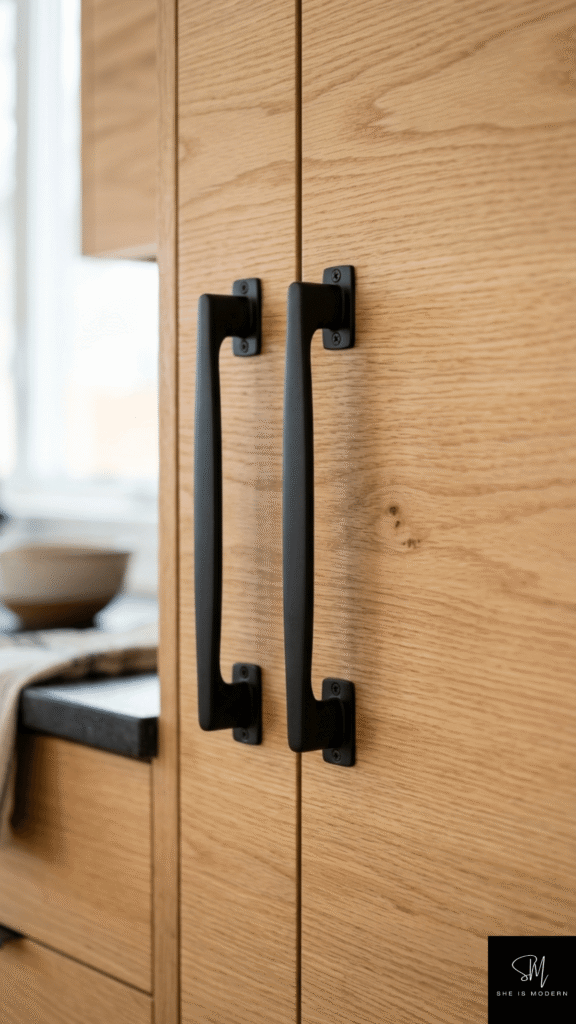
Hardware is the “jewelry” of industrial design, and matte black is the standard for a sophisticated, urban look. Swapping out standard chrome or nickel for black cabinet handles, door hardware, and faucets provides instant architectural definition. These dark accents act as anchor points throughout a room, providing a consistent visual thread that ties the industrial theme together. The flat finish of matte black absorbs light, creating a bold, high-contrast silhouette against lighter surfaces.
This strategy is particularly effective in kitchens and bathrooms, especially when paired with simple upgrades that look custom for a more refined finish. When matte black hardware is set against white subway tiles or natural wood, the result is a clean, engineered aesthetic that feels both custom and high end. To maintain a professional look, ensure that all hardware finishes match throughout the space. This repetition of black metal reinforces the industrial narrative and proves that even small details can significantly impact the overall authority of your design.
6. Open Shelving with Industrial Brackets
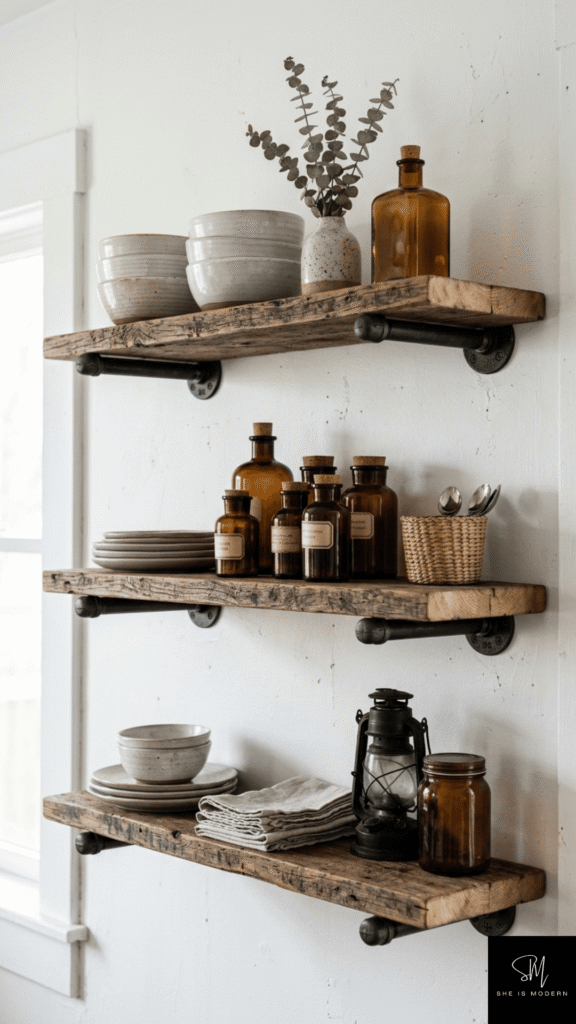
In industrial spaces, everything had a place and a purpose. Open shelving reflects this functional transparency. By using reclaimed wood planks supported by black iron piping or heavy steel brackets, you create a storage solution that is both sturdy and visually light. This approach removes the bulk of traditional cabinetry, allowing the wall texture (like brick or concrete) to remain visible, which enhances the room’s sense of scale and openness.
The success of open shelving lies in the curation of the items displayed. To maintain an expert aesthetic, group items by color or material, such as white ceramics or amber glassware. This prevents the “cluttered” look and emphasizes the “functional art” aspect of industrial design. Open shelving is a perfect opportunity to mix materials, the combination of rough-hewn wood and cold black metal brackets creates a tactile experience that is essential for a well-rounded industrial interior. To see how industrial design compares to 7 other complete interior styles, our Interior Design Master Guide breaks down every style with palettes and room-by-room plans.
7. Reclaimed Wood Elements
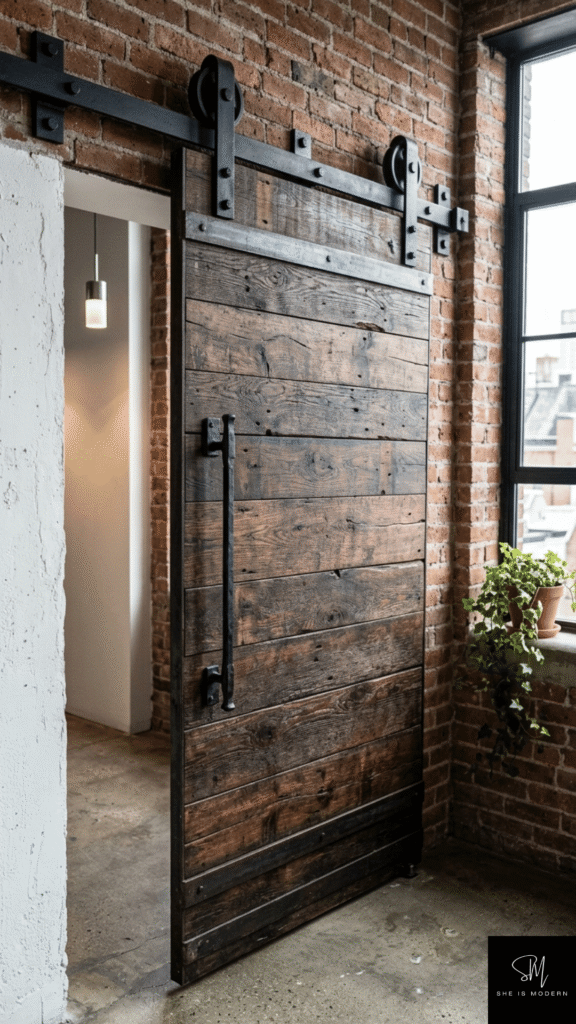
Industrial design can often lean toward the “cold” side due to the abundance of metal and stone. Reclaimed wood is the necessary antidote. Salvaged timber with its knots, grain patterns, and weathered history adds an organic warmth that makes a space feel human and lived in. Whether used as a sliding barn door, a thick dining table, or a ceiling accent, reclaimed wood provides a textural soul to the room that balances the harder industrial surfaces.
Using wood with a visible history such as old barn siding or factory floorboards reinforces the E-E-A-T principle of authenticity. These materials aren’t just decorative; they carry a structural narrative. Pair a robust wooden table with sleek metal chairs to achieve a perfect equilibrium. This contrast between the natural world and the industrial world is what makes this design style so enduring and visually compelling for modern living.
8. Black Grid Windows
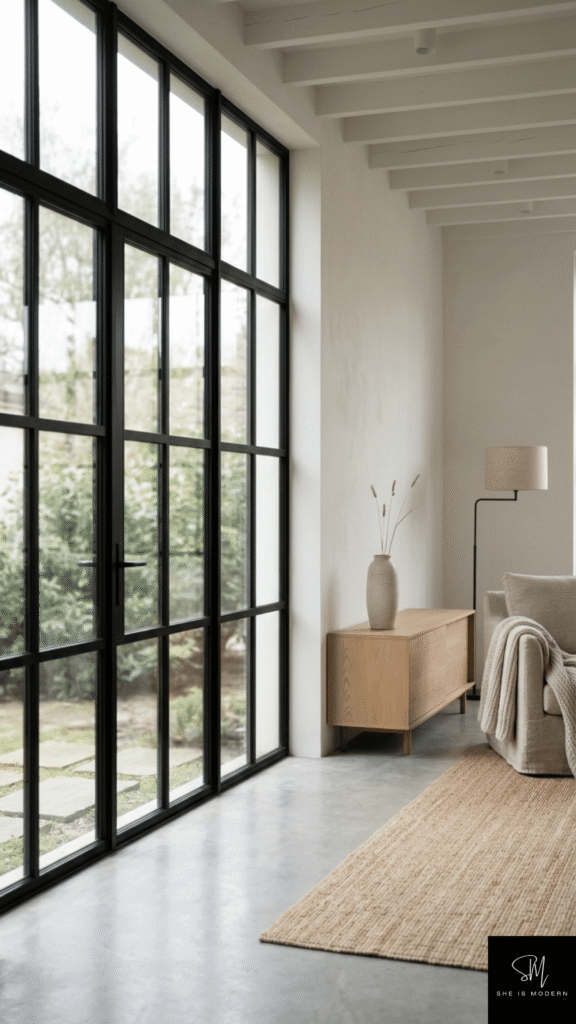
Black metal-framed windows, often called “factory” or “Crittall-style” windows, are a hallmark of the industrial aesthetic. The grid pattern creates strong geometric lines that turn a simple view into a framed piece of art. These windows maximize natural light while adding an undeniable architectural weight to the room. The thin black profiles provide a sleek, modern edge that works harmoniously with both historic brick and contemporary concrete.
If a full window replacement is not feasible, the same aesthetic can be achieved through interior glass partitions or large scale grid mirrors. These elements help distribute light throughout the home while maintaining the industrial theme. The black grid acts as a graphic element in the room, providing a sense of order and structure. Pairing these windows with simple, neutral window treatments ensures that the architectural lines remain the focal point of the space.
9. Minimalist Steel Staircases
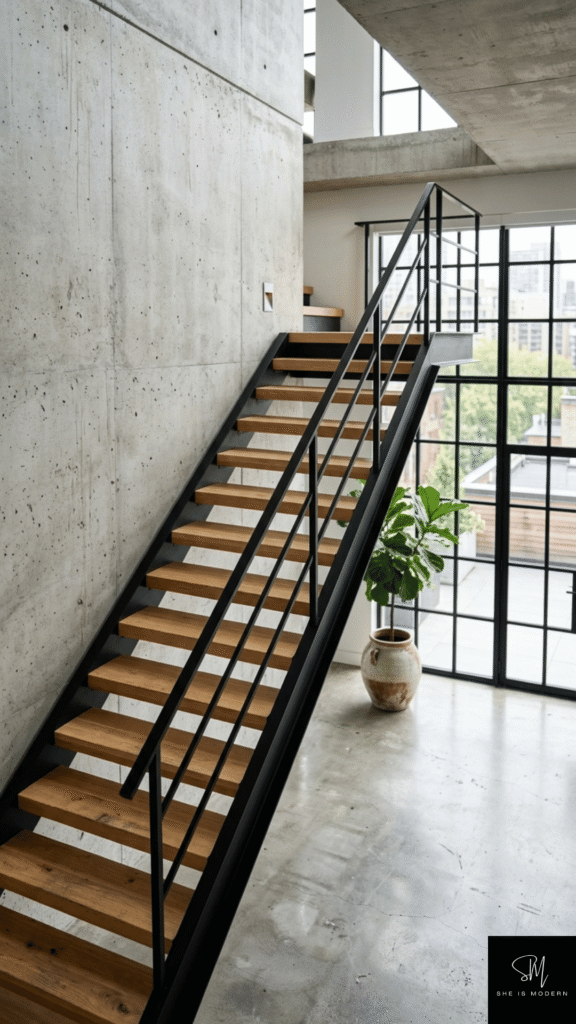
Industrial staircases are masterclasses in engineering and transparency. By using open treads (removing the vertical risers), you allow light to flow through the structure, making the staircase feel like a floating sculpture. A central black steel stringer provides the necessary structural support while maintaining a slim, minimalist profile. This design choice is ideal for modern interiors where maintaining sightlines and a sense of “airiness” is a priority.
To complete the industrial look, use steel wire mesh or horizontal cables for the railing instead of traditional wooden balusters. This keeps the design language consistent and “light.” The mix of warm wood treads and cold black steel creates a tactile journey through the home. A well-designed industrial staircase isn’t just a way to move between floors; it’s a bold statement of the home’s structural integrity and modern design philosophy.
10. Exposed Mechanical Ductwork
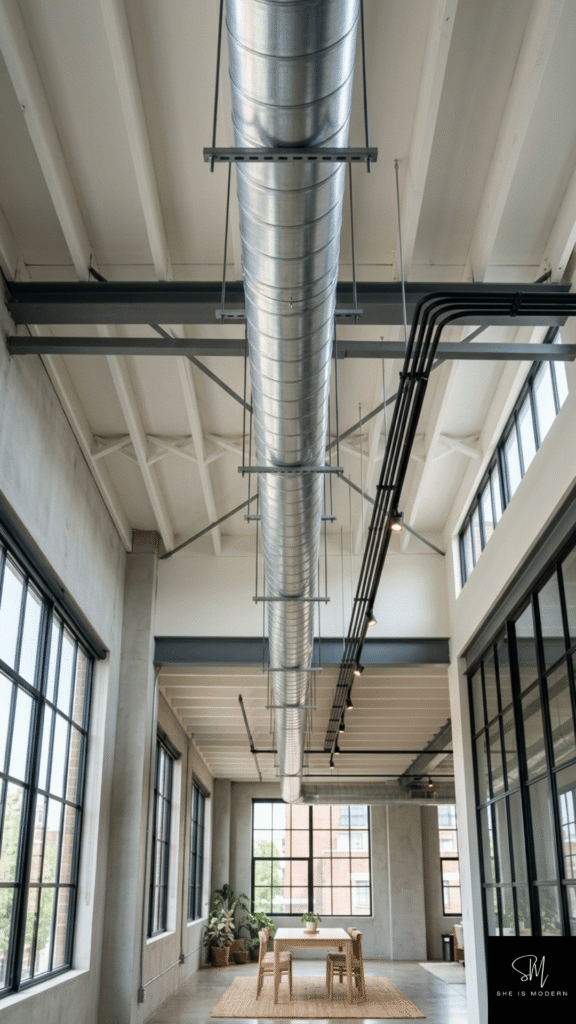
One of the boldest moves in industrial design is the decision to leave mechanical systems exposed. Instead of hiding air ducts behind drywall, showing the silver spiral ductwork adds a layer of “urban” texture to the ceiling. This celebrates the building’s functionality and creates a linear design element that guides the eye through the room. It’s a design choice that signals honesty and an appreciation for the “workings” of a home.
For this to look professional, the ductwork must be installed with precision. Clean, straight runs and symmetrical joints are essential to prevent the space from looking unfinished. If silver metal feels too industrial, ductwork can be painted matte black for a high-contrast look or white to blend into the ceiling while still providing a subtle 3D texture. High ceilings are the best canvas for this idea, as they provide the space needed for these large-scale elements to breathe.
11. Polished Concrete Flooring
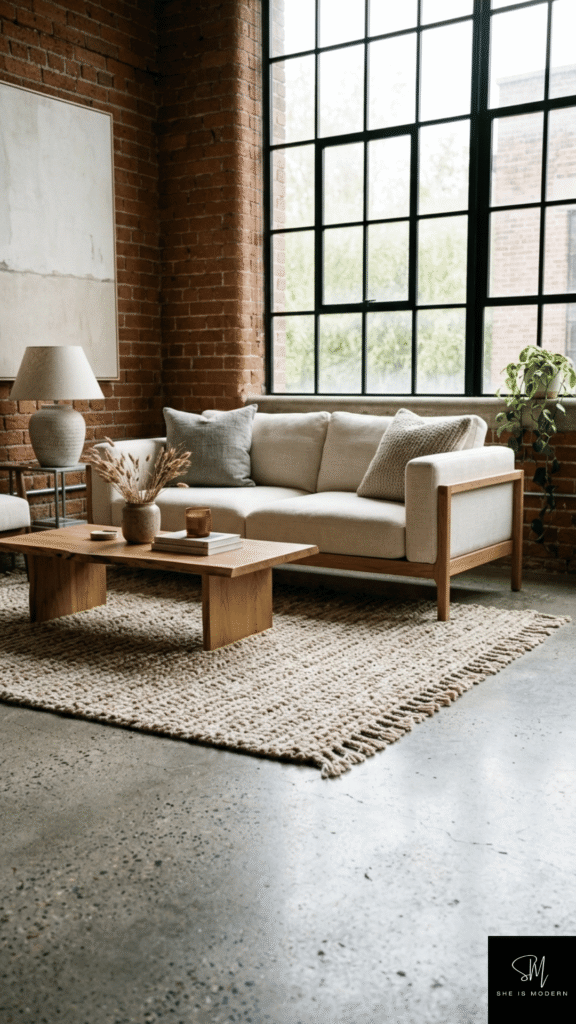
Concrete flooring is the ultimate industrial foundation. It is incredibly durable, sustainable, and provides a seamless visual flow that traditional tiling or hardwood cannot match. A polished finish gives the concrete a sophisticated sheen that reflects light, while a matte finish feels more raw and earthy. The natural variations in the concrete tiny fissures or shifts in gray give the floor a unique “patina” that improves with age and use.
To prevent a concrete floor from feeling too cold or “industrial” in a residential setting, layering is key. Use large-scale area rugs with deep textures or bold patterns to define seating areas and add physical warmth. Concrete is an excellent thermal mass, making it ideal for homes with radiant underfloor heating. This combination of “hard” industrial flooring and “soft” comfort creates a high-end, gallery-like feel that is perfect for displaying modern furniture.
12. Weathered Leather Seating
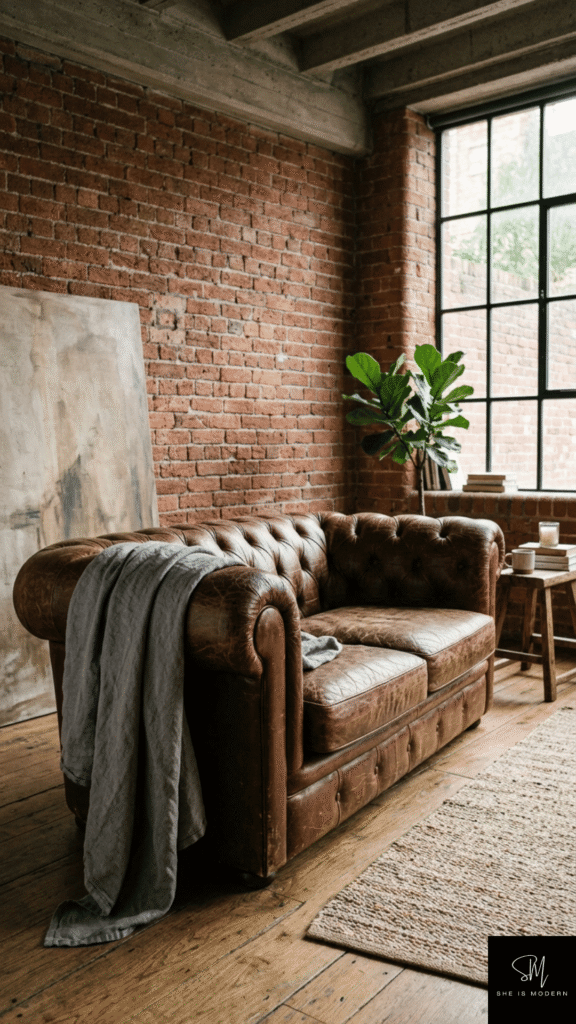
Every industrial space needs a “soft landing,” and nothing provides that better than weathered leather. A large leather sofa or set of club chairs adds an immediate sense of luxury and comfort to a room dominated by metal and stone. The natural distress of the leather the scuffs, the oils, and the softened texture complements the “imperfect” beauty of industrial materials like brick and reclaimed wood. Leather is a tactile material that grounds the room and provides a much-needed organic warmth.
To maintain a modern aesthetic, choose leather in deep tans, browns, or blacks. Avoid overly shiny or “new” looking leather; the more character the material has, the better it fits the industrial narrative. Balance the heavy weight of a leather sofa by styling it with lighter textiles, such as linen throws or cotton pillows. This ensures the seating area feels balanced and inviting, proving that industrial design can be just as comfortable as it is stylish.
If you want to elevate your space without a full renovation, explore these budget friendly home upgrades to achieve a high-end industrial look on a budget.