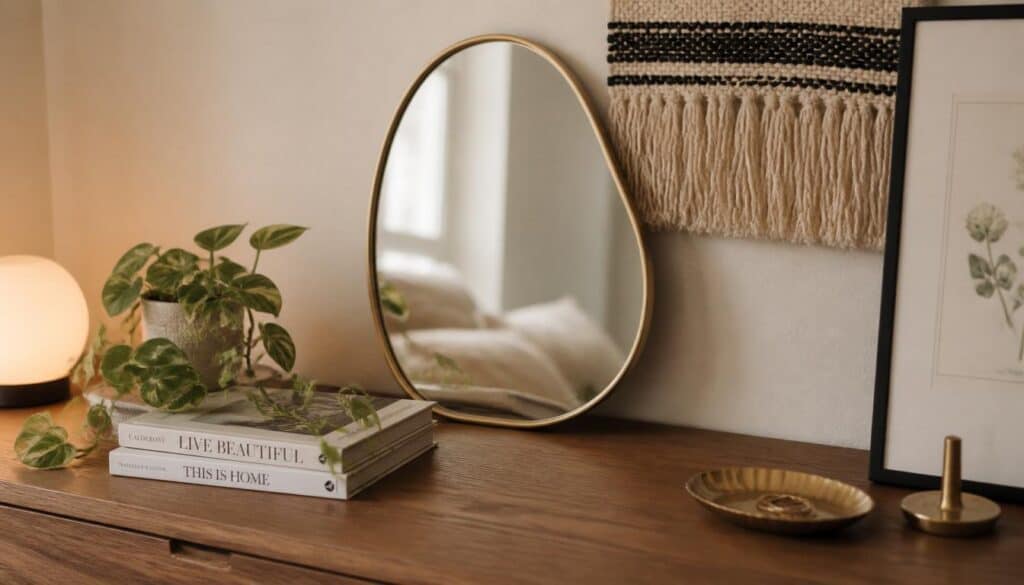
A bedroom wall does more visual work than people give it credit for. It’s the first thing you see waking up and the last thing you see falling asleep, and yet so many bedrooms leave that wall completely bare or scattered with whatever frames happened to survive the last move. I’ve transformed plenty of forgettable bedrooms using nothing more than wall styling, no new furniture, no paint, just a thoughtful approach to what actually goes up there.
What I love about wall decor specifically is how much impact it delivers relative to effort. A well styled wall can make a rented apartment feel like home or a builder basic bedroom feel genuinely designed. These 13 ideas come from walls I’ve actually styled and lived with, the kind of specific, practical detail, spacing, materials, mounting tricks, that separates a wall that looks intentional from one that just has stuff hung on it.
1. Build an Asymmetric Gallery Wall Above the Headboard
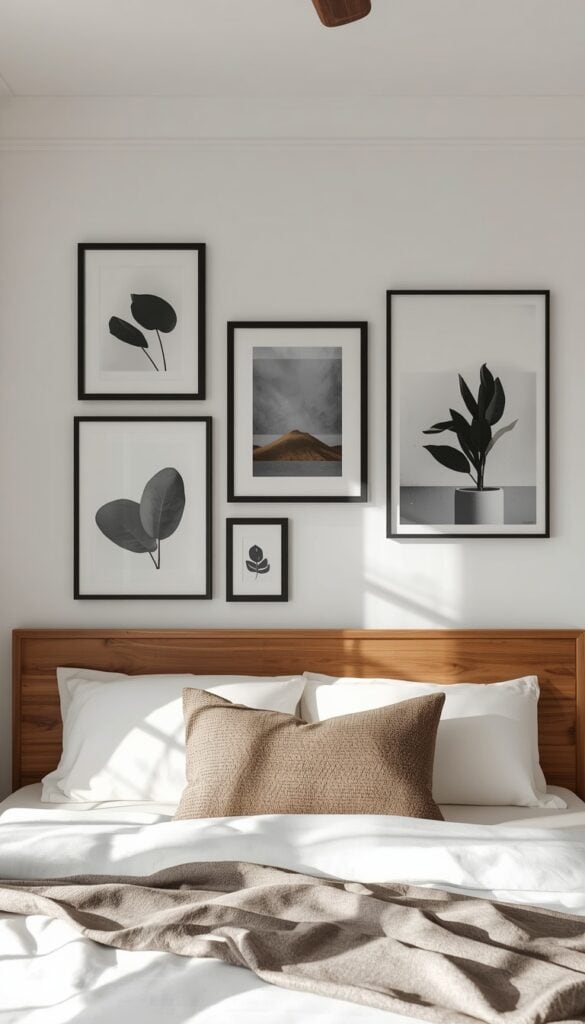
An asymmetric gallery wall above the headboard turns the bedroom’s most visually dominant spot into a genuine focal point, and the asymmetric arrangement specifically reads as more current and collected than a rigid grid layout. I plan every gallery wall on the floor first, arranging frames in different combinations until the spacing and visual weight feel balanced, before a single nail touches the actual wall.
Frame variety matters more than people initially think for this specific layout. I mix three to five frame sizes, never more than two frame finishes, black metal and warm wood work beautifully together, since too many competing materials makes an asymmetric arrangement look chaotic rather than intentionally collected. Consistent spacing of two to three inches between frames, even in the loose layout, keeps everything feeling cohesive.
Content selection should mix mediums rather than relying purely on photography or purely on prints. I combine one or two photographs, an abstract print, and a small textural piece like a woven hanging within the same arrangement, since this variety creates genuine visual interest that a wall of identical framed photos simply doesn’t achieve, regardless of how beautiful the individual images are.
2. Add a Large Scale Botanical or Nature Print as a Statement Piece
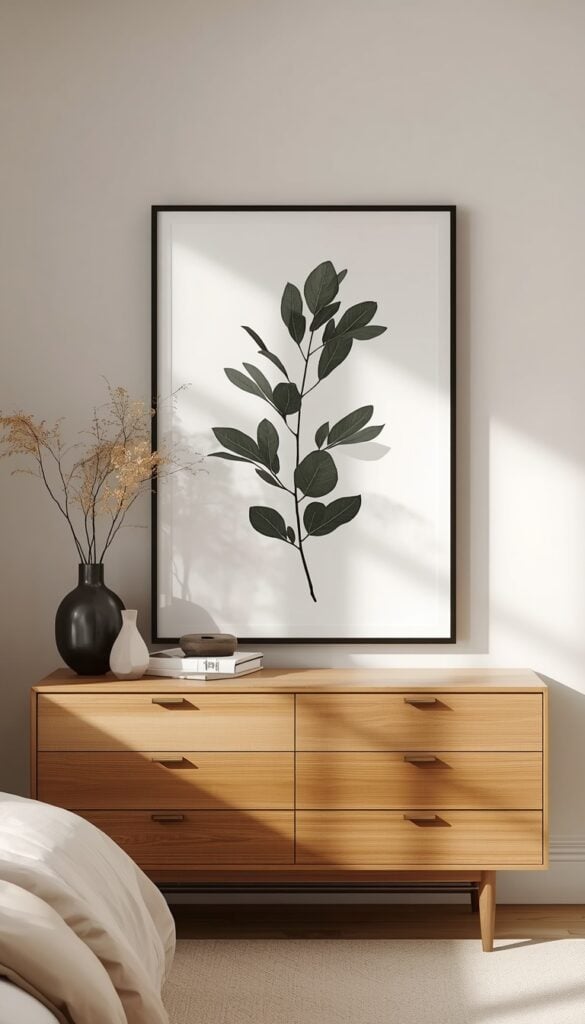
A single, oversized botanical or nature print does more for a bedroom wall than a dozen small frames scattered across the same space, since the scale alone creates genuine visual impact without requiring complicated arrangement or styling decisions. I recommend sizing this piece to cover at least sixty percent of the available wall width above a dresser or beside a window, since anything smaller gets visually lost on a large, empty wall.
Print subject matter affects the room’s overall mood significantly. I lean toward botanical illustrations, abstract landscapes, or close up nature photography specifically for bedrooms, since these subjects read as calming rather than stimulating, which matters in a space meant primarily for rest. Avoid busy, high contrast imagery here, since it works against the relaxed mood a bedroom should genuinely support.
Framing choice should stay simple and let the print itself remain the visual focus. I use a thin black metal or simple wood frame specifically, avoiding ornate or heavily detailed frame styles that compete with the artwork. A statement piece this large needs breathing room around it too, so I leave at least eight inches of clear wall space on all sides whenever the room allows it.
3. Hang a Woven Tapestry as a Soft Textural Backdrop
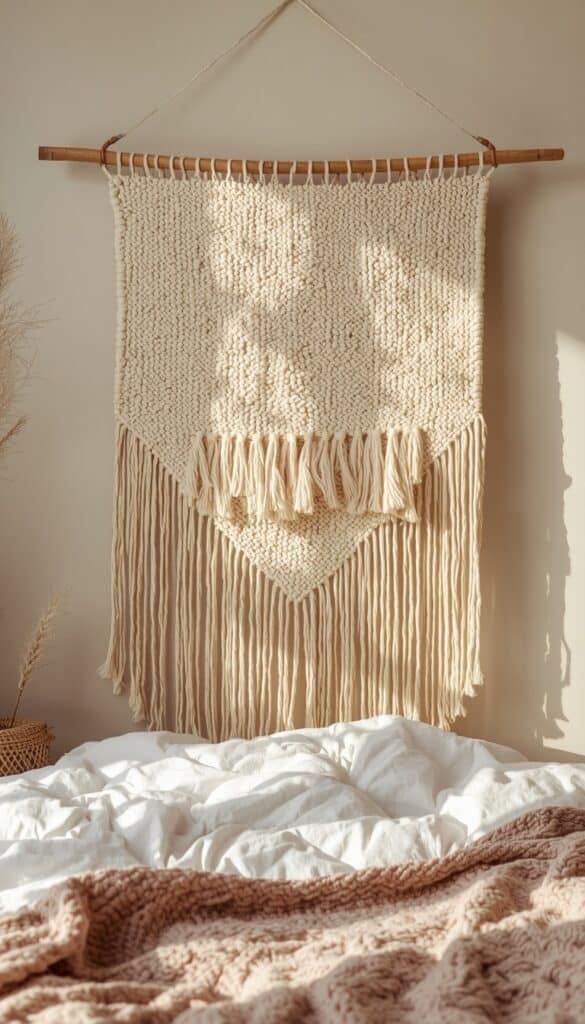
A woven tapestry brings genuine softness and texture to a bedroom wall that flat artwork simply can’t replicate, and it works beautifully as either a headboard backdrop or filling an awkward, empty wall section elsewhere in the room. I look for tapestries with varied weave texture and natural fringe, since this handmade quality reads as far more intentional than a flat, machine printed wall hanging mimicking the same look.
Mounting technique affects how the tapestry actually hangs and drapes once it’s up. I thread a simple wood dowel through a fabric sleeve sewn or pinned at the top edge, then hang the dowel from two small hooks, rather than pinning the fabric flat against the wall. This lets the tapestry fall with natural, soft folds instead of looking stiff and perfectly flat.
Size proportion to the wall matters significantly for how intentional this piece feels in context. I generally recommend a tapestry covering at least half the headboard’s width when used behind a bed, since a too small tapestry reads as an afterthought rather than a genuine design choice. Larger tapestries that extend slightly beyond the bed’s width on each side create the most cohesive, considered look.
4. Create a Mirror Cluster for Light and Visual Depth
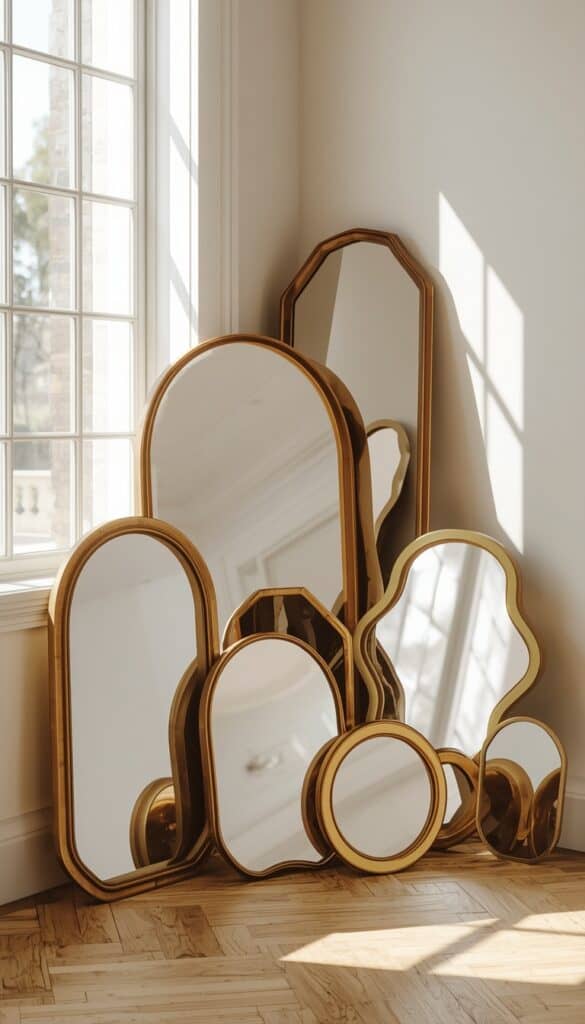
A cluster of mirrors in varying shapes and sizes does double duty on a bedroom wall, bouncing natural light deeper into the room while also functioning as genuine sculptural wall art. I group three to five mirrors of different shapes, round, arched, and irregular organic forms, rather than matching mirrors, since this variety creates a more dynamic, gallery-like effect than a uniform set would achieve.
Frame finish consistency matters more than shape variety for keeping this cluster looking cohesive rather than randomly assembled. I choose one metal tone, brushed brass or matte black, across every mirror in the cluster, since mixing finishes here, even with interesting shape variety, starts reading as mismatched rather than intentionally eclectic once they’re all grouped together on one wall.
Placement directly across from or beside a window maximizes the actual light bouncing function this cluster provides beyond its decorative value. I’ve brightened genuinely dim bedrooms significantly just through correct mirror cluster placement relative to the room’s existing natural light source, which matters as much as the visual styling itself when choosing exactly where on the wall to position the whole arrangement.
5. Install Floating Shelves Styled with Curated Objects
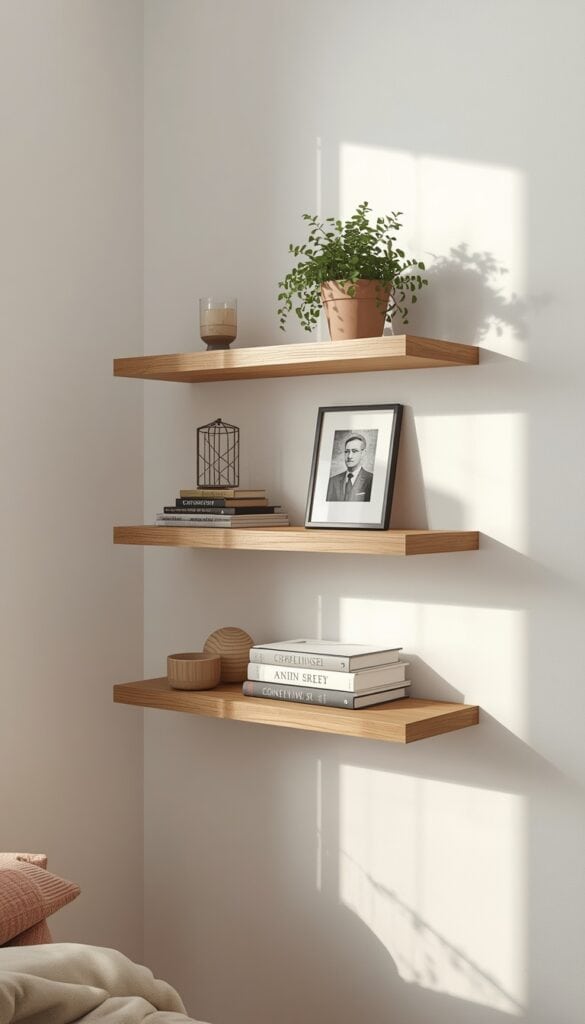
Floating shelves on a bedroom wall create dimensional, three dimensional interest that flat artwork alone can’t provide, while also offering genuine functional display space for books, small plants, and meaningful objects. I install these in a staggered, offset pattern rather than perfectly aligned shelves, since the slight asymmetry reads as more curated and less like generic store shelving.
Bracket strength matters for both safety and the shelf’s actual usefulness here. I anchor floating shelves directly into wall studs using brackets rated for at least twenty pounds, since bedroom shelves often hold books and ceramic objects that add up in weight quickly, and a sagging or pulling shelf undermines the whole styled effect you’re working to create.
Styling restraint is what separates a curated shelf from a cluttered one. I limit each shelf to three to five objects maximum, varying height and texture, a small stack of books, a single plant, one framed photo leaning rather than hanging, since overcrowding even a well built shelf makes the whole wall feel busy rather than intentionally styled.
6. Add a Neon or LED Word Sign for Personality and Glow
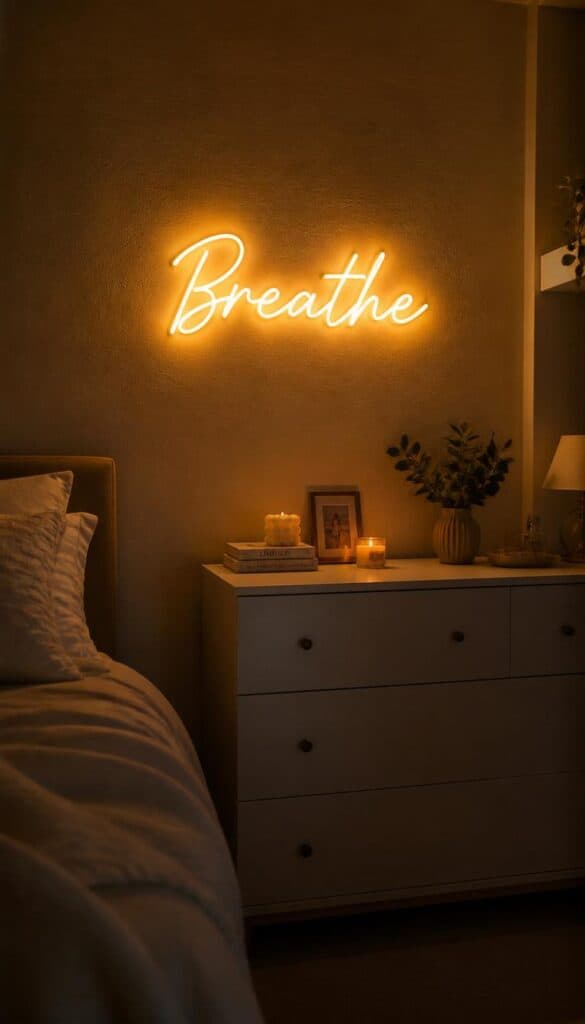
A neon style or LED word sign brings genuine personality and a soft, ambient glow to a bedroom wall, working as both daytime decor and nighttime mood lighting simultaneously. I recommend choosing a short word or simple phrase, three to five words maximum, since longer text becomes visually busy and harder to read clearly from across the room once it’s mounted and lit.
Color choice affects the room’s mood significantly more than people initially expect from what seems like a purely decorative choice. I steer toward warm white, soft pink, or a muted amber specifically for bedroom use, since these tones create a cozy, relaxed glow, while bright blue or harsh white LED signs can feel more like a storefront than a calming personal space.
Mounting hardware varies by sign weight and style, but I always test the actual brightness level at night before finalizing placement, since some signs read as pleasantly ambient while others are genuinely too bright to sleep comfortably near. A sign with a dimmer function or a simple on off remote solves this practical concern without sacrificing the personality this piece adds to the room.
7. Use Wallpaper on a Single Accent Wall as Wall Art
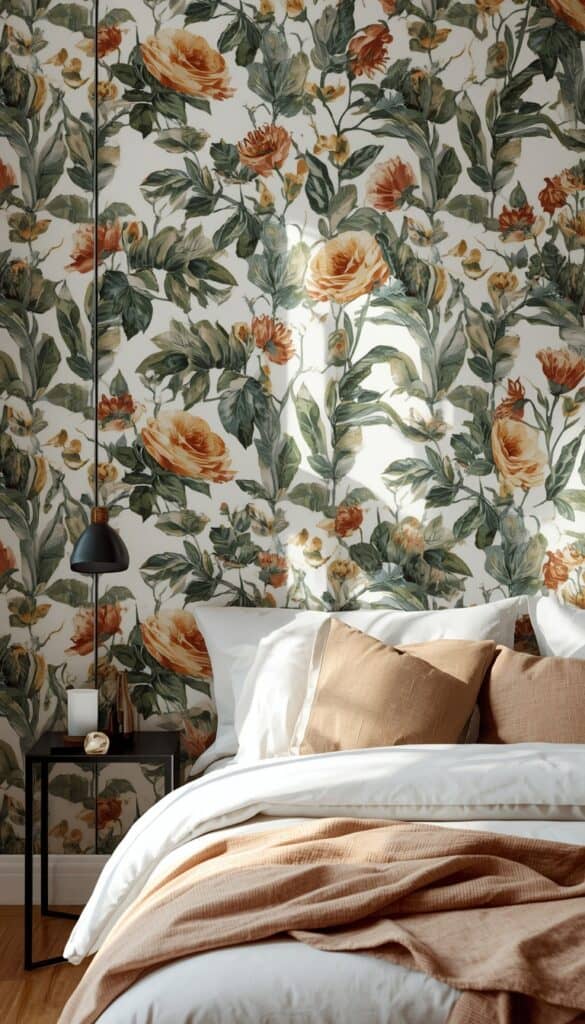
Removable wallpaper on just one wall functions as genuine large scale wall art, delivering far more visual impact than any single framed piece could achieve on its own. I choose this specifically for the wall behind a bed or the wall directly facing the bedroom door, since these spots get the most visual attention and benefit most from this kind of bold, room defining treatment.
Pattern scale matters enormously for how the wallpaper reads within the room’s actual proportions. I choose a larger scale pattern for bigger walls and a smaller, more delicate pattern for compact bedrooms, since an oversized pattern in a small room can feel overwhelming, while a tiny, busy print on a large wall sometimes reads as visually weak and underwhelming from across the room.
Keeping the rest of the room’s decor relatively simple once this wallpaper goes up prevents visual competition. I generally recommend treating a patterned accent wall as the room’s primary visual statement, then styling everything else, bedding, other walls, accessories, in solid, coordinating neutral tones that let the wallpaper remain the genuine focal point throughout the space.
8. Hang a Collection of Wall Sconces for Architectural Light Art
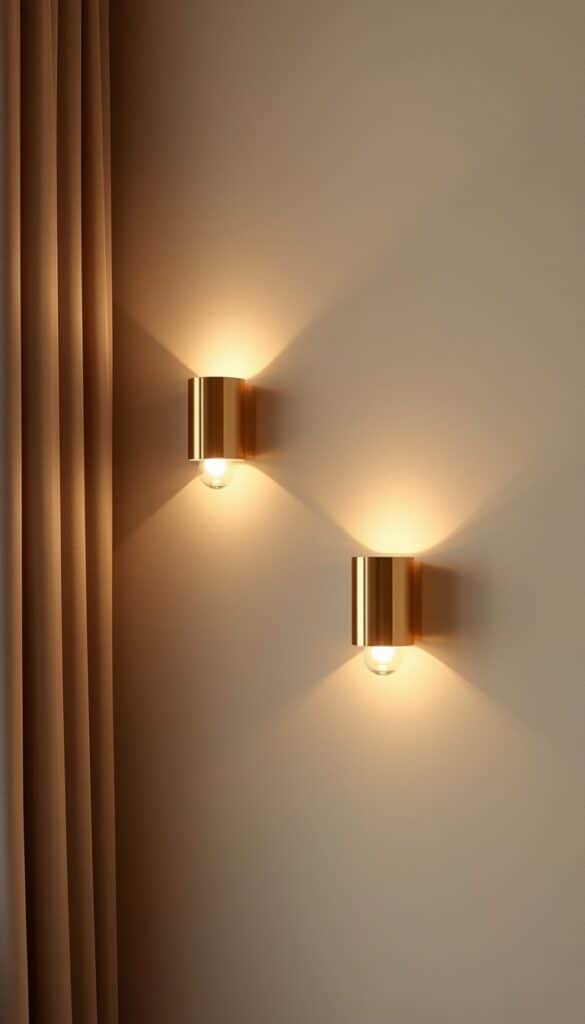
Wall sconces, hung in a deliberate pattern rather than purely functional placement, become genuine architectural wall art while still providing real ambient or task lighting throughout the bedroom. I cluster two to four sconces in an asymmetric pattern on one wall specifically, choosing fixtures with sculptural, interesting silhouettes rather than purely utilitarian designs that disappear visually once installed.
Spacing between sconces in this kind of decorative cluster should follow the same intentional irregularity as an asymmetric gallery wall arrangement. I vary the height and horizontal spacing between each fixture rather than aligning them in a perfectly even row, since this irregular placement reads as a genuine art installation rather than standard, evenly spaced bedroom lighting.
Wiring considerations matter significantly before committing to this styling approach. I recommend plug in sconces specifically for renters or anyone hesitant about hardwired electrical work, routing cords along the wall using paintable cord covers, since this achieves the same decorative, architectural effect without requiring any permanent electrical modification to the actual room.
9. Create a Vertical Plant Wall for Living Texture
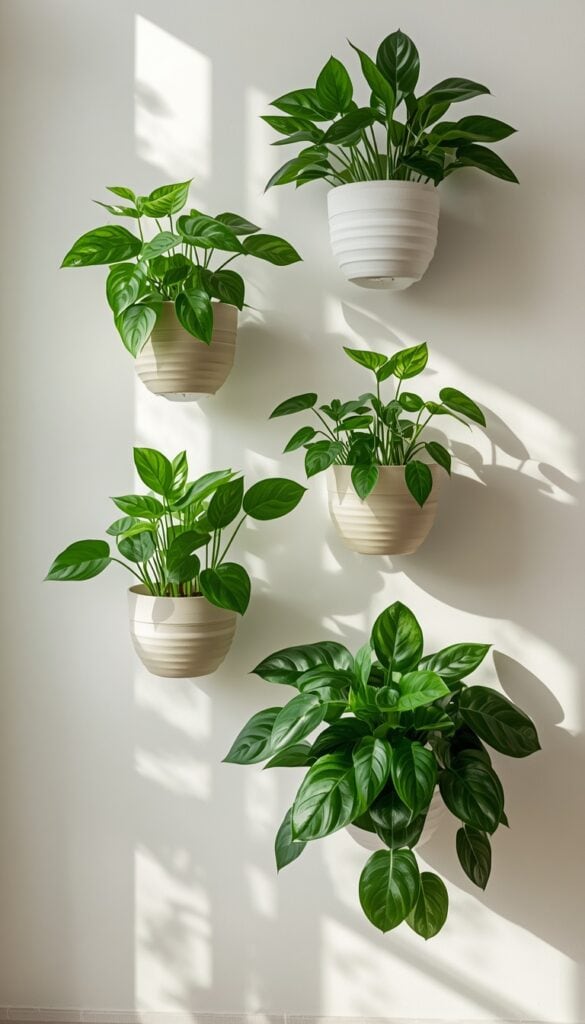
A vertical arrangement of wall mounted planters brings genuine living texture and color to a bedroom wall in a way static decor simply can’t replicate. I stagger three to five small planters at varying heights up one section of wall, using simple wall mounted brackets or a vertical wood ladder shelf specifically designed for plant display, rather than scattering pots randomly without any cohesive structure.
Plant selection should prioritize low light tolerance specifically for bedroom walls, since most bedrooms don’t receive the same direct sunlight a living room or kitchen window might provide throughout the day. I choose pothos, philodendron, or a small ZZ plant for this application, since all three genuinely thrive in lower indirect light and tolerate the inconsistent watering schedule a wall mounted planter setup often requires.
Drainage and moisture protection matter significantly more here than with floor standing plants, given the planters’ direct contact with your wall. I always choose planters with a sealed drainage saucer built in, or place a small protective backing behind each pot, since water damage on a bedroom wall is a genuinely frustrating problem that’s entirely preventable with the right planter choice from the start.
10. Add a Large Clock as Sculptural Wall Art
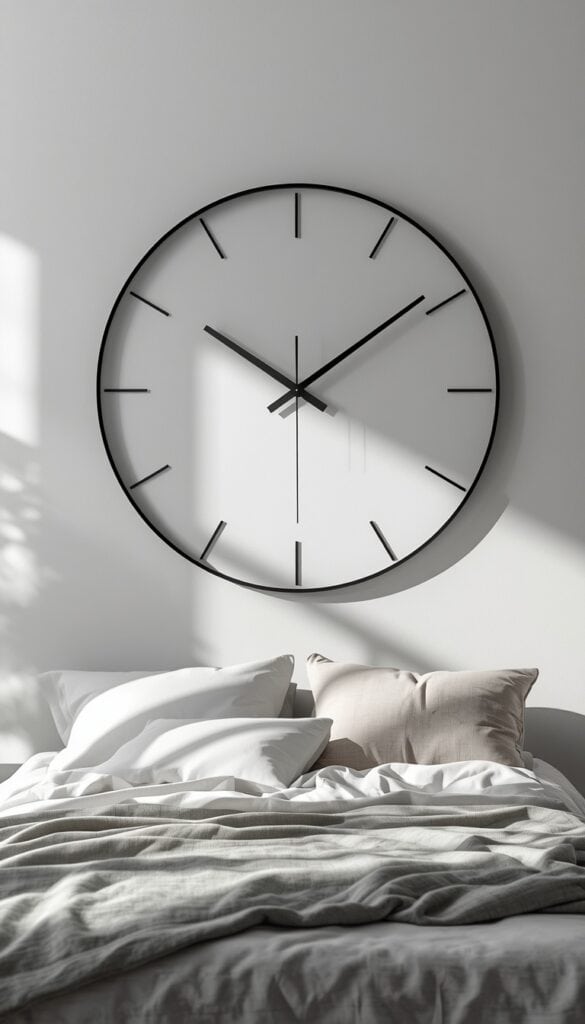
An oversized wall clock functions as genuine sculptural art while still providing the practical benefit of telling time at a glance, which matters in a bedroom where checking your phone for the time often leads to unintended scrolling. I recommend a clock at least 24 inches in diameter for genuine visual impact, since smaller clocks read as purely functional rather than contributing meaningfully to the wall’s overall styled appearance.
Frame and hand design affects whether this piece feels contemporary or more traditional within your room’s broader aesthetic. I choose a minimal, thin framed design with simple, clean hands for most modern bedroom styling, while a more ornate frame with Roman numerals suits a room leaning toward traditional or vintage character instead. Match this choice to your room’s existing style direction rather than treating it as a neutral, universal piece.
Placement should account for actual visibility from where you typically stand or sit in the room, not purely aesthetic wall balance. I position these specifically where they’re easily glanced at from the bed or a reading chair, since a beautiful oversized clock mounted somewhere you rarely look loses the practical function that justified its large scale in the first place.
11. Use a Fabric or Macrame Wall Hanging for Soft Bohemian Texture
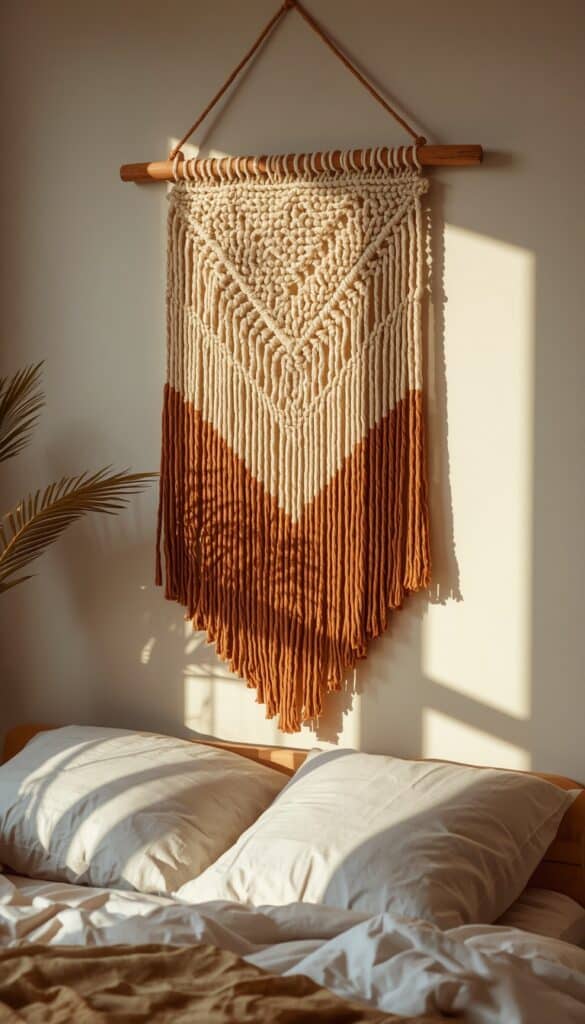
A macrame or woven fiber wall hanging brings a genuinely soft, organic texture to a bedroom wall, working beautifully as either a standalone statement piece or layered alongside other smaller wall decor elements. I look for pieces with varied knot patterns and asymmetric fringe lengths specifically, since uniform, flat weaving reads as more mass produced and less genuinely handmade or interesting once it’s actually hanging on display.
Color choice should stay intentional rather than defaulting purely to natural, undyed fiber every time. I’ve used pieces with a single dyed accent color, a soft terracotta or muted sage woven through an otherwise neutral cream piece, specifically to tie the wall hanging more directly into a room’s existing color palette rather than treating it as a purely textural, color neutral addition.
Hanging weight is genuinely lighter than people initially expect with most macrame and fiber pieces, since they’re typically constructed from cotton rope rather than anything dense. I use a single nail or a small adhesive strip for pieces under three feet wide, making this one of the easiest, most renter friendly wall decor options on this entire list to install and remove without damage.
12. Build a Vertical Library Ladder Shelf for Books and Decor
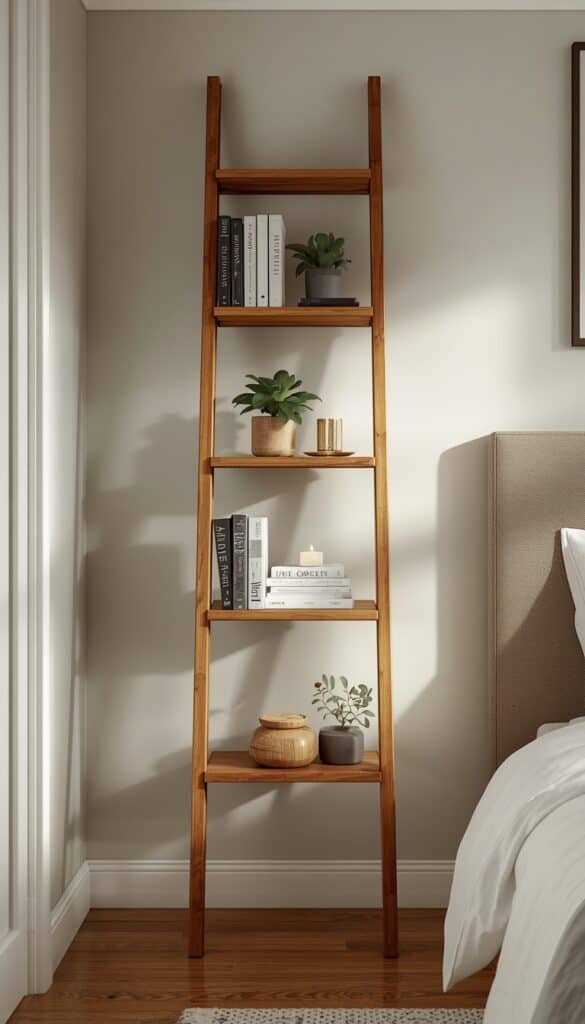
A vertical ladder style bookshelf leaned against a wall combines genuine storage function with sculptural wall styling, working especially well in bedrooms where floor space is limited but vertical wall space remains available. I choose a ladder shelf with at least four to five rungs specifically, since fewer rungs limits the styling and storage flexibility this piece is meant to provide across its full height.
Weight distribution across the rungs affects both stability and visual balance significantly. I keep heavier items, larger books, a stack of magazines, on the lower rungs, with progressively lighter decorative objects, a small plant, a framed photo, a candle, toward the top, since this distribution keeps the whole piece stable while also creating a naturally balanced visual weight from bottom to top.
Leaning angle and wall contact matter for both safety and the finished look. I always check that the ladder shelf’s top rung makes secure, stable contact with the wall, adding an anti tip strap for households with children or pets specifically, since a leaning piece this tall genuinely needs that extra securing measure regardless of how sturdy it initially feels when first set up.
13. Add a Curved or Organic Shaped Mirror as Sculptural Focus
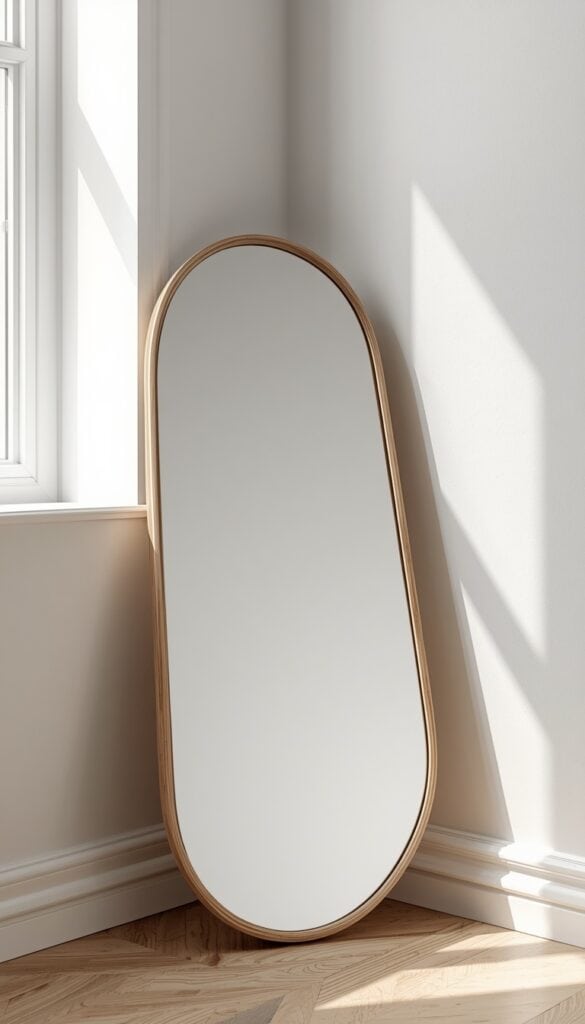
A mirror with an irregular, organic silhouette, something closer to a soft river stone or amoeba shape than a standard circle or rectangle, brings genuine sculptural interest to a bedroom wall while still serving the practical function any mirror provides. I hang these specifically as a standalone statement piece rather than within a cluster, letting the unusual shape itself command attention without competing against other wall elements nearby.
Frame material should echo something else already established in the room’s broader palette rather than introducing an entirely new element. A thin wood frame matching your nightstand’s wood tone, or a frameless mirror with simply polished organic edges, both work beautifully here. I avoid ornate or heavily decorated frames entirely with this particular shape, since the organic silhouette itself should remain the genuine visual focus.
Placement near natural light maximizes both the functional and decorative value this piece provides. I position organic mirrors specifically where they’ll catch and reflect window light throughout the day, since the irregular shape creates interesting, shifting shadow and light patterns as the sun moves, adding a subtle, ever changing quality that a standard, predictably shaped mirror simply doesn’t offer.
Bringing It All Together
Bedroom wall decor genuinely earns its impact through intention rather than quantity, and every idea here proves that a thoughtfully chosen piece or arrangement does more for a room than a wall crowded with random decor ever could. From an asymmetric gallery wall to a single sculptural mirror, the through line is always the same: scale, placement, and material consistency matter more than simply filling empty space. I’ve built every one of these walls myself, adjusting and learning what genuinely worked once I lived with the finished result. Choose one idea that speaks to your bedroom’s actual proportions and light, and let your wall decor finally do the work it’s capable of.
Frequently Asked Questions
Q: How do I plan a gallery wall without making mistakes? A: Lay every frame out on the floor first, arranging and rearranging until the spacing and visual balance feel right before any nails go into the wall. Tracing each frame onto painter’s tape and sticking it to the wall first also helps you visualize the final layout without committing to permanent holes too early.
Q: What size art should I hang above my bed? A: A statement piece or gallery wall should generally cover roughly two thirds of your headboard’s width for the most balanced, proportional look. Anything significantly smaller tends to look undersized and lost above a larger bed, while oversized pieces extending well beyond the headboard’s edges can feel unbalanced in the opposite direction.
Q: Is wallpaper a good option for renters who want bold wall decor? A: Removable peel and stick wallpaper genuinely works well for renters, since quality versions install and remove cleanly without damaging walls when applied and removed correctly. Testing a small patch first and following proper removal technique, gentle heat plus a slow, careful peel, protects your deposit while still delivering real visual impact.
Q: How many mirrors should I include in a mirror cluster? A: Three to five mirrors of varying shapes and sizes typically creates the most dynamic, gallery-like effect without overwhelming the wall. Fewer than three can look sparse and unintentional, while significantly more than five starts requiring careful spacing expertise to avoid the cluster looking chaotic rather than curated.
Q: What plants work best for a bedroom wall display? A: Pothos, philodendron, and ZZ plants all tolerate lower indirect light and inconsistent watering far better than most other houseplants, making them genuinely practical choices for wall mounted bedroom planters. Choosing planters with built in drainage protection also prevents the water damage risk that comes with mounting living plants directly on a wall.
Q: Should bedroom wall decor match the rest of the house? A: Bedroom wall decor doesn’t need to match every other room exactly, since bedrooms are personal spaces that genuinely benefit from reflecting individual taste more freely. Keeping a loose connection through one repeated material or color tone ties the bedroom into your home’s broader style without requiring exact uniformity throughout.
Q: How do I hang heavy wall decor without damaging rental walls? A: Weight rated adhesive strips handle items up to several pounds without nails, while heavier pieces sometimes still require a single small nail that’s far easier to patch than multiple larger holes. Always check the specific weight rating on adhesive products and match it honestly to your piece’s actual weight before hanging.