Lighting changes everything once fall settles in. The same bedroom that felt bright and breezy all summer can suddenly feel flat and a little cold once the days shorten, unless the lighting actually shifts with the season. I’ve rewired, swapped, and layered bedroom lighting through plenty of autumns now, and I can tell you the difference between a room that feels genuinely cozy in October and one that just feels dim comes down to a handful of very specific choices.
This isn’t about buying every warm toned lamp at once. It’s about understanding which light sources do which job, ambient, task, accent, and layering them with intention so the whole room shifts mood as the sun sets earlier each day. These 15 ideas come from bedrooms I’ve actually lit and lived in through the fall season, with the bulb temperatures, placements, and small details that genuinely matter once the light starts changing outside your window.
1. Swap to Warm 2700K Bulbs Throughout the Room
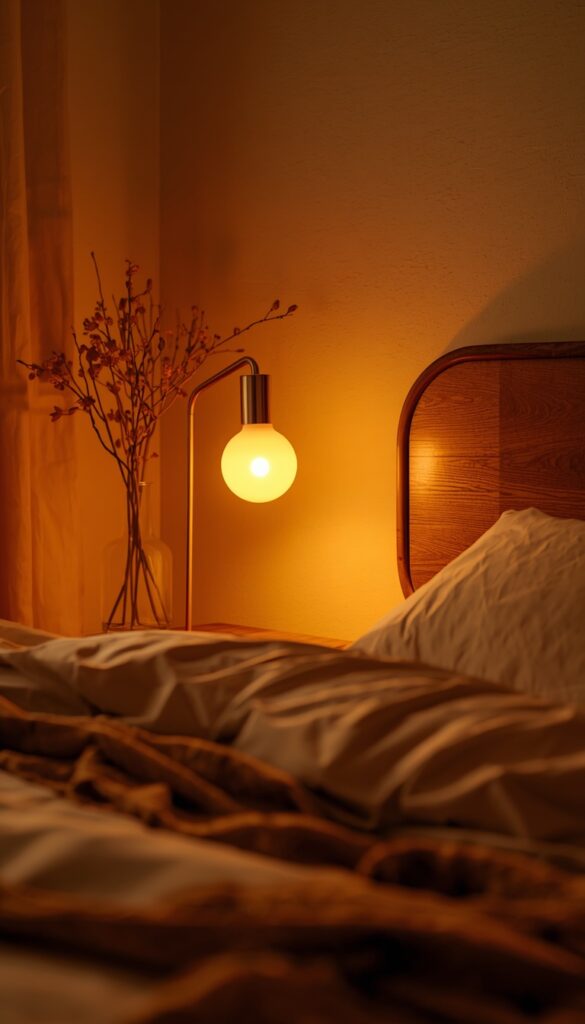
Bulb temperature is the single most important lighting decision for fall mood, and most people don’t realize how much a simple swap changes everything. A 2700K bulb produces that golden, candlelit warmth that genuinely feels like autumn, while anything above 3000K starts reading as clinical and cold, completely wrong for the cozy mood fall lighting should create throughout a bedroom.
I always check every single bulb in a room before assuming the lighting “feels off” for some other reason, since mismatched temperatures between lamps are one of the most common mistakes I see. A warm bedside lamp paired with a cooler overhead fixture creates a visually jarring split that undercuts the cohesive, autumnal glow you’re actually trying to build in the space.
Dimmable warm bulbs give you genuine flexibility beyond just the base color temperature itself. I install dimmable 2700K bulbs in nearly every fixture now, since the ability to soften light further in the evening adds another full layer of seasonal mood control beyond what a fixed brightness warm bulb alone can provide for a bedroom.
2. Layer a Table Lamp with an Amber Glass Shade
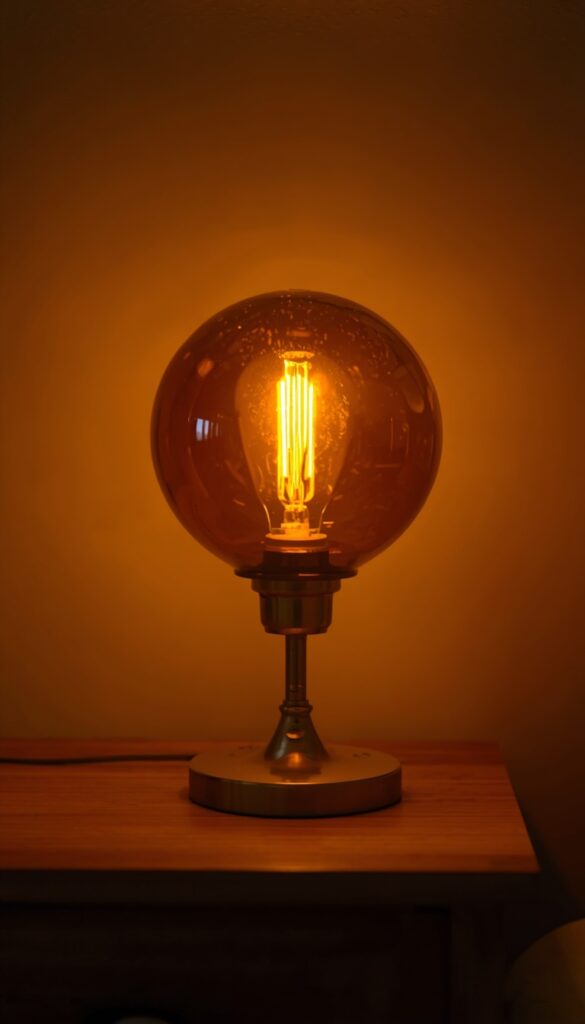
An amber or smoked glass lamp shade filters light through actual colored glass, creating a warmer, more golden cast than a standard white or cream fabric shade achieves on its own. I specifically look for amber glass in the four to six inch diameter range for nightstand lamps, since this size diffuses light evenly without creating harsh, directional shadows across the room.
Placement on a nightstand puts this warm glow exactly where it matters most during fall evenings, close enough to read by but soft enough to wind down with before sleep. I always pair amber glass shades with a warm 2700K bulb specifically, since a cooler bulb shining through amber glass creates an odd, slightly muddy color cast rather than the rich golden tone you’re actually after.
Base material affects the overall mood as much as the shade itself. I choose a brass or warm wood lamp base to echo the amber glass above it, rather than a cool chrome or matte black base, which creates a visual mismatch between the warm light and the cooler toned fixture holding it throughout the evening.
3. Add a Dimmer Switch to Your Main Overhead Fixture
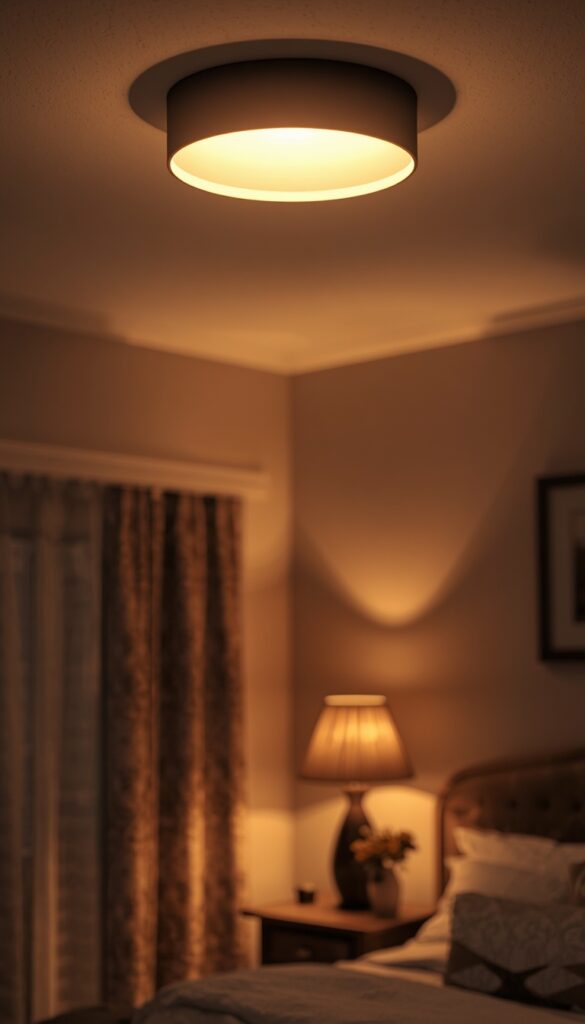
A dimmer switch on your main overhead light gives you genuine control over a fixture that otherwise stays locked at one harsh brightness level regardless of the time of day or season. I install these specifically in bedrooms where the overhead fixture is the room’s primary light source, since a dimmer here does more for overall mood flexibility than almost any other single lighting upgrade.
Compatibility matters before you buy a dimmer switch, since not every bulb or fixture works correctly with standard dimming hardware. I always confirm the bulbs are dimmer compatible LEDs specifically, since incompatible bulbs flicker or buzz audibly when dimmed, which is a genuinely annoying problem that’s easy to avoid by checking packaging before installation.
I generally recommend a smart dimmer with a few preset levels rather than a basic sliding dial, since presets let you instantly recall a specific fall evening brightness level without fiddling each time. This small convenience matters more than people expect once the darker months mean you’re adjusting this light nearly every single day.
4. Use Flameless Candles for Cozy, Flickering Ambiance
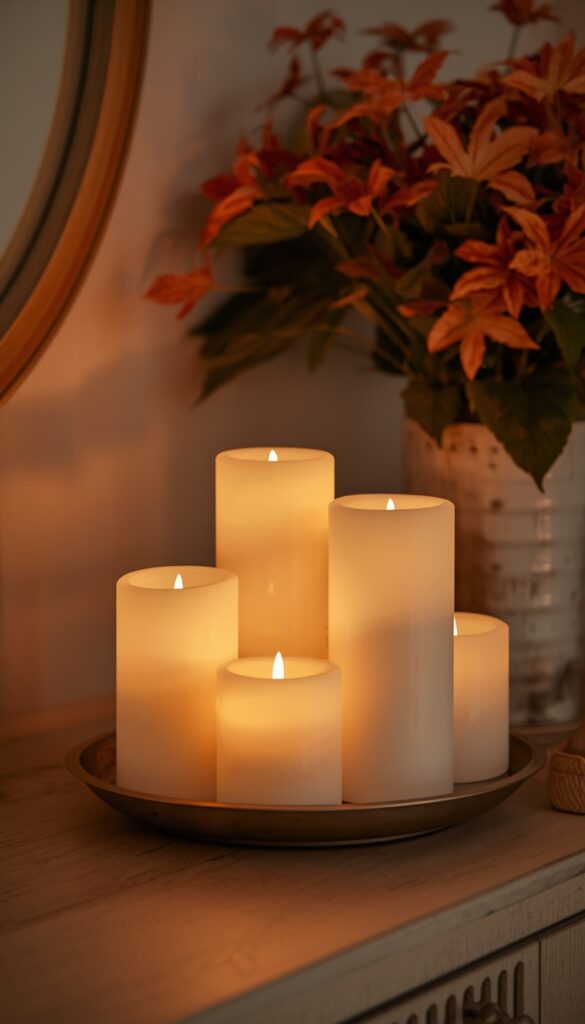
Flameless LED candles deliver genuine flickering warmth without the fire risk of leaving real candles burning unattended overnight, which matters significantly more once fall evenings stretch longer and candles tend to stay lit for extended periods. I look specifically for battery powered versions with a realistic, irregular flicker pattern, rather than a steady glow, since the authentic flicker effect is what actually sells the cozy illusion.
Grouping three to five flameless candles in varying heights on a dresser or windowsill creates more visual impact than a single candle alone. I cluster mine specifically using a small tray underneath, which both contains any wax drips from the candle’s faux exterior and groups the light sources into one cohesive, intentional display rather than scattered individual pieces.
Timer functions built into many flameless candles solve a real daily convenience problem during fall, automatically turning on as natural light fades earlier each afternoon. I genuinely recommend this feature specifically for autumn use, since remembering to manually switch on ambient candlelight every single day as sunset creeps earlier becomes a task most people eventually forget.
5. Hang Pendant Lights on Either Side of the Bed
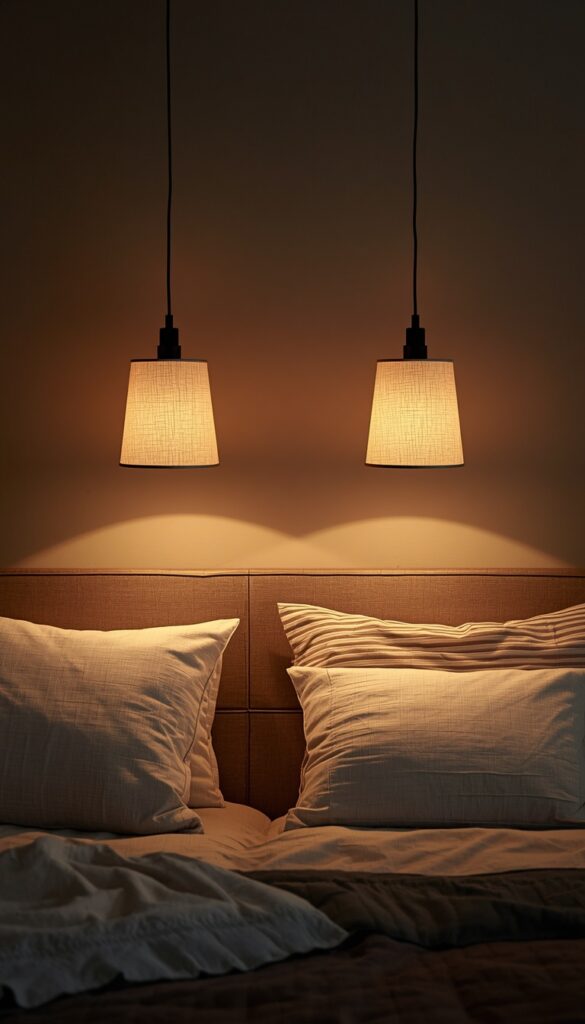
Pendant lights flanking the bed free up genuine nightstand surface space while adding a more architectural, intentional lighting element than a standard table lamp provides. I hang these on adjustable cords specifically, letting you set the exact height for reading without the bulb sitting too high or low relative to where you’re actually seated against the headboard.
Shade material affects the fall mood significantly here, more than with overhead fixtures. I choose linen, rattan, or a warm amber glass shade for this specific application, since these materials diffuse light into a soft, golden glow rather than the harsher, more direct beam an exposed bulb or metal shade tends to throw across the bed.
Symmetry matters less than people initially assume when hanging two pendants. I’ve intentionally varied the shade style slightly between the two sides for clients wanting a more collected, lived in look, though matching pendants still work beautifully if you prefer a cleaner, more formal symmetry throughout the whole bedroom setup.
6. Add Warm String Lights Behind the Headboard
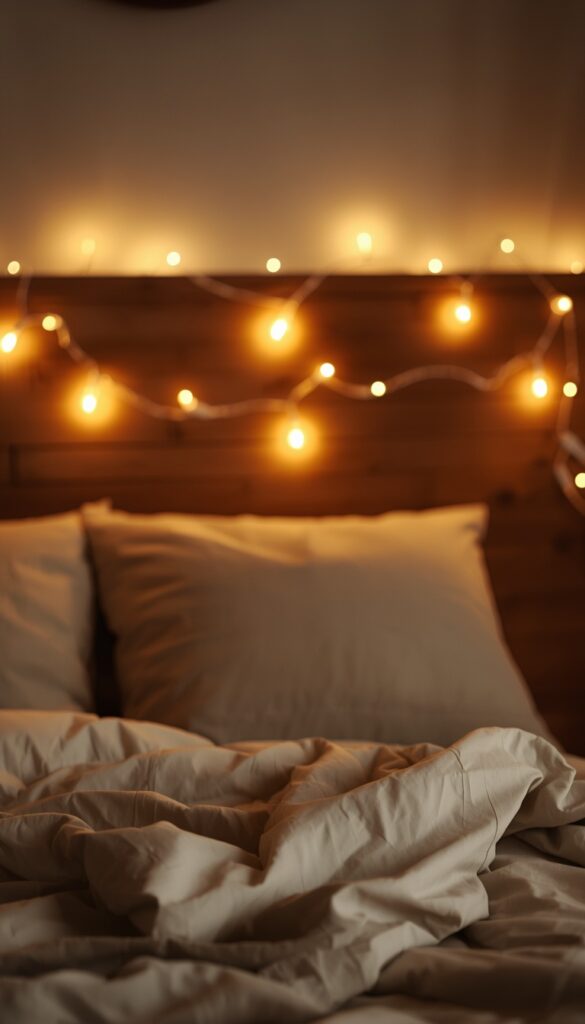
Warm white string lights tucked behind a headboard create a soft, ambient glow that feels especially fitting once fall evenings stretch longer and a single overhead light starts feeling too harsh for the actual mood you want. I always choose 2700K warm white bulbs specifically for this placement, since cooler white string lights clash badly with the autumnal warmth everything else in the room should be working toward.
Battery powered string lights with a remote or timer solve the practical problem of reaching behind a heavy headboard daily to switch them on and off. I tuck the battery pack itself behind the headboard or mattress edge, completely out of sight, while keeping the remote within easy reach on the nightstand for genuine daily convenience.
Density matters for how this actually looks once installed. I loop the lights loosely rather than stretching them taut across the headboard’s width, since a looser drape creates soft, irregular pools of light that read as more intentional and cozy than a perfectly even, taut string would achieve across the same space.
7. Use a Himalayan Salt Lamp for Soft, Warm Ambient Glow
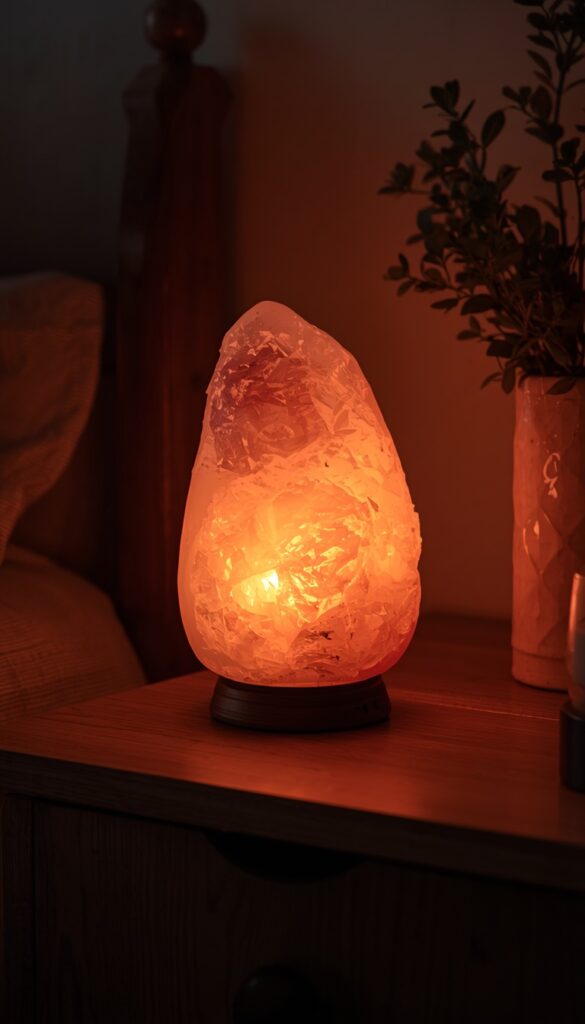
A Himalayan salt lamp produces a genuinely unique warm orange pink glow that comes from the natural mineral itself rather than a colored bulb shade, and that organic, slightly variable color reads as distinctly autumnal in a bedroom. I place mine on a nightstand or low dresser specifically, since the soft light works best as ambient backdrop lighting rather than anything meant for actual reading or task work.
Size affects both the light output and the visual presence of the piece itself. I recommend a medium lamp, roughly six to eight pounds, for an average bedroom nightstand, since smaller lamps produce a noticeably dimmer glow that can feel more like a tiny nightlight than genuine ambient mood lighting throughout the room.
Humidity affects salt lamps more than people expect, since the salt itself naturally absorbs moisture from the air and can develop a slight residue or even drip slightly in particularly damp climates. I keep mine on a small dish or wood base specifically to protect the nightstand surface, and wipe the lamp down occasionally if I notice any surface moisture building up.
8. Add a Floor Lamp with a Linen or Rattan Shade
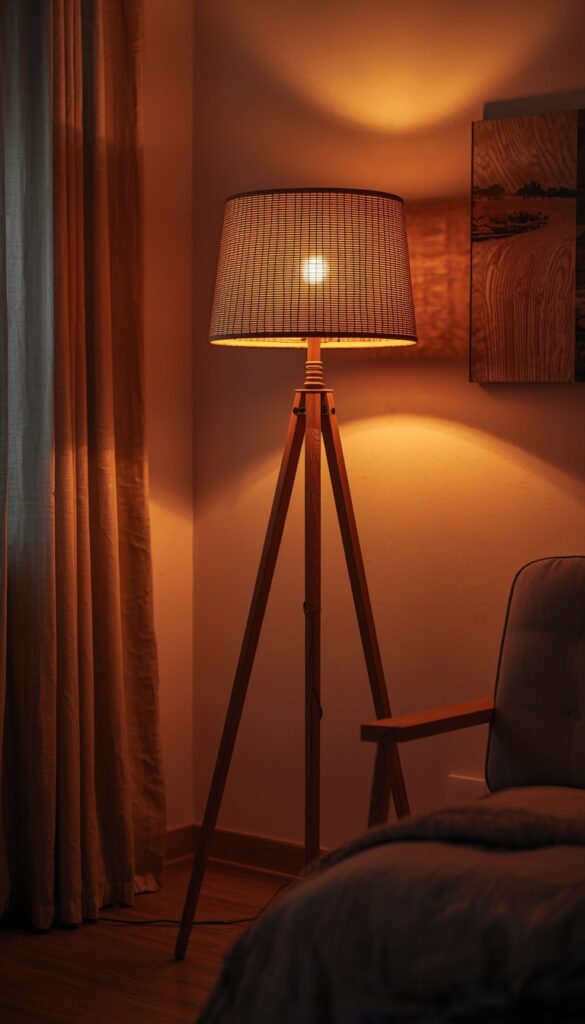
A floor lamp in a corner solves the real lighting gap that exists between an overhead fixture and a nightstand lamp, filling in the room’s broader ambient lighting layer rather than concentrating light only at the bed. I choose linen or rattan shades specifically for fall warmth, since both materials diffuse light into a soft, golden glow rather than the colder, more direct light a metal or glass shade would throw across the same corner.
Placement in an underused corner, beside a reading chair or near a closet, adds genuine functional light to a space that often goes dark otherwise. I position mine roughly three feet from the nearest seating, close enough to provide real reading light without towering awkwardly over a chair or casting an uncomfortable shadow across whoever’s sitting there.
Tripod style bases add a sculptural, autumnal quality that a single straight pole simply doesn’t achieve. I generally pair a wood tripod base with a warm toned shade specifically, since this combination echoes natural materials that feel especially fitting once the season shifts toward cooler weather and warmer indoor lighting throughout the home.
9. Layer Wall Sconces for Architectural, Ambient Light
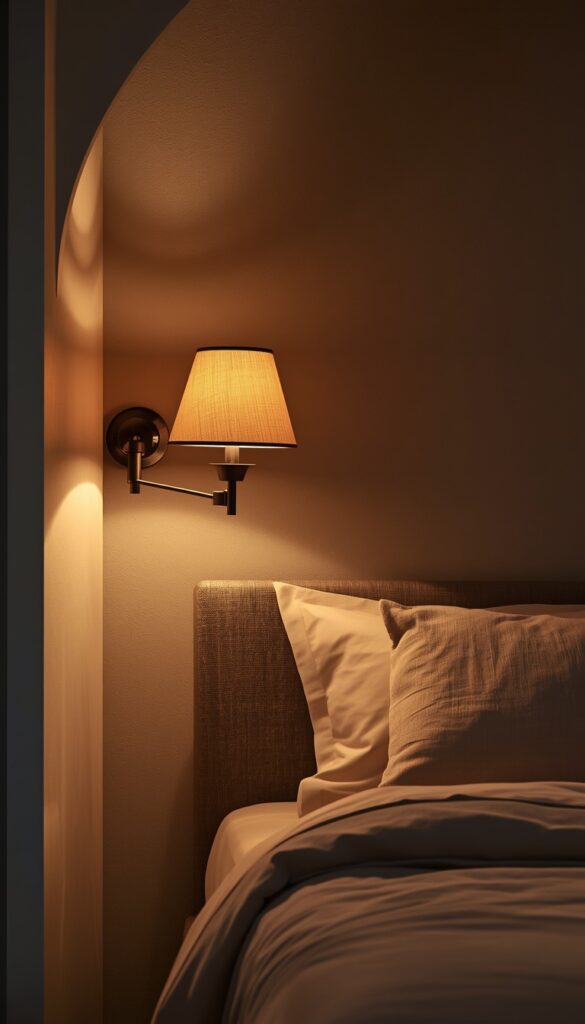
Wall sconces add a genuinely architectural lighting layer that feels more permanent and intentional than lamps alone, while also freeing up nightstand and floor space that lamps would otherwise occupy. I install these flanking the bed at roughly shoulder height when seated, which provides functional reading light without the bulky footprint a table lamp requires on an already crowded nightstand surface.
Adjustable or swing arm sconces give you genuine flexibility to direct light exactly where you need it for reading, then swing it away when you’re ready to sleep. I recommend this style specifically over fixed sconces for bedroom use, since the ability to redirect light makes the fixture far more functional throughout an entire evening’s actual use.
Warm fabric or frosted glass shades on sconces diffuse light more gently than an exposed bulb, which matters significantly for avoiding harsh glare directly beside where your head rests against the pillow. I always test the actual glare angle while lying down before finalizing sconce height, since this detail is easy to get wrong without checking from the actual viewing position.
10. Use a Plug In Wall Sconce for No Wiring Ambient Light
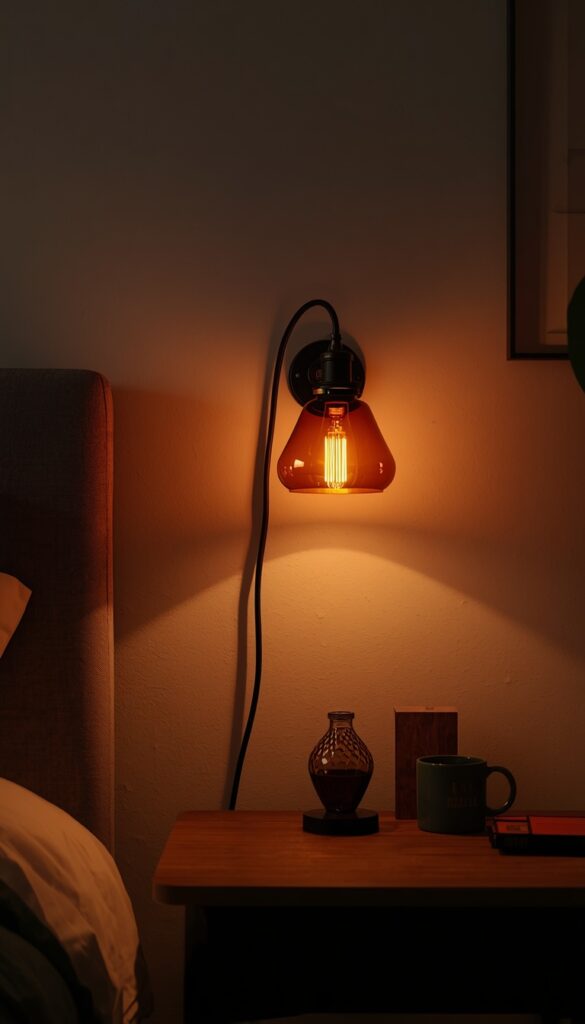
A plug in wall sconce delivers the same architectural, space saving benefit as a hardwired sconce without requiring any electrical work, which matters enormously for renters or anyone hesitant to call an electrician for a seasonal lighting refresh. I mount these using simple adhesive cord clips, routing the visible cord down to the nearest outlet along the wall’s baseboard rather than letting it dangle loosely.
Cord color and routing path affect how clean this installation actually looks once finished. I choose a cord clip color matching the wall paint specifically, then route the cord along the most direct, least visible path to an outlet, since a haphazardly routed cord undercuts the otherwise polished, intentional look a wall sconce is meant to add to a bedroom.
Shade style should match your room’s broader fall aesthetic just as much as with hardwired versions. I lean toward warm fabric or amber glass shades for plug in sconces specifically, paired with a 2700K bulb, creating the same cozy, autumnal glow as a hardwired fixture while keeping the whole installation completely renter friendly and reversible.
11. Add a Rechargeable Cordless Table Lamp for Flexible Placement
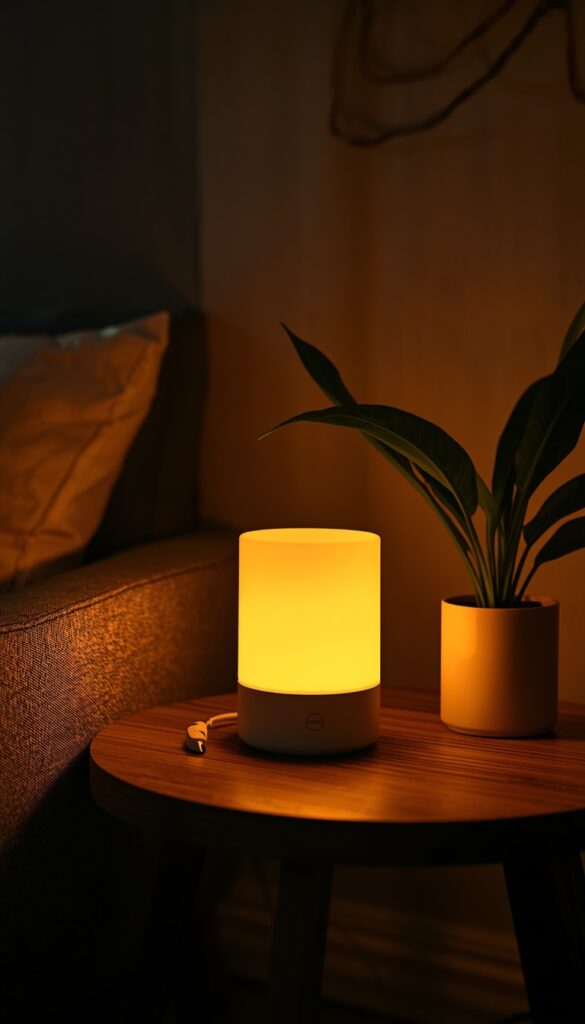
A rechargeable cordless lamp solves a genuine placement problem that outlet dependent lamps create, letting you move warm ambient light anywhere in the bedroom without being limited to spots near an existing electrical outlet. I use mine on a reading chair side table during the day, then move it to the nightstand in the evening, getting double functional use from one single fixture throughout the day.
Battery life matters significantly for actual daily reliability here. I recommend checking for at least eight hours of runtime on a single charge, since shorter battery life means more frequent recharging interruptions that genuinely undercut the convenience this style of lamp is supposed to provide in the first place.
Most cordless lamps now include adjustable color temperature and brightness through a simple touch control, letting you dial in that warm fall glow without needing a separate dimmer switch or specific bulb purchase. I always test this touch control in person before buying, since some budget versions have frustratingly unresponsive or imprecise touch sensors that make daily adjustment genuinely annoying.
12. Install Closet Lighting with Warm Motion Sensor Bulbs
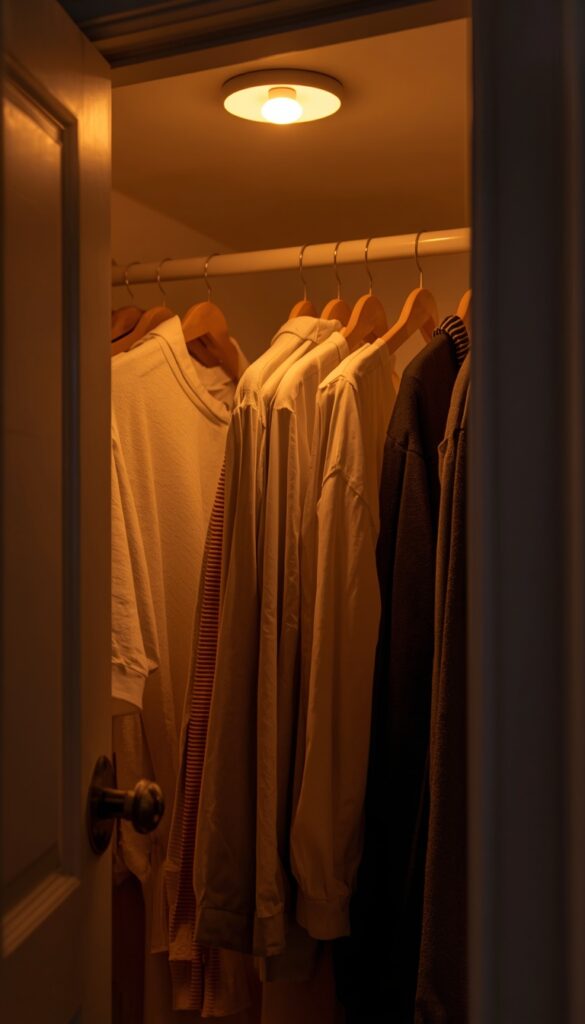
Closet lighting often gets overlooked in broader bedroom lighting plans, yet a warm, motion activated light inside makes a genuine daily difference, especially once fall mornings and evenings get noticeably darker than they were all summer. I install battery powered motion sensor pucks specifically, since they require no wiring and switch on automatically the moment you open the closet door.
Bulb temperature matters here just as much as in the rest of the bedroom, and I always choose warm 2700K specifically for closet lighting too, since a stark white motion light inside a closet creates a jarring contrast against the warm ambient glow you’ve built throughout the rest of the room just outside.
Placement at the top of the closet, angled slightly downward, illuminates hanging clothes and shelving more evenly than a light positioned too low or too far to one side. I test the actual coverage by standing in different spots within the closet before finalizing placement, since uneven lighting leaves frustrating dark corners that defeat the entire purpose of adding this fixture.
13. Use a Reading Light Clip for Targeted, Adjustable Illumination
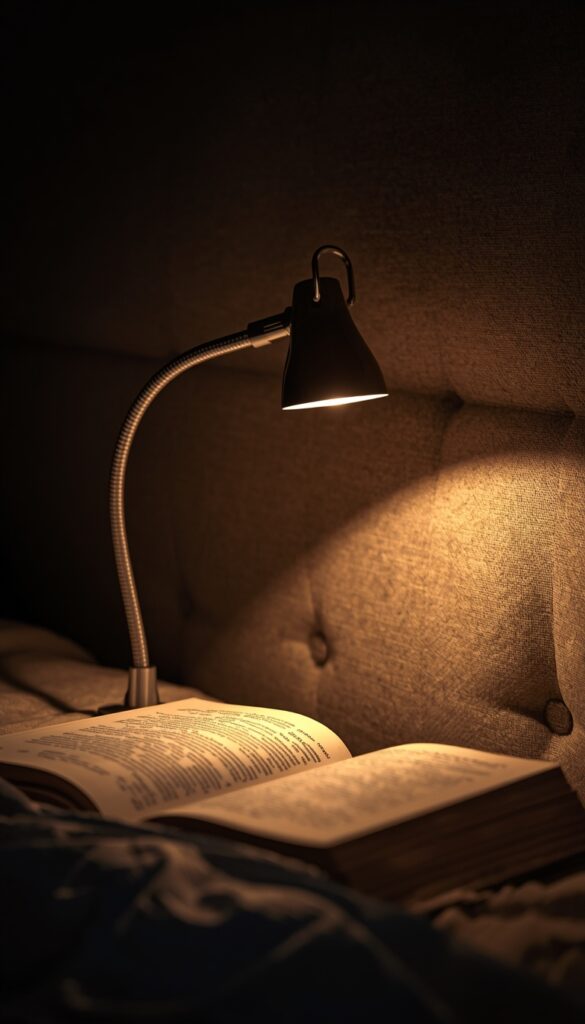
A clip on reading light attaches directly to a headboard, book, or nightstand edge, providing genuinely targeted illumination without flooding the rest of the room with light, which matters significantly if you’re reading while a partner sleeps beside you. I look specifically for models with a flexible gooseneck, letting you aim the light precisely at the page rather than a fixed angle that may or may not actually hit where you need it.
Brightness adjustability through multiple settings, rather than just on and off, gives you genuine flexibility between focused reading light and a much dimmer glow for winding down before sleep. I recommend at least three brightness levels on any clip light you’re considering, since a single fixed brightness rarely suits both active reading and that final, sleepy page or two before lights out.
USB rechargeable versions solve the real annoyance of battery replacement, especially for a small fixture you might use nightly throughout the darker fall and winter months. I keep mine charging on a small dock during the day, specifically so it’s always ready by the time evening reading time actually arrives each night.
14. Add a Dimmable Ceiling Fan Light for Layered Overhead Glow
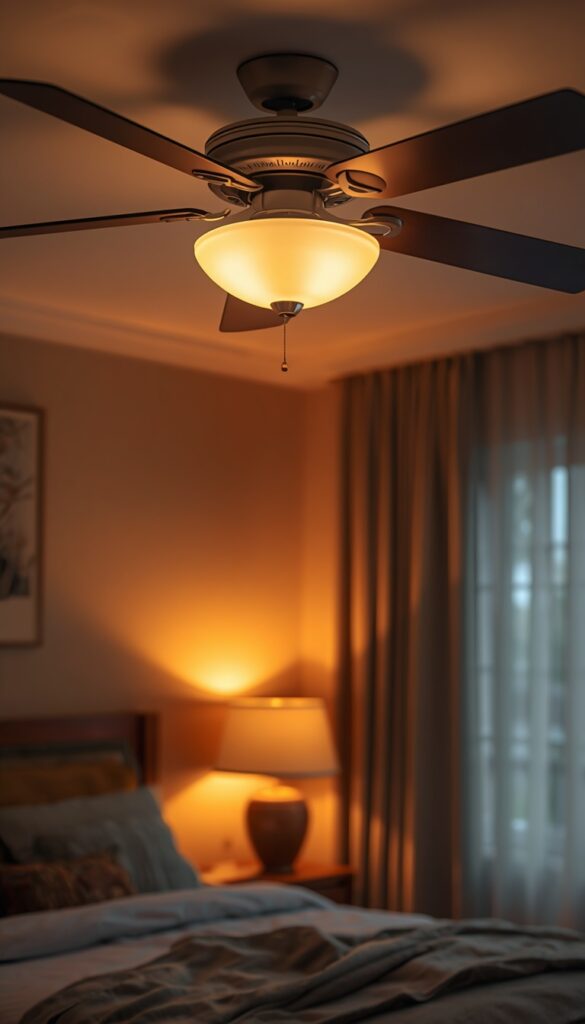
A dimmable ceiling fan light combination solves two seasonal needs simultaneously, since fall often brings both cooling evening temperatures that still occasionally call for air circulation and the need for warmer, adjustable overhead lighting as natural daylight shortens. I always specify a warm 2700K bulb option specifically when choosing or upgrading this fixture, since many stock fan lights default to a cooler, less flattering color temperature.
Separate controls for the fan and light function matter significantly for actual daily convenience, rather than a single combined switch that forces both functions on or off together. I install a remote or smart control specifically allowing independent dimming and fan speed adjustment, since you’ll frequently want light without the fan running, or vice versa, throughout different parts of an evening.
Light diffusion quality affects the overall mood more than people initially expect with these combination fixtures. I choose a frosted or fabric diffuser specifically over an exposed bulb design, since the softer, more even light spread feels considerably cozier and less clinical, fitting the broader autumnal mood you’re building throughout the rest of the bedroom’s lighting layers.
15. Layer a Projector or LED Light for Subtle Seasonal Color
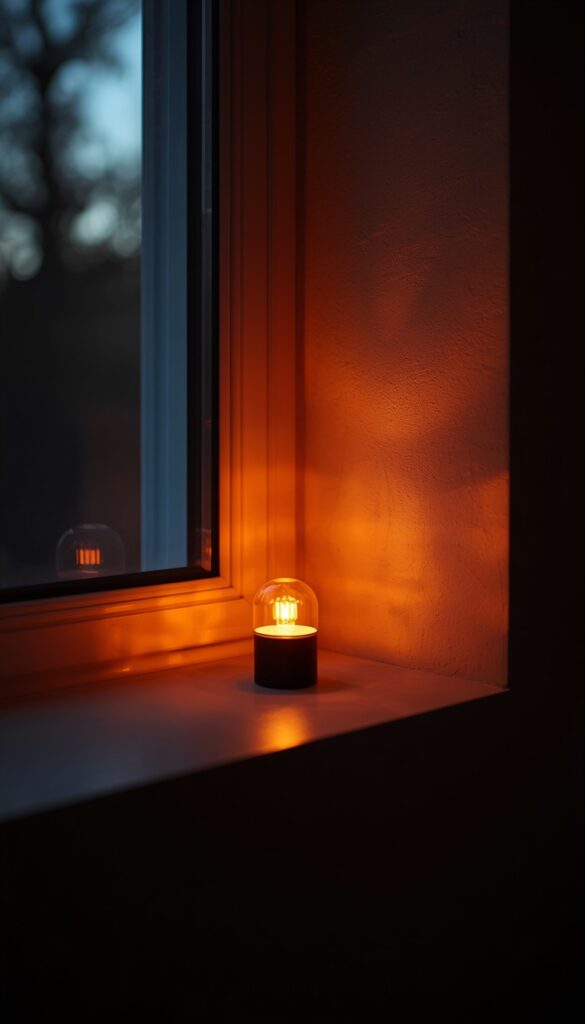
A small LED color changing light or a simple star or aurora projector adds a final, subtle layer of seasonal atmosphere without overwhelming the room’s primary warm lighting scheme already established through your other fixtures. I use these specifically set to warm amber or deep rust tones rather than the full rainbow color cycling many of these devices default to, since restraint keeps the effect feeling intentional rather than novelty driven.
Placement matters significantly for how subtle and effective this layer actually reads once added. I position mine low, on a dresser or windowsill rather than the ceiling, projecting light upward and outward across the wall or ceiling at a gentle, ambient level that complements rather than competes with the room’s other established light sources.
Timer or smart plug integration lets this accent layer turn on automatically alongside your other evening lighting, rather than requiring a separate manual switch every single night. I genuinely recommend this small automation, since a seasonal accent light you forget to turn on consistently provides far less actual benefit than one running reliably every evening without extra effort.
Bringing It All Together
Bedroom lighting for fall mood comes down to layering, warm color temperature, dimmable control, and a few intentional accent pieces working together rather than relying on one single fixture to do all the work. Every idea here comes from bedrooms I’ve actually lived in and adjusted through real autumns, the kind of details that matter once the days shorten and you’re spending more evening hours in the room itself. None of this requires rewiring your whole house. Swap a bulb, add a sconce, layer in some flameless candles, and notice how much the whole space shifts. Pick one or two ideas from this list, and let your bedroom settle into the season the way good lighting always should.
Frequently Asked Questions
Q: What bulb temperature is best for a cozy fall bedroom? A: A warm 2700K bulb creates that golden, candlelit glow most associated with cozy fall mood lighting. Anything above 3000K starts feeling more clinical and cold, which clashes with the warmth most people want in a bedroom once cooler weather sets in. Stick to 2700K across every fixture for consistency.
Q: How many light sources should a bedroom have for good ambiance? A: Most well lit bedrooms use at least three layers, ambient overhead light, task lighting like a reading lamp, and accent lighting like string lights or a salt lamp. Layering these together creates depth and flexibility that a single overhead fixture alone simply can’t provide throughout different times of day.
Q: Are flameless candles a good alternative to real candles in a bedroom? A: Genuinely, yes, especially for unattended evening ambiance, since they deliver a realistic flicker without any actual fire risk. Battery powered versions with timer functions also solve the practical problem of remembering to turn ambiance lighting on as fall evenings get darker earlier than they did during summer months.
Q: Can I add a dimmer switch to any bedroom light fixture? A: Most fixtures work fine with a dimmer switch, but you need dimmer compatible LED bulbs specifically, since incompatible bulbs can flicker or buzz audibly once dimmed. Always check bulb packaging for dimmable compatibility before installation, and consider a smart dimmer with presets for easier, faster daily adjustment.
Q: What’s the best lighting for reading in bed without disturbing a partner? A: A clip on gooseneck reading light or an adjustable wall sconce both provide targeted illumination aimed directly at your book, rather than flooding the whole room. Multiple brightness settings give you flexibility between focused reading light and a dimmer glow for winding down before sleep without waking anyone beside you.
Q: Do salt lamps actually improve air quality in a bedroom? A: Claims about Himalayan salt lamps purifying air aren’t strongly supported by scientific evidence, though many people still enjoy them purely for their warm, ambient glow. I recommend choosing one for the genuinely lovely autumnal light it produces rather than expecting measurable air quality improvements in your bedroom.
Q: How do I make overhead bedroom lighting feel less harsh in fall? A: Adding a dimmer switch with warm, dimmable LED bulbs makes the biggest difference here, letting you soften overhead light significantly compared to its full, fixed brightness. Pairing this with a frosted or fabric diffuser on the fixture itself also helps spread light more evenly rather than throwing one harsh, direct beam.