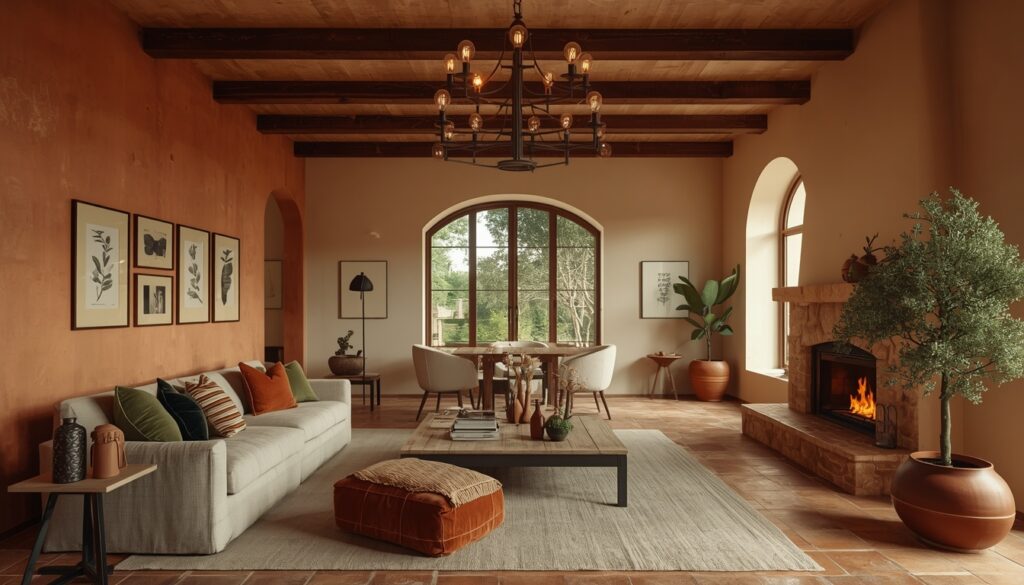
There’s a reason people fall hard for Tuscan design. It carries this rare quality of feeling both grand and deeply human at the same time — like a home that has been lived in, loved, and slowly perfected over generations. Modern Tuscan design takes that warmth and filters it through a contemporary lens. Less fussy ornamentation, more intentional material choices. The same soul, but with cleaner lines and a quieter confidence. If you’ve ever stood in a sun drenched Italian farmhouse and thought “I want to feel this way every day,” this style is your answer.
What makes modern Tuscan design so compelling right now is that it solves a problem a lot of people have with purely modern interiors — they’re beautiful, but they don’t feel warm. They don’t feel like home. Modern Tuscan borrows the warmth of terracotta, aged wood, hand hewn stone, and rich textiles and combines them with the restraint and intention of contemporary design. The result is spaces that look stunning in photographs but feel even better to actually live in. Every idea in this article comes from a genuine understanding of how this style works in real rooms — not just on mood boards.
1. Warm Terracotta Walls That Set the Whole Tone
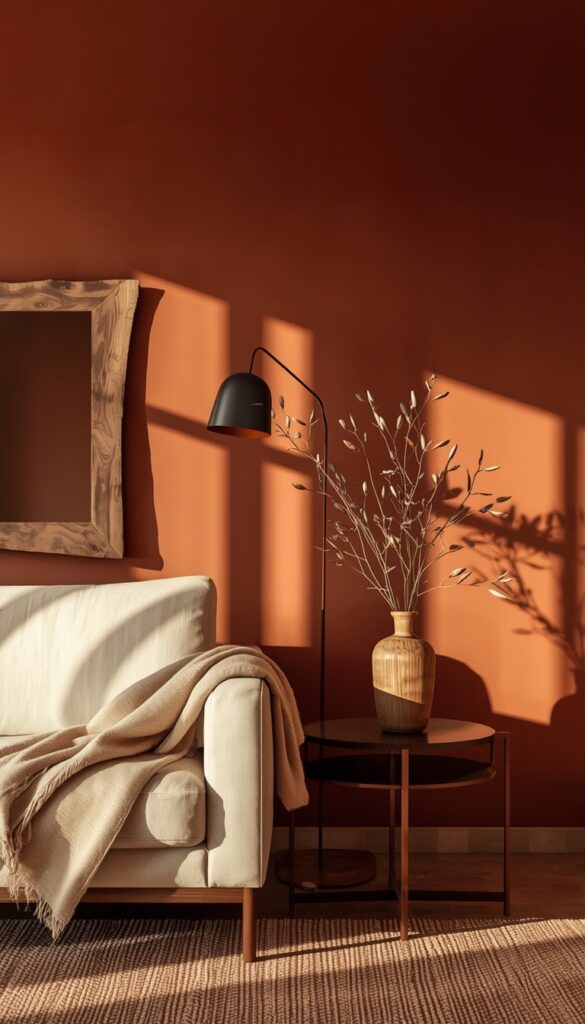
Terracotta is the foundational color of Tuscan design, and in a modern context it works best when applied with confidence and restraint. A deep, warm terracotta on one primary wall — the wall behind a sofa, a fireplace wall, or the main dining room wall — anchors the entire room in Tuscan warmth without overwhelming the space. The key is choosing a sophisticated terracotta tone rather than a bright orange one. Look for colors described as “burnt sienna,” “clay,” or “adobe” — these have more brown and grey in them, which gives them the aged, earthy quality that makes them feel genuinely Tuscan rather than bold and trendy.
The finish matters enormously. A matte or flat finish absorbs light in a way that makes terracotta walls look genuinely sun soaked and aged, similar to the limewash and plaster walls found in Italian farmhouses. Semi gloss or eggshell finishes make the same color look like a builder grade rental wall, not a Tuscan retreat. If you want to go further, a Venetian plaster or limewash technique applied in terracotta tones creates extraordinary depth — the color shifts slightly as the light changes throughout the day, which is one of the most beautiful things you can do to a wall in this style.
Pair terracotta walls with furnishings in warm cream, aged white, and natural linen tones so the wall color breathes and the room stays balanced rather than feeling cave like. Dark walnut or reclaimed oak furniture legs and frames against a terracotta wall look particularly rich. Add a large simple mirror in a warm gilded or iron frame on the terracotta wall to bounce light and prevent the deep color from absorbing too much of the room’s brightness. One terracotta wall done right sets the character of an entire room — it’s the single most impactful color decision you can make in a modern Tuscan interior.
2. Exposed Stone Accent Wall for Authentic Tuscan Character
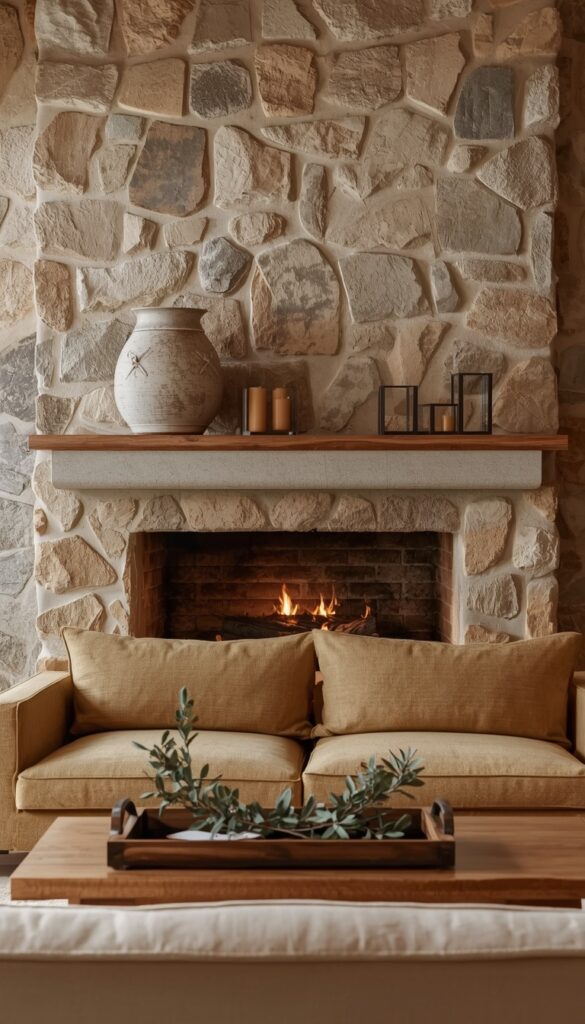
An exposed stone wall is one of those design elements that completely transforms the character of a room the moment it goes in. In modern Tuscan design, it serves as an anchor — a reminder of the ancient, grounded quality that makes this style feel so different from every trend that comes and goes. You don’t need a full room of stone. One well chosen wall — behind a fireplace, along one side of a kitchen, or as a dining room feature — is enough to shift the entire feel of a space toward something genuinely architectural and enduring.
Natural stone veneer panels are the practical solution for most homes, and the quality available today is remarkable. Look for panels with irregular face cuts rather than uniformly sized stones — the variation is what gives them an authentic, quarried quality rather than a manufactured one. Limestone, travertine, and irregular fieldstone in warm buff, cream, and sandy brown tones are the most Tuscan appropriate options. Avoid grey slate or very dark stone in this style — they lean cold and contemporary rather than warm and Mediterranean. The mortar color matters too: a warm buff or cream mortar blends naturally with the stone, while grey mortar looks modern and fights the Tuscan aesthetic.
In a modern Tuscan living room, an exposed stone fireplace wall with a simple, clean lined wooden mantel shelf above it creates the perfect balance of rustic and refined. The stone brings the ancient warmth, and the clean mantel line keeps it modern. Style the mantel with a few large, simple objects — one large ceramic vase, one chunky candle, one piece of sculptural ironwork — rather than clustering it with many small accessories. Less on the mantle lets the stone itself be the star. The overall effect is a room that feels like it belongs to a renovated Italian villa rather than a styled showroom.
3. Reclaimed Wood Ceiling Beams That Add Instant Warmth
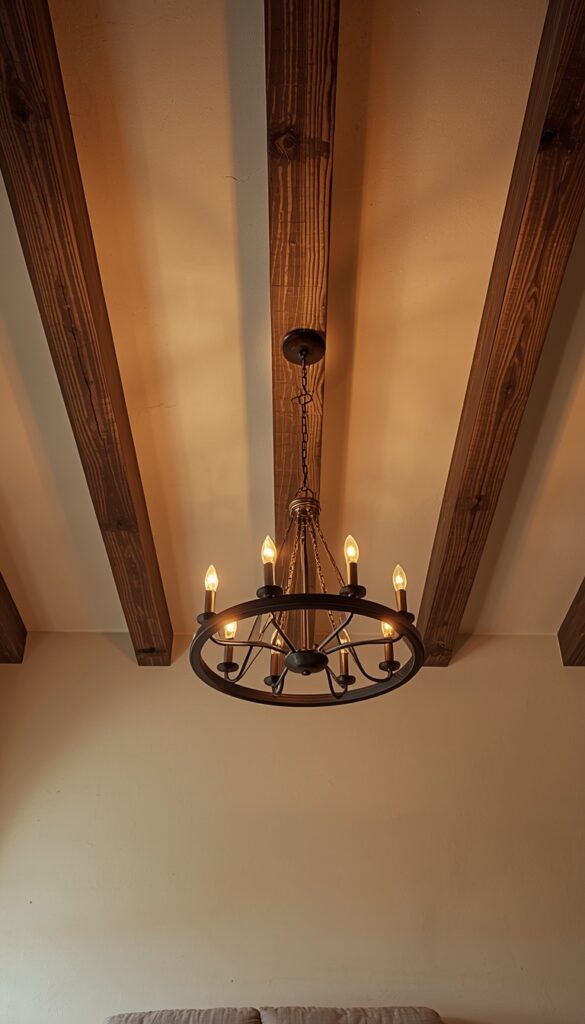
Few architectural elements do more for a room than exposed ceiling beams — and in modern Tuscan design, they’re practically essential. The exposed wooden beam ceiling is one of the most iconic signatures of Italian farmhouse architecture, and bringing it into a contemporary home creates an instant sense of age, craftsmanship, and warmth that no amount of furniture or accessories can replicate. The key in a modern interpretation is restraint — a few well spaced beams rather than a fully paneled ceiling. Three to five beams running parallel across a room ceiling is often more impactful than a dense grid.
For authenticity, reclaimed oak or chestnut beams are the ideal choice. They come with genuine history — saw marks, checking, color variation — that you simply cannot replicate artificially with new wood. Companies like Timberworks and Vintage Timberworks specialize in reclaimed structural beams for decorative installation. If reclaimed wood is outside your budget, high quality faux beams in cast polyurethane have become remarkably convincing, and they weigh a fraction of real wood, making installation far simpler. Stain them in dark walnut or aged oak tones and the difference in a finished room is genuinely difficult to detect.
Beam placement follows a simple rule: space them evenly and let the spacing be governed by the room’s proportions rather than a fixed formula. In a ten foot ceiling, beams set 24 to 30 inches apart feel substantial without crowding. In a higher ceiling, wider spacing maintains visual rhythm without looking sparse. Keep the ceiling between the beams in a warm white or creamy off white rather than a stark pure white — pure white makes the beams look like they’re floating against a clinical surface rather than embedded in an aged plaster ceiling. The combined warmth of the wood tone against that creamy ceiling is one of the most beautiful things in Tuscan inspired interior design.
4. Modern Tuscan Kitchen With Stone Countertops and Warm Cabinetry
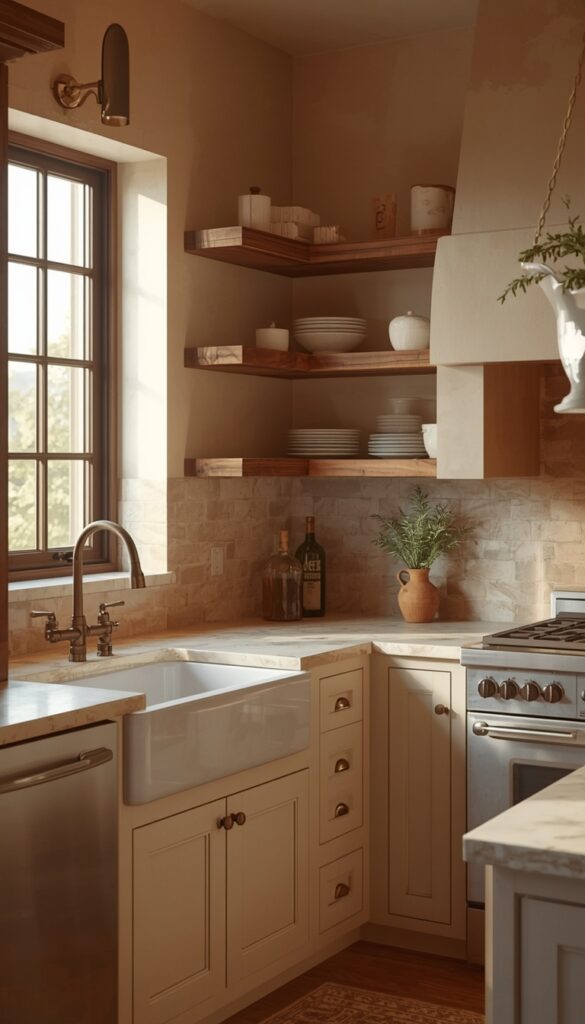
The kitchen is where modern Tuscan design delivers some of its most compelling results. Think about what a traditional Tuscan kitchen looks like — stone counters worn smooth from decades of bread making, cabinet doors in aged wood, the smell of olive oil and herbs drifting through the room. Modern Tuscan kitchen design honors that sensibility while adding the functionality a contemporary household actually needs. The cabinets should be painted or finished in a warm, muted tone — think aged cream, soft sage green, or warm putty rather than stark white or cold grey.
Stone countertops are non-negotiable in this style. Honed — not polished — marble or travertine surfaces have the matte, slightly rough quality that reads as authentic Italian farmhouse rather than modern luxury. Polished stone can feel too glamorous and reflective for this aesthetic. Honed surfaces have a quiet, understated beauty that improves with age as they develop a subtle patina. For a more durable option, honed quartzite in warm cream or sandy tones provides the same visual warmth as marble with significantly more resistance to etching and staining. Either choice grounds the kitchen firmly in modern Tuscan territory.
Hardware in a modern Tuscan kitchen should be substantial and hand finished — look for cabinet pulls and knobs in aged brass, oil rubbed bronze, or unlacquered brass that will patina naturally over time. Avoid polished chrome entirely in this style; it’s too cold and sharp. A simple, deep ceramic farmhouse sink in creamy white or a warm clay tone is the ideal choice for the sink area. Open wooden shelves beside the sink holding olive oil bottles, ceramic canisters, and a small potted rosemary plant complete the kitchen’s sensory experience. This kitchen doesn’t just look Tuscan — it feels like a place where someone genuinely loves to cook.
5. Wrought Iron Lighting Fixtures That Blend Old and New
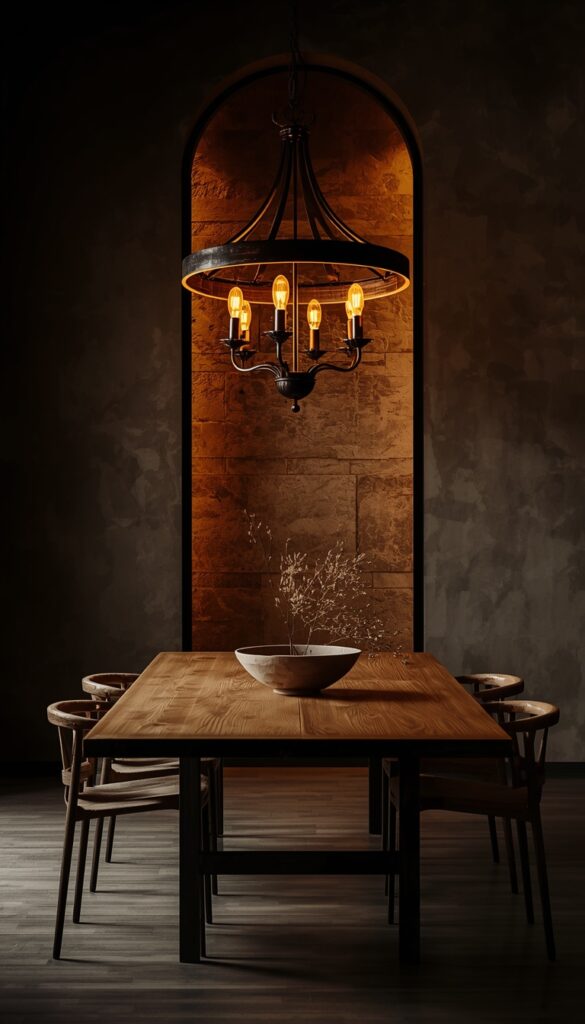
Lighting is one of the most powerful ways to communicate the modern Tuscan aesthetic, and wrought iron is the material that does it best. Iron has been used in Italian farmhouse design for centuries — gate hinges, window grilles, chandelier frames, candle holders. In a modern context, wrought iron lighting fixtures bring that same historical weight while staying visually clean enough to work in a contemporary space. The ideal is a fixture that has clear craftsmanship — hand forged rather than stamped — with simple, graceful lines rather than elaborate curlicues that read as overly ornate.
A large wrought iron chandelier with candle style bulbs in a living room or dining room creates an immediate sense of Tuscan drama without requiring any other major design decisions. Size is important — go generously large. A chandelier that feels slightly too big for the room is almost always more impressive than one that feels timid. For a dining room, the chandelier should be roughly half the width of the dining table. In a living room over a coffee table, a chandelier or iron pendant cluster should feel substantial enough to hold visual weight against the furniture grouping below it.
Supplement the main chandelier with wrought iron wall sconces at key points — flanking a fireplace, framing a mirror, or lighting a hallway. Sconces with fabric or parchment shades in warm cream add softness to the iron’s inherent hardness. Candle lanterns in iron frames on a dining table or outdoor terrace extend the aesthetic beautifully. The bulb choice matters as much as the fixture — always use warm Edison style bulbs at 2200K in wrought iron fixtures. Cool daylight bulbs in a wrought iron chandelier completely destroy the warm, candlelit quality that makes this aesthetic so atmospheric and inviting.
6. Tuscan Arched Doorways and Windows for Architectural Drama
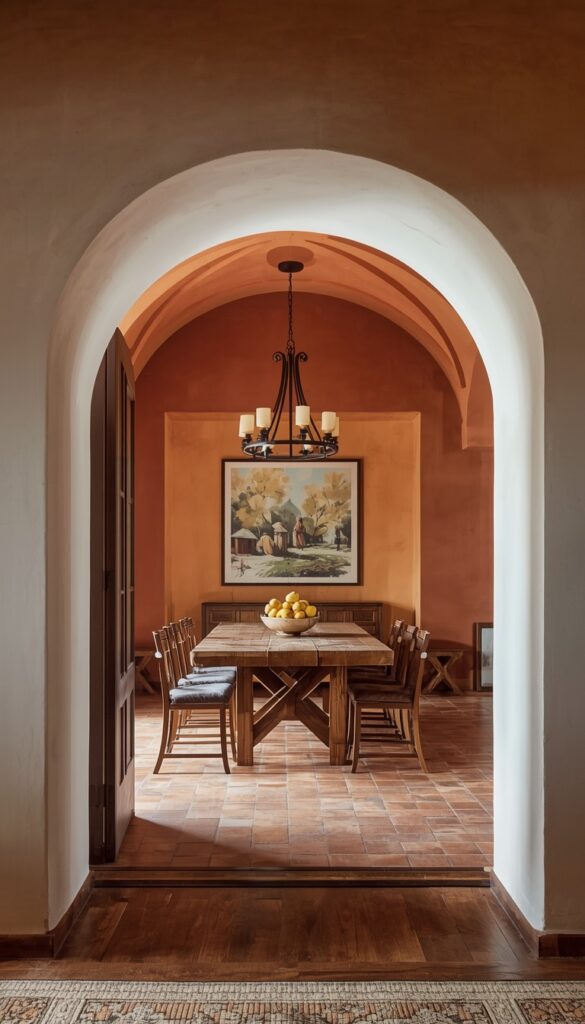
The arch is one of the oldest and most beautiful architectural forms, and it’s deeply embedded in Italian building tradition. Modern Tuscan homes use arched openings between rooms, arched window surrounds, and arched niches set into walls to create a sense of connection to that heritage. If your home has standard rectangular doorways, you don’t necessarily need to structurally alter them. A painted arch surround — the arch shape applied in paint or a contrasting plaster color around an existing doorway — creates the visual impression of an arched opening for minimal cost and zero structural work.
For new builds or full renovations, true rounded arch openings between a living room and dining room or kitchen create a breathtaking sense of flowing Mediterranean space. The arch should be a full semicircle rather than a flattened ellipse for maximum architectural authenticity. The interior soffit of the arch — the curved underside — looks best finished in a smooth plaster in a warm white or cream, contrasting gently with the surrounding wall color. This detail signals craftsmanship and intentionality in a way that flat topped openings never quite achieve. It transforms a transition between rooms into an architectural moment.
Arched niches in walls serve a different but equally powerful purpose — they create built in display opportunities that look ancient and purposeful. A deep arched niche in a terracotta or stone wall, lit from above by a small recessed light, becomes the perfect home for a single large ceramic vase, a piece of garden statuary, or a collection of pillar candles at varying heights. The niche concentrates attention on one beautiful object in a way that a regular shelf or side table cannot. In modern Tuscan interiors, these architectural details are what separate truly designed spaces from simply decorated ones.
7. Natural Linen and Velvet Textiles for Tuscan Warmth
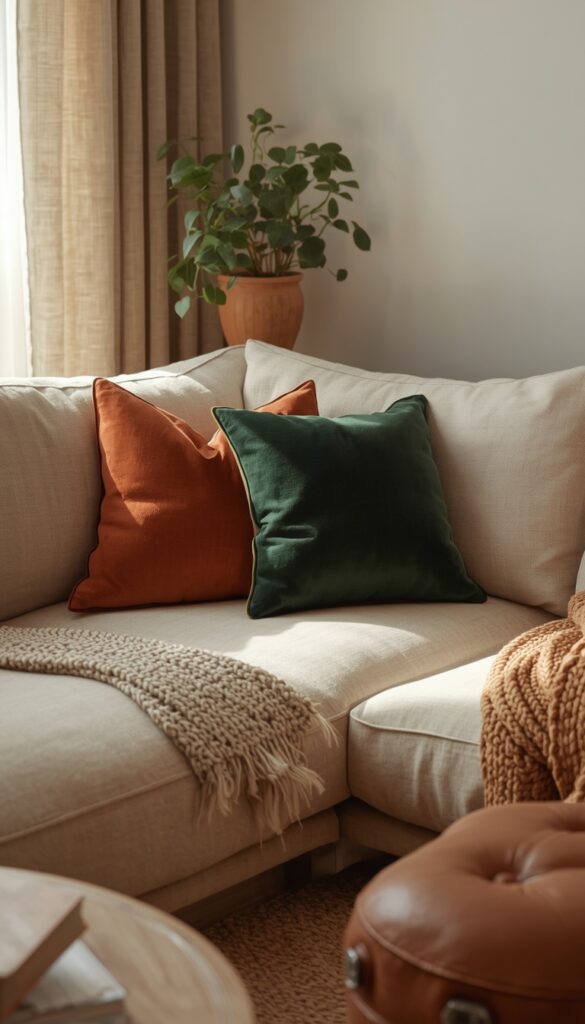
Textiles are where modern Tuscan interiors get their softness — the quality that makes you want to actually sit down and stay. The two fabrics that do the most work in this style are natural linen and velvet, and they seem like opposites until you see them together. Linen in its natural, undyed state has exactly the right earthy, sun bleached quality that resonates with the Tuscan countryside. Use it on sofas, dining chair slipcovers, window curtains, and throw pillow covers. Linen wrinkles easily and people often worry about that — but in this context, those wrinkles are part of the beauty. They look lived in and real.
Velvet brings the depth and richness that keeps a linen heavy room from feeling too sparse or beach house casual. Use it selectively — a velvet throw in deep plum or terracotta draped over one arm of a linen sofa, velvet cushions in forest green or deep burgundy against a cream linen back cushion, a velvet accent chair in aged gold in the corner of a reading area. These pops of dense, rich color against the background of natural linen create a tension that feels genuinely luxurious. The tactile contrast between rough linen and smooth velvet is something people register physically, even if they can’t articulate why the room feels so satisfying.
Layer textures rather than matching them. A linen sofa with a raw edge woven wool throw, a velvet cushion, and a leather lumbar pillow creates a material richness that a perfectly coordinated set of matching cushions simply cannot achieve. This idea of layered, slightly mismatched richness is central to genuine Tuscan style — things are accumulated over time, not purchased as a set. In practical terms, this gives you enormous freedom to combine pieces from different places and price points, which is one of the most liberating things about this aesthetic. Beautiful doesn’t require a budget; it requires a discerning eye.
8. Aged Terracotta Floor Tiles for an Authentic Italian Feel
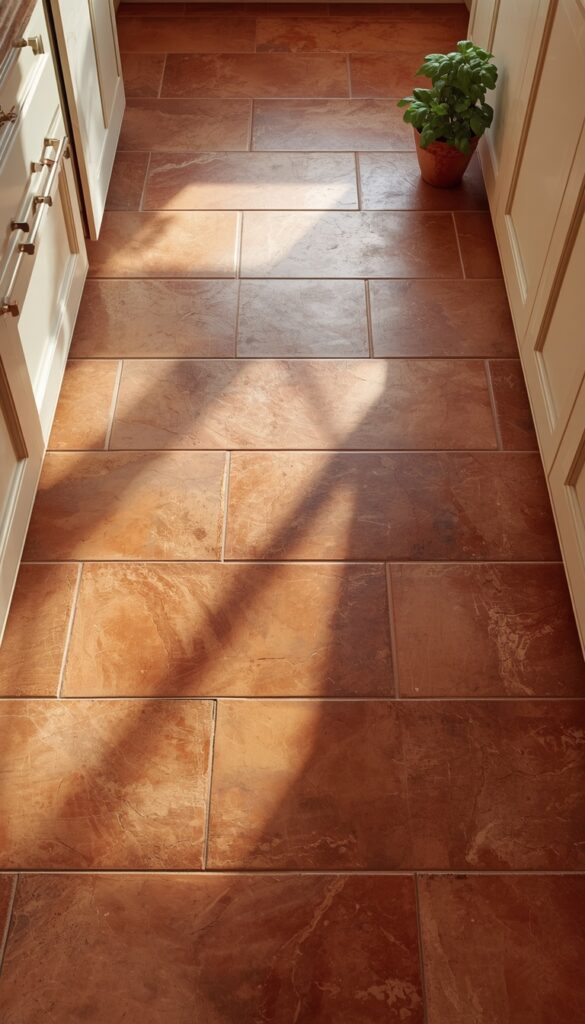
Terracotta floor tiles are one of those materials that get more beautiful with age — which makes them an almost perfect flooring choice for a style that celebrates history and patina. Authentic handmade terracotta tiles from Italy or Spain have slight variations in color, slight irregularities in shape, and a natural surface texture that machine made tiles can’t replicate. These imperfections are the whole point. A floor of genuine handmade terracotta in a kitchen, entrance hall, or sunroom immediately transports you to a Tuscan farmhouse in a way no other flooring material quite manages.
The sizing and laying pattern both matter. Large format tiles (14 inches or bigger) laid in a simple grid look more contemporary and sophisticated than small tiles in a complex pattern. In a modern Tuscan interior, where the goal is warmth without fussiness, a large tile in a straight lay with wide, natural toned grout joints is the most effective approach. If the room has a lot of visual activity — exposed beams, stone walls, layered textiles — keep the floor simple. The terracotta color will do the warmth work on its own without needing a pattern to add visual interest.
Sealing is the practical conversation that nobody wants to have but everyone needs to. Unsealed terracotta is porous and will stain from oil, wine, and everyday kitchen spills. A penetrating sealer applied before grouting and reapplied every three to five years protects the tile without changing its matte, natural surface appearance. A topical wax finish, the traditional Italian treatment, gives the floor a slight sheen and a deeper color saturation that is genuinely beautiful — a warm glow underfoot that makes the kitchen or entrance hall feel like it’s been polished by decades of caring hands. That quality of beautiful, useful wear is the heart of Tuscan design philosophy.
9. Olive Trees in Large Terracotta Pots as Living Sculpture
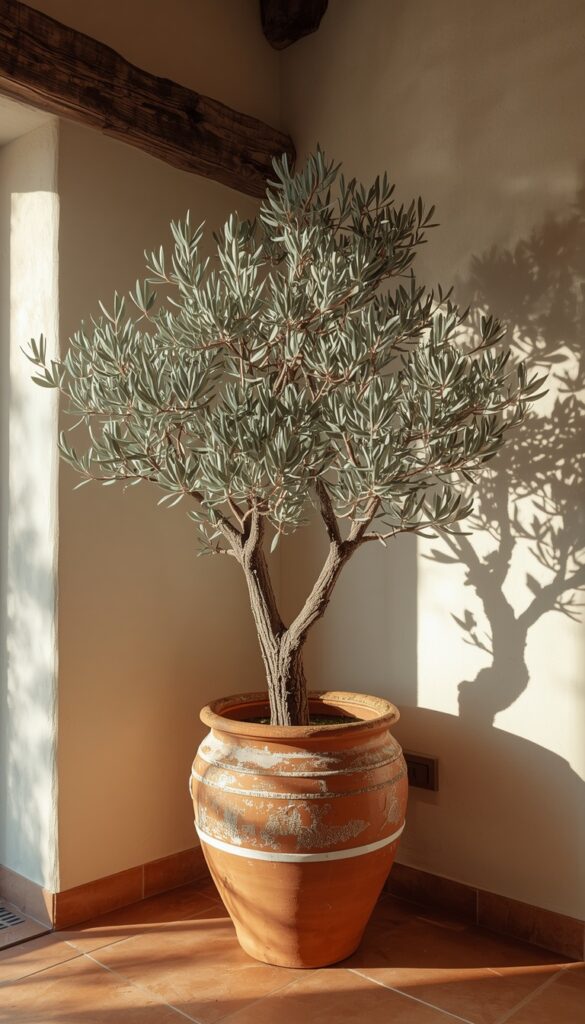
An olive tree in a large terracotta pot is one of those styling moves that works so universally well in modern Tuscan interiors that it almost feels unfair to call it a “trick.” It’s not a trick — it’s an acknowledgment that the olive tree is an inherently beautiful plant that happens to carry enormous cultural resonance with Italian and Mediterranean life. A single mature olive tree in a large, aged terracotta pot placed in a corner of a living room, beside a fireplace, or flanking an arched doorway adds a living architectural presence that no piece of furniture or artwork can replicate.
Standard nursery olive trees work, but the most dramatically beautiful indoor olive trees are those with multiple intertwined trunks — “multi stem” specimens that look as though they’ve been growing in the Italian hillside for decades. These are available from specialty nurseries and through online growers who focus on Mediterranean plants. The container choice matters as much as the tree itself. A genuinely aged terracotta pot — not a new one with artificial distressing, but one that has been outside weathering for years — carries a quality of authenticity that ties directly to the Tuscan aesthetic. The white mineral deposits and green moss that develop on aged terracotta are beautiful and should be left exactly as they are.
Indoor olive trees need very specific conditions to thrive — they are sun hungry Mediterranean plants, not low maintenance houseplants. Place them in your sunniest location, ideally beside a south facing window with at least six hours of direct light daily. They tolerate underwatering far better than overwatering, which makes them a reasonable choice for people who sometimes forget to water their plants. A layer of small river pebbles over the soil surface in the pot both improves drainage perception visually and reduces moisture evaporation. When an olive tree is healthy and thriving in a room, its silvery grey green foliage in motion under an air conditioning draft is one of the most quietly beautiful sights in interior design.
10. Modern Tuscan Fireplace With a Simple Plaster Surround
The fireplace is the emotional center of a Tuscan home — literally and symbolically. It’s where the family gathers, where the light comes from, where the warmth originates. In a modern Tuscan interior, the fireplace surround should be substantial but not ornate. A thick, simple surround in smooth plaster or honed limestone — with clean edges and no fussy carved details — strikes exactly the right balance between architectural weight and modern restraint. The mantel shelf above should be deep enough (at least eight inches) to be genuinely useful for styling, and the overall scale should feel generous in relation to the room.
The material of the surround is a significant design decision. Smooth Venetian plaster in a warm off white or soft terracotta creates a beautiful, seamless surface with subtle texture that catches the firelight beautifully. Honed limestone or travertine in a warm cream or sandy tone is perhaps the most authentically Tuscan choice — the same material has been used around fireplaces in Italian buildings for centuries. Both options achieve the same essential quality: a fireplace that looks solid, ancient, and quietly beautiful rather than ornamental and fussy. Avoid marble with high polish and bold veining in this context — it reads as glamorous rather than grounded.
The styling of the mantel shelf is where personality enters. In modern Tuscan style, restraint is the rule. Three or five objects arranged asymmetrically — perhaps a tall, simple iron candlestick on one end, a large aged ceramic vessel in the middle, and a small stack of thick hardcover art books on the other end — creates a mantel that looks deliberately composed without feeling arranged. A large, simple mirror in an aged iron or warm wood frame above the mantel reflects the firelight and makes the room feel significantly larger. This mantel approach — architectural simplicity punctuated by a few strong, meaningful objects — is the essence of modern Tuscan design philosophy in practice.
11. Hand Thrown Ceramic Vessels as Modern Tuscan Décor
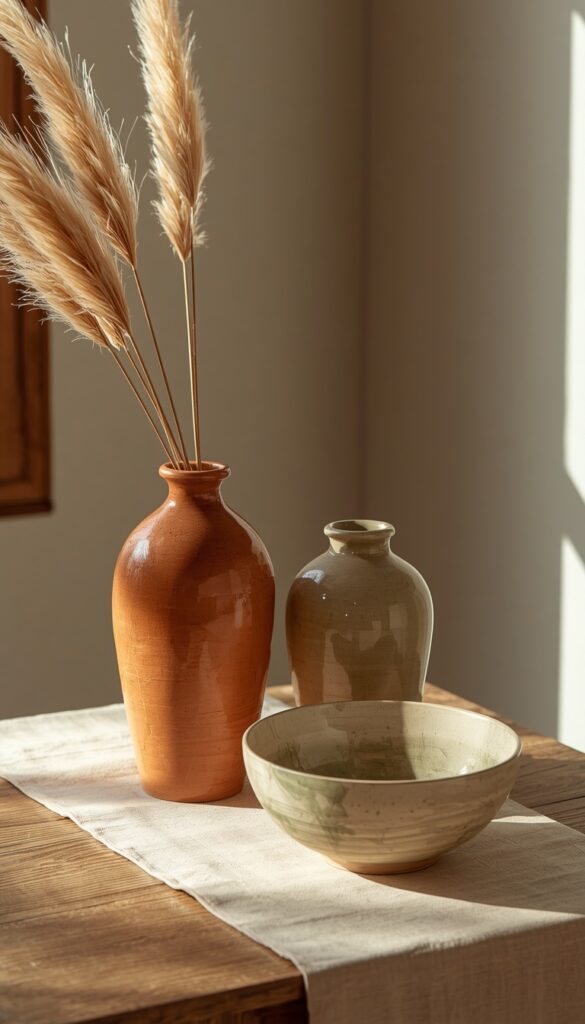
Ceramics are the decorative language of Tuscan culture. From the glazed majolica of Deruta to the simple unglazed urns of rural farmhouses, Italian craft tradition produces pottery that is both achingly beautiful and completely unpretentious. In a modern Tuscan interior, hand thrown ceramic vessels are the single most accessible way to bring the soul of the style into a room without major renovation or significant investment. You don’t need Italian made pieces specifically — you need pieces that share the same values: made by human hands, slightly imperfect, beautiful in their simplicity.
Look for vessels in warm earth tones — terracotta, ochre, warm grey, sandy cream, and muted sage green. The glaze quality should have depth rather than uniformity — reactive glazes that pool and shift in color across the surface are far more interesting than flat, industrial looking glazes. The shape should be simple and generous — wide bodied urns, tall slender vases, low wide bowls. Avoid anything that looks mass produced or too symmetrical. In American and European artisan pottery communities, makers working in this tradition are producing extraordinary pieces at accessible prices — Etsy, local craft fairs, and independent pottery studios are all excellent sources.
Group ceramic vessels in odd numbers and vary the heights dramatically for the most impactful arrangements. A trio of vessels — one very tall (18 inches or more), one mid height (10 to 12 inches), and one low and wide (5 to 6 inches) — on a side table, a windowsill, or a mantel shelf creates a composition that feels curated but natural. Fill the tall vase with dried pampas grass, dried olive branches, or simple dried seed pods rather than fresh flowers for an arrangement that stays beautiful for months without maintenance. The combination of hand thrown ceramics, dried botanicals, and Tuscan architectural elements creates a room that feels deeply considered and genuinely beautiful.
12. Courtyard Inspired Outdoor Living Space With Tuscan Elements
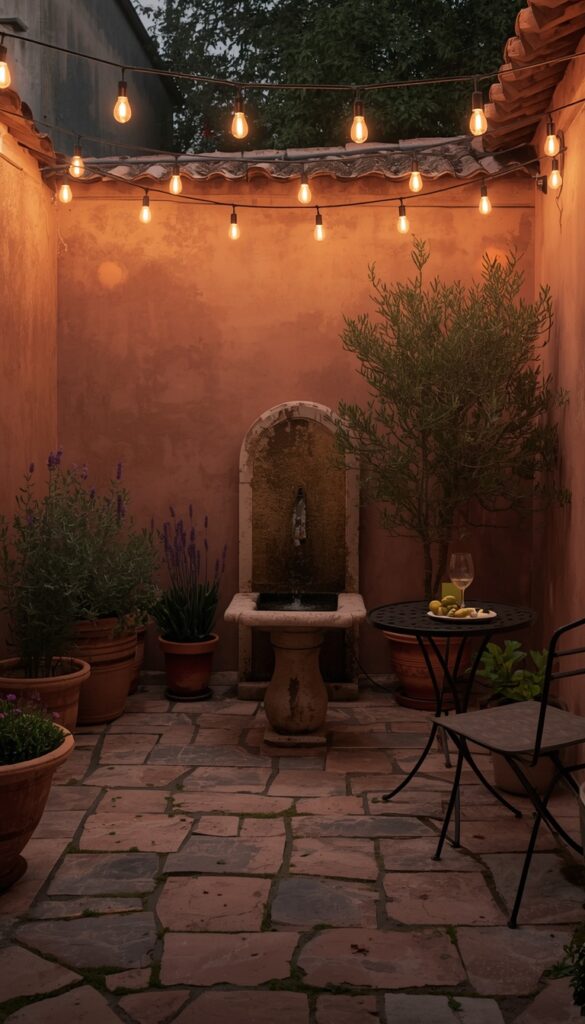
Modern Tuscan design extends naturally beyond the interior walls — in fact, the indoor outdoor connection is one of the most essential qualities of the authentic Tuscan lifestyle. A courtyard inspired outdoor space with a gravel or stone floor, a central focal point, and lush container planting creates the feeling of a private Italian garden retreat just outside your door. The surface material is the first decision: decomposed granite, irregular flagstone in a warm sandy tone, or aged terracotta pavers all read as authentically Tuscan and are far more appropriate than wood decking or modern concrete pavers in this context.
A central fountain or a large stone planter as the focal point of the outdoor space gives the courtyard its organizing principle — everything else arranges itself around that center. Aged stone fountains with a simple basin and spout design are available at garden centers and through antique dealers in every price range. The sound of water in a courtyard is as much a design element as any visual choice — it creates a sensory environment that makes the outdoor space feel genuinely immersive and deeply calming. Surrounding the fountain with irregular terracotta pots of rosemary, lavender, and olive trees completes the Tuscan plant palette.
Furniture in a Tuscan outdoor courtyard should be in wrought iron, aged teak, or natural stone — materials that weather gracefully and look better with age. Avoid plastic or powder coated aluminum furniture in this context; they look too modern and manufactured against the organic, aged quality of the stone and terracotta elements. String lights hung above the courtyard on a simple wire grid provide evening ambience — not the tight Edison bulb string lights associated with farmhouse style, but simple warm bulbs with generous spacing that cast a gentle, uneven glow across the space. At night, with candlelit lanterns on the table and the sound of the fountain, a Tuscan courtyard becomes the most beautiful room in the house.
13. Gallery Wall of Antique Botanical and Topographical Prints
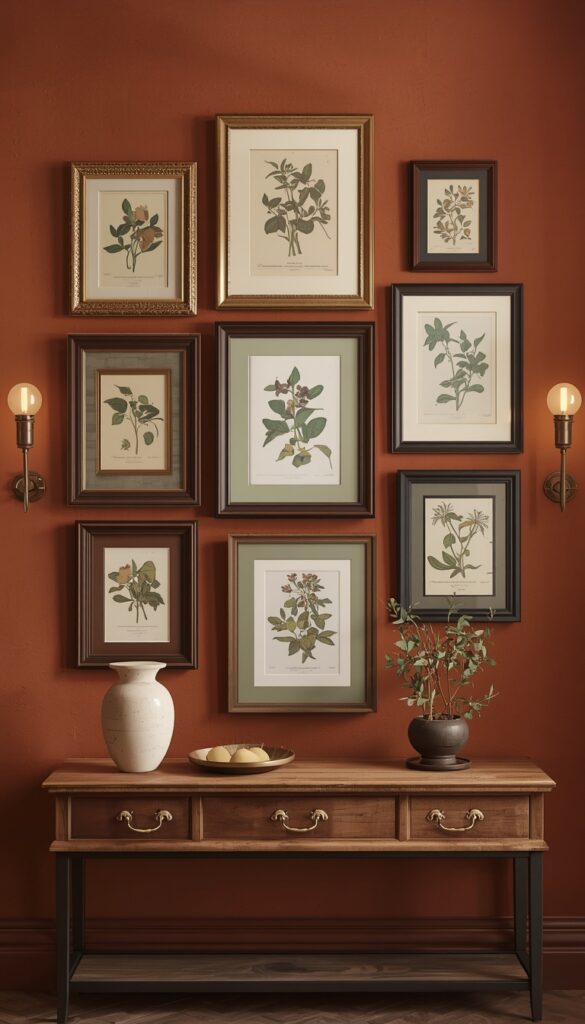
A thoughtfully assembled gallery wall is one of the most personal, characterful things you can add to a modern Tuscan interior — and antique botanical and topographical prints are the ideal content for it. Botanical illustrations from the 18th and 19th centuries — detailed drawings of herbs, fruits, and plants rendered in warm sepia tones or hand colored with muted pigments — carry a quality of scholarly beauty that fits the Tuscan aesthetic perfectly. They feel earned and collected, like something a cultivated Italian family might have accumulated over generations of traveling and reading.
The frames are as important as the prints themselves. Resist the impulse toward matching gallery wall frames — they look corporate rather than collected. Instead, mix frame styles within a unified color family: aged gilded frames in different sizes, simple dark walnut frames, and thin iron frames all look cohesive when unified by similar warm tones and similar content. Vary the sizes significantly — large anchoring prints (16×20 or bigger) mixed with smaller supporting prints (5×7 and 8×10) create the visual rhythm of a genuinely accumulated collection rather than a planned set. Source prints from estate sales, antique markets, and high quality print sellers on Etsy.
The wall behind the gallery arrangement matters as much as the art itself. A terracotta, deep ochre, or warm charcoal wall provides a rich backdrop that makes the prints look like they belong to the room rather than hanging on it. Arrange the gallery before hanging by laying everything on the floor — adjust until the composition feels balanced but not perfectly symmetrical. The largest print should sit near the visual center, with smaller prints radiating outward. A gallery wall of antique botanicals on a rich terracotta wall, flanked by a simple wrought iron sconce on each side, is one of those arrangements that makes a room feel immediately and completely finished.
Conclusion
Modern Tuscan design is one of those rare styles that delivers something genuinely hard to find in contemporary interiors — beauty that also feels like home. Every idea in this article is grounded in the same core principle: honoring the warmth, craftsmanship, and material richness of traditional Italian design while letting go of anything that feels fussy or overwrought. Terracotta walls, reclaimed beams, hand thrown ceramics, arched openings, wrought iron — these aren’t trendy pieces that will look dated in three years. They’re timeless design choices rooted in centuries of Italian living culture. Start with one idea that excites you most, commit to it fully, and let the warmth of modern Tuscan design build from there.
FAQs
Q: What is modern Tuscan design? A: Modern Tuscan design blends the warmth and material richness of traditional Italian farmhouse style with the clean lines and intentional restraint of contemporary design. It uses terracotta, aged wood, natural stone, wrought iron, and hand thrown ceramics to create spaces that feel warm, grounded, and timeless — without the heavy ornamentation of classic Tuscan décor.
Q: What colors are used in modern Tuscan interior design? A: Warm earthy tones define the modern Tuscan palette — terracotta, burnt sienna, warm ochre, aged cream, soft sage green, and warm charcoal. These colors echo the natural landscape of the Italian countryside: sun baked clay, olive groves, stone walls, and terracotta rooftops. They work beautifully together and never feel trendy because they’re rooted in nature.
Q: How do I add Tuscan style to a modern home? A: Start with one or two key material choices — a terracotta accent wall, exposed ceiling beams, or natural stone countertops — and build around them. You don’t need to overhaul an entire house. Even adding hand thrown ceramic vessels, wrought iron lighting, and natural linen textiles to an existing room shifts the atmosphere significantly toward the warmth and grounded beauty of modern Tuscan style.
Q: What flooring is best for a Tuscan style home? A: Aged terracotta tiles are the most authentically Tuscan flooring choice, particularly for kitchens, entrance halls, and sunrooms. Honed travertine and warm toned limestone are excellent alternatives that work in living areas and bedrooms. All three materials improve with age and develop a natural patina that connects the floor to the Tuscan tradition of beautiful, functional materials that last for generations.
Q: What furniture works best in a modern Tuscan interior? A: Choose furniture in reclaimed oak, walnut, or aged wood with simple, substantial forms — nothing too delicate or too sleek. Linen upholstery in natural, undyed tones is the most Tuscan appropriate fabric choice for sofas and chairs. Wrought iron accent pieces, leather occasional chairs, and simple wooden dining tables with visible grain all reinforce the material warmth that defines modern Tuscan design.
Q: Can modern Tuscan design work in a small apartment? A: Absolutely. The style scales down beautifully because its power comes from material quality and color warmth, not from large rooms or grand architecture. A terracotta accent wall, a few hand thrown ceramics, a wrought iron pendant light, and linen curtains can transform even a small apartment living room into a genuinely warm, Tuscan feeling space without any structural changes whatsoever.
Q: What plants suit a modern Tuscan interior? A: Olive trees, rosemary, lavender, and fig trees are the most culturally resonant plants for this style — they’re all deeply associated with the Italian countryside. Indoors, a multi stem olive tree in a large aged terracotta pot is the most dramatic and beautiful choice. Trailing rosemary in a terracotta pot on a kitchen windowsill, or a compact lavender plant on a side table, adds fragrance and authenticity to any room.
Q: Is modern Tuscan design expensive to achieve? A: It doesn’t have to be. The most impactful elements — terracotta wall paint, linen textiles, hand thrown ceramics from independent potters, antique print gallery walls — are all available at accessible price points. The style actually rewards patient sourcing from estate sales, antique markets, and craft fairs over purchasing everything new. Objects with genuine history and patina almost always look more beautiful in a Tuscan inspired space than brand new alternatives.