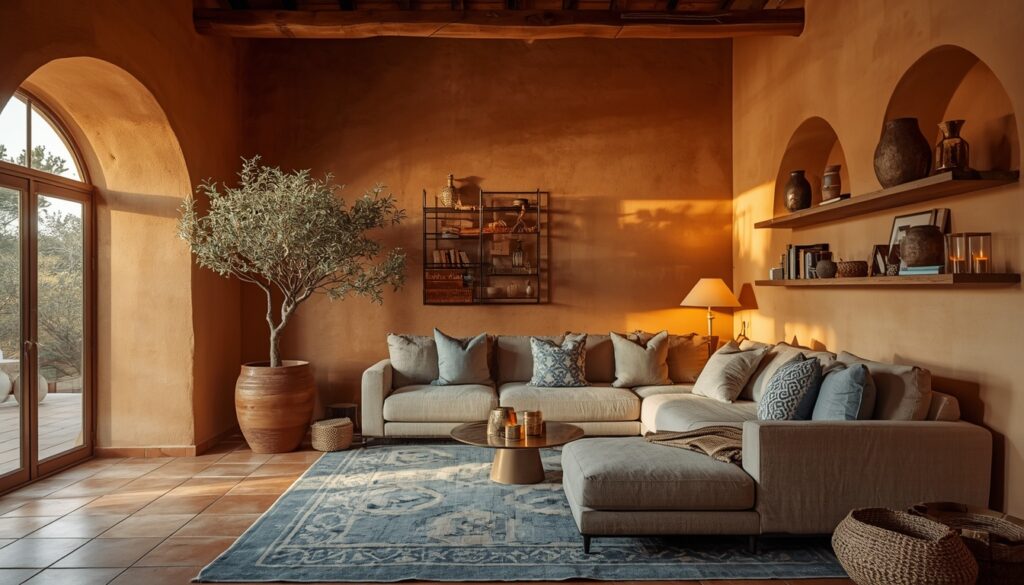
There is a reason people fall in love with Mediterranean interiors the moment they see them. Something about that combination of warm stone, sun bleached walls, hand painted tiles, and natural textures feels immediately right. It feels like rest. It feels like a place where time slows down and every room invites you to stay a little longer. The Mediterranean aesthetic is not about perfection — it is about warmth, character, and the kind of beauty that comes from natural materials aged gracefully over time. Whether you live in a city apartment or a countryside home, that feeling is completely achievable without moving to the coast of Greece or the south of France.
What makes Mediterranean interior design so compelling right now is how effortlessly it balances beauty with livability. Nothing feels precious or untouchable. The worn edges of a terracotta tile, the rough texture of a limewash wall, the slight imperfection of a hand thrown ceramic bowl — these are the details that give Mediterranean spaces their soul. This guide covers sixteen specific, actionable ideas that bring authentic Mediterranean character into any home. Every idea is grounded in real design principles, not vague inspiration. Read through all sixteen and you will finish with a clear, confident vision for transforming your space into something genuinely beautiful.
1. Limewash Walls — The Texture That Makes Every Room Feel Alive
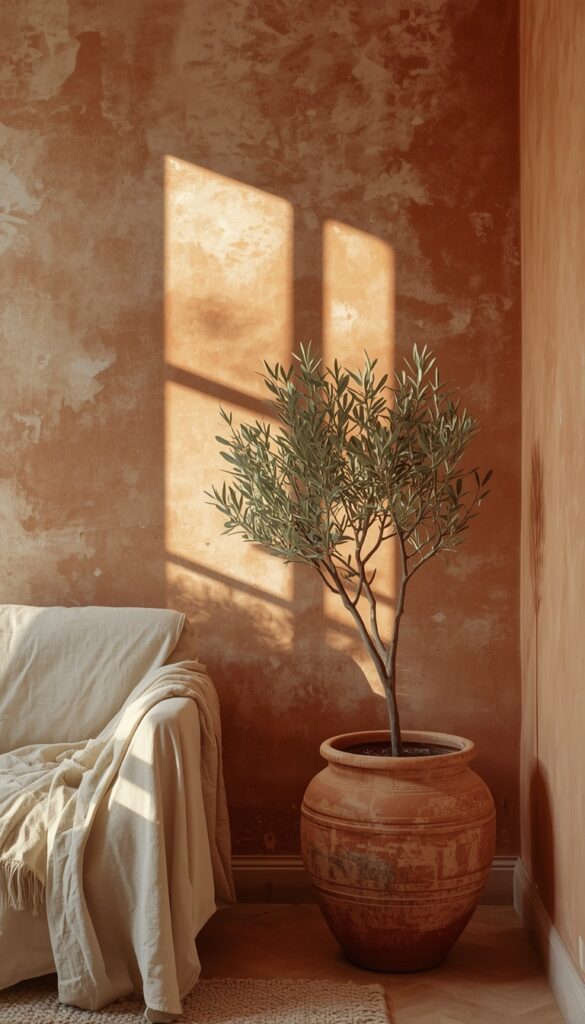
Limewash paint is the foundation of authentic Mediterranean interiors, and nothing else comes close to replicating what it does to a wall. Unlike standard paint, limewash soaks into the surface rather than sitting on top of it. The result is a matte, slightly translucent finish with natural tonal variation — lighter in some areas, slightly deeper in others — that gives walls genuine depth and character. No two limewash walls ever look exactly the same, which is precisely the point. In Mediterranean architecture, walls were traditionally finished with slaked lime mixed with water and pigment. Modern limewash products replicate this effect beautifully and apply over existing painted surfaces without stripping.
Color selection for limewash walls in a Mediterranean interior should stay in the warm, earthy register. Warm white with a slight ochre undertone is the most classic choice — it reads as white in bright light but takes on a warm, creamy quality in the evening. Terracotta tinted limewash creates a rich, sun baked wall color that suits dining rooms and living spaces with strong natural light. Soft clay, aged plaster, and dusty sage are all excellent alternatives that maintain the organic, natural character of the Mediterranean palette without feeling predictable. Avoid cool whites and gray tinted limewash — these strip the warmth out of the technique and create a wall that looks deliberately distressed rather than authentically aged.
Application technique determines how convincing the final result looks. Limewash applies best with a wide, natural bristle brush using a crisscross motion that creates the characteristic layered, uneven coverage. Working in small sections and varying the pressure and direction of each stroke builds the natural tonal variation that makes limewash so distinctive. A single coat looks too uniform — two to three coats, each allowed to partially dry between applications, creates the authentic depth that makes a limewash wall look genuinely old rather than recently painted. For beginners, practicing on a piece of drywall or a sample board before committing to a full room wall helps build confidence with the technique before the work that matters.
2. Terracotta Floor Tiles — Warm Underfoot, Beautiful Overhead
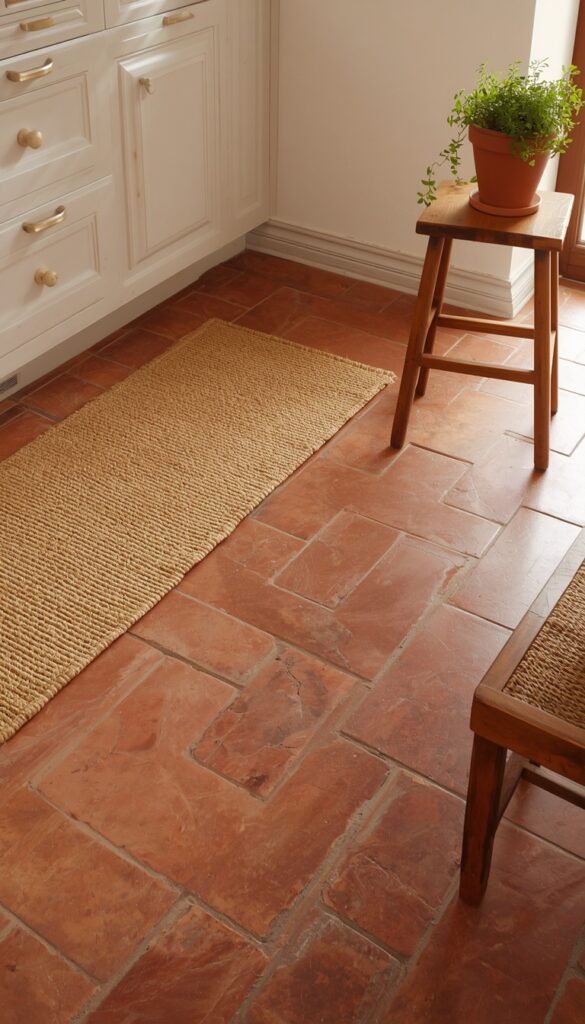
Terracotta floor tiles are arguably the most recognizable material in Mediterranean interior design. That warm, earthy red orange tone is impossible to fake convincingly with any other material, and the way terracotta tiles look in natural light — especially afternoon sunlight coming through a south facing window — is genuinely one of the most beautiful things a floor can do in a home. Terracotta tiles have been made in essentially the same way for thousands of years — clay shaped and fired at relatively low temperatures, which gives them their characteristic soft, slightly porous surface. That natural quality is exactly what makes them so suited to the Mediterranean aesthetic.
Terracotta tiles work in kitchens, hallways, living rooms, sunrooms, and bathrooms — virtually any room benefits from their warmth. In a kitchen, large format terracotta tiles in a traditional offset brick pattern create an immediate Mediterranean character that no other flooring choice replicates. Pair them with white or cream cabinetry, wooden open shelving, and hand painted tile splashback details for a kitchen that feels authentically designed rather than trend assembled. In a living room, terracotta tiles under natural fiber rugs — jute, sisal, or seagrass — create the layered, textural warmth that is central to Mediterranean living. The tiles provide the underlying character while the rugs add comfort and define seating zones within the space.
Sealing and maintenance are the two practical considerations that put some people off terracotta tiles. Unsealed terracotta is highly porous and absorbs stains quickly. A quality penetrating sealer applied before use and reapplied every one to two years depending on traffic levels protects the tile while preserving its natural matte appearance. Avoid surface sealers that create a glossy film — these look completely wrong on terracotta and undermine the authentic, natural quality of the material. Sealed terracotta cleans easily with a damp mop and a pH neutral cleaner. Avoid acidic cleaners like vinegar, which damage the sealer and eventually the tile surface itself. Properly maintained terracotta tiles age beautifully — they develop a subtle patina over years of use that only makes them look better.
3. Hand Painted Ceramic Tiles — Pattern and Color in the Right Dose
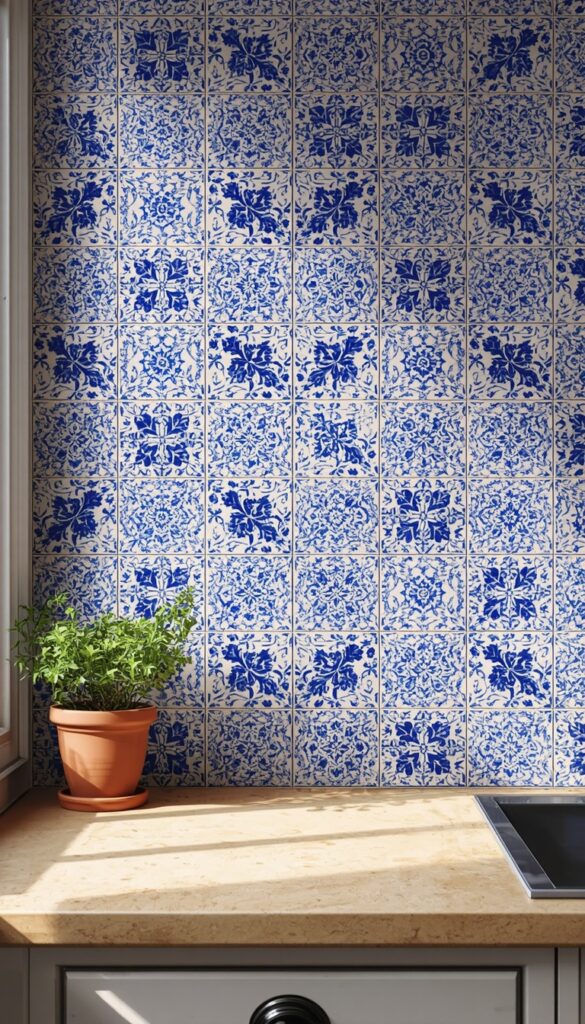
Hand painted ceramic tiles are the jewelry of Mediterranean interiors. They do not cover everything — that is not their role. They appear as deliberate accents that inject pattern, color, and artisanal character into specific locations where the eye naturally lands. A kitchen splashback in hand painted blue and white azulejo style tiles. A bathroom feature wall in geometric Moorish patterns. A fireplace surround framed with hand painted floral tiles. An outdoor dining table with a tiled top. Each of these applications uses tile as a purposeful design statement rather than a background material, which is exactly how Mediterranean cultures have used decorative ceramic for centuries.
The most historically authentic Mediterranean tile patterns draw from several distinct regional traditions. Spanish azulejo tiles use cobalt blue geometric and floral patterns on a white ground — these suit cooler, more graphic Mediterranean interiors with a strong Spanish or Portuguese influence. Moroccan zellige tiles use irregular, hand cut pieces in rich jewel tones assembled into complex geometric mosaics — these suit more maximalist, layered interiors with North African character. Italian majolica tiles feature painted botanical and figurative motifs in warm yellows, greens, and blues on a white tin glazed ground — these suit kitchens and dining rooms with a southern Italian or Sicilian feel. Understanding which regional tradition suits your overall direction produces far more cohesive results than mixing patterns from different sources indiscriminately.
Installing hand painted tiles well requires restraint in quantity and precision in placement. The temptation to use them everywhere is understandable — they are beautiful. But overuse dilutes their impact and creates visual chaos rather than a considered pattern. One strong application per room is the guiding principle. A splashback of twenty tiles makes more impact than scattered single tiles across multiple surfaces in the same kitchen. When grouting hand painted tiles, choose a grout color that complements rather than contrasts the tile palette — warm cream or natural sand grout suits most Mediterranean tile colors far better than bright white, which creates a harsh grid that distracts from the tile pattern itself.
4. Arched Doorways and Openings — Architecture That Defines the Whole Aesthetic
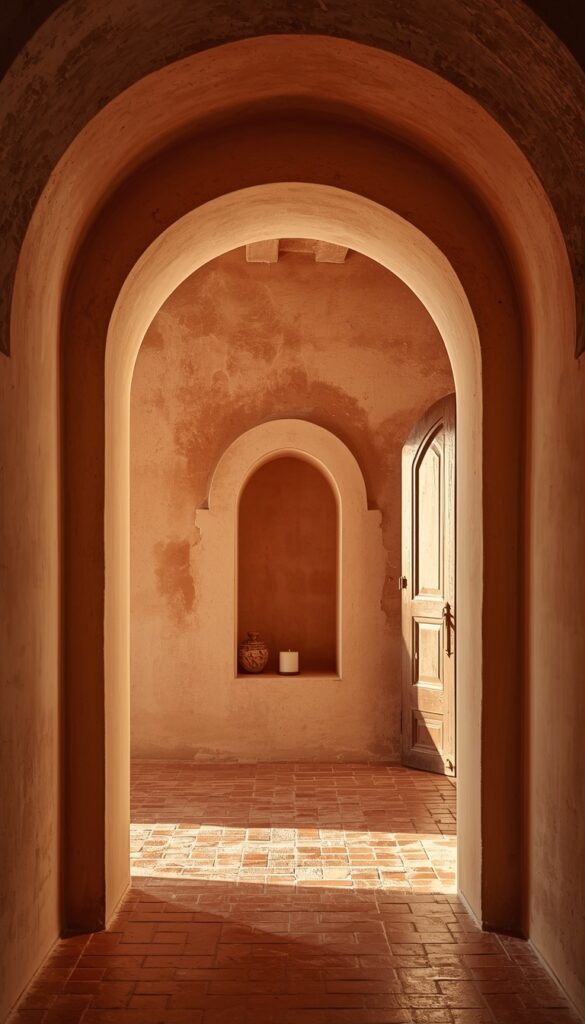
Nothing signals Mediterranean interior design more immediately than an arch. The curved top of a doorway, a window opening, or an interior passageway carries centuries of architectural meaning — from Roman aqueducts to Moorish palaces to whitewashed Greek island homes. In a contemporary interior, a single arched opening between a hallway and a living room changes the entire character of both spaces instantly. It creates a sense of arrival and transition. It softens the geometry of a room. It makes even a modest apartment feel like a place with genuine architectural identity. This single intervention, when done well, generates more Mediterranean atmosphere than almost any decorative choice you could make.
Creating arched openings in an existing home requires structural assessment first. In a load bearing wall, the arch must incorporate a properly engineered lintel to carry the load above — this is non-negotiable and requires a structural engineer’s input. In a non load bearing partition wall, the conversion is far more straightforward and can be completed by an experienced builder in a day or two. For those who cannot alter the architecture of their home, arched mirror frames, arched cabinet doors, arched headboards, and arched room dividers all bring the visual language of the arch into a space without structural intervention. Even a large arched mirror leaning against a wall in a living room changes the character of the room in a genuinely meaningful way.
Finish and proportion determine whether an arch reads as authentically Mediterranean or merely decorative. Arches in Mediterranean architecture tend to be full semicircular arches rather than the flattened elliptical arches more common in Georgian and Federal styles. The wall thickness around a Mediterranean arch is typically substantial — deep reveals of 20 centimeters or more create that characteristic sense of solid mass that makes the arch feel structural and ancient rather than thin and applied. Finish the reveal in limewash plaster for maximum authenticity. Add a recessed niche within the reveal if space allows — a small arched niche with a candle or a ceramic object inside is one of the most characteristically Mediterranean architectural details possible at small scale.
5. Rattan and Wicker Furniture — Natural Material With Timeless Mediterranean Appeal
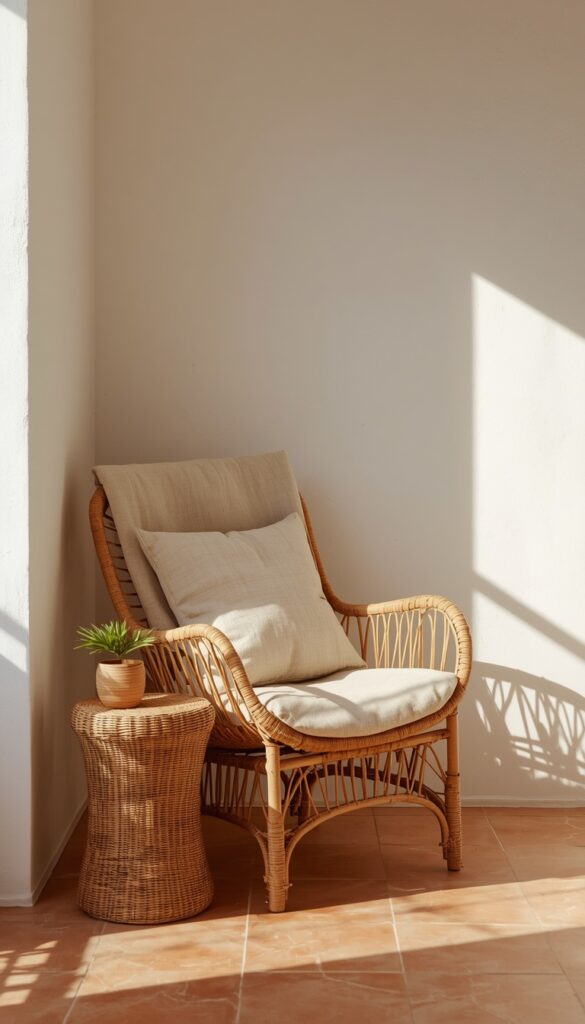
Rattan and wicker furniture belong to Mediterranean interiors in a way that feels completely natural and historically grounded. These woven natural materials have furnished coastal and inland Mediterranean homes for centuries — lightweight enough to move between indoor and outdoor spaces, sturdy enough to last decades with basic care, and visually warm in a way that no synthetic material replicates. A rattan armchair in a living room corner, a wicker side table beside a sofa, or a woven pendant light shade above a dining table all contribute the same quality — organic texture and natural warmth that grounds the visual richness of a Mediterranean color palette. Rattan does not compete with other elements — it complements everything around it.
The most useful rattan pieces for a Mediterranean interior are those that bring both function and visual texture simultaneously. A large rattan or wicker lounge chair with a plump linen cushion becomes the focal point of a sitting room corner without trying. A woven rattan daybed on a covered terrace or sunroom creates an instant Mediterranean living moment. Rattan bed frames in a bedroom bring a relaxed, natural quality that suits the lighter, airier side of Mediterranean bedroom design. Wicker storage baskets on open shelving or below a console table add texture and organization at the same time. The key in all cases is pairing rattan with natural fabric cushions and covers rather than synthetic textiles — linen, cotton, and undyed wool all complement the woven texture of rattan beautifully.
Caring for rattan and wicker indoors requires very little effort. Dust regularly with a soft brush or low suction vacuum attachment to prevent dust from settling into the weave. Wipe down occasionally with a barely damp cloth if needed. Keep rattan furniture away from direct heating sources — radiators and wood burning stoves dry out the natural fibers and cause brittleness over time. In very dry climates, an occasional light application of linseed oil keeps the fibers supple and prevents cracking. High quality rattan furniture — particularly pieces made from natural Malacca rattan rather than cheap reed or synthetic alternatives — develops a beautiful honey to amber patina over years of use that genuinely improves its appearance and character with age.
6. Exposed Wooden Ceiling Beams — Rustic Warmth That Transforms a Room
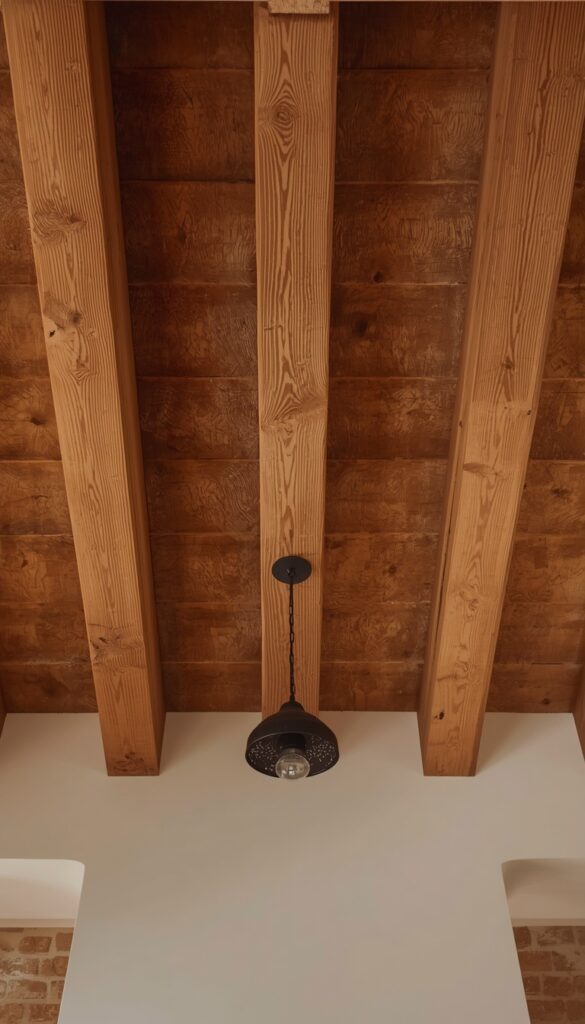
Exposed wooden ceiling beams are one of the most dramatic single interventions available in Mediterranean interior design. A plain white ceiling becomes something entirely different the moment rough hewn timber beams cross it. The room gains height perception, visual warmth, and an immediate sense of age and substance that no paint color or furniture arrangement can achieve alone. In traditional Mediterranean farmhouses across Spain, France, Italy, and Greece, timber beams were a structural necessity — the bones of the building made visible. In contemporary interiors, both structural and decorative beam options exist, and both can be executed convincingly when done with attention to proportion, finish, and spacing.
Decorative faux beams — hollow timber shells that fix to the ceiling over existing structure — are the practical solution for most contemporary homes. Quality faux beams made from real wood veneer over a lightweight foam or MDF core look convincing at normal ceiling height. Avoid versions with visible seams or overly uniform grain patterns — these read as fake immediately. Real solid timber beams, salvaged from old barns or industrial buildings, have a density and character that faux versions approximate but never fully match. If your project budget and ceiling structure allow for real reclaimed timber, the investment is worth it — the texture, color variation, and genuine age marks of salvaged wood create a ceiling that looks like it has always been there.
Finish and color of ceiling beams determines whether they feel authentically Mediterranean or generically rustic. Dark espresso or near black stained beams suit Spanish colonial and Moorish influenced Mediterranean interiors. Natural honey toned or lightly whitewashed beams suit French Provençal and Italian farmhouse styles more authentically. Rough sawn surfaces with visible tool marks and grain variation look more genuinely aged than smooth, planed surfaces. The spacing of beams matters too — beams placed too close together create a heavy, oppressive ceiling. A spacing of 80 to 120 centimeters between beam centerlines suits most room proportions well, creating visual rhythm without visual weight. Beams between 15 and 25 centimeters wide look proportionate in standard residential ceiling heights.
7. Moroccan Lanterns — Light That Turns Any Room Into a Scene
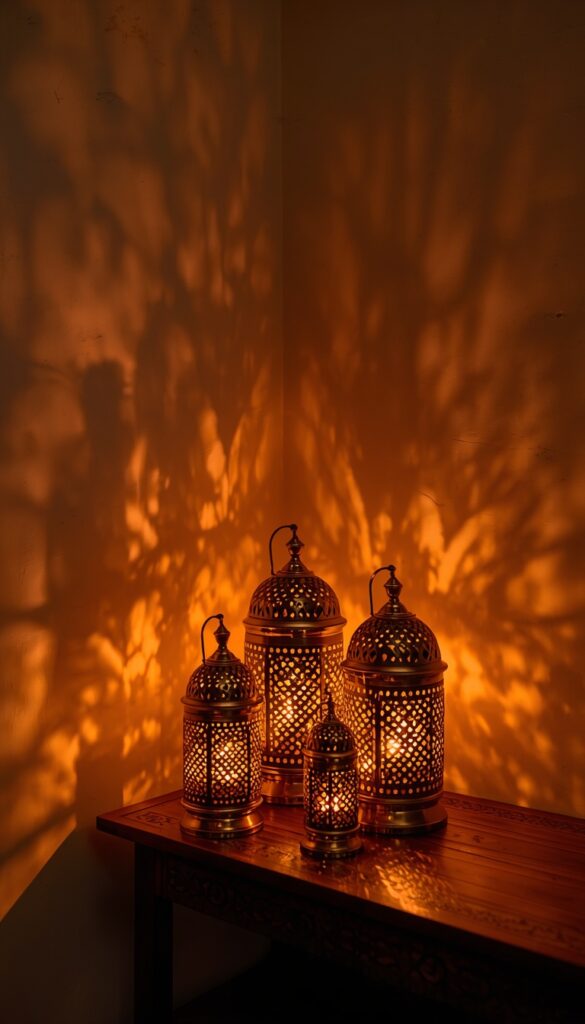
Moroccan lanterns create a quality of light that no other fixture replicates. The pierced metalwork — hammered brass, aged copper, or blackened steel — casts intricate geometric shadow patterns across walls and ceilings when lit from inside. A single Moroccan lantern in a corner of a living room transforms the entire atmosphere of the space after dark. Several lanterns grouped together at different heights create something that feels genuinely extraordinary — a room that shifts personality completely between day and night. During the day, the lanterns read as beautiful sculptural objects. After dark, they become light sources that turn ordinary walls into something that looks like a scene from a film set in Marrakech or Andalusia.
Moroccan lanterns work in virtually every room of a Mediterranean inspired home. Hung as pendant lights above a dining table, they create an intimate, atmospheric overhead light that flatters both the food and the people around it. Placed as floor lanterns in a living room corner with a tall candle inside, they anchor a seating arrangement and add warmth at a lower height than ceiling fixtures. Lined along a windowsill or mantel shelf as a collection of varying sizes, they create a curated display with genuine decorative presence. In a bathroom, a small pierced brass lantern on a shelf beside the sink or bathtub adds a luxurious, spa like quality that no standard bathroom light fitting can match.
Metal type and finish determine both the aesthetic character and the longevity of a Moroccan lantern. Solid brass lanterns develop a rich, warm patina over time that only deepens and improves with age — this natural aging process is desirable and should not be cleaned away with metal polish. Copper lanterns oxidize to a beautiful verdigris green in humid environments like bathrooms, which suits certain interiors beautifully but may not suit others. Blackened steel lanterns have a more contemporary, graphic quality that suits interiors where the Moroccan influence is one element within a broader modern or industrial aesthetic. Avoid chrome plated or bright nickel versions — these reflect light too harshly and lose all connection to the authentic handcrafted character that makes Moroccan lanterns so special.
8. Olive Trees Indoors — The Living Sculpture Every Mediterranean Room Needs
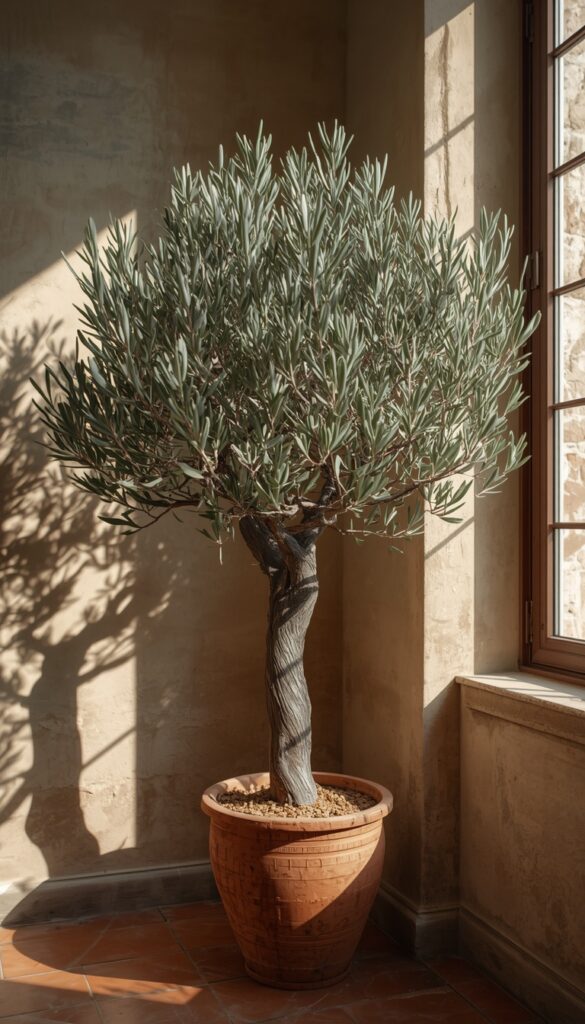
An indoor olive tree is the single most powerful living element you can bring into a Mediterranean interior. Nothing else, not a fig tree, not a citrus tree, not a fiddle leaf fig — carries the same immediate visual and cultural resonance. Olive trees have been central to Mediterranean life and landscape for over six thousand years. Their gnarled, silver barked trunks, the delicate shimmer of their silver green leaves in light, and their ancient, weathered character bring a quality to an interior that feels both intensely decorative and genuinely grounded in place. A mature olive tree in a large terracotta pot beside a living room window is one of the most beautiful things a room can contain.
Growing an olive tree successfully indoors requires understanding its non-negotiable needs. Bright direct sunlight for at least six hours daily is essential — a south facing window is ideal, a grow light supplement works in darker homes during winter months. Olives are drought tolerant and prefer to dry out completely between waterings — overwatering is the most common reason indoor olive trees decline. Plant in a very free draining mix — standard potting soil with added perlite or grit in a ratio of roughly one part grit to two parts compost drains well enough. A terracotta pot rather than a glazed ceramic or plastic container allows the root zone to breathe and excess moisture to evaporate through the pot walls, which replicates the naturally dry, well drained conditions of their native Mediterranean habitat.
Styling an indoor olive tree for maximum visual impact comes down to pot choice and placement. A large, aged terracotta pot — ideally one with some natural weathering, mineral deposits, or moss on the exterior — suits an olive tree far better than a pristine new pot. The weathering of the pot echoes the weathering of the tree itself. Place the tree where it becomes a natural focal point — beside a tall window, in a corner where two walls meet, or as a room dividing element between a living space and a dining area. At night, a simple floor uplight positioned at the base of the trunk directed upward through the canopy creates a dramatic shadow effect on the ceiling that is genuinely stunning in a Mediterranean interior.
9. Linen Textiles — The Fabric That Breathes Mediterranean Warmth Into Every Room
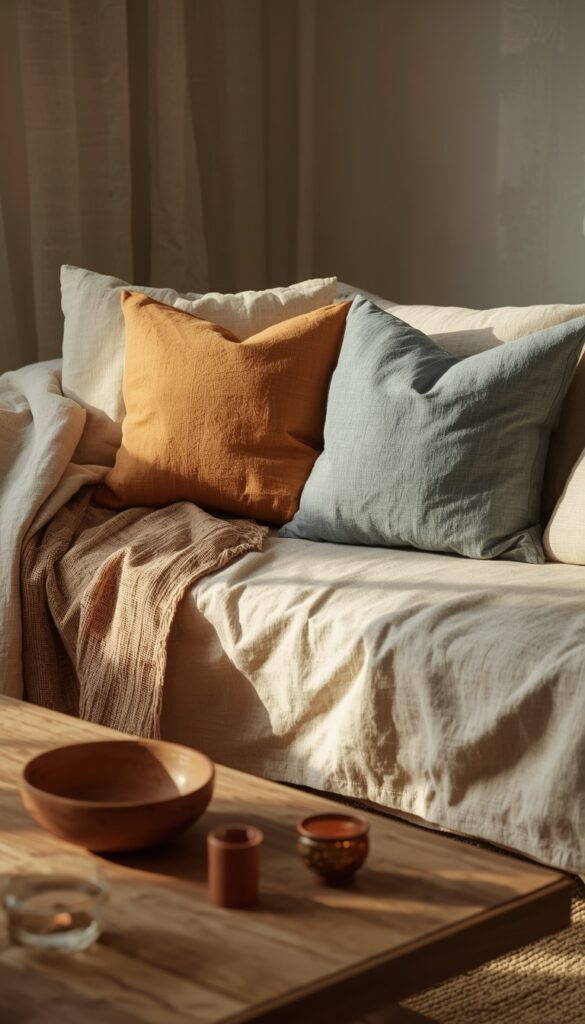
Linen is the textile of Mediterranean living. It has been woven and used across the Mediterranean basin for at least ten thousand years — longer than almost any other fabric in human use. The reason it has endured is simple. Linen feels extraordinary against the skin, regulates temperature naturally, improves with every wash, and develops a beautiful, relaxed texture over time that no synthetic fabric can replicate. In a Mediterranean interior, linen appears everywhere — curtains, sofa throws, cushion covers, bed linen, table runners, and napkins. It is not a decorative accent. It is the default textile choice, the fabric that everything else relates back to, and the material that holds the warmth of the entire aesthetic together.
Natural, undyed linen in its characteristic warm oat tone is the most versatile and most authentically Mediterranean choice. It pairs with terracotta, warm white, aged wood, hand painted tile, and natural stone without effort. Soft sage green linen, dusty blue linen, and warm ochre linen all suit Mediterranean color palettes beautifully when used as accent textile choices alongside natural base linen tones. Avoid bright white linen in a Mediterranean context — it reads too crisp and laundered for an aesthetic that values natural texture and relaxed imperfection. The slight crinkle of naturally air dried linen is a feature, not a flaw. Embrace it. A linen curtain that falls in slightly irregular folds, a linen throw casually draped over a sofa arm — these imperfections are exactly what gives a Mediterranean room its genuine, lived in character.
Sourcing quality linen for home textiles requires a little knowledge. European linen — particularly from Belgium, France, and Lithuania — is the benchmark for quality. It uses longer flax fibers that produce a stronger, more lustrous weave with better longevity than cheaper short fiber alternatives from elsewhere. Thread count is less meaningful for linen than for cotton — focus instead on weight in grams per square meter. Curtain linen typically falls between 180 and 280 gsm for good drape. Upholstery linen ranges from 300 to 400 gsm for durability. Bed linen at around 150 to 180 gsm has the right weight for comfortable sleeping while still offering that characteristic linen texture. Washing linen at 40 degrees and air drying rather than tumble drying significantly extends its life and develops its characteristic texture beautifully over time.
10. Blue and White Color Palette — Classic Mediterranean Color That Never Dates
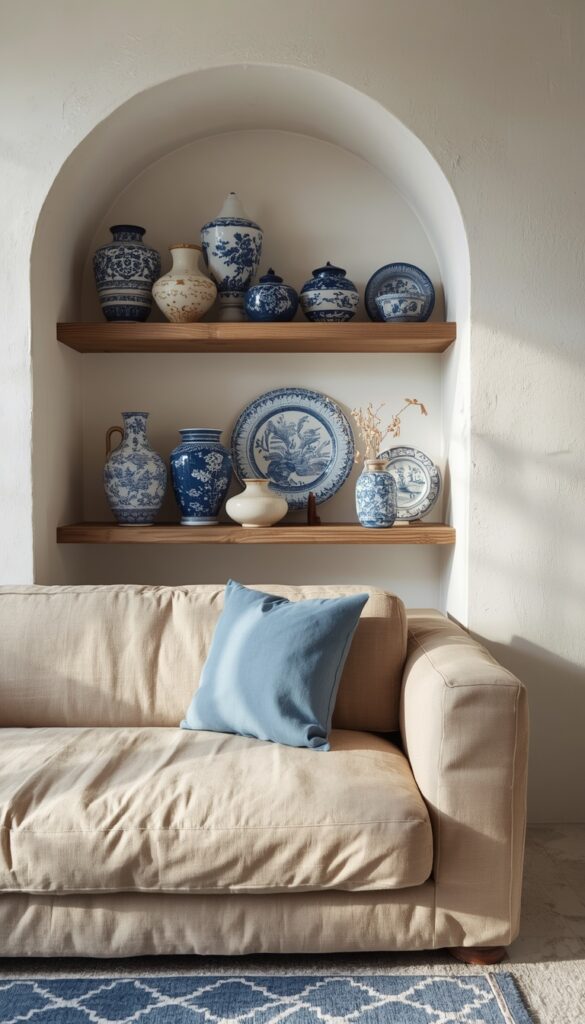
The blue and white color combination is so deeply embedded in Mediterranean visual culture that it has become almost synonymous with the aesthetic itself. Greek island villages painted in brilliant white with cobalt blue window frames and doors. Portuguese azulejo tile facades in cobalt blue and white. Moroccan ceramic pottery in navy and cream. Spanish talavera tiles in blue and white floral patterns. This color pairing appears across the entire Mediterranean basin in different forms because it references two constants — the white light of the Mediterranean sun and the deep blue of the Mediterranean sea and sky. Bringing these colors into an interior does not just create a color scheme. It creates an atmosphere with genuine geographic and cultural resonance.
The most sophisticated approach to blue and white in a Mediterranean interior avoids using both colors at full saturation simultaneously. Pure brilliant white walls with cobalt blue accents creates a high contrast graphic effect that suits very sunny rooms with strong natural light — it can feel harsh in darker northern rooms. A more nuanced and broadly applicable approach uses warm white or cream as the dominant wall and textile tone with varying depths of blue appearing in ceramics, tiles, textiles, and painted furniture. Dusty, chalky blues — Aegean blue, soft indigo, faded denim tones — feel more authentically aged and Mediterranean than bright, saturated cobalt in many contemporary interior contexts. The combination of warm white walls with dusty blue shutters, blue toned ceramics, and a blue and white patterned rug creates a blue and white atmosphere without any single element feeling overwhelming.
Introducing blue and white in the right sequence and hierarchy makes the difference between a cohesive Mediterranean interior and one that feels like a themed holiday rental. Start with the largest surfaces — walls, floors, and large upholstered pieces — in neutral warm tones. Introduce blue progressively through medium scale elements like rugs, curtain trim, and painted furniture. Complete the palette with small scale blue and white details — ceramic vessels, cushion covers, table linens, and decorative tiles. This layering approach ensures blue reads as an integral part of the design rather than a color applied after the fact. It also gives you complete flexibility to adjust the intensity of the blue presence by swapping out smaller accessory pieces without redecorating the whole room.
11. Natural Stone Surfaces — Raw Material That Grounds the Whole Design
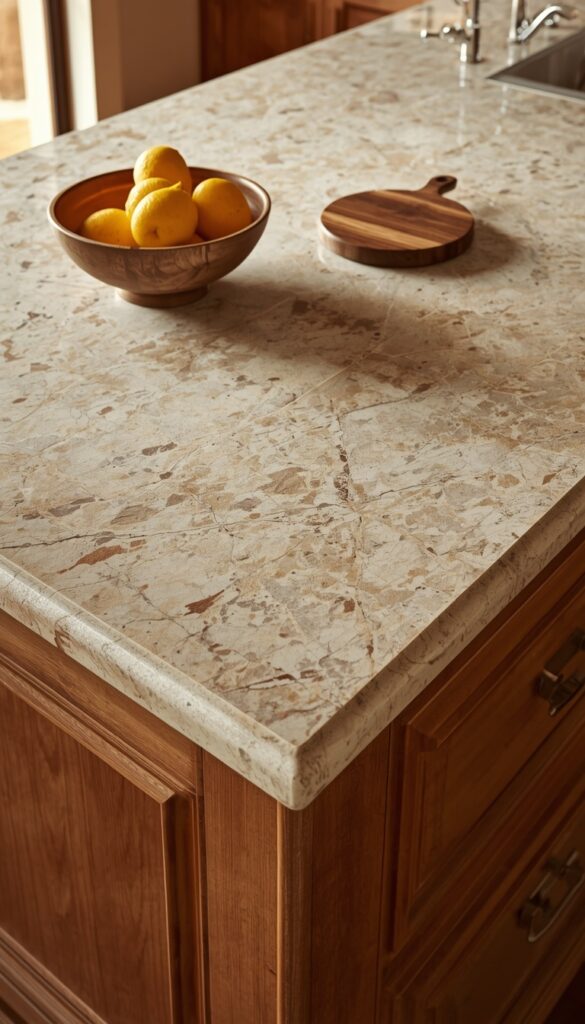
Natural stone is the structural soul of Mediterranean architecture. Limestone, travertine, marble, sandstone, and slate have built and surfaced Mediterranean homes for millennia — from the marble floors of Roman villas to the rough limestone walls of Greek island houses to the travertine courtyards of Moroccan riads. Bringing natural stone into a contemporary interior immediately connects the space to this deep material history. Stone has a presence, a weight, and a visual complexity that no manufactured material fully replicates. The way light moves across a limestone floor, the subtle veining of a travertine countertop, the cool solidity of a marble bathroom wall — these qualities justify the cost and effort of working with real stone every single time.
The most impactful stone applications in a Mediterranean interior are those that appear on large, prominent surfaces. A kitchen island with a thick travertine top becomes the architectural centerpiece of the entire room. A bathroom clad floor to ceiling in warm limestone creates a sanctuary like atmosphere that no tile can match. A living room fireplace surrounded in rough cut sandstone turns a functional feature into a genuine focal point. For smaller budgets or rented spaces, stone appears convincingly in smaller applications — a marble side table, a stone fruit bowl, a limestone candle holder, a set of travertine coasters. These smaller stone pieces bring the material into the room at a lower commitment level while still contributing the tactile weight and natural character that stone uniquely provides.
Finish choice for natural stone determines whether the material reads as rustic Mediterranean or sleek contemporary. Honed and tumbled finishes — matte, slightly rough, with softened edges — suit Mediterranean interiors far better than polished, mirror finish stone. Polished marble reads as a luxury hotel or corporate lobby rather than a sun warmed Mediterranean villa. Tumbled travertine tiles with their characteristic pitted surface and softened corners have a genuinely aged quality that makes them look like they have been walked on for centuries. Brushed limestone has a slightly textured surface that catches light differently at different angles, creating natural visual depth. These matte, textural finishes also show wear, footprints, and marks less than polished surfaces, a practical advantage in a style that celebrates natural aging rather than pristine perfection.
12. Open Wooden Shelving — Display, Storage, and Character in One
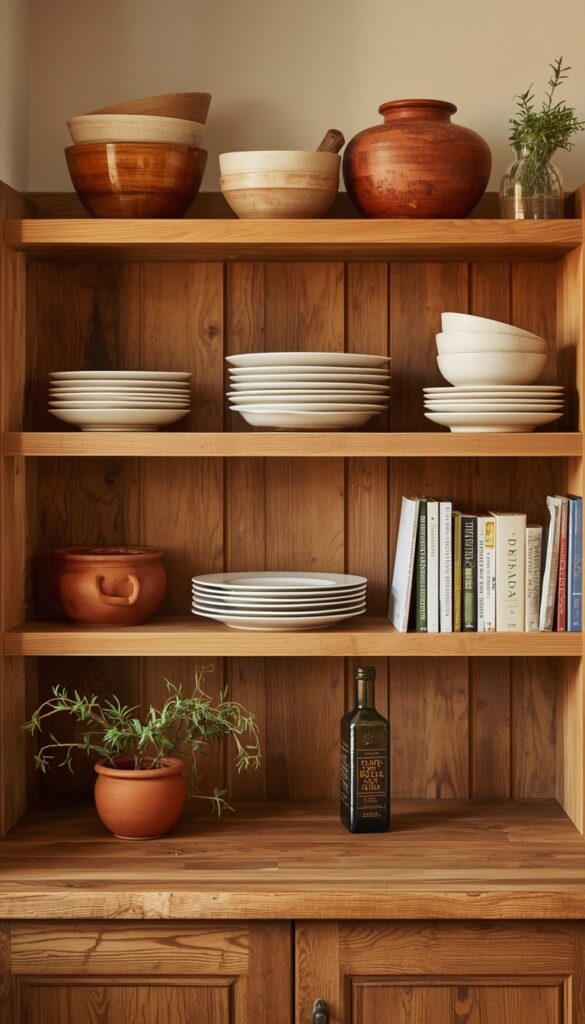
Open wooden shelving is central to Mediterranean kitchen and living room design for practical and aesthetic reasons simultaneously. Practically, it provides accessible storage for everyday items — dishes, glasses, olive oil bottles, ceramic bowls — without the visual barrier of cabinet doors. Aesthetically, it creates an opportunity to display beautiful, useful objects in a way that tells something about the people who live there. In a Mediterranean kitchen, open shelves hold a rotating cast of terracotta pots, hand painted ceramics, olive wood boards, vintage glass bottles, dried herbs, and well loved cookbooks. The result is a kitchen that looks genuinely inhabited and genuinely beautiful at the same time — which is exactly the spirit of Mediterranean domestic life.
Wood choice for open shelving in a Mediterranean interior should stay in the warm, natural register. Solid oak with a natural or light oil finish is the most versatile option — the warm golden tone of oak complements terracotta, warm white walls, and natural stone surfaces beautifully. Reclaimed timber with visible nail holes, saw marks, and natural color variation carries more character than new wood and suits farmhouse influenced Mediterranean styles particularly well. Chestnut, walnut, and cherry wood all work beautifully in Mediterranean contexts with their rich warm tones. Avoid painted wood shelving in Mediterranean spaces unless the paint color is a deeply considered choice — raw, oiled wood always looks more authentically grounded in this aesthetic than a white painted shelf that could belong to any interior style.
Styling open shelves in a Mediterranean interior follows a simple principle — mix functional items with beautiful ones in equal measure. A row of matching white dinner plates displays beautifully on a shelf. A collection of hand thrown ceramic mugs in varying colors and sizes looks characterful and lived in. Stack cookbooks horizontally and use them as plinths for small ceramic objects. Lean a wooden board or a small framed artwork casually against the back of the shelf rather than hanging it on the wall. Introduce living plants — a trailing rosemary, a small olive, or a compact fig — to bring organic life to the shelving display. The goal is a shelf that looks curated rather than cluttered, where every object is either beautiful or useful, and the best objects manage to be both.
13. Courtyard Inspired Indoor Garden — Bringing the Outside In
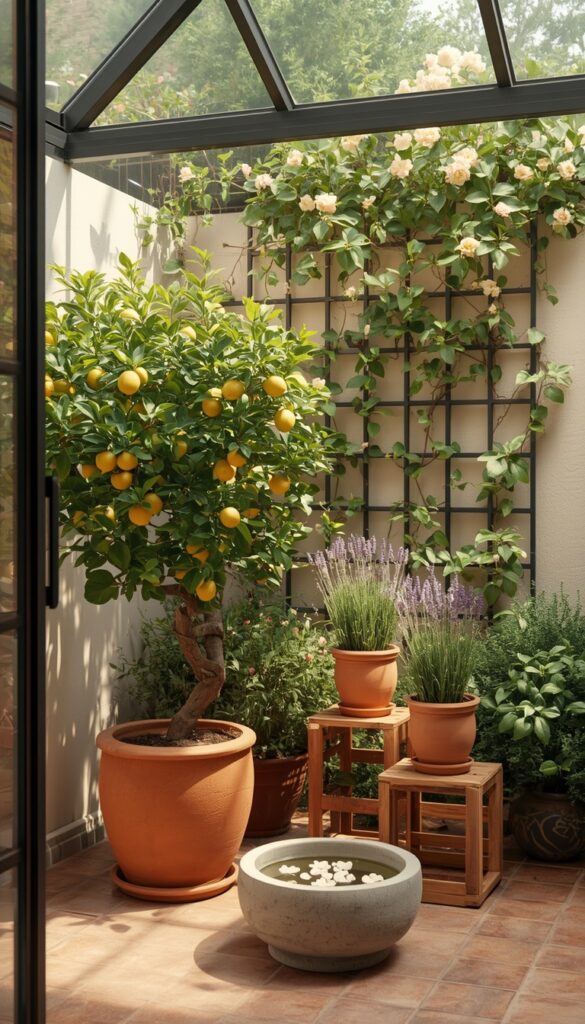
The internal courtyard or riad in Moroccan tradition — is one of the most beautiful architectural concepts in Mediterranean domestic design. A central outdoor space surrounded by the home on all sides, filled with plants, a fountain, and filtered light from above. Most contemporary homes cannot accommodate a true internal courtyard, but the spirit of this idea translates powerfully into any interior through the concept of a dedicated indoor garden zone. A corner of a living room or a sunroom filled with large scale Mediterranean plants — olive trees, lemon trees, bougainvillea trained up a trellis, climbing jasmine, potted lavender — creates a genuine indoor garden moment that references the courtyard tradition without requiring structural changes.
Plant selection for a courtyard inspired indoor garden should prioritize Mediterranean species that carry cultural resonance alongside visual beauty. Lemon trees in large terracotta pots are one of the most iconic Mediterranean domestic plants — their glossy dark leaves, fragrant flowers, and bright fruit create a sensory richness that few other plants match. Bougainvillea trained up a wall mounted trellis or a freestanding bamboo frame creates a dramatic cascade of papery flowers in magenta, coral, or white. Lavender grouped in multiple terracotta pots creates a fragrant, silvery purple display. Rosemary, sage, and thyme planted in individual pots contribute culinary usefulness alongside their aromatic, gray green Mediterranean character. Group plants at different heights using inverted terracotta pots or wooden crates as risers to create the layered, complex planting structure of a real garden compressed into an interior corner.
Water is the one element that completes a courtyard inspired indoor garden in a way that nothing else can. The sound of moving water — even very gentle water movement — changes the sensory character of a space profoundly. A small tabletop stone fountain, a simple ceramic water feature, or even a wide shallow bowl filled with water and floating flowers introduces this quality into an interior garden zone at modest cost and effort. The sound of water associates powerfully with the Mediterranean riad tradition and creates an immediate sense of calm that is difficult to achieve through visual means alone. If a water feature is not practical, use the bowl of floating flowers as a static alternative — gardenias, jasmine flowers, or rose petals floating on still water in a shallow ceramic dish create a beautiful sensory focus without the complication of a pump or power source.
14. Whitewashed Furniture — Old World Charm With Effortless Versatility
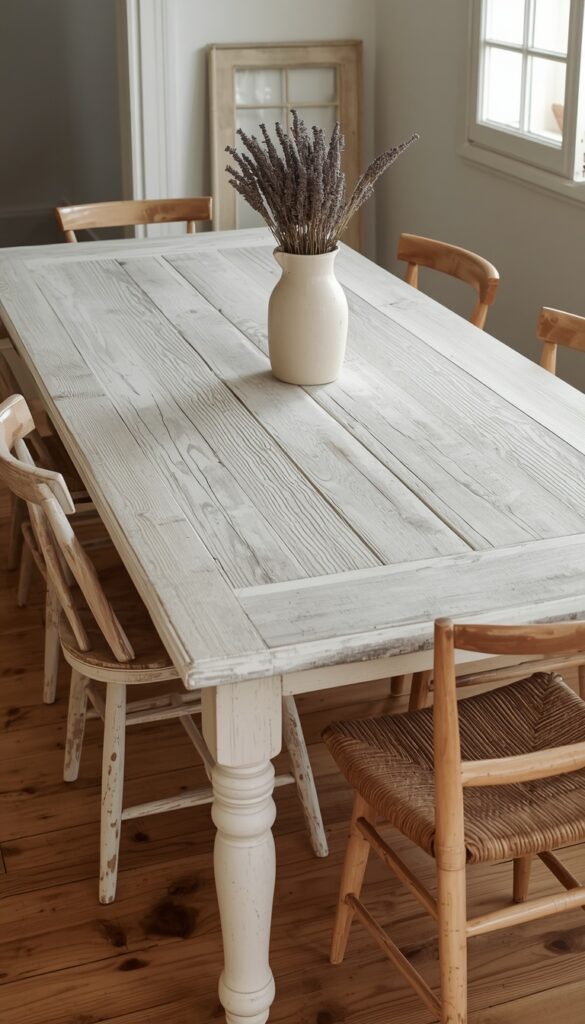
Whitewashed wood furniture has a quiet, sun bleached beauty that fits Mediterranean interiors perfectly. The whitewash technique — applying a diluted white paint or lime wash to raw or previously stained wood and wiping back before it dries — allows the natural grain of the wood to show through a soft white veil. The result is neither fully painted nor fully natural — it sits in between, with a chalky, aged quality that looks like furniture that has spent decades in bright coastal sunlight. A whitewashed dining table, a washed timber bed frame, or a whitewashed chest of drawers each bring this particular quality — relaxed, organic, genuinely beautiful without trying too hard.
Whitewashed furniture works especially well in Mediterranean bedrooms and dining rooms. In a bedroom, a whitewashed timber bed frame with linen bedding in warm natural tones creates an atmosphere of complete ease and rest. Add a whitewashed bedside table, a rattan pendant light, and a terracotta pot on the windowsill and the room achieves Mediterranean character through material harmony rather than decorative excess. In a dining room, a long whitewashed farmhouse table with mismatched timber chairs — some painted, some natural, all slightly imperfect — creates the kind of honest, convivial dining space that Mediterranean food and gathering culture celebrates. The imperfection is not a compromise — it is the aesthetic itself.
Creating a whitewash finish on existing furniture is one of the most accessible DIY projects in home decorating. Dilute white latex paint with water in a ratio of roughly one part paint to two parts water for a subtle, transparent wash. Apply with a brush in the direction of the grain, then wipe back immediately with a damp cloth before the paint dries. The wiping back step removes excess paint from the surface while leaving pigment in the grain lines and textural recesses of the wood, which creates the characteristic depth of a whitewash finish. Multiple thin coats built up gradually produce a more convincing result than one heavy application. Sand very lightly between coats with fine 220 grit sandpaper for a smoother base that accepts the next coat evenly. Seal the finished surface with a matte furniture wax for protection while preserving the chalky quality of the finish.
15. Wrought Iron Details — Structural Elegance From Gate to Light Fitting
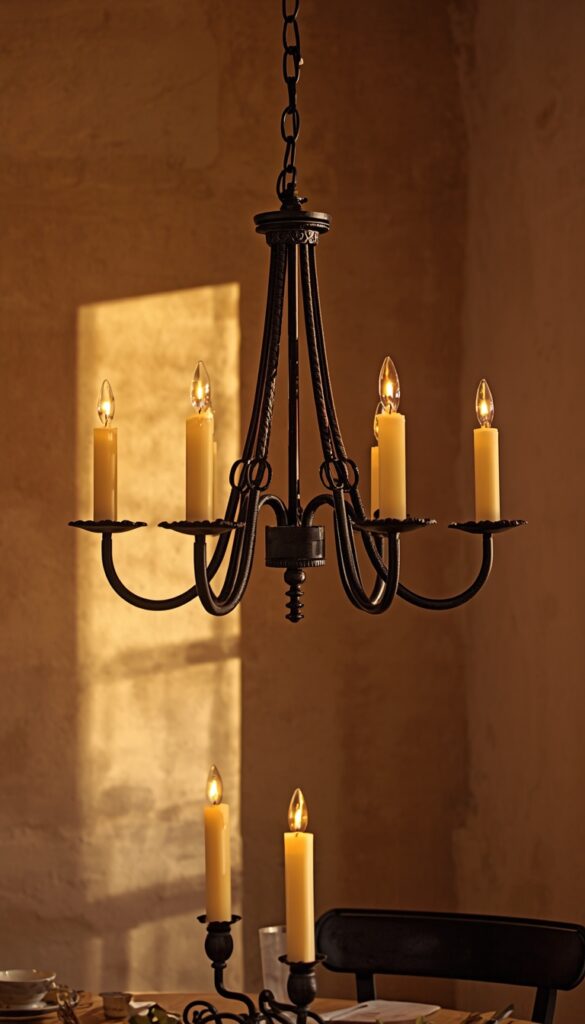
Wrought iron is the material of Mediterranean architecture in the way that brass is the material of Art Deco or chrome is the material of modernism. Wrought iron balcony railings, window grilles, door handles, light fittings, candle holders, and furniture frames appear throughout Mediterranean domestic and civic architecture from Spain through Italy to Turkey. The material has a hand forged character — slightly irregular, with the marks of the blacksmith’s work visible on its surface — that no cast or machined metal replicates. In a contemporary interior, wrought iron details connect the space to this long material tradition while providing a visual anchor of dark, solid weight that contrasts beautifully with the lightness of white walls, linen textiles, and natural timber.
The most effective wrought iron elements in a Mediterranean interior are those that serve a functional purpose while adding decorative presence simultaneously. A wrought iron candle chandelier hung above a dining table is both a light source and a sculptural object of genuine beauty. Wrought iron curtain rods with decorative finials add architectural detail to windows while serving their functional purpose. A wrought iron console table in an entry hall provides storage and surface while introducing the material in a location where it creates an immediate first impression. Wrought iron pot holders and rails in a kitchen provide functional hanging storage for copper pots, dried herbs, and utensils while referencing the working kitchen aesthetic of traditional Mediterranean cooking spaces.
Finish matters significantly for wrought iron in an interior context. Traditional flat black is the most authentic and most versatile choice — it reads as genuinely aged and handcrafted. Aged or rustic brown black finishes with subtle warm undertones suit warmer, more Provençal and Italian influenced interiors beautifully. Avoid powder coated wrought iron in bright colors or very uniform finishes — these strip the handcrafted, aged quality that makes the material valuable in a Mediterranean aesthetic. Some wrought iron pieces develop surface rust in humid environments, which requires a light treatment with a rust inhibiting wax or oil annually. This small maintenance step is worthwhile — quality wrought iron pieces, properly cared for, outlast most other decorative elements in a home by generations.
16. Candlelight and Lanterns — The Lighting Philosophy
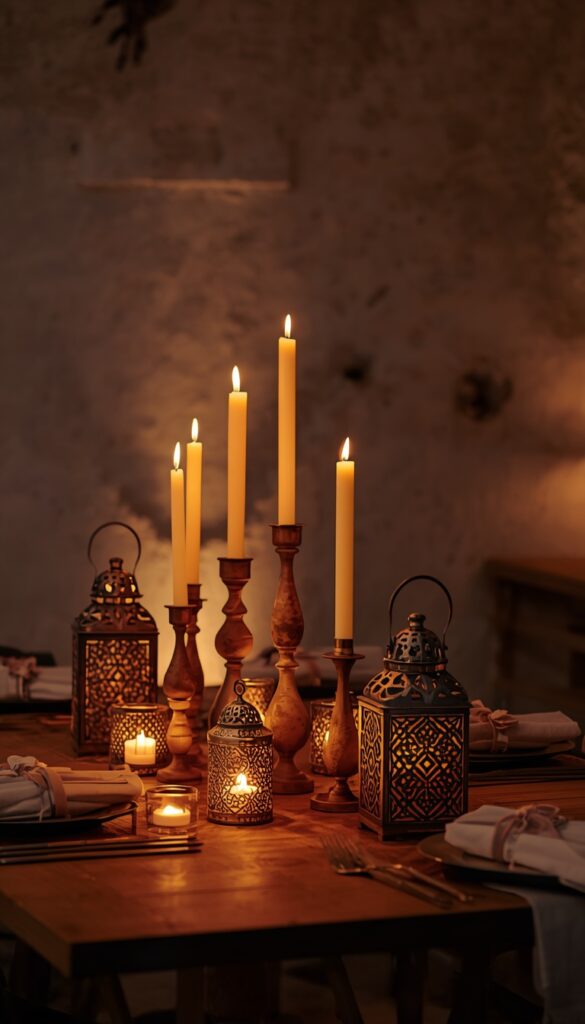
Mediterranean evening light has a particular quality that anyone who has spent time in Spain, Greece, Italy, or Morocco recognizes immediately — it is warm, low, layered, and abundant in candlelight. The Mediterranean approach to evening lighting is fundamentally different from the northern European and American preference for bright, even overhead illumination. Instead of flooding a room with light from a single ceiling source, Mediterranean interiors use multiple small light sources at different heights — wall sconces, table lamps, floor lanterns, and candles — that together create a warm, glowing ambiance that flatters everything and everyone within the space. This lighting philosophy is one of the most transformative things you can bring into any interior, regardless of its style.
Candles play a specific and irreplaceable role in Mediterranean interior lighting that electric light sources cannot fully substitute. The movement of a candle flame — its gentle, unpredictable flicker — creates a quality of light that is categorically different from any static electric source, however warm. Grouping candles of varying heights and diameters together on a dining table, a mantel shelf, or a low coffee table creates a gathered, intimate light source with genuine visual warmth. Pillar candles in aged terracotta holders, tapered candles in wrought iron candlesticks, tea lights clustered in shallow ceramic dishes — all of these contribute to the layered candlelit atmosphere that defines Mediterranean evenings. The scent of candles also contributes — Mediterranean fragrance notes of fig, olive wood, sea salt, jasmine, and citrus add a sensory dimension to the evening atmosphere that pure visual decoration cannot achieve.
Building a genuinely Mediterranean lighting scheme for any room requires thinking in three distinct layers simultaneously. The first layer is ambient — a ceiling pendant or wall sconces that provide the baseline level of light needed to use the room comfortably. The second layer is a task — focused light at specific functional locations like a reading lamp beside a chair or under shelf lighting in a kitchen. The third layer is the atmosphere — candles, lanterns, and decorative light sources that exist purely to create warmth and visual interest rather than functional illumination. It is this third layer that most rooms lack and that Mediterranean interiors prioritize without hesitation. Investing in this atmospheric layer — quality lanterns, beautiful candleholders, a collection of pillar candles — costs relatively little and delivers a transformation in the evening atmosphere that no amount of furniture rearrangement or paint color changes can achieve alone.
Conclusion
Mediterranean interior design is not a trend with an expiration date — it is a design philosophy built on materials, textures, and a way of living that has proven its appeal across centuries and continents. Every idea in this guide connects back to the same core principles — natural materials, warm color, honest craftsmanship, and spaces designed for genuine living rather than visual performance. Whether you start with a single limewash wall, a collection of Moroccan lanterns, or a large olive tree in a terracotta pot, you are pulling on a thread that connects your home to something genuinely beautiful and enduring. Mediterranean interior design rewards patience and layering — the spaces that embody it most fully are assembled over time, one considered choice at a time. Start with what resonates most deeply, and build from there.
Frequently Asked Questions
Q: What are the key features of Mediterranean interior design? A: Mediterranean interiors combine natural materials like stone, terracotta, and timber with warm earthy color palettes, handcrafted details, and an emphasis on indoor outdoor living. Key features include limewash walls, terracotta floors, hand painted ceramic tiles, arched architectural openings, natural fiber textiles like linen, and warm layered lighting through lanterns and candles.
Q: How do I add Mediterranean style to a modern apartment? A: Start with limewash paint on one feature wall and replace standard light fittings with Moroccan style lanterns or rattan pendants. Add terracotta pots with an olive tree or lemon tree, layer linen textiles across sofas and beds, and introduce hand painted ceramic accents. These changes work in any apartment without structural alterations and create an immediate Mediterranean atmosphere.
Q: What colors are used in Mediterranean interior design? A: Warm whites, terracotta, sandy ochre, dusty blue, sage green, and warm stone tones form the core Mediterranean palette. These colors reference the natural landscape — bleached walls, sun baked earth, olive groves, sea, and sky. Avoid cool grays and stark whites, which strip warmth from the aesthetic and undermine the sun drenched character that Mediterranean design depends on.
Q: Is Mediterranean interior design expensive to achieve? A: Not necessarily. Many of the most impactful Mediterranean elements are genuinely affordable — limewash paint, terracotta pots, linen textiles, candles, and rattan accessories all cost far less than new furniture. The investment areas are natural stone surfaces, quality tiles, and solid timber furniture. A phased approach — starting with affordable atmospheric elements and adding investment pieces over time — works very well.
Q: What plants suit a Mediterranean interior? A: Olive trees, lemon trees, lavender, rosemary, bougainvillea, and fig trees are the most characteristically Mediterranean choices. These plants carry both visual and cultural resonance with the Mediterranean landscape. Most require bright light and infrequent watering — conditions that suit south facing rooms well. Group plants in terracotta pots of varying sizes for the most authentic, layered garden effect.
Q: Can Mediterranean style work in a cold climate home? A: Absolutely. Mediterranean interior design translates beautifully to cold climate homes — the warm materials, rich textures, and layered lighting actually feel more necessary and more appreciated in cooler, darker environments. Focus on the interior elements — limewash walls, terracotta, warm textiles, candlelight, and natural stone — rather than the outdoor living aspects, and the aesthetic works in any climate.
Q: What lighting works best in a Mediterranean interior? A: Layered warm lighting at multiple heights creates the most authentic Mediterranean atmosphere. Combine a wrought iron or rattan pendant for ambient light with wall sconces at mid height and candles or lanterns at floor and table level. Warm bulbs in the 2700K color temperature range suit Mediterranean interiors far better than daylight or cool white bulbs, which create a clinical quality entirely at odds with the warmth of the aesthetic.