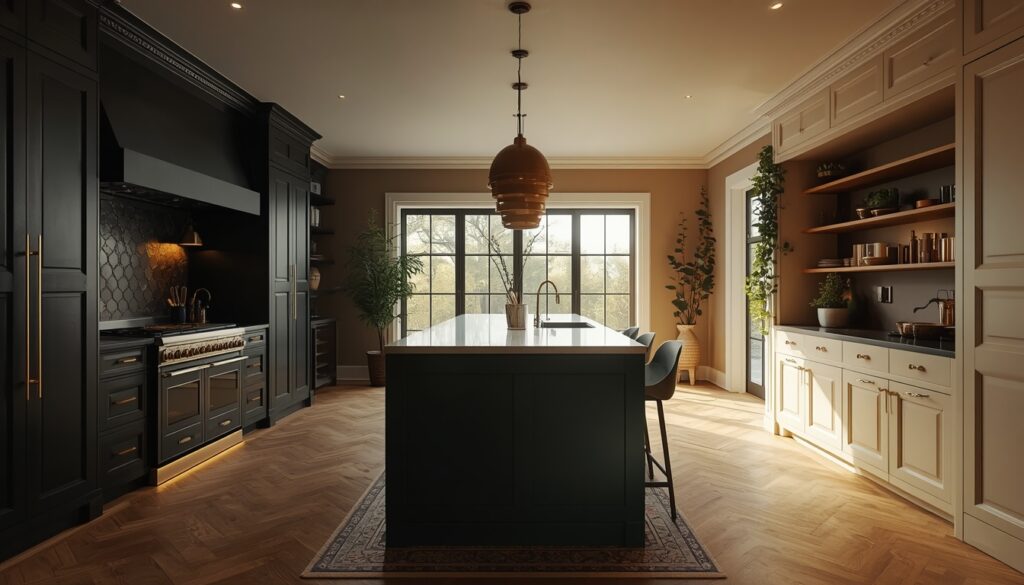
Bloxburg kitchens are one of those things that look simple until you actually sit down to build one. Suddenly you’re staring at a blank room wondering whether to go modern or cottage core, open shelving or upper cabinets, dark counters or light ones. The decisions stack up fast. But here’s what I’ve learned after spending way too many hours in Bloxburg build mode — the kitchens that look genuinely stunning aren’t built with the most expensive items. They’re built with intention. The right color palette, a consistent style, and a few clever layout tricks make all the difference.
What I want to give you in this article isn’t a list of random aesthetic screenshots. I want to walk you through fourteen kitchen ideas that each have a clear design logic behind them — so you understand why they work, not just what they look like. Whether you’re building your first Bloxburg house or tearing down a kitchen you’ve outgrown, these ideas will give you something real to work with. Every concept here is specific, buildable, and genuinely worth your time. Let’s get into it.
1. Dark Moody Kitchen — With Black Cabinets and Brass Hardware
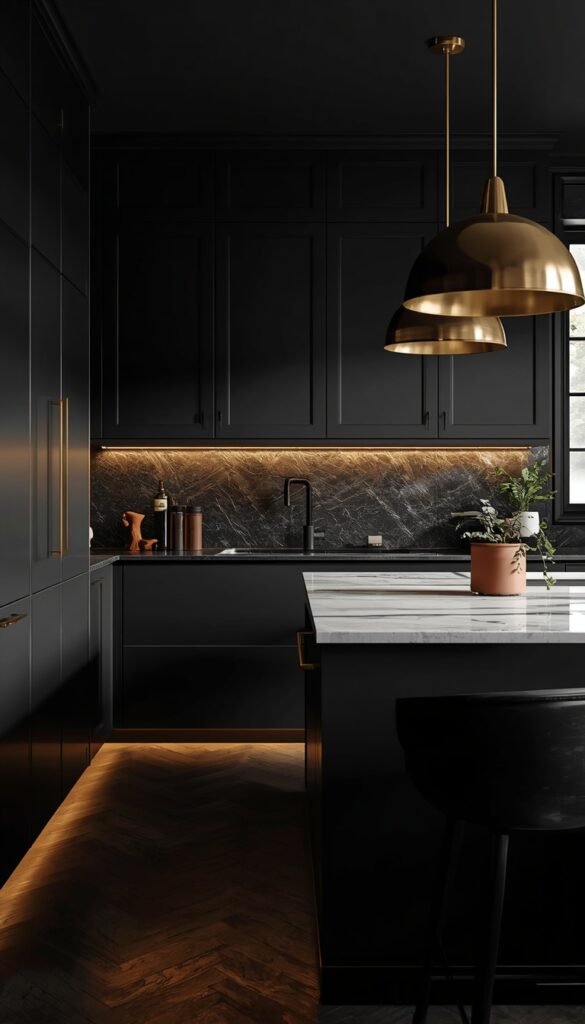
A dark moody kitchen in Bloxburg is one of the most dramatic, high impact styles you can build — and it’s far easier to pull off than most players think. The foundation is black or near black cabinets, both upper and lower. In Bloxburg, the dark cabinet options pair perfectly with a deep charcoal or near black wall color. Keep the walls one shade lighter than the cabinets so the whole room doesn’t collapse into a single dark mass. That subtle contrast is what separates a moody kitchen that looks intentional from one that just looks gloomy and unfinished.
Brass hardware is what makes this style sing. Add brass faucets, brass cabinet handles, and brass light fixtures wherever Bloxburg’s item catalog allows. The warm gold tone against the dark cabinets creates a rich, jewel box effect that no other hardware color matches in this context. Chrome and silver feel cold against dark cabinetry. Brass feels warm, luxurious, and deeply intentional. Even if you can only add one or two brass elements, they’ll elevate the whole kitchen dramatically. Think of brass as the jewelry that completes the outfit.
For counters, go with a white or light marble look surface to provide contrast against the dark cabinetry below. This creates the visual breathing room that keeps the kitchen from feeling heavy. A pendant light directly above a kitchen island in brass, naturally adds that final layer of designed polish. Add a small potted plant on the counter for one note of organic warmth in an otherwise dramatic space. Dark moody Bloxburg kitchens photograph beautifully, look stunning in house tours, and genuinely stand apart from the sea of all white builds that dominate the game.
2. Cottagecore Bloxburg Kitchen — With Open Shelving and Warm Wood Tones
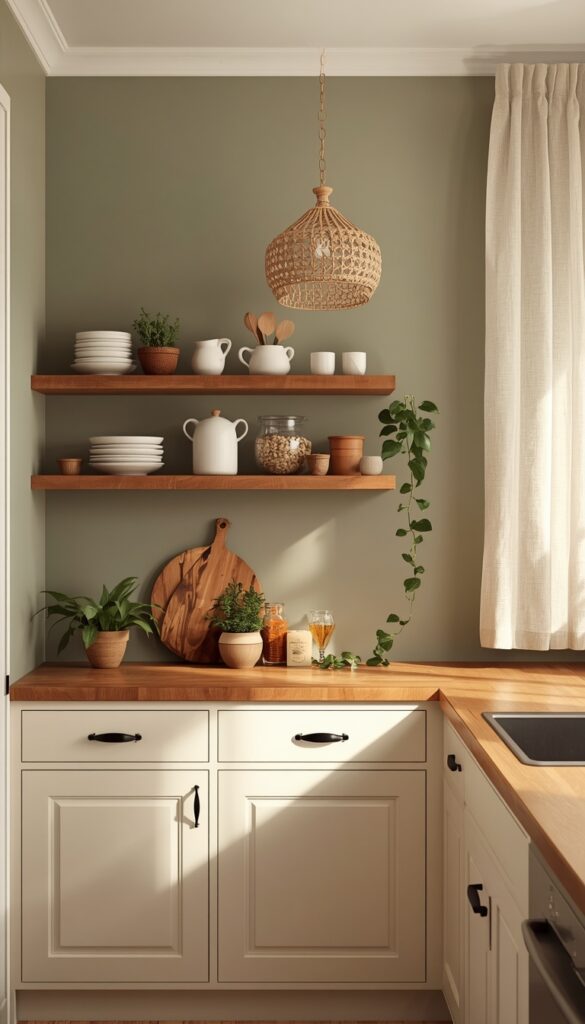
Cottage core is one of Bloxburg’s most beloved aesthetics, and the kitchen is where it shines hardest. The whole idea is warmth, handmade charm, and the feeling that someone who loves cooking actually lives here. Start with cream or off white lower cabinets rather than pure white — pure white reads as modern and clinical, while cream reads as warm and lived in. Paint the walls a soft sage green or warm linen tone. These two colors are the backbone of a cottage core kitchen palette and they work together with almost no effort.
Open shelving is essential to the cottage core look. Replace your upper cabinets entirely with floating wooden shelves — the warmer the wood tone, the better. Style the shelves with a mix of ceramic items, small decorative plants, and food props if Bloxburg’s catalog offers them. The styling of these shelves is where players often go wrong — don’t just stack identical items. Vary heights, vary textures, mix functional looking items with purely decorative ones. That layered, collected over time quality is exactly what makes cottage core feel authentic rather than themed.
Butcher block or warm toned wood countertops complete the look perfectly. If Bloxburg’s counter options include anything in a honey or walnut wood tone, choose that over stone in this style. The combination of cream cabinets, sage walls, warm wood shelves, and wooden counters creates a cohesive material story that feels genuinely cozy and intentional. Add a small floral window treatment if curtains are available, and a simple pendant light in a rattan or warm metal shade. This kitchen style gets the most admiring comments in Bloxburg house tours — people genuinely stop and say it feels real.
3. All White Bloxburg Kitchen — That Feels Clean and Bright
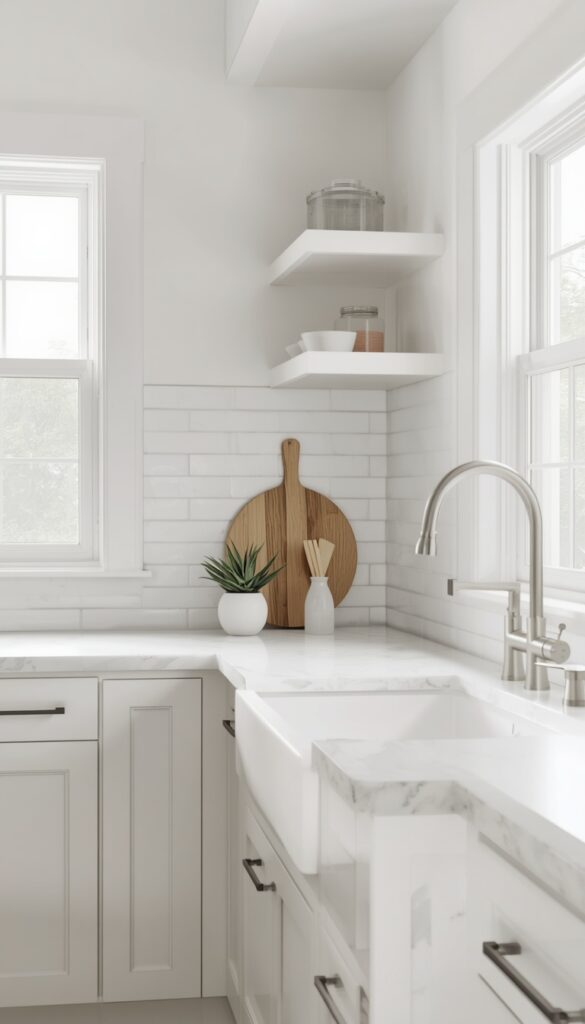
The all white Bloxburg kitchen is a classic for a reason. Done right, it feels airy, spacious, and incredibly clean — the kind of kitchen that makes the whole house feel bigger and more polished. Done lazily, it just looks blank. The difference is all in the layers. You need at least three different shades of white and off white working together — pure white cabinets, a slightly warmer white on the walls, and a cool white or light grey on the countertops. These subtle tonal shifts prevent the flat, unfinished look that plagues poorly built all white kitchens in Bloxburg.
White subway tile is the most reliable backsplash choice for this style, and it’s worth using Bloxburg’s tile options to create a proper backsplash zone between your counter and upper cabinets. The grout line matters here — a light grey grout reads as clean and refined, while bright white grout can disappear into the overall whiteness. Hardware in brushed nickel or matte black gives the cabinets definition and keeps them from blending into the walls. Matte black handles on white cabinets in particular is a combination that never fails — it’s sharp, modern, and gives the eye clear resting points.
Bring warmth into an all white kitchen through organic accessories rather than through the core architecture. A wooden cutting board propped against the backsplash, a small plant in a terracotta pot on the counter, a rattan pendant light above the island — these warm accents stop the white from feeling sterile without changing the fundamental brightness and openness of the style. Natural light helps enormously here, so position your kitchen near windows when your floor plan allows it. An all white Bloxburg kitchen with good natural light is one of the most screenshot worthy builds in the game.
4. Farmhouse Bloxburg Kitchen — With Shiplap Walls and Apron Sink
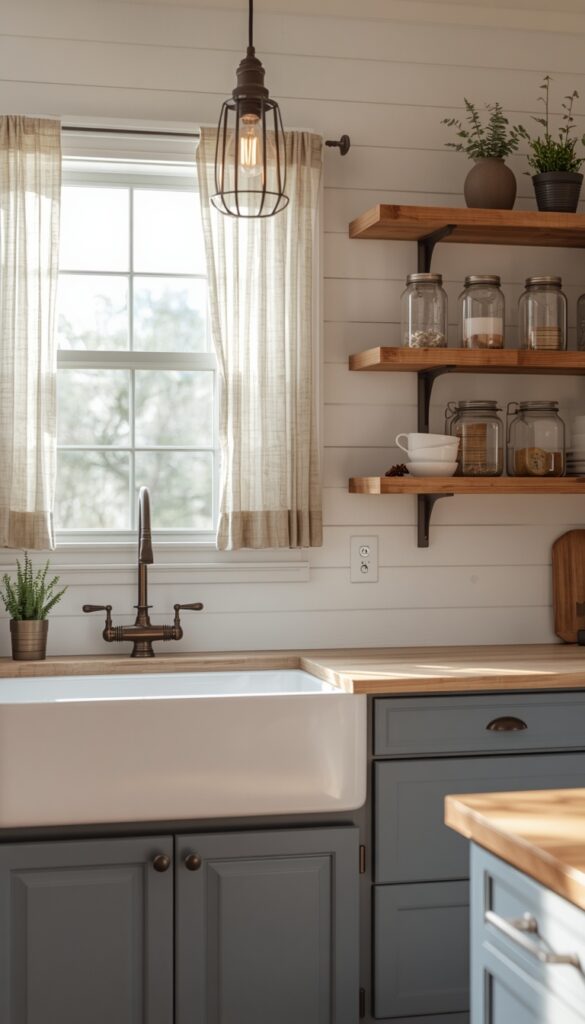
The farmhouse kitchen look in Bloxburg hits differently when you nail the key details. This style is built on a handful of specific elements — shiplap or board and batten textured walls, a deep apron front sink, painted cabinets in white or soft grey blue, and open wooden shelving. Get those foundations right and everything else falls into place naturally. Start with the walls. If Bloxburg has a shiplap style wall texture, use it from counter height upward, or use it on a single accent wall behind the stove to anchor the kitchen with a clear focal point.
The apron front sink — also called a farmhouse sink — is the single most iconic element of this style. In Bloxburg, choose the widest, most traditional looking sink option available and position it under a window if your layout allows. A simple gooseneck faucet in brushed nickel or oil rubbed bronze finishes the sink perfectly. Below the sink, open cabinet doors — or no cabinet doors at all with an exposed shelf — adds an authentic farmhouse touch. Painting the lower cabinets a soft dusty blue or aged white while keeping the upper cabinets white creates a two tone look that’s immediately charming.
Lighting in a farmhouse Bloxburg kitchen should feel vintage inspired rather than sleek. Look for pendant lights with an Edison bulb visible inside them — the exposed filament is a strong farmhouse signal. A simple wooden floating shelf above the stove holding a small plant, a ceramic oil cruse, and a few stacked wooden items creates that styled but casual mantel effect that makes farmhouse kitchens feel genuinely warm and personal. This is one of the Bloxburg styles where less furniture is more — keep the space from being overcrowded and let the architectural details do the heavy lifting.
5. Minimalist Bloxburg Kitchen — With Handle less Cabinets
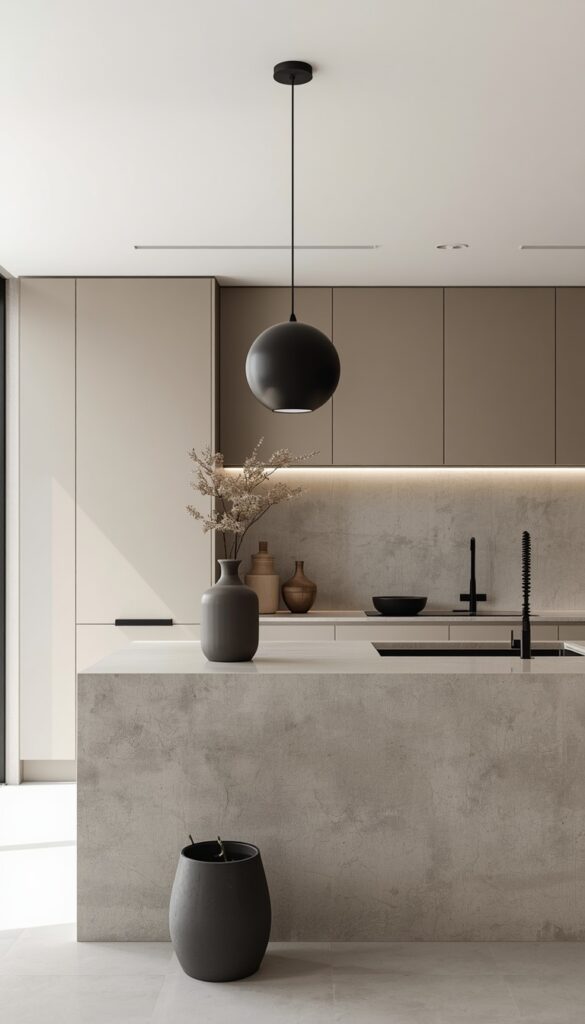
Minimalist Bloxburg kitchens are deceptively hard to build well. The whole philosophy of minimalism is that every element earns its place — nothing decorative, nothing redundant. That means the quality and precision of each decision matters more than in a heavily styled kitchen where accessories can paper over any awkward choices. Start with flat front, handleless cabinets in a single solid color — white, light grey, greige, or even a soft sage work beautifully. The clean, uninterrupted cabinet faces are what give minimalist kitchens their sleek, architectural quality.
Countertops in a minimalist kitchen should be a consistent slab material with minimal veining — think solid white quartz or a light concrete tone. Avoid busy, high contrast stone patterns in this style. They fight with the calm, clean energy of everything else. A waterfall countertop edge on your kitchen island — where the counter material runs vertically down the side of the island to the floor — is the single most effective way to make a minimalist Bloxburg kitchen look genuinely high end and intentional. If Bloxburg’s build mode allows you to approximate this detail, use it without hesitation.
Accessories in a minimalist kitchen should be almost nonexistent. One small plant, one geometric ceramic vase, one pendant light in a simple matte black or brushed concrete finish — that’s your entire decorating budget for this style. Restraint is the whole point. The power of a minimalist kitchen lies in what you leave out, not what you put in. Sightlines should be clean, counters should be nearly empty, and the overall impression should be one of disciplined calm. Players who build this style consistently say it’s the hardest to build and the most satisfying when it finally comes together.
6. Two Tone Cabinet Bloxburg Kitchen — for a Bold Visual Statement
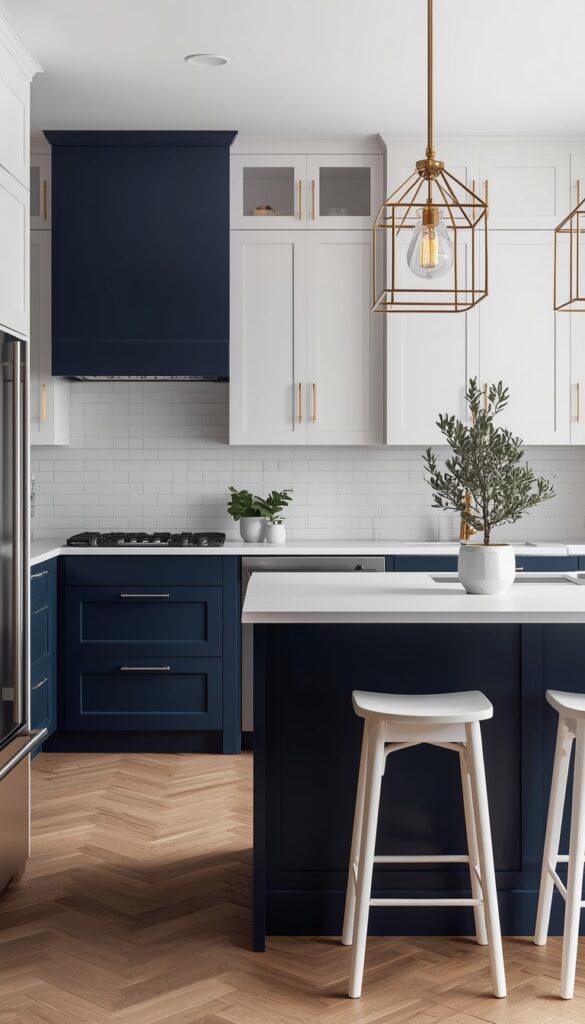
Two tone cabinets are one of the most effective design moves in Bloxburg kitchen building because they add visual complexity and depth without requiring extra furniture or accessories. The concept is simple: lower cabinets in one color, upper cabinets in a different but complementary color. The trick is choosing the right pairing. Navy lower cabinets with white uppers is perhaps the most reliably stunning combination — it’s bold, nautical without being themed, and the contrast creates a clear visual anchor for the whole kitchen.
Other combinations that work beautifully in Bloxburg: forest green lowers with cream uppers, charcoal grey lowers with pale sage uppers, or warm terracotta lowers with warm white uppers. What almost never works is two colors of similar darkness or similar intensity — they fight each other rather than creating a hierarchy. The lighter color should always go on the upper cabinets to keep sightlines open and prevent the upper half of the kitchen from feeling heavy. This is a design principle from real interior design, and it translates perfectly into Bloxburg build logic.
Hardware consistency is critical in a two tone kitchen. Use the same hardware finish on both the upper and lower cabinets — it ties the two colors together and makes them read as one intentional design decision rather than two separate kitchens stacked on top of each other. Brass handles work beautifully with navy and forest green lowers. Matte black works with charcoal and warm earth tones. The backsplash should stay neutral — white, light grey, or a soft natural stone tone — so it doesn’t compete with the two cabinet colors fighting for attention. Two tone Bloxburg kitchens always stop people during house tours.
7. Industrial Bloxburg Kitchen — With Exposed Brick and Metal Accents
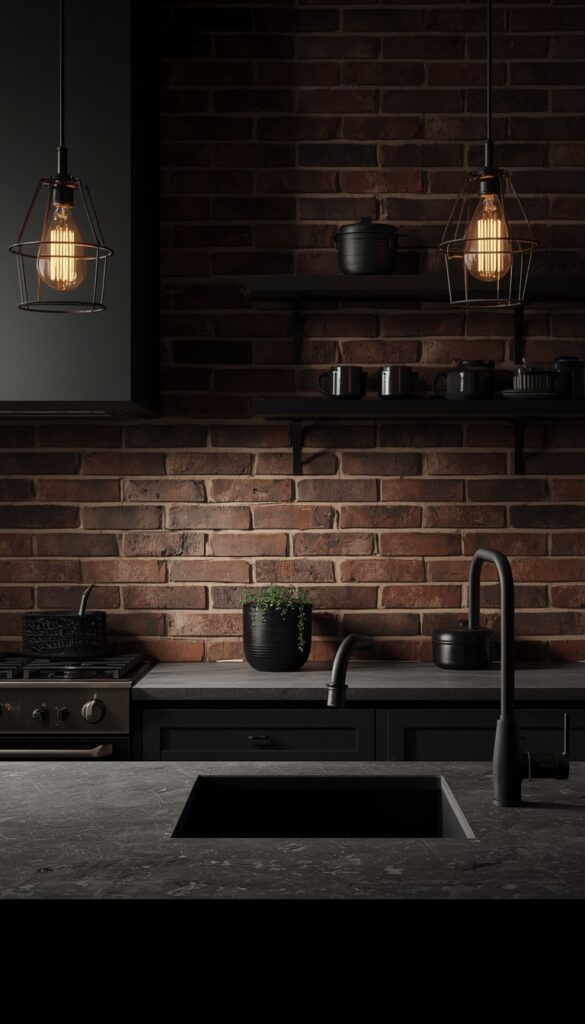
Industrial style in Bloxburg is about celebrating raw, honest materials — exposed brick, bare concrete, dark metal, and reclaimed wood all play lead roles. It’s a city loft aesthetic that feels completely different from the warm cottagecore and farmhouse builds that dominate the game, and that contrast is part of its appeal. Start by applying an exposed brick texture to one full wall — typically the wall behind the stove or the longest wall in the kitchen. This immediately sets the tone and gives the whole room a strong architectural foundation to build around.
Metal open shelving in matte black or dark gunmetal replaces traditional upper cabinets in this style. The exposed bracket and shelf combination is an instantly industrial statement, and it keeps the brick wall visible rather than covering it with closed cabinetry. Style the shelves with darker, more understated items — dark ceramic mugs, a cast iron skillet prop, dark glass bottles, a small trailing plant. Avoid pastel or floral accessories entirely in this style — they break the tonal cohesion completely and make the kitchen look confused rather than curated.
Concrete or dark stone countertops are the natural counter choice for an industrial Bloxburg kitchen. The heavy material reads as authentic to the aesthetic in a way that marble or white quartz simply doesn’t. A square, deep single basin sink in matte black with an angular industrial faucet rounds out the counter zone perfectly. Lighting should be utilitarian and exposed — pendant lights with visible Edison bulbs, bare metal cages, or simple tube lights in black metal housings all work. Industrial Bloxburg kitchens look remarkable in low light screenshots and stand out as genuinely unique builds in a game full of cottage and modern styles.
8. Pastel Bloxburg Kitchen — That Feels Like a Dream
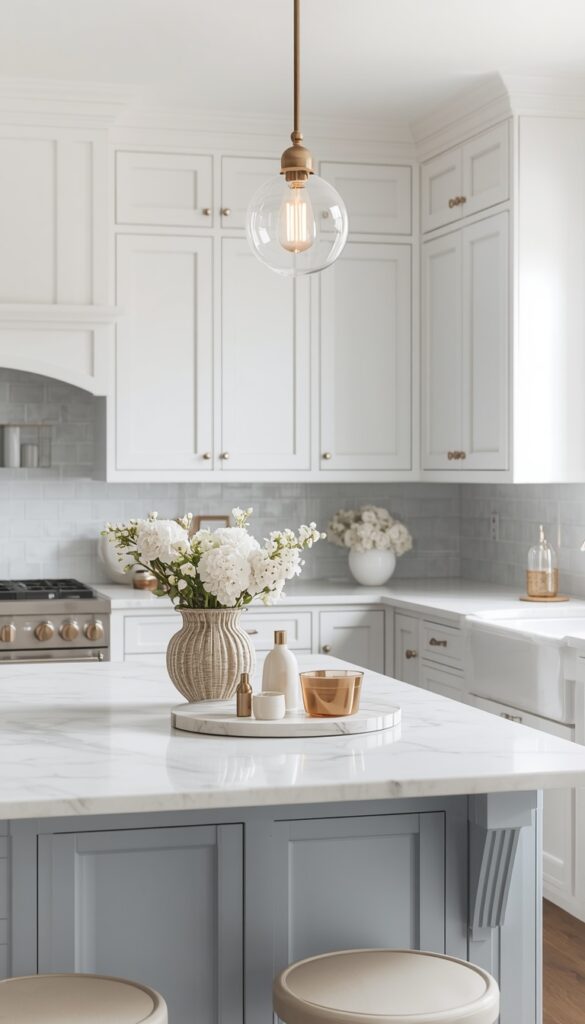
Pastel kitchens in Bloxburg are having a serious moment, and it’s easy to see why. They’re soft, joyful, and genuinely unlike anything else in the game’s design landscape. The key to a pastel kitchen that looks polished rather than childlike is keeping the palette sophisticated and unified. Choose one dominant pastel — dusty pink, powder blue, pale lavender, or mint green — and build the entire kitchen around that single color. Pastel kitchens that try to use multiple pastel shades simultaneously tend to feel chaotic. One hero color, consistently applied, reads as confident and designer led.
Use your chosen pastel on the lower cabinets and pair it with clean white uppers and a white ceiling. This keeps the softness contained to the lower half of the room and prevents the space from feeling overwhelmed by color. A white marble or soft stone countertop in light grey veining complements every pastel beautifully and adds a note of luxury to what might otherwise feel too precious or sweet. The backsplash should echo either the white of the upper cabinets or a barely there version of your hero pastel — avoid busy patterns here, as they compete with the color itself.
Gold or champagne hardware is the ideal finish for a pastel Bloxburg kitchen. It adds warmth and a slight vintage glamour that elevates the palette from sweet to sophisticated. A statement pendant light in a globe shape with a warm Edison bulb adds both warmth and a rounded silhouette that complements the soft character of the whole palette. Accessories should be thoughtful and minimal — a small vase of white flowers, a marble tray on the counter, a small gold framed print on the wall nearby. Pastel Bloxburg kitchens photograph beautifully in natural light and consistently earn some of the best engagement in house tour content.
9. Japandi Bloxburg Kitchen — With Natural Wood and Neutral Tones
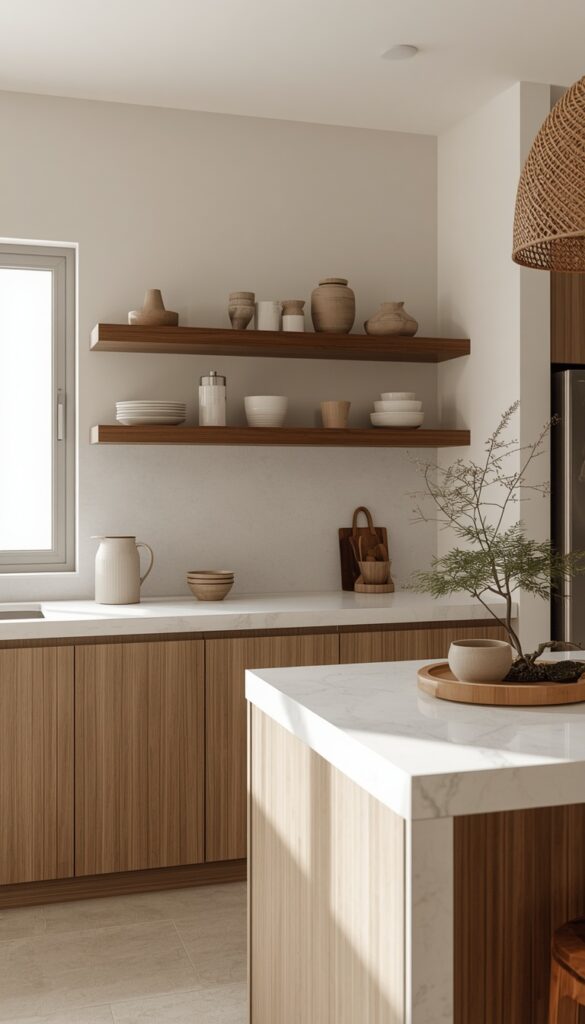
Japandi is the design style born from the marriage of Japanese minimalism and Scandinavian warmth — and it builds extraordinarily well in Bloxburg. The palette is strict: warm whites, soft beiges, warm greys, and the natural medium tones of wood. No bright colors. No bold patterns. No visual noise. Everything should feel quiet, purposeful, and handcrafted in spirit even when it’s clearly digital. Start with flat front lower cabinets in a warm greige or pale warm grey and pair them with open walnut tone floating shelves in place of upper cabinets.
Natural wood is the heart of Japandi style, and in Bloxburg you want it everywhere it makes sense — countertops, shelving, bar stools, and accessories. The warmth of the wood is what stops this style from feeling cold or overly austere. Balance the wood with clean white surfaces: white walls, white upper areas, white or near white countertops where wood isn’t used. The tension between warm wood and cool white is exactly what creates the Japandi feeling — it’s a visual temperature balance that feels deeply restful to look at. Players consistently describe finished Japandi kitchens as “peaceful.”
Ceramics and organic textures are your accessories in a Japandi Bloxburg kitchen. A simple handmade looking ceramic bowl on the counter, a small bonsai tree or trailing pothos plant, a woven rattan pendant light shade — these bring life to the space without disrupting its calm. Avoid shiny, reflective surfaces in this style — everything should feel matte, tactile, and grounded. No chrome, no polished stone with high sheen, no glass accessories. Matte finishes read as humble and considered, which is exactly the quality that makes Japandi feel different from every other style in the game.
10. L Shaped Bloxburg Kitchen Layout — That Maximizes Space
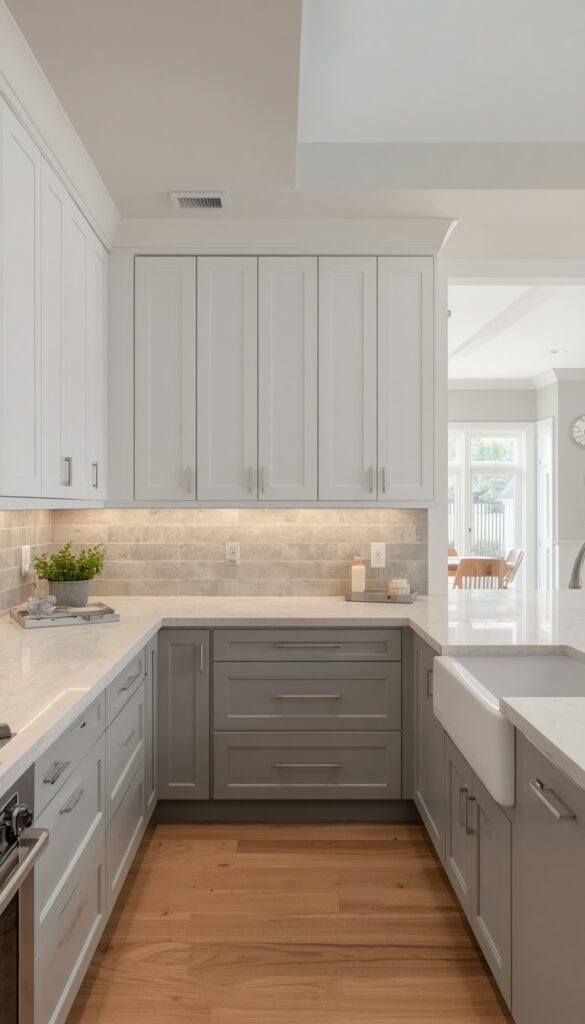
Most Bloxburg kitchens get built in a single wall or galley configuration because they’re the easiest to execute. But an L shaped layout is genuinely worth the extra planning effort — it creates a clear work triangle between the stove, sink, and refrigerator, which makes the kitchen feel more functional and more realistic. Position one arm of the L along the back wall and the other arm along a side wall. The corner where they meet is a natural spot for either a deep storage cabinet or a small built-in wine or display shelf that adds character to the junction.
The visual benefit of an L shaped layout is that it creates two distinct zones in one kitchen — a cooking zone along one wall and a prep or seating zone along the other. This gives the space a sense of organization and intention that straight line kitchens rarely achieve. If your Bloxburg house has an open plan living and dining area, the L shaped kitchen naturally creates a partial boundary between the kitchen and the rest of the space without needing a wall or an island. The corner itself becomes a visual anchor rather than dead space.
For an L shaped Bloxburg kitchen to look truly polished, the countertops must run continuously around the corner without an awkward gap. Keep the corner counter area styled — a small appliance prop, a plant, or a decorative tray — so it doesn’t look empty and abandoned. Lighting should be distributed across both arms of the L equally, with pendant lights or recessed ceiling lights placed at regular intervals above both counter runs. Players who switch from a single wall to an L shaped layout almost universally say they’ll never go back — it simply makes the kitchen feel like a real, functional room rather than a decorated wall.
11. Kitchen Island Bloxburg Build — That Becomes the Room’s Focal Point
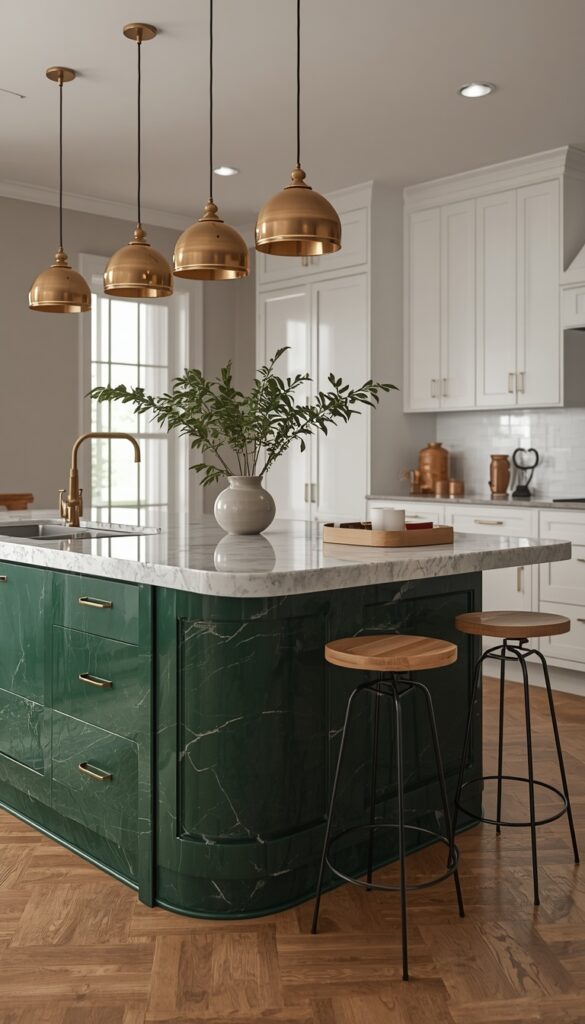
A kitchen island is the single most impactful structural addition you can make to a Bloxburg kitchen. It creates a clear center of gravity for the entire room, adds prep surface, serves as a dining spot if bar stools are placed on one side, and gives the space a complexity and depth that kitchens without islands simply can’t achieve. The island doesn’t need to be enormous — even a two counter wide, three counter long island dramatically changes the feel of a kitchen in Bloxburg. What matters is that it’s properly centered in the available space with room to walk comfortably around all sides.
The island should contrast slightly with the main cabinetry for maximum visual impact. If your main cabinets are white, make the island navy, forest green, or charcoal. If your main cabinets are dark, give the island a lighter wood tone or stone finish. This color differentiation signals that the island is a distinct architectural element, not just an afterthought. Pendant lights hung directly above the island — ideally two or three at evenly spaced intervals — tie the island to the ceiling plane and frame the whole kitchen beautifully when viewed from the adjacent living or dining area.
Bar stools on one side of the island are non-negotiable for the full effect. Choose stools that are proportional to the island height — if your counter surface sits at standard counter height in Bloxburg, bar stools with a footrest work perfectly. Matching stool pairs look more polished than mismatched ones; stick to either all wood, all metal, or a combination of wood seat and metal frame. A small decorative object at each end of the island — a plant, a candlestick, a ceramic piece — frames the island as a designed element and gives house tour screenshots a polished, editorial quality that players notice immediately.
12. Vintage Bloxburg Kitchen — With Pastel Appliances and Retro Tiles
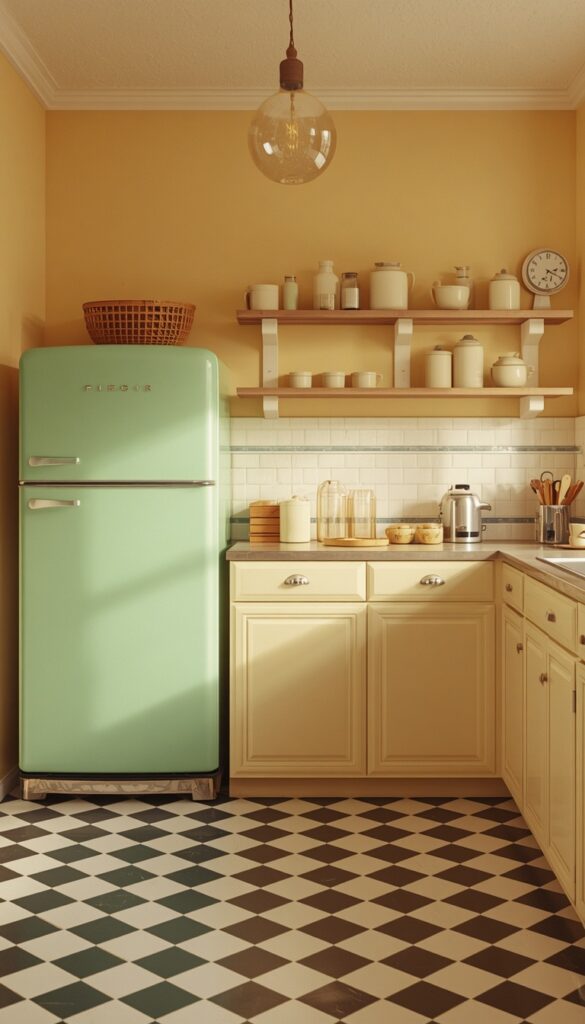
The vintage kitchen style in Bloxburg leans into a specific era — think 1950s American diner meets European grandmother’s kitchen — and the joy of building it is that it celebrates color and pattern in a way most other Bloxburg kitchen styles explicitly avoid. Pastel appliances are the cornerstone of this look: a mint green or powder blue refrigerator, a cream or pale yellow stove, retro styled small appliances in matching tones. If Bloxburg’s item catalog offers any appliances in vintage colorways, they belong here and nowhere else.
Checkerboard floor tiles are the single most iconic flooring choice for a vintage kitchen, and they work in Bloxburg if you apply a black and white tile pattern to the floor. Alternatively, small scale retro hex tiles in black and white or cream and terracotta create the same authentic feeling. The walls should be painted in a warm, slightly muted tone — not a modern crisp white, but a vintage cream or pale butter yellow that feels like it was last decorated in 1958 and somehow remained perfect ever since. Wooden open shelving with brackets painted to match the wall color carries items that reinforce the vintage story.
Cabinet hardware in the vintage kitchen should be chunky and rounded — cup pulls or small bin pulls in polished chrome or brass evoke period authentic hardware styles. The light fixture above a central kitchen table or island should be a glass globe pendant or a schoolhouse style flush mount with visible Edison bulbs. Accessories lean into nostalgia: ceramic canisters in matching pastel sets, a simple wooden stool, a small wall clock with a round face. Vintage Bloxburg kitchens are genuinely rare in the game and generate enormous interest during house tours precisely because they commit fully to their era rather than hedging toward modern neutrality.
13. Open Plan Bloxburg Kitchen — That Flows Into the Living Area
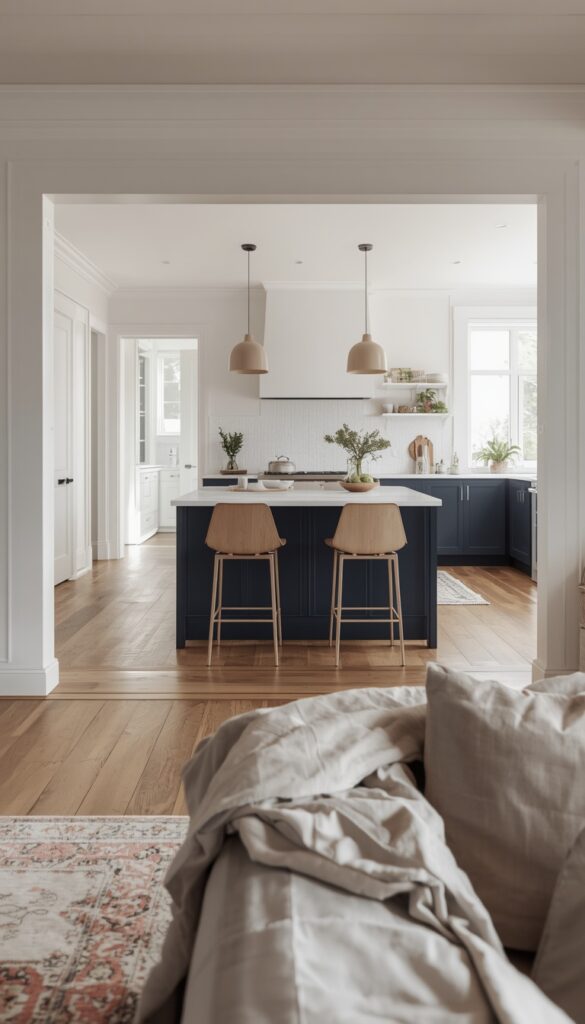
An open plan kitchen in Bloxburg is about more than just removing a wall. It’s about designing a single cohesive space where the kitchen, dining, and living areas feel like one intentional room rather than three separate functions crammed together. The most important design decision in an open plan layout is color continuity — the kitchen, dining, and living areas should share the same or closely related wall color so the eye travels smoothly across the entire space without interruption. One strong color palette running through all three zones is far more powerful than three separate color schemes fighting for dominance.
The kitchen island or peninsula becomes crucial in an open plan Bloxburg built because it provides a soft visual boundary between the kitchen and living zones without the hard stop of a wall. Position bar stools on the living room facing side of the island so that the kitchen becomes a social space — people sitting at the island can see the television and engage with anyone on the sofa. This mirrors exactly how real open plan kitchens function, and recreating that social logic in Bloxburg makes the space feel authentically lived in and thoughtfully designed rather than just spatially connected.
Flooring consistency across an open plan layout is another detail that separates good Bloxburg builds from great ones. Using the same floor material across the kitchen and adjoining living area creates visual flow and makes the whole space feel larger. If you want to delineate zones without a wall, use an area rug under the living furniture and leave the kitchen floor bare — the rug does the separation work without any architectural intervention. Lighting should also shift between zones: task lighting above the kitchen counters and island, and warmer, lower hanging pendant or floor lamp lighting in the living area, creating a natural transition between the two functions.
14. Bloxburg Kitchen With a Statement Ceiling and Pendant Lights
Most Bloxburg players design their kitchens from the floor up — cabinets, counters, flooring, accessories — and then forget about the ceiling entirely. This is a missed opportunity. The ceiling in a kitchen is the one surface that connects every other element in the room. A statement ceiling dramatically changes the perceived height and drama of the space. The simplest and most effective ceiling upgrade is a contrasting paint color — painting the kitchen ceiling in a deep, rich tone (navy, forest green, terracotta, or charcoal) when the walls are light creates an immediate sense of architectural intention that most Bloxburg builds entirely lack.
Pendant lights hanging from that statement ceiling complete the transformation. The key is choosing a pendant style that complements the ceiling color — a warm brass cage pendant against a navy ceiling, a matte black dome pendant against forest green, a rattan woven pendant against a warm terracotta ceiling. These pairings aren’t accidental — they follow the same logic as pairing accessories with accent colors in real interior design. Position pendants above the island or main counter run and keep them consistent in style if you use multiples. Mixing pendant styles in a single kitchen almost always looks chaotic.
For a maximum impact ceiling treatment in Bloxburg, combine the contrasting color with a ceiling height upper cabinet run that terminates right at the ceiling line — no gap between the top of the cabinets and the ceiling surface. This “ceiling height cabinet” detail is one of the most consistently impressive things you can build in Bloxburg, and when the ceiling above it is a deep contrasting color, the whole kitchen gains a sense of drama and architectural complexity that screenshots beautifully from every angle. Players who add this detail always comment that it makes their Bloxburg kitchen look more like a designed interior than a game build.
Conclusion
What makes a Bloxburg kitchen genuinely great isn’t the most expensive items or the most complicated build — it’s the clarity of a design decision made and followed through with confidence. A moody kitchen that commits fully to its dark palette, a cottagecore kitchen that layers its warm wood tones consistently, a minimalist kitchen that trusts in restraint — these are the builds that people screenshot and save and return to for inspiration. The fourteen ideas in this article each give you a clear direction to follow, with enough detail to actually execute it. Pick the style that excites you most, trust the logic behind it, and build the Bloxburg kitchen you’ve been imagining.
FAQs
Q: What is the best Bloxburg kitchen style for beginners? A: The all white kitchen is the most forgiving starting point for new builders. The palette is simple, the material choices are straightforward, and small mistakes are easy to fix without rebuilding the whole room. Once you’re comfortable with cabinet placement, countertops, and lighting basics, you can add personality through hardware and accessories without major structural changes.
Q: How do I make my Bloxburg kitchen look more realistic? A: Realistic looking Bloxburg kitchens share a few key traits — consistent material palette, lighting above the counter and island, bar stools at the island, and at least one organic element like a plant or food prop. Ceiling height cabinets with no gap above them are one of the most underused details that immediately makes a Bloxburg kitchen look like a real designed interior.
Q: What floor looks best in a Bloxburg kitchen? A: Light wood tone flooring works with almost every kitchen style and makes the space feel warm and spacious. Checkerboard tile is perfect for vintage style builds. Concrete or dark stone flooring suits industrial and minimalist kitchens beautifully. The most important rule is matching your floor to your overall style — a concrete floor under a cottagecore kitchen will always look slightly off no matter how well everything else is executed.
Q: How do I use color in a Bloxburg kitchen without it looking overwhelming? A: Commit color to one surface — typically the lower cabinets — and keep everything else neutral. This approach, called the 60 30 10 rule in real interior design, works perfectly in Bloxburg too. Your dominant neutral (walls, upper cabinets) takes sixty percent, your secondary color (lower cabinets or island) takes thirty percent, and an accent (hardware, one accessory) takes ten percent.
Q: Do Bloxburg kitchens need an island? A: Not every kitchen needs one, but an island adds function and visual complexity that’s hard to replicate any other way. If your kitchen room is too narrow for comfortable walkways on all sides of an island, skip it and focus on a well styled counter run instead. A single wall kitchen with great lighting, ceiling height cabinets, and a beautiful backsplash can be just as impressive without an island taking up valuable floor space.
Q: What lighting works best in a Bloxburg kitchen? A: Pendant lights above the island or main counter are the most impactful kitchen lighting choice in Bloxburg. Use two or three matching pendants at consistent spacing rather than a single central ceiling light, which flattens the whole room. Match the pendant finish to your hardware finish for a cohesive look. Warm toned light reads as more inviting in screenshots and house tours than cool blue white lighting.
Q: How do I choose a backsplash for my Bloxburg kitchen? A: Match the backsplash to the overall complexity of your kitchen style. Simple, clean kitchens — minimalist, Japandi, all white — need a simple, solid, or subtly textured backsplash. More personality driven styles — farmhouse, vintage, cottagecore — can handle more pattern and visual texture. The backsplash should always complement the countertop material rather than compete with it in color or pattern.
Q: What’s the most unique Bloxburg kitchen style that stands out in house tours? A: Industrial and vintage kitchens consistently generate the most surprise and admiration in Bloxburg house tours because they’re genuinely rare. Most players default to white modern or cottagecore builds, so a fully committed industrial kitchen with exposed brick and metal shelving, or a vintage build with retro tile and pastel appliances, immediately stands out and gets remembered. Committing fully to the style — no hedging toward safe neutrals — is what makes either of these builds truly remarkable.