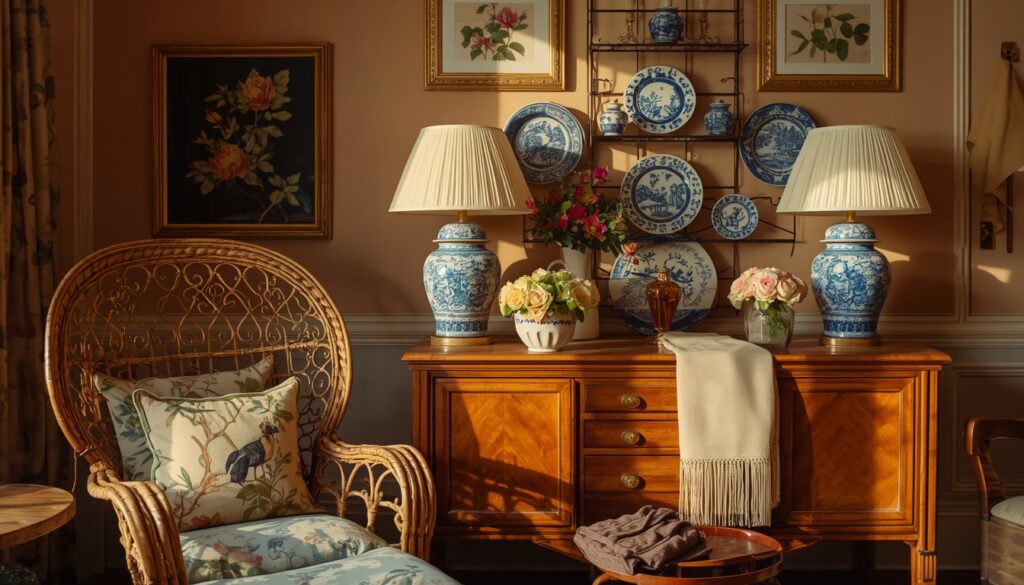
Grandmillennial style is one of the most genuinely exciting things to happen to interior design in years. It’s the aesthetic that says: I love antiques, I love chintz, I love things with history and soul and I’m not apologizing for any of it. The term was coined around 2019, but the feeling it describes is much older. It’s the warm, layered, slightly maximalist approach to decorating that your grandmother did instinctively, reimagined by a generation of younger people who grew up in those homes and never stopped loving what they saw. It’s traditional without being stuffy. It’s collected without being cluttered. It’s deeply, unapologetically personal.
What makes grandmillennial decor so satisfying to work with is that it rewards patience and a genuine eye. You’re not buying a matching set from one retailer and calling it a room. You’re finding a piece of antique transferware at an estate sale, layering it with a new floral linen cushion, anchoring it all with a fringe trimmed throw, and somehow making it feel completely cohesive and completely yours. The 13 decor pieces in this article are the building blocks of that aesthetic — each one chosen because it carries real grandmillennial character and real styling versatility. Whether you’re new to this style or deep in it already, there’s something here that will make your space feel more layered, more storied, and more alive.
1. Chintz Fabric — The Defining Pattern of Grandmillennial Style
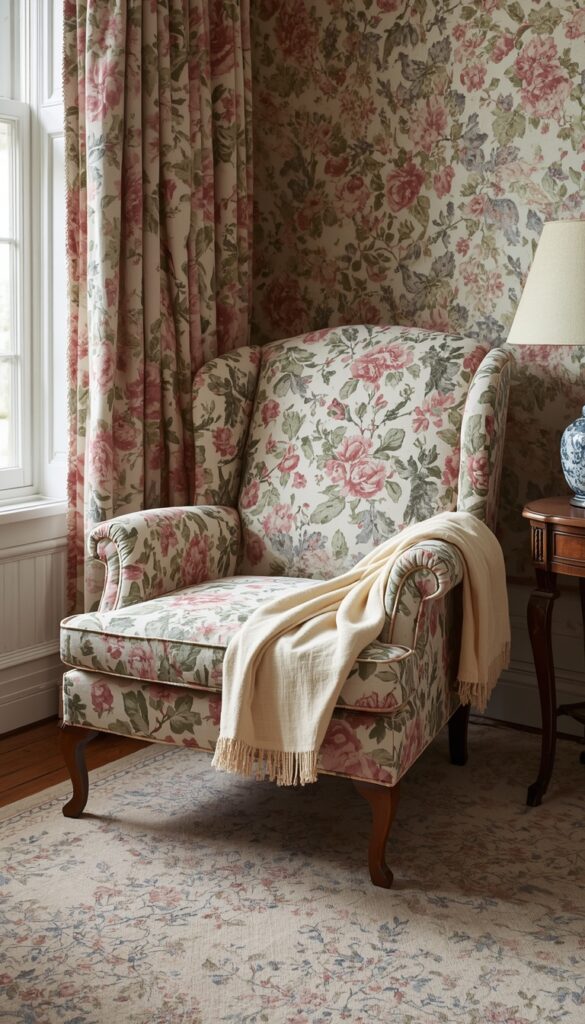
Chintz is the fabric most closely associated with grandmillennial decor, and for good reason. It’s a densely patterned, glazed cotton printed with large scale floral motifs — roses, peonies, hydrangeas, garden blooms in full exuberant color. It originated in India, was obsessively collected by the English in the 17th and 18th centuries, and became the defining fabric of the traditional English country house interior. Chintz on a sofa, a pair of armchairs, or floor length curtains is an immediate and unmistakable statement that says you love beauty and history and aren’t afraid of pattern.
The key to using chintz successfully is not overwhelming every surface with it. One large piece — a sofa, a pair of armchairs, a full set of curtains — is usually enough to anchor the room and establish the grandmillennial tone. From there, pull individual colors from the chintz pattern for your other textiles and accents. If your chintz carries dusty rose, soft sage, cream, and cornflower blue, those four colors become your palette. A solid dusty rose cushion, a sage green throw, a cream painted side table — suddenly the room feels cohesive around the chintz rather than competing with it.
Sourcing matters with chintz. Vintage chintz from estate sales and fabric dealers has a quality and a richness that most modern reproductions can’t quite replicate — the glazing is deeper, the colors more complex, the print more detailed. Colefax and Fowler, Brunschwig & Fils, and Schumacher all produce excellent contemporary chintz if you’re having something custom made or recovering a piece of furniture. For ready made chintz cushions and soft furnishings, John Lewis in the UK and similar department stores with traditional fabric departments are reliable starting points. Feel the fabric before you buy when you can — the glaze of quality chintz is something you recognize immediately.
2. Antique Blue and White Transferware for Collected Shelf Styling
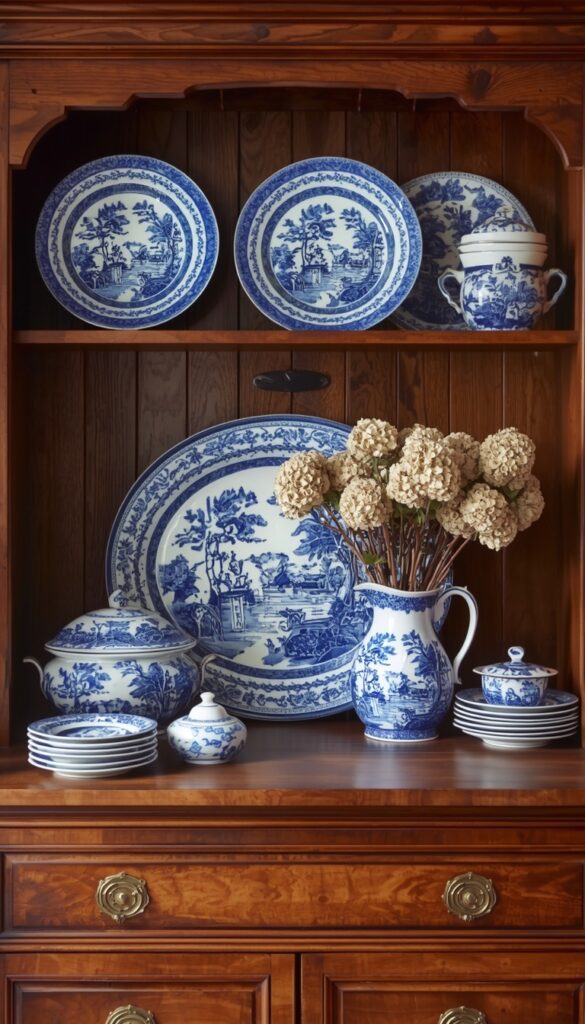
Blue and white transferware is arguably the most iconic element of the grandmillennial aesthetic. These are the ceramic plates, platters, pitchers, and serving pieces printed with detailed blue patterns on white earthenware — the Willow pattern, Chinese inspired pagoda and garden scenes, botanical and pastoral landscapes. They’ve been produced in England since the late 18th century, originally as affordable imitations of costly Chinese porcelain, and they’ve never really gone out of style. In a grandmillennial room, they’re displayed proudly — stacked on shelves, hung on walls, arranged on a dresser, clustered on a dining table.
The beauty of collecting transferware is that no two pieces are identical, even within the same pattern family. Small variations in printing, different backstamps from different potteries, slight color variations between pieces — these imperfections are what give a collection its character. Don’t try to match perfectly. A shelf of blue and white transferware that mixes Spode’s Blue Italian with a Johnson Brothers pastoral scene and a few unidentified pieces from an estate sale looks far more interesting than a perfectly matched set of twelve. The variety tells a story of collecting over time, which is exactly the energy grandmillennial decor is after.
Display is everything with transferware. A traditional plate rack showing the full face of each plate is the classic approach — and it works because it turns functional ceramics into genuine wall art. Plate stands on a dresser or sideboard work equally well for a more layered, multi surface display. Mix in a few transferware pieces that still get used — a blue and white pitcher that holds fresh or dried flowers, a large platter that lives on the coffee table holding remote controls and candles — so the collection feels lived in rather than museum-like. Real grandmillennial style is about using beautiful things, not just owning them.
3. Fringe Trimmed Throws and Cushions for Layered Textile Warmth
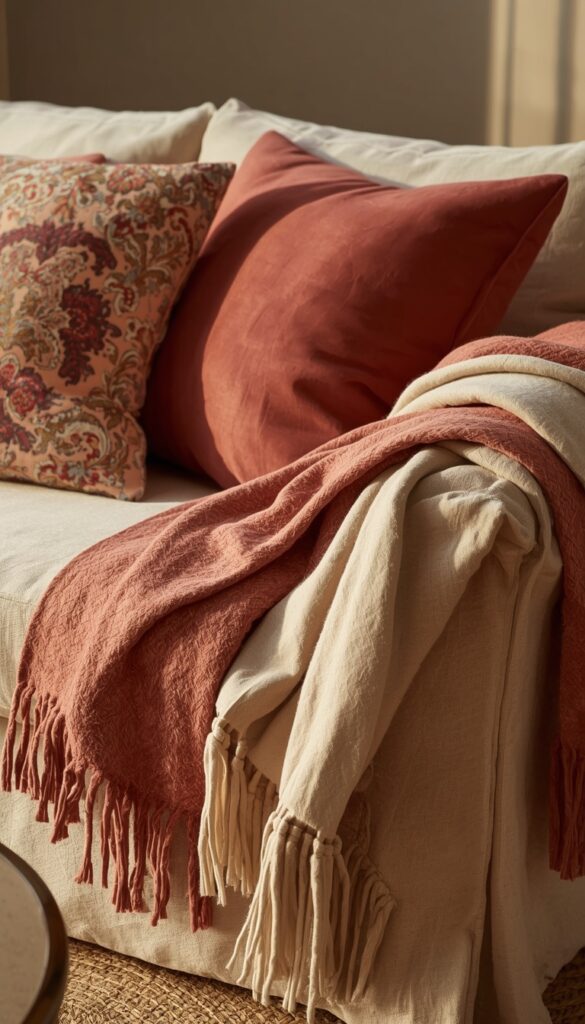
Fringe is one of the details that most reliably marks a grandmillennial interior. It’s the finishing trim on a throw blanket, the edge detail on a cushion, the border on a curtain or tablecloth that transforms something functional into something decorative. Fringe was everywhere in traditional interiors — on lampshades, on furniture upholstery, on window treatments — and its return in the grandmillennial aesthetic is part of a broader embrace of ornamental detail that minimalism stripped away for decades. A fringe trimmed throw draped over a sofa arm or the back of an armchair instantly adds warmth, texture, and that unmistakable sense of “someone who loves beautiful things lives here.”
The most versatile fringe pieces to invest in are throws and cushions because they move easily between rooms and can be refreshed seasonally. A merino wool throw in a soft cream or warm dusty rose with a hand knotted fringe border is a genuine luxury piece that looks expensive because it is — the fringe work adds significant production time and cost. More affordable options in cotton or cotton blend with a cut fringe rather than a knotted one still read as grandmillennial but at a more accessible price point. Check the fringe quality carefully — it should lie flat and even, and the attachment to the fabric should be secure and consistent.
Layer fringe pieces with other textiles rather than isolating them. A fringe throw looks best draped over a sofa that already has solid cushions, patterned cushions, and perhaps a velvet lumbar. The fringe adds to the layered textile story without being the only interesting element. On a bed, a fringe trimmed coverlet layered over white linen sheets and under a light quilt creates a beautifully composed, traditionally inspired bed that feels completely current. Fringe cushions work especially well mixed with chintz, embroidered, or tapestry pieces — all the ornamental textile elements of the grandmillennial aesthetic sitting together in one richly layered arrangement.
4. Floral Wallpaper in a Traditional Room Defining Pattern
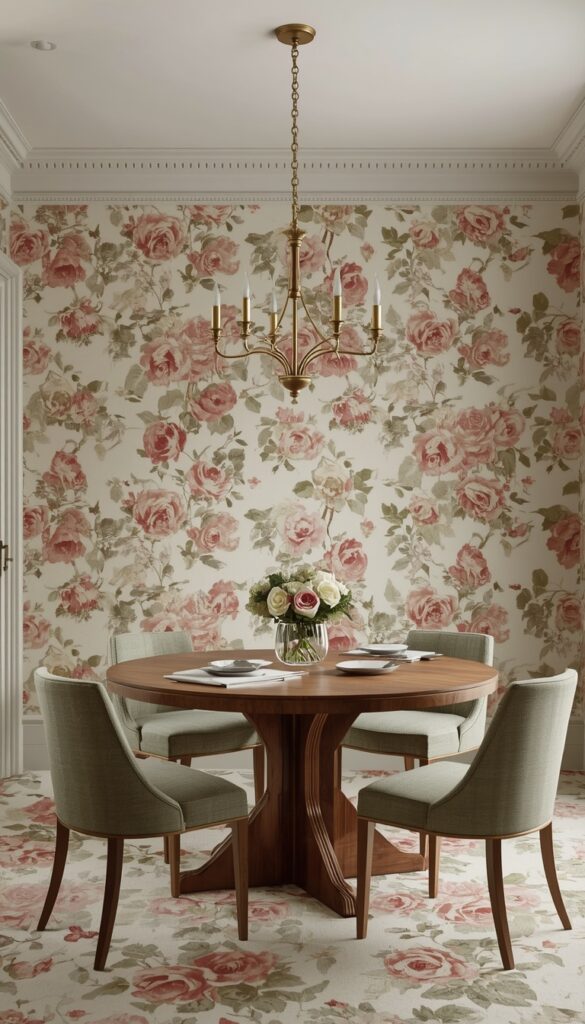
Floral wallpaper is the grandmillennial move that changes everything. One room papered in a bold, traditional floral — large climbing roses, overscale peonies, densely packed garden botanicals — immediately announces a design sensibility and a confidence that is genuinely rare. This is not the small scale, muted floral wallpaper that minimalists occasionally permit. This is the full commitment, vintage inspired, maximalist floral that covers the whole room and makes you feel like you’ve walked into a greenhouse or an English country house drawing room. It’s extraordinary when done well.
The scale of the pattern relative to your room is the most important decision you’ll make. Large scale florals — those with a repeat of 18 inches or more — need space and height to read properly. They suit larger rooms and higher ceilings where the full pattern repeat can be appreciated. In smaller rooms or rooms with standard ceiling heights, a medium scale floral with a tighter repeat maintains the grandmillennial character without overwhelming the space. Cole & Son, Sanderson, and Farrow & Ball all produce exceptional traditional floral wallpapers, and their online room visualizer tools are genuinely useful for assessing scale before you order samples.
Paper one room rather than every room — this is how grandmillennial decorators use wallpaper most effectively. A dining room papered from floor to ceiling in a climbing rose pattern feels celebratory. A bedroom with floral wallpaper on the wall behind the bed and plain walls on the other three sides feels intimate and composed. A hallway or stairwell papered in a bold floral makes a striking first impression. The key is committing fully — no half measures, no one wall only approaches in a small room. Grandmillennial wallpaper works because it’s generous and confident, not because it’s hedged.
5. Needlepoint Pillows for Genuine Heirloom Character
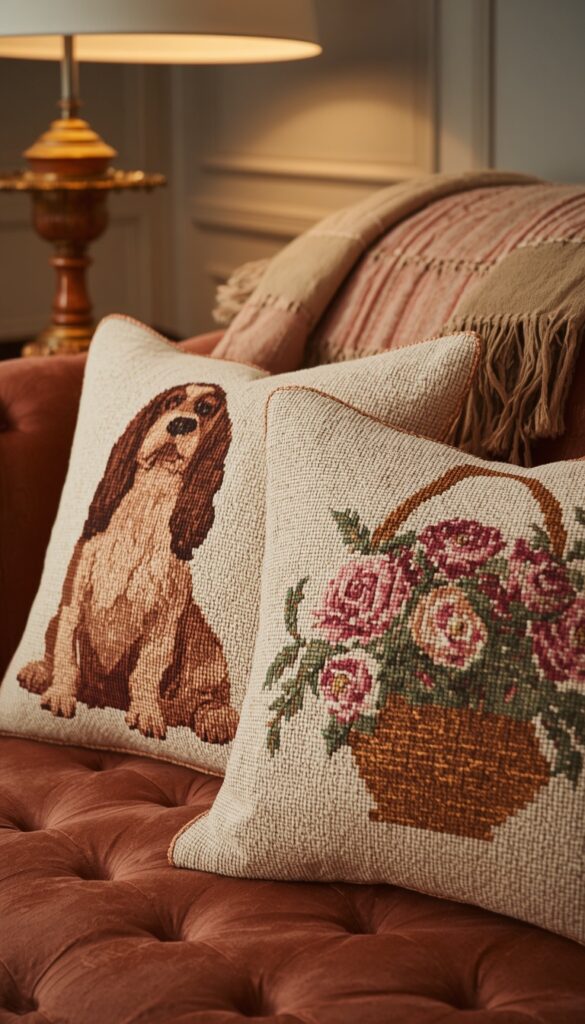
Needlepoint pillows are one of the most specific and most beloved elements of the grandmillennial aesthetic. These are hand stitched cushions worked in wool thread on canvas — typically featuring florals, animals, crests, monograms, topiaries, or pictorial scenes — that carry a quality of handcraft and personal history that no manufactured piece can replicate. Finding a vintage needlepoint pillow at an antique market or estate sale is one of the genuine pleasures of grandmillennial collecting. The thought that someone sat and stitched every single stitch — possibly decades ago — gives the object a warmth and humanity that’s impossible to manufacture.
Vintage needlepoint pillows vary enormously in subject, quality, and condition. The best ones have tight, even stitching, vibrant color that hasn’t faded, and a backing fabric in good condition. Common subjects include roses and florals, dogs and cats, birds, hunting scenes, fruit arrangements, and alphabet or monogram pieces. Dog needlepoints — particularly spaniels, Labradors, and terriers — are among the most collectible and the most quintessentially grandmillennial. A needlepoint pillow of a well rendered spaniel sitting on a velvet sofa is a genuinely iconic grandmillennial image for a reason. It’s specific, it’s charming, and it’s exactly the kind of detail that makes a room feel truly personal.
If you can’t find vintage, several companies now produce new needlepoint canvases in traditional grandmillennial subjects that you can stitch yourself — which is both a meditative hobby and a way to create genuinely personalized pieces for your home. Etsy has a strong community of needlepoint sellers offering both vintage finished pillows and new hand painted canvases ready to stitch. For ready made new pieces, Anthropologie and Meri Meri offer occasional needlepoint inspired pillows, though the hand stitched vintage originals always carry more character. Mix one or two needlepoint pillows into a sofa arrangement with chintz, fringe trimmed, and embroidered pieces for the full layered grandmillennial textile effect.
6. Antique Botanical Prints for Wall Arrangements with Story
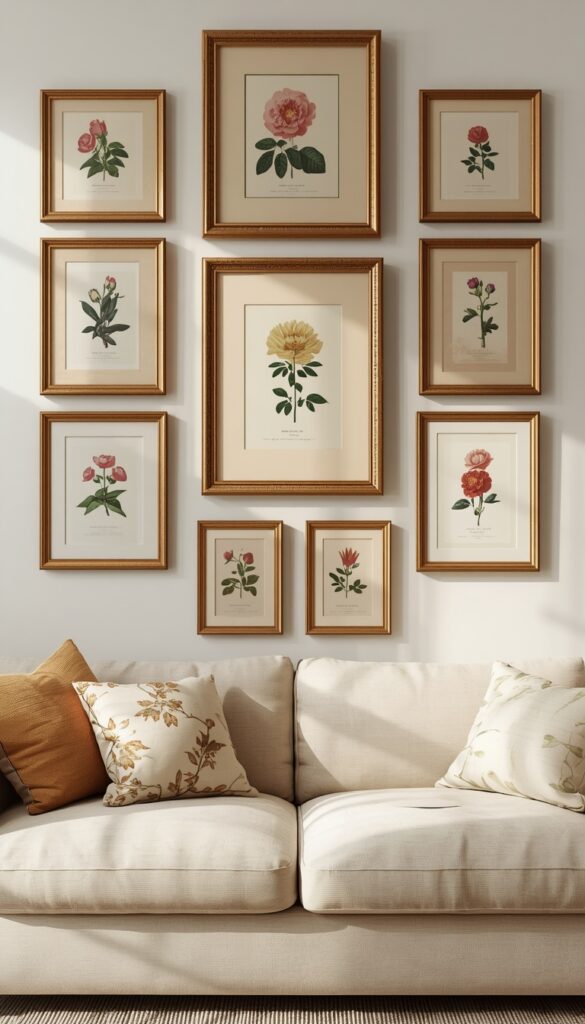
Antique botanical prints — hand illustrated depictions of plants, flowers, and natural specimens from the 18th and 19th centuries — are one of the most consistently beautiful and enduringly popular elements of grandmillennial wall decor. The original botanical illustrations were scientific documents, commissioned to record plant specimens with absolute precision. The irony is that the obsessive detail required for scientific accuracy produced some of the most exquisitely beautiful art ever made. A genuine antique botanical print — hand colored, printed on aged paper with a visible plate mark — has a quality and a presence that modern reproductions rarely capture fully.
Genuine antique botanicals from the 18th and 19th centuries are accessible at a wider range of price points than most people expect. Individual plates pulled from bound volumes — which is how most antique botanicals reach the market — can be found at antique fairs, specialist print dealers, and auction sites for anywhere from twenty dollars to several hundred depending on the artist, the plant depicted, and the condition. The great botanical illustrators — Pierre Joseph Redouté for roses, Georg Dionysius Ehret for a range of species — command higher prices, but unsigned plates from quality botanical publications are often very affordable and just as beautiful in a frame.
Framing is where botanical prints really come alive. Simple antique gold or warm gilt frames suit them perfectly — avoid modern chrome or cold black frames, which fight the warmth of the aged paper. A wide mat in cream or warm white gives the illustration breathing room and makes even a small print look significant. Arrange botanicals in a grouped wall installation rather than hanging them individually scattered around the room. A cluster of six to twelve framed botanicals in complementary gilt frames creates a genuine gallery effect that anchors a wall beautifully. Mix sizes deliberately — a few larger plates and several smaller ones creates visual rhythm without rigidity.
7. Ruffled or Pleated Lampshades for Softly Traditional Lighting
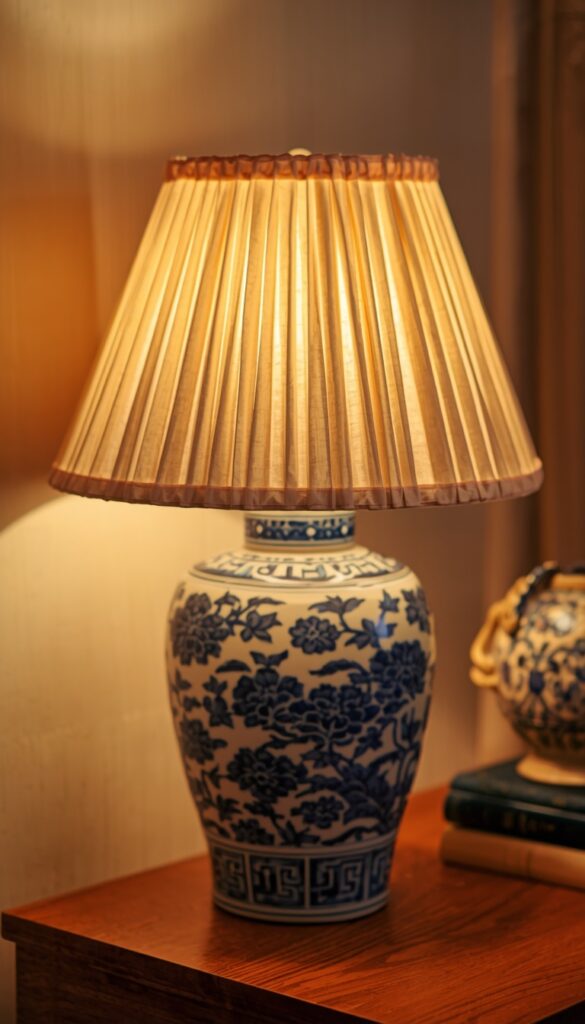
The lampshade is one of the most overlooked opportunities in traditional interior design, and in grandmillennial rooms, it’s a chance to add genuine character and charm. Ruffled lampshades — gathered fabric shades with a soft, pleated ruffle at the base or throughout the shade — and pleated silk or linen shades with formal cartridge pleating are both deeply traditional forms that have experienced a full revival in the grandmillennial aesthetic. They sit on a table lamp or a floor lamp and immediately communicate a love of the traditional, the ornamental, and the beautifully made. They’re the kind of detail that guests notice and comment on.
Pleated silk lampshades have the longest pedigree and the most luxurious look — a cartridge pleated ivory silk shade on a ceramic ginger jar lamp base is one of the great classic pairings in traditional interior design. Silk shades cast a particularly warm, flattering light because the silk is slightly translucent and glows when lit. They require more care than fabric or linen shades — they dust rather than wash and should be kept out of direct sunlight — but the quality of light they produce and the visual richness they bring to a room are worth the extra attention. Anna Hayman Designs in the UK makes exceptional hand pleated silk shades to order.
For a more accessible entry point, gathered fabric shades in linen or cotton are widely available and work beautifully in grandmillennial rooms. Look for shades with a bottom ruffle in the same fabric as the shade itself — not a contrasting trim, which can look cheap — and a warm white or cream interior lining rather than a white one. The cream lining produces warmer light, which is always more flattering in a living room or bedroom. Pair ruffled shades with ceramic lamp bases — blue and white ginger jars, hand painted majolica pieces, floral decorated porcelain — for the most genuinely grandmillennial result.
8. Toile de Jouy Fabric for Classic Storytelling Pattern
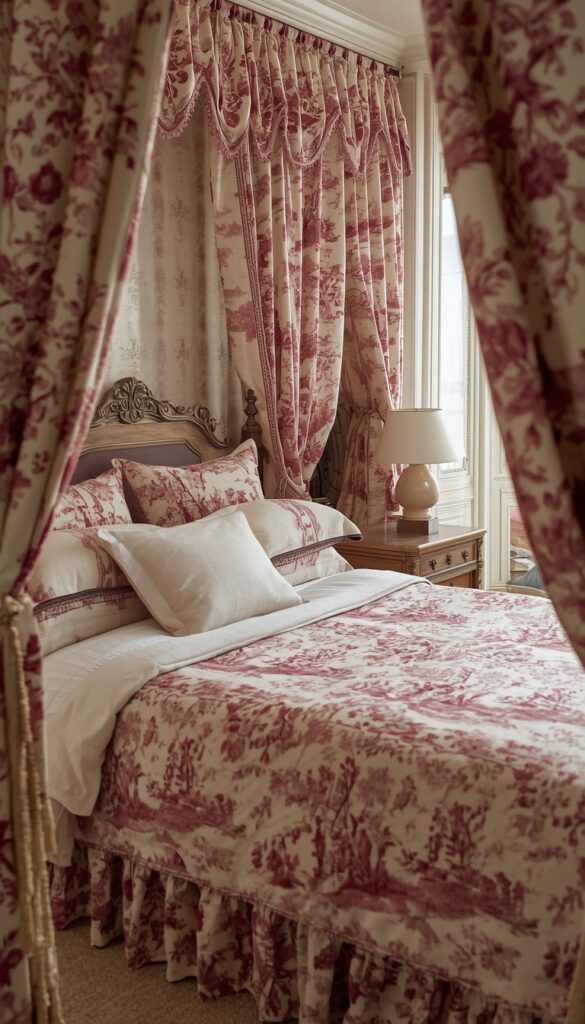
Toile de Jouy is one of the most distinctive and most historically significant patterns in traditional textile design. Originally produced at the Oberkampf manufactory in Jouy en Josas, France, beginning in 1760, it depicts elaborate pastoral or historical scenes — shepherdesses in meadows, classical figures in landscapes, hunting parties, exotic scenes from Asia or America — printed in a single color on a white or cream cotton ground. The traditional colors are red, black, navy, and sepia brown, though modern versions come in almost every hue. Toile in a grandmillennial room immediately reads as classically educated, historically aware, and deeply confident in its own taste.
Toile works beautifully in bedrooms — particularly on bed hangings, curtains, and an upholstered headboard. The repetitive, detailed pattern creates a rich, immersive atmosphere when used generously in a room, and bedrooms are the space where that immersive quality feels most appropriate and most enveloping. The traditional approach of matching toile curtains with a toile bedspread or duvet cover — creating a tented, fully wrapped in pattern effect — is maximalist in the best possible way. If that feels too intense, use toile on curtains alone with plain bedding that picks up one of the toile’s colors, and the pattern gets the stage without overwhelming the room.
Toile also translates beautifully onto smaller decorative pieces — upholstered ottomans, covered books, trays, and waste paper baskets. These smaller toile accents are a great way to introduce the pattern if you’re not ready to commit to curtains or upholstery. Cover a stack of hardback books in coordinating toilet fabric for a genuinely charming shelf detail. A small toilet covered wastepaper basket in a study or bedroom is a lovely, very grandmillennial touch. Brunschwig & Fils, Pierre Frey, and Stroheim all produce museum quality toile that’s worth the investment for large upholstered pieces, while more affordable options from fabric by the yard retailers work perfectly for smaller projects.
9. Ceramic Table Lamps with Floral or Decorative Bases
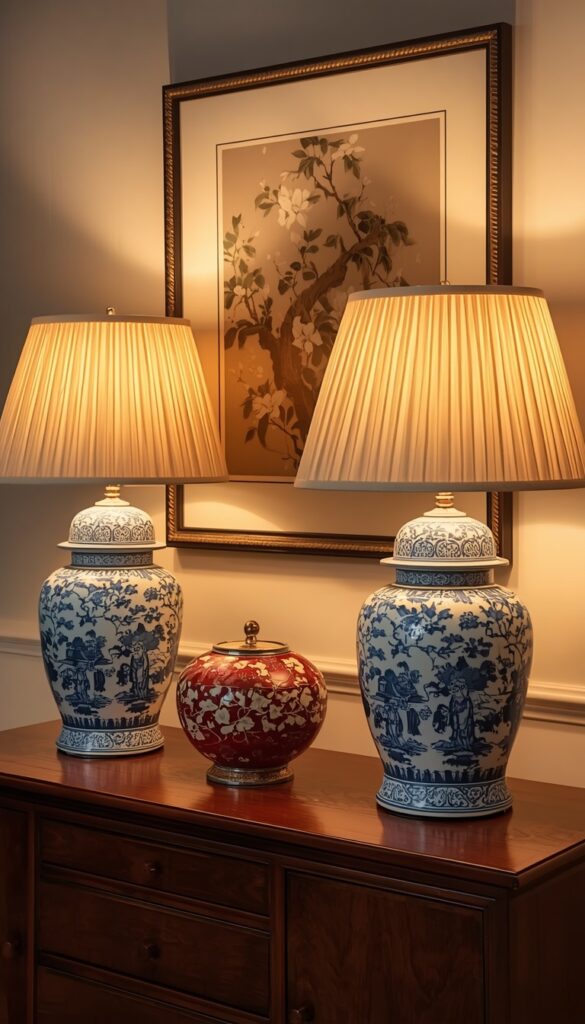
Ceramic table lamps are one of the foundational pieces of the grandmillennial room, and the base is where all the personality lives. A plain ceramic base in a solid color is a fine lamp. A hand painted floral ceramic base, a blue and white ginger jar lamp, a majolica glazed piece in deep green and cream, or a chinoiserie decorated vase lamp — these are grandmillennial lamps. They bring color, pattern, and genuine decorative history to a surface. They’re the kind of object that earns its place in a room not just through function but through beauty, and that’s the grandmillennial principle at its most essential.
Blue and white ginger jar lamps are the single most iconic grandmillennial lamp form, and for very good reason — they’re genuinely beautiful, they work with almost every traditional color palette, and they’re available at a huge range of price points from affordable to genuinely antique. A pair of matching blue and white ginger jar lamps on a sideboard or console table, dressed with pleated cream silk shades, is one of the most satisfying vignettes in traditional interior design. Antique ginger jar lamps found at estate sales or antique markets often have the richest blue and the most detailed decoration — always worth looking before buying new.
Majolica lamps — those with the characteristic colorful tin glazed earthenware decoration — bring a warmer, more Mediterranean grandmillennial quality and are somewhat less commonly seen, which makes them feel more distinctive. Deeply saturated in cobalt, turquoise, mustard, and cream, a majolica lamp base adds color and pattern to a room in a way that ceramic pieces rarely match. Pair one with a simple pleated linen shade in cream or warm white to keep the focus on the base. Mix a majolica lamp with a blue and white ginger jar lamp on either side of a sofa or bed for a collected, slightly mismatched look that feels genuinely curated rather than coordinated.
10. Wicker and Rattan Furniture for Organic Traditional Texture
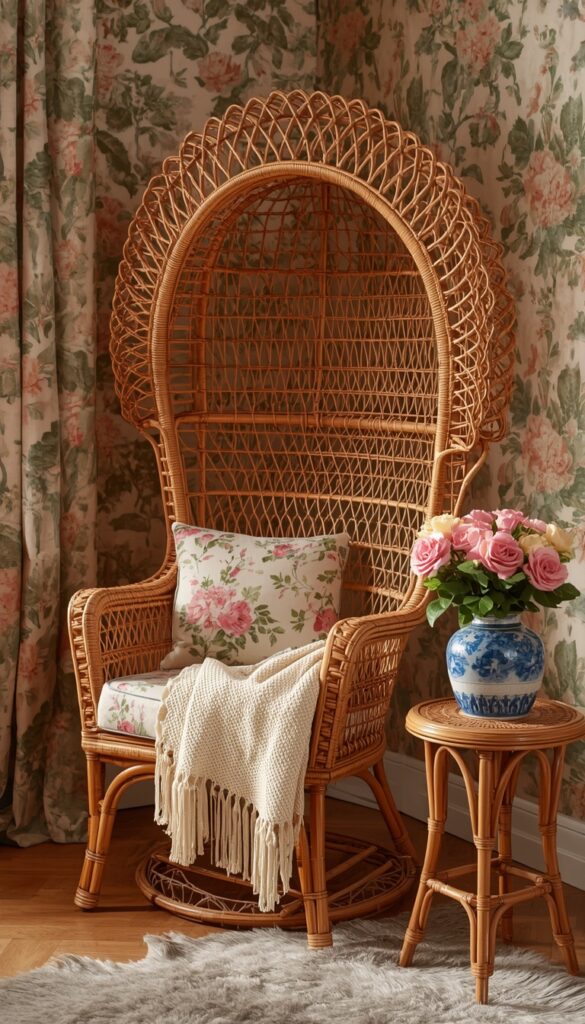
Wicker and rattan furniture occupies a very specific place in the grandmillennial aesthetic — it’s the organic, slightly casual counterpoint to all the formal chintz and chinoiserie. Grandmillennial rooms need texture contrast. Without it, all that pattern and color can become visually exhausting. Wicker and rattan introduce a natural, tactile quality that gives the eye somewhere to rest. A wicker armchair in a corner of a floral wallpapered room, or a rattan side table beside a velvet sofa, adds the kind of organic warmth that keeps a maximalist room feeling livable rather than overwhelming. It also brings a slightly conservatory, slightly colonial atmosphere that suits the grandmillennial mood beautifully.
The most versatile grandmillennial rattan pieces are armchairs and side tables. A rattan peacock chair — that iconic high backed fan shaped form — is perhaps the single most recognizable piece of furniture in the grandmillennial lexicon. It photographs beautifully, it makes a genuine statement as a standalone piece, and it’s been in continuous production since the mid 20th century, which means vintage examples are relatively easy to find. Dress it with a chintz or floral cushion and a fringe trimmed throw and it becomes a genuinely iconic grandmillennial vignette. Rattan side tables in round or hexagonal forms add surface space without visual weight, keeping them versatile in both traditional and more transitional rooms.
Caring for rattan and wicker properly makes a significant difference to longevity. Keep pieces away from direct sunlight, which dries the natural fibers and causes them to crack and split over time. Occasional light oiling with a natural furniture oil keeps the fibers supple. For cleaning, a damp cloth with mild soap for surface grime and a soft brush for getting into the weave are all you need. Vintage rattan, if structurally sound, is worth restoring — the quality of older pieces, with tighter weaving and better finishing, is generally superior to what’s produced at most price points today.
11. Embroidered Textiles for Handcrafted Grandmillennial Warmth
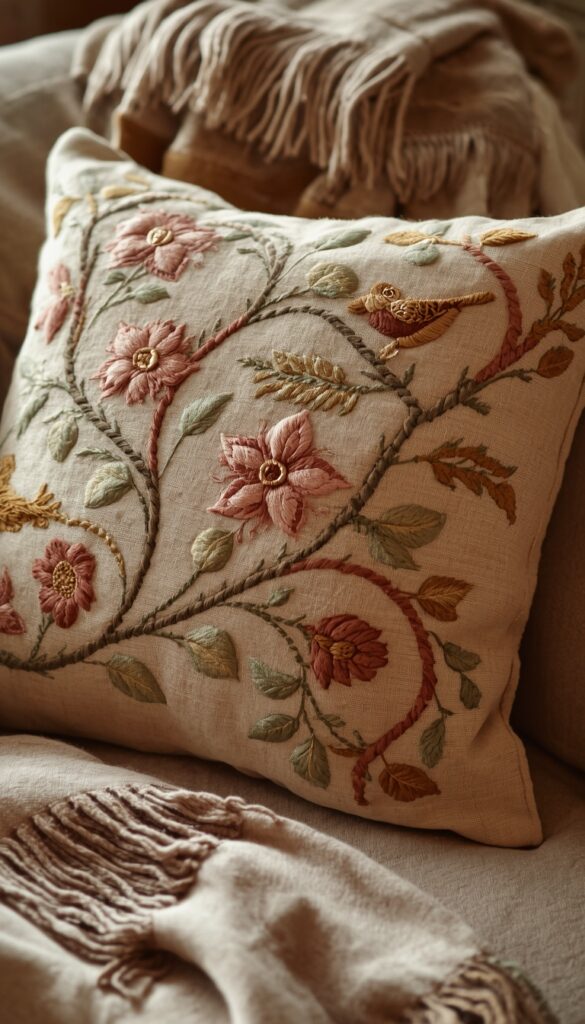
Embroidered textiles are the thread — quite literally — that runs through the grandmillennial aesthetic. Crewelwork cushions in wool thread on linen, embroidered tablecloths with floral borders, cutwork and whitework pillow cases, jacobean style embroidered panels on curtains or bedspreads — all of these are quintessentially grandmillennial and all of them carry the quality of handwork that gives a room genuine warmth and human presence. Mass production can replicate the look of embroidery with reasonable success, but it can never fully replicate the texture, the slight irregularity, and the absolute uniqueness of hand stitched work.
Crewelwork is particularly worth seeking out. This is the technique of working wool thread in a variety of stitches onto a linen or cotton ground to create typically botanical or landscape patterns — stylized flowers, branching trees, exotic birds, flowing vines. Authentic vintage crewelwork cushions and panels from the 1960s and 70s — when the craft had a significant revival — are regularly available at antique fairs and estate sales and are often underpriced because buyers don’t always recognize what they’re looking at. A genuine vintage crewelwork cushion in good condition is one of the most beautiful and most grandmillennial objects you can introduce to a room.
Embroidered tablecloths and bed linens from the early to mid 20th century represent another wonderful collecting category. White or cream linen tablecloths with embroidered floral borders, monogrammed linen pillowcases with broderie anglaise edges, or hand embroidered runner cloths in colorful wool thread are all objects that carry domestic history in the most beautiful way. Look for these at estate sales, vintage linen dealers, and specialist textile markets. Condition is key — check for staining, tears, and moth damage before buying. A perfectly preserved vintage embroidered tablecloth used regularly on a dining table is one of the most genuinely grandmillennial things you can do.
12. Chinoiserie Pieces for Global Inspired Traditional Glamour
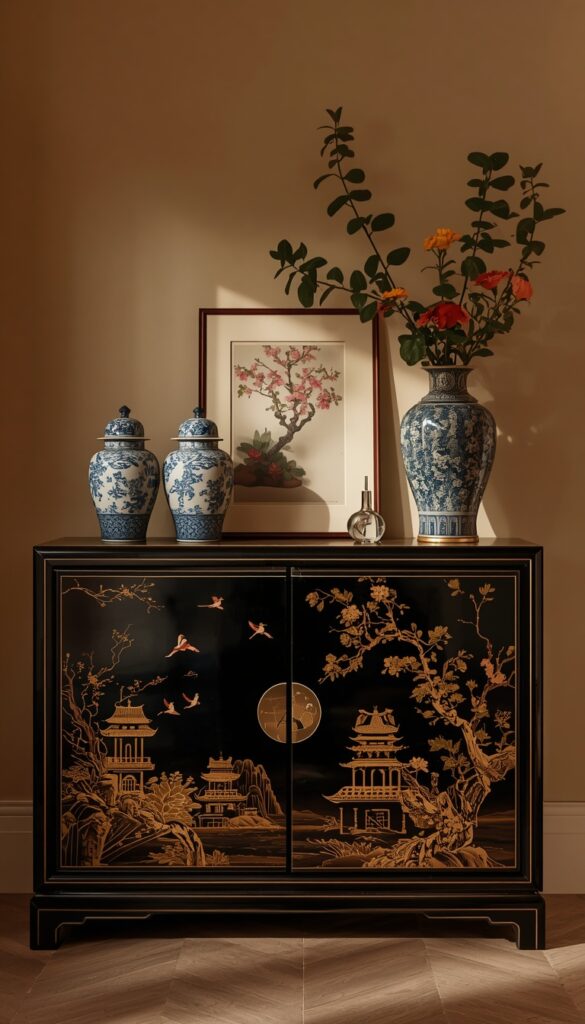
Chinoiserie, the European interpretation of Chinese decorative motifs applied to furniture, ceramics, wallpaper, and objects is one of the most glamorous expressions of the grandmillennial aesthetic. It emerged in 17th century Europe when trade with Asia brought lacquerware, porcelain, and silk into wealthy European homes and sparked an obsessive fascination. The European decorators who tried to replicate these objects created something distinctly their own — not authentically Chinese but not purely European either, a fantastical hybrid of the two traditions. That hybrid quality — global, imaginative, slightly theatrical — is exactly what makes chinoiserie so compelling in a grandmillennial room.
The most accessible chinoiserie pieces for grandmillennial rooms are ceramics and small decorative objects. Chinoiserie decorated ginger jars, vases, cachepots, and temple jars in blue and white or polychrome enamels bring immediate impact to a shelf or console table. The classic chinoiserie motifs — pagodas, willow trees, figures in gardens, birds of paradise, flowering prunus branches — all read as both historically rich and visually beautiful. A pair of tall chinoiserie temple jars flanking a mantelpiece or a cluster of ginger jars on a bookshelf are signature grandmillennial moments that genuinely reward the eye on repeated viewing.
For larger statement pieces, a chinoiserie decorated cabinet, lacquered chest, or painted screen is a transformative addition to a grandmillennial room. These pieces are available at antique dealers and specialist auction houses, and while the finest examples are significant investments, mid century and later chinoiserie pieces are often very accessibly priced relative to their visual impact. A chinoiserie decorated lacquer cabinet painted with garden scenes and gilded detailing against a dark ground — black, deep green, or oxblood red — is one of the great grandmillennial statement pieces. Nothing else quite announces the aesthetic with the same authority and beauty.
13. Vintage Oil Portraits and Ancestor Paintings for Storied Wall Decor
Ancestor portraits — oil paintings of unknown people from previous centuries, bought at antique markets and hung as though they were your own family — are one of the most genuinely delightful expressions of grandmillennial collecting culture. The practice has a long tradition. Before family photography, portraits were how wealthy families recorded their lineage, and they were commissioned in significant numbers from the 17th century onward. The result is that the antiques market is full of beautifully painted portraits of entirely unknown people, available at remarkably accessible prices, that bring enormous warmth, character, and history to any wall they occupy.
Finding the right ancestor portrait is a genuinely enjoyable pursuit. Antique fairs, estate sales, auction houses, and online platforms like Chairish, 1stDibs, and specialist art dealers all carry them in significant numbers. Look for portraits that are technically accomplished — well rendered faces, quality of light on fabric, confident brushwork — rather than just decoratively interesting. A well painted portrait of a woman in 18th century dress, a serious looking 19th century gentleman in a dark coat, or a charming portrait of a child with a dog are all classics of the genre. The subject matters less than the quality of execution and the presence the portrait brings to a wall.
Framing and hanging techniques elevate ancestor portraits from interesting objects to genuine room anchors. A heavy, ornate gilt frame — particularly an antique or antique reproduction frame with carved detailing — suits oil portraits perfectly and communicates the gravitas these paintings deserve. Hang them higher than you might instinctively think — the center of a portrait should sit slightly above the standard 57 inch eye level, particularly for larger pieces, which creates a more imposing, stately quality. Group multiple portraits together on a staircase or hallway wall for maximum impact. Mixed with botanical prints, blue and white transferware plates, and other collected objects, ancestor portraits bring a depth of history that transforms a room entirely.
Conclusion
Grandmillennial decor is ultimately about one thing: collecting and displaying beautiful objects with genuine intention and a real love of history, craft, and pattern. The 13 pieces in this article — from the exuberant florals of chintz fabric and floral wallpaper to the quiet handcraft of needlepoint pillows and embroidered textiles, from the global glamour of chinoiserie to the storied warmth of ancestor portraits — all share that essential grandmillennial quality. They’re pieces that reward attention, that carry stories, and that make a room feel genuinely lived in and loved. Start with one piece that truly excites you, let it guide the next decision, and trust the process of building a grandmillennial room that’s entirely, beautifully yours.
Frequently Asked Questions
Q: What exactly is grandmillennial decor? A: Grandmillennial decor is a style that embraces traditional, antique inspired, and maximalist design elements — think chintz fabrics, floral wallpaper, transferware ceramics, needlepoint pillows, and fringe trimmed textiles. It’s associated with younger decorators who love the warm, layered aesthetic of traditional interiors but style it with a fresh, personal, contemporary confidence.
Q: How do I start decorating in a grandmillennial style? A: Start with one key piece that genuinely excites you — a chintz cushion, a piece of transferware, a vintage botanical print. Let that piece guide your palette and your next decisions. Grandmillennial style builds gradually through collecting and layering rather than buying a complete look at once. That slow building is actually the whole point.
Q: Is grandmillennial style the same as traditional or cottage style? A: They share DNA but aren’t identical. Traditional style tends to be more formal and symmetrical. Cottage style is looser and more rustic. Grandmillennial sits between them — it embraces traditional elements like chintz and transferware but layers them with a more personal, slightly irreverent approach that mixes high and low, antique and new, with genuine confidence.
Q: Where is the best place to shop for grandmillennial decor pieces? A: Estate sales and antique markets are the best source for authentic pieces — transferware, needlepoint pillows, botanical prints, and ancestor portraits are all regularly available at accessible prices. Online, Chairish, Etsy, and 1stDibs carry strong selections. For new grandmillennial inspired pieces, Anthropologie, Rifle Paper Co., and traditional fabric houses like Schumacher and Sanderson are excellent.
Q: Can grandmillennial decor work in a modern or small apartment? A: Absolutely. Scale down the commitment — one chintz cushion, a framed botanical print, a blue and white ceramic piece — and grandmillennial character comes through even in a minimalist space. In smaller rooms, edit more carefully and let each piece breathe. A few genuinely beautiful traditional objects always read better than a crowded arrangement in a tight space.
Q: How do I mix grandmillennial pieces without the room looking cluttered? A: Keep a consistent color palette threading through all your pieces — usually three to four colors pulled from your largest pattern. Make sure every surface has deliberate negative space alongside the styled objects. Group related pieces together rather than scattering them. And edit regularly — remove pieces that don’t earn their place so the ones that remain can be fully appreciated.
Q: Is grandmillennial decor expensive to achieve? A: Not necessarily. Some of the most beautiful grandmillennial rooms are built almost entirely from estate sale and thrift store finds. Antique transferware, vintage needlepoint pillows, ancestor portraits, and botanical prints are all regularly available at very accessible prices. The aesthetic rewards patience and a good eye far more than a large budget, which is part of what makes it so genuinely satisfying to build.
Q: What colors work best for grandmillennial rooms? A: Warm, traditionally inspired palettes suit grandmillennial style best — think dusty rose, sage green, cornflower blue, cream, warm terracotta, and soft gold. These colors appear repeatedly in chintz, toile, and transferware patterns, which is why they feel so natural in grandmillennial rooms. Avoid cold greys, stark whites, and cool contemporary tones, which fight the warmth that grandmillennial interiors depend on.