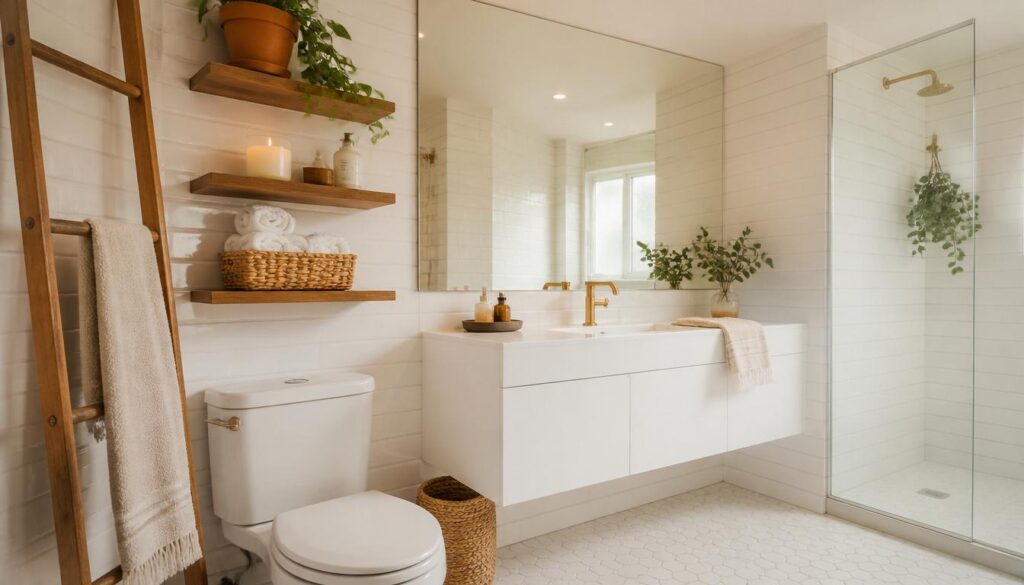
A tiny bathroom doesn’t have to feel like a punishment. That’s the honest truth that most small space advice somehow buries under a pile of generic suggestions. The difference between a cramped bathroom and a small bathroom that feels intentional and even beautiful comes down to how well you use the vertical space, how thoughtfully you choose storage, and whether the decor you add earns its place by doing two jobs at once. Square footage is fixed. What you do with it is entirely up to you. And there are far more clever, genuinely stylish solutions available right now than most people realize , solutions that don’t require a contractor, a big budget, or a weekend of demolition.
What makes tiny bathroom decorating so satisfying when you get it right is the precision of it. Every single choice matters more than it would in a larger room. A wall mounted shelf that might be unremarkable in a big bathroom becomes a genuine game changer in a 40 square foot one. A mirror that doubles as a medicine cabinet frees up an entire vanity surface. A magnetic strip on the inside of a cabinet door reclaims space you didn’t even know you had. These thirteen ideas cover the full range , from the structural to the purely decorative , and every single one comes with the specific details you need to actually make it work in your space. Let’s get into it.
1. Install Floating Shelves Above the Toilet for Smart Vertical Storage
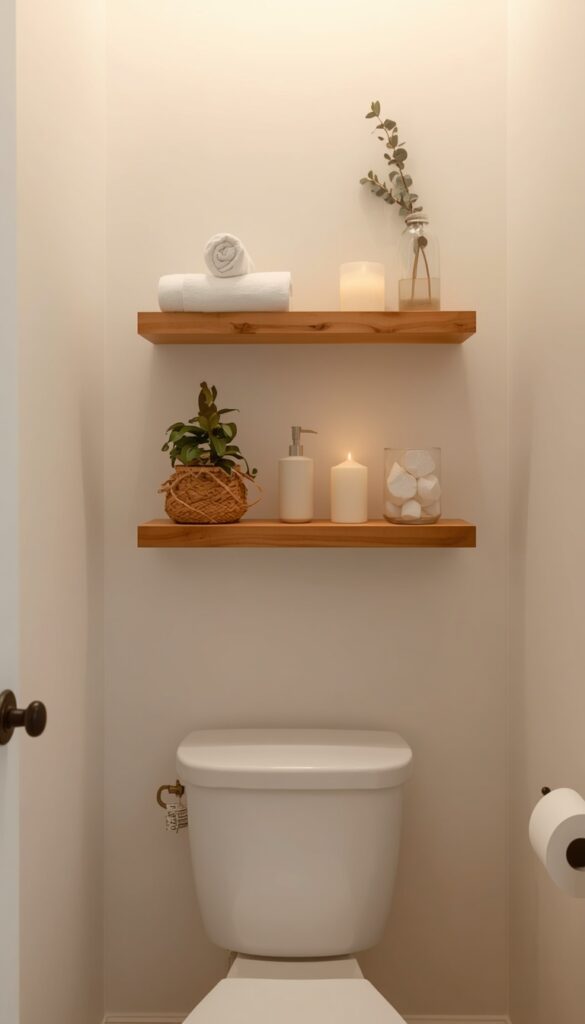
The wall above your toilet is the most underused real estate in a small bathroom. Most people leave it completely bare, which means they’re ignoring a vertical column of wall space that can hold an extraordinary amount without touching the floor at all. Floating shelves installed above the toilet , typically two or three shelves starting about a foot above the tank and stepping up from there , can hold towels, toiletries, candles, small plants, and decorative baskets that also store things. It’s storage that looks like decor, which is exactly the kind of two in one solution that small bathrooms demand.
The depth of these shelves matters more than most tutorials mention. A shelf that’s too deep will feel like it’s looming over you when you’re seated. Aim for shelves between five and seven inches deep , deep enough to hold a folded hand towel, a few bottles, or a small basket, but shallow enough to feel recessive rather than imposing. Wood shelves with a simple bracket in matte black or brushed brass look clean and finished. Floating shelves with a lip , a small raised edge along the front , prevent bottles and objects from vibrating off in older buildings where walls and floors aren’t perfectly level.
Styling these shelves is where personality enters. Don’t just stack products up there , create an arrangement that’s both functional and visually considered. Rolled towels in a small woven basket on the bottom shelf look beautiful and free up your towel rail. A small trailing plant like a pothos on the top shelf cascades downward and adds genuine life to an often sterile space. Glass or ceramic canisters for cotton balls and swabs keep everyday items tidy and attractive. Keep about thirty percent of each shelf clear , visual breathing room is what separates a styled shelf from an overcrowded one.
2. Swap Your Vanity Mirror for a Mirrored Medicine Cabinet
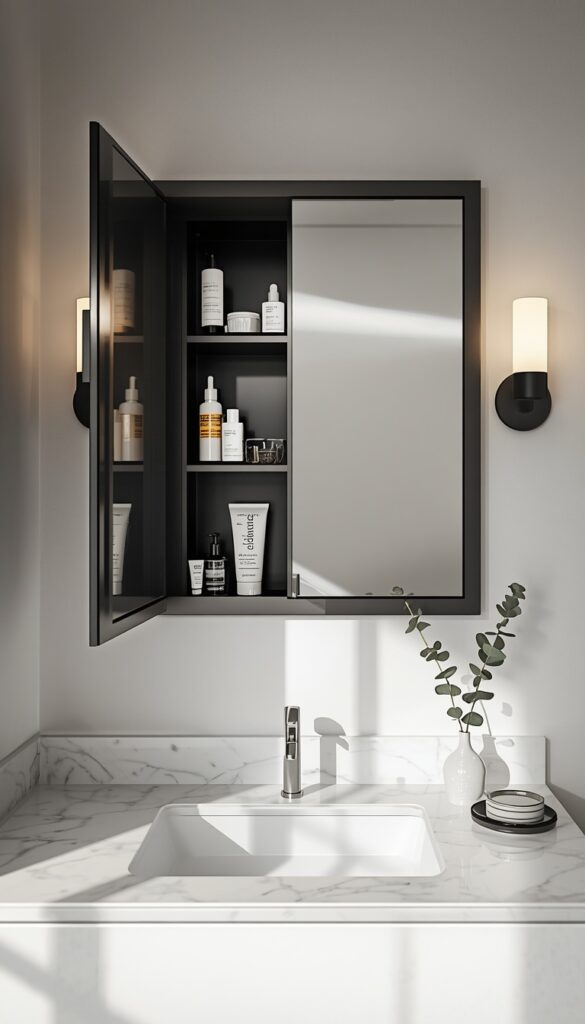
A standard flat mirror above the bathroom vanity looks fine, but it does exactly one job. A recessed mirrored medicine cabinet does the same visual job while hiding an entire secondary storage system behind its face. In a tiny bathroom, that swap is genuinely transformative. You get the same mirror you had ,same size, same reflective light bouncing benefit , and you gain three to five adjustable shelves behind it for prescriptions, skincare, razors, and all the small items that currently crowd your countertop. Clearing the counter surface in a small bathroom creates a sense of spaciousness that almost nothing else achieves as immediately.
Recessed medicine cabinets require cutting into the wall between studs, which sounds more intimidating than it is for most standard wall constructions. The standard cabinet width of 14 to 16 inches fits between typical 16 inch on center stud spacing without any structural modification. Surface mounted medicine cabinets are a simpler alternative that don’t require cutting but do protrude from the wall, adding depth that can feel tight in a very narrow bathroom. Both styles now come in genuinely attractive finishes , matte black frames, brushed gold trim, frameless glass edges , that look far more designed than the institutional chrome versions of the past.
When choosing a medicine cabinet, interior lighting is worth paying for. A cabinet with built in LED strips along the top or sides of the mirror provides excellent task lighting for grooming that overhead bathroom lighting almost never supplies adequately on its own. Adjustable shelves are essential , fixed shelves often can’t accommodate taller bottles like mouthwash or hair serum. Some models include an electrical outlet inside the cabinet for charging electric toothbrushes, which is a genuinely brilliant use of recessed wall space that removes one more item from the counter permanently.
3. Use a Ladder Shelf as a Freestanding Towel and Storage Solution
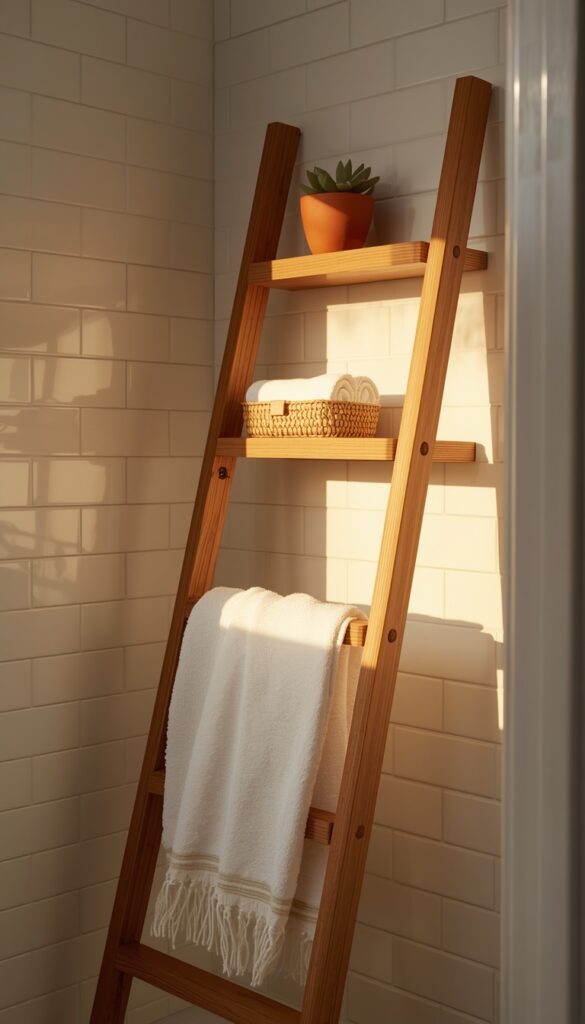
A bathroom ladder shelf is one of the most versatile small bathroom storage pieces available, and it earns its floor space many times over. It leans against the wall without requiring any drilling or wall anchors, which makes it rental friendly and repositionable. The rungs hold towels beautifully , draping a large bath towel over the wider lower rung and a hand towel over a narrower upper one creates a layered display that looks intentional rather than improvised. The shelves or rungs between can hold baskets, folded towels, candles, or small plants, turning a purely functional item into a genuine bathroom vignette.
Material choice determines how a ladder shelf reads in the space. Solid teak or bamboo ladder shelves bring warm, natural wood tones that work especially well in white or light tiled bathrooms where warmth is needed. Black metal ladder frames with thin wooden rungs have a clean, graphic quality that suits more modern and industrial spaces. White painted wood ladders disappear against white walls, which can be useful in an already busy small bathroom where you want storage without adding visual weight. Whatever the material, check the weight capacity listed , bathroom ladder shelves hold more than they look like they should, but wet towels are heavier than dry ones and some cheaper versions flex noticeably.
Placement makes a significant difference in how much space a ladder shelf actually consumes. Positioned in a corner at an angle , so it leans into the corner rather than flat against one wall , a ladder shelf takes up far less floor space than its footprint suggests and feels more tucked away. This diagonal placement also gives you access from the front without having to reach directly over the base, which matters in tight spaces. Add a small non-slip pad under the base feet to protect the floor and prevent the ladder from shifting when you pull a towel off it. This is the kind of detail that matters in a bathroom where every movement counts.
4. Mount a Magnetic Strip Inside Cabinet Doors for Hidden Storage
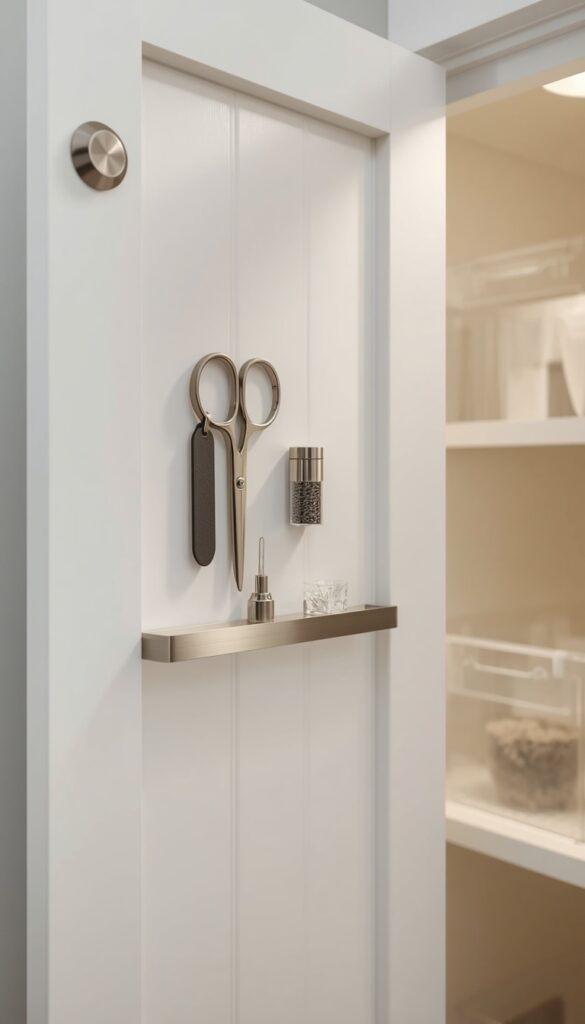
The inside of your bathroom cabinet doors is almost certainly completely empty right now, and that’s a waste of some genuinely useful real estate. A magnetic strip mounted to the inside of a cabinet door can hold metal nail files, tweezers, small scissors, bobby pin containers, and metal capped tubes in a neat, accessible row that takes up zero counter or shelf space. This is the kind of solution that sounds almost too simple until you actually do it, at which point you wonder how you managed without it. The inside face of cabinet doors is consistently one of the most overlooked storage surfaces in any small bathroom.
Magnetic strips designed for kitchens work perfectly in this application , they’re typically 12 to 18 inches long, come in stainless steel or powder coated black, and mount with two screws or strong adhesive strips. For bathroom use, adhesive mounting is usually sufficient for the lighter items you’ll store here. Organize the items by frequency of use: the things you reach for daily at eye level, less used items toward the top or bottom. A magnetic strip can also hold a small magnetic container , available for under ten dollars , that corrals loose items like bobby pins and hair ties that otherwise migrate all over a bathroom counter and vanish.
If your cabinet doors are hollow core, check that you’re mounting into a solid section of the door frame rather than the hollow center, which won’t hold screws securely. Most cabinet doors have a solid wood perimeter frame with a hollow or composite fill in the center, so mounting near the door edge rather than the middle gives you the best anchor. You can also apply a magnetic sheet , a thin, flexible material that sticks to the door surface , to create a broader magnetic surface for lighter items. Either approach costs under fifteen dollars and reclaims door space that has been sitting completely empty, which in a tiny bathroom is genuinely valuable.
5. Choose a Pedestal Sink to Open Up Visual Floor Space
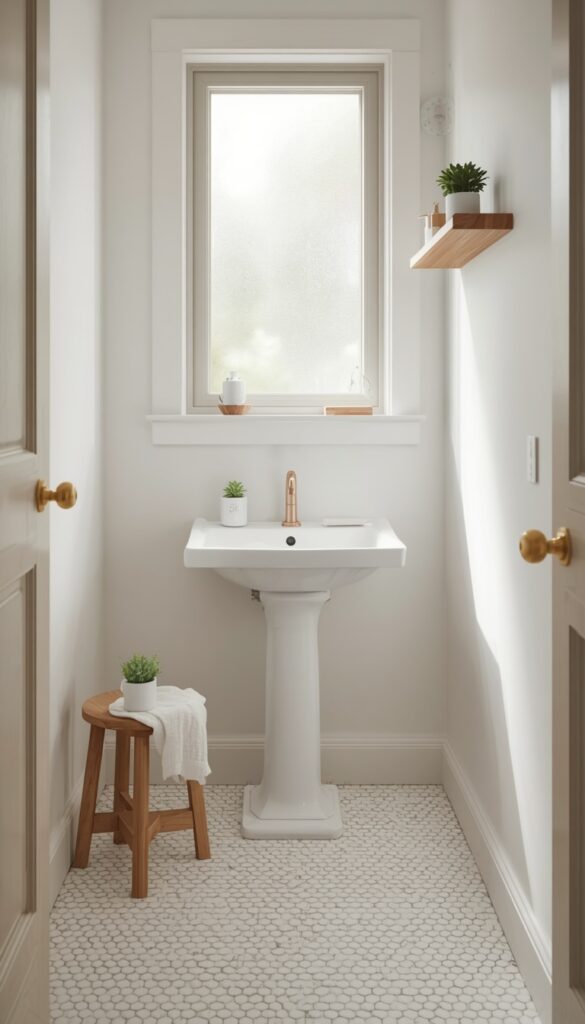
Floor space in a tiny bathroom is precious, and the visual perception of floor space matters almost as much as the actual square footage. A bulky vanity cabinet with a sink on top closes off the floor completely and makes a small bathroom feel significantly more cramped than it needs to be. A pedestal sink , or its more modern equivalent, a wall mounted sink , eliminates the base cabinet entirely, exposing the floor and creating an immediate sense of openness and airiness. You lose the under sink storage, which is real, but in a truly tiny bathroom the visual gain often outweighs that loss, especially when you compensate with vertical storage solutions elsewhere.
The key to making a pedestal sink work in a small bathroom without losing your mind over storage is planning your vertical alternatives before you make the switch. Those floating shelves above the toilet, a recessed medicine cabinet, and a ladder shelf together can hold everything a vanity cabinet held, distributed across the walls rather than concentrated under the sink. A pedestal sink with a slim column base rather than a wide skirt base takes up less visual space and looks more refined in a small room. Wall mounted sinks are the most dramatic space opener of all , they float completely free of the floor and the wall, which makes even the smallest bathroom feel architecturally considered.
Style wise, a beautiful pedestal sink elevates the entire bathroom instantly. Classic white ceramic pedestal sinks with a simple column base suit traditional and transitional bathrooms perfectly. More contemporary square or rectangular basins with a sleek wall mount bracket create a sharp, modern look. Some wall mounted sinks incorporate a small shelf below the basin , not enough for major storage, but enough for hand soap and a small plant. Keep the area under a pedestal sink intentionally clear, or use a small woven basket or a simple wooden stool to hold one or two frequently used items without recreating the visual blockage you just removed.
6. Add a Tension Rod Under the Sink for Extra Hanging Storage
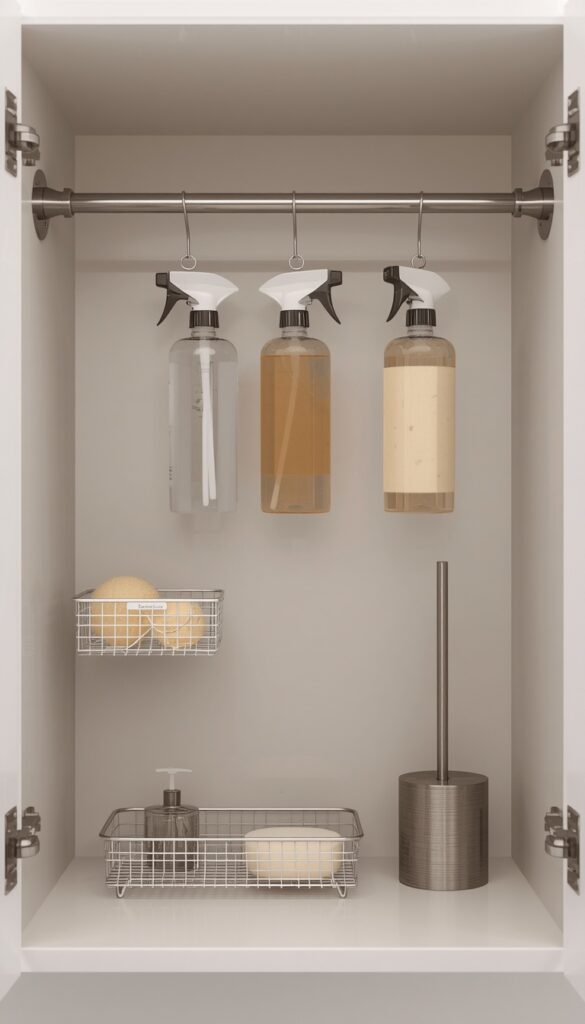
If you have a pedestal sink with open space below, or a vanity cabinet with a deep under sink area, a tension rod installed horizontally inside that space creates an instant hanging storage rail that costs about five dollars and takes two minutes to install. Hang small spray bottles by their trigger handles, S hooks with cleaning supplies, or a row of small wire baskets for toiletries. This approach keeps the items off the cabinet floor, makes them fully visible and accessible, and doubles the usable vertical storage within the cabinet space. It’s one of the most satisfying small bathroom hacks because the effort to payoff ratio is almost embarrassingly good.
The tension rod should be mounted in the upper third of the under sink cabinet space to leave room below for taller items like a toilet brush holder or a cleaning bucket. Use a rod rated for at least ten pounds ,bathroom supply items add up in weight quickly. Spring tension rods with rubber tipped ends grip cabinet walls firmly without marking them, making this solution completely damage free and rental safe. For a more polished look, use a brushed nickel or matte black tension rod rather than a white or chrome one ,the finish coordinates with your faucet and cabinet hardware and makes the under sink area look intentional rather than improvised.
Pair the tension rod with matching S hooks or uniform small baskets for a result that looks organized and considered. Clear acrylic hooks allow spray bottle triggers to hang cleanly. Small wire baskets hung from the rod on S hooks can hold items like spare soap bars, extra sponges, or travel sized products that tend to accumulate without a designated home. Label each basket with a small tag if you want to maintain the organization long term. This system works so well because it keeps everything visible , in small bathrooms, the things that get hidden tend to get forgotten, and forgotten items get repurchased, which is how bathroom cabinets end up so impossibly full.
7. Install a Corner Shower Caddy That Actually Stays Put
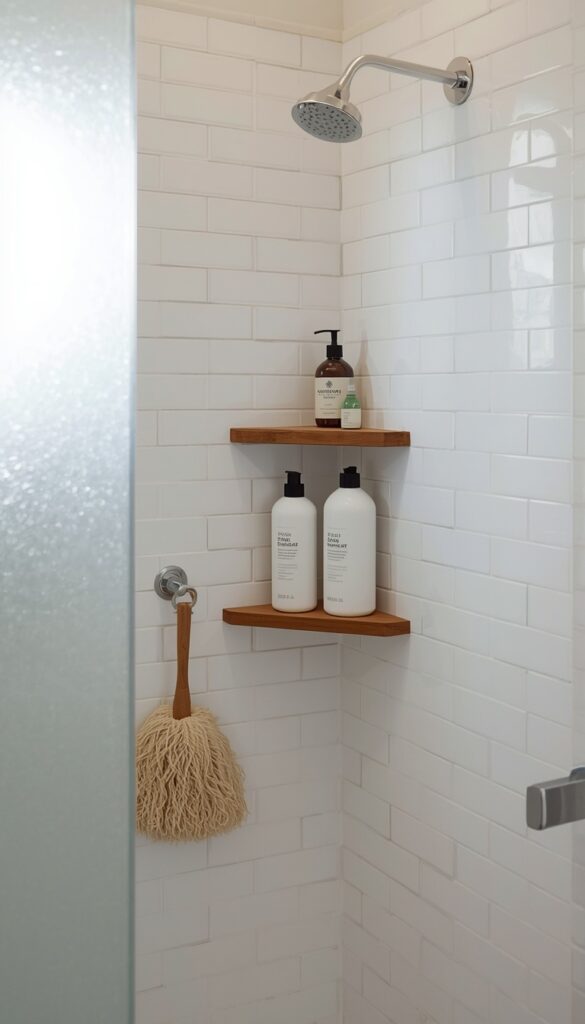
Corner space inside a shower is almost always wasted. The wall corner of a shower represents a significant amount of surface area that most people ignore, filling the shower floor with bottles instead and creating exactly the kind of clutter that makes a small bathroom feel chaotic. A properly installed corner shower caddy , mounted with genuine wall anchors rather than the suction cups that fail within weeks ,reclaims that corner completely and gets every bottle off the floor, which also makes the shower itself easier to clean. Floor space inside a shower matters too, especially in a tiny bathroom where the shower is often the largest single element in the room.
The difference between a corner caddy that works and one that ends up in the trash is installation quality. Suction cup caddies look appealing in the store because they require no drilling, but in a real shower environment with daily humidity cycles, suction cups lose grip within weeks or months. Drill mounted caddies with wall anchors appropriate to your tile or wall material are the only permanent solution. Use tile anchors rated for wet environments, and always caulk around the mounting screws after installation to prevent moisture from getting behind the caddy and causing mold. This small extra step extends the life of the installation significantly and keeps the wall surface in good condition.
For a small bathroom shower, a two tier corner caddy in stainless steel or teak keeps rust and corrosion at bay far better than chrome or powder coated options, both of which deteriorate in prolonged humidity. Teak is particularly worth considering , it’s naturally water resistant, it looks beautiful, and it ages gracefully in a way that most metal caddies don’t. Size the shelves to your actual bottles: taller lower shelf for shampoo and conditioner, shallower upper shelf for face wash and razors. A built-in hooks on the side rail for a razor or loofah removes two more items from the caddy shelves and keeps everything accessible without reaching over other bottles.
8. Hang a Small Eucalyptus Bundle to Add Decor Without Taking Up Space
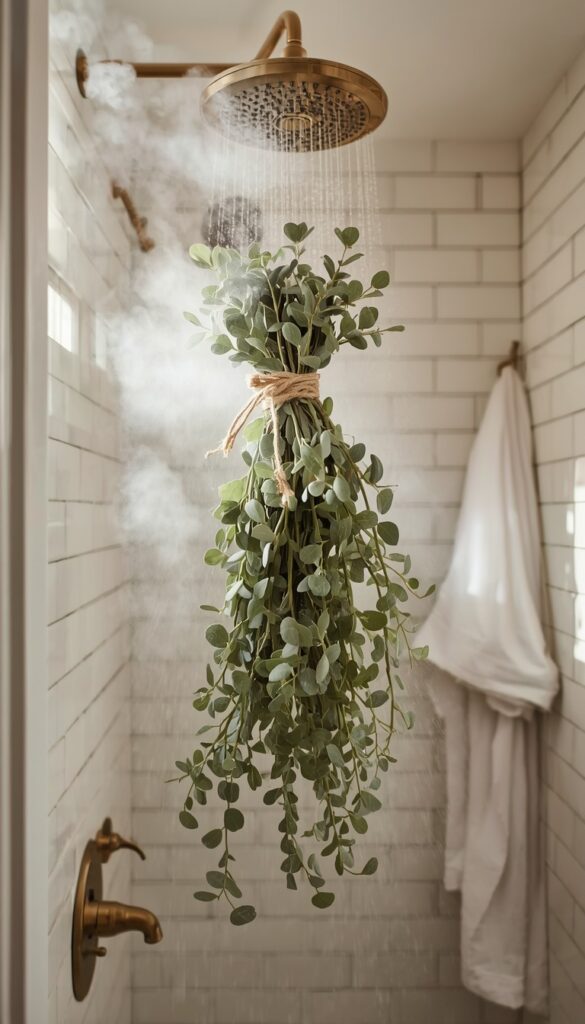
Bathroom decor doesn’t need surface area to make an impact. A bundle of fresh or dried eucalyptus tied with simple cotton twine and hung from the showerhead or from a small hook on the wall behind the door costs almost nothing, requires zero counter or shelf space, and adds genuine natural beauty to a bathroom that might otherwise feel purely utilitarian. Fresh eucalyptus releases a light, clean fragrance when steam from the shower activates the natural oils , a scent that feels spa-like and immediately elevates in any bathroom, regardless of size. This is one of those touches that seems small but changes the whole feeling of the room.
Fresh eucalyptus bundles last two to three weeks before drying out, at which point they transition into dried bundles that hold their shape and a gentler version of the scent for several months more. Eucalyptus varieties differ in appearance and scent: seeded eucalyptus has delicate small pods along the stem and a soft, feathery quality; silver dollar eucalyptus has large round leaves and a bold, graphic look; willow eucalyptus has long, trailing stems that cascade beautifully. Any florist or farmers’ market will have at least one variety, and most grocery stores stock eucalyptus regularly now. Buy a bundle, tie it with jute twine, and hang it from a small adhesive hook , the whole process takes under five minutes.
For a bathroom without a visible showerhead to hang from, an adhesive hook on the wall directly above the shower spray zone works just as well ,positioning it high enough that the bundle gets hit with steam but not direct water. A hook on the back of the bathroom door is another option that works even in a bathroom without a shower or tub, displaying the bundle at eye level where its visual and aromatic impact are both maximized. In a tiny bathroom where every decorative choice must earn its space, eucalyptus wins decisively: it adds color, scent, organic texture, and a sense of care and intention without requiring an inch of precious surface area.
9. Use Stackable Clear Bins Inside Cabinets to Double Your Storage
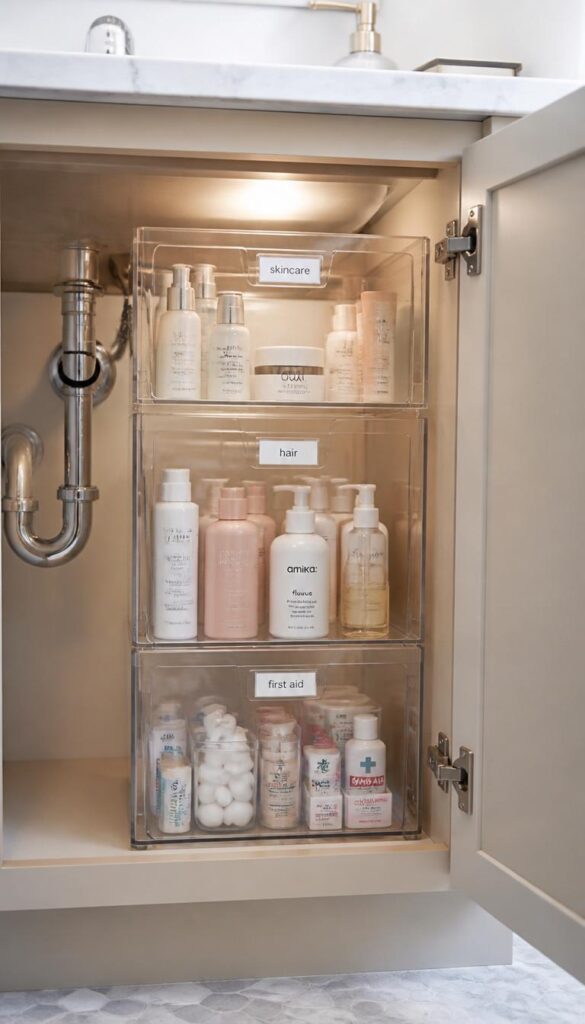
The interior of most bathroom cabinets is a single undivided cavity where items pile on top of each other in a way that makes it genuinely difficult to find anything without removing several things first. Stackable clear bins transform that cavity into an organized, layered system where every item has a specific place and everything is visible without removing anything else. Clear bins are the specific choice here , not wire baskets, not opaque boxes , because visibility is what keeps a small bathroom organization system functioning over weeks and months rather than collapsing back into chaos within days of a busy week.
The most functional approach divides the cabinet into zones by category: one bin for skincare, one for hair products, one for medications, one for first aid, one for cleaning supplies. Stack shorter bins on top of taller ones to use the full vertical height of the cabinet space rather than leaving the upper half empty. Decant items from their original packaging where practical , a pump dispenser for cotton rounds takes up less space than the original bag and looks far more intentional. Remove all packaging boxes from medications and store just the blister packs or bottles , boxes designed for retail display are rarely the most space efficient shape for actual storage.
Measure your cabinet interior before buying bins , this sounds obvious but is genuinely the step most people skip, resulting in bins that don’t stack properly or don’t fit at all. Standard cabinet depths vary significantly between builders and renovations, and the difference between a bin that slides in cleanly and one that catches on the cabinet frame is often less than an inch. iDesign, OXO, and Sterilite all make well designed clear bins at different price points that are genuinely worth buying over cheaper generic versions, because the lids close properly, the edges are smooth, and the plastic remains clear rather than yellowing after a few months in a humid environment.
10. Replace a Shower Curtain Rod with a Curved One for More Shower Space
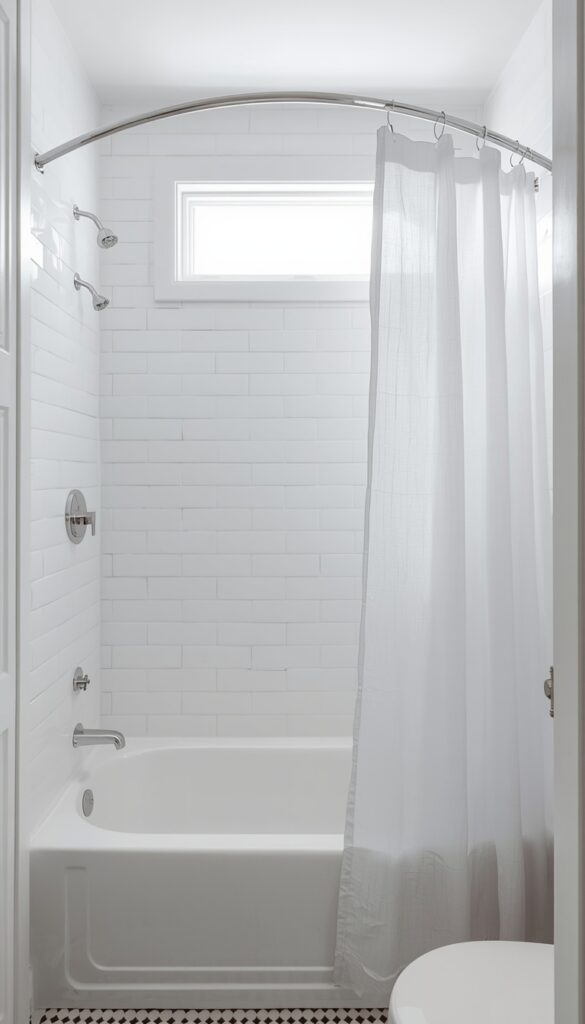
A standard straight shower curtain rod positions the curtain flat across the front of the tub, which means the full interior width of the tub is available but the curtain itself encroaches slightly on the space you’re actually standing in. A curved shower rod bows outward by four to six inches at the center, pushing the curtain forward and creating noticeably more elbow room inside the shower without changing the tub dimensions at all. In a tiny bathroom, that four to six inches of extra space inside the shower feels genuinely significant , it’s the difference between a shower that feels claustrophobic and one that feels adequately comfortable.
Installation is identical to a standard rod ,most curved rods use the same tension mounting system and fit the same wall to wall span. The bow in the curved rod is fixed, so you don’t adjust it during installation. Choose a curved rod in a finish that matches your existing fixtures , matte black, brushed nickel, polished chrome, or brushed brass , to maintain a cohesive look. Diameter matters for stability: a rod with a diameter of at least one inch in a quality metal will hold a weighted curtain with liner without flexing noticeably. Thin, lightweight rods flex and droop under the combined weight of curtain and liner, which looks sloppy and shortens the rod’s lifespan considerably.
Pairing the curved rod with a lightweight, semi transparent shower curtain maximizes both the perceived space inside the shower and the perceived openness of the bathroom itself. A solid white or cream linen look curtain reflects light back into the bathroom and feels more airy than a patterned or dark curtain. A clear or frosted PEVA liner behind it keeps water contained without adding visual weight. For the smallest bathrooms where the shower curtain is a significant visual element, choosing a simple, light toned curtain is one of the easiest ways to prevent the shower from dominating and overwhelming the entire room’s feel.
11. Hang a Wall Mounted Toothbrush Holder to Clear the Counter
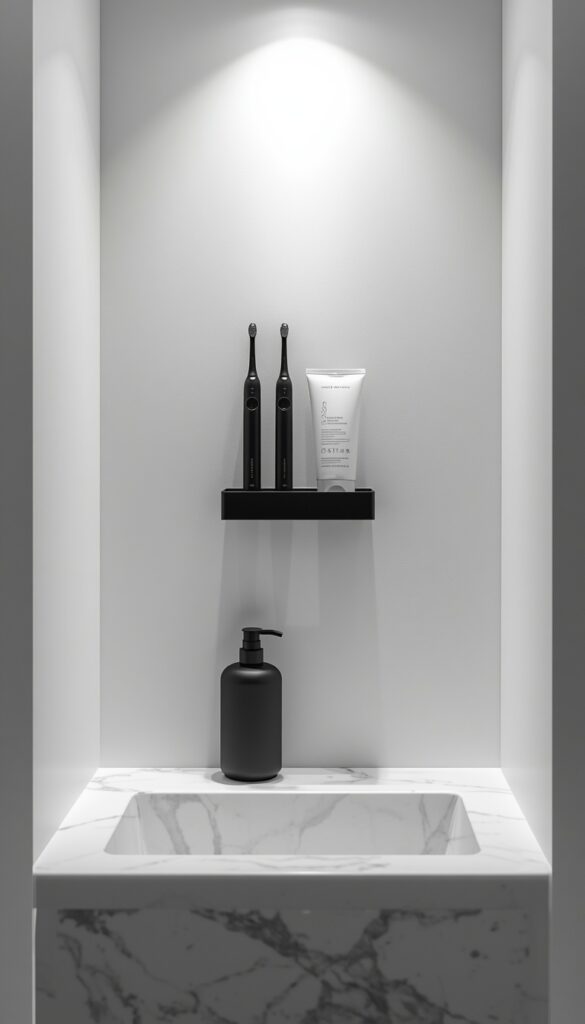
The bathroom countertop is where a small space organization either succeeds or falls apart. Every item sitting on that surface reduces the perceived size of the room, because countertop clutter reads as visual noise in an already compressed space. A wall mounted toothbrush holder removes one of the most consistently counter cluttering items , toothbrushes and toothpaste , and relocates them to the wall, where they’re just as accessible but visually much less intrusive. It’s a small change that has a disproportionate effect on how clean and open the counter feels, especially first thing in the morning or when guests use the bathroom.
Wall mounted toothbrush holders come in two broad categories: those that require drilling and those that use adhesive mounting. Adhesive versions work on most smooth tile surfaces with no damage, and modern adhesive products like 3M Command strips are genuinely strong enough for the weight of several toothbrushes and a tube of toothpaste. Ceramic wall mounted holders have a clean, permanent look that suits traditional bathrooms. Stainless steel holders suit more modern spaces and have the advantage of being rust resistant in a wet environment. Some models include a separate bottom tray that catches drips , worth paying for if you keep electric toothbrush heads or anything liquid dispensing in the holder.
The placement of a wall mounted toothbrush holder matters for daily usability. Mount it at approximately counter height , or just slightly above , rather than higher up the wall, where reaching becomes awkward during early morning half awake bathroom routines. Position it near the sink but slightly to the side so it doesn’t conflict with faucet use. Once the toothbrush holder is wall mounted, use the freed counter space deliberately: keep it as clear as possible rather than filling it with the next set of counter items. The discipline of maintaining clear counter space is genuinely harder than the installation, but it’s what keeps the bathroom looking significantly bigger than its actual dimensions.
12. Use Adhesive Hooks Strategically for No Drill Storage Wins
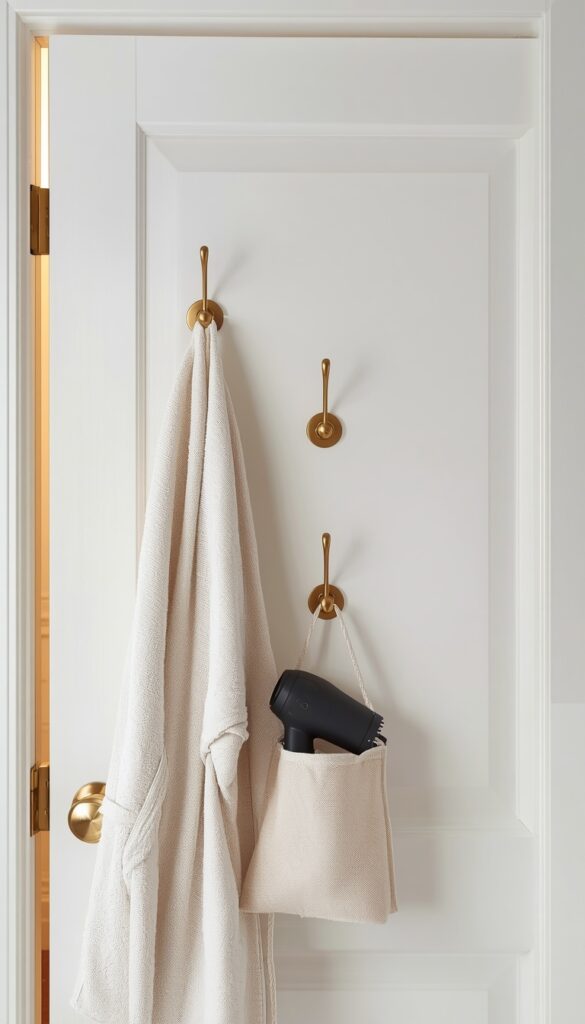
Adhesive hooks are the most underestimated tool in small bathroom organization. Modern adhesive hooks , particularly the 3M Command range , hold genuinely significant weight when applied correctly to smooth surfaces, and they remove cleanly without damaging tile, painted walls, or cabinet surfaces when you follow the removal instructions. In a tiny bathroom, the ability to add storage points anywhere without committing to drilled holes means you can be experimental and iterative , try a hook placement, adjust it if needed, move it when your needs change. This flexibility is especially valuable in rented spaces where permanent modifications aren’t permitted.
The strategic part matters as much as the product itself. Think about your actual daily routine and where your hands naturally reach: a hook on the back of the bathroom door for a robe or towel that would otherwise drape over something else; a hook on the side of the vanity cabinet for a small hanging basket of hair tools; a hook on the wall beside the shower for a hand towel; a hook inside the cabinet for a small bag of less used items. Each hook does a specific job for a specific item rather than serving as a general dumping point. When you assign each hook a role before you mount it, the system maintains itself far longer.
Weight ratings on adhesive hooks are given for ideal conditions , smooth, clean, dry surfaces with a full 72 hour cure time before loading. In a bathroom environment with daily humidity, you’re working in less than ideal conditions, which means using hooks rated for at least twice the weight you actually plan to hang. A hook rated for five pounds can hold a wet towel reliably; a hook rated for one pound under the same conditions will fail within weeks. Mount hooks on the most solid, non porous surface available , glazed tile is the most reliable surface for adhesive hooks; painted drywall in high humidity areas is the least reliable. Know the difference and place your hooks accordingly.
13. Style with a Single Large Mirror to Make the Room Feel Twice as Big
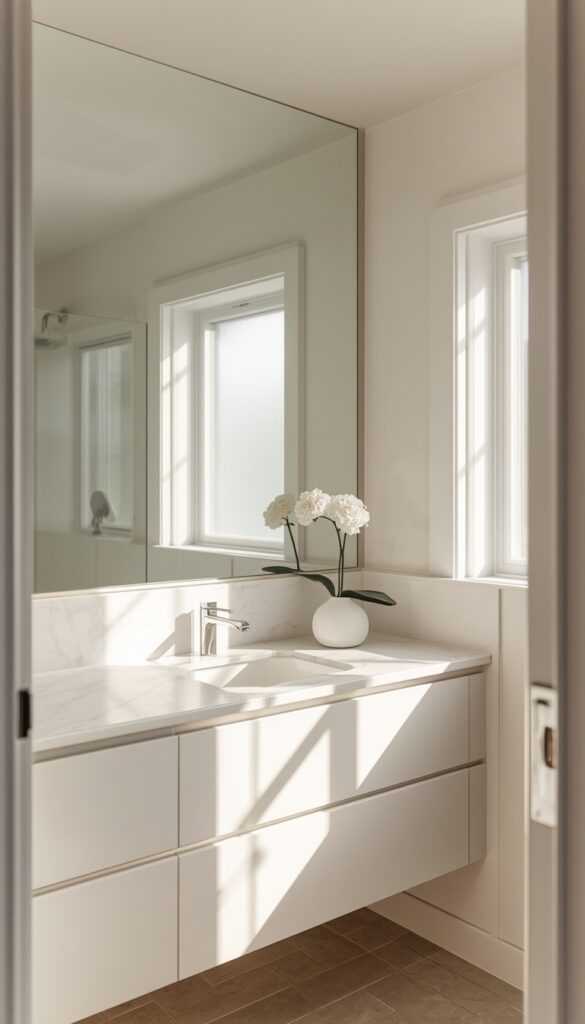
Mirrors expand space optically in a way that nothing else in interior design replicates. A large mirror reflects both light and depth, creating the perception of a room that extends beyond its actual walls. In a tiny bathroom, this is transformative. The critical word here is large , a mirror that fills most of the wall above the vanity works dramatically better than a small or medium mirror that leaves a significant wall visible around it. The closer the mirror gets from wall to wall and ceiling to counter proportions, the more dramatically it expands the perceived space. One large, confidently sized mirror does more work than three small decorative mirrors combined.
The frame , or lack of one , changes how a large mirror reads in a tiny bathroom. A frameless mirror sits flush against the wall and essentially disappears, leaving only the reflection visible, which is the maximum possible expansion of perceived space. A thin, simple frame in matte black, brushed brass, or natural wood adds a small amount of definition without significantly reducing the mirror’s spatial effect. Avoid wide, ornate frames in a very small bathroom , they eat into the reflective surface and add visual bulk that works directly against the goal of perceived spaciousness. An arched top on a large mirror adds architectural interest and softens the hard rectangular lines that dominate most small bathrooms.
Position matters as much as size. A mirror that reflects a window , even partially , doubles the natural light in the room, which is one of the most powerful improvements you can make to a small bathroom’s feel. If your layout allows it, position the mirror on the wall directly opposite or at an angle to the window rather than on the same wall as the window. At night, a large mirror that reflects the bathroom’s warm artificial light sources creates a glow that makes the room feel luxuriously lit rather than dimly utilitarian. Consider the reflection carefully before mounting , you want to see the best parts of the room reflected back, not a wall of towels or a cluttered cabinet top.
Final Thoughts on Making a Tiny Bathroom Work
Tiny bathrooms reward smart thinking more than any other room in the house. Every idea in this article works because it treats space as something to be earned through intentionality rather than purchased through square footage. The through line connecting all thirteen ideas is the same principle: use walls rather than floors, choose pieces that do more than one job, and keep surfaces clear enough that the room can breathe. You don’t need to implement all thirteen at once. Pick the two or three ideas that match your specific frustrations , cluttered counter, wasted vertical space, a shower that feels claustrophobic , and start there. A tiny bathroom done well is genuinely something to be proud of.
Frequently Asked Questions
Q: How do I make a tiny bathroom look bigger? A: The most effective approach combines a large mirror, light wall colors, and exposed floor space. A wall to wall mirror above the vanity reflects both light and depth, making the room feel significantly larger. Light toned tiles or paint keep the walls from closing in. Removing under sink cabinetry and using vertical storage instead frees up the floor and opens the space dramatically.
Q: What storage works best in a very small bathroom? A: Vertical storage beats floor based storage in tiny bathrooms every time. Floating shelves above the toilet, a recessed medicine cabinet, and wall mounted holders keep everything accessible without consuming floor space. Stackable clear bins inside cabinets maximize the storage you already have. The goal is moving as much as possible off the counter and floor and onto walls.
Q: Can I add storage to a tiny bathroom without drilling? A: Absolutely. Modern adhesive products like 3M Command hooks hold significant weight on smooth tile surfaces and remove cleanly. Tension rods require no holes at all. Ladder shelves lean against the wall without wall anchors. A surface mounted medicine cabinet needs only two small screws. Rental friendly solutions now cover most of the best small bathroom storage ideas very effectively.
Q: What colors make a small bathroom feel larger? A: Light, warm neutrals work best , soft white, warm cream, pale greige, and light sage all make a small bathroom feel more open. The finish matters too: matte and satin finishes on walls absorb light softly and feel less clinical than high gloss. Using the same color on walls and ceiling removes the visual boundary that makes a room feel shorter and more enclosed.
Q: How do I keep a tiny bathroom organized long term? A: Assign every item a specific home and return things to that home after every use , this discipline matters more than any storage product. Clear bins make it easy to see what you have, which prevents over buying. A monthly ten minute declutter of expired products and items you no longer use keeps the storage system from gradually filling beyond its capacity. Consistency beats perfection every time.
Q: Is a pedestal sink worth it in a tiny bathroom? A: It depends on whether you have alternative vertical storage planned. A pedestal sink creates remarkable visual openness by exposing the floor, but it eliminates under sink cabinet storage. If you’ve addressed storage through floating shelves, a medicine cabinet, and wall mounted holders, a pedestal sink in a tiny bathroom is genuinely worth it , the spatial effect it creates is one of the most dramatic single changes you can make.
Q: What’s the single best investment for a tiny bathroom? A: A recessed mirrored medicine cabinet gives you the most combined value , a large mirror that expands the space visually, built-in storage that completely clears the countertop, and task lighting that improves daily function. It requires one afternoon of installation work and delivers permanent improvements to both storage and the perceived size of the room. For most tiny bathrooms, it’s the highest impact single purchase available.