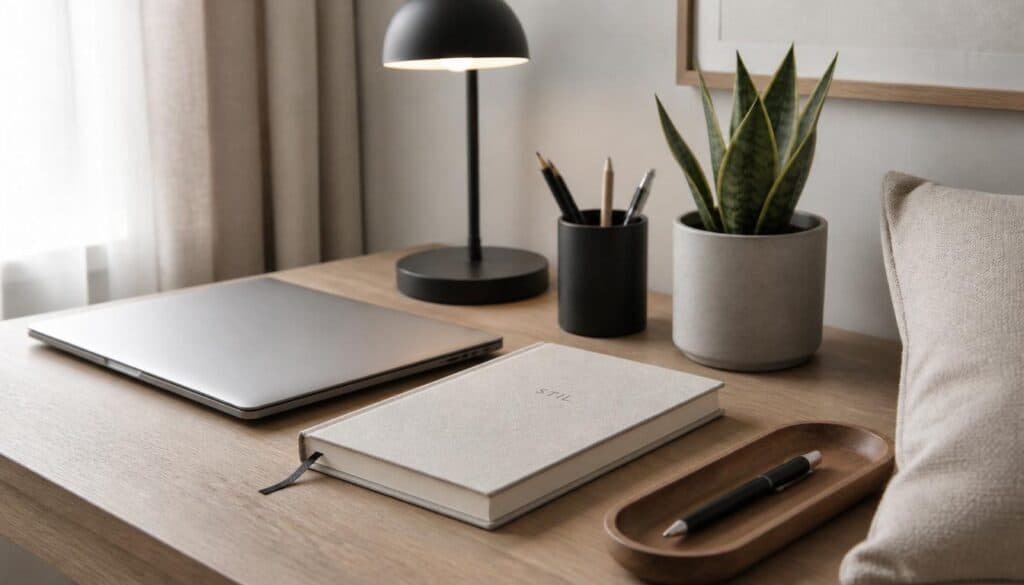
A cluttered desk doesn’t just look messy. It actually pulls at your attention in ways you don’t fully notice until it’s gone. I’ve redesigned home offices for people who genuinely couldn’t figure out why they felt scattered all day, and almost every single time, the answer was sitting right there on their desk in the form of too much stuff competing for their eyes. Minimalist office design isn’t about owning fewer things for the sake of looking nice. It’s about removing visual noise so your brain can actually settle into work.
What surprises people most is how small the changes usually need to be. You don’t need an empty room and a single laptop to get this right. You need intention behind every object that earns a spot on your desk, and a few specific habits that keep the space from sliding back into clutter within a week. These 14 tips come from offices I’ve actually built and used myself, the kind of practical detail that genuinely changes how focused a workday feels.
1. Clear Your Desk Down to Three Essential Items
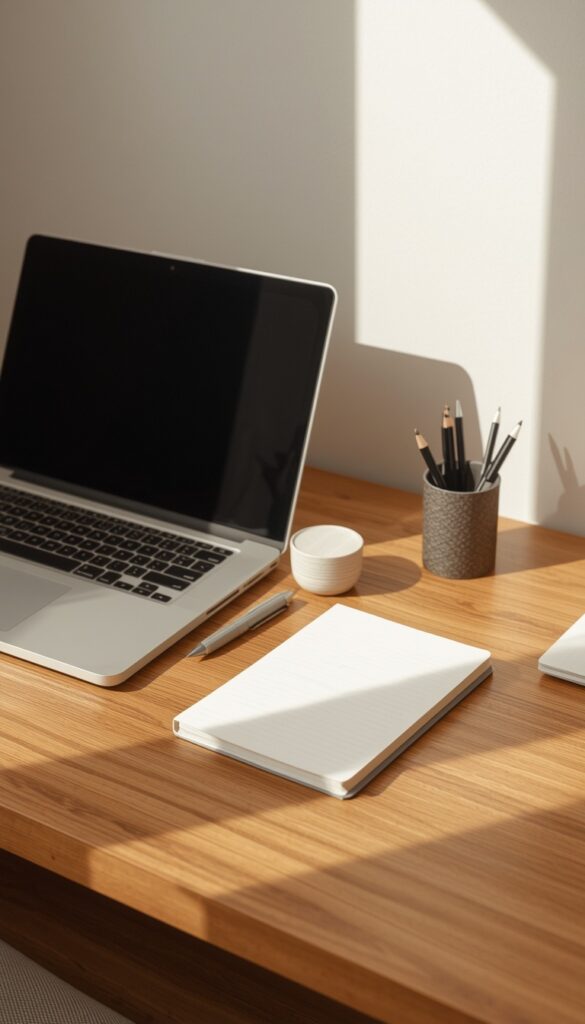
A genuinely minimalist desk holds only what you touch daily, and for most people that means a laptop, one notebook, and maybe a pen cup. Everything else, the random charging cables, old mail, a coffee mug from three days ago, pulls at your visual attention even when you’re not consciously looking at it, which quietly drains focus throughout an entire workday without you realizing the cause.
I always run a quick daily test before calling a desk genuinely minimal: pick up every item currently on the surface and ask whether you used it today. If the honest answer is no, it goes into a drawer or gets removed from the room entirely. This simple habit, repeated daily for about a week, naturally trims a desk down to what actually belongs there.
Surface material affects how easy this restraint actually feels to maintain long term. A matte wood or stone desktop shows less visual clutter than a glossy white surface, where every fingerprint, dust speck, and stray object stands out sharply under direct light. I generally recommend a slightly textured, non reflective surface specifically for anyone who struggles to keep a workspace looking genuinely clear.
2. Hide Cables Completely Using an Under Desk Tray
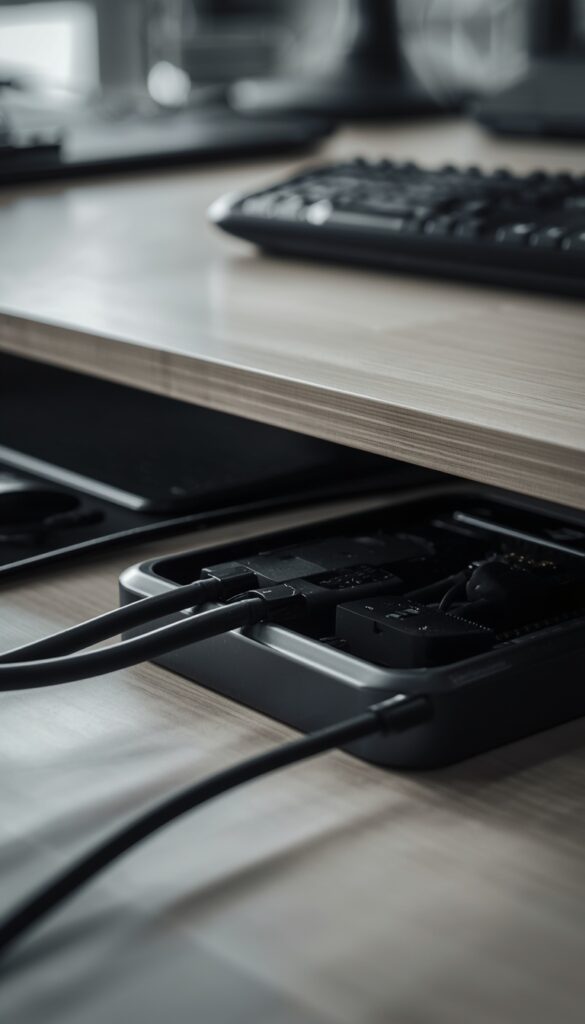
Visible cables create a surprising amount of visual chaos, even on an otherwise clean desk, since tangled wires draw the eye downward and disrupt the calm, uncluttered feeling minimalist design depends on. I mount a simple cable tray to the underside of the desk, routing the power strip and all device cords into it so absolutely nothing hangs loose or trails across the floor.
Cable length matters more than people expect when setting this up correctly. I always buy slightly shorter replacement cables specifically for a minimalist setup, rather than using whatever excess length cords came in the box, since extra slack creates loops and tangles even inside a tray, undercutting the clean look you’re trying to achieve.
Color matters here too, in a way that’s easy to overlook. I choose black or white cables specifically matching my desk and wall color, rather than the mismatched factory colors most cords ship in, since uniform cable color disappears visually against the surrounding furniture far more effectively than a rainbow of mismatched cord colors ever could.
3. Use One Neutral Color Palette for the Entire Room
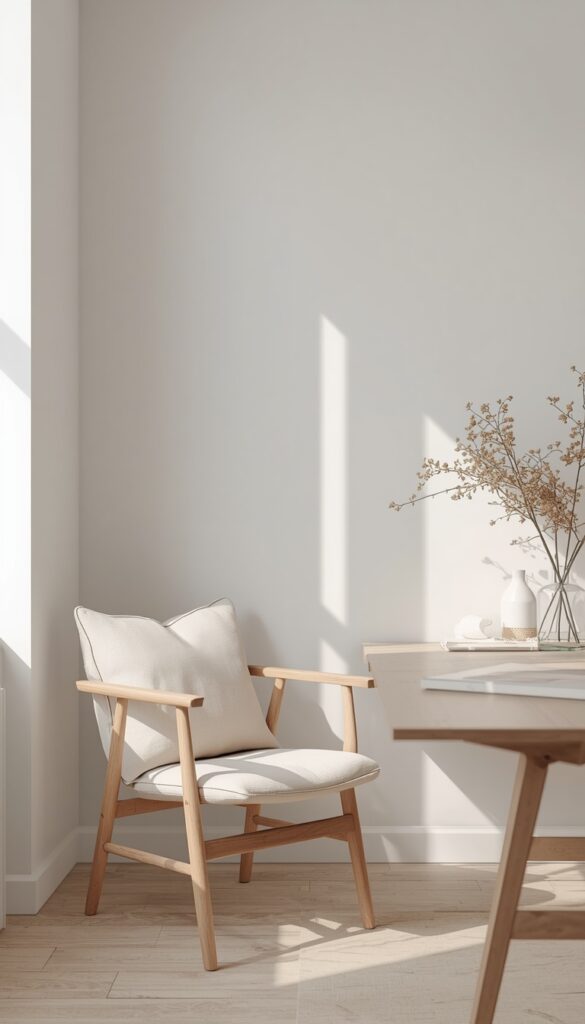
A minimalist office relies on color restraint more than almost any other single design choice, and I always build the palette around one neutral base, warm white, soft gray, or a muted sand tone, with at most one additional accent color used sparingly throughout the room. This restraint genuinely reduces visual stimulation, letting your brain settle into work mode faster than a room with several competing colors fighting for attention.
I generally recommend testing your chosen palette under the room’s actual lighting before committing to wall paint or large furniture purchases. Neutral tones shift more than people expect under different bulb temperatures, and a palette that looks calm and cohesive under daylight can read as slightly cold or flat once evening artificial lighting takes over the room instead.
Texture becomes especially important once color stays this restrained, since it’s genuinely what keeps an all neutral room from feeling flat or sterile. I layer in a linen chair cushion, a wood desk surface, and a woven storage basket, all within the same neutral family, so the room still feels rich and considered despite the deliberately limited color choices throughout.
4. Choose Closed Storage Over Open Shelving
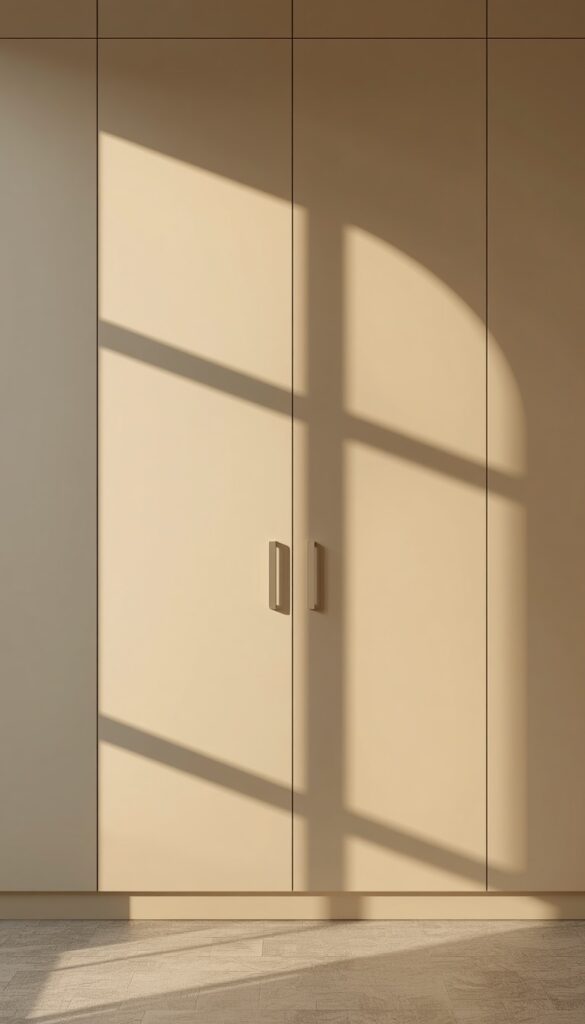
Closed storage, cabinets and drawers with doors rather than open shelves, hides the inevitable clutter that builds up during actual daily work, files, supplies, reference books, behind a clean, unbroken surface. I specifically recommend this over open shelving for minimalist offices, since open shelves require constant maintenance to stay visually calm, while closed storage lets you toss items inside without disrupting the room’s overall clean appearance.
Door style affects the room’s mood as much as the storage function itself. I choose flat, handle less cabinet fronts wherever possible, using push to open mechanisms instead of visible pulls, since this detail removes one more small visual element competing for attention across an entire wall of storage in an already minimal room.
Labeling the inside of drawers, rather than relying on memory, keeps this closed storage system genuinely functional rather than becoming a black hole where things disappear and get forgotten. I use small, simple labels inside each drawer specifically, since you don’t need them visible from across the room, just clear enough to find what you need quickly during actual work.
5. Add Exactly One Plant for Calm Without Clutter
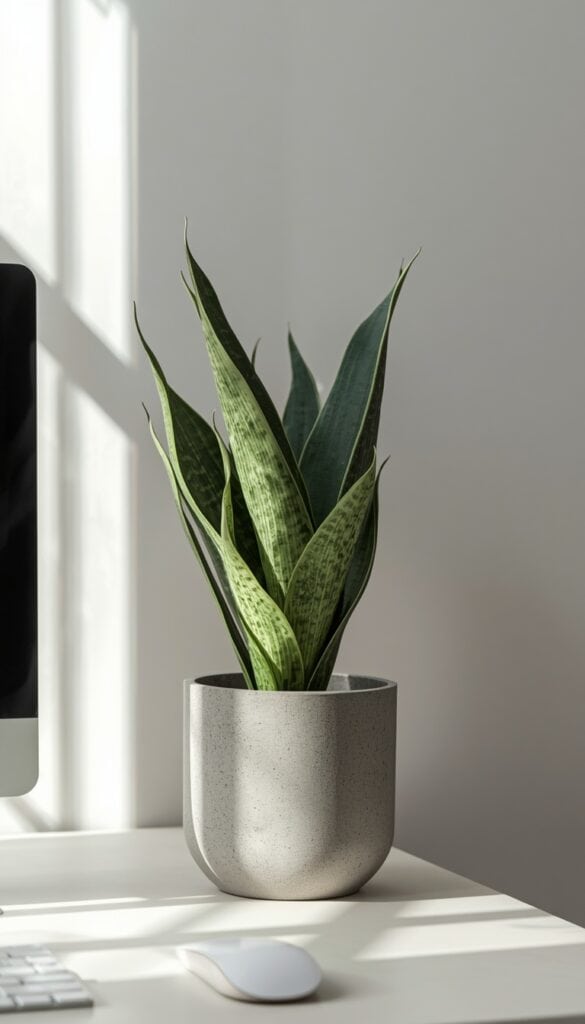
A single, well chosen plant brings genuine life and calm into a minimalist office without crowding the room’s deliberately restrained aesthetic. I recommend one plant specifically, rather than a collection, since multiple plants start competing visually with the room’s overall simplicity, even when each individual plant looks beautiful on its own in a different context.
Species choice should prioritize low maintenance over dramatic visual impact for an office setting specifically. I lean toward a snake plant or a ZZ plant for most home offices, since both tolerate inconsistent watering and lower light far better than a fussier, more demanding plant that requires constant attention pulling you away from actual focused work throughout the week.
Pot choice should echo your room’s established neutral palette rather than introducing a new color or busy pattern. I use a simple matte ceramic or concrete planter specifically, in a tone matching your desk or wall color, so the plant adds organic life without becoming a visually competing element fighting against the room’s overall minimal intention.
6. Position Your Desk to Face a Window, Not a Wall
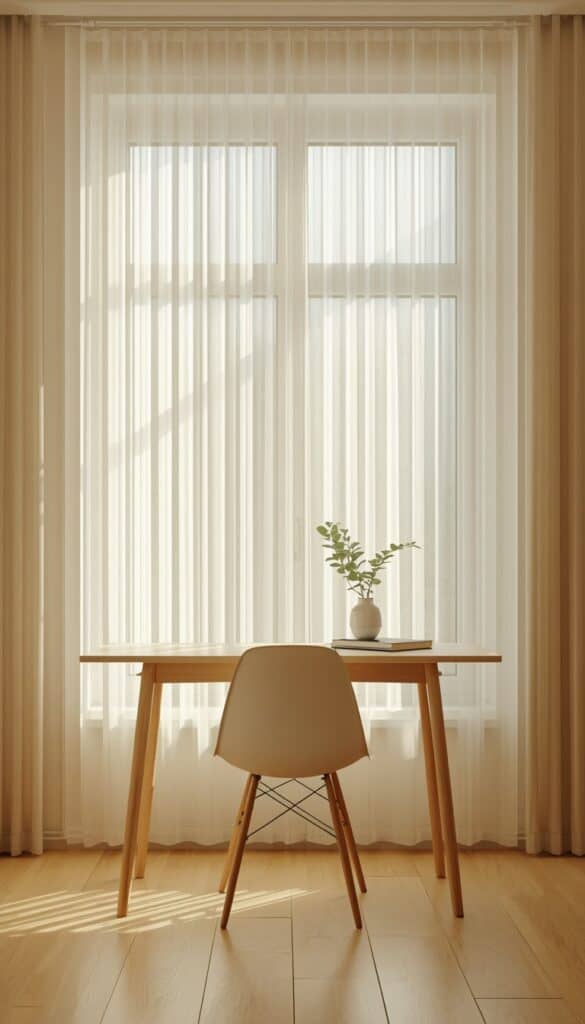
Desk orientation affects focus more than people initially expect, and facing a window specifically gives your eyes a genuine resting point throughout the day, somewhere to look during natural mental breaks that doesn’t require fully disengaging from the workspace itself. I always recommend this placement over facing a blank wall, which can feel visually confining during longer stretches of focused work.
Glare management matters once you’ve made this switch, since direct sunlight hitting a screen can actually undercut the very focus benefit you’re trying to gain. I add a simple sheer curtain specifically at this window, diffusing harsh midday light into something softer without blocking the actual view or natural light entirely throughout the working day.
If facing a wall is unavoidable due to room layout, I add one simple piece of calming art or a small framed print directly at eye level instead, giving your eyes the same kind of brief resting point a window would otherwise provide. This substitute genuinely helps, even though it’s not quite as effective as actual daylight and a real view.
7. Use a Single Task Lamp Instead of Multiple Light Sources
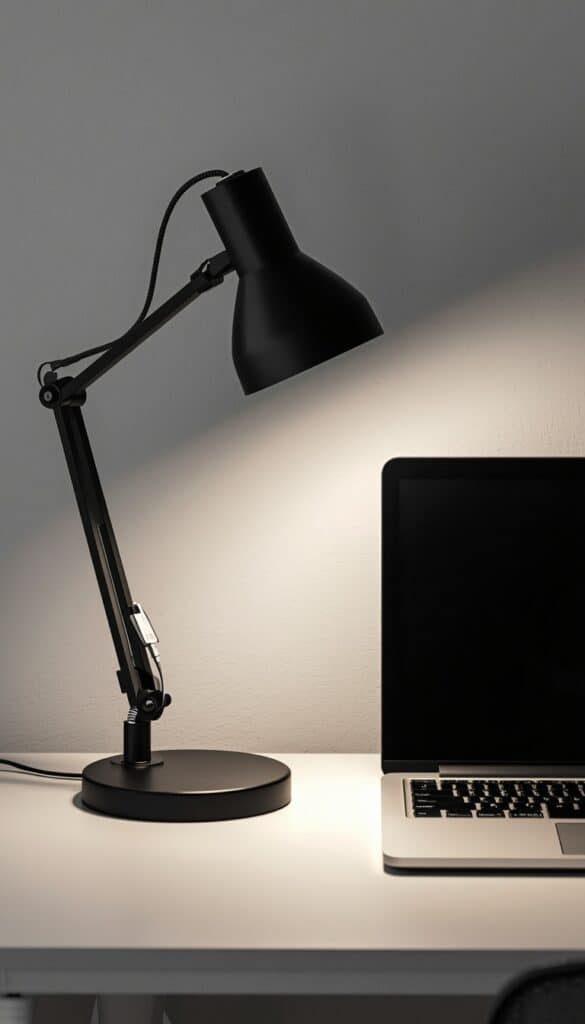
One well chosen task lamp, positioned correctly, often outperforms several scattered light sources that compete with each other and create uneven shadows across your actual workspace. I choose a simple, articulating lamp with a matte metal or wood finish specifically, avoiding anything with a busy or decorative shade that introduces visual clutter into an otherwise restrained desk setup.
Color temperature affects focus more directly than people realize when choosing this single light source. I recommend a neutral 4000K bulb specifically for task lighting during active work hours, since this temperature keeps you alert without the harshness of cooler daylight bulbs or the sleepy, golden cast of warmer 2700K bulbs better suited to evening relaxation elsewhere in the home.
Placement to the side of your dominant hand, rather than directly overhead, eliminates the shadow your own hand would otherwise cast across whatever you’re writing or working on. I always test this placement by actually sitting and working at the desk before finalizing lamp position, since the correct angle genuinely depends on your specific desk layout and seating position.
8. Remove Visual Distractions from Your Direct Sightline
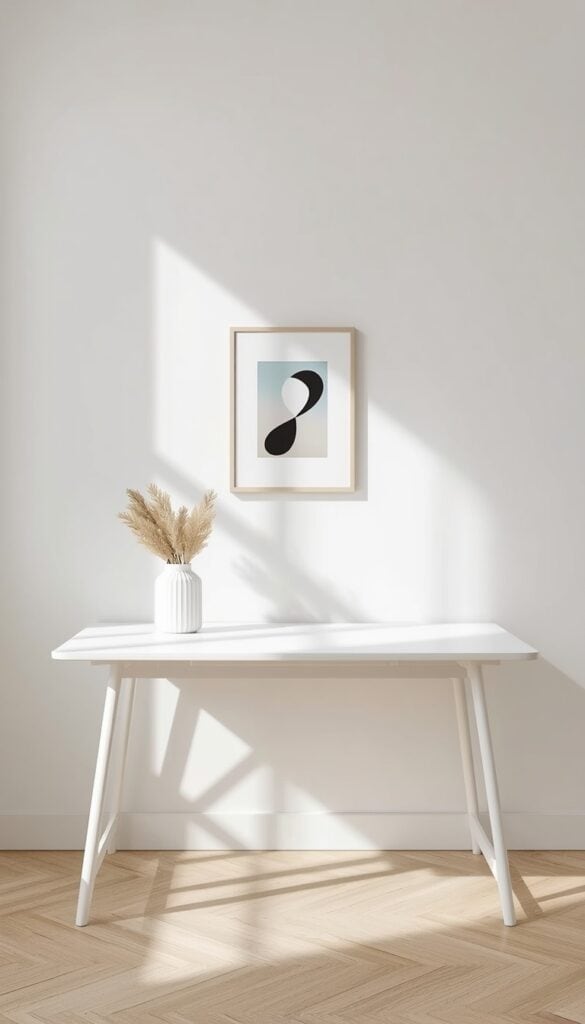
Your direct sightline while seated at your desk matters enormously for sustained focus, and I always audit exactly what falls within that view before calling an office setup genuinely minimal. A busy bookshelf, a cluttered closet visible through an open door, or even a stack of mail on a side table all pull at attention from your peripheral vision throughout the day, even when you’re not consciously noticing them.
I recommend physically sitting at your desk and slowly scanning your actual field of view, left to right, noting anything that feels visually busy or distracting. Closing closet doors, turning a cluttered shelf out of direct sightline, or repositioning your desk slightly often solves this problem without requiring any new furniture or major room changes whatsoever.
A single focal point within this sightline, one piece of calming art, a plant, or simply a clean wall, gives your eyes somewhere intentional to land during natural breaks in concentration. I’ve found this small adjustment alone significantly improves how settled and focused a workspace feels, even when nothing else about the room’s actual furniture changes at all.
9. Choose Furniture with Visible Legs Instead of Solid Bases
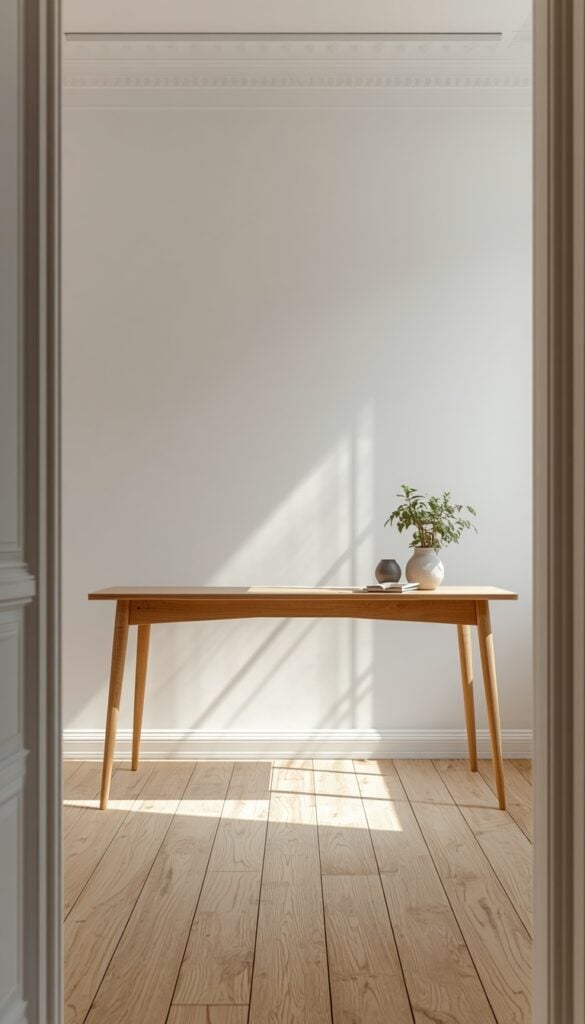
Furniture with visible legs, rather than a solid base sitting flush with the floor, creates genuine visual breathing room in a minimalist office, letting light and sightlines pass underneath rather than blocking them entirely. I choose a desk and any storage cabinets with slim, exposed legs specifically for this reason, since the open space beneath each piece keeps the whole room feeling more open even when the furniture itself takes up real floor space.
Leg material should echo something else already established in the room’s palette, matching your desk’s wood tone or a metal finish used elsewhere in the space. I avoid mixing more than two leg materials across a single room’s furniture, since too much variation here creates visual noise that undercuts the calm, cohesive feeling minimalist design depends on throughout the entire space.
This detail matters most in smaller offices specifically, where every inch of visual openness genuinely affects how cramped or spacious the room feels day to day. I’ve converted several tight home office corners from feeling closed in to genuinely open simply by swapping solid based furniture for pieces with slim, visible legs instead.
10. Use a Single Material Story Across All Surfaces
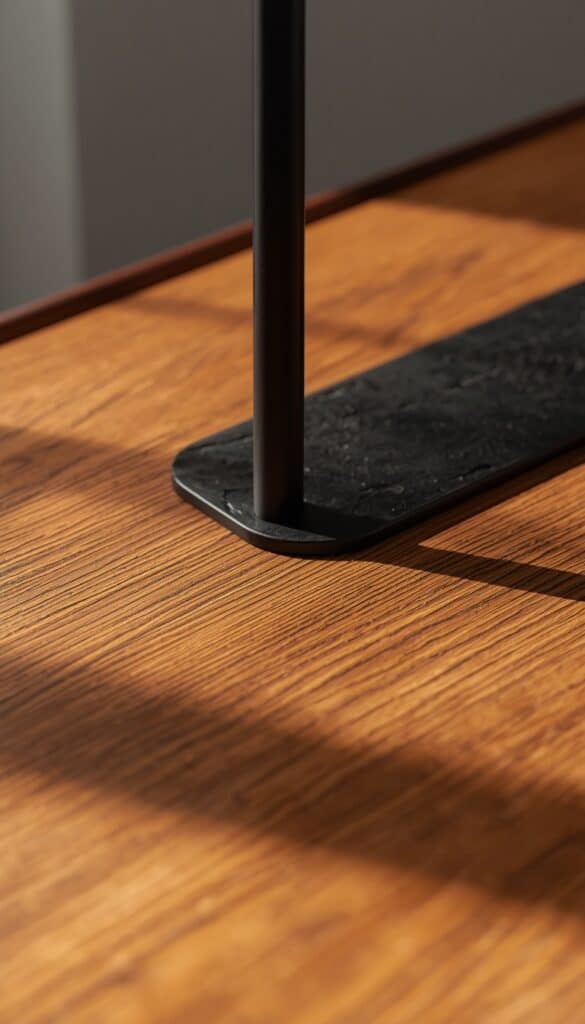
Sticking to one or two materials, consistently repeated across your desk, shelving, and any accent pieces, creates a cohesion that mixed materials simply can’t achieve in a small, focused room. I generally choose a warm wood tone paired with one metal finish, brushed brass or matte black, then repeat exactly these two materials across every furniture piece and hardware detail throughout the entire office.
I always audit existing furniture against this material story before adding anything new to the room. A piece that doesn’t fit the established wood and metal combination, even if it’s individually beautiful, gets relocated elsewhere in the home rather than forced into a minimalist office where it disrupts the careful material consistency everything else has been built around.
This consistency extends to smaller accent details too, the desk lamp base, drawer pulls, even a pen holder. I check every object against the room’s two established materials before it earns a spot on display, since this small discipline is genuinely what separates a cohesive minimalist office from a room that’s simply sparse without actual intentional design behind it.
11. Add Acoustic Treatment to Reduce Distracting Echo
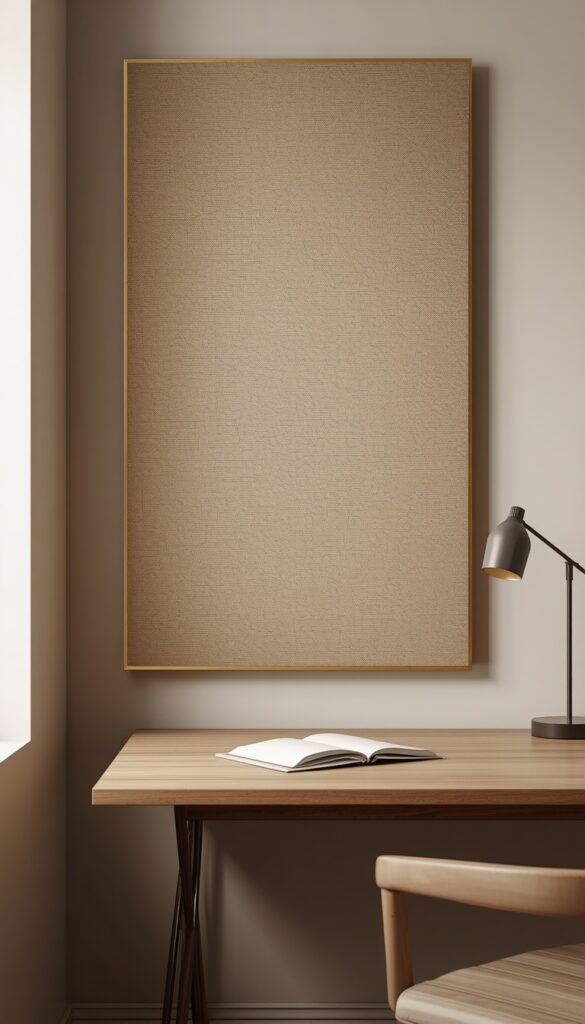
Hard, flat surfaces in many home offices create distracting echo and sound reflection that genuinely undercuts focus, especially during video calls or any work requiring sustained concentration in a quiet environment. I add a simple fabric wrapped acoustic panel or two specifically at first reflection points, the spots where sound would bounce directly back toward your seated position, rather than covering walls randomly throughout the room.
Panel color should blend into your established neutral palette rather than standing out as an obvious, separate addition. I choose fabric in the same tone family as your walls specifically, since a panel that disappears visually still delivers the same genuine acoustic benefit as a more obvious, contrasting design choice would provide.
A thick area rug serves a similar acoustic function while also adding warmth underfoot in an otherwise minimal room. I always recommend this addition specifically in offices with hard flooring, since the rug absorbs sound that would otherwise bounce between floor and ceiling, genuinely improving both call clarity and overall focus throughout actual working hours.
12. Keep Wall Art to a Single, Intentional Piece
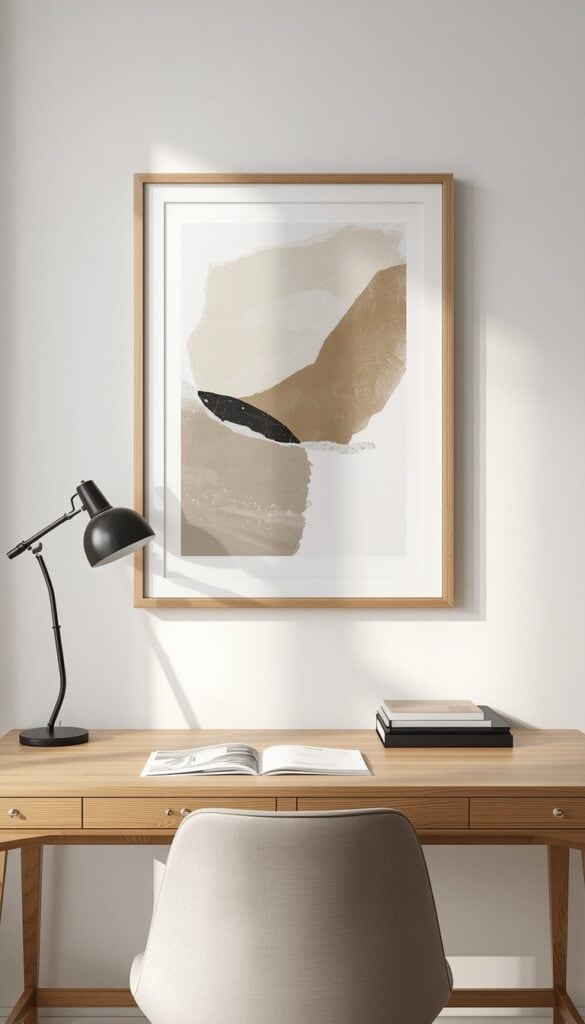
A minimalist office benefits from restraint in wall art just as much as in furniture and color choices, and I generally recommend one larger, intentional piece rather than a gallery wall or multiple smaller frames competing for attention across the same wall space. This single focal point gives your eyes somewhere calm to land without introducing the visual busyness several scattered frames inevitably create.
Subject matter matters more than people initially consider for a focus oriented space specifically. I steer toward abstract, landscape, or simple line art rather than busy, detailed imagery, since calmer subject matter genuinely supports sustained concentration better than visually complex art that pulls your attention into examining details throughout the workday.
Frame choice should echo your established material story discussed earlier, matching the wood tone or metal finish used throughout the rest of the room. I avoid ornate or heavily decorated frames entirely in this context, since they introduce a level of visual detail that conflicts with the deliberate simplicity everything else in a minimalist office is working to maintain.
13. Establish a Five Minute End of Day Reset Routine
A minimalist office stays minimal through daily maintenance, not a single big cleanup that inevitably slides back into clutter within a week. I close every workday with a genuine five minute reset: clearing the desk surface completely, filing loose papers into their designated drawer, and returning any displaced items to their established spot before actually leaving the room.
This habit matters more than any single piece of furniture or storage solution discussed elsewhere in this list. I’ve watched beautifully designed minimalist offices slide back into clutter within just two weeks specifically because the daily reset habit never got established, while far simpler setups stayed genuinely calm for years through this one consistent, small daily practice instead.
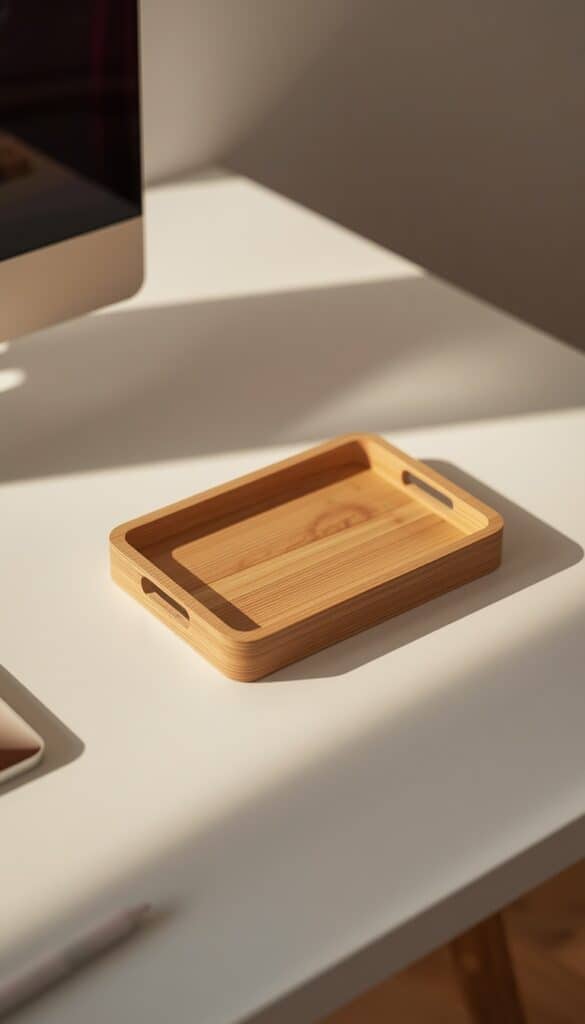
I keep a small empty tray on the desk specifically for this reset routine, a holding spot for anything that needs to be put away but doesn’t have time to be properly filed at that exact moment. Clearing this tray first thing the next morning, before starting actual work, keeps the habit genuinely sustainable rather than becoming another source of accumulating clutter itself.
14. Use Drawer Organizers to Prevent Hidden Clutter
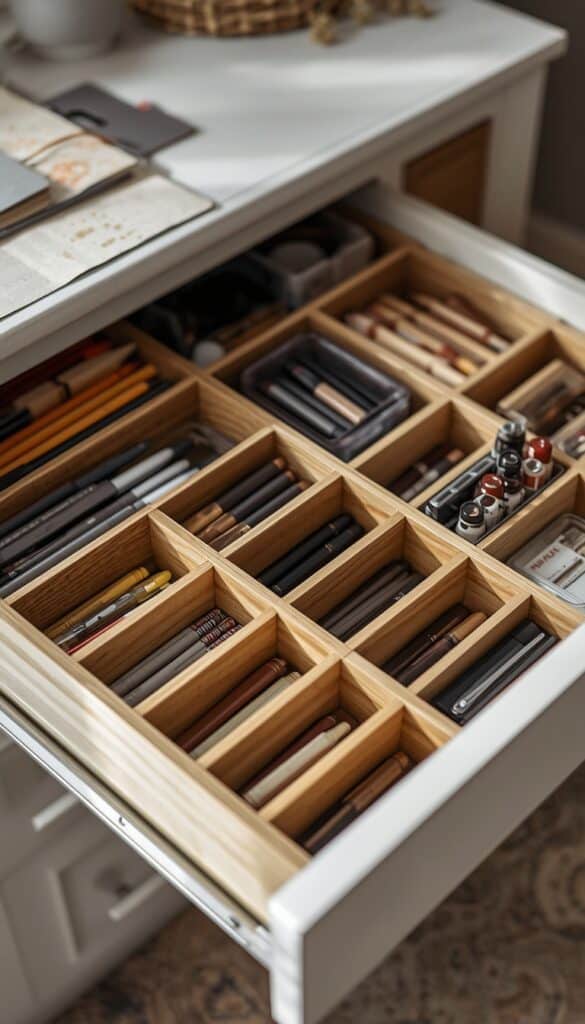
Closed storage solves visible clutter, but drawers without internal organization simply relocate the chaos out of sight rather than genuinely resolving it, which eventually makes finding anything frustratingly difficult during actual work. I install simple adjustable dividers in every desk drawer specifically, sorting pens, sticky notes, and small supplies into distinct compartments rather than letting everything slide into one disorganized pile.
I generally recommend auditing drawer contents every few months, removing anything that’s accumulated but genuinely doesn’t belong in an active workspace drawer anymore, old receipts, dried out pens, supplies you no longer use. This periodic check prevents the slow, gradual clutter creep that happens even with good dividers in place from the start.
Bamboo or wood dividers hold their shape and position better over time than thin plastic versions, which tend to shift and warp slightly with regular use. I choose wood specifically for this reason, plus it echoes the same material story established throughout the rest of the room’s furniture and hardware, even inside a closed drawer nobody else actually sees.
Bringing It All Together
A minimalist office genuinely earns its calm through consistent small choices, not one dramatic decluttering session that fades within weeks. Every tip here comes from offices I’ve actually built and worked in myself, the kind of practical detail that separates a space that looks minimal in photos from one that genuinely supports focus during real daily work. You don’t need to implement all fourteen tips at once. Pick the two or three that address your specific biggest distraction right now, build the daily habits around them, and let the rest of your minimalist office evolve naturally from there.
Frequently Asked Questions
Q: How do I start decluttering my home office for better focus? A: Begin with a simple daily test: pick up everything on your desk and ask whether you used it today. Remove anything you didn’t, then repeat this for about a week. This gradual approach builds a genuinely minimal desk far more sustainably than one overwhelming cleanup session that often slides back into clutter.
Q: What colors improve focus in a minimalist office? A: Neutral tones like warm white, soft gray, and muted sand reduce visual stimulation better than bold or saturated colors competing for attention. Sticking to one neutral base with at most one accent color, used sparingly, genuinely helps your brain settle into work mode faster than a visually busy, colorful room.
Q: Should I use open shelving or closed storage in a minimalist office? A: Closed storage generally works better for staying genuinely minimal, since open shelves require constant upkeep to avoid looking cluttered. Cabinets and drawers let you store necessary supplies out of sight, keeping the room’s visible surfaces calm without requiring daily styling effort to maintain that clean appearance.
Q: How many plants should I have in a minimalist home office? A: One well chosen, low maintenance plant, like a snake plant or ZZ plant, adds genuine life without crowding the room’s restrained aesthetic. Multiple plants start competing visually with the overall simplicity, even though each one might look beautiful individually in a different, less deliberately minimal setting.
Q: What’s the best desk lighting for staying focused while working? A: A single articulating task lamp with a neutral 4000K bulb, positioned to the side of your dominant hand, supports alertness better than warmer bulbs while avoiding shadows across your work. Multiple competing light sources often create uneven lighting that’s actually more distracting than one well placed, intentional fixture.
Q: How do I keep a minimalist office from getting cluttered again? A: A consistent five minute end of day reset, clearing your desk and filing loose items before leaving the room, matters more than any storage solution alone. This daily habit prevents the slow clutter creep that eventually undoes even a beautifully designed minimalist setup within just a few weeks without it.
Q: Does a minimalist office actually improve productivity? A: Many people find that reducing visual clutter genuinely helps sustained focus, since fewer competing visual elements mean less unconscious mental processing throughout the day. While individual results vary, a calmer, more intentional workspace consistently supports better concentration than a visually busy, disorganized one for most people.