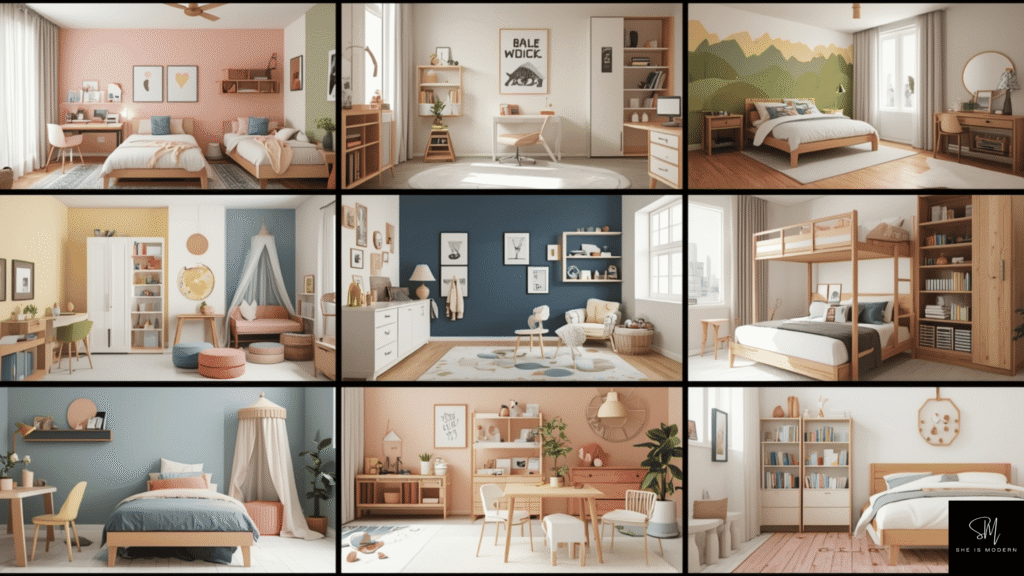
Creating a kids’ bedroom is not just about looks. It’s about building a space where your child feels happy, safe, and inspired every day. A well designed room can support play, learning, and rest all in one place. You don’t need expensive items or complicated designs to make it special. Simple ideas, soft colors, and smart storage can completely change the feel of a room.
In this guide, you’ll find creative and practical bedroom ideas that are easy to try. Each idea focuses on comfort, fun, and functionality. Whether your child loves colors, themes, or calm spaces, these ideas will help you design a room they truly enjoy.
For a complete bedroom design plan that works for any age and room size, this how to design any bedroom guide covers everything from style to layout in one place.
1. Colorful Accent Wall
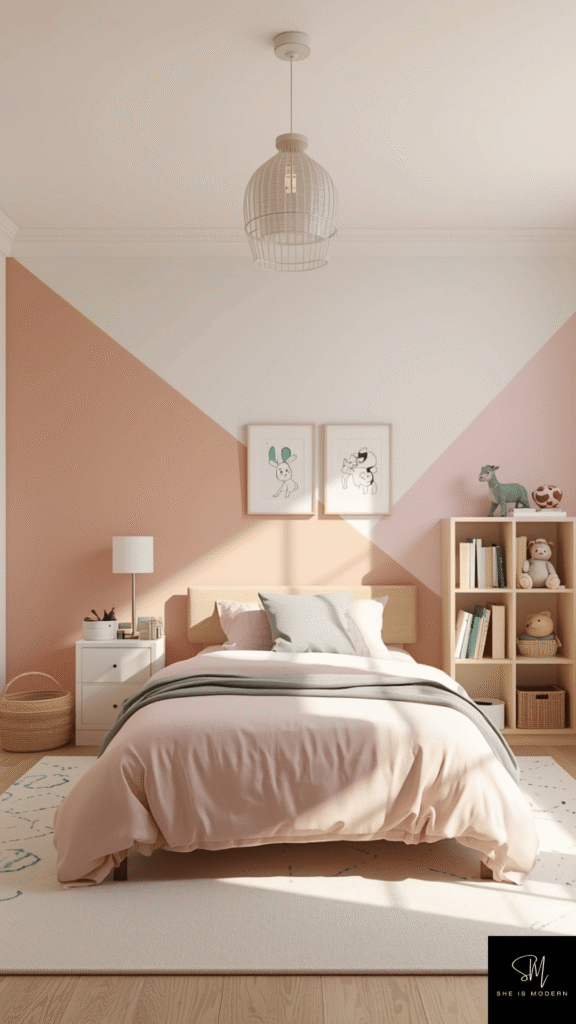
A colorful accent wall can instantly make a kids’ bedroom feel fun and lively. You can choose one wall and paint it in a bright or soft color, depending on the overall theme. Shades like light blue, pastel pink, or soft green create a calm look, while bold colors like yellow or orange add energy. This simple idea helps you avoid making the whole room too bright while still adding a strong visual touch.
You can also get creative with patterns on the accent wall. Stripes, shapes, or simple murals can make the space more playful. If painting feels difficult, wall stickers or decals are an easy option. They are simple to apply and can be removed anytime, which makes them perfect for growing kids whose tastes change often.
This feature wall can become the main focus of the room. Place the bed or study area near it to highlight the design. It helps create a balanced and cheerful environment without needing too many decorations. A well designed accent wall makes the room feel complete and visually appealing.
2. Cozy Reading Corner
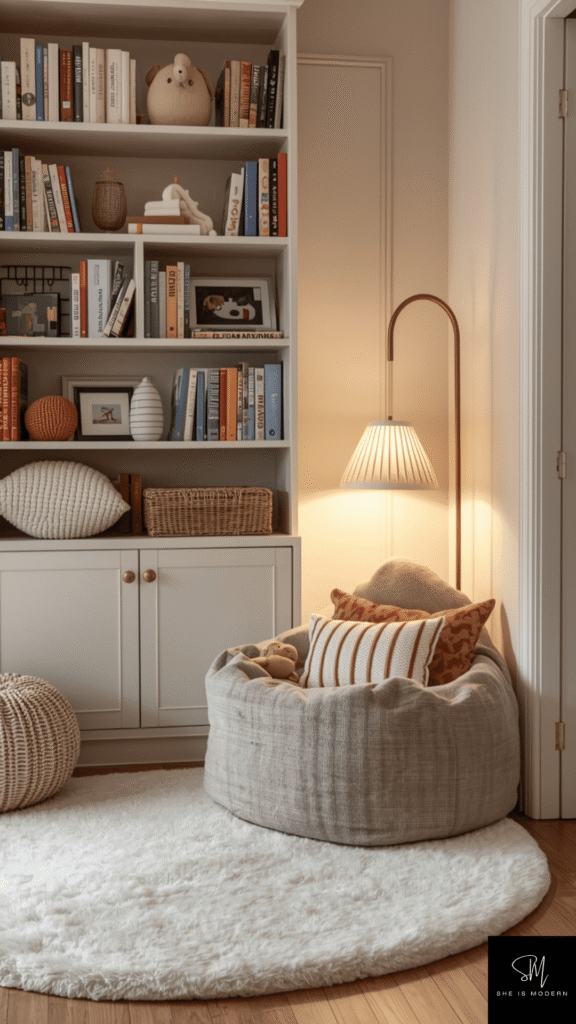
A cozy reading corner is a great way to encourage kids to enjoy books and quiet time. You can create this space using a small chair, floor cushions, or a soft bean bag. Add a small shelf or basket to store books within easy reach. Choose a corner near natural light if possible, so the area feels bright and comfortable during the day.
To make the space more inviting, add soft textures like a rug or a blanket. You can also use gentle lighting, such as a small lamp or string lights, for a warm feel in the evening. Keeping the colors calm helps children relax and focus better while reading or resting.
This corner does not need much space. Even a small area can become special with the right setup. It gives kids a quiet place to sit, think, and explore their imagination. A reading corner adds both comfort and purpose to the bedroom.
3. Fun Themed Decor
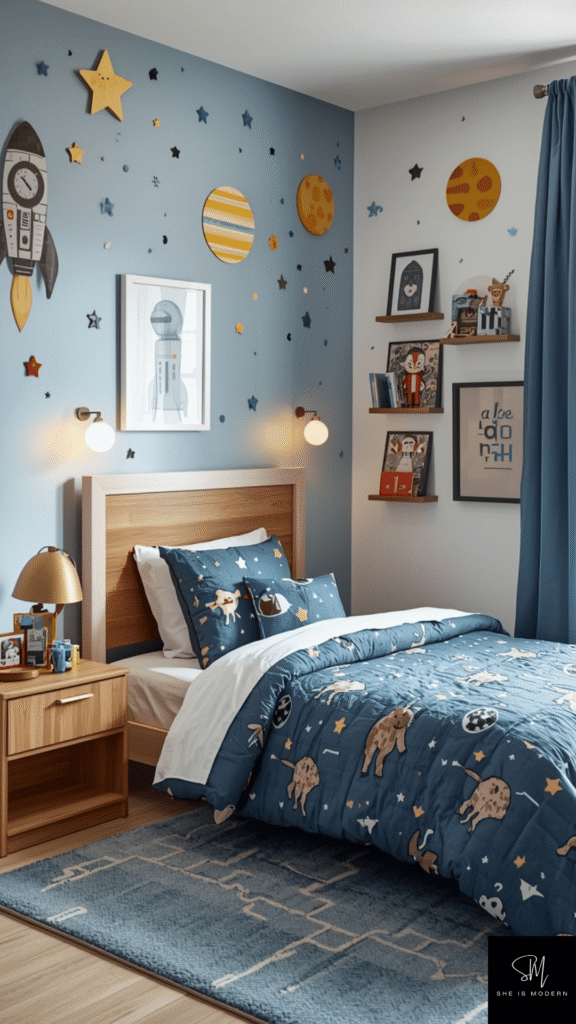
Themed decor can make a kids’ bedroom feel exciting and personal. You can choose a theme based on your child’s interests, like animals, space, nature, or cartoons. Start with simple elements such as bedding, wall art, or small decorations. This helps create a consistent look without making the room feel too busy.
Keep the theme balanced by using a mix of neutral and themed items. For example, if the theme is space, use star patterns with simple colors like navy and white. This keeps the room stylish while still being fun. Avoid adding too many heavy decorations so the space stays clean and comfortable.
Themed decor makes the room feel special and unique. It reflects your child’s personality and interests. As they grow, you can easily update small items without changing the whole room. This makes it a flexible and practical design choice.
4. Smart Storage Solutions
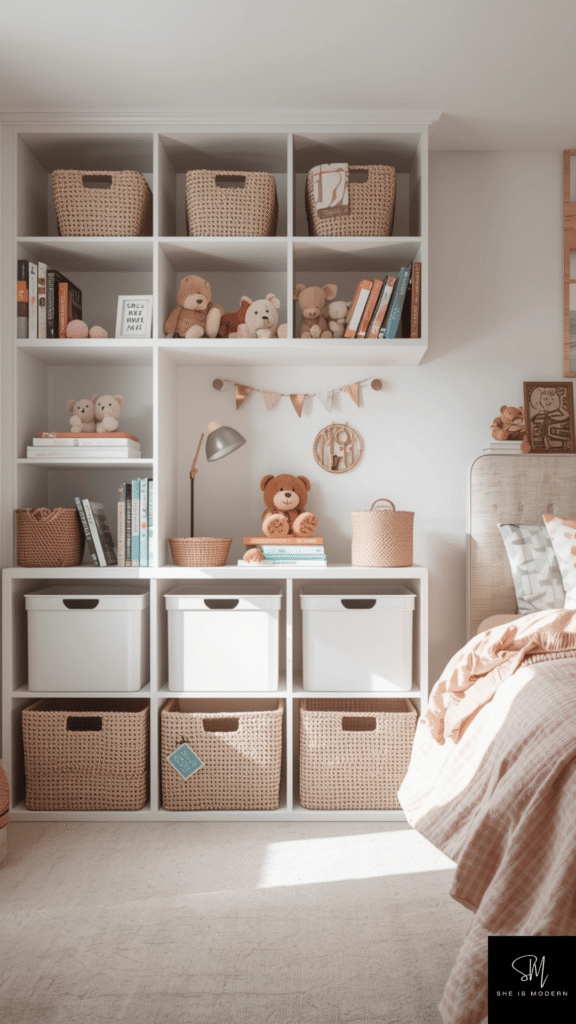
Storage is very important in a kids’ bedroom. Toys, books, and clothes can quickly create a mess if not organized well. Use simple storage solutions like baskets, shelves, and storage boxes. Choose options that are easy for kids to use so they can learn to keep their room tidy.
You can also use multi purpose furniture, like beds with drawers or benches with storage inside. This helps save space and keeps everything in one place. Labeling boxes or using clear containers can make it easier to find items quickly.
A well organized room feels calm and easy to use. It also teaches kids good habits from a young age. With smart storage, you can keep the room clean without removing the fun and creativity. This balance is key for a functional kids’ space.
Want a bedroom that stays organized and stylish? Our Bedroom Makeover Style Guide covers layouts, color palettes, checklists & budget planner.
Everything in one PDF. → See the Guide
5. Soft Lighting Setup
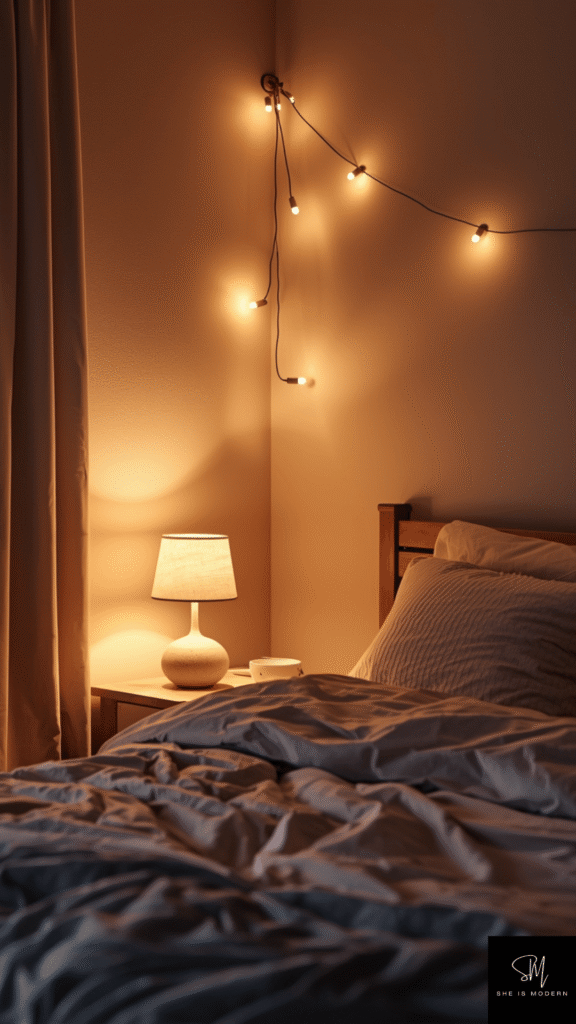
Lighting plays a big role in creating a comfortable kids’ bedroom. Instead of using only bright ceiling lights, add softer lighting options. Table lamps, wall lights, or string lights can create a warm and calming atmosphere. This makes the room feel cozy, especially in the evening.
Choose lights with soft tones rather than harsh white light. This helps children relax before bedtime. Night lights are also a great addition for younger kids who may feel uncomfortable in complete darkness. Placing lights at different levels adds depth and style to the room.
A good lighting setup makes the room more flexible. It can be bright for playtime and soft for rest. This simple change improves both comfort and design. Soft lighting helps create a peaceful space where kids can feel safe and relaxed.
6. Bunk Bed or Loft Setup
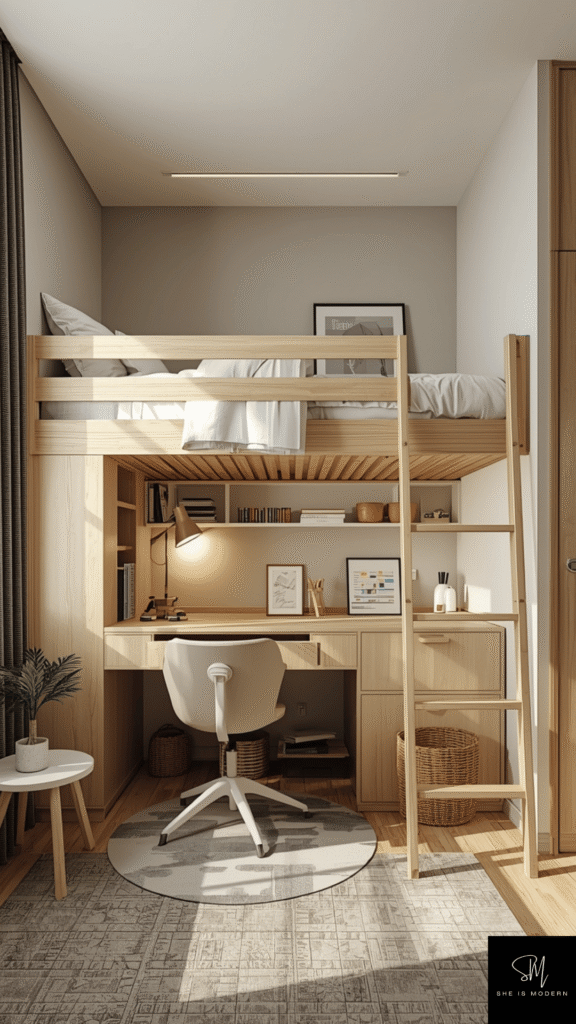
A bunk bed or loft setup is a smart way to save space in a kids’ bedroom. It works well for shared rooms or smaller spaces where you need more floor area. A loft bed can create extra space underneath for a desk, storage, or a small play zone. This makes the room feel more open and organized without adding extra furniture.
You can style the bed area with soft bedding and simple colors to keep it cozy. Adding a small ladder design or guard rails ensures safety while keeping the look clean. Choose strong and durable materials so the setup lasts longer and stays secure for daily use.
This idea is both practical and fun for kids. It creates a sense of adventure while also making the room more functional. A well planned bunk or loft setup helps maximize space and keeps everything neatly arranged.
7. Play Area Inside Room
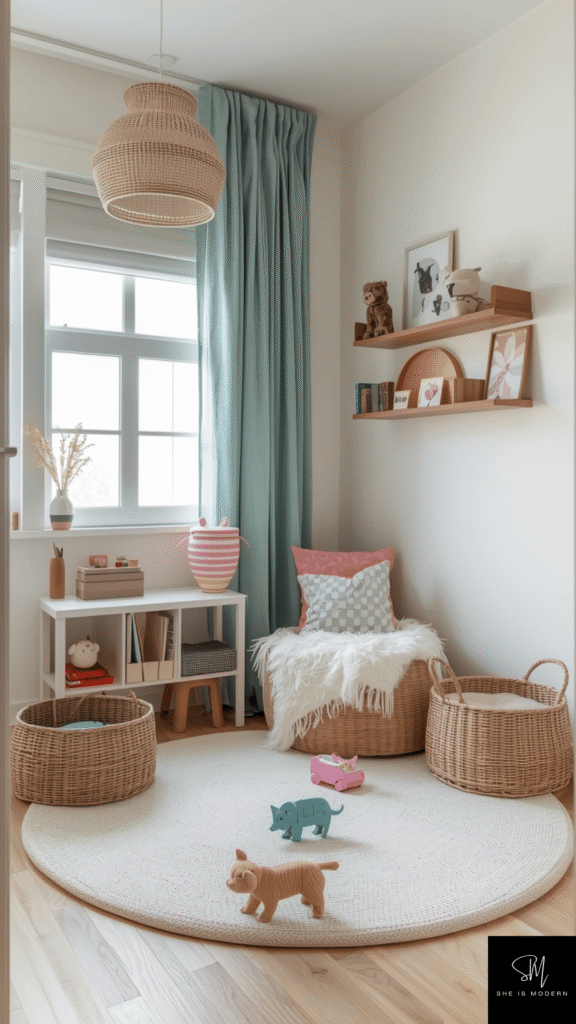
Creating a small play area inside the bedroom makes the space more fun and active. You don’t need a large area. A simple corner with a soft mat, a few toys, and open space is enough. This helps keep playtime organized instead of spreading toys all over the room.
Use storage baskets or shelves to keep toys easy to access and simple to clean up. Adding a small table for drawing or building activities can also make the space more useful. Keep the setup simple so it does not feel crowded or messy.
A dedicated play area helps kids enjoy their room more, especially when you include simple activities inspired by fun and creative ideas like spring crafts. It gives them a place to be creative and active while keeping the rest of the room tidy. This balance makes the space both fun and practical.
8. Wall Shelves Display
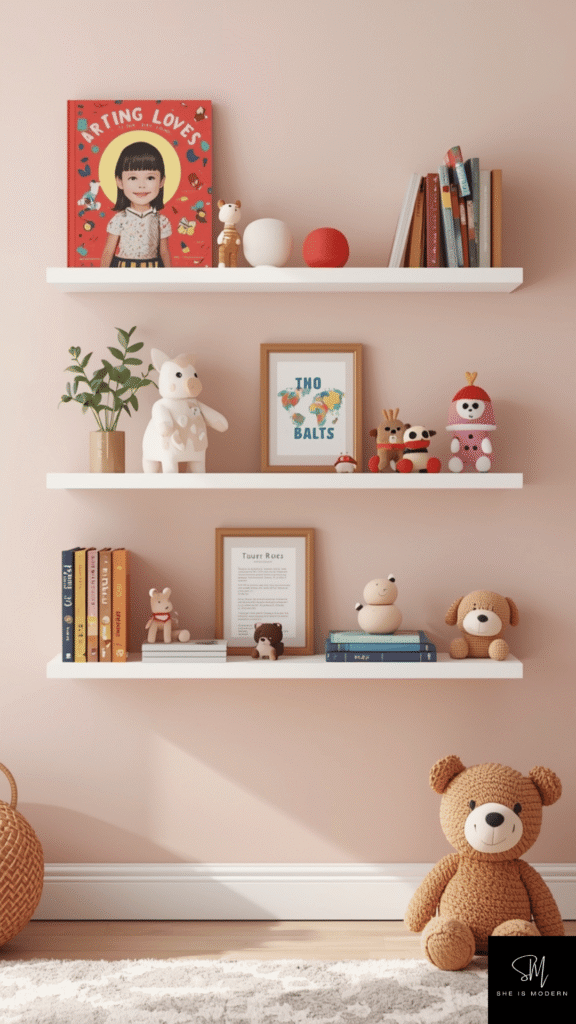
Wall shelves are a great way to add storage and style at the same time. They help keep books, toys, and decor off the floor and neatly arranged. Simple floating shelves work best because they look clean and modern. Place them at a height that is easy for kids to reach.
You can decorate the shelves with a mix of items like books, small toys, and framed pictures. Keeping the arrangement simple helps the room feel organized. Use soft colors or natural wood for a calm and balanced look.
Wall shelves also allow you to change the display easily. As your child grows, you can update what is shown without changing the whole setup. This makes it a flexible and useful idea for any kids’ bedroom.
9. Study Desk Setup
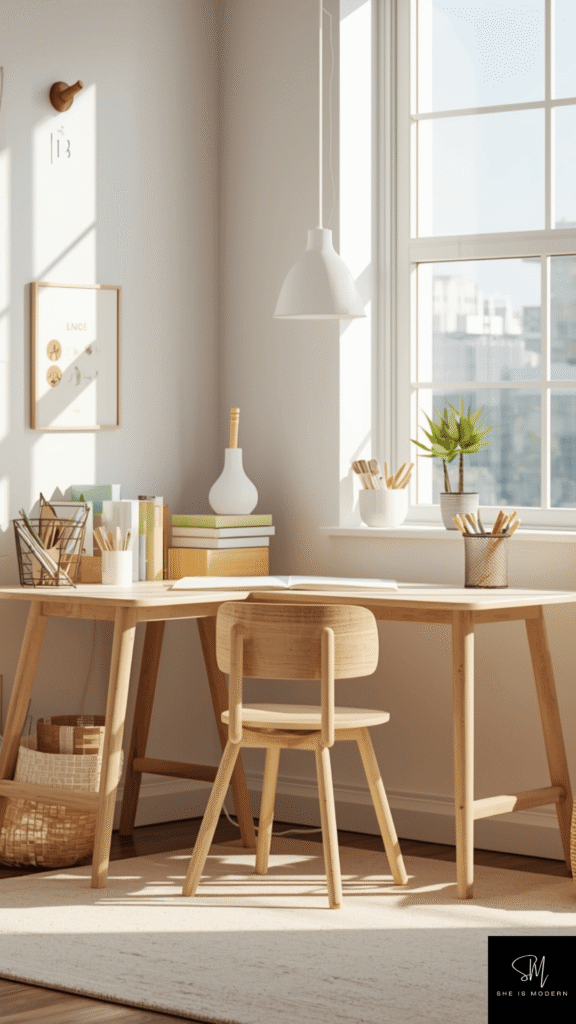
A study desk setup helps create a focused space for learning and creativity. Choose a simple desk with enough surface area for books and activities. Pair it with a comfortable chair that supports good posture. Place the desk near a window if possible to get natural light during the day.
Keep the desk organized with small storage items like pencil holders or trays. Avoid clutter so the space feels calm and easy to use. Soft lighting can be added for evening use to make the area comfortable at all times.
This setup encourages kids to develop good study habits. It gives them a dedicated place to focus on homework, drawing, or reading. A clean and simple desk area adds both function and structure to the bedroom.
Ready to design the perfect bedroom? Get our complete Bedroom Makeover Style Guide — styles, palettes, layout tips & full checklist included. → Explore the Guide
10. Canopy Bed Style
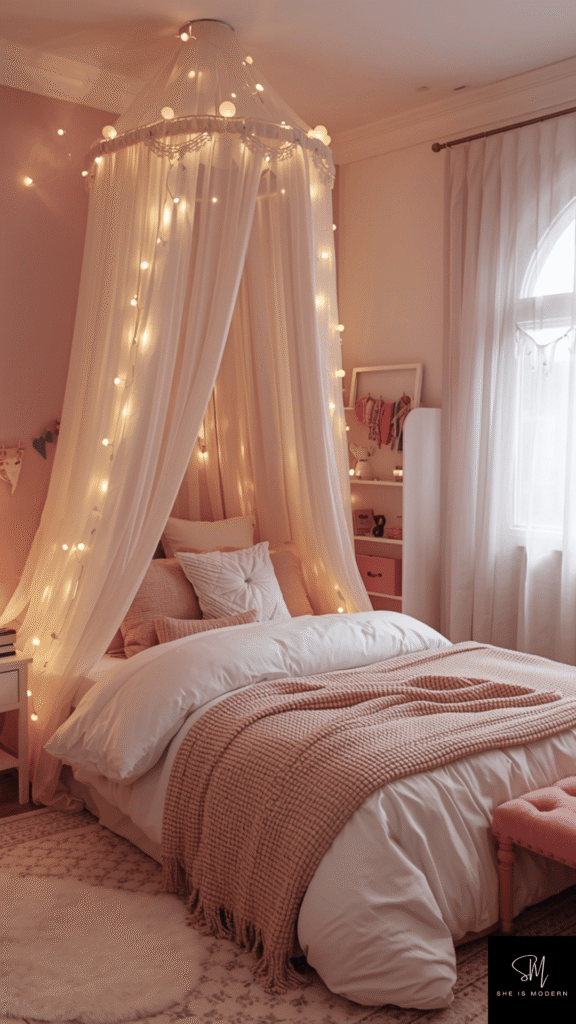
A canopy bed can make a kids’ bedroom feel magical and cozy. You can use a simple bed frame and add light fabric or curtains around it. Soft materials like cotton or sheer fabric work best because they create a gentle and airy look. Choose light colors such as white, pastel pink, or soft blue to keep the space calm and balanced.
You can decorate the canopy with fairy lights or small hanging elements for a playful touch. Keep the design simple so it does not feel heavy or crowded. The goal is to create a soft sleeping space that feels safe and comfortable for your child.
This idea adds a dreamy and special feel to the room. It turns the bed into a cozy little corner where kids can relax and feel secure. A canopy bed is both decorative and functional, making bedtime more enjoyable.
11. Chalkboard Wall
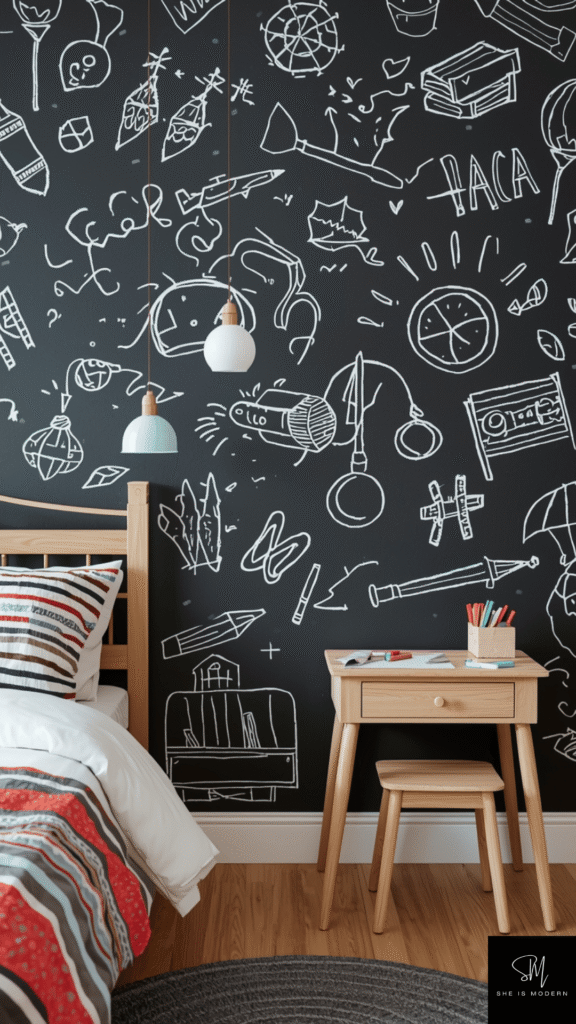
A chalkboard wall is a fun and creative addition to a kids’ bedroom. You can paint one wall with chalkboard paint or use a large chalkboard panel. This gives children a space to draw, write, and express their ideas freely. It encourages creativity and keeps them engaged in a healthy activity.
Keep the surrounding decor simple so the chalkboard remains the focus. You can place it near a study or play area for easy access. Adding a small shelf below it for chalk and erasers helps keep things organized. The dark surface also adds contrast to the room design.
This idea allows kids to change the wall design anytime they want and pairs well with other creative activities like paper plate crafts that keep them engaged. It keeps the room interactive and fun without making permanent changes. A chalkboard wall is both playful and practical for growing children.
12. Soft Pastel Theme Room
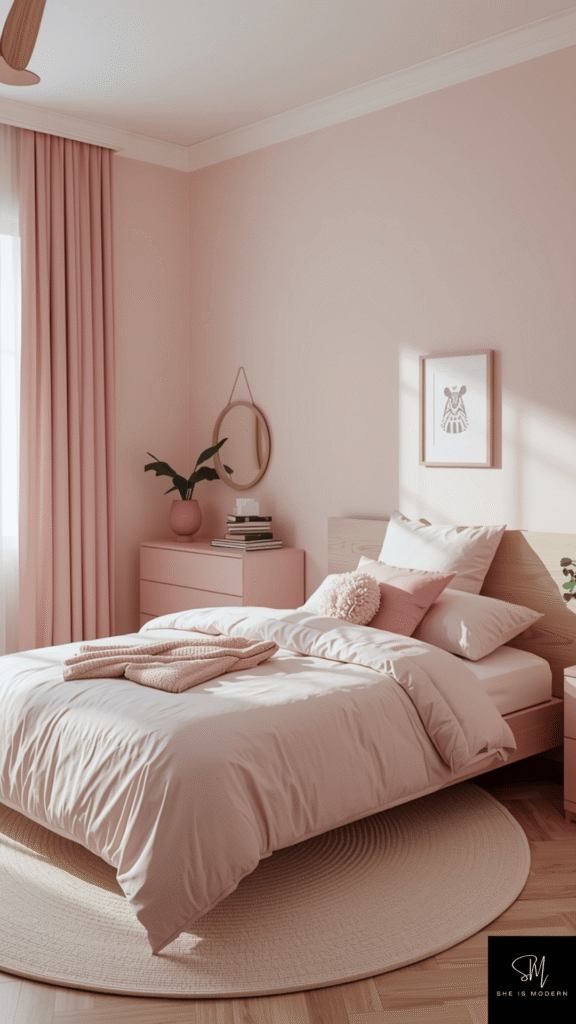
A soft pastel theme creates a calm and soothing kids’ bedroom. Use colors like light pink, mint green, baby blue, or lavender. These shades help make the room feel peaceful and relaxing. You can apply pastel tones on walls, bedding, curtains, and decor items for a balanced look.
Keep furniture simple and light colored to match the theme. Avoid too many bold colors so the space stays soft and airy. Adding small decor pieces like cushions, rugs, or wall art in matching tones completes the design. This keeps everything visually connected and pleasant.
A pastel room is perfect for creating a gentle and cozy environment. It supports both rest and light play without feeling overwhelming. This style is timeless and works well as your child grows, with only small updates needed over time.
13. Toy Organization Zone
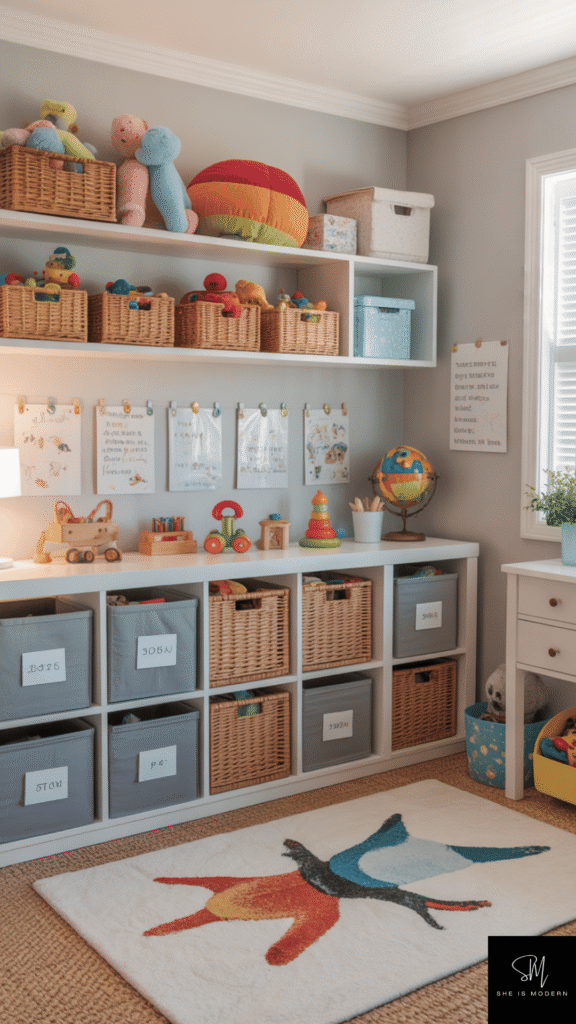
A toy organization zone helps keep a kids’ bedroom clean and stress free. You can create a simple system using labeled boxes, baskets, or open shelves. Keep frequently used toys within easy reach so children can clean up and access them without help. This makes daily organization easier and faster.
Choose storage items in soft colors or natural materials to keep the room looking neat. Clear boxes are also useful because kids can quickly see what is inside. Place storage at a low height so children can develop the habit of organizing their own space. This builds responsibility in a simple way.
A well planned toy zone reduces mess and improves room flow. It also keeps the rest of the bedroom tidy and comfortable. This idea is practical and makes the space more functional for both play and rest.
14. Personalized Decor Space
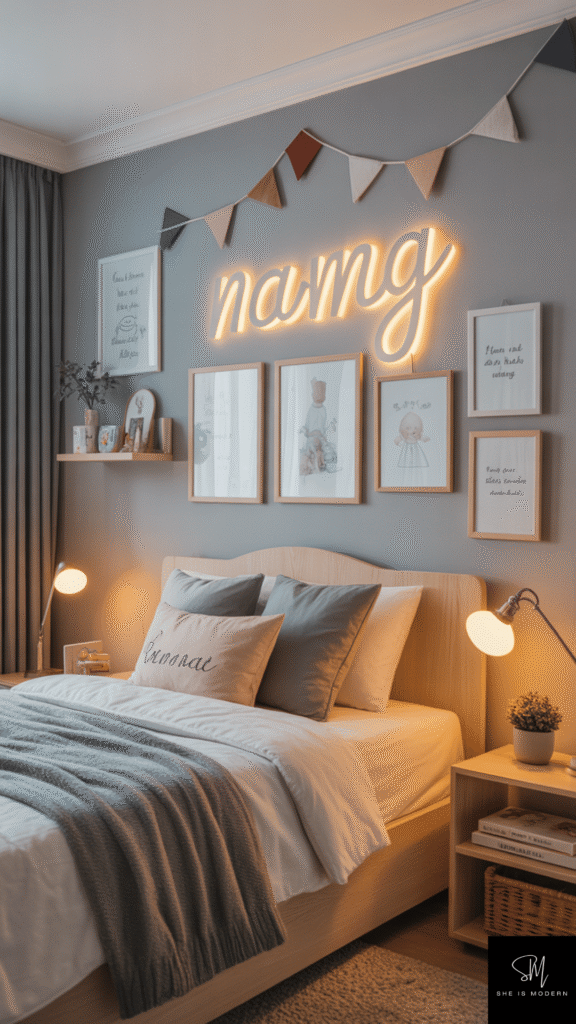
A personalized decor space makes a kids’ bedroom feel special and unique. You can add items that reflect your child’s personality, like name signs, favorite colors, or custom wall art. Even small touches like framed drawings or photo displays can make a big difference in the overall feel of the room.
Keep the design simple and balanced so it does not look overcrowded. Choose a small area like a wall corner, shelf, or headboard space for personalization. Mixing personal items with neutral decor helps maintain a clean and stylish look while still keeping it meaningful.
This idea helps children feel more connected to their room. It gives them a sense of ownership and comfort in their space. A personalized setup grows with them and can be easily updated as their interests change over time.