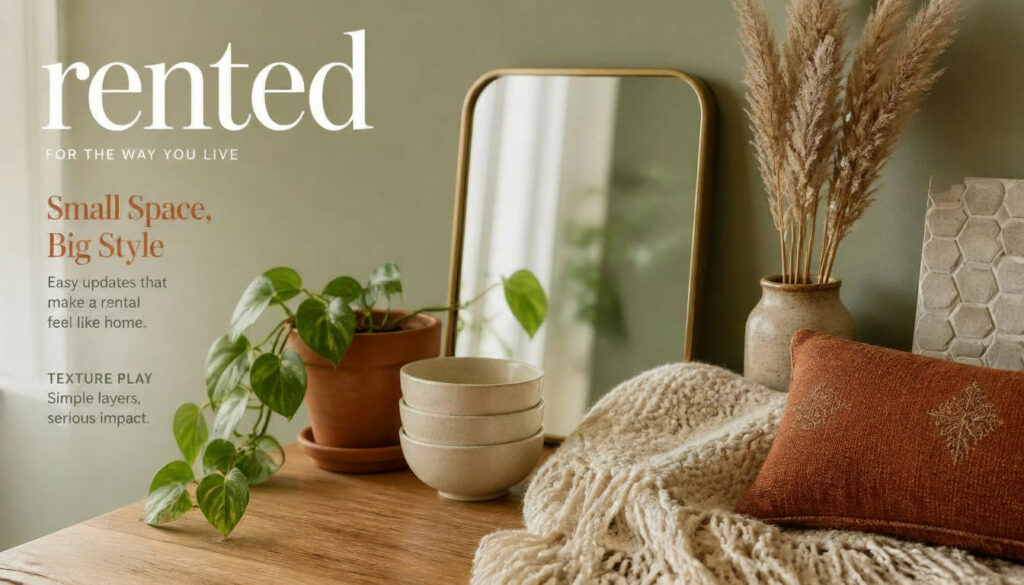
Renting doesn’t mean you’re stuck with beige walls and builder grade light fixtures forever. I’ve styled more rental apartments than I can count, and I can tell you the secret isn’t expensive furniture ,it’s smart, reversible choices that pack a visual punch. Contemporary design is all about clean lines, intentional color, and texture that feels current without screaming trend of the month.
The best part? Almost everything on this list comes off the wall, out of the floor, or back in the box when you move. No landlord drama, no security deposit nightmares. Just a space that finally feels like yours instead of a placeholder you’re waiting to leave.
1. Layer Removable Wallpaper for an Instant Statement Wall
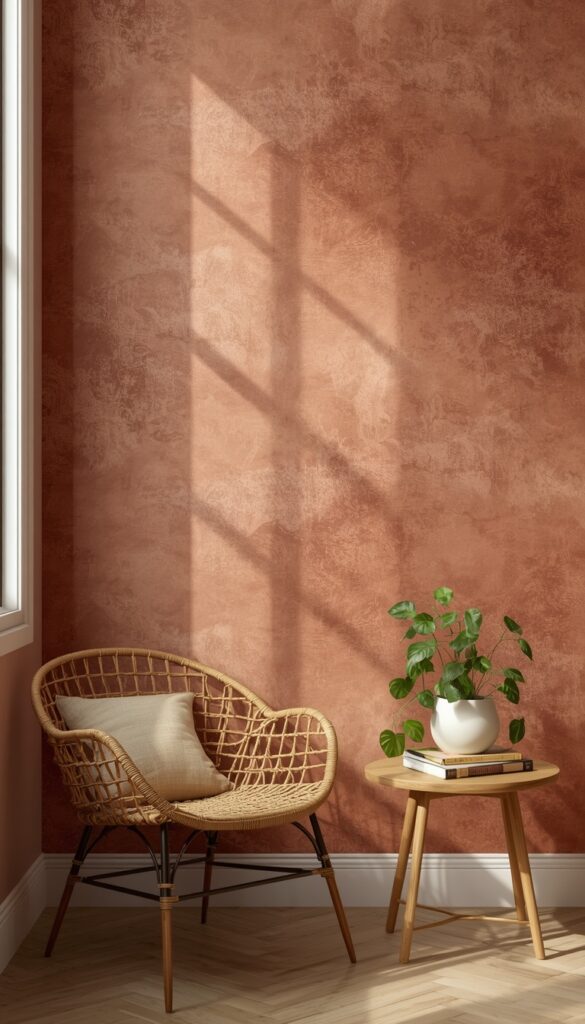
Removable wallpaper is the single fastest way to transform a rental from forgettable to photo worthy. Peel and stick options now come in textured finishes ,grasscloth, linen weave, even subtle plaster effects ,that mimic expensive wall treatments without a drop of paint. I always recommend testing a sample patch first, since wall texture affects adhesion more than people expect. Smooth, freshly painted drywall works best; older or textured walls need extra patience during application.
Pick one accent wall instead of the whole room. Behind a bed, behind a console table, or framing a reading nook all work beautifully. Contemporary spaces lean toward organic shapes ,soft arches, abstract botanicals, gentle color blocking ,rather than busy florals. I’ve found warm terracotta and muted sage tones photograph incredibly well and pair with almost any furniture style already in your apartment.
When it’s time to move, removing it correctly matters as much as applying it. Use a hairdryer on low heat to soften the adhesive before peeling slowly at a 45 degree angle. Rushing this step is how people end up with sticky residue or torn paint. Budget an extra hour for a full wall. Most quality brands leave zero residue when removed properly, which is exactly why landlords rarely object.
2. Swap Builder Grade Light Fixtures for Plug In Pendants
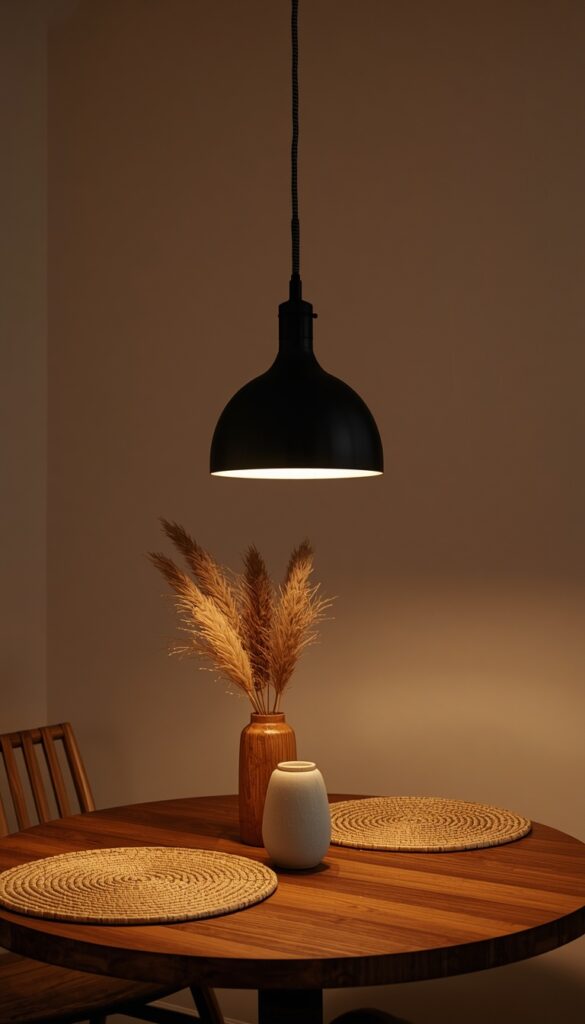
Nothing dates a rental faster than a flush mount ceiling fixture from 2009. Plug in pendant lights solve this without any electrical work or landlord permission. They hang from a hook, plug directly into a standard outlet, and the cord tucks neatly along the ceiling using small adhesive clips. I’ve installed dozens of these, and the visual transformation in a dining nook or reading corner is honestly dramatic.
Look for a fixture with a fabric covered or braided cord ,vinyl cords feel cheap and tend to yellow over time. Matte black, brushed brass, and warm wood bead designs all read as contemporary right now. Position the pendant so the bulb sits at eye level when seated, roughly 30 inches above a table surface. Too high and it loses impact; too low and it becomes annoying.
Bulb choice matters more than most people realize. A warm 2700K LED bulb creates that cozy, designer showroom glow, while anything above 3000K starts feeling clinical and cold. I always tell people to avoid frosted bulbs if the fixture has an exposed design ,clear filament bulbs show off the fixture itself. This single swap costs under fifty dollars but changes the entire mood of a room.
3. Anchor the Living Room with an Oversized Area Rug
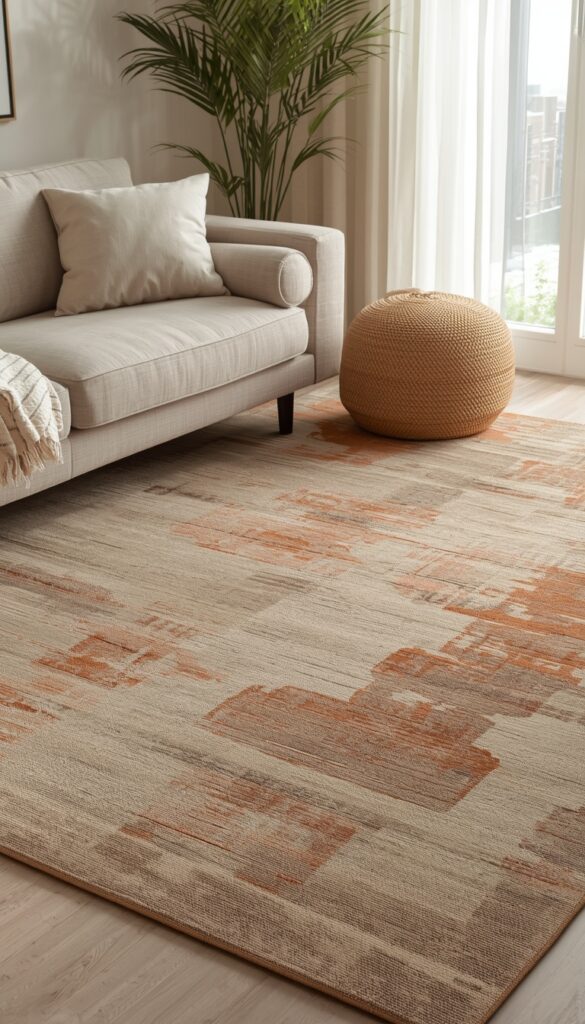
Rental flooring is rarely a design asset. Builder grade carpet or cheap laminate can undercut even gorgeous furniture, but a properly sized area rug fixes that instantly. The biggest mistake I see is rugs that are too small ,your sofa legs should sit on the rug, not hover beside it. For most living rooms, that means an 8×10 minimum, even in a smaller space.
Contemporary rugs favor abstract patterns, tonal stripes, or soft geometric shapes over traditional medallions. Wool blend or low pile options work best in rentals since they’re easier to vacuum and don’t trap allergens the way thick shag styles do. I’ve found a neutral base with one unexpected color thread ,rust, deep blue, or olive ,gives a room personality without overwhelming a small footprint.
A rug pad isn’t optional, even on carpet. It prevents slipping, protects rental flooring underneath from compression marks, and extends the rug’s life significantly. When you eventually move, that rug rolls up and travels with you, unlike paint or built ins. It’s genuinely one of the highest impact, fully portable investments you can make in a temporary space.
4. Use Tension Rods to Create a Closet System Without Drilling
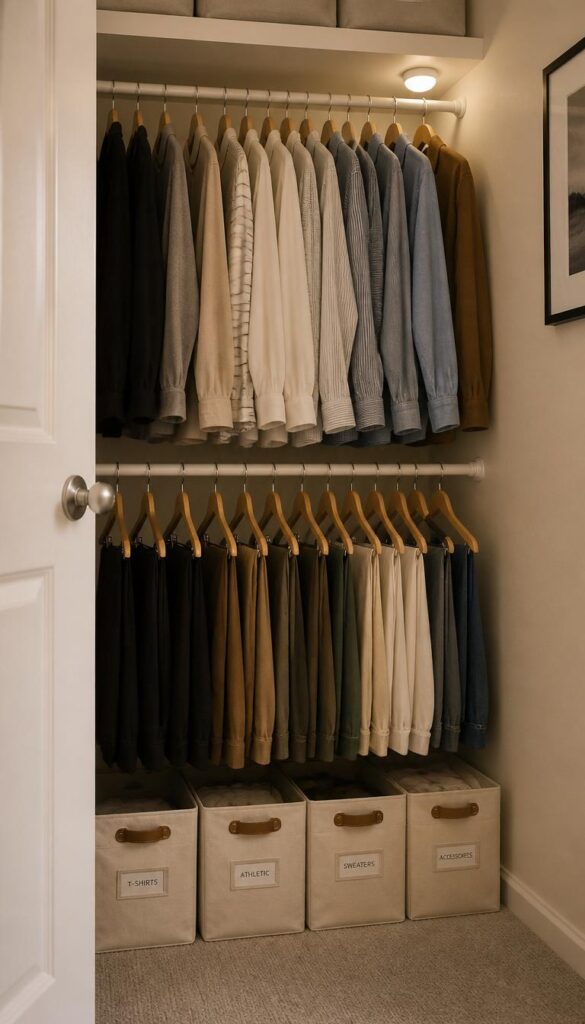
Rental closets are notoriously bad ,one rod, one shelf, and a lot of wasted vertical space. Tension rods solve this without a single screw. You can add a second hanging rod below the existing one for shorter items like shirts and folded pants, instantly doubling your storage capacity. I’ve built entire closet systems this way for clients who weren’t allowed to drill anything.
Measure twice before buying ,tension rods need at least an inch of overlap on each side to hold weight securely. Cheap rods will bow under heavy coats, so spend a little more on a steel rod rated for at least 20 pounds. Pairing tension rods with stackable fabric bins on the closet floor uses every inch of space that builder closets typically waste.
Contemporary closet styling also means visibility matters. Clear or canvas bins with labels look intentional, while mismatched cardboard boxes read as clutter. A small battery powered LED puck light stuck inside the closet, since most rental closets have terrible lighting, makes everything easier to find. When you move out, every piece comes down in minutes with zero wall damage.
5. Install Peel and Stick Backsplash Tile in the Kitchen
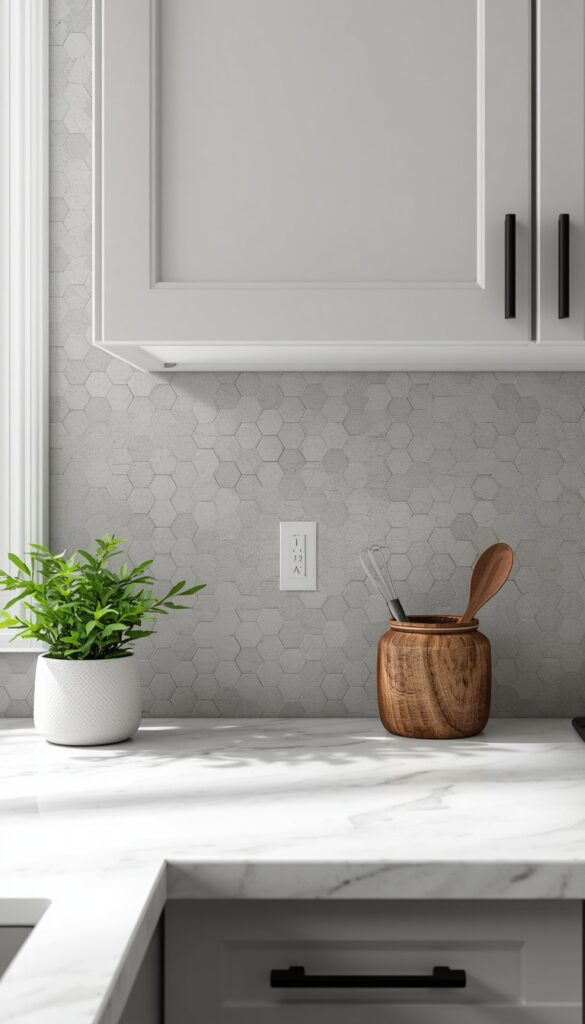
A dated kitchen backsplash ,or worse, no backsplash at all ,is one of the most common rental complaints I hear. Peel and stick tile, particularly in subway or hexagon shapes, fixes this in an afternoon. The good versions are made from real gel resin that mimics ceramic glaze, not flat printed vinyl that looks obviously fake under kitchen lighting.
Surface prep determines whether this project lasts or fails within weeks. Clean the wall with rubbing alcohol to strip grease, let it dry completely, then apply tiles starting from a corner for the straightest lines. I always recommend a level and pencil line as a guide; eyeballing it leads to a noticeably crooked pattern by the third row, which is impossible to unsee once you notice it.
Contemporary kitchens favor white or soft gray hexagon tile with a subtle texture, paired with matte black cabinet hardware for contrast. Avoid anything with heavy faux grout lines in bright white ,they tend to look chalky rather than authentic. When it’s time to leave, gently heat each tile with a hairdryer before peeling to avoid pulling paint off the wall underneath.
6. Add Floating Shelves That Install Without Wall Damage
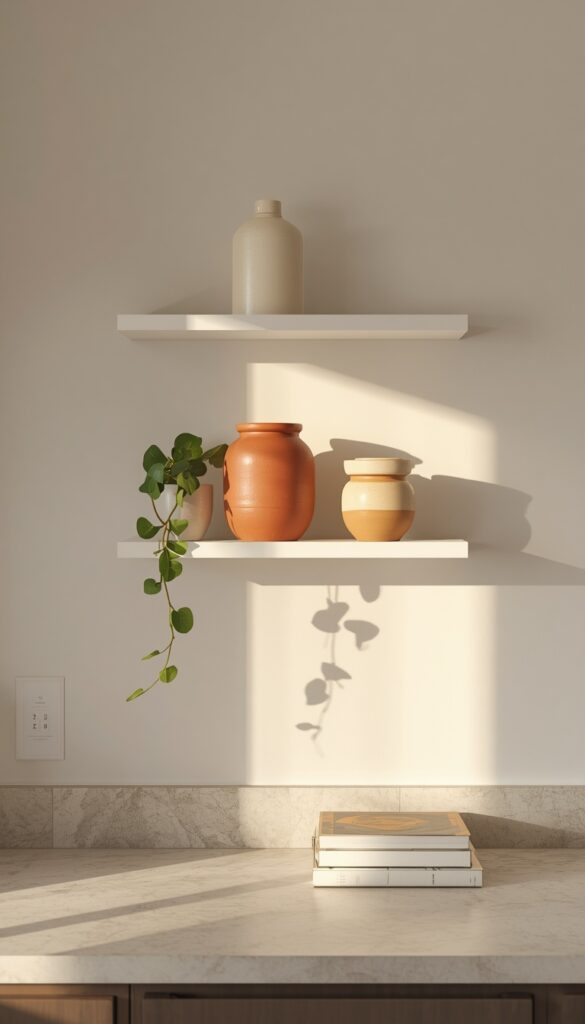
Traditional floating shelves need anchors and drywall screws, which most leases prohibit. Newer command strip based floating shelf systems hold up to 10 pounds per shelf without a single hole, and they’re rated for clean removal too. I’ve used these to create everything from a kitchen spice display to a bathroom storage solution above a toilet tank.
Weight distribution is the part people get wrong. Spread items evenly across the shelf rather than clustering everything on one end, since uneven weight stresses the adhesive strips unevenly and shortens their hold time. Light, decorative objects ,small plants, framed photos, a single stack of books ,work better than heavy stoneware or large vases on these systems.
Contemporary styling on open shelves means restraint. Three to five objects per shelf, varied in height, with some negative space between them looks curated rather than cluttered. I like grouping by color family rather than by object type ,it reads as more intentional. When you move, the strips release cleanly with a firm, steady pull at a downward angle, leaving no marks behind.
7. Bring in a Floor Mirror to Expand Small Rental Spaces
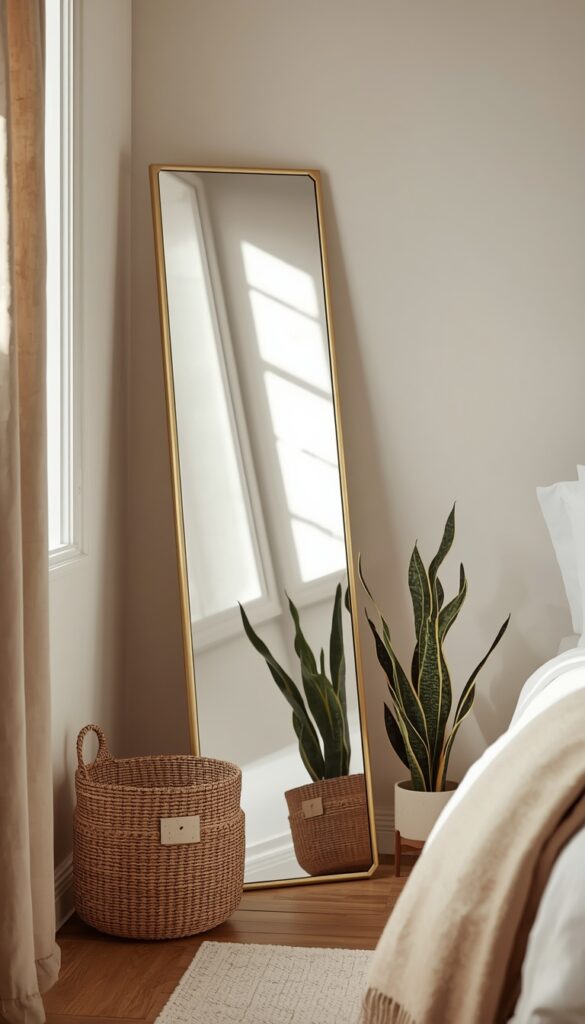
Rentals are often short on natural light and square footage, and a large floor mirror addresses both problems at once. Positioned across from a window, it bounces daylight deeper into the room and makes a cramped studio feel noticeably bigger. I’ve placed these in dozens of small apartments, and it’s consistently one of the most requested tricks once people see the effect.
Leaning mirrors in slim metal frames read as contemporary right now, especially in matte black, brushed brass, or warm walnut wood. Arched and rounded rectangle shapes feel softer and more current than the harsh rectangular mirrors common a decade ago. Lean it against a wall at a slight backward angle rather than mounting it ,this keeps your security deposit intact and lets you reposition it whenever you rearrange furniture.
Placement affects safety as much as style. Always lean a floor mirror against a solid wall section, never near a doorway swing path or a spot where pets and kids regularly run. An anti tip strap, sold separately for most leaning mirrors, secures the top discreetly to the wall without drilling and adds real peace of mind in households with small children.
8. Use Curtains to Soften Ugly Window Treatments
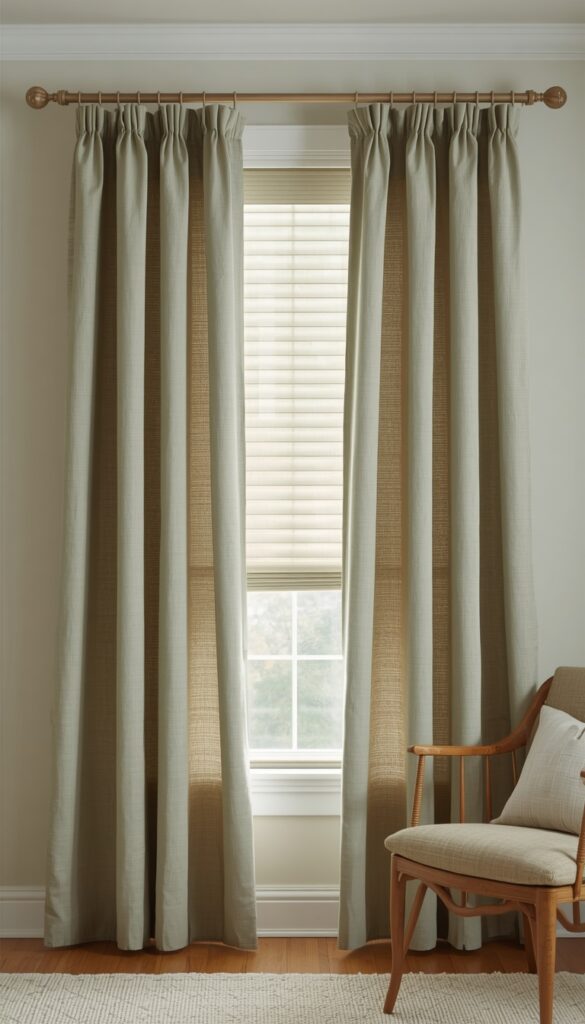
Most rentals come with mini blinds that are either broken, beige, or both. Layering floor length curtains over existing blinds instantly softens a room and adds a sense of height. I always tell clients to hang the curtain rod close to the ceiling, well above the actual window frame ,this trick visually stretches the wall and makes ceilings feel taller than they are.
Tension curtain rods are the rental hero here, since they require zero drilling and hold standard curtain weight just fine for most window widths. For wider windows over 48 inches, go with a sturdier spring loaded rod rated for extra weight, or the whole setup sags within weeks. Linen blend curtains in warm white, soft gray, or dusty sage feel contemporary and let in filtered light beautifully.
Don’t skip the width math. Curtains should be roughly double the width of your window for a full, gathered look when closed ,skimpy single panel curtains read as an afterthought rather than a styling choice. Hang panels so they just kiss the floor or puddle slightly; anything shorter looks like ill fitting hand me downs rather than an intentional design decision.
9. Create a Gallery Wall Using Adhesive Hanging Strips
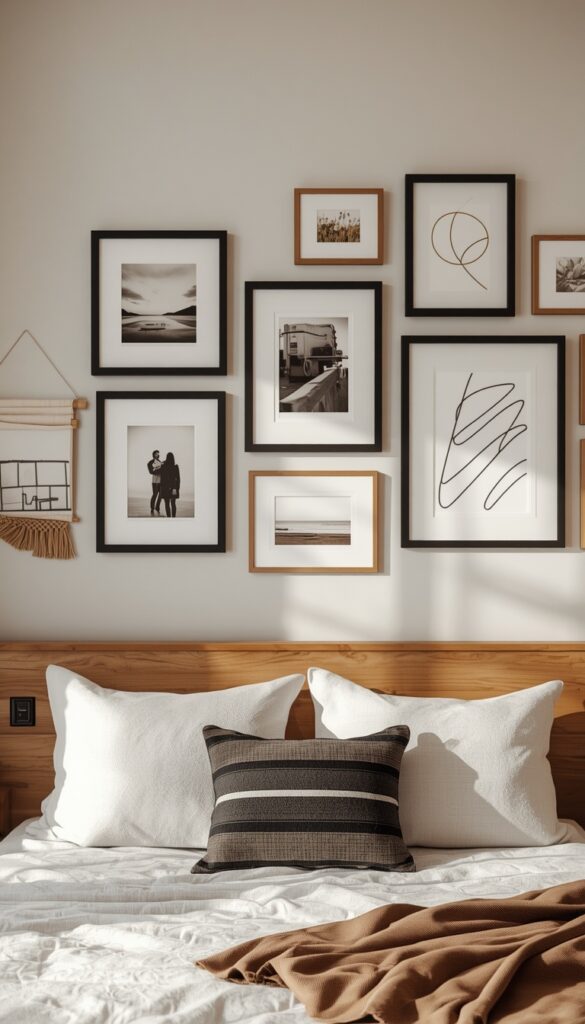
A bare rental wall feels temporary in the worst way, and a gallery wall fixes that faster than almost anything else on this list. Adhesive picture hanging strips rated for several pounds let you hang real framed art without nail holes. I plan every gallery wall on the floor first, arranging frames exactly as they’ll appear on the wall, before a single strip touches drywall.
Contemporary gallery walls skip the rigid grid format in favor of an organic, asymmetric cluster ,varying frame sizes and a mix of photography, line art, and one or two textural pieces like a small woven hanging. Keep spacing between frames consistent, around two to three inches, even when the arrangement looks loose and casual. That consistency is what separates intentional from accidental.
Test the weight rating before committing ,most strips hold between four and sixteen pounds depending on size, so heavier framed pieces need multiple strips distributed across the back. Trace each frame’s hanging point onto painter’s tape on the wall first for precise placement. Removal is clean when you pull the tab straight down slowly; yanking sideways risks tearing paint.
10. Upgrade Cabinet Hardware for an Instant Kitchen Refresh
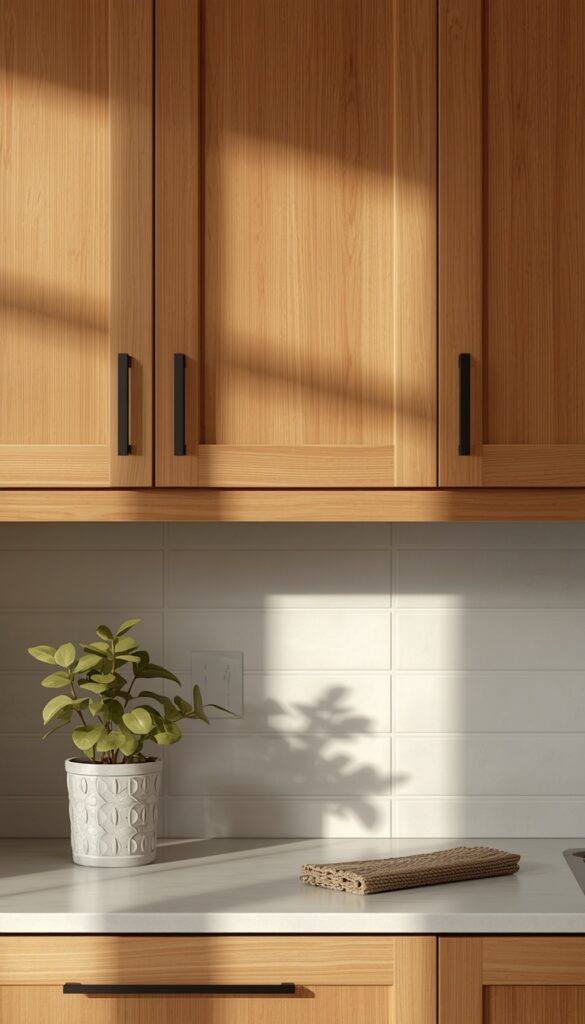
Swapping cabinet knobs and pulls is one of the cheapest, highest impact rental upgrades I know, and most leases explicitly allow it since the holes are typically standard sizing already. Unscrew the old hardware, measure the existing hole spacing carefully, and buy matching replacements in a finish that feels current ,matte black, brushed brass, or warm pewter all read as contemporary right now.
Save every single piece of original hardware in a labeled bag, then store it somewhere you won’t lose it for the duration of your lease. This step gets skipped constantly, and it’s the one that costs people their full deposit back. Most property managers expect original hardware reinstalled at move out, so treat those builder grade knobs like they’re precious.
Mixing finishes intentionally, rather than matching everything perfectly, is a genuinely contemporary choice ,try matte black pulls on lower cabinets with brushed brass knobs on upper ones for visual interest. A handheld screwdriver makes this an under an hour project for an average kitchen. The cost is minimal, and the visual difference between dated brass knobs and sleek black bar pulls is honestly dramatic.
11. Style Open Shelving with a Curated Mix of Objects
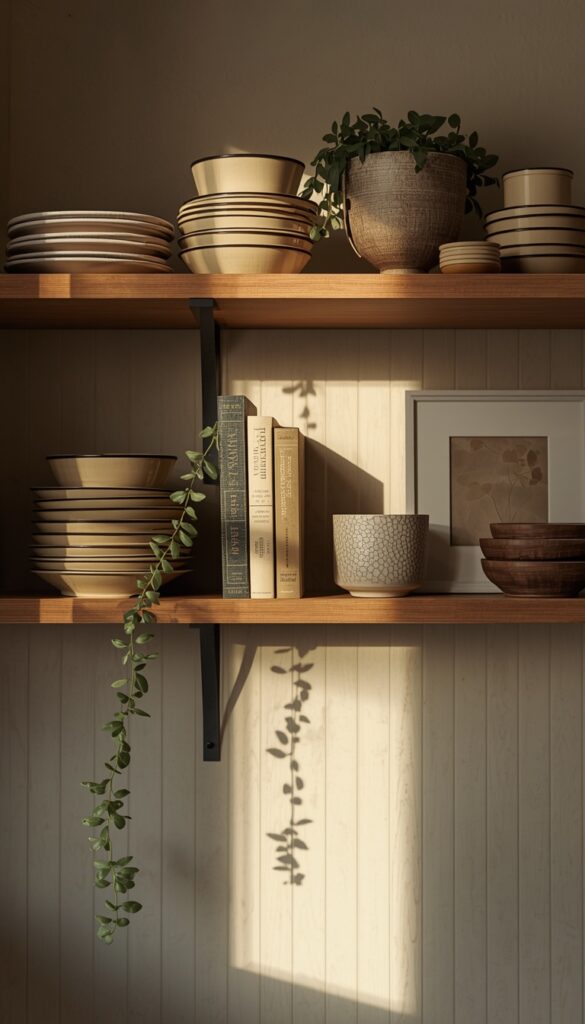
If your rental kitchen already has open shelving, or you’ve added floating shelves, styling them well separates a cluttered look from a genuinely curated one. I always start with a mix of heights and textures ,a stack of ceramic bowls, one or two cookbooks standing upright, a small plant, and maybe a single piece of art leaning against the wall behind everything else.
Color discipline matters more than people expect. Pick two or three colors max across all your displayed objects, and let everything else stay neutral ,white, cream, warm wood tones. This restraint is what makes contemporary open shelving look effortless rather than busy. Avoid lining items up like a store display; slight asymmetry and varied depth read as far more natural and lived in.
Function should drive at least half of what’s on display. Use the shelves for things you actually reach for daily ,favorite mugs, olive oil, a cutting board ,mixed with purely decorative pieces. Purely decorative shelving starts feeling sterile fast. I’ve found this blend of useful and beautiful is exactly what makes open shelving feel like a real, lived kitchen rather than a showroom display.
12. Add a Statement Console Table Behind the Sofa
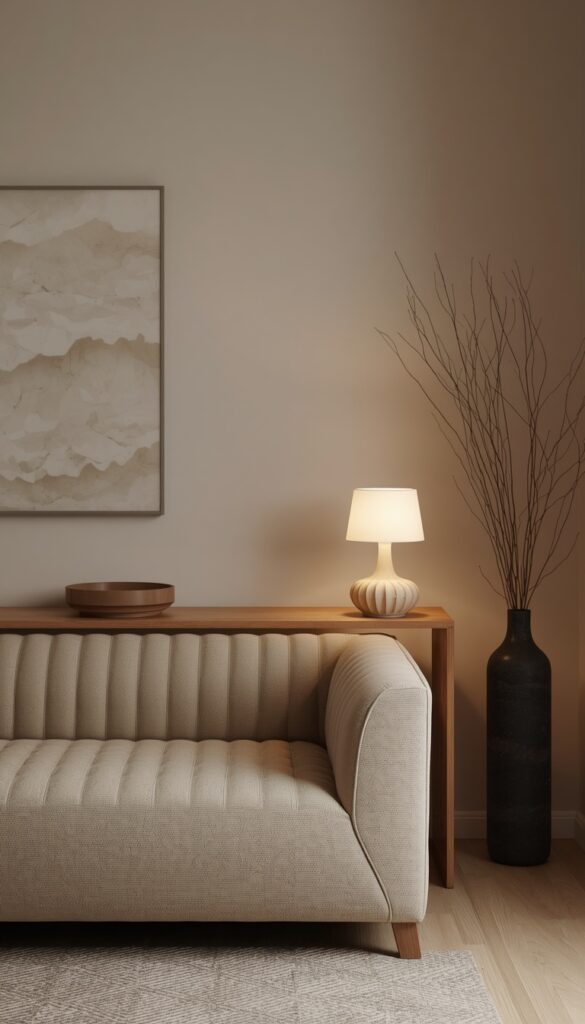
A console table behind a sofa does double duty in a rental ,it adds storage and creates a defined entry transition in open concept layouts where there’s no actual hallway. Contemporary console tables favor slim profiles, often with a single open shelf below rather than bulky drawers, in materials like rattan, fluted wood, or matte black metal frames.
Height matters more than most people check before buying. The table should sit roughly level with, or slightly below, the back of your sofa ,too tall and it blocks sightlines across the room, too short and it looks like an afterthought. I measure my sofa back height every single time before recommending a console, since rental sofas vary wildly in this dimension.
Styling the top surface is where personality lives. A table lamp on one end, a low bowl or tray in the middle, and one tall element like a vase or a small framed piece leaning against the wall creates a natural visual rhythm. Avoid centering everything perfectly symmetrical ,that reads as formal and dated rather than current and relaxed.
13. Layer Throw Pillows and Blankets for Instant Texture
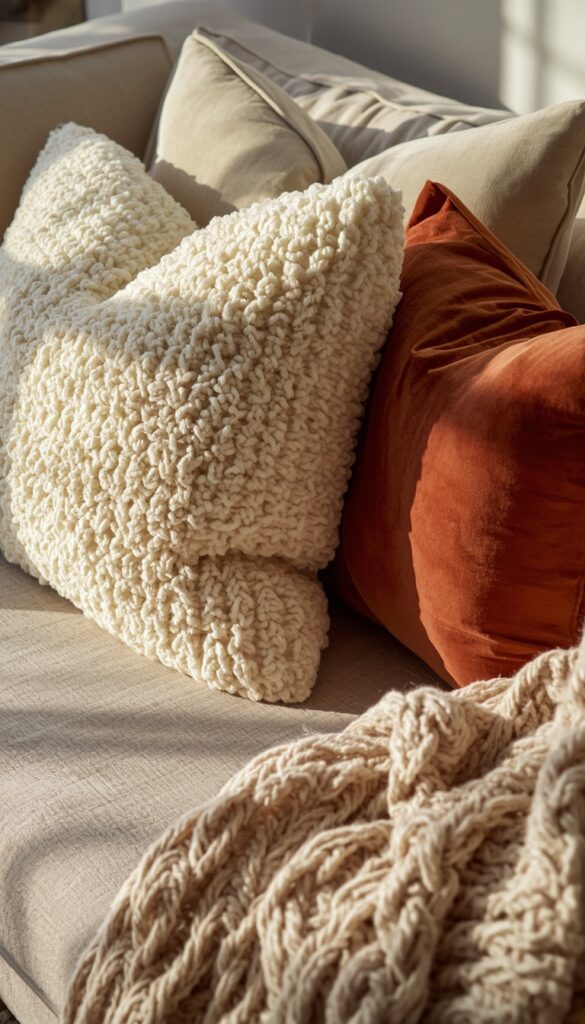
Texture is the fastest, cheapest way to make a rental sofa feel custom rather than generic, and most people drastically under buy here. I recommend a mix of at least three pillow sizes ,one large 24 inch square, two medium 20 inch squares, and one lumbar pillow ,rather than four matching pillows in a uniform row, which reads as flat and store bought.
Fabric mixing is where contemporary styling really shows. Pair a chunky bouclé or textured weave with one smooth linen or velvet pillow, and let a single pattern, like a subtle abstract print, anchor the combination. Avoid more than one bold pattern in the same grouping; it competes for attention rather than working together. Neutral bases with one unexpected accent color feel current and intentional.
A draped throw blanket finishes the look, but placement technique matters. Fold it in thirds and drape it over one arm of the sofa, letting it cascade naturally rather than laying flat and square. Chunky knit textures in warm cream, oatmeal, or rust photograph beautifully and add real coziness. This entire refresh costs under a hundred dollars and transforms how the whole room feels.
14. Use Plants to Add Life and Color Without Commitment
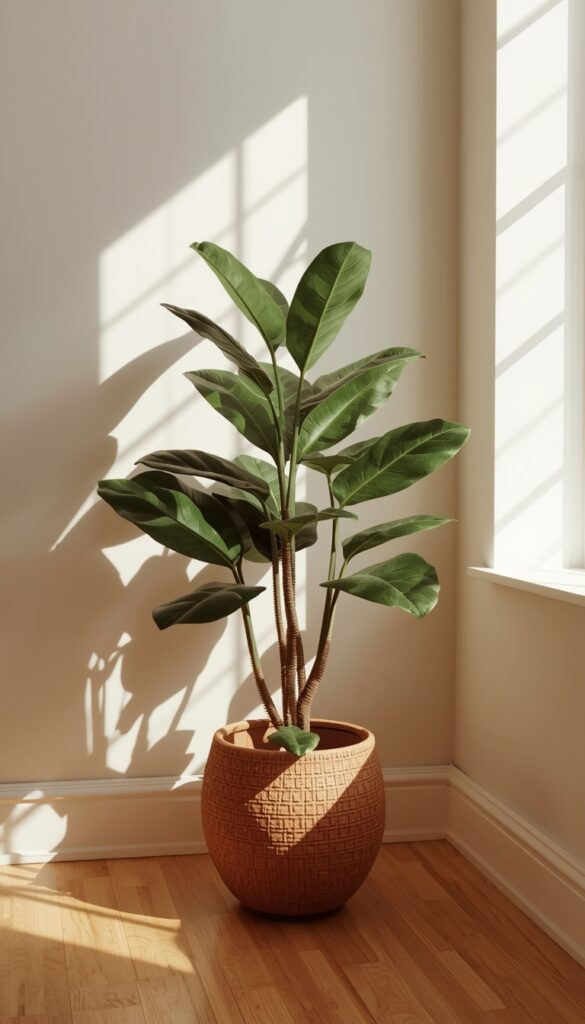
Plants solve the “rental feels sterile” problem better than almost any other single addition, and they’re entirely portable when you move. I always recommend starting with one statement plant ,a fiddle leaf fig, a snake plant, or a large pothos trailing from a high shelf ,rather than scattering small plants randomly around a room, since one bold piece reads as intentional.
Pot choice affects the contemporary feel as much as the plant itself. Skip the plastic nursery pot and drop it into a textured ceramic or woven seagrass planter instead, ideally with a drainage saucer hidden underneath to protect rental flooring. Matte finishes in warm terracotta, cream, or charcoal feel far more current than glossy or brightly colored ceramic pots from a decade ago.
Light availability should genuinely drive your plant choices, not aesthetics alone. Low light rentals do better with snake plants, ZZ plants, or pothos, while anything described as needing bright indirect light will struggle and decline near a north facing window. I’ve watched too many beautiful fiddle leaf figs die in dim rental corners; matching the plant to your actual light saves money and disappointment.
15. Define Zones in Open Concept Layouts with Furniture Placement
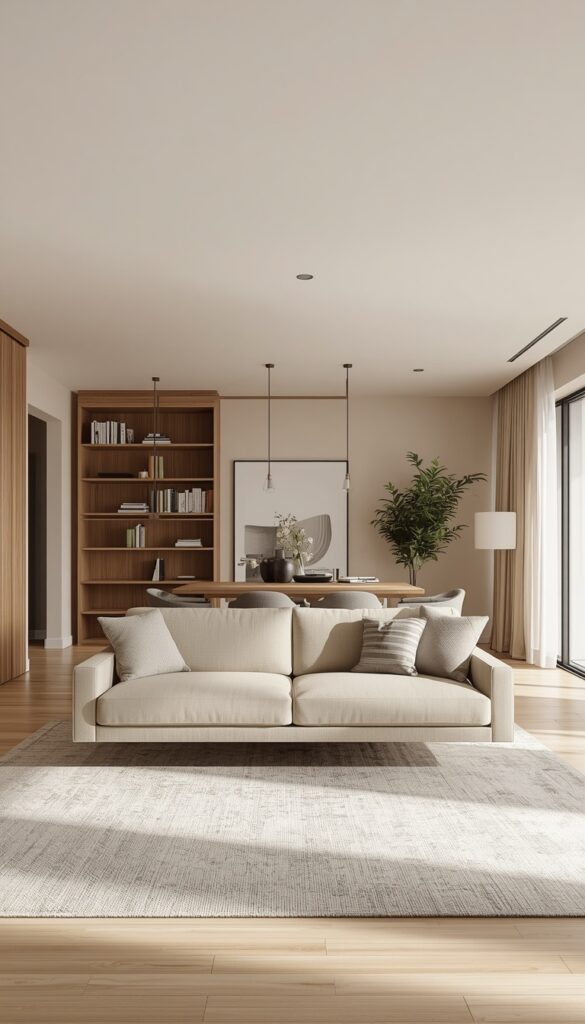
Many contemporary rentals use open concept layouts that blend living, dining, and kitchen space into one large room with no walls to separate them. Without clear zoning, the whole space reads as one undefined blob. Furniture placement, not construction, is how you fix this ,a rug under the living area, a console or bookshelf as a visual divider, and consistent flooring throughout to keep cohesion.
Floating your sofa away from the wall, rather than pushing every piece against the perimeter, is a distinctly contemporary move that creates a real conversation area in the center of the room. I know it feels counterintuitive in a smaller space, but it actually makes open layouts feel more intentional and less like a furniture showroom display lined up against the walls.
A bookshelf or slim cabinet placed perpendicular to a wall, rather than flush against it, can quietly separate a dining zone from a living zone without blocking light or sightlines. Repeating one or two materials ,the same wood tone, the same metal finish ,across each zone ties everything together visually, even when the functions of each space are completely different.
Bringing It All Together
Renting doesn’t have to mean settling for a space that feels temporary or impersonal. Every idea here works with your lease, not against it, which means you get real design impact without risking your deposit or your sanity. The trick is layering small, intentional changes ,a rug here, a pendant light there, a curated shelf ,until the whole apartment finally feels like a true reflection of you. Contemporary rental decor is really about confidence: choosing pieces that feel current, livable, and entirely yours, even on borrowed walls. Start with just one idea from this list this weekend, and watch how much a single change can shift the whole feeling of your home.
Frequently Asked Questions
Q: What is the best way to decorate a rental without losing my security deposit? A: Stick to removable, adhesive based solutions like peel and stick wallpaper, command strip shelves, and tension rods instead of anything requiring nails or drilling. Always photograph the original condition of walls and fixtures before making changes. Test removal on a small hidden section first, and keep all original hardware stored safely so you can reinstall it before move out inspection.
Q: How do I make a rental apartment look expensive on a budget? A: Focus your money on a few high impact pieces ,a large area rug, good lighting, and one statement furniture item ,rather than spreading it thin across many small items. Layering texture through pillows, throws, and curtains adds visual richness cheaply. Cabinet hardware swaps and a fresh light fixture also punch well above their actual cost.
Q: Can I paint the walls in a rental apartment? A: Most leases either prohibit painting entirely or require returning walls to their original color before move out, so always check your lease first. If painting isn’t allowed, removable wallpaper gives you nearly the same visual impact without the restriction. Some landlords do permit painting with written approval, so it never hurts to simply ask.
Q: What size rug should I buy for a small rental living room? A: Aim for the largest rug your space can reasonably fit, with furniture legs resting on top of it rather than beside it. An 8×10 works for most studio and one bedroom living areas. A too small rug actually makes a room look smaller and more chopped up, which defeats the entire purpose of adding one.
Q: How do I add storage to a rental apartment without built-ins? A: Tension rods, stackable bins, and floating shelf systems add real storage without permanent construction. Vertical space is usually underused in rentals, so look up before buying more floor furniture. Over the door organizers and under bed storage bins also recover space that builder grade layouts typically waste.
Q: Will removable wallpaper damage rental walls when I take it down? A: Quality peel and stick wallpaper, applied and removed correctly, should leave walls in their original condition. The biggest risk comes from rushing removal or using cheap, poorly rated products on textured or older paint. Always test a small patch first, and use gentle heat to soften adhesive before slowly peeling at an angle.
Q: What’s the difference between contemporary and modern decor style? A: Modern style refers to a specific historical design movement from the early to mid 20th century, with clean lines and minimal ornamentation. Contemporary style reflects whatever is current right now and constantly evolves, often blending modern, traditional, and global influences together. Contemporary decor today favors organic shapes, warm neutrals, and natural materials.
Q: How can I make my rental feel less temporary and more like home? A: Personal touches matter more than expensive furniture ,framed photos, a few well loved plants, and textiles in colors you genuinely love make a space feel lived in fast. Layering several small changes together, rather than one big purchase, creates a more complete and personal transformation. Consistency in your color palette across rooms also helps the whole apartment feel intentional.