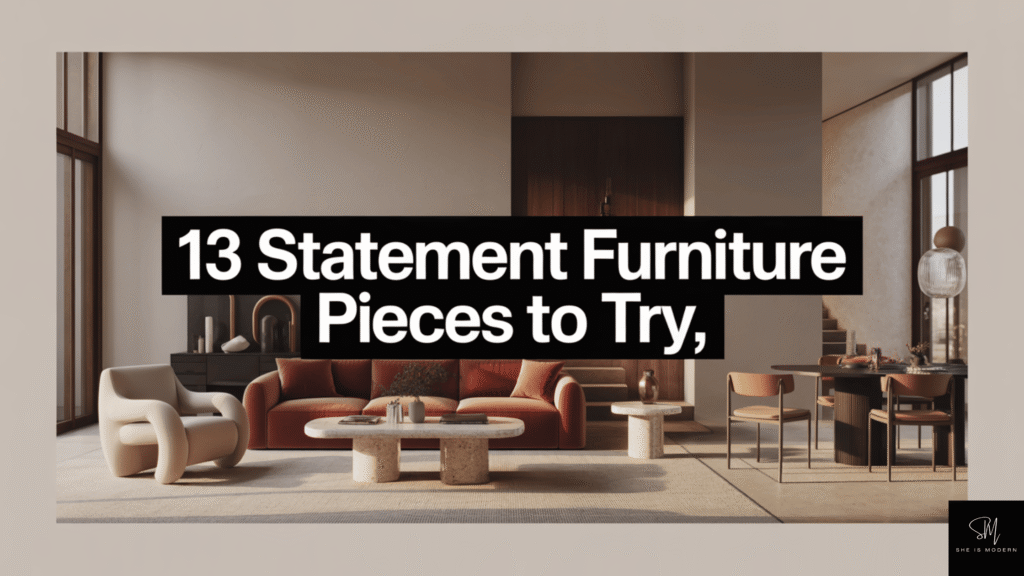
A statement piece earns attention because it solves a room’s real need in an interesting shape, finish or color. A sofa you cannot get through the doorway or a chair that blocks the entry is not a good statement, however striking the photo looks. Start by choosing the one furniture job your room is missing, then compare the thirteen options here by floor space, delivery path, daily use and upkeep.
This guide focuses on furniture that you sit on, work at or store things in. If the room needs a smaller visual change rather than a major purchase, the existing bold decor ideas cover accessories and wall features. The images below are visual examples, not documented purchases or owner-tested products.
Before you start
Before ordering, record the item’s width, depth and height, then tape that footprint on your floor. Include the space used when a chair is pulled out, a drawer opens or someone walks past. Measure the actual clear opening through every entry door, hallway, turn, stair landing or elevator. Compare the product’s shipping dimensions and assembly options, not only its styled room photo. A retailer’s fit example is not a promise that a different sofa will fit your home.
Price should include delivery, assembly, upholstery care or replacement parts where relevant. For shelves, dressers and tall cabinets, plan the maker’s approved anti-tip installation. If you rent, check mounting permission before purchase. The right piece should fit both the floor plan and the household’s routine.
1. Let a Colored Sofa Set the Room Palette
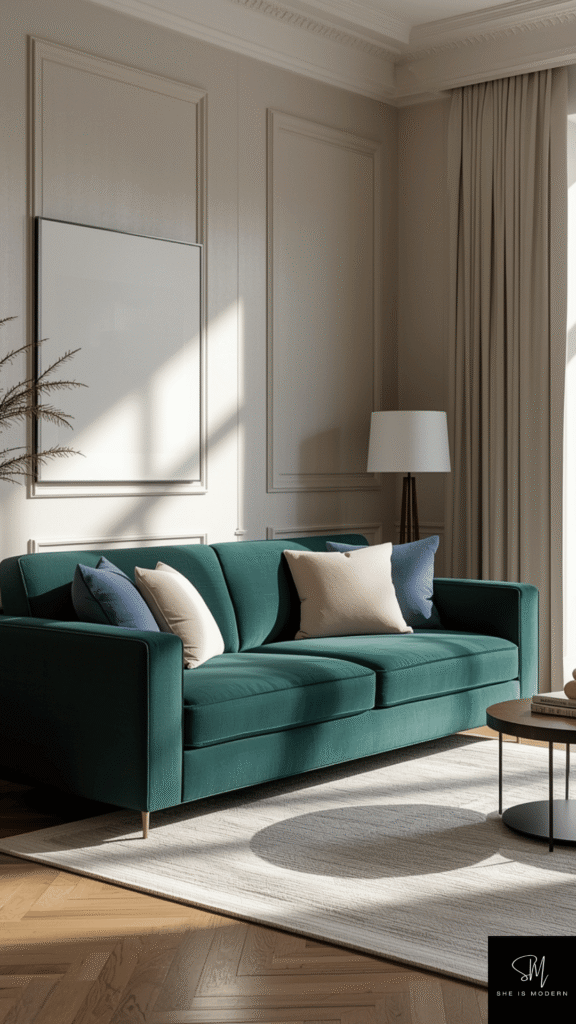
The pictured teal sofa is the main color in an otherwise pale living area. Before choosing a similar sofa, order or borrow a fabric sample and look at it in daylight and lamplight. Compare cushion construction, cleaning instructions and replacement-cover options along with the color. If children, pets or frequent guests use the seat, serviceability may matter more than a dramatic fabric.
Tape the sofa footprint onto the floor and sit in the space where it would go. Check the path to the door and the distance to the coffee table with a person walking past. For more detailed placement, use the living room furniture layout planner before placing an order.
2. Make a Wide Lounge Chair the Reading Seat
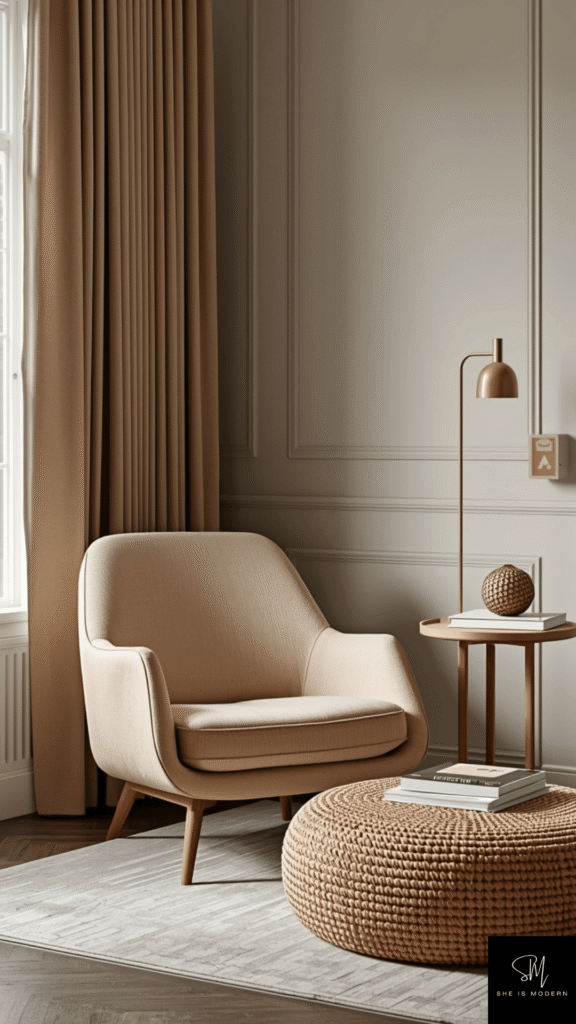
The first chair example is a broad neutral seat beside a small table. Treat this as a comfort-first choice: measure the seat and arm widths, then make sure there is space for a lamp and a table within reach. Try the chair’s seat depth in person when possible; an oversized chair that is comfortable for one person may be awkward for another.
This option belongs in a generous corner or bedroom with room to walk around it. If the location is tight, skip the extra-wide chair and consider the compact patterned armchair in idea eight. They solve different floor-space problems even though both attract attention.
3. Test a Sculptural Coffee Table for Everyday Use
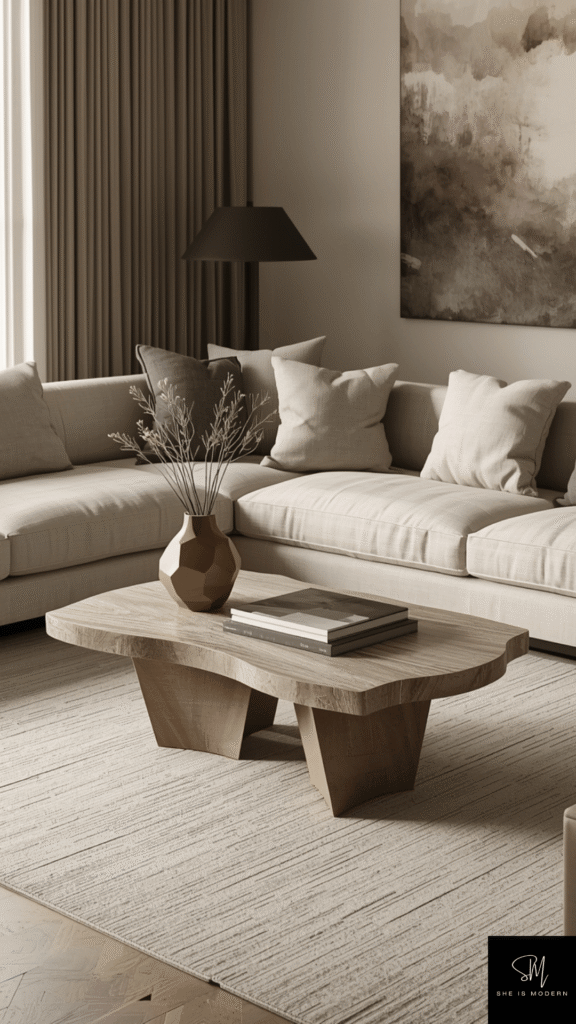
The low table in the image has an irregular, sculptural base. Check the tabletop’s usable area before choosing a shape: can it hold your usual tray or book without balancing them on an edge? A soft corner or curved form may be more comfortable in a walking route, but still tape its full footprint onto the floor and check access to the sofa.
Consider weight, cleaning and whether its finish shows rings or scratches. If the striking shape takes away legroom or stable surface area you need, a plain table with one small sculptural object may be the better decision.
4. Choose a Dining Table That Works Open and Occupied
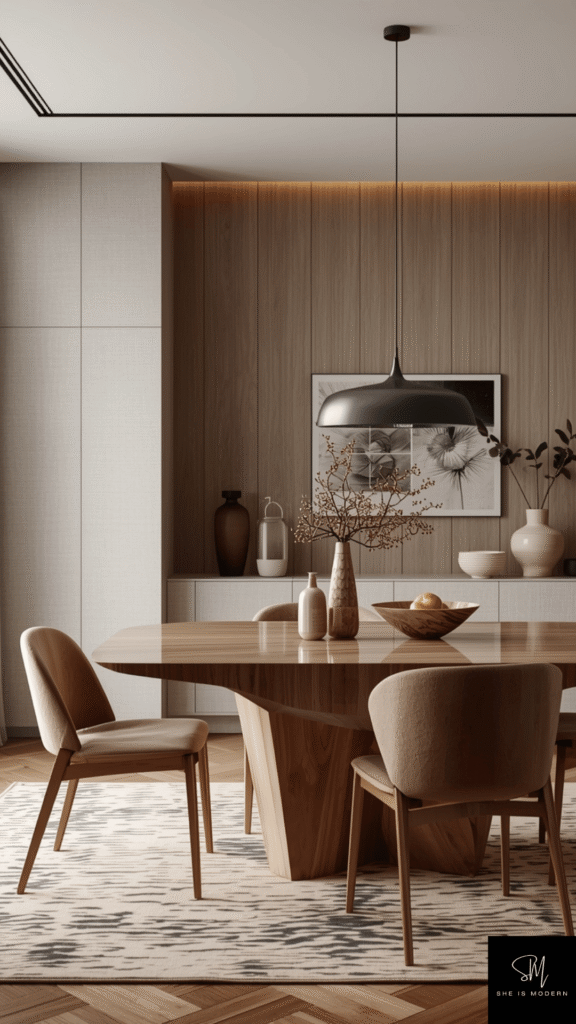
The photographed wooden table creates a focal point through its shape and grain. Measure the tabletop and the space a chair occupies when pulled back, then test whether everyone can enter and leave the dining area. A pedestal can reduce leg conflicts in some layouts, but inspect the base dimensions and stability for the actual model.
Decide whether the table must also serve as a desk. A highly textured finish may be attractive but harder to write on or clean. For a room that combines dining with seating, compare layouts in the site’s living and dining room ideas after making the basic measurements.
5. Use the Bed Frame as the Bedroom Focal Point
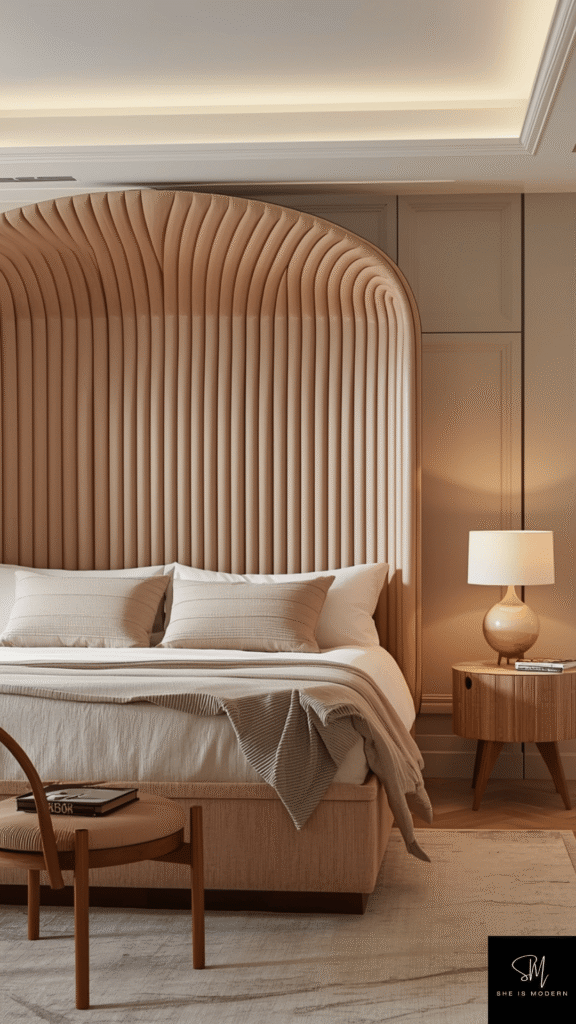
The image shows a tall curved headboard that provides most of the bedroom’s visual texture. Check the frame’s outer dimensions, not only mattress size, and measure around nightstands, outlets and drawers. Confirm the headboard height against the ceiling and any window or wall fixture. A dramatic frame should not make it difficult to change sheets or reach storage.
Fabric headboards may need spot cleaning; wood and metal have different care requirements. Use the bedroom furniture layout dimensions worksheet to check the room before paying for a frame with a larger footprint than your current bed.
6. Build a Bookshelf Around What You Own
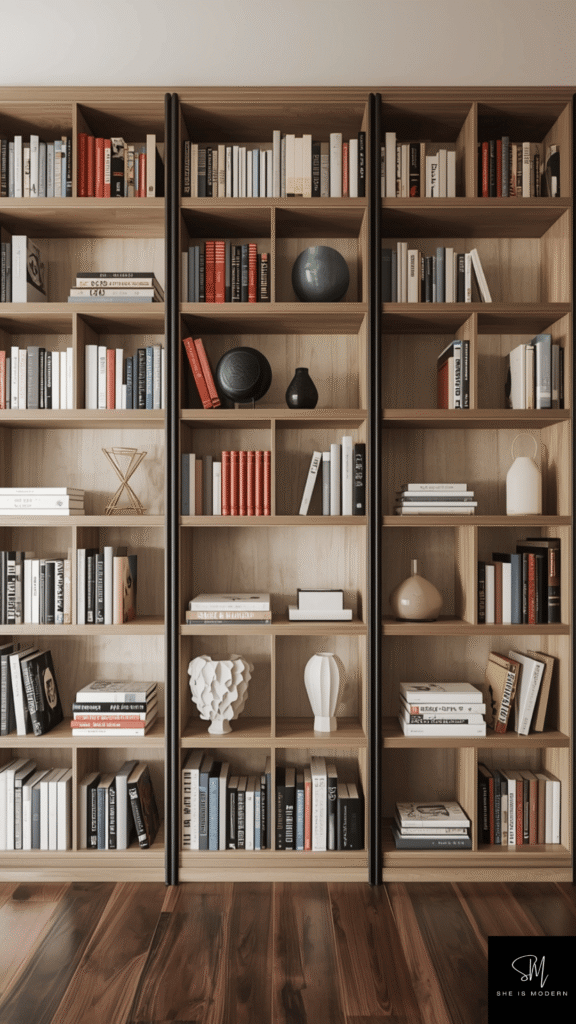
The full-height shelf in the photo works as a statement because books and objects give its grid a purpose. Count and measure the books or storage boxes you need to keep, then check shelf depth and load ratings for the actual unit. Leave reachable space for daily items and use a few empty openings only after the storage needs are met.
Tall shelving and furniture with doors or drawers can tip; follow the manufacturer’s specified anchoring and wall-hardware instructions. If the installation is not possible in your rental, choose a different storage solution rather than an unsecured tall statement shelf. For the contents, start with the living room storage plan, then add a few objects using these simple DIY room decor ideas only if they fit the shelf.
7. Let a Console Solve an Entryway Problem
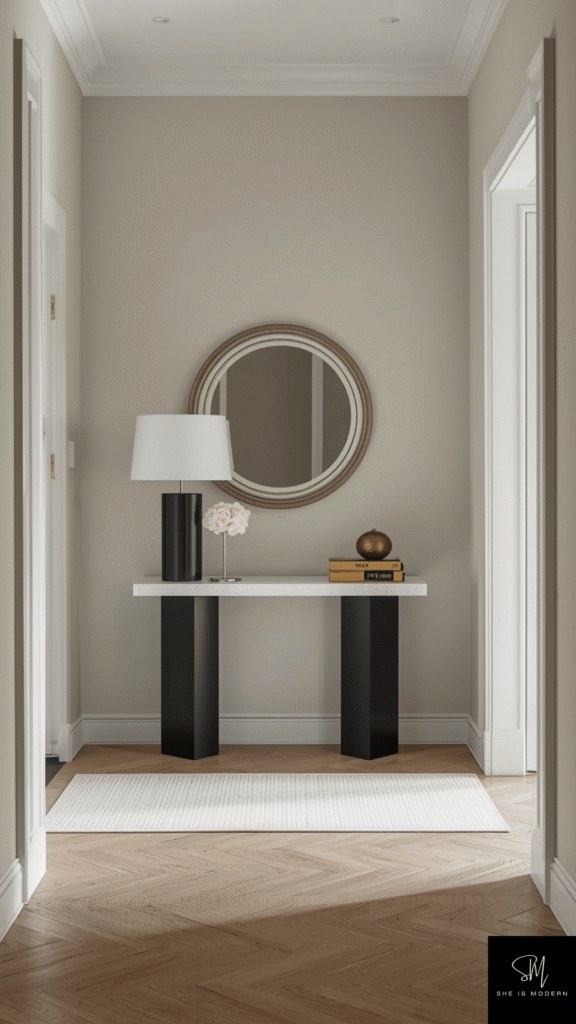
The image shows a slim dark console with a round mirror in an entry. Check its depth with the door open and with someone carrying groceries past it. Choose enough surface for keys and mail, then decide whether a drawer or lower shelf will reduce clutter. A deep sculptural base can look narrow from the front while occupying more floor space than expected.
A statement console is worthwhile when it gives the entry a real landing place. If it only holds decorative objects while bags still pile on the floor, try a simpler shelf or a small cabinet. Secure a tall or unstable piece as its manufacturer directs.
8. Use a Compact Patterned Armchair for Color
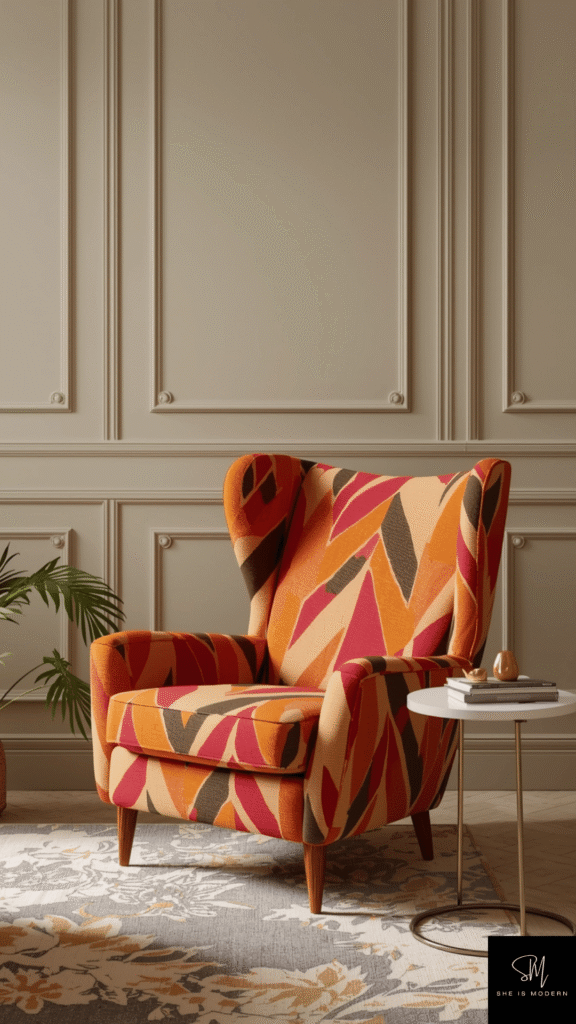
The bright patterned chair in the photo is smaller and more upright than the wide lounge chair in idea two. This is a better accent when you need an extra seat but cannot devote a whole corner to lounging. Measure its widest point, including arms, and leave room to stand up without hitting a table. Compare the pattern sample in the actual room before choosing other textiles around it.
A single patterned chair can carry the color; the rest of the seating can remain neutral. For a renter or a small room, this is also easier to move than replacing the main sofa. Confirm fabric cleaning directions before buying a high-traffic seat.
9. Check a TV Unit for Storage and Screen Placement
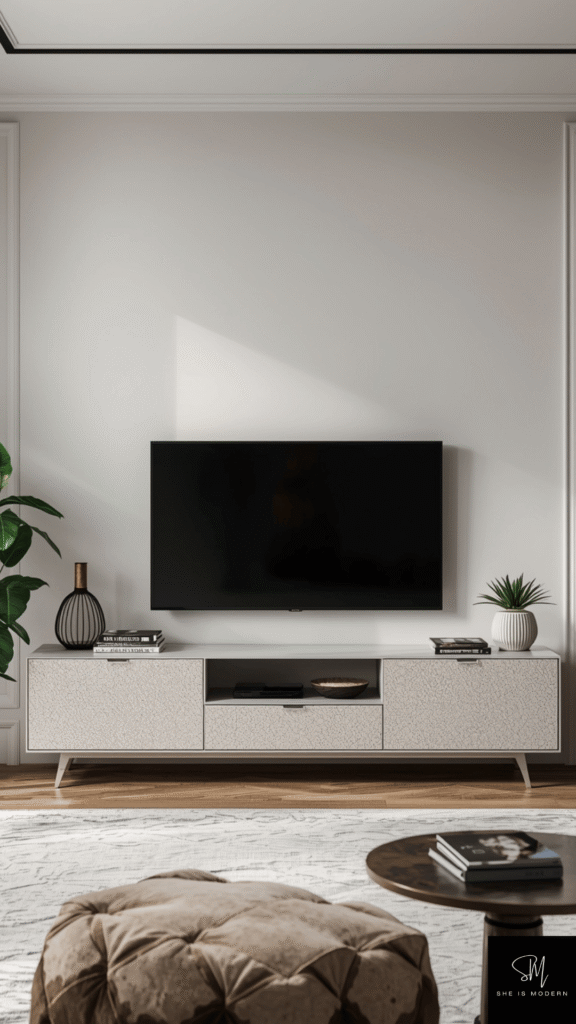
The pictured low white unit keeps the screen visually simple. Before choosing a more dramatic media console, measure the TV feet or manufacturer mounting specification, device dimensions, cable access and ventilation space. A finish or sculptural leg that blocks ventilation or hides a power outlet can make the unit less useful.
Follow the TV and furniture makers’ stability and anti-tip instructions, especially in homes with children. Do not assume a low profile automatically makes the entire setup safe. If screen placement drives the room plan, test it against seating and light before buying the unit.
10. Make the Desk Work Before Choosing Its Shape
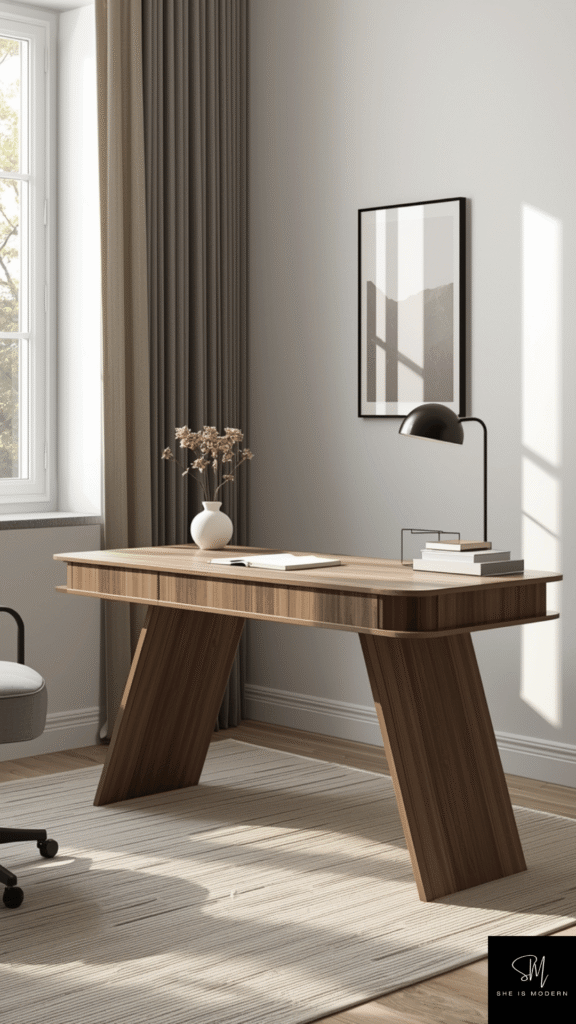
The image shows a desk with broad geometric legs. Test the usable top against the tasks you do every day: a laptop, notebook and lamp need different space than two monitors. Check knee room, chair clearance, cable management and where documents go. A strong silhouette is not useful if the leg shape blocks an ergonomic seating position.
Measure both the desk and the delivery path. A desk that arrives partly assembled may not fit a tight stair turn the way a flat-pack option does. Position the working surface so window glare and outlet location are practical in your actual room.
11. Choose a Storage Cabinet for Its Contents
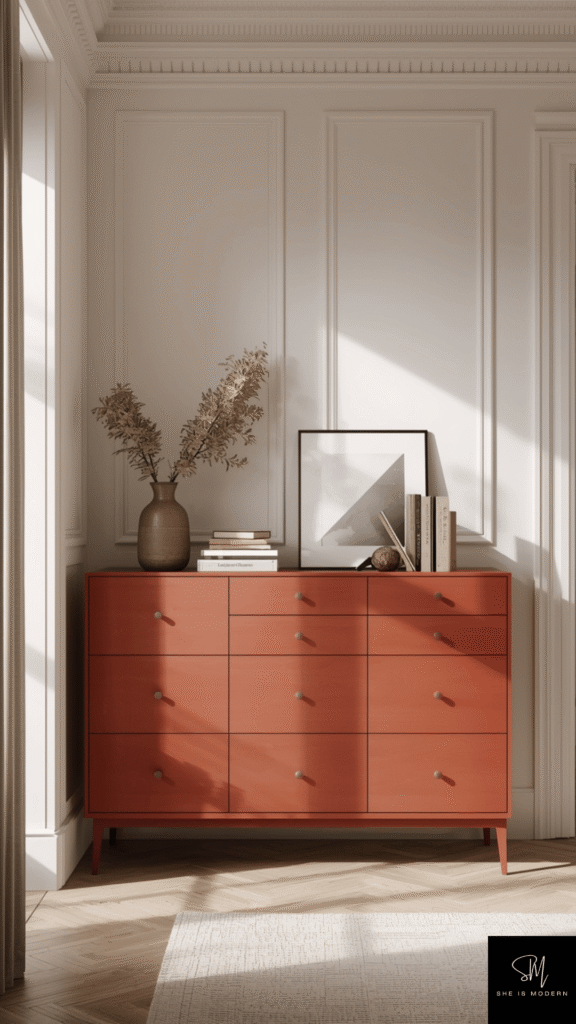
The terracotta cabinet in the image adds color to an entry while hiding clutter. List what needs to go inside, then check shelf spacing, drawer opening and depth. A storage unit that cannot hold the things you own becomes an expensive display surface. Test its proposed spot with a door or drawer fully open.
Check weight and anchoring requirements for the model, including any wall attachment specified by the maker. Ask about rental mounting permission in advance. If you need storage but not more color, prioritize the useful cabinet first and add a smaller colored object later.
12. Add a Side Table Only Where It Is Reached
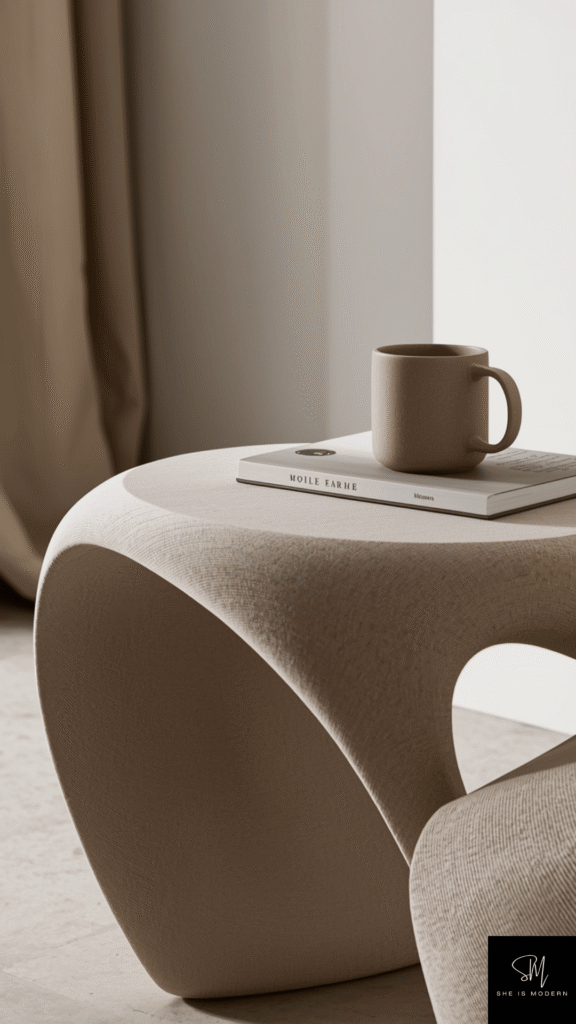
The photo shows a curved pale side table with a cup on top. Stand at the sofa or bed and place a temporary box where the table would go: can you set down a drink without leaning across a walkway? Check the tabletop stability, edge shape and cleaning instructions. A decorative table is not a substitute for a usable surface.
If the space is narrow, measure the distance between seat and wall before choosing a broad sculptural base. Consider whether a smaller table, wall shelf or existing ottoman already solves the job without buying another item.
13. Let a Bench Serve an Entry or Bedside Need
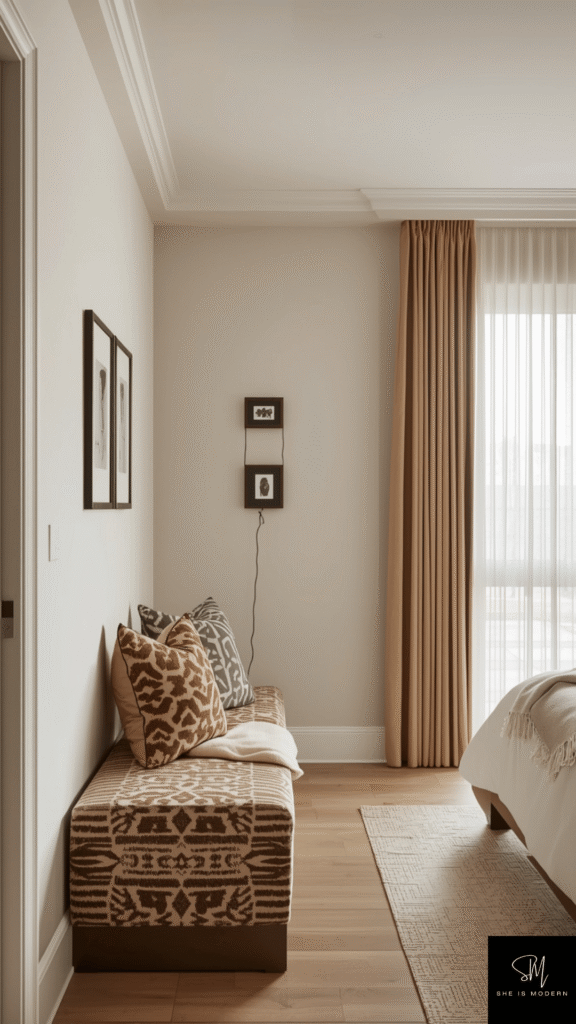
The last image shows a narrow upholstered bench beside a bed. Decide whether you need somewhere to put on shoes, a place for a folded blanket or occasional seating. Test its height against the bed and the walking space when someone sits. A long bench can look slim in a photo but block a closet door in a real room.
Check the manufacturer’s load limit and care directions, particularly for upholstered seats. If it will mainly collect clothes, a smaller hamper or one hook may solve the actual problem at lower cost. Buy the bench only if you can name when and how it will be used.
Choose the idea that fits your room
Pick one focal piece by solving the most important room problem first: seating, dining, working or storage. Measure where it will live and every route it must travel, confirm how it will be used and cleaned, and compare the full cost before placing an order. If a dramatic design fails one of those tests, the quieter alternative is the more successful choice.
For broader style palettes after you have settled on the furniture plan, She Is Modern also offers an optional paid Interior Style & Design Guide. The measurements and selection checks above stand on their own.