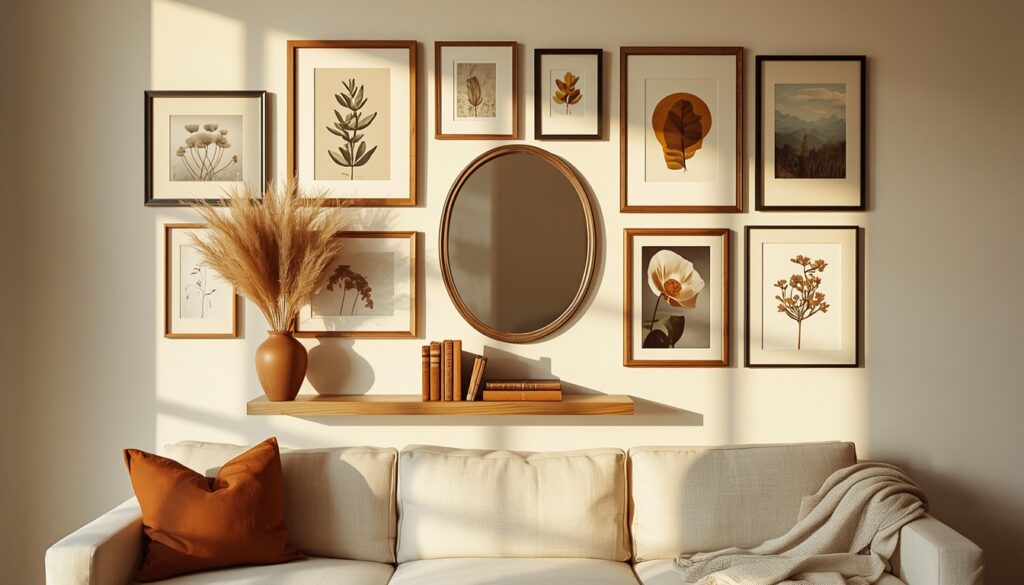
There’s a certain kind of magic that happens when a blank wall finally becomes something worth stopping for. A gallery wall done right doesn’t just fill space — it tells a story, sets a mood, and makes a room feel intentionally lived in. Whether you’re working with a narrow hallway, a sprawling living room wall, or an awkward corner you’ve been ignoring for months, the right arrangement of frames, art, and objects can completely transform how a space feels.
The best gallery walls aren’t accidental. They’re the result of real decisions — about scale, spacing, color, and what you actually love enough to look at every day. I’ve spent years styling walls in my own home and helping friends pull theirs together, and I can tell you the difference between a wall that impresses and one that just looks busy comes down to a handful of smart choices. This article walks you through 15 genuinely beautiful gallery wall ideas, with specific details you can actually use.
1. The Black Frame Grid — Clean, Bold, and Always Timeless
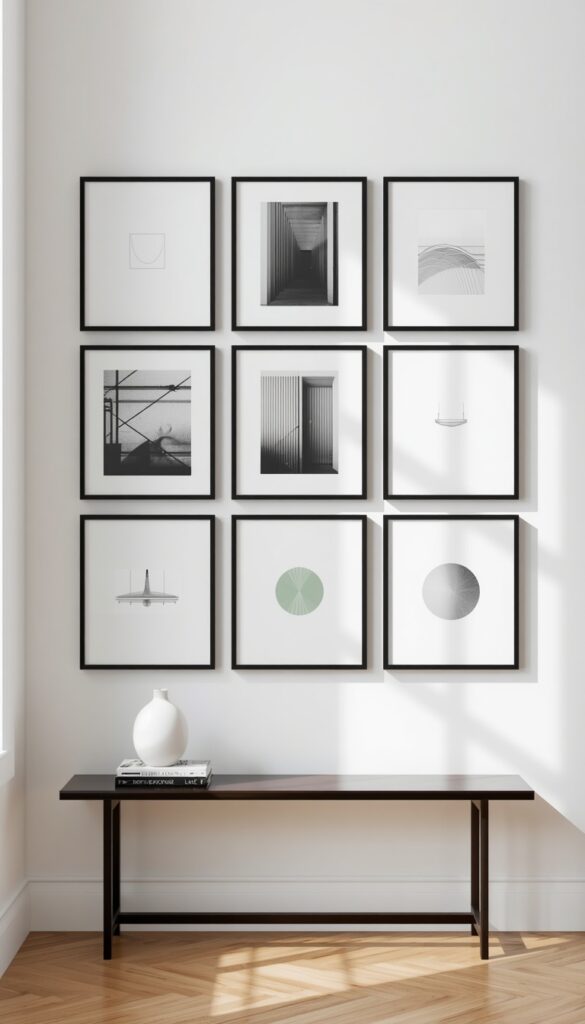
A grid gallery wall built entirely with matching black frames is one of the most satisfying things you can hang in a home. The repetition creates visual rhythm, and the uniformity makes even a chaotic mix of art types feel cohesive. This works especially well in modern, Scandinavian, or industrial style spaces where clean lines already dominate the room’s language.
The key to pulling this off is committing to consistency. Use the same frame size — 5×7 or 8×10 are both strong choices — and keep spacing exactly equal, typically 2 to 3 inches between each frame. Use a level and painter’s tape to map out your grid before you hammer a single nail. The planning stage feels tedious, but it’s what separates a polished result from a wall that looks like it happened by accident.
Inside those frames, contrast is everything. Mix black and white photography with simple line drawings and the occasional abstract print. Don’t fill every frame with the same type of image. A grid rewards the eye that moves across it and finds something new in each square. Add a single frame with a pop of muted color — sage green or dusty terracotta — and it gives the whole arrangement a deliberate, curated feel that visitors will notice immediately.
2. Oversized Anchor Art with Smaller Surrounding Pieces
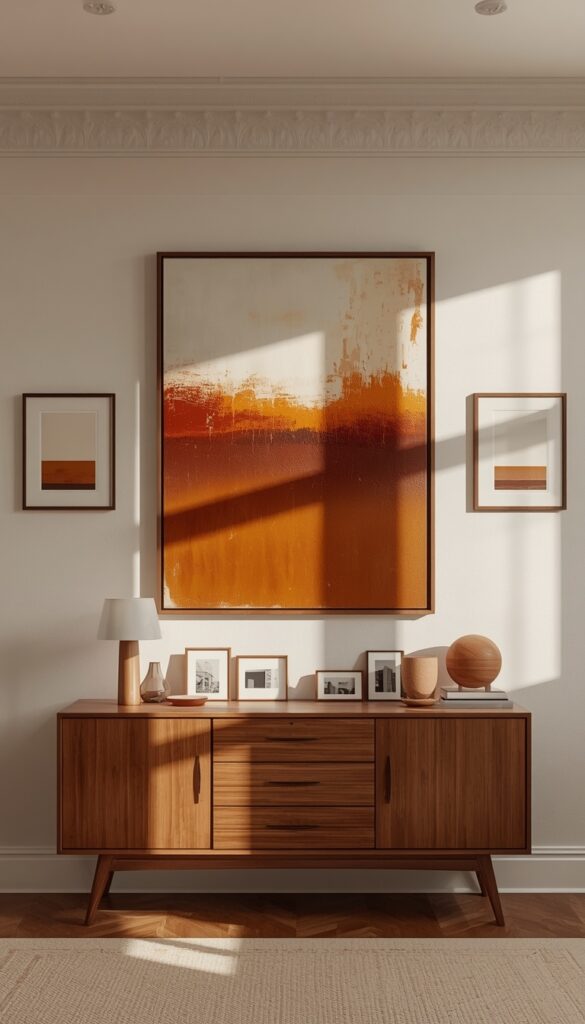
One large statement piece at the center of a gallery wall is a design move that never stops working. The anchor piece — anything from a 24×36 canvas to a large framed print or an oversized mirror — gives your eye somewhere to land first. Everything else you hang around it becomes a supporting cast, and that hierarchy is exactly what makes the arrangement feel intentional rather than random.
Choose your anchor before you buy anything else. Its color palette should inform the smaller pieces you select. If the main canvas has warm ochre and rust tones, pull those same hues into the surrounding prints, even subtly. A 24×36 center piece works beautifully flanked by two 11×14 prints on either side, with a row of three 5×7 pieces below. The asymmetry between sizes keeps it feeling organic rather than rigid.
Frame finish matters here more than people realize. The anchor doesn’t need the same frame as the surrounding pieces — in fact, it shouldn’t. A thick natural wood frame on the large piece, paired with thinner metal frames on the smaller ones, creates a layered visual effect that looks expensive and considered. This approach works brilliantly above a sofa, above a bed, or on any wall where you want one strong focal point that grows more interesting the closer you look.
3. Mixing Frames and Floating Shelves for a 3D Gallery Wall
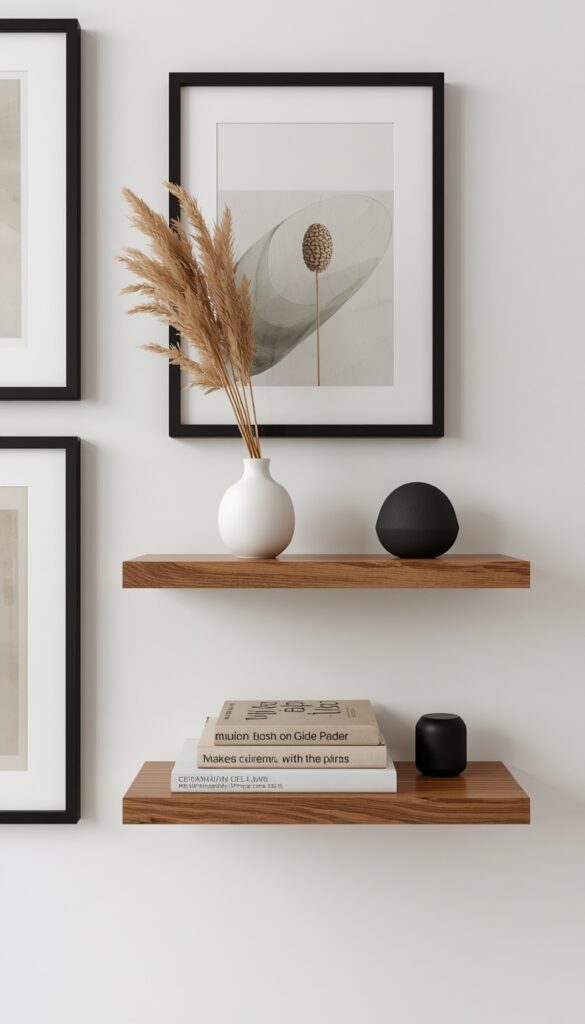
A flat gallery wall is beautiful, but adding floating shelves into the mix takes the whole concept into another dimension — literally. Small wooden shelves installed at different heights within a frame arrangement let you bring in physical objects: a small ceramic vase, a trailing plant, a sculptural candle holder. The result feels more like a curated installation than a simple wall display.
Use two or three shelves of different lengths, a 24 inch shelf, a 16 inch shelf, and a 10 inch shelf work well together. Stagger them at different heights rather than lining them up horizontally. Between and around the shelves, hang your framed art as usual. The trick is treating the shelves as oversized “frames” themselves, filling them with objects that share the same color story as your prints. White ceramic, natural wood, and matte black accessories feel cohesive without being matchy.
The objects you place on those shelves deserve as much thought as the art. A single sprig of dried pampas grass in a bud vase reads as intentional. A small stack of two or three books with beautiful spines adds texture. Avoid cluttering the shelves with too many items — three objects per shelf is usually the sweet spot. This style works especially well in living rooms and home offices where you want a wall that feels personal and layered rather than purely decorative.
4. All White Frame Gallery Wall on a Colored Accent Wall
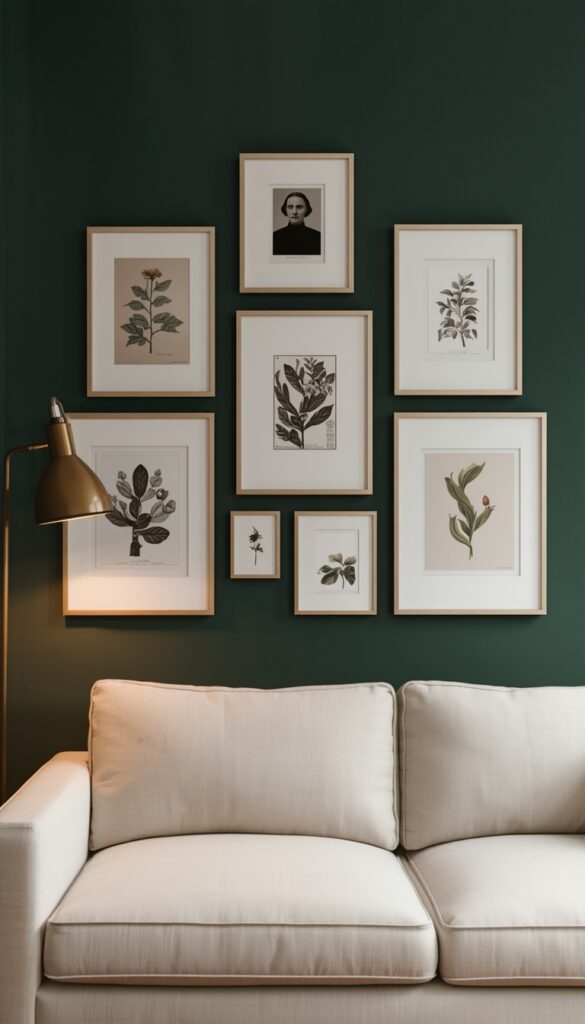
White frames on a deep colored wall is one of those combinations that looks difficult but is actually forgiving and flexible. A rich wall color — think deep teal, forest green, terracotta, or navy — makes white frames pop with a crispness that you simply can’t achieve on a standard white or off white wall. The frames become art before you even look at what’s inside them.
The arrangement can be loose and organic here because the wall color is already doing a lot of heavy visual lifting. Mix portrait and landscape orientations freely. Vary frame sizes without worrying too much about strict symmetry. What holds it all together is the consistent white frame finish and the unifying backdrop of that one bold wall color. Even a collection of mismatched art types — vintage botanical prints, abstract shapes, a child’s drawing — reads as curated when contained in matching white frames.
For the art itself, lean into contrast. Black and white photography looks stunning against a deep jewel toned wall. Simple white on white prints create an almost tonal effect that’s quietly sophisticated. Watercolor botanicals with soft washes of color come alive against a dark backdrop in a way they never would on a plain white wall. This is genuinely one of the most impactful gallery wall ideas you can try, and the investment is low — a can of paint and a set of coordinating frames.
5. The Salon Style Floor to Ceiling Gallery Wall
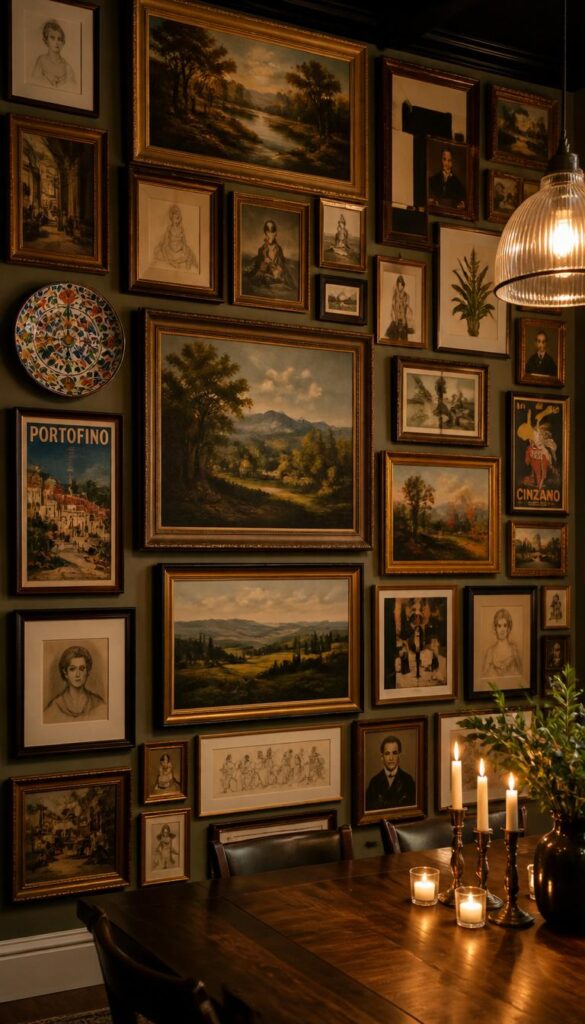
Salon style hanging — where art covers nearly the entire wall from floor to ceiling in a dense, layered arrangement — is bold, dramatic, and deeply impressive when done well. It originated in 18th century European salons where hundreds of paintings covered every inch of wall space. The modern version is more curated, but the effect is the same: a wall that commands attention and rewards long looking.
Start by laying all your pieces on the floor and arranging them before committing to the wall. The goal is to fill the space without it feeling chaotic, which means paying attention to visual weight. Larger, darker pieces tend to anchor the arrangement — place them toward the center and lower half of the wall. Lighter, smaller pieces float naturally toward the edges and upper areas. Leave roughly 1.5 to 2 inches between frames throughout for breathing room.
The most impressive salon walls mix media types freely. Framed oil prints sit next to pencil sketches, textile art, decorative plates, and vintage mirrors. Varying the frame finishes — wood, metal, ornate gilded frames, simple black — adds richness rather than confusion, as long as the art itself shares a general color palette. Cool neutrals, warm earth tones, or a monochromatic scheme all hold a salon wall together effectively. This style suits living rooms, dining rooms, and stairwells beautifully.
6. Botanical Print Gallery Wall with Natural Wood Frames
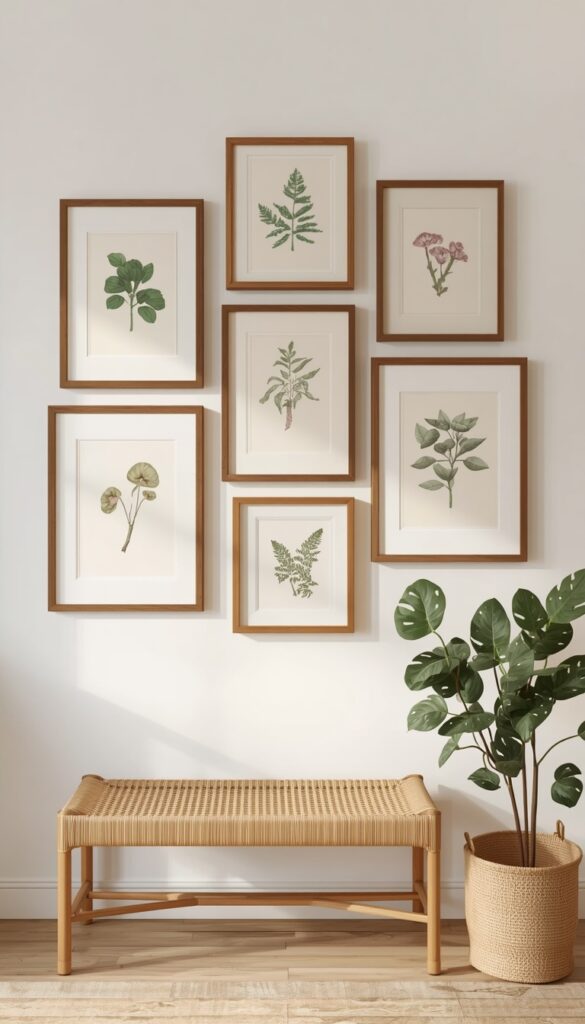
Botanical prints have real staying power in interior design, and there’s a good reason for that. They bring the softness of nature indoors without the upkeep of actual plants, they come in an enormous range of styles from vintage scientific illustrations to loose watercolor studies, and they work across many different design aesthetics from cottagecore to modern farmhouse to coastal.
Natural wood frames are the perfect partner for botanical art. Honey oak, walnut, and bleached ash all work well — the key is keeping the wood tones in the same family rather than mixing very light and very dark frames together. A warm walnut frame makes the muted greens and soft creams in vintage botanical prints look genuinely beautiful. Use a mix of frame sizes: a few 11x14s as anchors, a handful of 8x10s, and a scattering of 5x7s to fill gaps in the arrangement.
For the arrangement shape, an organic cluster works better here than a strict grid. Botanical walls should feel a little free form, like they grew naturally rather than being engineered. Leave slightly more space around larger prints and let smaller ones cluster tightly together in pairs or trios. Add one or two real dried botanical elements — a pressed fern framed behind glass, a small woven wicker frame — to bridge the gap between the art and the physical world. This wall works in kitchens, sunrooms, bedrooms, and any space that benefits from a grounded, natural feeling.
7. Black and White Photography Wall with One Color Accent
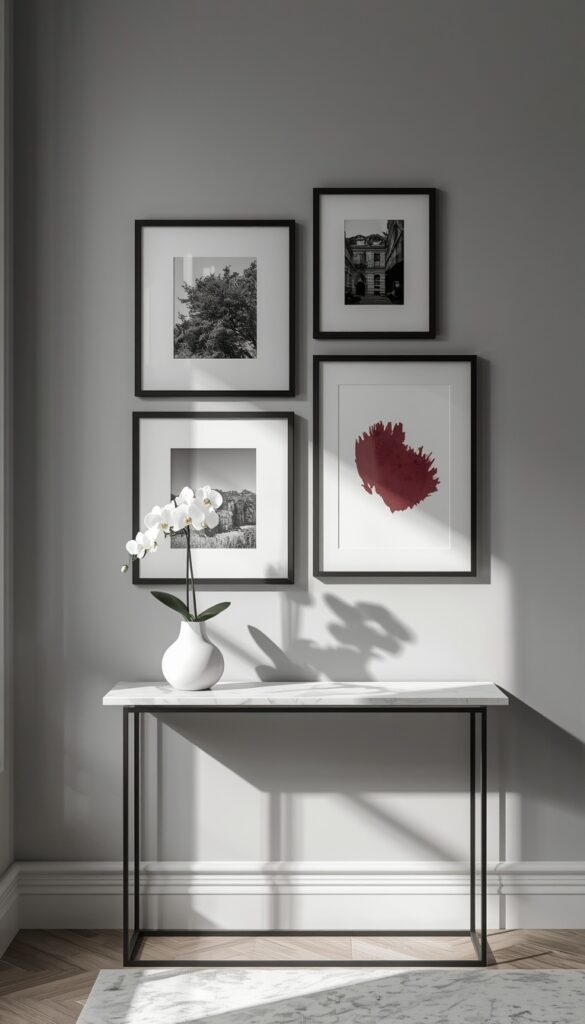
A gallery wall built entirely from black and white photography has a sophistication that’s hard to beat. The tonal consistency creates a wall that feels unified and gallery worthy even when the subjects vary widely — landscapes, portraits, architecture, abstract close ups. The restraint of working in black and white is actually what gives this type of wall its visual strength.
To prevent the wall from feeling cold or overly serious, introduce a single color accent deliberately. This could be one framed print with a very specific pop of color — a deep burgundy abstract, a single yellow wildflower photograph, a blue geometric print. That one color element does extraordinary work: it warms the whole arrangement, makes the black and white pieces look more intentional by contrast, and gives the eye a resting point that feels earned rather than random.
Frame selection matters here. Thin black metal frames keep everything sleek and modern. Thin white frames give a cleaner, more gallery-like feel. Avoid wide ornate frames on black and white photography — they compete with the images rather than supporting them. Arrange in a loose horizontal line above a console table or sofa, or cluster into an informal rectangle on a larger wall. Either way, the effect is polished, personal, and genuinely impressive to anyone who walks into the room.
8. Layered Ledge Display Instead of Hung Frames
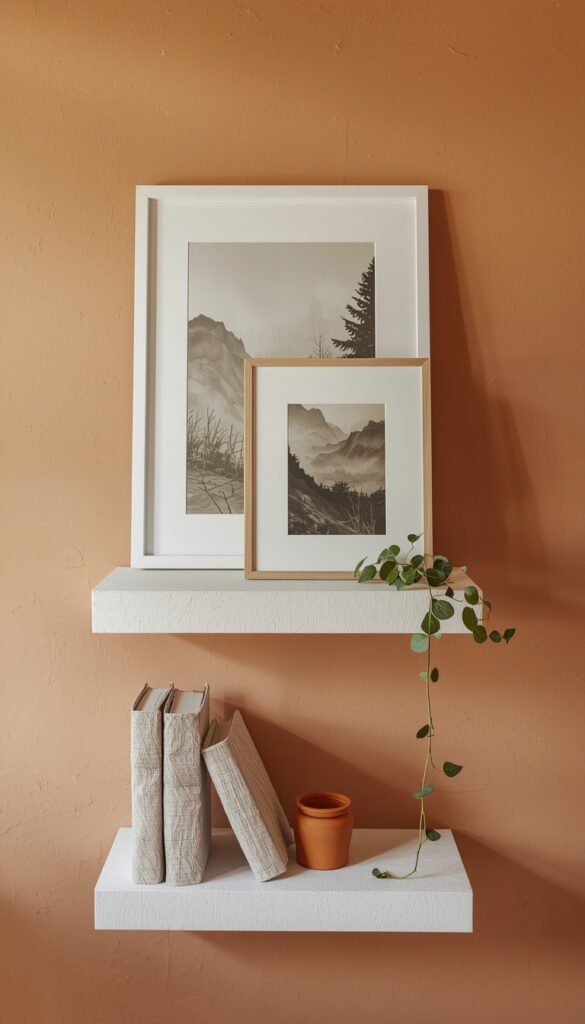
Picture ledges — those shallow rail shelves designed specifically for leaning frames, create a gallery wall effect without committing a single nail to art placement. You can rearrange, swap pieces, and add new finds whenever you want, which makes this approach ideal for people who love changing things up or who haven’t fully committed to a collection yet.
Install two or three ledges at staggered heights, keeping them roughly 12 to 18 inches apart vertically. IKEA’s MOSSLANDA ledges are a practical and affordable option; at 55 inches long they hold a generous number of frames. The visual depth created by leaning frames slightly in front of each other adds a casual, lived in quality that hung art simply can’t replicate. Layer a larger frame at the back, a medium one in front, and a small framed print or postcard leaning against it at the side.
Mix framed art with unframed objects on the ledges. A small sculptural object, a ceramic tile, a dried floral arrangement in a slender vase — these elements stop the display from looking like a store shelf. Refresh a ledge gallery wall seasonally without any replanning or rehanging. Swap in holiday themed prints in winter, botanical watercolors in spring, beach photography in summer. The flexibility of this system is genuinely underrated, and the result looks intentional and editorial rather than casual or unfinished.
9. Vintage Mirror Collection as a Gallery Wall
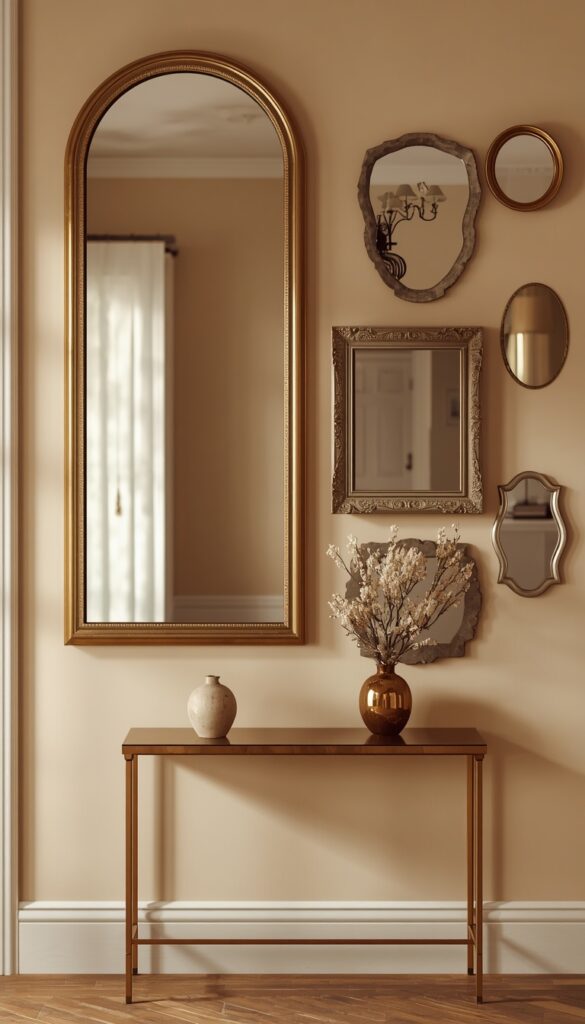
Mirrors as gallery wall elements are one of the most underused ideas in home decorating. A collection of vintage mirrors in varied shapes and sizes — ornate gilt ovals, simple round brass pieces, scalloped antiqued frames — creates a wall display that adds both visual interest and the practical benefit of bouncing light around the room. The result is more dynamic than a standard art collection and far more unexpected.
The arrangement works best when you vary the shapes dramatically. Pair a tall arched mirror with a small round one, a rectangular piece with an irregular asymmetric frame. Varying the frame finishes within a warm metallic range — gold, brass, bronze, antique silver — gives the collection coherence without sameness. Aim for an odd number of mirrors: five, seven, or nine pieces tend to look more natural than even numbered groupings.
Thrift stores, estate sales, and antique markets are the best sources for vintage mirrors at reasonable prices. Clean the glass thoroughly and don’t worry about slight foxing or aging on antique mirror surfaces — that patina is exactly what makes the collection feel authentic rather than assembled from a big box store. This gallery wall works brilliantly in entryways, dining rooms, and living rooms, especially on walls adjacent to windows where the mirrors can capture and reflect natural light throughout the day.
10. Children’s Art Gallery Wall Styled Like Real Art
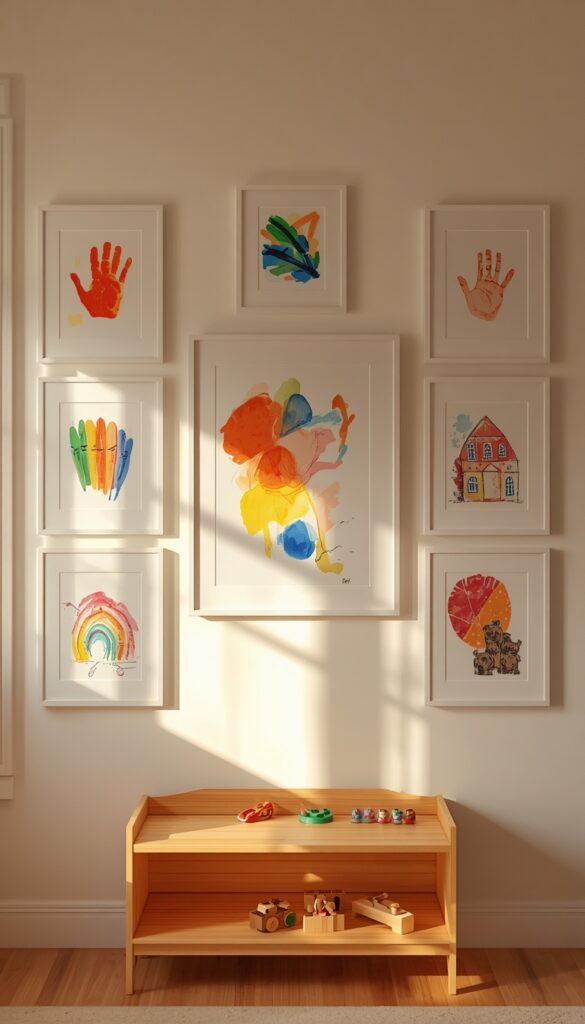
Framing your children’s artwork in proper frames and hanging it with the same care as museum prints is one of the most heartfelt gallery wall ideas a parent can try — and it looks genuinely beautiful when done thoughtfully. The trick is treating the children’s art as worthy of good presentation, because it is. A child’s finger painting in a clean white mat and a simple black frame immediately elevates from refrigerator art to something you’d actually be proud to display.
Select the strongest pieces — look for bold color, interesting mark making, or work with strong compositional energy, even if that’s entirely accidental. Mix sizes freely. A large 11×14 abstract watercolor from your six year old as the anchor piece, surrounded by smaller drawings in matching frames, creates a wall that is genuinely moving for any parent or visitor to stand in front of. Rotate the collection seasonally so children feel their current work is valued.
Display this type of gallery wall in the child’s bedroom, a playroom, or — if you’re feeling confident about it — the living room or hallway. Living room placement sends a powerful message about what your family values. Add the child’s name and age written lightly in pencil on the back of each piece so you have a record. Years from now that wall becomes something far more valuable than any print you could have bought. It becomes a record of my childhood.
11. Monochromatic Art Wall in Warm Earth Tones
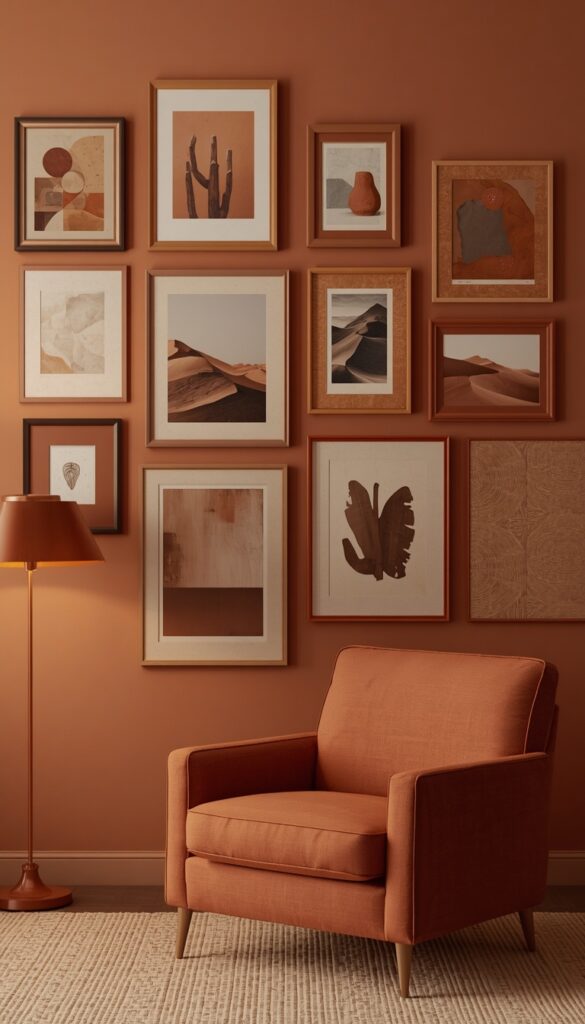
A monochromatic gallery wall built around a single color family — warm earth tones are particularly rich and livable — creates a visual experience that feels deeply considered without being cold or minimalist. This means selecting art, frames, and mats that all live within a range of terracotta, rust, ochre, sand, and warm brown. The variations within that palette provide all the visual movement the wall needs.
This approach works because it removes the hardest decision from gallery wall planning — color coordination. When everything already belongs to the same color family, the arrangement can be loose and varied without risk of clashing. Mix abstract prints, landscape photography, pattern based art, and even decorative ceramic pieces. The common thread of warm earth tone keeps the whole collection reading as one cohesive statement.
Frame selection in this style deserves particular attention. Warm terracotta clay frames, natural rattan frames, and matte cognac leather frames are all beautiful choices that reinforce the palette from the outside in. A linen or raw cotton mat inside each frame adds texture between the glass and the print. This gallery wall style suits bedrooms, reading nooks, and living rooms with warm wood furniture especially well. It creates a feeling of grounded warmth that makes people want to sit down and stay awhile.
12. Eclectic Gallery Wall with Textiles and 3D Objects
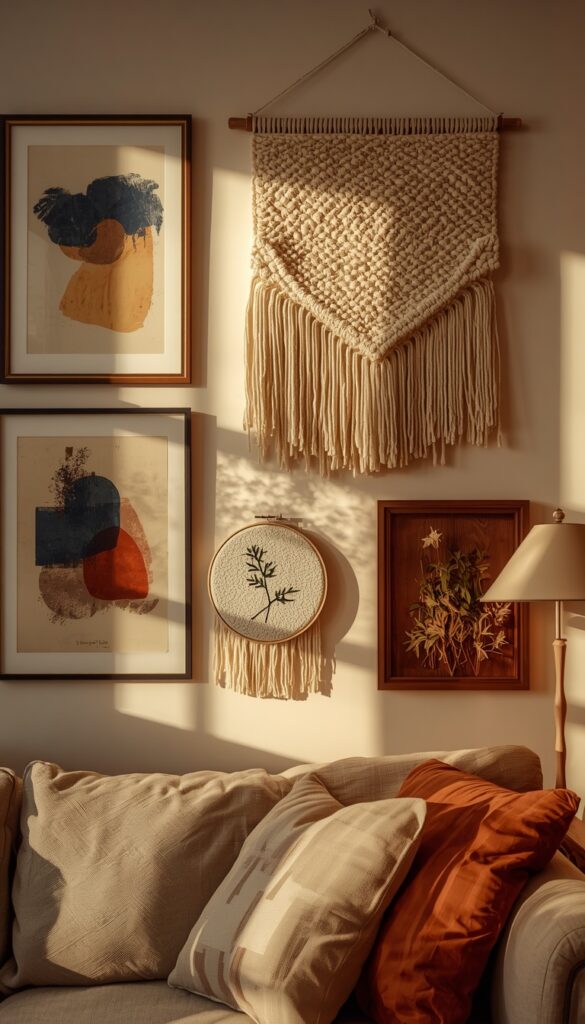
The most personal gallery walls are the ones that go beyond flat art and incorporate physical texture — woven wall hangings, embroidered hoops, macramé panels, ceramic plaques, wooden carvings, and shadow boxes. When framed art sits alongside textile and sculptural elements, the wall gains a richness and depth that no amount of beautiful prints alone can achieve.
Planning this type of wall requires thinking about visual weight differently. Textile pieces — a chunky woven wall hanging or a large embroidery hoop — often carry more visual weight than a framed print of similar size. Balance heavier texture pieces with lighter, more minimal framed art nearby. A large natural fiber wall hanging off center works beautifully when anchored by two or three simple framed prints on its opposite side, creating asymmetric balance rather than mirror symmetry.
The art and objects in an eclectic wall should still share something in common — even if it’s just a general color range or a feeling. A coastal eclectic wall might include a driftwood sign, a framed nautical map, a woven blue and white textile, and a shadow box with shells. A global inspired wall might layer printed batik textiles, a Moroccan brass plate, and abstract prints in saffron and indigo. The common thread of feeling is what separates an eclectic gallery wall from a cluttered one.
13. Staircase Gallery Wall That Follows the Angle of the Steps
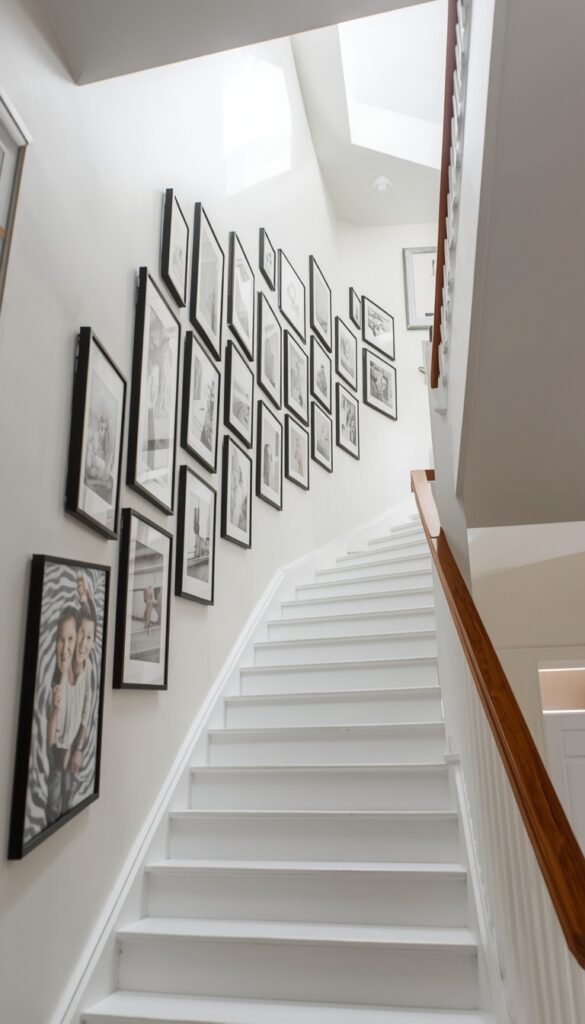
A staircase wall is genuinely one of the best opportunities for a gallery wall in any home — it’s a long vertical surface that gets seen from multiple angles, and the natural diagonal created by the staircase gives you a built-in composition to work with. Done right, a staircase gallery wall feels like walking through a curated experience rather than just climbing stairs.
The classic approach is to hang frames so their tops follow a diagonal line that mirrors the angle of the stair treads. Keep the spacing between frames consistent — 3 to 4 inches works well — and the visual line will read as intentional and clean. Use one consistent frame size for the neatest result, or mix sizes while keeping the tops aligned to that diagonal. Map the layout on paper first, measuring your staircase angle so you can pre plan positions before touching the wall.
Family photography works beautifully in staircase galleries — chronological arrangements, from older photos at the bottom to newer ones at the top, create a timeline effect that’s both decorative and meaningful. A mix of black and white with color photography in matching frames along the stair wall has an editorial quality that feels genuinely impressive. Add picture rail hooks if your walls are plaster to avoid unnecessary nail damage, and use a long level stretched diagonally to keep everything aligned as you work your way up.
14. Oversized Typography and Quote Art Gallery Wall
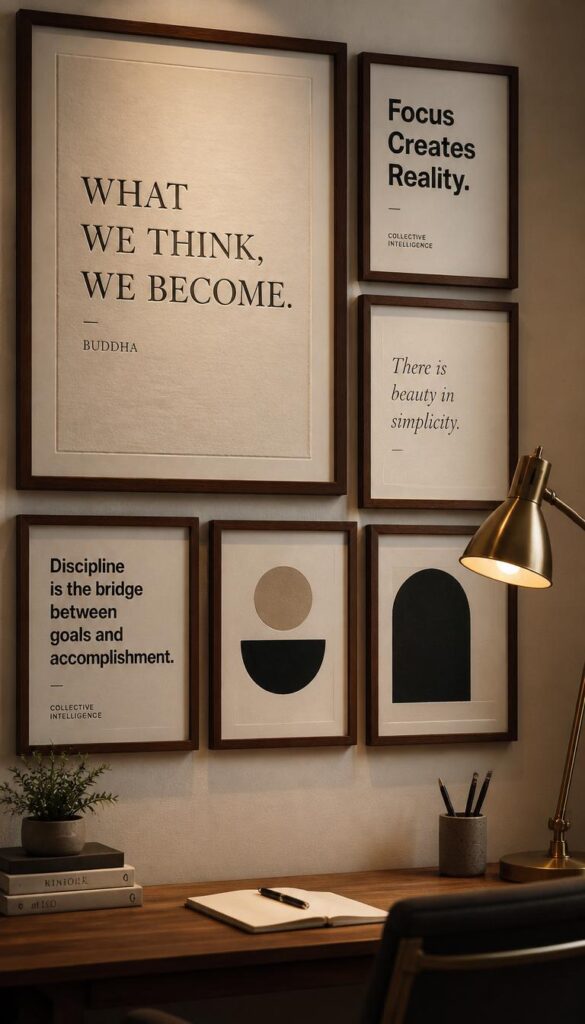
Words on walls have been overdone in the wrong way — generic mass produced farmhouse signs with tired phrases. But a thoughtfully curated gallery wall built around meaningful typography is a completely different thing. Think museum quality letterpress prints, architectural typography posters, vintage travel or propaganda style text art, or simple but beautifully typeset personal quotes in custom frames.
The typography itself should be treated as visual art, not just words. A large letterpress print with beautiful tactile texture paired with smaller text based prints in varied typefaces — from bold grotesque sans serif to delicate italic script — creates a wall that rewards close reading and visual appreciation simultaneously. Choose words and phrases that mean something specific to you rather than broadly inspirational statements that could belong to anyone.
Mix typography pieces with one or two purely visual, non text prints to give the eye a rest and prevent the wall from feeling like a reading assignment. A single abstract print or a minimal landscape anchors the word heavy arrangement and makes the text pieces feel even more deliberate. Consistent frame colors — all black, all natural wood, or all white — hold the varied typefaces together visually. This gallery wall style is particularly strong in home offices, libraries, and reading rooms where the written word feels at home.
15. Seasonal Rotating Gallery Wall with an Interchangeable System
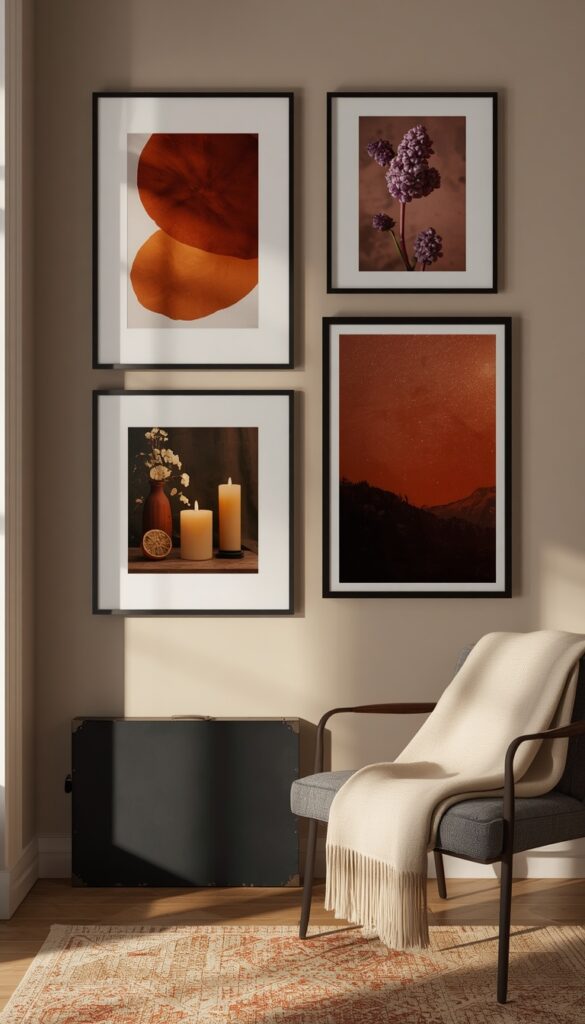
The smartest gallery wall you can build is one designed from the start to evolve. A rotating gallery wall uses a consistent frame system — same sizes, same finishes — but swaps art in and out with the seasons, your mood, or your life. It’s a commitment to the idea that your walls should reflect who you are right now, not just who you were when you first moved in.
The easiest interchangeable system uses frames with simple back loading inserts that open without tools. IKEA’s RIBBA frames work perfectly for this. Print new art at home on a quality matte photo printer, or use an affordable online print service and order new pieces in your standard frame sizes whenever you want a refresh. Keep a small collection of prints stored flat in a portfolio case so you always have options to rotate through.
This approach also solves the problem of seasonal decor in a sophisticated way. A winter wall might lean into cool blues, pine greens, and warm candlelight photography. Spring brings in botanical watercolors and soft floral prints. A summer rotation could be all coastal photography or bright abstract color. Autumn calls for rich ochres, plum tones, and warm toned still life prints. The gallery wall stays the same physical structure — the art does the seasonal work. It’s endlessly flexible, surprisingly affordable, and always impressive.
Conclusion
A gallery wall is one of the most personal, high impact things you can do to a room, and it doesn’t require a designer’s budget or years of experience to get right. What it does require is intention — thinking carefully about scale, color, arrangement, and what actually means something to you before you start hanging. The 15 gallery wall ideas in this article cover a wide range of styles and spaces, but the common thread running through every one of them is that the best walls are built with purpose. Start with one idea that genuinely excites you, plan it out before you pick up a hammer, and trust your instincts. Your walls are one of the most visible expressions of who you are — make them worth looking at.
FAQs
Q: What is the easiest gallery wall idea for beginners? A: A simple grid of matching frames in one size and finish is the most beginner friendly starting point. The consistency of identical frames removes most of the decision making, and equal spacing creates an automatic sense of order. Map the layout on your floor first, then use painter’s tape on the wall to plan positions before hanging a single nail.
Q: How many pieces do you need for a gallery wall? A: Most gallery walls look best with a minimum of five pieces — fewer than that often reads as isolated art rather than a cohesive wall arrangement. A medium sized living room wall typically suits seven to twelve pieces well. The space available and the sizes of your pieces matter more than hitting a specific number.
Q: What spacing should you use between gallery wall frames? A: Two to three inches between frames is the standard for a clean, polished look. Salon style walls with a denser feel can go as tight as one to one and a half inches. Wider spacing — four inches or more — gives each piece more breathing room but can make the arrangement feel scattered rather than intentional, so use it only for very minimal displays.
Q: Can you mix frame sizes and finishes on a gallery wall? A: Absolutely — mixing sizes creates visual rhythm and energy. Mixed finishes work best when you keep them within a consistent tone family: all warm metals together, or all wood tones together, rather than jumping between warm gold and cool silver in the same arrangement. One anchor piece in a distinctly different finish can work beautifully as an intentional focal point.
Q: What type of art works best for a gallery wall? A: Gallery walls work with virtually any art type — prints, photography, original paintings, textile art, and even sculptural objects. The key is finding a unifying element: a shared color palette, consistent framing style, or related subject matter. When pieces share at least one visual thread, even very different art types can coexist comfortably in the same arrangement.
Q: How do you hang a gallery wall without damaging walls? A: Command strips work reliably for lighter frames up to about 16 pounds. For heavier pieces, use proper wall anchors or locate wall studs for solid support. Picture rail systems are ideal for plaster walls in older homes. Adhesive cork strips or foam bumpers on the lower corners of each frame prevent the frames from tilting and protect the wall surface over time.
Q: How do you plan a gallery wall layout before hanging? A: Trace each frame onto kraft paper, cut out the shapes, and tape them to the wall with painter’s tape before committing to nail positions. This lets you adjust the arrangement freely without any wall damage. Alternatively, lay all the pieces on the floor in front of the wall and photograph the arrangement from a standing height — the photo gives you a realistic preview of how it will read on the wall.
Q: What is the best wall color for a gallery wall? A: Light neutral walls — warm white, cream, or soft greige — give maximum flexibility and make frames and art pop cleanly. Deep accent colors like navy, forest green, or terracotta create dramatic contrast that makes white frames particularly striking. The best wall color ultimately depends on your frame finishes and art palette — plan all three elements together rather than choosing the wall color in isolation.