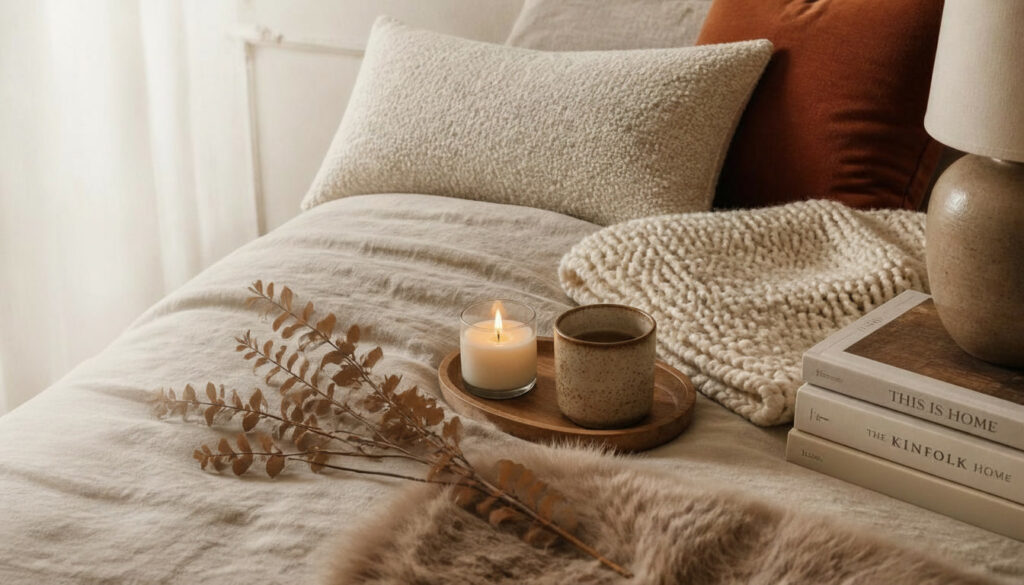
A cozy bedroom isn’t an accident. It’s built, layer by layer, from texture, lighting, and a handful of details most people walk right past in a furniture showroom. I’ve styled bedrooms in drafty old houses and brand new apartments with stark white walls, and the same core principles work in both. Coziness comes from softness you can actually feel, warmth you can actually see, and a few small comforts that make you want to linger instead of rushing out the door every morning.
This isn’t about buying everything at once or chasing a single Instagram perfect look. It’s about understanding which details genuinely create comfort versus which ones just look nice in a photo. These 14 ideas come from real bedrooms I’ve worked on, the kind of practical, specific advice that actually changes how a room feels to sleep and wake up in, not just how it photographs.
1. Layer a Chunky Knit Throw at the Foot of the Bed

A chunky knit throw, draped across the foot of the bed, is one of the fastest ways to add visual warmth and genuine tactile comfort to any bedroom. I always look for a thick, cable knit or waffle weave texture in a natural fiber like wool or cotton, since synthetic blends tend to feel flat and don’t hold their shape as nicely once draped and rumpled through daily use.
Color choice should complement your bedding without matching it exactly, since an identical tone on tone look reads as flat rather than layered. A cream throw against sage green bedding, or an oatmeal throw against deep navy, creates the kind of gentle contrast that genuinely catches the eye. I avoid throws in stark white; they show wear and require far more frequent washing than warmer, slightly muted tones.
Draping technique matters more than people expect for the finished look. Fold the throw in thirds lengthwise, then lay it across the lower third of the bed in a loose, slightly rumpled fold rather than perfectly flat and square. This casual draping reads as lived in and inviting, while a too perfect fold can accidentally look stiff and overly staged instead of genuinely cozy.
2. Add a Reading Lamp with Warm, Dimmable Light
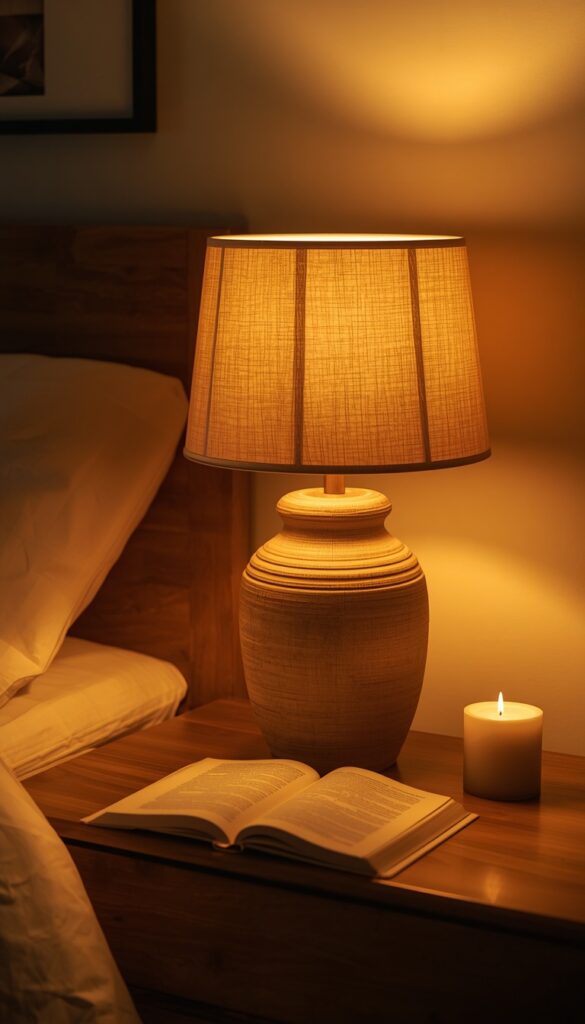
A dedicated reading lamp on your nightstand does more for bedroom coziness than almost any other single addition, since it lets you control your immediate light without flooding the whole room with a harsh overhead fixture. I always recommend a dimmable warm bulb, ideally adjustable between 2200K and 2700K, so you can shift the mood from focused reading light to a soft, sleepy glow.
Lamp height matters for actual function, not just style. The bottom of the shade should sit roughly at shoulder height when you’re seated upright in bed, low enough to direct light onto a book’s pages without shining directly into your eyes. I’ve adjusted countless nightstand setups where the lamp looked beautiful but sat too high or too low to actually function comfortably for reading.
Shade material changes the quality of light significantly. A linen or fabric shade diffuses light softly and evenly, creating that warm, glowing effect cozy bedrooms are known for, while a metal or glass shade throws a more direct, focused beam. I generally pair fabric shades with wood or ceramic lamp bases for the warmest, most inviting overall combination in a bedroom setting.
3. Use Flannel or Brushed Cotton Sheets in Cooler Months

Sheet material affects how cozy a bed actually feels far more than people realize, especially once temperatures drop. Flannel sheets, measured by weight in grams per square meter rather than thread count, trap warmth against your body and feel genuinely soft against skin in a way crisp percale sheets simply can’t replicate during colder months.
I generally recommend a flannel weight between 170 and 200 grams per square meter for genuine warmth without feeling overly heavy or hot once you’re actually under the covers. Lighter flannels below this range can feel thin and less effective, while heavier options sometimes trap too much heat for anyone who tends to sleep warm throughout the night.
Brushed cotton offers a middle ground between flannel’s heavy warmth and standard cotton’s crispness, with a soft, slightly fuzzy hand feel that works well in transitional seasons. I keep both flannel and a lighter cotton set on hand, swapping seasonally, since a year round flannel sheet set can feel uncomfortably warm once temperatures climb back up in spring and summer.
4. Add Blackout Curtains for Deeper, More Restful Sleep
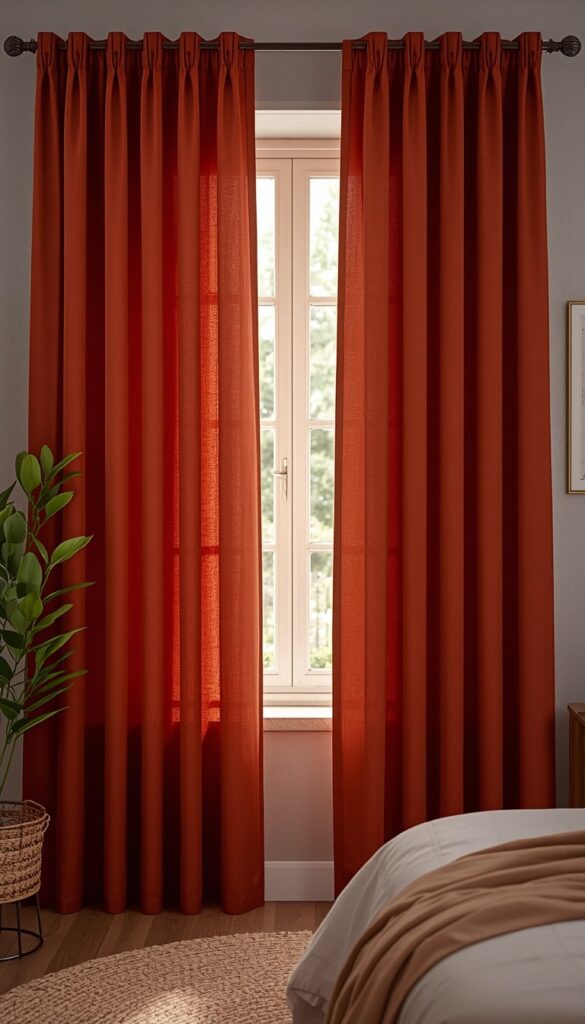
Blackout curtains do real functional work alongside their cozy aesthetic contribution, blocking outside light that disrupts deep sleep cycles, particularly in bedrooms facing streetlights or getting strong early morning sun. I always check the fabric’s actual blackout lining, since some curtains marketed as blackout only block partial light and still let a noticeable glow through around the edges.
Mounting height changes both function and visual impact. I hang curtain rods several inches above the actual window frame and extend them a few inches beyond each side, which blocks more peripheral light leakage while also making the window itself look larger and the ceiling feel taller. This small adjustment improves both the room’s coziness and its actual light blocking performance.
Fabric weight and color affect the room’s mood even with curtains closed. A heavier curtain in a deep, warm color, terracotta, forest green, charcoal, adds genuine visual richness during the day, while still doing its blackout job at night. I steer away from thin, lightweight blackout fabrics; the cheaper versions often feel flimsy and undercut the cozy, substantial feeling good curtains should add to a room.
5. Bring In a Faux Fur or Sheepskin Accent Rug
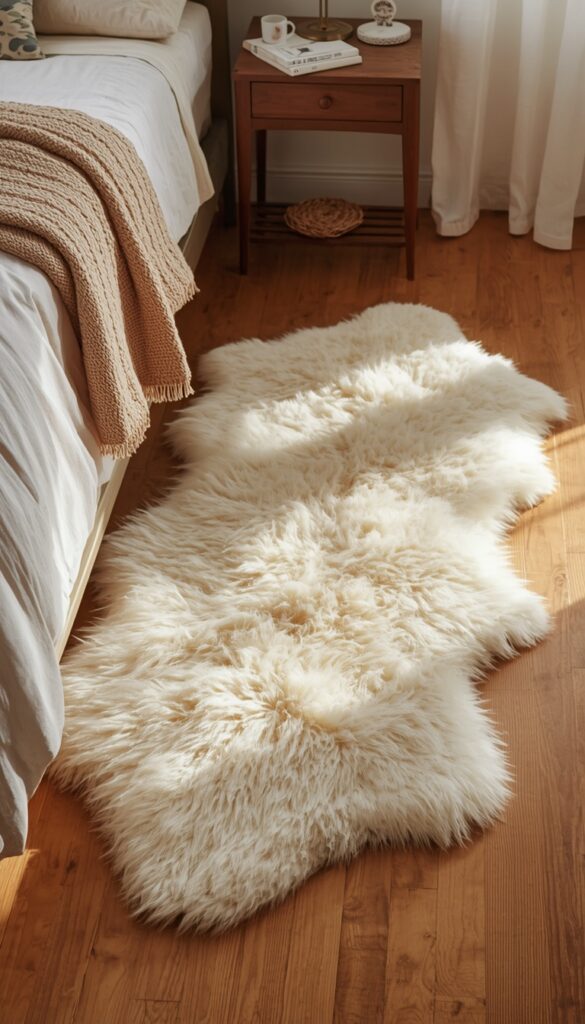
A faux fur or sheepskin rug placed beside the bed adds genuine tactile luxury to the first and last moments of your day, the part where bare feet hit the floor getting in and out of bed. I always position mine on the side I personally get out of most often, since that’s where the comfort actually matters daily rather than purely for visual styling purposes.
Material quality affects both look and longevity here. A higher density faux fur holds its shape and shed resistance far better over time than thin, cheap versions that flatten and mat after just a few months of regular foot traffic. I generally recommend shaking and fluffing these rugs weekly, since their plush texture compresses with daily use and needs that small bit of regular maintenance to stay looking genuinely lush.
Color choice should soften rather than compete with your existing bedroom palette. A cream or warm gray sheepskin works in nearly any color scheme, while a bolder colored faux fur can feel like a genuine style statement in an otherwise neutral room. I keep mine slightly off center from the bed rather than perfectly centered, which reads as more natural and lived in.
6. Hang Sheer Curtains Beneath Blackout Panels for Daytime Softness
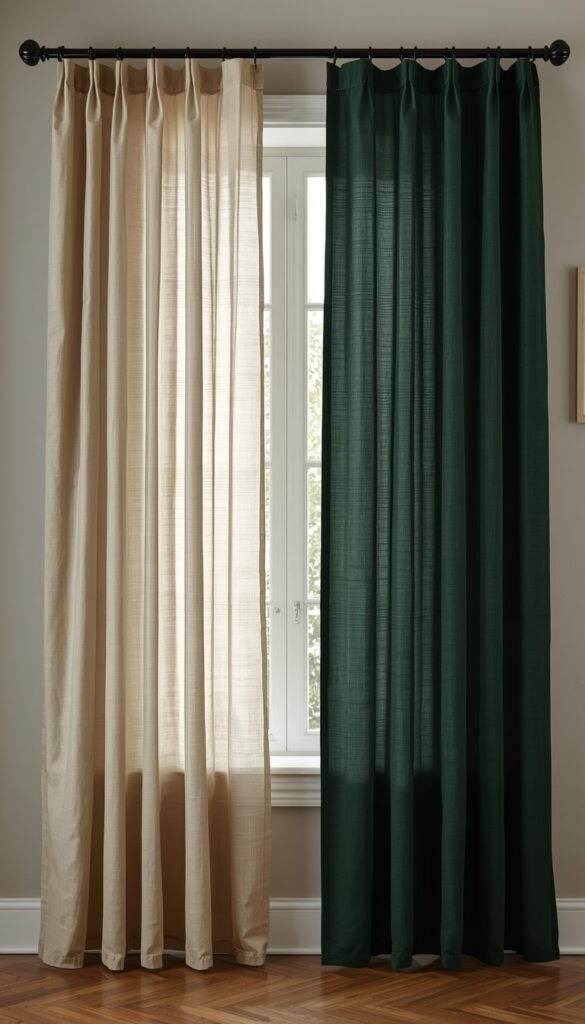
Pairing sheer curtains underneath your blackout panels gives you genuine flexibility between a bright, airy daytime look and full darkness at night. During the day, you can push the heavier blackout panels fully open and let the sheer layer filter soft, diffused light into the room, creating that gentle, glowing quality that makes a bedroom feel calm rather than harshly bright.
I mount this on a double curtain rod, one rod slightly in front of the other, so both layers operate independently without tangling every time you open or close them. Linen or a lightweight, slightly textured sheer fabric diffuses light more beautifully than a flat, shiny polyester sheer, which can look cheap and overly stiff once it catches direct sunlight.
This layered approach also adds genuine depth and dimension to the window itself, even when both layers are fully open and pushed to the sides. The sheer fabric peeking out slightly beyond the blackout panel’s edge creates a soft, textural detail that a single curtain layer simply can’t replicate, and it’s a detail that consistently makes window treatments look more considered and complete.
7. Add a Canopy or Drape Above the Headboard

A soft fabric drape mounted above the headboard creates an instant focal point and adds genuine softness to a bedroom’s most visually dominant wall. I use a simple curved metal rod or a straight tension rod mounted higher than the headboard itself, then let lightweight fabric, linen or a soft cotton gauze, cascade down behind the pillows in loose, natural folds.
Fabric choice changes the entire mood here significantly. A heavier, more structured fabric pools dramatically and feels romantic and traditional, while a sheer, lightweight gauze drapes airily and feels more current and ethereal. I generally recommend testing both directions with fabric samples pinned up temporarily before committing to a full panel, since the visual difference between the two is more dramatic than people expect.
Lighting integrated behind this drape elevates the whole effect from nice to genuinely striking once evening arrives. A warm LED strip light, tucked along the rod and angled toward the wall, creates a soft glow that filters gently through the fabric after dark. This backlighting detail transforms the headboard wall into the room’s clear focal point precisely when coziness matters most.
8. Use a Weighted Blanket for Extra Comfort and Calm

A weighted blanket adds genuine physical comfort beyond simple visual coziness, using gentle, even pressure across the body that many people find calming and grounding, particularly helpful for anyone who struggles with restlessness or trouble settling into sleep. I generally recommend choosing a weight around ten percent of your body weight for the most comfortable, effective pressure without feeling overly restrictive or hard to move under.
Fabric choice affects both feel and seasonal comfort significantly. A cotton or bamboo cover breathes better and works year round, while a minky or plush fabric feels warmer but can run hot during summer months. I keep a lighter cotton covered weighted blanket as my primary choice specifically because it doesn’t require seasonal swapping the way a heavier, plush option eventually does.
Placement and layering technique matters for how this blends into your overall bedroom styling. I fold mine in thirds and place it at the foot of the bed alongside a lighter throw, rather than spreading it fully across the entire bed surface, which keeps the bed looking intentionally layered rather than simply piled with blankets in a disorganized heap.
9. Style Your Nightstand with a Tray of Calming Essentials
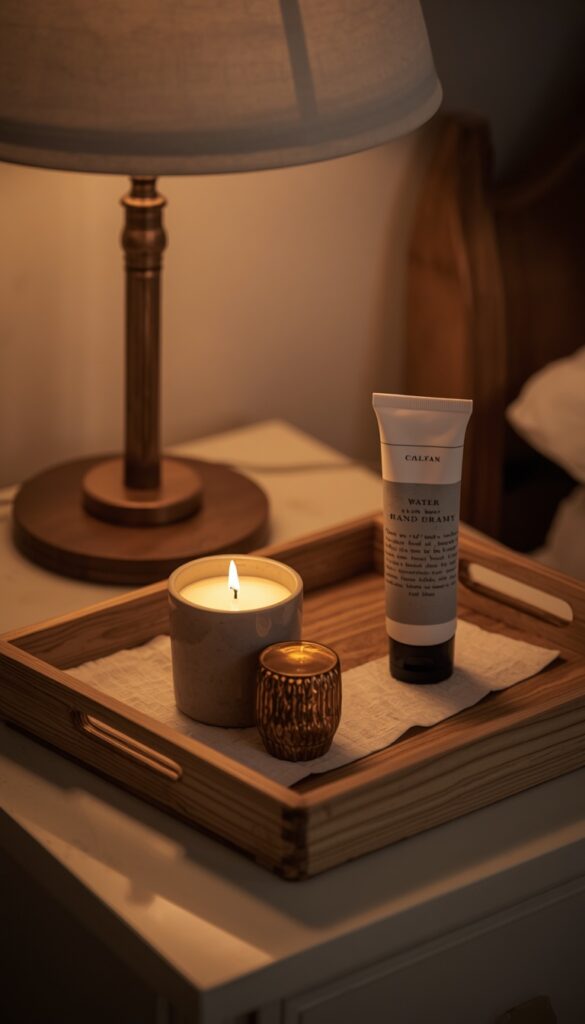
A small styled tray on your nightstand groups your nighttime essentials into one organized, intentional display rather than letting items scatter loosely across the surface. I keep mine simple: a small candle, a glass of water or a ceramic cup, and maybe a hand cream or lip balm, things genuinely used every single night rather than purely decorative objects.
Material choice for the tray itself should echo something else already present in the room, a wood tray matching your headboard, or a ceramic tray picking up your bedding’s color tone. I avoid plastic entirely in this specific spot since it cheapens an otherwise cozy, intentional nightstand display and doesn’t hold up particularly well to nightly water glass condensation over time.
Candle scent matters more here than people initially consider, since this is the last thing you smell before falling asleep most nights. I lean toward warm, calming scents, sandalwood, vanilla, lavender, rather than bright citrus or fresh linen scents that work better in daytime spaces. A soy or beeswax candle also burns cleaner overnight if you’re someone who lets a candle run a while before bed.
10. Add an Upholstered Headboard for Softness and Support
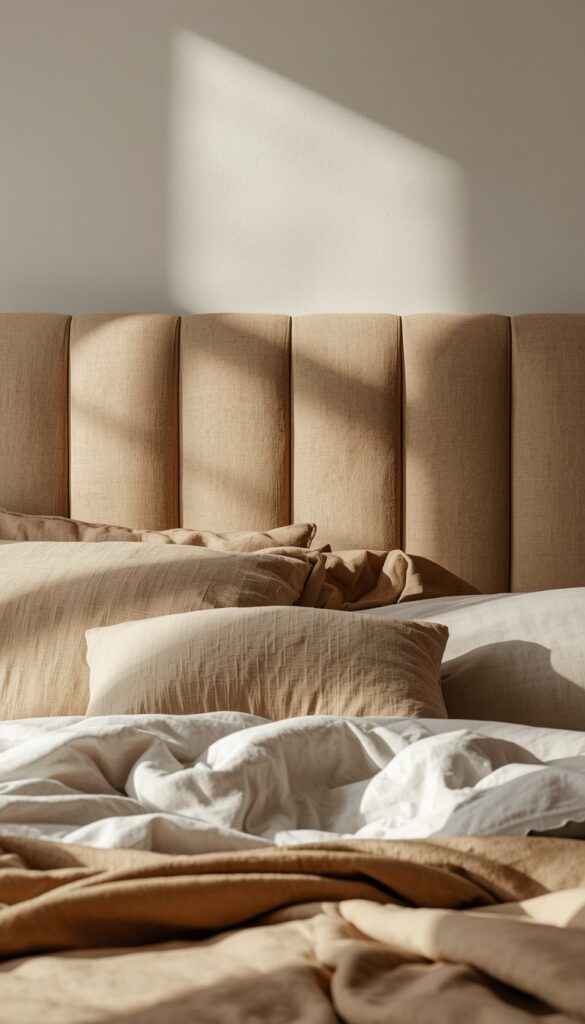
An upholstered headboard genuinely transforms how a bedroom feels, adding softness against a wall that’s otherwise hard and flat, while also giving you comfortable back support for reading or working from bed. I always recommend a linen or performance velvet fabric over leather for cozier bedrooms specifically, since fabric simply feels warmer and more inviting against skin than a cooler, slicker material.
Channel tufted or simple wingback style headboards both read as current right now, depending on your room’s broader style direction. I steer people away from heavily buttoned, traditional tufting unless that specific vintage look is genuinely what they’re after, since simpler tufting patterns tend to age better and feel less dated within just a few years of design trend shifts.
Height matters more than people initially think when shopping. A taller headboard, extending well above where pillows sit, creates a more dramatic, anchoring effect on the wall, while a shorter, low profile headboard keeps the room feeling more open and airy overall. I measure ceiling height and overall room proportions before recommending either direction to a client.
11. Bring In Warm Toned String Lights for Soft Evening Glow
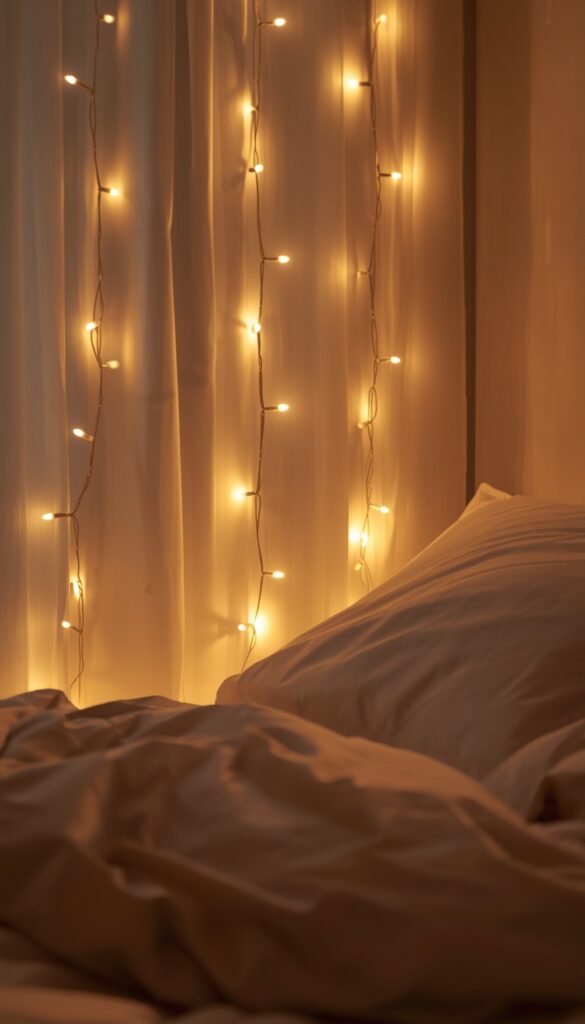
Warm white string lights, tucked carefully along a headboard, draped behind a curtain panel, or wrapped loosely around a piece of furniture, add a genuine soft glow that overhead lighting simply can’t replicate once evening settles in. I always choose warm 2700K LED string lights specifically, since cooler white versions feel sterile and clash badly with the warm, cozy mood you’re trying to create.
Placement restraint matters enormously here, more than with almost any other lighting choice. I tuck string lights into one specific, intentional spot, behind a curtain, along one shelf edge, rather than draping them loosely across an entire wall or ceiling, which quickly starts looking cluttered and overly busy rather than genuinely cozy and considered.
Battery powered options with a built in timer solve a real daily annoyance, automatically turning lights on each evening and off again later without you remembering to flip a switch nightly. I genuinely recommend this feature, since manually managing string lights every single night becomes tedious fast, and a forgotten light left on all day undercuts the whole point of using them intentionally.
12. Add a Plush Area Rug Beneath the Bed
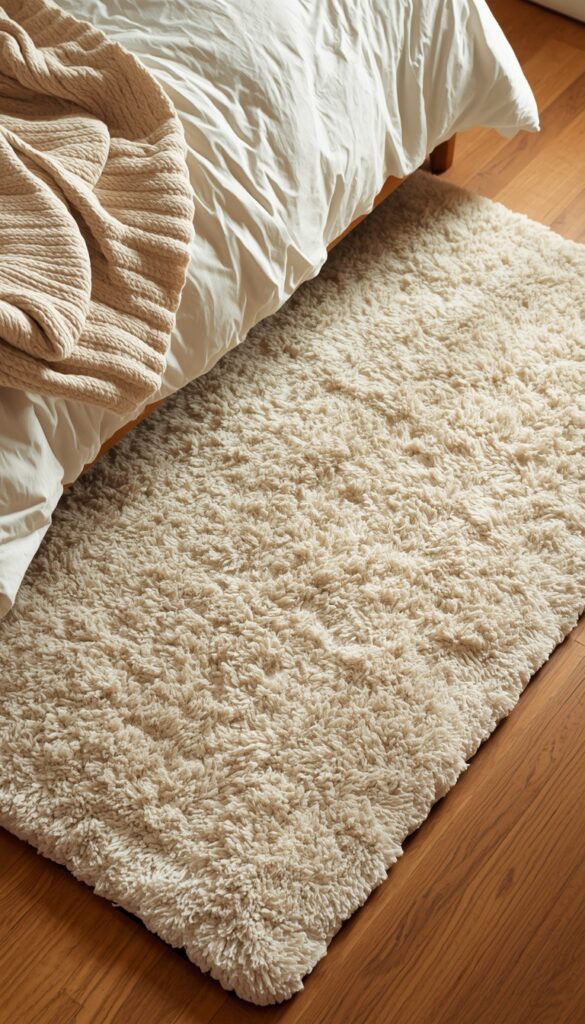
A plush area rug positioned beneath the bed, extending well beyond its edges on at least three sides, adds genuine warmth underfoot and visually softens a room that might otherwise feel cold, particularly over hardwood or tile flooring. I generally recommend the rug extend at least eighteen to twenty four inches beyond the bed frame on the sides you actually walk around daily.
Pile height affects both comfort and practicality here. A higher pile rug feels luxuriously soft underfoot first thing in the morning, but it also traps more dust and requires more frequent vacuuming than a lower, denser pile. I generally recommend a medium pile height for bedrooms, balancing genuine comfort with reasonable, manageable upkeep over time.
Color and pattern choice should support your room’s existing palette rather than introducing a competing focal point, since the bed itself should remain the room’s clear visual anchor. I lean toward soft, subtle patterns or solid neutral tones for bedroom rugs specifically, saving bolder, more graphic patterns for living spaces where the rug itself can take center stage.
13. Use Warm Wood Tones in Nightstands and Furniture
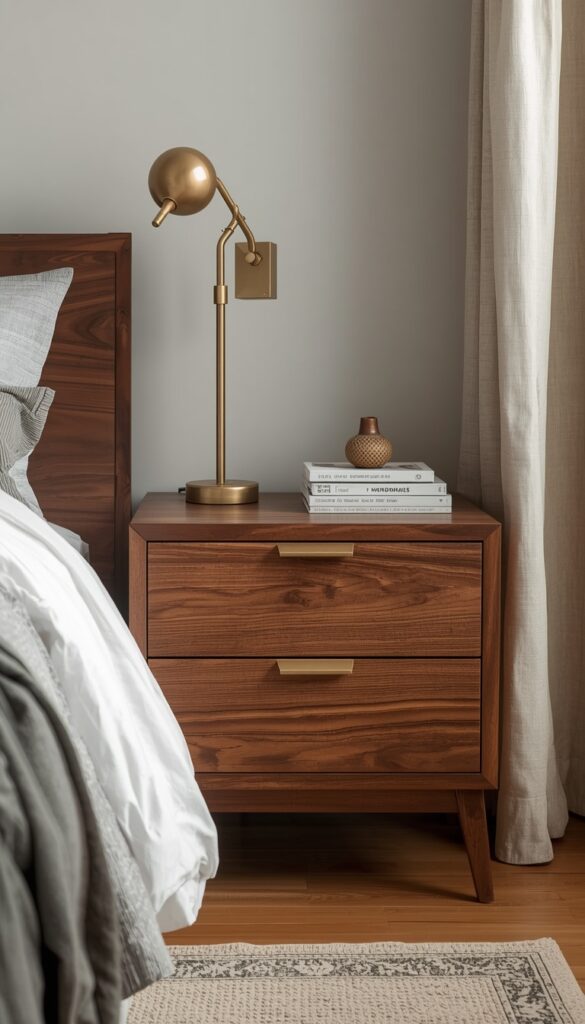
Warm wood furniture brings genuine visual warmth into a bedroom in a way cold metal or stark white furniture simply can’t replicate on its own. I always look for wood with visible grain and a medium to warm tone, like walnut, oak, or cherry, rather than a uniform, flat painted finish, since that natural grain variation adds real texture and depth to the room.
Consistency across pieces matters more than matching exactly. Your nightstands, dresser, and any other wood furniture in the room don’t need to be from the same matching set, but keeping the wood tones within a similar warm family creates real cohesion. I’ve mixed vintage and new wood pieces successfully many times, as long as the overall tone family stays consistent throughout the room.
Finish sheen affects the mood as much as the wood tone itself. A matte or satin finish feels warmer and more current than a glossy, lacquered finish, which can read as colder and more formal. I generally recommend a soft matte finish for cozy bedrooms specifically, since it absorbs rather than reflects light, contributing to that warm, enveloping feeling good cozy spaces are known for.
14. Add Layered Pillows in Varied Sizes and Textures
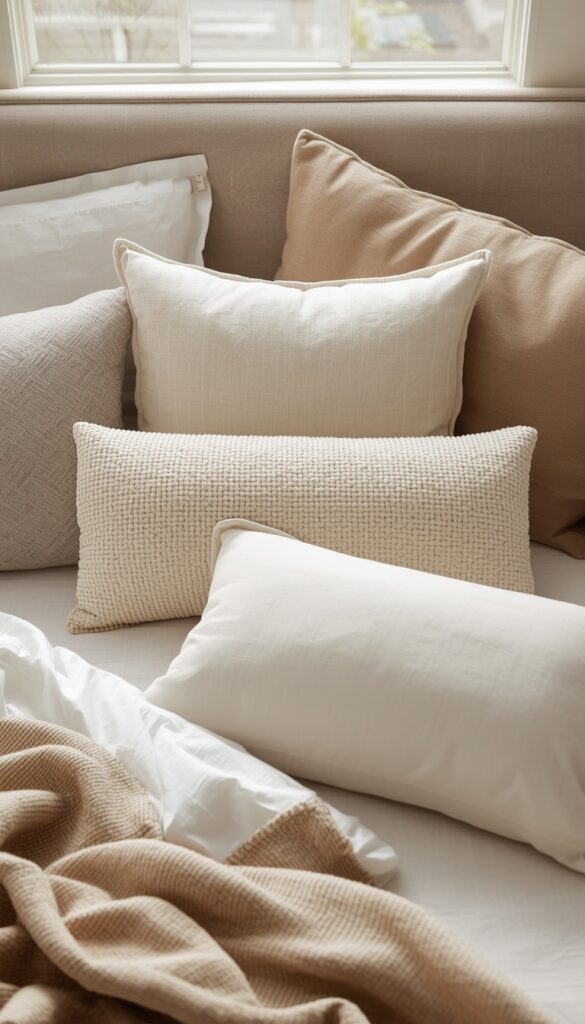
Pillow layering does enormous visual and tactile work in a cozy bedroom, transforming a simple made bed into something that genuinely invites you to sink in and relax. I recommend layering at least three sizes, standard sleeping pillows in back, a euro square in the middle, and a smaller decorative or lumbar pillow in front, rather than a flat row of identical pillows lined up evenly.
Texture variation matters as much as size variation for genuine coziness. Pairing a smooth cotton pillowcase with a chunky knit or bouclé decorative pillow adds real tactile interest that a uniform set of matching pillows simply can’t deliver. I always check that at least one pillow in the arrangement has a distinctly different texture from the rest before calling a layered look finished.
Color discipline still applies even with texture variation in play. I keep the overall palette within two or three tones, even while mixing several different textures and pillow shapes, since too many competing colors can undercut the calm, cozy feeling despite genuinely beautiful individual pillows. Restraint in color lets texture do the more interesting visual work instead.
Bringing It All Together
A cozy bedroom isn’t built from one big purchase. It’s built from layers, soft textiles, warm lighting, and a few small daily comforts that genuinely change how a room feels to live in, not just how it photographs for a quick scroll online. Every idea here comes from real bedrooms I’ve actually styled and slept in myself, the kind of details that matter once the lights are dim and you’re settling in for the night. You don’t need to do all fourteen at once. Pick one or two that genuinely speak to you, start there, and let your cozy bedroom build naturally from this point forward.
Frequently Asked Questions
Q: How do I make my bedroom feel cozier without spending much money? A: Layering an existing throw blanket differently, swapping to warmer bulb temperatures in your current lamps, and decluttering your nightstand into a simple tray all cost little to nothing. Texture and lighting consistently matter more than new furniture for genuine coziness, so start with what you already own before buying anything new.
Q: What colors make a bedroom feel the coziest? A: Warm neutrals, cream, terracotta, deep forest green, charcoal, consistently read as cozier than cool, bright tones like crisp white or pale blue. These warmer shades absorb light gently rather than reflecting it harshly, creating that enveloping, settled feeling most people associate with genuine bedroom coziness.
Q: Are blackout curtains worth it for a cozy bedroom? A: Genuinely, yes, since they improve actual sleep quality while also adding visual richness and texture to the room. Pairing them with a sheer layer underneath gives you flexibility between bright daytime light and full nighttime darkness, solving both the functional and aesthetic sides of good window treatment.
Q: What’s the best lighting for a cozy bedroom? A: Warm 2700K bulbs in layered sources, a dimmable reading lamp, tucked string lights, maybe a small accent lamp, create depth that a single overhead fixture never achieves. Avoid cool white or daylight bulbs entirely in bedrooms, since they clash with nearly every cozy color palette and feel clinical after dark.
Q: How many pillows should I put on my bed for a cozy look? A: Somewhere between four and six pillows generally hits the sweet spot, layering varied sizes and textures without making the bed feel impractically crowded to actually sleep in each night. Fewer than that can look sparse, while significantly more becomes a genuine hassle to move every single evening.
Q: Is a weighted blanket good for making a bedroom cozier? A: Many people find weighted blankets genuinely calming thanks to the even, gentle pressure they provide across the body, beyond just adding visual coziness to the bed. Choosing a weight around ten percent of your body weight typically feels comfortable rather than restrictive for most people trying one for the first time.
Q: What fabric is warmest for bedroom curtains and bedding? A: Flannel and brushed cotton lead for bedding warmth, while heavier linen or velvet curtains add the most visual and thermal richness for window treatments. Both material categories trap warmth effectively while still feeling genuinely soft against skin, which matters as much as their appearance in a true cozy bedroom.