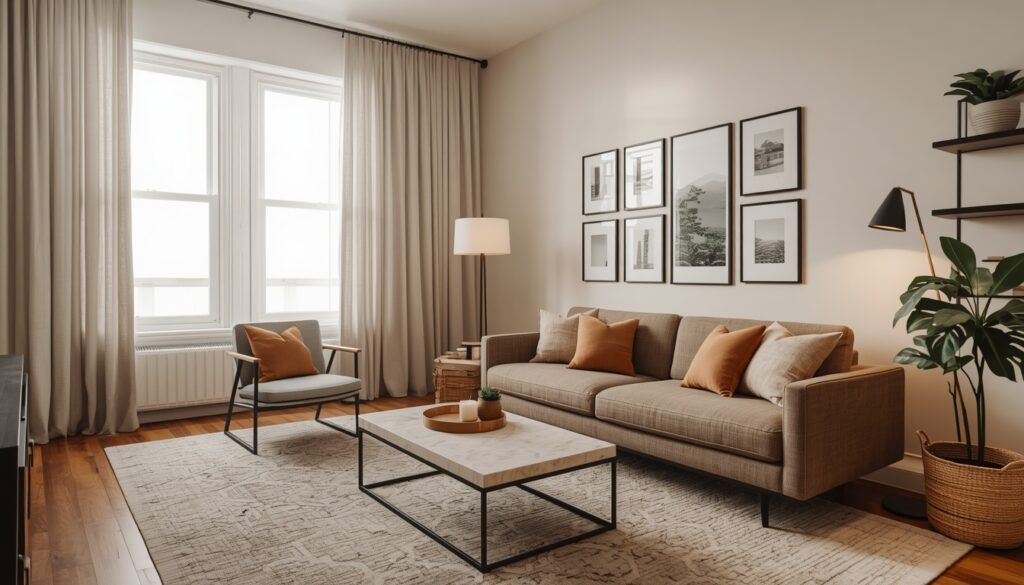
Renting doesn’t mean settling. That’s the thing nobody tells you when you sign a lease and stare at those blank beige walls ,you have way more power over how your space looks and feels than your landlord wants you to think. The secret is knowing which changes are genuinely reversible, which products actually work as advertised, and how to layer them so the result looks intentional and beautiful rather than like a collection of workarounds. Renters who know these things live in spaces that feel completely their own. The ones who don’t spend years waiting to “really decorate” until they own a home.
This list covers 13 renter friendly decor ideas that are genuinely practical and genuinely stylish ,not just “hang a tapestry and call it a day” advice. Every idea here leaves zero permanent damage, works across apartment sizes and styles, and makes a real visual difference. Whether you’re in a studio with one tiny window or a two bedroom with bizarre carpet choices you can’t change, there’s something here that will make your space feel more like you. Start with one. You’ll want to do all thirteen.
1. Peel and Stick Wallpaper That Actually Looks Real
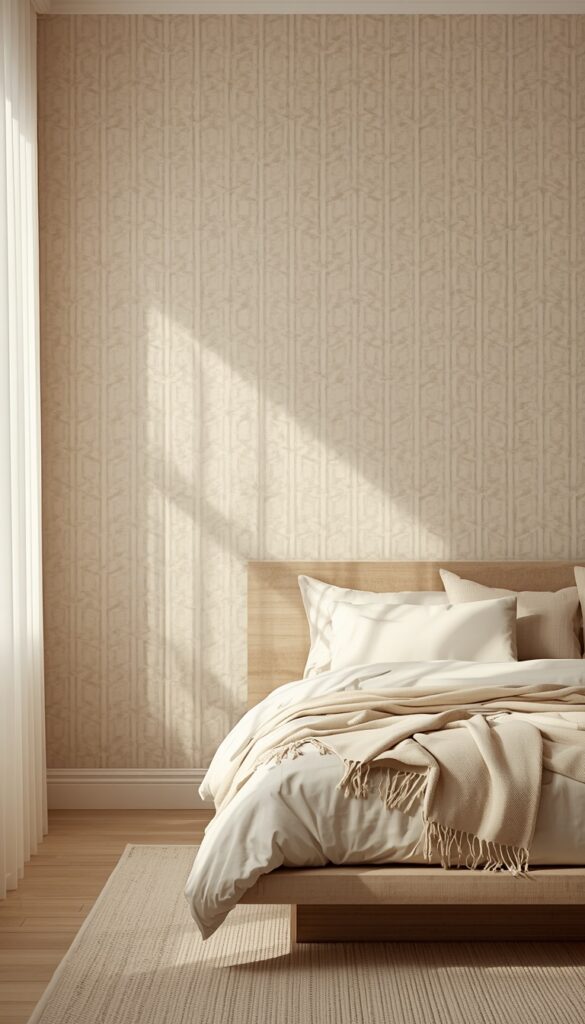
Peel and stick wallpaper has come a very long way from the flimsy, bubble prone versions of a few years ago. Today’s options include genuine linen textures, convincing grasscloth looks, architectural prints, and even realistic stone and wood patterns that fool people up close. One accent wall ,behind a bed, behind a sofa, or in an entryway ,transforms the entire character of a room without a single nail hole or permanent adhesive. This is the single most impactful change a renter can make, and it costs a fraction of what traditional wallpaper installation runs.
The key to getting it right is surface preparation. The wall must be completely clean, dry, and free of dust. Wipe it down with a damp cloth and let it dry fully before you start. Use a squeegee or a flat credit card to press out bubbles as you go ,working from the center outward. Measuring and cutting carefully before you peel the backing saves enormous frustration. Most quality peel and stick brands recommend starting from the ceiling and working down, overlapping seams slightly and then trimming with a precision knife for a seamless result.
Removal is where renters get nervous, but quality peel and stick wallpaper comes off cleanly when you pull it slowly at a 45 degree angle ,not straight out from the wall. Warming the edges with a hairdryer for 15 to 20 seconds first helps loosen the adhesive on older applications. Brands like Chasing Paper, Tempaper, and Walls Need Love have strong reputations for clean removal. Always test a small panel in an inconspicuous corner first, let it sit for a week, then remove it to check how your specific wall reacts before committing to the full accent wall.
2. Removable Tile Stickers for Kitchens and Bathrooms
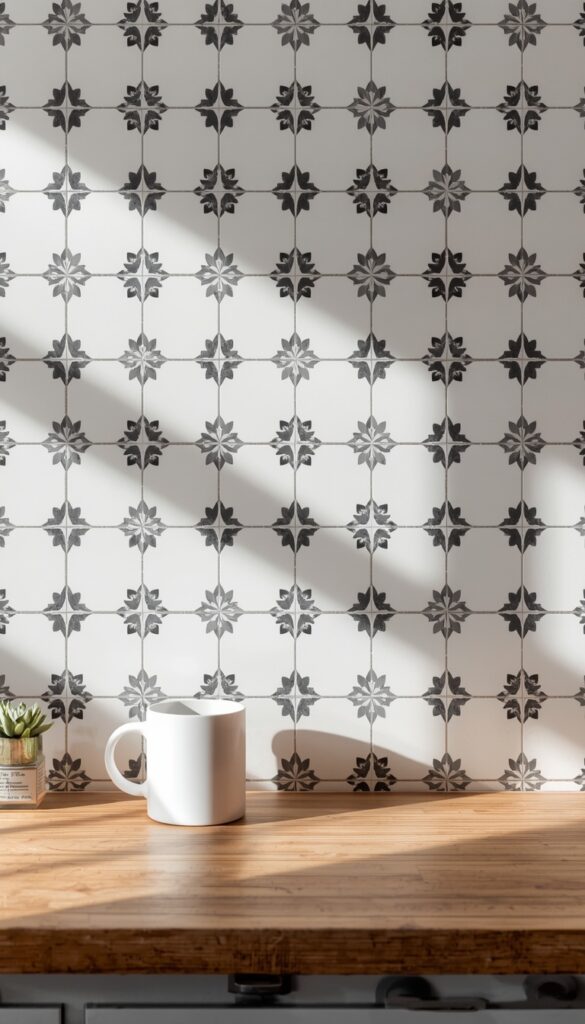
The kitchen backsplash and bathroom tile situation in most rentals is grim. Outdated beige subway tiles, generic white ceramic, or ,at the extreme end ,aggressively patterned vintage tile that belongs in a different decade entirely. Removable tile stickers are the answer. They apply directly over existing tile, adhere without damaging the surface beneath, and can completely change the visual story of a kitchen or bathroom in an afternoon. The transformation is genuinely shocking ,in the best way.
Look for vinyl tile stickers that are specifically rated for high moisture environments. This matters in bathrooms and near sinks. The adhesive needs to handle steam and splashing without peeling at the edges. Quality brands like Quadrostyle or Tile Style Decals offer options designed for these conditions. The most convincing looks are geometric patterns in black and white, encaustic style cement tile prints, or simple large format marble looks. Avoid overly trendy patterns that you’ll regret in six months ,the classics last longer visually and feel less dated on removal day.
Installation tips that actually matter: clean the existing tiles thoroughly with a degreasing agent and let them dry completely ,any grease from cooking residue will prevent proper adhesion near a stove. Use a ruler and level to keep rows straight, since even a slightly crooked first tile becomes obvious by the time you reach the end of the wall. Cut around outlets and fixtures with a sharp craft knife. When you’re ready to move out, peel them slowly and use an adhesive remover like Goo Gone on any residue. Your landlord won’t know they were ever there.
3. Freestanding Furniture That Builds Permanent Looking Storage
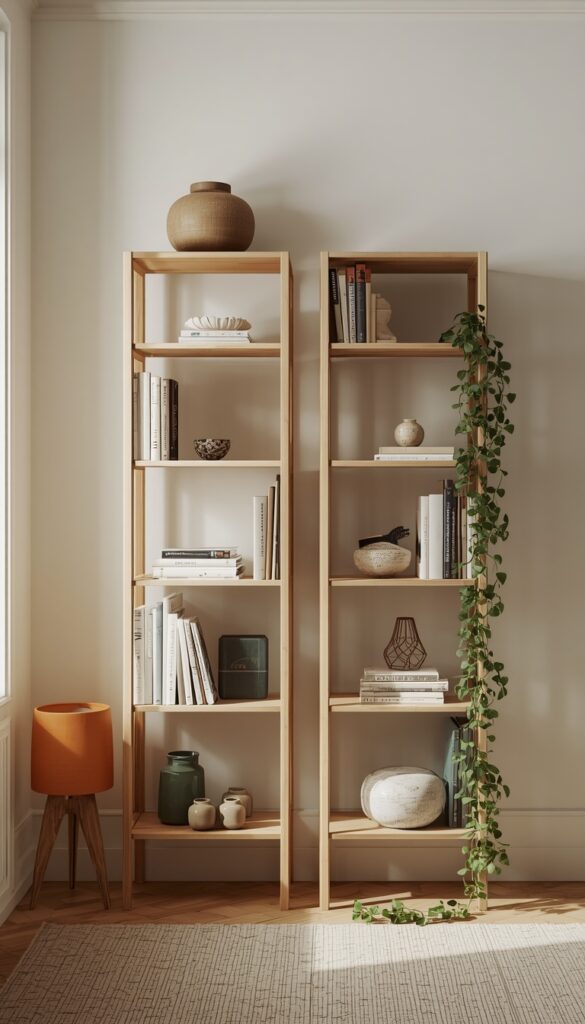
One of the biggest frustrations of renting is the complete absence of built in storage. No custom shelving, no butler’s pantry, no mudroom lockers ,just whatever closets came with the apartment, which are never enough. The solution is freestanding furniture that looks intentional and built in even though it isn’t. A tall bookshelf positioned in an alcove, a freestanding wardrobe in a bedroom, or a storage cabinet in a bathroom creates the visual impression of architecture without touching the walls in any permanent way.
The styling approach matters enormously here. A freestanding piece that’s clearly floating in the middle of a room looks temporary. Position shelving units to fill a wall from side to side, or tuck them into corners so they read as part of the architecture. Two matching bookcases placed side by side with consistent objects on each shelf create symmetry that looks custom. Painting freestanding shelves the same color as the wall behind them ,using removable paint in a rental context ,makes them recede visually and look almost built in, which is a trick designers use in permanent homes too.
Hardware upgrades take freestanding furniture from generic to considered. Standard flat pack shelving from IKEA or similar retailers often comes with basic handles that immediately signal “assembly required.” Swapping those out for brushed brass bar pulls, ceramic knobs, or matte black hardware takes ten minutes and costs very little ,but the difference in how the piece reads is significant. Keep the original hardware in a labeled bag to reinstall before you move. This single swap consistently makes budget furniture look like something that costs three times more.
4. Command Hook Gallery Walls Without the Nail Holes
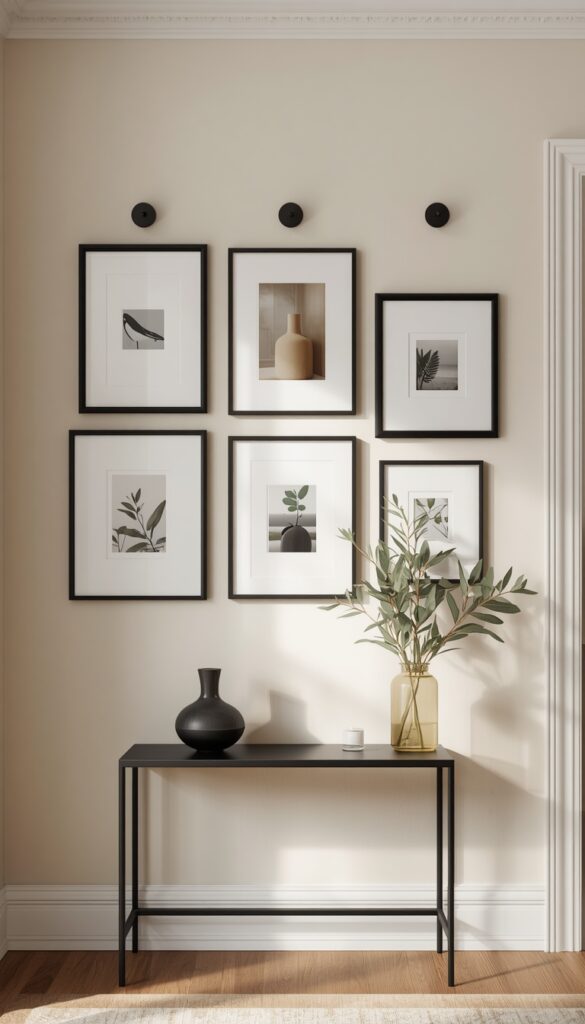
Gallery walls remain one of the most powerful ways to personalize a rental, and Command strips and hooks have genuinely improved enough that they’re no longer a compromise ,they’re a legitimate hanging solution for most art and frames. The critical factor most people miss is weight limits. Every Command product has a specific weight rating, and exceeding it is exactly how you end up with a frame on the floor at 2am. Match the product to the frame weight carefully, and for anything over five pounds, use two strips for redundancy.
The gallery wall arrangement that photographs best and reads most cohesively in person is one where all frames share a common element ,same frame color, same mat color, or same general subject matter. Mixing frame metals (brass and black) with a consistent mat color (white or off white) is a format that works across virtually any style. Lay the arrangement on the floor before committing to the wall ,take a photo of it, live with it for a day, and adjust before you apply a single strip. The floor planning step saves enormous frustration and wasted adhesive.
For renters who are genuinely nervous about wall damage, consider a leaning approach instead. A large framed print leaning against a wall on a console table or shelf, with smaller frames leaned in front of it, creates a gallery effect with zero wall contact. This layered leaning look actually photographs beautifully and is incredibly easy to rearrange. Add a string of clip lights across the top of the wall section and your gallery wall becomes a fully lit installation ,impressive, flexible, and completely removable the day you pack up.
5. Curtain Rods Hung With Tension or Adhesive Mounts
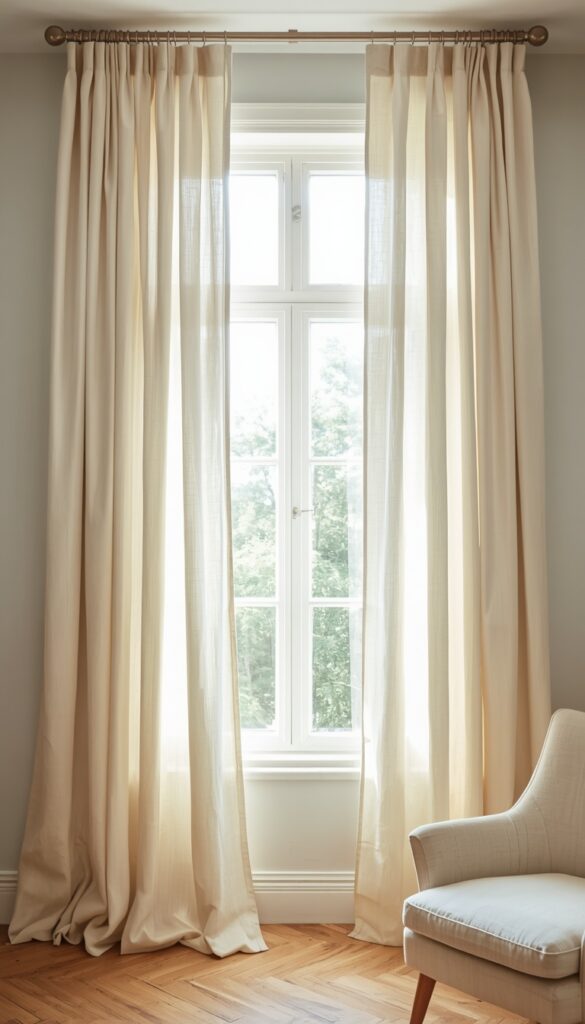
The curtain situation in most apartments is either bare windows with plastic blinds or builder grade curtain rods mounted in the most basic positions possible. Upgrading your curtains makes a bigger difference to how a room feels than almost any other single change ,but renters worry about the wall damage from drilling new rod brackets. The good news is that tension rods and heavy duty adhesive mounting systems now handle curtain weights that would have required drilled hardware just five years ago.
For sheer or lightweight curtains, a tension rod inside the window frame is genuinely elegant ,it sits flush with the frame and disappears behind the fabric. For heavier curtain panels, look for adhesive curtain rod brackets rated for the curtain weight ,brands like Umbra and Fallout make versions that hold convincingly and remove cleanly. The hanging height is still the most important detail: mount the rod 4 to 6 inches above the window frame and extend it 6 to 12 inches past each side of the window. This creates the illusion of larger windows and taller ceilings in every room it’s applied.
Curtain fabric choice affects the room more than most people realize. In a small rental apartment, sheer white or ivory linen panels make the space feel airy and larger ,they let light through while still providing privacy. In a darker apartment where natural light is limited, avoid heavy blackout curtains in the main living areas ,save those for the bedroom where darkness actually serves a function. A subtle pattern in the curtain ,a thin stripe, a woven texture, or a soft geometric print ,adds visual interest without making the room feel smaller or busier.
6. Peel and Stick Floor Tiles to Cover Ugly Flooring
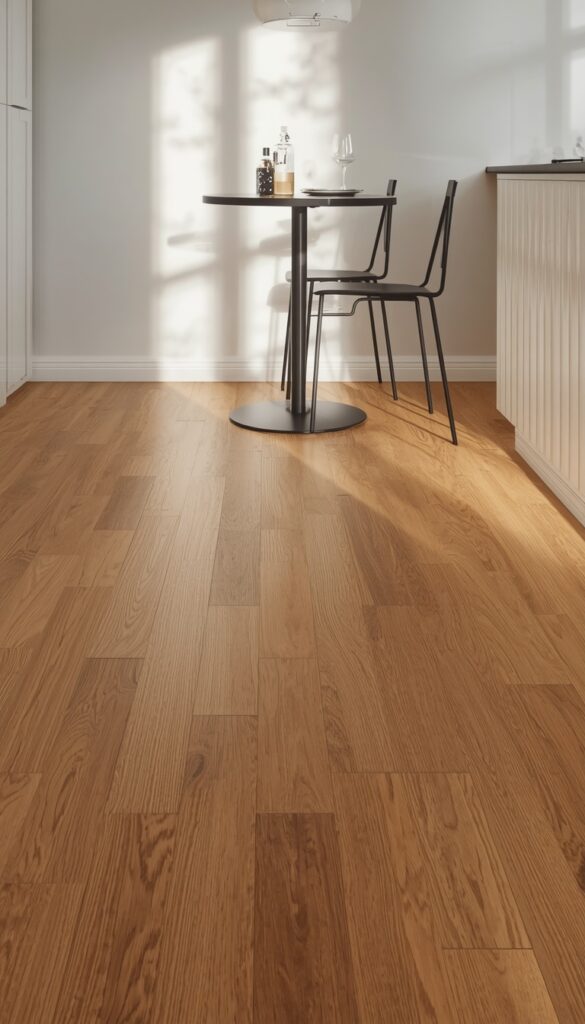
Bad rental flooring is one of the most demoralizing features of renting. Scuffed laminate, dated vinyl in geometric patterns from thirty years ago, cold tile in a bedroom ,none of it feels like home. Peel and stick floor tiles are a genuinely viable solution for renters who need a flooring upgrade that doesn’t require landlord permission. Modern versions in luxury vinyl tile (LVT) formats are thick enough to feel substantial underfoot and convincing enough in wood look or stone look finishes that guests won’t realize they’re not looking at real material.
The most important prep step is ensuring the existing floor is completely clean, dry, and flat. Any raised edges, bumps, or grease patches will show through and cause tiles to lift at the edges over time. Use a degreasing cleaner first, let the floor fully dry, and run your hand over the surface feeling for any irregularities. Felt pads under furniture legs prevent the tiles from shifting or dimpling under weight. In high traffic areas like a kitchen or entryway, pressing the tiles firmly in place with a rolling pin or flooring roller tool makes a real difference to long term adhesion.
Removing peel and stick floor tiles when you move out requires patience and a heat gun or hairdryer. Work in sections, warming each tile for about 20 to 30 seconds before peeling slowly from one corner. A plastic scraper helps lift edges without scratching the floor beneath. Any adhesive residue comes up cleanly with a citrus based adhesive remover ,don’t use harsh solvents that might damage the original flooring underneath. Test a small area first before doing the full floor. Done correctly, the original floor comes back to exactly the condition it was in before.
7. Large Area Rugs to Redefine Ugly Carpet or Bare Floors
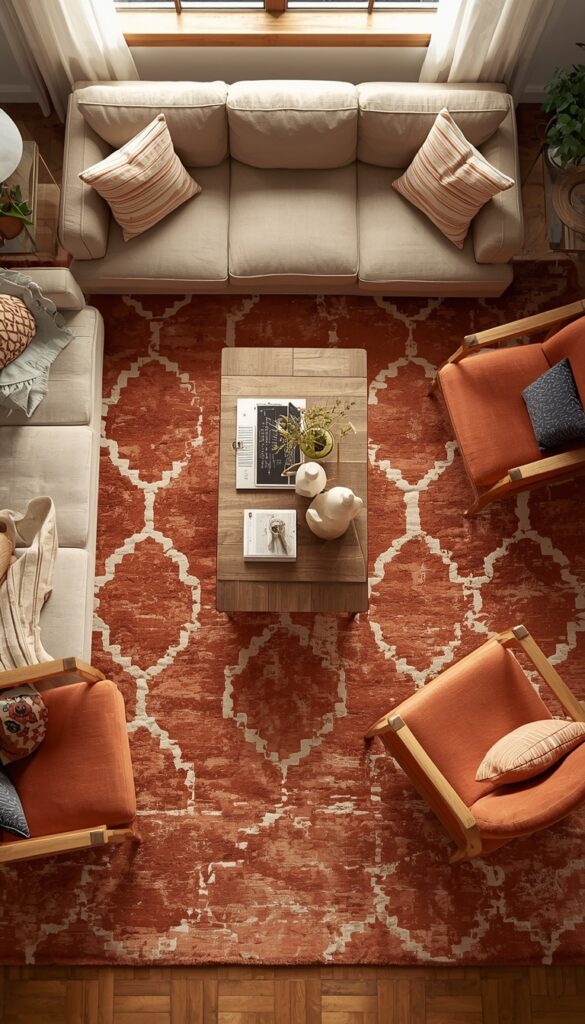
A large area rug is possibly the most renter friendly decorating tool in existence. It requires zero installation, leaves zero damage, and can completely transform the look and feel of a room. Over ugly carpet, a large rug in a fresh pattern or clean color essentially creates a new visual floor ,your eye goes to the rug, not what’s underneath. Over cold tile or plain hardwood, a rug adds warmth, texture, and sound absorption that makes a space feel genuinely livable rather than just functional.
The sizing rule is non-negotiable and transforms results immediately: go bigger than you think you need. In a living room, the rug should sit under the front legs of all major seating pieces at minimum ,ideally under all the furniture entirely. For a dining table, 24 inches of rug extending beyond every side of the table is the minimum to prevent chairs from teetering on the edge when pulled out. Renters consistently choose rugs that are too small because larger ones cost more ,but an undersized rug makes a room feel more cramped and oddly furnished, not less.
Layering rugs is a legitimate strategy in rentals, especially over existing carpet that you can’t remove. A natural jute or sisal rug as a base layer, with a smaller patterned or solid rug on top, adds depth and texture while covering the carpet beneath. A rug pad between your area rug and the carpet underneath prevents sliding and adds a bit of cushion. This layering technique is widely used in professionally styled interiors and works particularly well in eclectic, bohemian, or warm minimalist aesthetics where texture is a core part of the visual language.
8. Temporary Backsplash With Peel and Stick Contact Paper
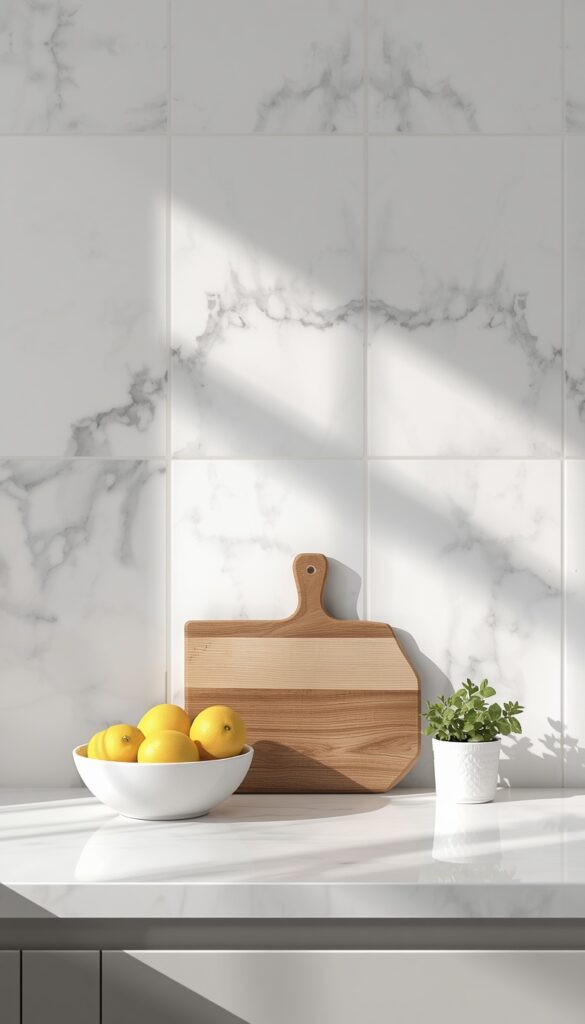
Contact paper has evolved significantly. The versions available now include realistic marble, linen, concrete, brushed metal, and geometric tile looks that are genuinely convincing in photographs and increasingly convincing in person. For renters with a plain, dated, or damaged kitchen backsplash they can’t replace, contact paper applied cleanly over the existing surface is a fast, inexpensive, and completely reversible transformation. A weekend project that costs under thirty dollars can make a rental kitchen look like it was professionally renovated.
The cutting and measuring process is where most contact paper projects go wrong. Measure the backsplash area precisely and cut pieces about an inch larger than needed on each side ,you’ll trim to final size after application. Peel the backing only a few inches at a time as you apply, smoothing with a squeegee as you go to prevent air bubbles. Around outlets, score the paper gently with a craft knife and fold the edges back into the outlet box rather than trying to cut a perfect rectangle around the opening ,it looks cleaner and takes less time.
One honest limitation: contact paper applied over highly textured tile ,like rough stone or deeply grouted subway tile ,won’t lay fully flat and can look noticeably bubbled. It works best over smooth tile surfaces or smooth painted walls. For deeply grouted or heavily textured backsplashes, the peel and stick tile sticker approach described earlier in this list is the better option because it’s thicker and can bridge those surface irregularities more convincingly. Knowing which product works on which surface saves you time, money, and the frustration of a result that doesn’t look right.
9. Removable Paint and Peel and Stick Color Panels
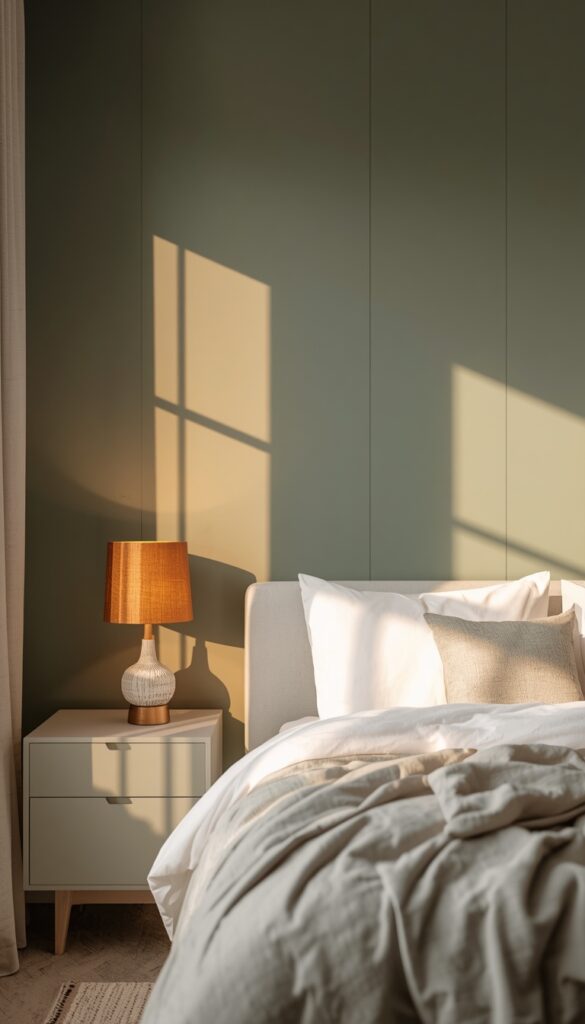
Most leases explicitly forbid painting. But some landlords ,particularly in more competitive rental markets ,allow it with conditions: return the walls to their original color before moving out. If your lease permits this, temporary paint in a neutral color with an easy repainting obligation is worth considering. However, for leases with strict no paint clauses, peel and stick color panels are the newer and genuinely impressive alternative. These large format panels in solid colors or subtle textures apply to walls, add color and depth, and remove without damage.
Peel and stick color panels work best in large, simple applications rather than complex patterns. A full accent wall in a deep dusty sage, a warm terracotta, or a muted navy changes the entire energy of a bedroom or living room in a way that feels as dramatic as actual paint. The larger the panel format, the more convincing the result ,small panels create visible seams that break the illusion. Brands like Tempaint and ColorWall have developed versions with increasingly minimal seam lines and better adhesion on different wall textures.
If your landlord does allow temporary painting, use a primer first ,even on existing paint ,because it improves adhesion and makes the topcoat color truer and more even. Keep the original paint color noted (or photograph the original can if it’s still in the apartment). When repainting to move out, one coat of the original color over your accent wall color may not fully cover it, especially with darker shades ,budget for two coats and a proper application with a quality roller. The security deposit math usually still works in your favor if you enjoyed a beautifully colored room for the duration of your lease.
10. LED Lighting Strips and Smart Bulbs for Instant Ambiance
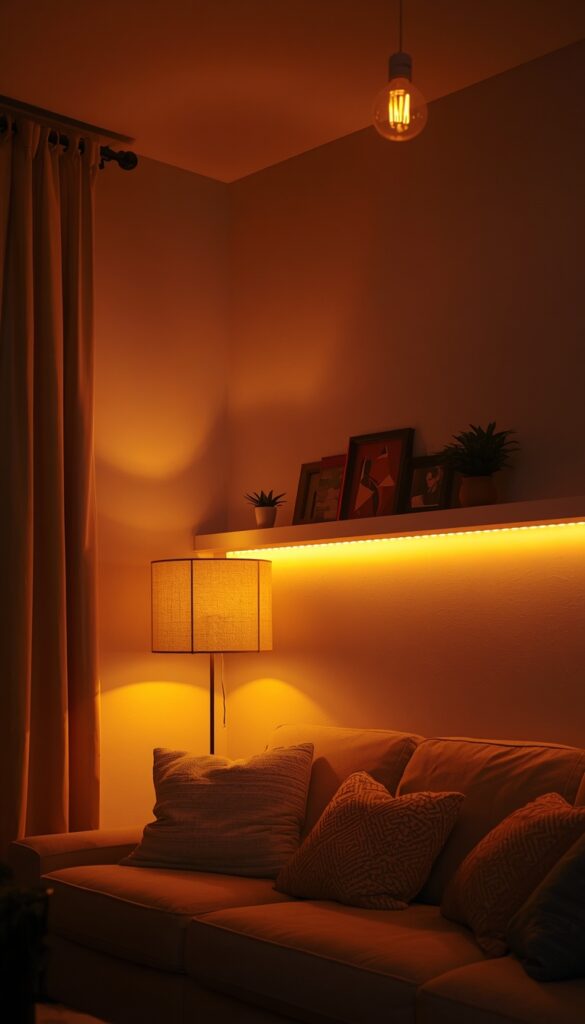
Rental lighting is almost universally terrible. Overhead fixtures with harsh cool bulbs, zero dimming options, and layouts that light the ceiling better than the room itself. Smart bulbs and LED strip lighting are the renter’s answer ,no hardwiring, no landlord approval needed, and a complete transformation in how a room feels after dark. Swapping every overhead bulb to a warm toned smart bulb (2700K to 3000K color temperature) and adding a few strategic floor and table lamps immediately makes a rental feel warmer, calmer, and more considered.
LED strip lights installed under kitchen cabinets, behind a TV, under a bed frame, or along the underside of floating shelves add a layer of ambient lighting that changes the entire atmosphere of a room. Adhesive backed strips apply without tools and remove cleanly ,the adhesive holds better on clean, painted wood or MDF than on rough or porous surfaces. Smart LED strips that connect to an app let you change color temperature and brightness based on the time of day or the mood you want ,warm amber for evenings, bright white for working, soft cool blue for late nights.
The single most impactful lighting change in any rental is adding a floor lamp with a warm Edison style bulb to a dark corner. Dark corners make rooms feel smaller and more oppressive. Filling them with warm, indirect light visually expands the space and adds layers of illumination that overhead fixtures alone never achieve. Pair one arc floor lamp above a reading chair with a small table lamp on a side table nearby, and the layered glow that results makes even a basic rental apartment feel like a considered, designed space after dark.
11. Indoor Plants as Living Architecture
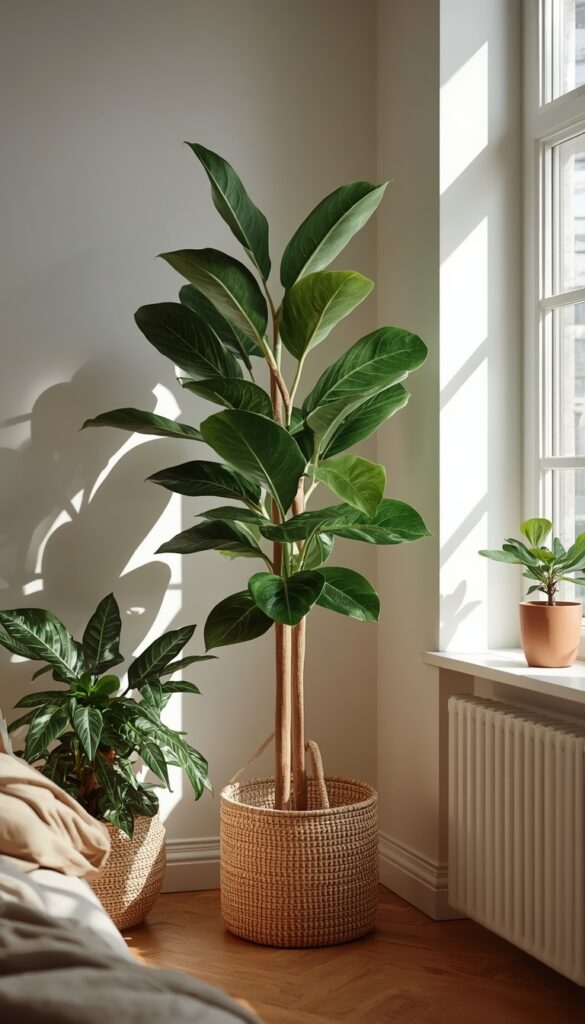
Plants do something for a rental that no furniture or art can replicate ,they bring life into a space in a genuinely literal sense. And in a rental context, they’re completely removable, endlessly adjustable, and ,for the right varieties ,surprisingly low maintenance. A tall fiddle leaf fig in a woven basket, a trailing pothos from a high shelf, or a cluster of small succulents on a windowsill all add organic texture and visual warmth that softens the hard edges of a typical apartment. Plants make a rental feel inhabited and loved rather than just occupied.
Scale matters as much with plants as it does with furniture. One large plant makes more impact than five small ones scattered around a room. A six foot fiddle leaf fig or a tall monster in the corner of a living room functions as living architecture ,it fills vertical space, adds a natural focal point, and makes the room feel more complete. If your apartment has low light, go for low light tolerant varieties: snake plants, ZZ plants, pothos, and peace lilies all thrive with minimal sunlight and are genuinely hard to kill, which matters when you’re busy.
Pots and planters are part of the styling equation. A beautiful plant in a cheap plastic nursery pot looks half finished. Transfer your plants into ceramic, terracotta, or woven rattan covers and the whole look steps up significantly. A collection of terracotta pots in varying sizes, grouped on a windowsill or plant stand, creates a warm, lived-in vignette that costs very little but looks completely intentional. If floor space is limited, wall mounted plant shelves using adhesive mounting hardware give your plants vertical real estate without any permanent installation.
12. Fabric Wall Hangings and Woven Textiles as Art
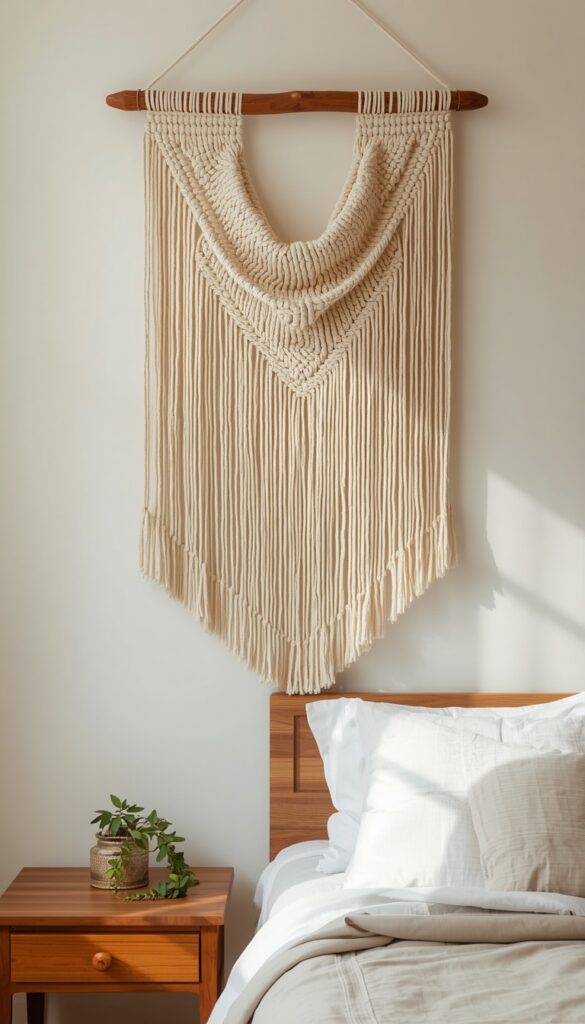
Fabric wall hangings are one of the best kept secrets in renter friendly decorating. They’re large, visually impactful, lightweight enough for Command strips, and they add texture in a way that framed prints simply cannot. A large woven wall hanging in natural fibers ,cotton, jute, wool ,instantly adds warmth, depth, and handcrafted personality to a blank wall. In a rental where bold paint colors and dramatic wallpaper feel risky, a textile piece covers a significant amount of wall space while adding visual complexity that makes the room feel layered and collected.
For the most current look, choose wall hangings that are abstract rather than literal ,organic shapes, irregular weaves, or geometric patterns in natural or earthy tones feel contemporary and versatile across many different interior styles. Macramé is having a genuine moment again, but the newer versions are more refined and structured than the vintage craft fair aesthetic. A large macramé piece with natural wood dowel and undyed cotton in a neutral bedroom adds texture and warmth without imposing a specific color story ,it works with almost anything.
Hanging methods matter for renters. A single large Command strip rated for the weight of the piece works well for lightweight cotton hangings. For heavier woven textiles, distribute the weight across two or three strips placed along the dowel or hanging rod. Another approach that leaves zero wall contact: lean a tall hanging over a ladder shelf or prop it against a long console table on a piece of fishing line looped over a small Command hook at the top. The leaning textile look is very current in interior styling and has the added advantage of being infinitely rearrangeable without touching the wall again.
13. Decorative Room Dividers to Define Spaces
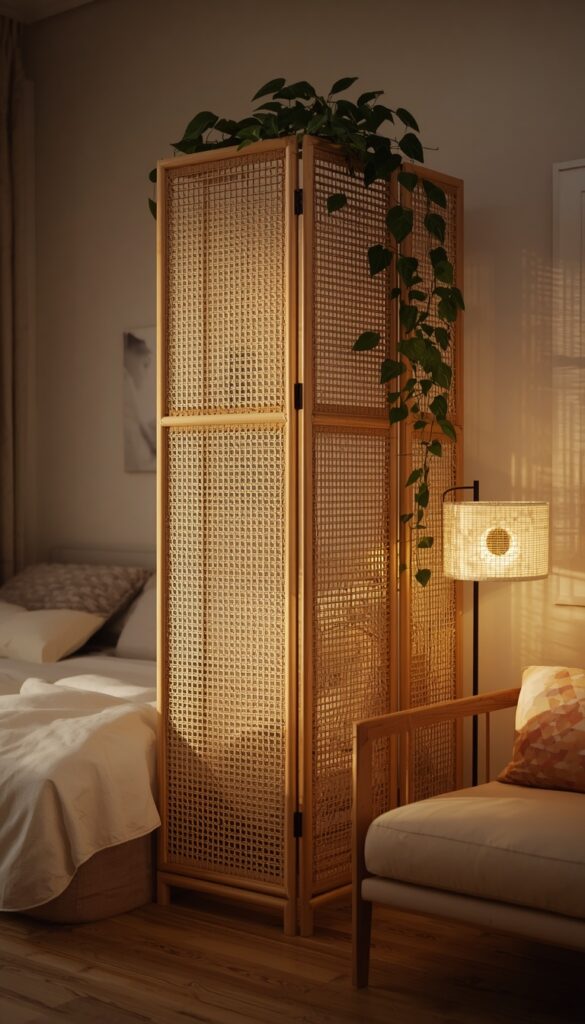
Open plan rental apartments often have the opposite problem from small ones ,too much undefined space with no natural way to separate a sleeping area from a living area, or a home office zone from a lounge zone. Freestanding room dividers solve this beautifully. A well chosen divider adds visual separation, architectural interest, and practical privacy without a single screw going into any surface. It’s one of the most underused renter friendly decorating tools, and in the right space it can completely transform how a floor plan functions and feels.
Rattan and bamboo folding screens are particularly well suited to this role, they’re lightweight, allow air and some light to pass through, and add natural texture that warms up any interior. A three or four panel rattan screen used to section off a bedroom corner in a studio apartment gives that sleeping area a genuinely private, considered feel. Tall open frame metal dividers with geometric cutout designs work beautifully in more minimal or industrial aesthetics. Bookshelves can also function as room dividers when positioned perpendicular to a wall ,and they add storage and display surface in the process.
Styling the divider is part of the work. A rattan screen with a few trailing plants draped over the top edge, or a string of warm Edison bulb lights wrapped through the panels, becomes a full moment rather than just a functional separator. Position the divider so it creates a defined zone without blocking light from windows ,this is important in smaller apartments where every bit of natural light matters. In the right location, a decorative room divider makes a rental apartment feel like a thoughtfully designed home with genuinely distinct living spaces, which is exactly what the best renter friendly decorating achieves.
Conclusion
Renting doesn’t have to mean waiting. Every idea in this list proves that you can create a space that feels genuinely personal, beautifully styled, and completely your own ,without violating your lease or risking your deposit. The best renter friendly decor ideas share one quality: they improve your daily experience of your space without creating problems when you eventually leave. From the drama of a peel and stick wallpaper accent wall to the warmth of a layered rug, from smart lighting that completely transforms evening ambiance to plants that bring the space to life ,these changes add up to something real. Start with the idea that excites you most. Your space is yours right now, and right now is the perfect time to make it feel that way.
FAQs
Q: What is the easiest renter friendly decor idea that makes the biggest difference? A: Upgrading your curtains and hanging them high and wide is the single easiest change with the most dramatic visual impact. It makes windows look larger, ceilings feel taller, and rooms feel more finished ,all without any permanent wall damage when you use adhesive mounting brackets or tension rods.
Q: Can I use peel and stick wallpaper in a rental without losing my deposit? A: Yes, if you apply it correctly and remove it carefully. Clean the wall thoroughly before applying, and peel it off slowly at a 45 degree angle when you leave ,warming the edges with a hairdryer first. Quality brands like Tempaper and Chasing Paper are specifically designed for clean removal from painted walls.
Q: How do I make a rental apartment feel more like home without spending a lot? A: Focus on three things: lighting, textiles, and plants. Swap overhead bulbs for warm toned smart bulbs, add throw pillows and a large area rug for texture, and bring in one or two plants. These three changes together cost relatively little but transform how a space feels to live in every day.
Q: Are Command strips strong enough to hang art in a rental? A: For most art and mirrors under 10 pounds, yes ,absolutely. Use multiple strips for anything heavier and always match the Command product to the specific weight of the frame. The key is following the application instructions exactly, especially the 30 minute wait time after pressing before hanging anything.
Q: What can I do about ugly rental carpet I can’t replace? A: Layer a large area rug over it. Choose a rug big enough to cover the worst areas and extend under furniture. A natural jute rug as a base with a patterned rug on top is a great layering strategy that covers carpet completely while adding real visual texture and warmth to the room.
Q: Is it worth buying nice furniture for a rental? A: Genuinely good furniture that moves with you is always worth it. Freestanding shelves, quality sofas, and versatile rugs aren’t wasted on a rental ,they come with you to the next place and the one after that. The pieces you invest in for a rental become the foundation of every home you’ll ever live in.
Q: How do I deal with ugly floors in a rental apartment? A: Peel and stick luxury vinyl tiles are the most transformative option for hard floors ,they apply over existing flooring and remove without damage. For carpet, a large area rug is your best tool. In either case, prep the surface properly before application and the result will look clean and convincing.
Q: Can I really change the look of my rental kitchen without renovating? A: Absolutely. Removable tile stickers over the backsplash, contact paper on cabinet doors, new hardware on cabinet pulls, and under cabinet LED strip lighting are all reversible changes that together make a rental kitchen look completely different. Each one is inexpensive, takes a few hours at most, and leaves zero permanent changes behind.