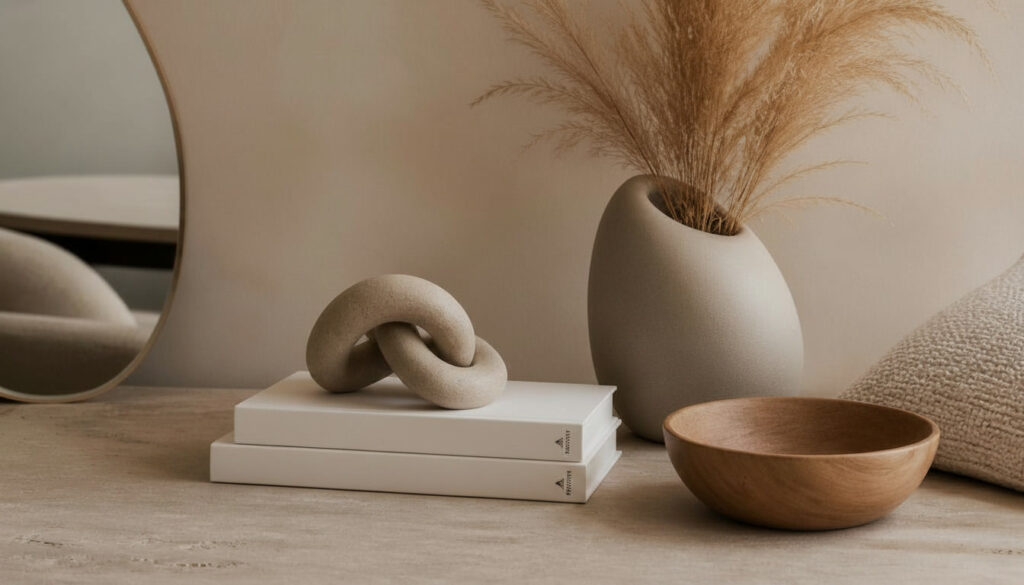
Organic modern decor sits in a sweet spot I genuinely love working in. It takes the clean lines and intentional simplicity of modern design and softens every edge with raw, natural materials, curved silhouettes, and textures that feel like they came from the earth instead of a factory. I’ve built this aesthetic in homes with sweeping windows and homes with barely any natural light at all, and it works in both because the principles don’t actually depend on architecture. They depend on material choice and restraint.
What makes this style so satisfying is the balance it strikes. It’s minimal without feeling cold, natural without feeling rustic or cluttered. These 14 ideas come from rooms I’ve actually styled, with the kind of specific, practical detail that separates organic modern done well from a room that just has a few plants and calls it a day.
1. Choose Curved Furniture Silhouettes Over Sharp Angles
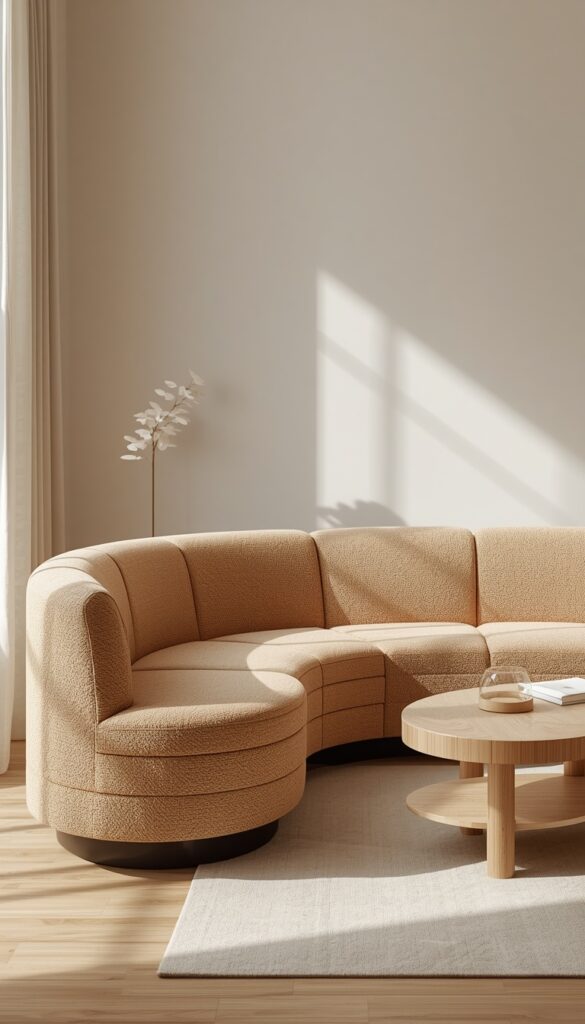
Curved furniture is the clearest visual signal of organic modern style, softening a room’s overall feel without sacrificing the clean, uncluttered quality modern design depends on. Look for a sofa with a gently rounded arm, a coffee table with an organic, kidney shaped top, or a dining chair with a curved spindle back. These shapes feel sculptural rather than purely functional, which is exactly the point of this aesthetic.
I always check proportion carefully when mixing curved pieces with any straight lined furniture already in a room. A curved sofa paired with sharp, boxy side tables creates visual tension rather than the soft cohesion organic modern is built around. Aim for at least sixty percent curved or rounded silhouettes throughout a room’s major furniture pieces, letting straight lines play a smaller, supporting role.
Material matters as much as shape here. A curved piece in smooth, light oak or a soft, nubby boucle reads as genuinely organic, while the same curved silhouette in glossy lacquer or chrome starts feeling more like contemporary or art deco styling instead. I steer people toward matte, natural feeling finishes whenever curves and material decisions overlap in the same piece.
2. Bring In Raw, Unfinished Wood Through Furniture and Accents
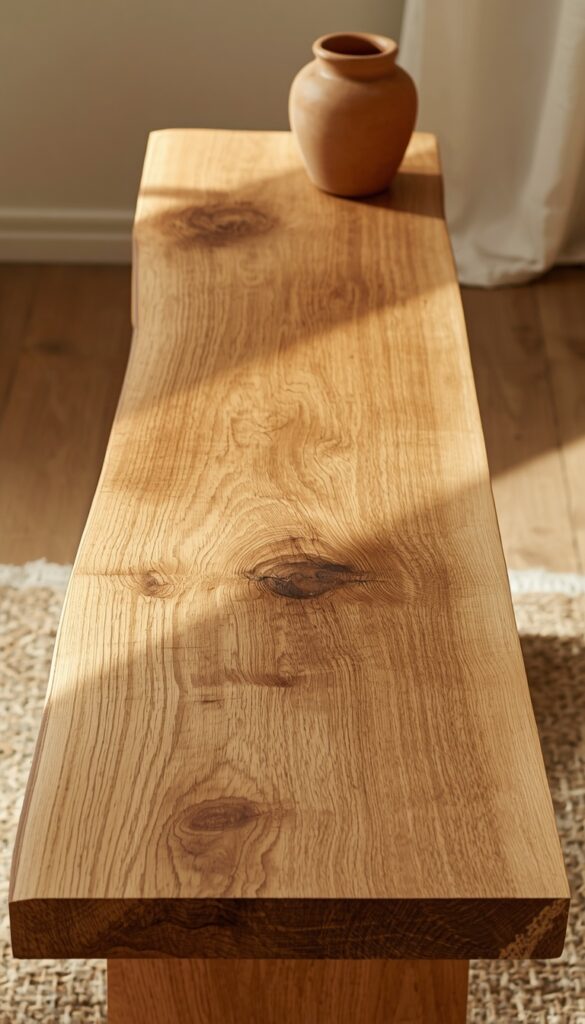
Raw or minimally finished wood, the kind that still shows knots, natural color variation, and visible grain, anchors organic modern spaces in a way painted or heavily lacquered wood simply can’t replicate. I look for furniture with a light oil or wax finish rather than a thick polyurethane coat, since the lighter finish lets the wood’s natural texture and slight imperfections remain visible and tactile.
Live edge details, where the natural curve of the tree trunk’s outer edge stays intact on a tabletop or shelf, genuinely elevate this look when used with restraint. One live edge piece, a console table or a floating shelf, makes a strong organic modern statement, while multiple pieces throughout the same room start feeling more rustic than intentionally modern and refined.
I generally recommend lighter wood species, like white oak, ash, or maple, over darker walnut for this specific style, since lighter woods feel airier and more aligned with organic modern’s overall brightness. Walnut works too, but it shifts the mood toward something warmer and slightly heavier, which can still be beautiful but reads as a different, more traditional direction.
3. Layer Natural Stone Through Countertops and Accent Pieces
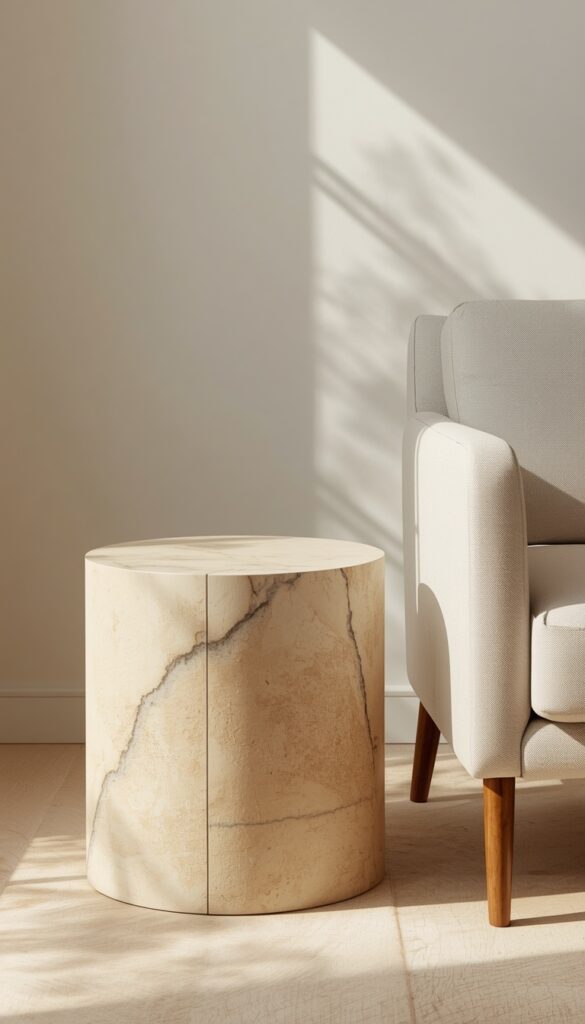
Natural stone, with its inherent veining, color variation, and texture, brings genuine organic character into a modern space without introducing a single pattern or color choice that feels artificial. Honed marble, travertine, or a textured limestone all read as current right now, especially in matte or honed finishes rather than the high polish look more common in traditional luxury interiors.
I use smaller stone accent pieces, a side table, a decorative bowl, a coaster set, as an accessible entry point for anyone not ready to commit to full stone countertops or flooring. These smaller pieces let the natural material’s organic quality shine through in a contained, lower commitment way while still tying into a larger stone investment elsewhere in the home.
Travertine specifically deserves more attention than it usually gets in modern spaces. Its soft, warm, slightly porous texture feels distinctly organic compared to the cooler, more uniform look of polished marble. I’ve used travertine side tables and lamp bases specifically to add warmth and texture to rooms that otherwise lean too cool or sterile in their overall material palette.
4. Use a Neutral, Earth Toned Color Palette Throughout
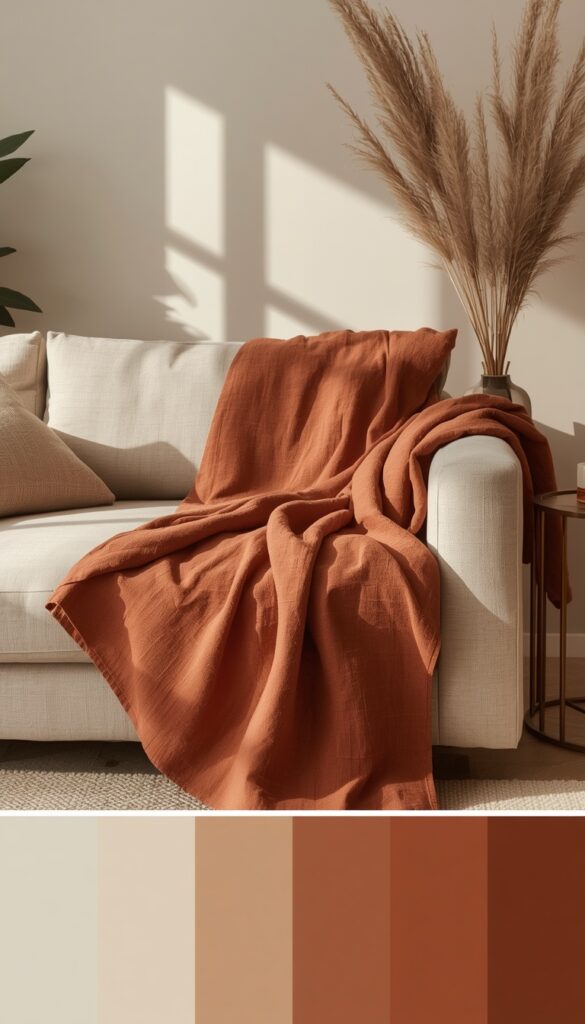
Organic modern color palettes stay deliberately restrained, built from warm neutrals, sand, cream, clay, soft taupe, rather than bold, saturated colors competing for attention. This restraint is what lets the textures and natural materials do the visual heavy lifting instead of color, which is a genuine shift from styles that rely on bold paint or statement walls to create interest.
I always recommend testing paint and fabric samples together in the actual room before committing, since earth tones shift more subtly than bold colors do under different lighting, and a palette that looks cohesive on individual swatches can read as slightly mismatched once combined in a real space with mixed natural and artificial light throughout the day.
One slightly deeper grounding tone, a rich terracotta or a deep olive, keeps an all neutral palette from feeling flat or one dimensional. I introduce this through a single textile or accent piece rather than paint, since it’s easier to swap out later if your taste shifts, while the broader neutral foundation stays consistent and timeless throughout the space.
5. Add Sculptural Ceramic Vessels as Functional Art
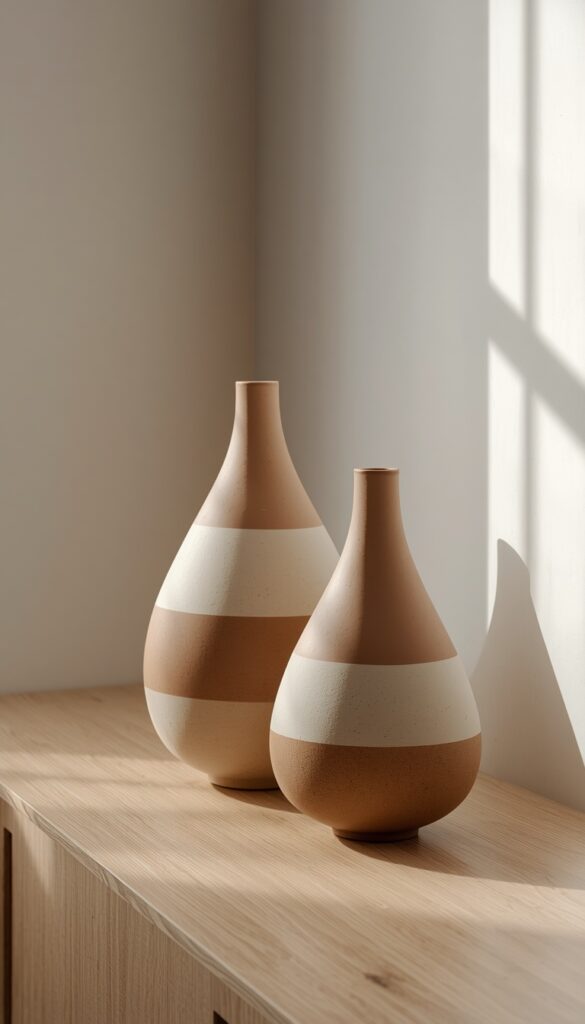
Sculptural ceramics, hand thrown or hand built pieces with organic, asymmetric shapes, function as genuine art in organic modern spaces while still serving a practical purpose holding flowers, branches, or simply standing empty as a decorative object. I look specifically for pieces with visible texture, a slightly uneven rim, a matte glaze with subtle variation, rather than perfectly smooth, machine made symmetry.
Grouping these vessels in odd numbers, three rather than two or four, creates a more dynamic, intentional display than an evenly matched pair. I vary height and width significantly within a grouping, since uniform sizing makes a collection look more like a matching set bought together rather than a considered, evolving collection built over time, which suits this aesthetic’s organic spirit better.
Glaze color should stay within your broader earth toned palette, but texture variation matters even more than color variation for visual interest. A matte stoneware piece beside a slightly glossy, speckled glaze creates depth without disrupting color cohesion. I genuinely think this textural contrast within a limited color range is one of the most underrated tricks in organic modern styling.
6. Incorporate Woven Natural Fiber Furniture and Accents
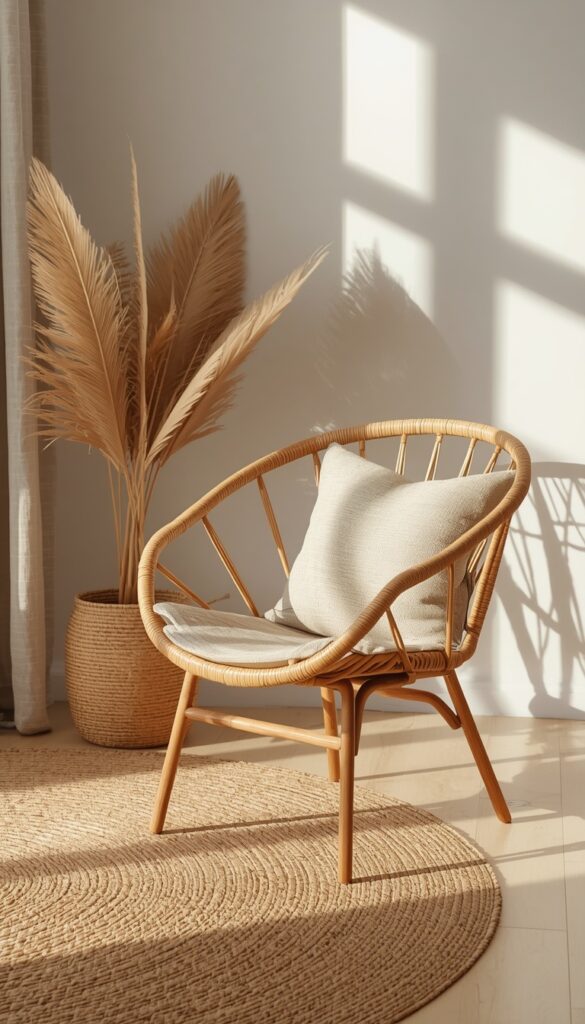
Rattan, jute, seagrass, and cane all bring genuine textural warmth into organic modern spaces, softening what could otherwise feel like a fairly stark, minimal aesthetic if every surface stayed smooth and matte. A rattan accent chair, a jute area rug, or simple cane cabinet door inserts all introduce this woven texture without overwhelming the room’s deliberately restrained color and shape vocabulary.
I always check weave tightness and quality before buying these pieces, since loosely woven, cheaper rattan tends to snag and unravel faster under regular daily use. A tighter, more consistent weave pattern holds up significantly better over years of actual living with the furniture, even though it sometimes costs more upfront than the looser, bargain alternatives.
Pairing woven texture with smooth, curved wood or stone keeps the overall look balanced rather than overly textural in one single direction. I avoid combining too many different woven textures in the same room, a rattan chair, a jute rug, and a seagrass basket together starts feeling busy. One or two woven elements per room is usually the sweet spot.
7. Choose Linen and Boucle for Soft, Tactile Upholstery
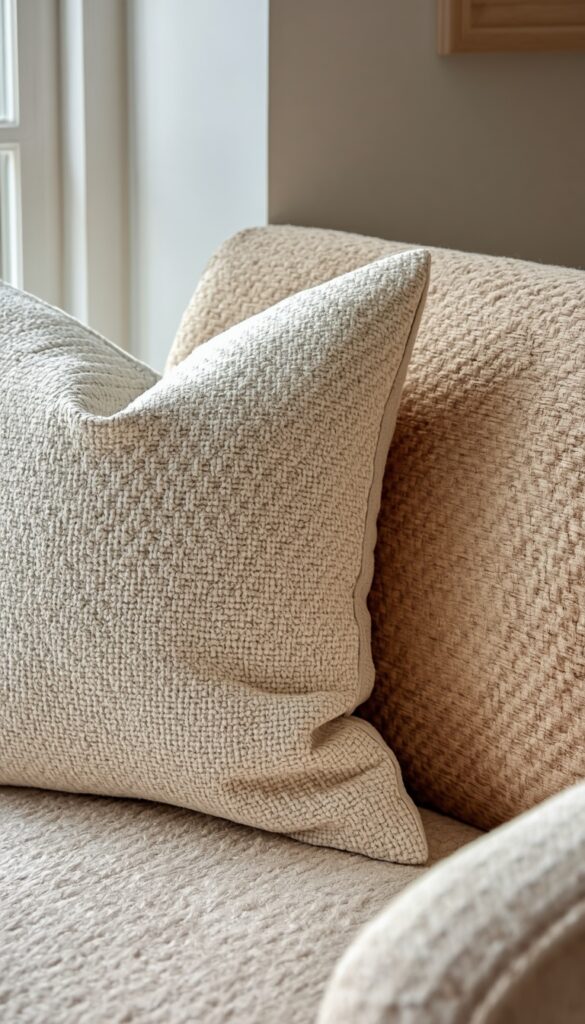
Linen and boucle upholstery bring genuine softness and texture into organic modern furniture without introducing pattern or bold color, both of which would clash with this style’s deliberately restrained approach. I specifically look for linen with a slightly looser, more relaxed weave rather than a tight, stiff weave, since the relaxed texture photographs and feels noticeably more organic and lived in.
Boucle has genuinely earned its popularity here, since its nubby, textured surface adds visual and tactile interest to a sofa or chair without requiring any pattern at all. I steer people toward boucle in warm, neutral tones, cream, oatmeal, soft gray, rather than the bolder colored versions that have become trendy lately, since bold boucle pulls toward a different, more playful aesthetic.
Durability matters with both fabrics, and I always ask about a piece’s actual fiber content before recommending it for daily use furniture. A linen polyester blend resists wrinkling and wear better than pure linen for high use pieces like a sofa, while pure linen works beautifully on lower traffic pieces like an accent chair that won’t see the same daily wear.
8. Use Organic Shaped Mirrors to Soften Wall Lines
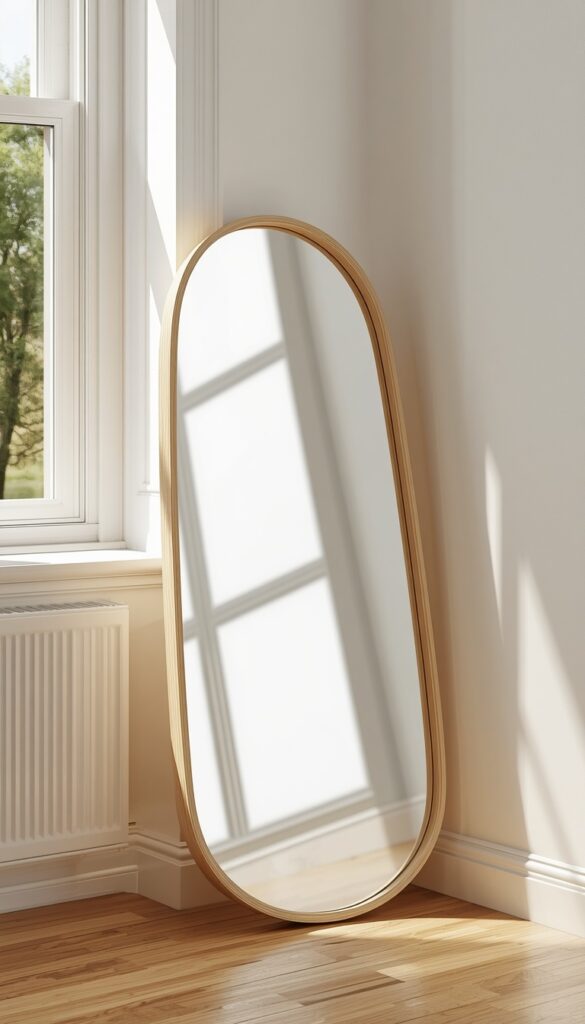
A mirror with an irregular, organic shape, something closer to a soft amoeba or river stone silhouette than a standard circle or rectangle, brings a genuinely sculptural quality to a wall while still doing the practical work of bouncing light around a room. I’ve hung these specifically in hallways and entryways where a more traditional mirror shape would feel comparatively flat and predictable.
Frame material should echo the room’s broader material palette rather than introducing something entirely new. A thin wood frame in a light oak tone, or a frameless mirror with simply polished organic edges, both work beautifully here. I avoid ornate or heavily decorated frames entirely in this style, since they pull toward a more traditional or eclectic direction instead.
Placement near a window maximizes the natural light bouncing function this mirror shape provides, while also letting the organic silhouette catch interesting natural light and shadow throughout the day as the sun moves. I’ve found this detail genuinely changes how a mirror feels in a room, adding subtle visual movement that a static, traditionally shaped mirror simply doesn’t offer.
9. Add Dried Grasses and Branches in Oversized Floor Vessels
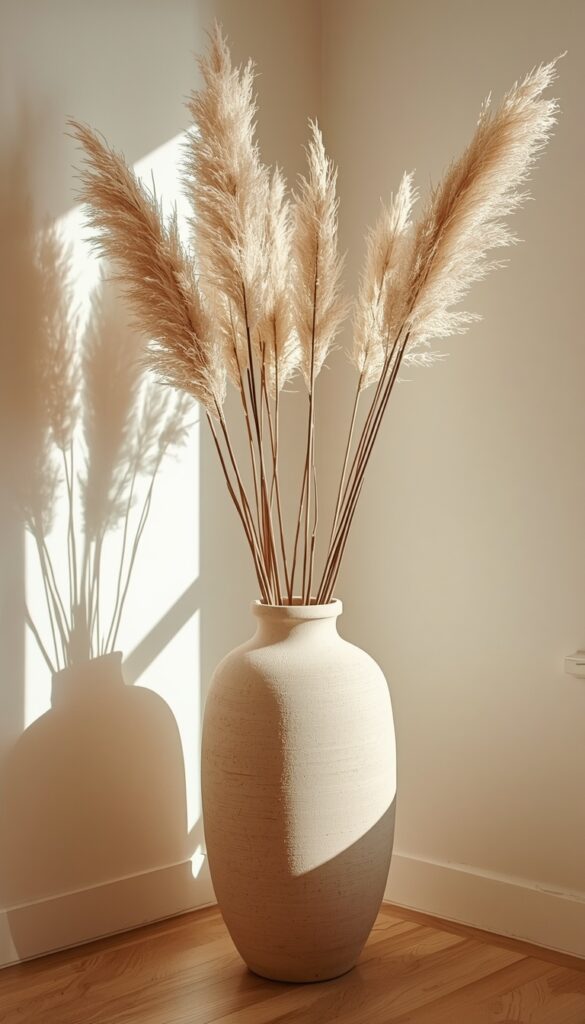
Tall, oversized floor vessels holding dried pampas grass, bunny tail grass, or simple bare branches bring real height and organic movement into a room’s negative space, the kind of empty corner that often goes completely unused in modern interiors. I always choose a vessel with a wide, stable base specifically for these taller arrangements, since a narrow base risks tipping under the weight and height of fuller dried branches.
Vessel material should lean toward stoneware, woven seagrass, or a simple unglazed terracotta rather than anything glossy or brightly colored, since the vessel itself should support the organic arrangement rather than competing visually with it. I generally recommend a height between two and three feet for the vessel alone, before any branches or grasses are added on top.
Placement in an empty corner, beside a sofa, or flanking a doorway all work beautifully for this styling trick. I avoid centering these tall arrangements in the middle of open floor space, since they read as more intentional and architectural when used to fill or soften a specific corner rather than standing alone in the center of a room.
10. Choose Organic, Asymmetric Lighting Fixtures
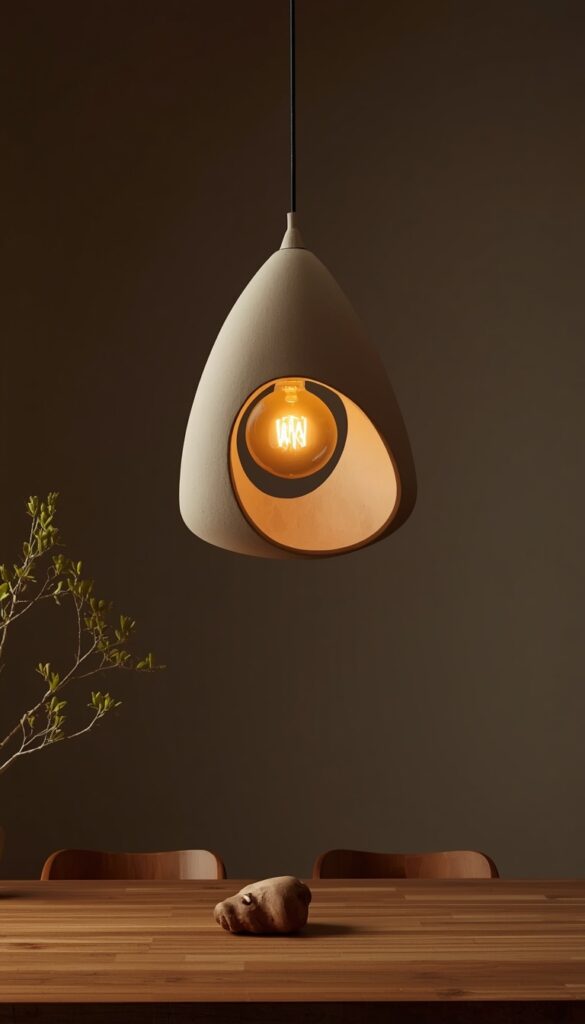
Lighting fixtures with organic, asymmetric shapes, a sculptural floor lamp with an irregular shade, or a pendant light resembling a natural form like a seed pod or stone, bring genuine artistic interest into organic modern spaces without relying on bold color or pattern to do that visual work. I look specifically for fixtures in matte finishes, plaster, raw metal, woven fiber, rather than anything glossy or chrome.
Plaster pendant lights deserve particular attention here, since their slightly imperfect, hand finished surface texture reads as genuinely organic in a way smooth, mass produced fixtures simply can’t replicate. I’ve installed these specifically as statement pieces over dining tables, where their sculptural shape becomes a genuine focal point rather than just a source of light hanging overhead.
Bulb visibility matters for the overall mood these fixtures create. I generally recommend a warm, slightly amber toned bulb that’s at least partially shielded by the fixture’s organic shape, rather than a fully exposed bulb, which can feel more industrial than organic. This small detail keeps the lighting feeling soft and intentional rather than starkly utilitarian.
11. Layer Textured Area Rugs in Natural Fibers
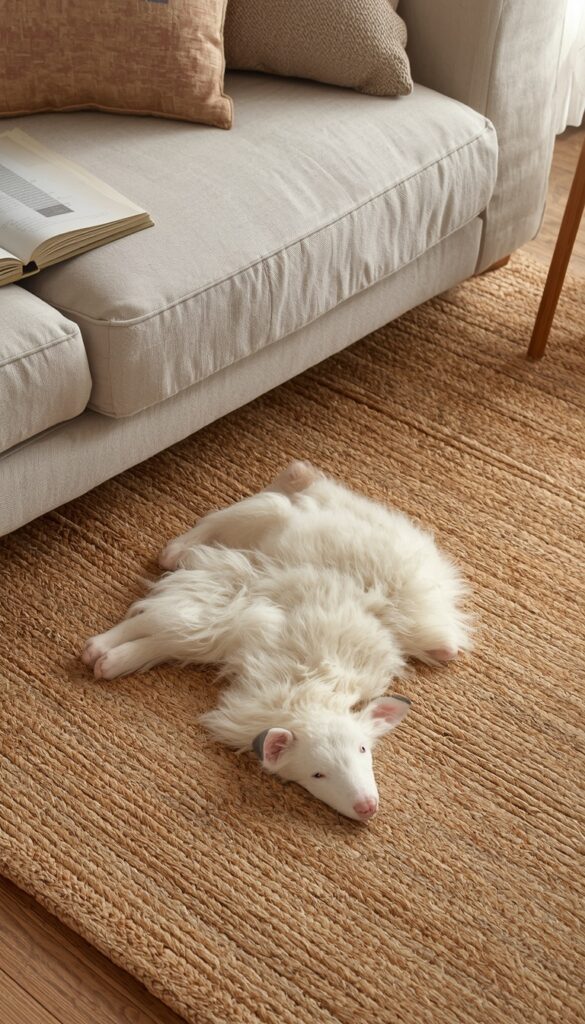
A textured area rug in jute, sisal, or a low pile wool blend grounds an organic modern room while adding genuine tactile interest underfoot that a flat, smooth rug simply can’t provide. I look specifically for rugs with visible texture or subtle pattern variation woven into the material itself, rather than a printed pattern sitting flat on top of the fiber.
Layering two rugs, a larger jute or sisal base rug with a smaller, softer wool rug on top, adds genuine depth and warmth to a seating area while keeping the overall look intentional rather than accidental. I generally offset the smaller rug slightly rather than centering it perfectly, since slight asymmetry reads as more organic and less rigidly formal throughout the arrangement.
Natural fiber rugs do require more specific care than synthetic options, particularly around moisture exposure, since jute and sisal can both stain and warp if they get genuinely wet and stay damp for any length of time. I always recommend keeping these rugs away from entryways or kitchens where spills happen more frequently than in a quieter living or bedroom space.
12. Bring In Greenery with Architectural, Sculptural Foliage
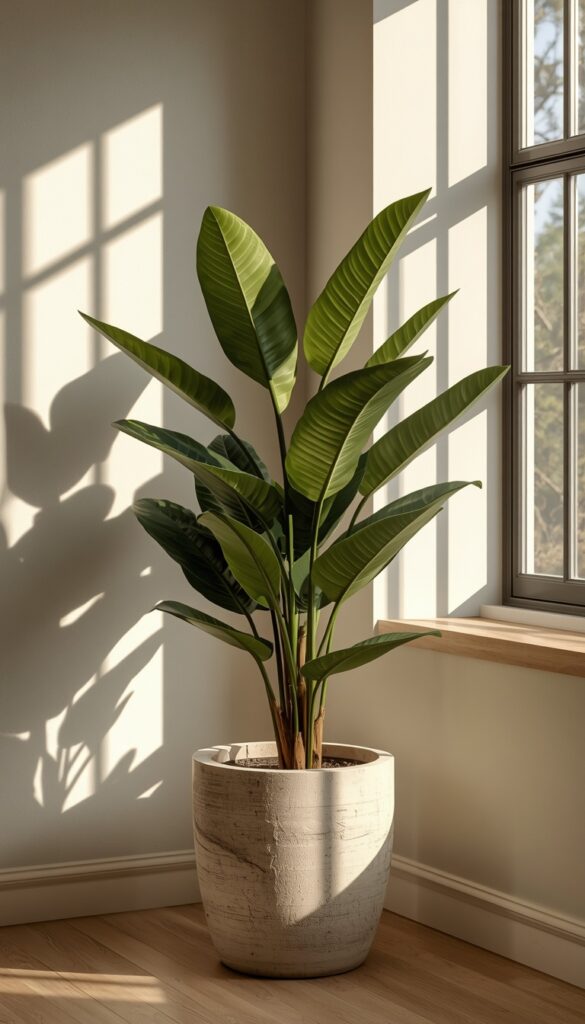
Plants with bold, architectural leaf shapes, a fiddle leaf fig, a bird of paradise, a large monstera, suit organic modern spaces far better than soft, wispy foliage like ferns or delicate trailing vines. I choose plants specifically for their graphic leaf silhouette here, since that strong shape echoes the sculptural quality found throughout the rest of this aesthetic’s furniture and decor choices.
Pot choice should stay within the room’s broader material palette, a simple stoneware planter, a woven seagrass basket, or a textured concrete vessel, rather than anything glossy, brightly colored, or overly ornate. I generally avoid plastic nursery pots entirely in this styling context, even temporarily, since the visual mismatch undercuts an otherwise carefully considered room almost immediately.
Light requirements should genuinely drive your specific plant choice rather than aesthetics alone, since even the most architecturally striking fiddle leaf fig will decline quickly in a dim, north facing room. I always match plant species to actual available light first, then choose the pot and placement second, since a thriving plant in a slightly imperfect pot beats a beautiful pot holding a dying plant every time.
13. Use Matte, Honed Finishes Instead of High Gloss Surfaces
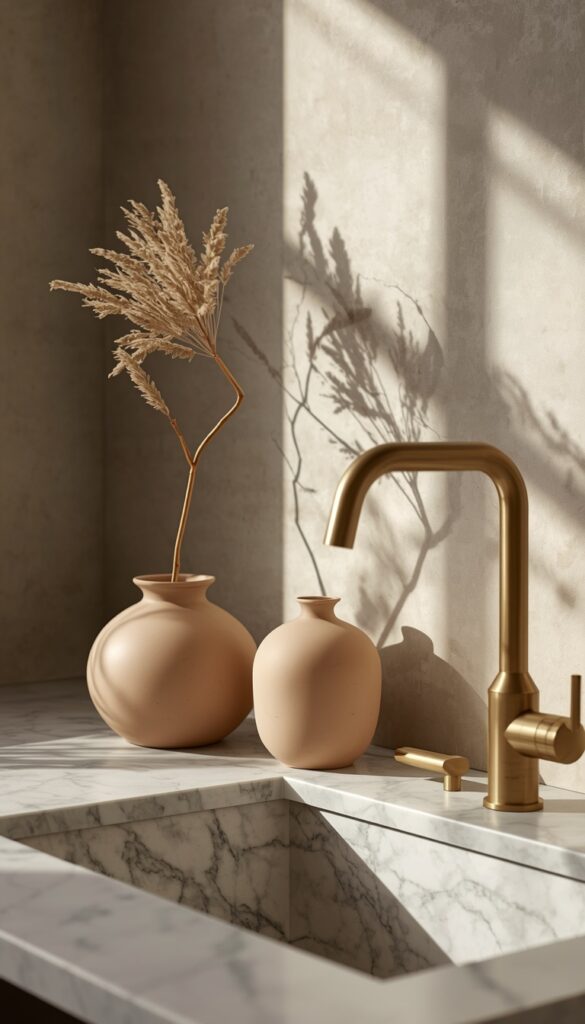
Matte and honed finishes, across countertops, furniture, and hardware alike, define the organic modern look as much as any specific material choice does. A honed marble countertop, a matte ceramic vase, or brushed rather than polished metal hardware all share this same quality of absorbing rather than reflecting light, which creates the soft, grounded feeling this aesthetic depends on throughout a space.
I always specify matte or honed finishes explicitly when ordering custom pieces or working with a contractor, since many materials default to polished or glossy unless you specifically request otherwise. This small specification detail matters enormously for the finished look, and it’s one of the most common mistakes I see when someone’s organic modern vision doesn’t quite translate once materials actually arrive.
Mixing in one or two slightly glossy elements, a single glazed ceramic piece, a brass light fixture, prevents an all matte room from feeling flat or one dimensional overall. I think of this the same way I think about texture variation elsewhere in this style: total uniformity, even in a deliberately restrained palette, eventually reads as boring rather than intentional and curated.
14. Add a Statement Console with an Organic, Sculptural Base
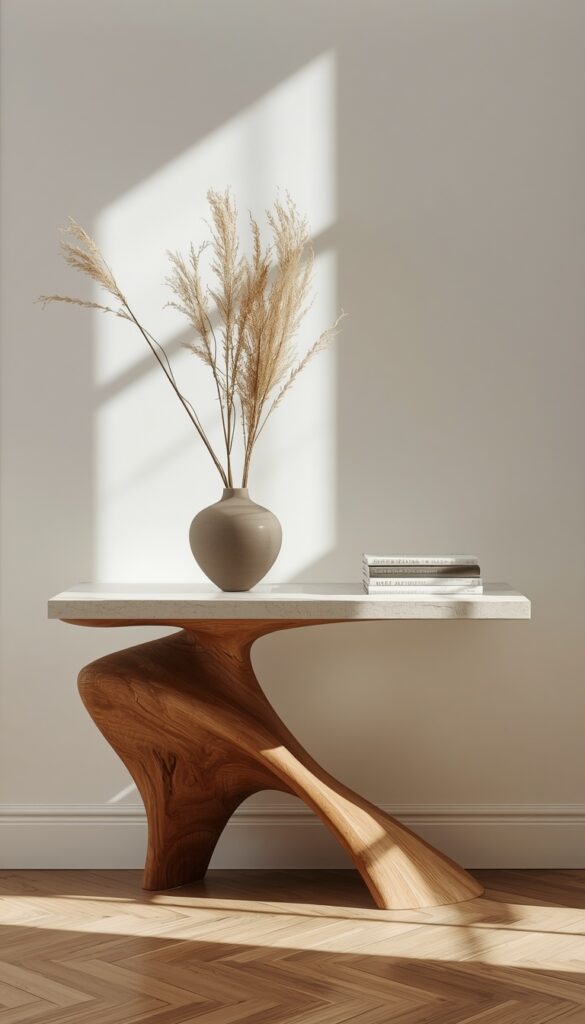
A console table with a sculptural, organic base, think a single curved wood pedestal or an irregular stone slab support, rather than four straight legs, brings genuine artistic interest into an entryway or behind a sofa. I look specifically for bases that feel hand carved or naturally formed, even if they’re actually manufactured, since that organic quality is the entire point of choosing this piece over a standard rectangular console.
Tabletop material should contrast slightly with the sculptural base for the most visual interest, a smooth stone top over a carved wood base, or a warm wood top over a more architectural stone or plaster base. I avoid matching the top and base material exactly, since contrast between the two elements creates more visual depth than a uniform, single material piece would offer.
Styling the surface on top should stay minimal, echoing the restraint found throughout the rest of this aesthetic. I generally place one sculptural object, a ceramic vessel or a small stack of art books, and one functional item, a small lamp or a shallow bowl for keys, rather than crowding the surface with multiple competing decorative pieces.
Bringing It All Together
Organic modern decor rewards a slower, more intentional approach to furnishing a room. Every material choice, curved wood, honed stone, woven fiber, works together to create a space that feels calm, considered, and genuinely connected to something natural rather than manufactured. You don’t need to overhaul an entire room overnight to get this look right. Start with one anchor piece, a curved sofa or a sculptural console, and build outward from there with restraint and patience. The beauty of organic modern decor is how naturally it evolves over time, the same way the materials it celebrates were never meant to feel rushed. Pick one idea from this list and let your space grow into something genuinely grounded and yours.
Frequently Asked Questions
Q: What defines organic modern decor style? A: Curved furniture, raw natural materials, and a restrained earth toned color palette define this aesthetic. It blends modern design’s clean simplicity with organic textures like wood, stone, and woven fiber. Matte and honed finishes throughout the space reinforce the calm, grounded feeling that separates organic modern from a colder, more industrial modern look.
Q: Is organic modern decor the same as boho style? A: They share some overlap, like natural materials and woven textures, but organic modern stays far more restrained and minimal than boho’s typically layered, eclectic approach. Boho embraces pattern, color, and visual abundance, while organic modern keeps the palette neutral and lets shape, texture, and material variation do the visual work instead.
Q: How do I add organic modern style on a budget? A: Focus first on texture and shape rather than buying new furniture outright. Swapping hardware to a matte finish, adding a few sculptural ceramic pieces, and choosing one woven accent like a jute rug all bring real impact affordably. Thrift stores often hold curved, organic shaped furniture at a fraction of retail pricing.
Q: What colors work in an organic modern living room? A: Warm neutrals like sand, cream, clay, and soft taupe form the foundation, often with one deeper grounding tone like terracotta or olive introduced through textiles rather than paint. This restrained palette lets natural materials and curved silhouettes remain the room’s clear visual focus instead of color competing for attention.
Q: Can I mix organic modern with mid century modern furniture? A: Yes, and the two styles actually pair beautifully since both favor clean lines and warm wood tones. The key difference is organic modern leans more toward curved, asymmetric shapes and matte natural finishes, while mid century favors tapered legs and slightly more structured silhouettes, so blending the two feels intentional rather than mismatched.
Q: What kind of lighting fits organic modern decor? A: Sculptural, asymmetric fixtures in matte finishes like plaster, raw metal, or woven fiber suit this style best. Warm, amber toned bulbs partially shielded by the fixture’s organic shape keep the mood soft rather than industrial. Avoid anything glossy, chrome, or fully exposed, since those read as more contemporary or industrial instead.
Q: How do I keep organic modern decor from feeling too plain or empty? A: Layer texture deliberately rather than relying on color or pattern for visual interest. Mixing woven fiber, honed stone, raw wood, and sculptural ceramics in a limited color palette creates richness without clutter. A few well chosen statement pieces, like a curved console or an oversized dried branch arrangement, also prevent the space from feeling sparse.