
A guest room is ready when a real person can arrive, settle in, sleep, find what they need, and understand the limits of the space without troubleshooting it for you. Fresh sheets do not reveal a blocked outlet, a curtain that will not close, a bathroom route that is hard to find at night, or an untested sofa bed.
This guest bedroom readiness checklist is a practical home-hosting process, not a hotel imitation or regulated rental standard. It works for an occasional visitor, a repeat family stay, a rented home, or a spare room with another purpose. You will ask guest-specific questions, walk the route as if you have never seen it, prepare in three phases, and use a pass, fix, disclose, or defer decision.
What guest-ready means in a real home
A guest-ready space has a clean, intact sleeping surface with bedding that suits the described arrangement. The visitor can enter, move around, put a bag somewhere, reach lighting, charge a device, locate the bathroom, and find promised supplies and instructions. Privacy expectations are clear. Temperature and light controls are tested. Household clutter, valuables, private papers, medicine, and work equipment are out of the guest zone.
Readiness includes an honest decision about limitations. A shared bathroom, street noise, a room without a locking door, or a living room restored in the morning may work if explained before arrival and accepted. A broken fixture, wet bedding, unstable furniture, exposed hardware, or obstructed route should not be handed over for the guest to discover.
This is a practical home checklist, not a substitute for local rules, a regulated lodging standard, medical advice, or accessibility expertise. Do not label a room accessible based on a visual impression. If you cannot verify a requested feature, describe the limitation and offer another arrangement where possible.
Ask these guest-specific questions before preparing the room
Treat questions as a short, respectful intake rather than an interrogation. Ask only what affects the stay, keep the answers private, and do not pressure anyone to disclose medical details. A simple message can prevent a late change to the sleeping setup.
Sleeping and comfort
- Will you be using a regular bed, sofa bed, air mattress, daybed, or another setup?
- Do you prefer a firmer or softer pillow, lighter or warmer bedding, or an extra blanket?
- Are there temperature, noise, light, or fragrance sensitivities I should plan around?
- Do you need room for luggage, a charging device, equipment, or anything else you want near the sleeping area?
Ask what would make the room usable without asking why a person needs it. Do not diagnose, promise medical suitability, or describe a mattress, pillow, or device as appropriate for every guest.
Arrival and access
- What time do you expect to arrive, and will you need instructions for entering after dark?
- Will you need a clear route around the bed or a particular bathroom arrangement?
- Is a shared room, shared bathroom, household pet, child, or quiet-hours schedule something you should explain in advance?
- Would a written note with Wi-Fi details, basic house information, local directions, or a host contact be useful?
If a guest asks for a specific feature, describe only what you checked. Do not guarantee it because the room looks spacious in a photo.
Run a physical guest room inspection checklist
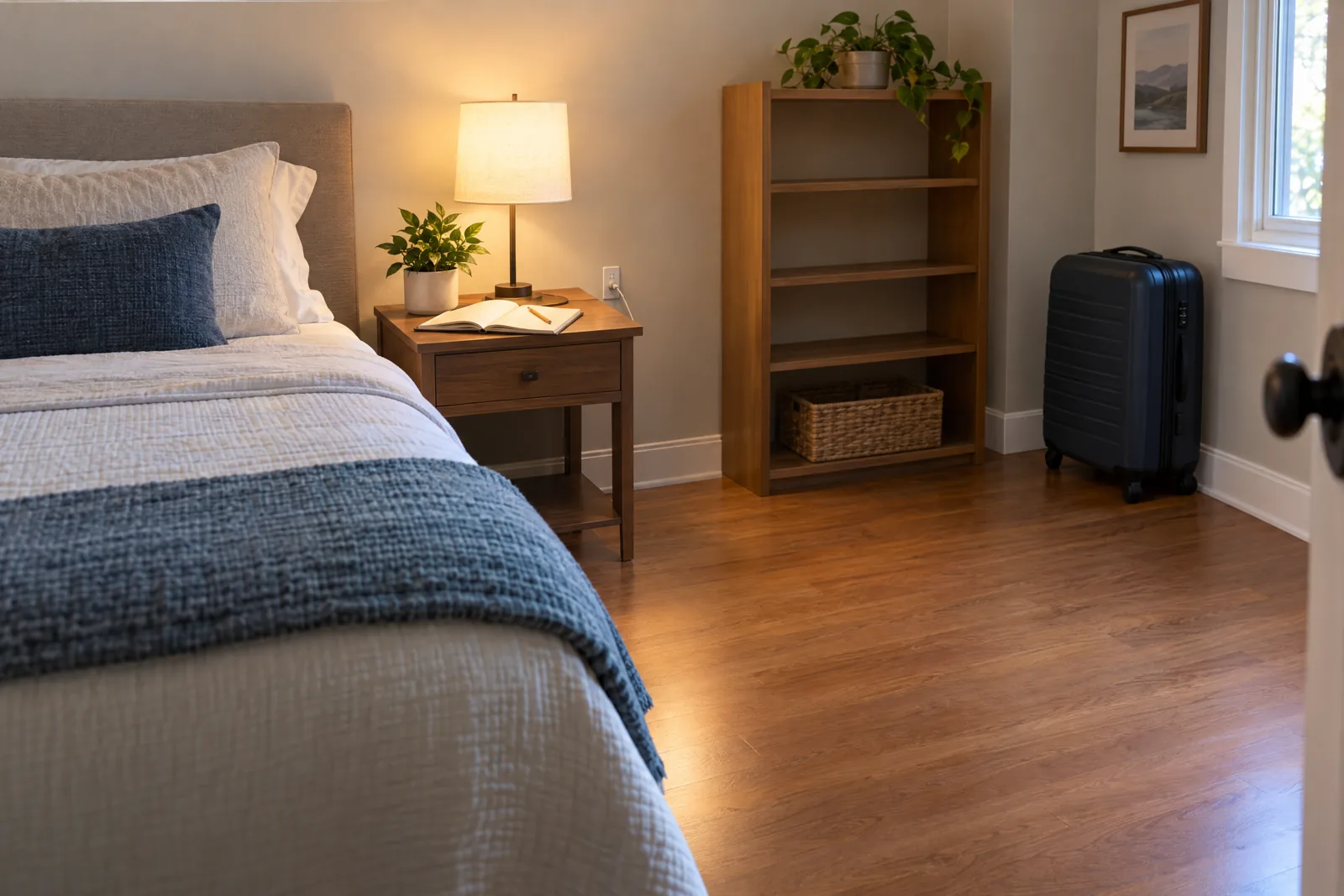
Do this walkthrough from the guest’s point of view. Physically use the room instead of looking at it from the doorway. Carry the bag the guest is likely to bring, turn the lights off and on, sit and lie on the sleeping surface, operate the controls, and walk to the bathroom at the likely time of use.
Follow the arrival route and check privacy
Start at the entrance the guest will use. Follow the route to the sleeping space, bathroom, and supplies. Look for shoes, baskets, cords, pet items, cleaning tools, or furniture that make it confusing. If the guest may arrive at night, repeat the walk with expected lights.
Operate the bedroom door, curtains, blinds, shades, and screens. Check visibility from inside and outside, and whether a door stays closed. If the space is in a living room or office, explain household use and available privacy. Do not describe a curtain as private if it leaves a clear view into the sleeping area.
Move personal documents, valuables, medication, fragile objects, and household clutter out of sight and reach. Confirm that the guest can find the entry method, key, access message, host contact, and bathroom without guessing. Keep a backup plan for a missed message or a locked door, but share only the information the guest needs.
Keep doors and windows unblocked and do not let staging or storage interfere with an exit route. Review a home fire escape plan alongside local requirements instead of inventing a code or clearance rule.
Test every lamp and the nighttime route
Enter and leave using the likely evening route. Turn the room, bedside, bathroom, night, and motion lights on and off. Check that switches are understandable and that a bedside control is reachable when the layout allows it.
Walk from the bed to the bathroom and back with the main room lights off. Notice dark spots, loose mats, low furniture, and controls hidden behind a nightstand. Do not hide a cord, lamp switch, or remote behind bedding or furniture. Describe the lighting honestly instead of promising a particular brightness level. If the only workable solution is a lamp near the bed, make sure its cord is not crossing the route.
Inspect outlets, cables, and charging access
Identify the outlet or outlets the guest may use before furniture is pushed into place. Plug in the intended lamp or charger and check that the connection stays secure during ordinary use. A usable charging spot is visible, reachable, and not dependent on a cable stretched across a walkway.
Offer only compatible, intact cables and adapters, and label what belongs to the room. Do not use damaged equipment, overload a power strip, or run a cable where feet and luggage will catch it. Ask what connection or equipment space the guest needs and prepare only what you can verify.
Test the bed, bedding, and movement around it
Sit and lie on the sleeping surface. Listen for unusual movement and check for obvious instability, sagging, sharp edges, exposed hardware, dampness, or a frame that shifts under ordinary use. If it is a sofa bed or air mattress, assemble and inflate it before the visit, then test how it feels and where bedding will be stored after it is folded away.
Walk around the bed with a bag in hand. Notice whether a guest can reach the door, light, storage, and charging point without moving heavy furniture. Check sheets, pillowcases, protectors, blankets, and pillows for cleanliness, damage, stains, dampness, hair, or a musty odor. Only offer choices that are clean and usable. Do not hide a damaged mattress under decorative layers.
Operate temperature, air, and noise controls
Use the fan, heater, thermostat, window, shade, or other control the guest is expected to operate. Make sure the control works, is understandable, and can be reached without moving heavy furniture. If the room relies on a shared thermostat, explain who controls it and what options the guest has.
Visit the room at the likely sleeping time. Notice drafts, stale air, street noise, household noise, light from windows or electronics, and strong odors. Offer practical choices such as an extra clean layer, a fan, earplugs, or a light-blocking covering. Do not promise silence, a particular temperature, or improved air quality.
Avoid hidden fragrances, candles, diffusers, and scented laundry products unless you have a clear, guest-informed reason and an appropriate setup. Ask about sensitivities instead of assuming a scent is welcoming.
Walk the bathroom route and test supplies
Walk the route to the bathroom with the likely evening lighting. Tell the guest where it is and whether it is shared. Operate the toilet, sink, shower or bath, hot-water controls, light, and ventilation. Look for leaks, blocked fixtures, visible dirt, dampness, mildew, pests, slippery conditions, or an odor that needs attention. Escalate unresolved plumbing or electrical issues rather than improvising a repair.
Stage clean towels, toilet paper, soap, and agreed basic toiletries where the guest can see them. Put spares in a place that is easy to find. Make a plunger and any relevant instructions discoverable without making the guest ask an embarrassing question. Remove personal products and cleaning chemicals from the guest’s immediate area.
The bathroom test is about function and findability, not a hotel display. If hot water, ventilation, a fixture, or the route is unreliable, disclose it before arrival and offer another arrangement.
Prepare the space in three phases
A phased guest room preparation checklist prevents a rushed cleaning session from becoming the only inspection: solve problems early, catch changes on arrival day, and record what needs attention after the stay.
Phase 1: Day before arrival
Start with the arrangement you promised. Confirm arrival time, entry method, sleeping surface, bathroom arrangement, and relevant preferences. If the room is shared, tell the guest when household activities normally occur.
Then complete these tasks:
- Remove personal clutter and create a defined place for luggage, shoes, clothing, and devices.
- Launder and stage bedding and towels. Inspect the sleeping surface, protector, frame, and any temporary hardware.
- Clean the bedroom, bathroom, and high-touch surfaces. Remove trash and address dust, hair, stains, pests, dampness, and odors before adding welcome items.
- Run the physical tests for privacy, lights, outlets, cables, the bed route, temperature controls, noise, and bathroom function.
- Write a concise note with Wi-Fi, the bathroom location, basic controls, quiet-hours information, and a way to contact you. Avoid exposing unnecessary personal or network information.
- Put water and core supplies where the guest can see them. Leave optional snacks, flowers, decorative objects, robes, or a smart TV out of the readiness decision.
- Secure unstable or top-heavy furniture and TVs according to the product or manufacturer’s guidance. Renters should get permission before mounting or altering the home.
- Decide whether each unresolved item is Fix, Disclose, or Defer. If it changes the sleeping arrangement, hygiene, privacy, access, or basic function, do not wait until arrival.
For optional styling inspiration after these functional checks are complete, see guest bedroom styling ideas. Its bedding, neutral color, reading corner, bedside, lighting, storage, towel, mirror, headboard, desk, rug, and welcome suggestions are optional design choices, not a substitute for testing the room.
Phase 2: Arrival-day final check
Repeat a scan after household activity. Check the bedding, towels, toilet paper, water, lighting, charging spot, and instructions again.
Walk the guest route at the expected arrival time, including the entry, sleeping space, bathroom, and any stairs or shared areas relevant to the arrangement. Remove cleaning supplies, private documents, medicine, valuables, and anything that could be mistaken for a guest supply. Make sure a door, blind, lamp, or bathroom fixture has not been left in a different state.
Send access directions and your contact method in a message short enough to use at the door. Include only essential details such as where to enter, where to find the room, how to reach the bathroom, and how to contact you. If something changed and cannot be fixed, disclose it plainly before the guest settles in and offer the best available alternative.
Phase 3: After-departure reset
A reset is more than remaking the bed. First confirm that the guest has left and retrieve or deactivate access items as appropriate to the arrangement. Air and inspect the space. Look for stains, damage, missing items, leaks, pests, unusual odors, or equipment problems.
Strip used linens and towels for laundering. Inspect the mattress, protector, pillows, sofa bed, air mattress, and floor before deciding what can be reused. Empty bins, clean high-touch surfaces and the bathroom, and return furniture to its intended position. Replenish the household’s chosen minimum supply of towels, soap, toilet paper, water, and clean bedding.
Return keys, remotes, chargers, notes, and personal items to their designated locations. Log lost-and-found items and unresolved repairs while the details are fresh. If a problem affects clean, usable sleep or basic function, mark the space unavailable until it is addressed rather than carrying it into the next visit.
Copyable pass, fix, disclose, or defer matrix
Copy this table into a notes app, document, or task list. “Pass” means the space works as represented. “Fix” means do not rely on the guest to discover or tolerate the issue. “Disclose” is for a limitation the guest can knowingly accept. “Defer” is for a nonessential improvement that does not change hygiene, privacy, access, sleep usability, or the promised arrangement.
| Phase | Task | How to verify | Pass when | Fix before arrival | Disclose or defer |
|---|---|---|---|---|---|
| Day before | Sleeping surface | Sit, lie down, and walk around it | Stable, clean, intact, and suitable for the agreed setup | Instability, wetness, damage, exposed hardware, pests, or a changed sleeping plan | Cosmetic wear that does not affect use and is honestly disclosed |
| Day before | Bedding and towels | Inspect and stage each item | Clean, dry, intact, and sufficient for the stay | Stains, odor, hair, damage, or missing core items | Optional extra layer can wait if core bedding works |
| Day before | Privacy | Operate door, curtain, blind, or screen | Privacy matches what was described | Covering or door fails, or creates unexpected exposure | Shared-space limits only after clear disclosure and agreement |
| Day before | Room lighting | Turn lights on and off from entry and bed positions | Guest can see and understand the main controls | Dead bulb, inaccessible control, unsafe cord, or confusing dark route | Decorative light can wait if core lighting works |
| Day before | Bathroom route | Walk it with likely evening lighting | Route is clear and location is understandable | Obstruction, difficult-to-find bathroom, or unmentioned access problem | Minor convenience improvement can wait |
| Day before | Outlets and cables | Connect the intended lamp or charger | Outlet works, connection is secure, and cables stay out of paths | Blocked outlet, damaged cable, unstable connection, or trip risk | Extra connection type can wait after asking preference |
| Day before | Temperature controls | Operate the offered fan, heater, thermostat, window, or shade | Guest can use the control and knows what it does | Broken or damaged equipment, inaccessible control, or misleading promise | Preference optimization can wait if options are explained |
| Day before | Noise and light | Visit at likely sleep time | Conditions match the description and options are practical | No workable arrangement for a material disruption | Earplugs or a shade can help while a larger fix is planned |
| Day before | Luggage and storage | Place a bag and put away clothing | Guest has a clear, defined place for belongings | Promised space is occupied or unusable | Extra organizer or decorative storage can wait |
| Day before | Bathroom function | Run fixtures and inspect surfaces | Toilet, sink, bathing setup, light, and ventilation operate normally | Leak, blocked fixture, hot-water failure, pests, or sanitation issue | Cosmetic upgrade can wait |
| Arrival day | Instructions and access | Use the message as a first-time guest | Entry, Wi-Fi, bathroom, controls, and host contact are findable | Missing, incorrect, or inaccessible information | Local recommendations can wait |
| Arrival day | Visible supplies | Scan from the guest’s viewpoint | Water, towels, toilet paper, soap, and agreed extras are easy to find | A core item is missing or hidden | Optional welcome touch can wait |
| After departure | Linen and inspection | Strip, inspect, launder, and log | Used items are processed and room condition is recorded | Damage, stains, pests, leaks, or equipment issues affecting the next stay | Nonessential restock can wait with a logged task |
| Reader fill-in | [task] | [test] | [pass condition] | [fix] | [disclose or defer] |
| Reader fill-in | [task] | [test] | [pass condition] | [fix] | [disclose or defer] |
| Reader fill-in | [task] | [test] | [pass condition] | [fix] | [disclose or defer] |
A practical path when there is no spare bedroom
Do not force a dedicated-bedroom checklist onto a living room, office, den, or another multipurpose space. A temporary setup can work when sleeping, privacy, and morning teardown are agreed in advance.
Choose a bed, sofa bed, air mattress, or floor-level arrangement that can be assembled and removed without blocking exits or normal household access. Set it up once before the visit and walk the actual route with the bedding and a bag in place. Do not rely on universal room or aisle measurements. Your furniture, doors, pets, and household routines determine whether the route works.
Create privacy with an existing door, curtain, screen, or a clear household schedule. Tell the guest exactly what is private and when the room will need to be restored. Move work equipment, personal documents, valuables, fragile objects, and private conversations out of the guest zone. Decide where bedding will be stored after teardown so that the next morning does not become a scramble.
Give the visitor a defined place for clothes, luggage, water, lighting, charging, towels, and bathroom supplies. Test setup and teardown, including any sofa-bed mechanism or pump, before the guest arrives. Establish quiet hours and shared-room expectations in plain language instead of relying on hints.
A low-cost temporary setup can be welcoming with clean bedding, a workable light, charging, a clear route, water, towels, visible bathroom supplies, basic instructions, and honest privacy expectations. Flowers, snacks, robes, a television, a styled basket, and matching furniture are optional. If the arrangement cannot provide a clean, usable sleeping space with acceptable expectations, suggest another arrangement.
What to skip or keep optional
Readiness does not depend on a luxury mattress, matching furniture, a scented candle, a decorative mirror, a reading chair, a television, or a coordinated tray. None can compensate for a failed lamp, dirty towel, blocked route, unreliable bathroom, or unclear privacy.
Skip hidden fragrances and avoid open flames unless there is a guest-informed reason and a setup you can manage responsibly. Do not buy a product to solve a problem before testing the actual room. A borrowed lamp, cleared shelf, clean towel, handwritten note, or existing curtain may be enough. Spend first on fixing a functional issue, not on making a temporary room look like a hotel.
Guest bedroom readiness FAQs
What should I do if a guest requests a feature I cannot verify?
Describe only what you checked, state the limitation plainly, and offer another arrangement where possible. Do not infer accessibility or medical suitability from appearance.
When should I disclose a shared bathroom or privacy limitation?
Disclose it before arrival, in the same message as the sleeping and access details, so the guest can make an informed choice and you can offer another arrangement if needed.
What makes a temporary guest setup ready?
Set up and test the sleeping surface, route, lighting, charging, supplies, privacy, and teardown before the visit. Keep the arrangement only if it is clean, usable, and honestly described.
Final one-minute guest room checklist
Before handing over the space, answer these questions without guessing:
- Can the guest find the entrance, sleeping space, bathroom, light controls, water, Wi-Fi, and host contact?
- Can they sleep, move with their luggage, store belongings, charge a device, and use the temperature or light controls as represented?
- Are the sleeping surface, bedding, towels, bathroom, surfaces, and core supplies clean and usable?
- Do the privacy limits, shared-space rules, household noise, and any unresolved issue match what was disclosed?
- Are doors and windows unblocked, cords out of walking paths, and top-heavy furniture addressed according to its guidance?
- Did any item fail the matrix and remain marked Fix instead of quietly becoming the guest’s problem?
The best guest room preparation checklist tests the actual space and communicates its limits. Once it passes, styling can add warmth. Before that, function, cleanliness, privacy, understandable access, and an honest plan matter more than a polished display.